Feeds:
Posts
Comments

Archive for the ‘Influences’ Category

Paul Klee

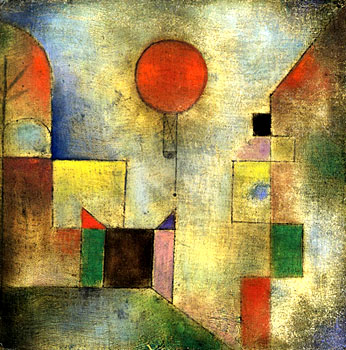
Klee-Carnival in the MountainsI’ve been a fan of the work of Paul Klee for some time now.  Whenever I would stumble across his work in museums, I would immediately feel a sense of kinship with his work.  His work is always the obvious product of his mind and seems unfettered by what might be expected by outside forces.

Klee Red BalloonMuch of his work is on paper and is smallish in size compared to many of the pieces that often surround them in museums, giving the work a very intimate, warm feel.  I feel like I’m privy to some quiet secret when I see his work. Maybe it has to do with the way his paintings combine music and form, creating that elusive rhythm of which I often write.   I also  love the grit within his colors and how he sometimes segments his work into small boxes of color, a technique that I adopt at different times in my painting.

Many categorize his work as whimsical but I have to somewhat disagree.  Granted there is sometimes an appearance of lightness in his work, but I see his work as very serious but with a distant and different perspective than the norm.  If you get a chance, take a look at the work of Paul Klee.  You’ll be glad you found him…klee-senecio

Read Full Post »

Klimt

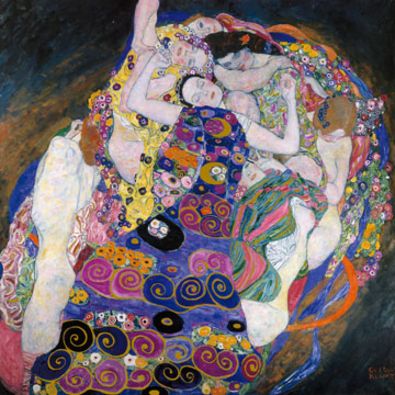
klimt-portrait-of-adele-bloch-bauerAnother artist whose work always draws my eye is that of Gustav Klimt, whose popularity continues through the success of  sales of items such as posters, prints, cards and calendars, all bearing his distinctive images.  Who hasn’t seen an image of  The Kiss on something?

For me , the attraction to Klimt’s work is in the way many of his pieces can be viewed as objects rather than a scene on a picture plane.  There is a feeling that you can be both in the painting and outside it.  This is a hard quality to describe for me.  Maybe it can best be equated to the  religious icon paintings of the Russians.

klimt_giudittaThis objectification  of his paintings has been a big influence on my work.  I have always wanted to create paintings that were as much objects as they were mere scenes on a panel.  Of course, this is done in my own way, not nearly so ornate as Klimt’s.  His influence may not even be visible in my work, nor should it as it is not a stylistic influence but rather a conceptual one.

This is just another example of how truly diverse work can inspire the artist and why it is so important for young artists to view a wide spectrum of art and artists.   There is so much to be gained from keeping an open mind and drawing as much as possible from the minds of others, in art and in life.klimt_pallas-athene 


klimt_the-kissklimt-gustav-la-vergini

Read Full Post »

The AngstWhen I used to enter a gallery or museum, even up until several years ago, I would be filled with a severe sense of dread and anxiety.  Angst.  The knot in the stomach.  The racing pulse. The whole thing.

I would go from painting to painting and would feel lessened because in each piece I would see something that I could not do, some technique that was not in my toolbag.  There were colors and forms that I could not replicate and all I could think was that I was somehow inferior.  

I didn’t belong.  

The resulting feelings would leave me reeling and sometimes angry, making me even more determined to create something that would validate my work.  

While this was a motivating force for many years, helping me actually find my voice, it gradually subsided over the years as I became more and more aware that I had been focusing on things I could not control and on being something I was not.

I began to see what I was.  I had an individual voice and vocabulary that was mine and mine alone.  I began to see that other artists felt about my work as I had felt about their work.  I saw that while they were doing things that I could not, the reverse was true as well.  I recognized that my voice, my technique and style, was finally mine and mine alone.  I saw that my form of expression was every bit as valid as any other artist hanging in any gallery or museum.

This was a liberating feeling.  It allowed me to go into galleries and museums and , instead of seeing what I was not, recognize the beauty of expression that was there and be excited and inspired by things other artists were doing.  Instead of coming out saying I’ll show them I was saying I can use that.  

It was merely a matter of trusting that what I saw in my own work was a true and real expression and would be visible to others.  I think this a lesson from which any viewer of art can benefit.  They must learn to trust their own instincts and reactions when looking at art.  Like my self-expression, their reaction to a work is theirs and theirs alone.  Their reaction is as valid as anyone else and no critic or gallery-owner can make a person like a piece that doesn’t move them.  When the viewer realizes that there is no right or wrong, that their own opinion is truly valid, their viewing pleasure will increase dramatically.  

By the way, the piece at the top is an old experiment from around 1994.  I always enjoy pulling it out even though it doesn’t fit neatly into my normal body of work.  No more angst.

Well, a different kind of angst…

Read Full Post »


Paul Sample CelebrationSometimes you run across work that really hits you and you wonder, “How have I never heard of this guy before?”

The world of art is full of such people, artists who while popular in their time never have made that shift into the ongoing popular consciousness. Perhaps their style was out of step or out of favor in their time or perhaps they just never caught the big break.  One of my favorite examples is the artist Paul Sample.  paul-sample-church-supper

The poor guy doesn’t even warrant a Wikipedia page of his own.

I first saw a piece of his a number of years ago in a traveling exhibit at the Arnot Art Museum,  in Elmira.  I can’t remember the title or even all the details.  I just recall being struck by the composition and the way he framed the painting with the elements at the picture’s edge (much like he has done in the top painting, Celebration, shown here).  There was an emergence from dark to light that really presented the central part of the scene in a strong way.  

Paul Sample Janitor's Holiday I immediately went home and integrated this idea of his into my own work.  Over the years I’ve come across other examples of his work (I’ve never been able to locate the piece I saw those years ago) and am always visually excited by them.  The compositions have a wonderful triangular quality where everything more less pointed to center of the panel, allowing the eye to settle easily into the painting.  His colors have the richness and dark undertones that  really attract me as well.

As I’ve said, the art world is full of any number of Paul Samples.  They may be less known and less loved than the brighter stars in their galaxy but their work remains alive and vital, full of the potential to influence even to this day.

Give them a chance…

Read Full Post »

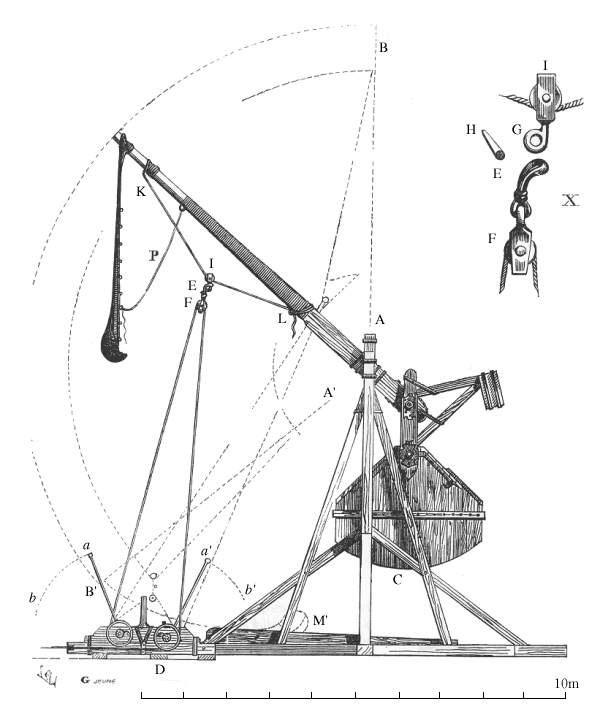
trebuchet2A number of years back, there was an episode of the quirky television show Northern Exposure, which was set in a small Alaskan town, that involved the town’s philosopher-artist-DJ, Chris, building a trebuchet, shown here on the left.  A trebuchet is  a medieval war machine, a type of advanced catapult that flings objects great distances.  In the show Chris used it to fling an old piano, the old upright flying in a perfect  slow-motion arc through a blue sky and crashing to the earth in a pile.

Every time I see this episode I am moved by an odd, primal thrill in seeing the arc of the piano’s flight and am reminded  of how this has always excited something I can’t explain in myself.

As a kid watching Fran Tarkenton and Joe Namath (New York teams on our local channels) throwing long bombs brought the same pleasure as the spirals seemed to defy time and space as they hurtled through the cold, autumn skies.  

In baseball, there is nothing more exciting to me than the right-fielder throwing out a runner at the plate or third base.  I still am thrilled by memories of throws from Dwight Evans of the Red Sox and Ichiro Suzuki of the Mariners that are delivered with arcs of such power and sheer grace.

Then there is the beauty of the towering arc of a home run.  I recently saw a replay of Josh Hamilton’s amazing performance at last year’s All-Star game.  One after another, huge shots rained out of Yankee Stadium.  Majestic is the only word that comes to mind.

Personally, I remember being at a friend’s house in high school with a group of buddies,  having blown off classes, drinking beers and just being delinquents.  We were in the back yard of this house which was in a small development.  One kid picked up a large stone and heaved it sky-ward.  It left his hand as we watched and went into the sky in a perfect arc, tumbling in a beautiful, smooth rotation.  It seemed to slow time itself and finally began to descend to earth, crashing finally through the window of the neighbor’s garden shed.

I did say we were delinquents, didn’t I?

But that moment is etched in my mind.  I have friend who was there that I occasionally see whose eyes become wide when I mention the arc of that rock.  He remembers it as one of the amazing things he’s ever experienced, a transcendent event.

Maybe there’s something sad in that but to me it attests to our reaction to the arc.  I wish I could scientifically explain how our brain recognizes and processes the beauty of the arc but I can’t.  I only know that when I see its natural curvature that I am seeing a type of rightness, that quality I often struggle to describe for the lines and curves in my work.  

If I can capture that natural grace, I will be a happy man…

Read Full Post »

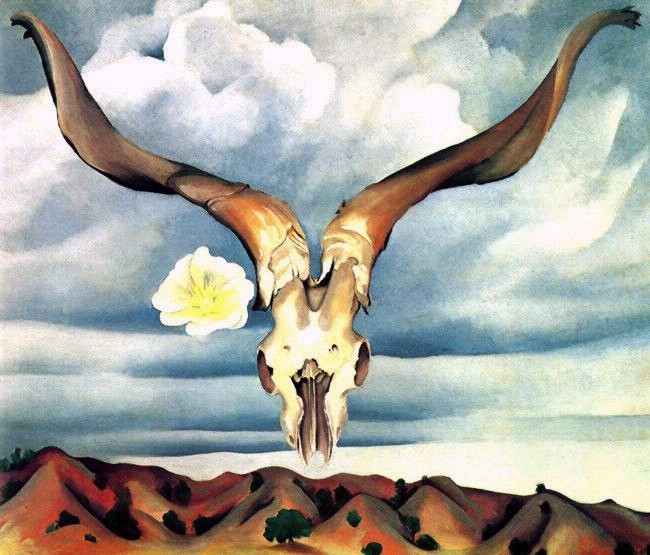
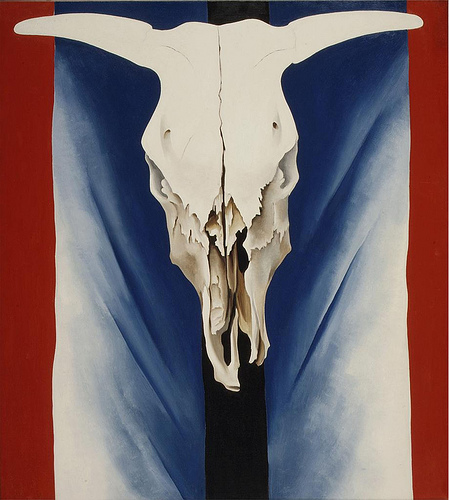
Georgia O'Keefe Ram's HeadOne of the first painters to really draw me into their work was Georgia O’Keefe.  Her colors were vibrant and crisp.  Her use of organic forms and the beauty of the curves and arcs she employed was impeccable.  Her compositions were unique and out of the box, often bisecting the picture frame in an unorthodox manner.okeefe-cow-skull

Here images were very iconographic– cow skulls, driftwood, poppies that filled the picture frame in an abstract fashion and on and on.  Her paintings were not narratives nor  were they snapshots of a particular  time.  There was an ethereal, timeless quality that makes them always feel contemporary, fresh and vital

There was also the sense of stillness and spirit that I now hope for in my own work.  Again, there is a timelessness in the work that goes beyond the moment when she created the piece.

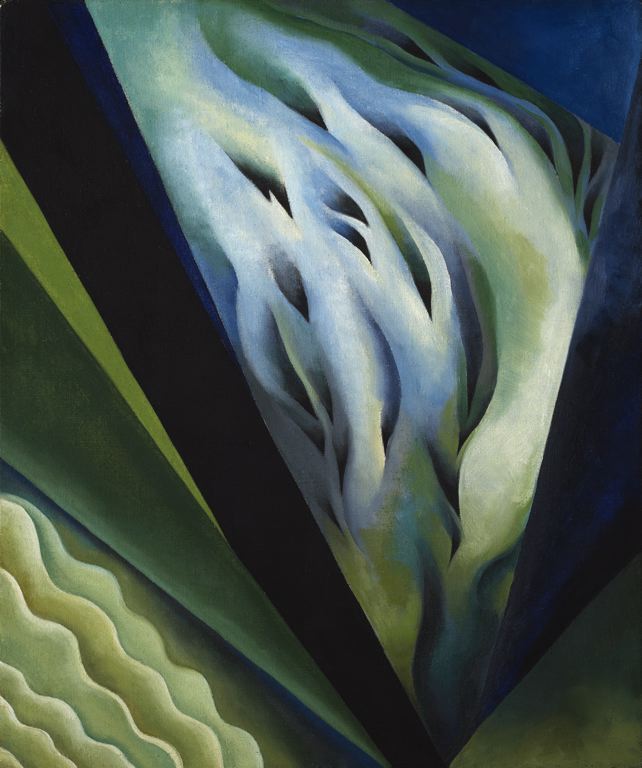
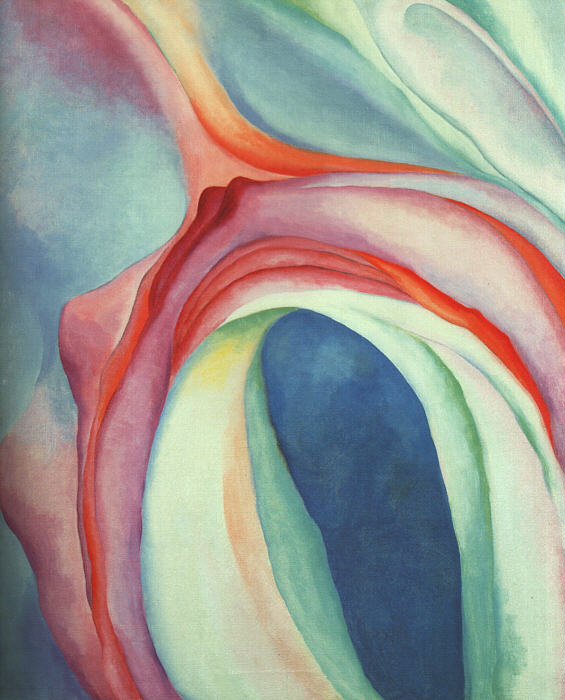
okeefe-blue-green-musicI was also drawn to the different styles of her work- her modernist cityscapes, her abstract paintings of flowing color and form and her floral.  Her hand was always obvious in the work.   Every piece in every style has a sense of being in the present. 

There are so many elements in her work that I have absorbed over the years and incorporated in my own work that I could never fully express the appreciation and gratitude I have  for her career.

As much as I have always been drawn to her work and affected by it, there is one drawback that I first discovered a number of years ago.  I had discovered her work in books and prints, never seeing them in person.  When I first saw a show of her work, while being stunned to see the imagery up close, I was less than excited by the surfaces of her paintings.  There was a great deal of flatness and they lacked the visual oomph of the printed page.  The surfaces had no excitement of their own.okeeffe-music-pink-and-blue-ii-1919

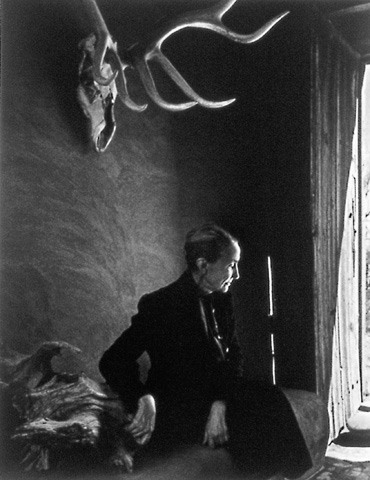
I realize this is my own subjective feeling on the work and that many great paintings have this same lack of surface excitement.  For example, I feel the same way about the work of Joan Miro even though I am  knocked out and excited by his work.  This feeling of mine does not in amy way take away from the greatness of the work.  I just realized that while I wanted to create the same type of graphic excitement of these artists, I also wanted to create something that  had a tactile, textural effect when seen up close and in person.  To that end, I think  my work always shows better in person than in print or on a computer screen.okeefe-karsh-photo

But that doesn’t really matter today.  I just want to show the icons and forms of Georgia O’Keefe and hopefully it will spark something in someone else and they will create their own forms, their own vocabulary of imagery.  

Their own world…

Read Full Post »

991-855We went to the opening of the Little Gems show at the West End Gallery in Corning last night.  It’s an annual show of very small paintings by the gallery artists and is always one of my favorite shows to attend.  There was a great turnout and I talked with folks I hadn’t seen in quite some time, some of them the earliest buyers of my work.

The Little Gems show was the first show where I ever exhibited my work, back in 1995.  It was an interesting experience, as I mentioned in an earlier post on this blog, to sit back and see how people react to the work.  It ran the whole spectrum of emotions, from exhilaration as some stopped and talked with friends about how they liked the small pieces by this new artist, to despondency as some brusquely walked by without a second glance.

I remember a local, well-known businessman approaching me and seeing my name tag, said,”You’re GC Myers?  I love your work!  It’s just great!  But…”

Uh-oh.  There’s a but.  That is never a good thing…

“But I only buy paintings of places I know.  Y’know, a local landscape or landmark.”

What?  At the time, it was an odd sensation.  It was one of the most exuberant expressions of approval for my work I had yet heard followed within a breath by a backhanded slap.  It took a long time before I processed this comment but in the long run it helped me.  It sparked my natural contrarian nature and gave me some resolve to not to kowtow to such little minds, to paint what I wished to paint in whatever manner I so chose.  This has served me well over the years and whenever I feel I am steering my work to someone else’s criteria of validity, I pull out that incident and stay on my own course.

I’ve had other incidents like this.  For instance, there is a well-known collector from our area with a vast collection who I’ve known for many years.  He knew me before I was a painter.  Whenever we meet he is highly complimentary but has never added one of my pieces to his collection.  Several years ago I learned the reason.

At an opening he said, “I really should have one of your pieces but…”

Uh-oh.

“But I only buy oil paintings.”

Now I’ve known of this bias for a long time but hearing it from a savvy collector was a kick in  the head.  All I could ask myself was if this guy would not want a Wyeth watercolor or a Klee work on paper?  He was cutting out a broad swath of the art world with this somewhat arbitrary qualifier.  It seemed to me that it was his loss.

Again, I have used that as incentive over the years.  The “don’t tell me what I can or can’t do” factor is a big motivator for me, even now.

Hey, that makes me want to paint.  See ya’…….

Read Full Post »

Egon Schiele

Egon SchieleI have always been drawn to the work of Egon Schiele.  He is perhaps best known for his self-portraits and his figurative work of long, gaunt bodies. Many are nudes, some bordering on what might be considered pornographic, especially for the time in which they were produced.  They were angular and bony and have the look of heroin chic.  Most of all they exude a feeling of being.  Powerful stuff.

Egon Schiele  CityscapeThat being said, I am actually most drawn to his cityscapes.  I find them beautiful in a gem-like fashion.  I love the beauty of his colors and the dark griminess that permeates them.  It’s a particular quality that I try to instill in my work.  Every time, when I stumble upon these works after not seeing them for some time, I am excited and inspired by the colors, texture and composition of this work.

egon_schieleegon_schieleegon-schiele Agony

Read Full Post »

Two Sides

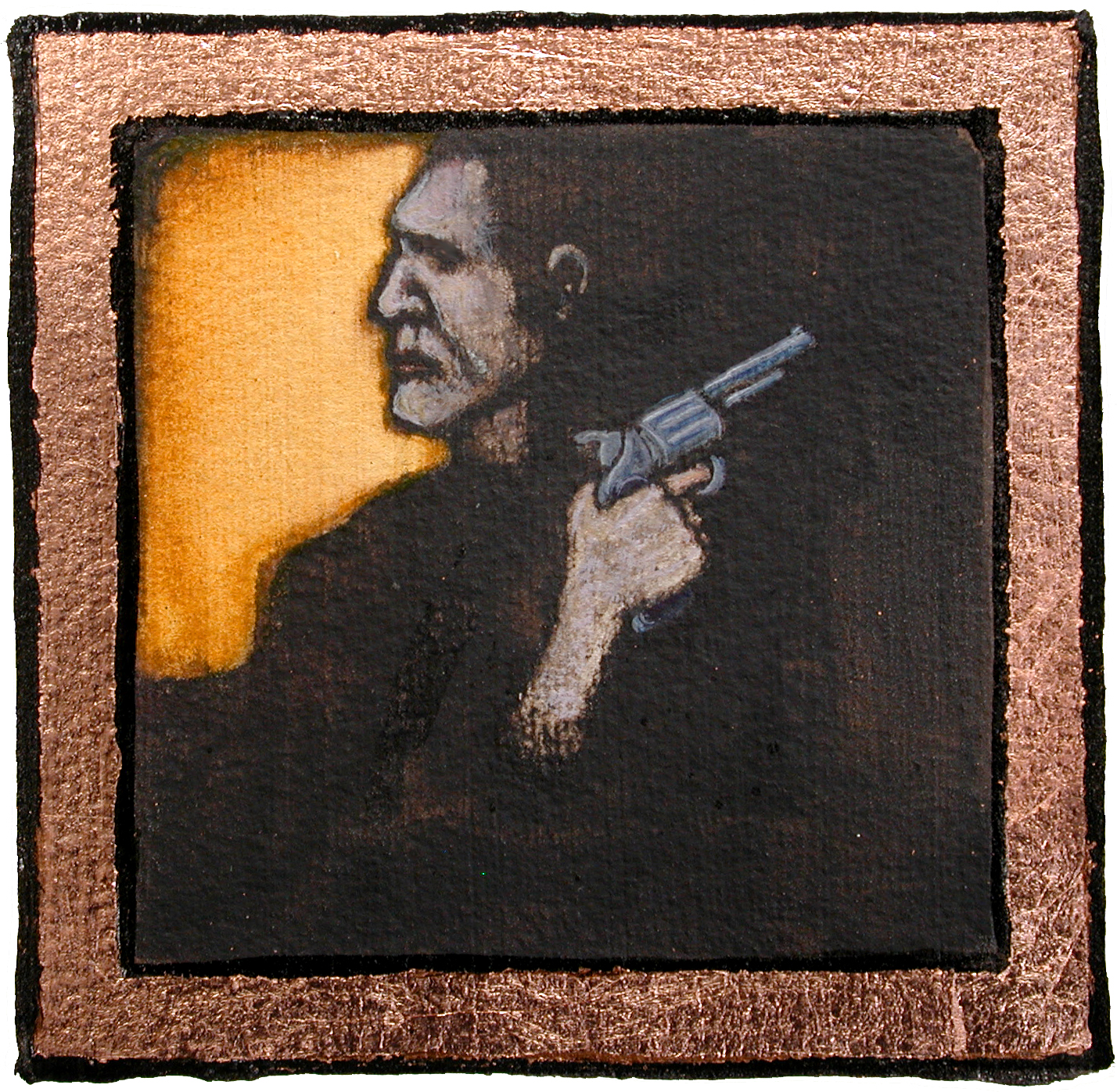
996-229-two-sidesThis is another piece from my Outlaws series, titled Two Sides.  For some, this is a little scary- a guy holding a gun.  For me, it is representative of the two opposing sides in everyone’s nature.

yin-yangI believe we are all comprised of equal parts of opposing valuesin our natures- man/woman, good/bad, light/dark.  Most walk that centerline that divides the two halves but both sides are always there, closer at hand that we may find comfortable.

This piece was designed to somewhat replicate the yin-yang symbol of Taoism.  Light and darkness make up the central character, although he appears to have slid slightly more to the darker side of his nature.

Perhaps appearances can be deceiving…

Read Full Post »

Railbirds

RailbirdsThis is an old piece called Railbirds.  I’ve always liked this little painting for the clarity of color and the composition and rhythm of the figures that are seemingly  engaged in a fistfight at the rail of a horse track.  It’s also a piece that calls back parts of my youth that are distant and remain only in memory.Between Races

The culture of gambling played a major part in my youth.  I spent an inordinate amount of time at racetracks and taverns, reading the Daily Racing Form and drinking watery Cokes,  as a kid.  There are a lot of stories and details I could add that might make this a personal mythology piece but I think in this instance, the less said the better.

However, I will say that this time was a great experience in watching people and how they click and interact with one another.  I was exposed to adults, often at their worst .

 Drunk. Angry.  Greedy.

I can’t say how this translates into my work or how it effected my becoming an artist .  Maybe it showed me the darker side of our psyche and took away the romance and influence it might hold for many.  Maybe it was important in forming my sense of light and dark.  Maybe it’s the basis for the darkness that I try to put behind my paintings.

As I’ve pointed out before, you can’t appreciate the good without knowing the bad -or the light without having been in the dark.

Read Full Post »

« Newer Posts - Older Posts »