Feeds:
Posts
Comments

Archive for the ‘Technique/History’ Category

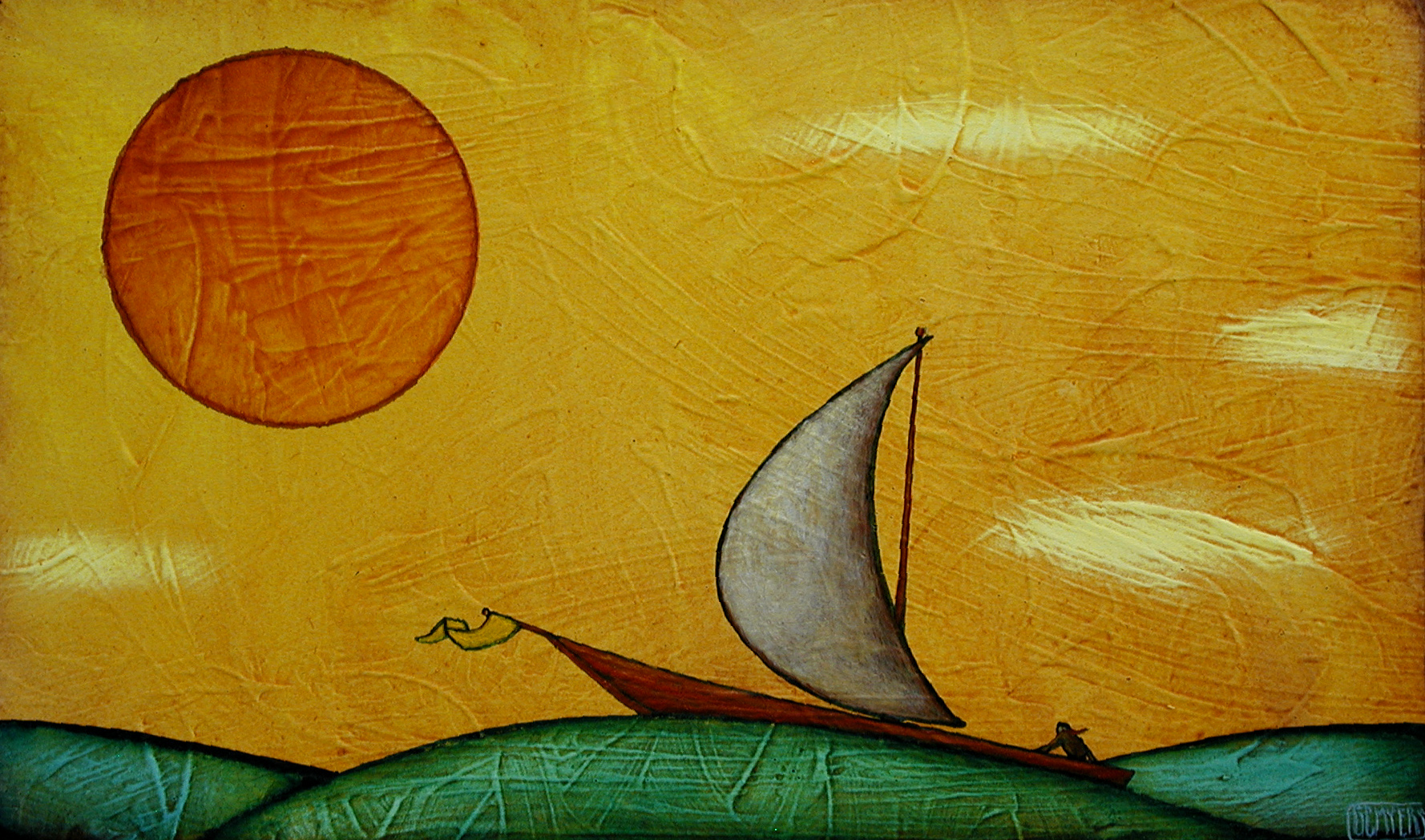
Glory RunI do a few paintings every year that have a boat riding the waves.  They’re simple compositions and are done mainly for my own self-satisfaction.  I really like working on simple constructs such as this because it’s such a wonderful challenge to create emotion and depth with only a few elements.  It forces one to focus on the more subtle aspects of the painting– the quality and depth of color, the delicate interaction of the compositional elements, the way the underlying texture creates tension and motion above, etc.

There are a lot of aspects that I consider when working on  a piece such as this but in many cases this evaluation of them takes but a glance, trying to get a sense of the rightness of each piece.  This something I’ve mentioned before and is something I struggle to explain.  It’s being able to look at something and weigh all the elements that comprise it and determine if they make sense in the eye and mind.  Is there balance, does one element overwhelm everything?  Does one line move organically into another?  Is there a sense of harmony in the colors and do they translate as natural to the eye?

This sense of rightness is especially important in a piece such as this, Glory Run, because so little must say so much and any flaw in the logic of the piece makes it fall apart.  But if all maintains this rightness the impact of the piece increases greatly.

I wish I could explain a bit better but I’ll just let the work do the talking for now…

Read Full Post »

Waiting on the SunThis is the part of my year where I step back and take a good look at the past year, how my work developed over the year and what I felt really came across and expressed what I wanted in the paintings that I executed.  It’s also the time when I start to set my course for the upcoming year.  I start to think about possible tweaks in my work.  I try to decide what aspects of my work were exposed this past year and how I can increase the strengths and minimize the weaknesses that emerged.

I think about possible new projects.  For instance, I want to do a large detailed canvas, something much larger than I normally paint, that I will work on for the better part of the year and will document its progress on this blog.  I think there will a continuation of the Archaeology series, on a smaller basis than this past year.  I also look at work from past years to see points where my work has changed and try to determine if it might be interesting to revisit that earlier style armed with a more evolved vision and technique.Dark Gives Way

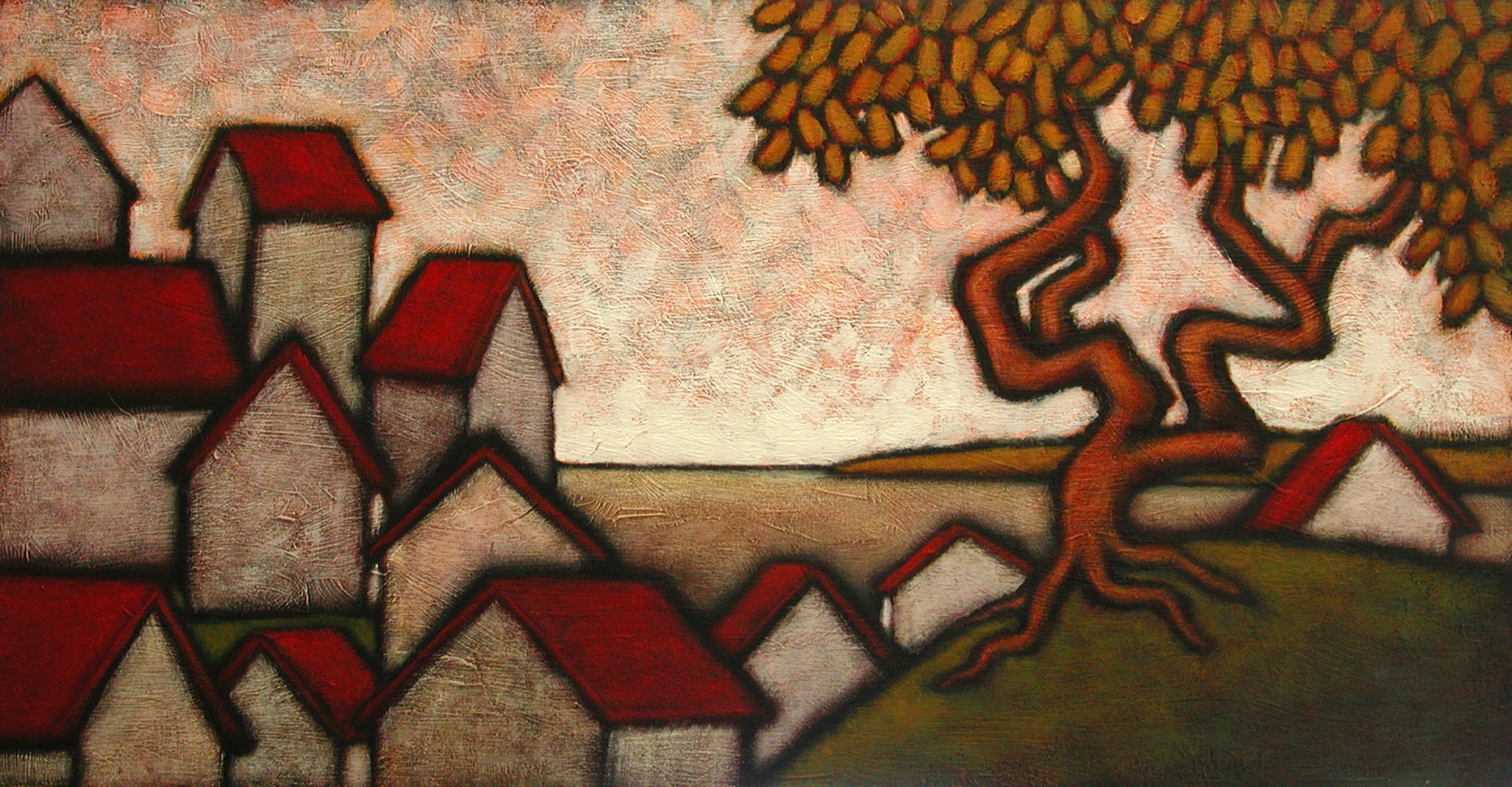
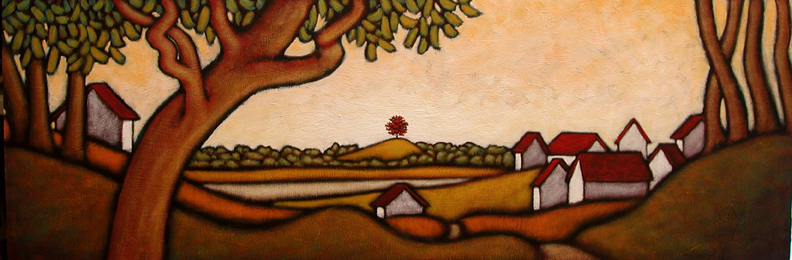
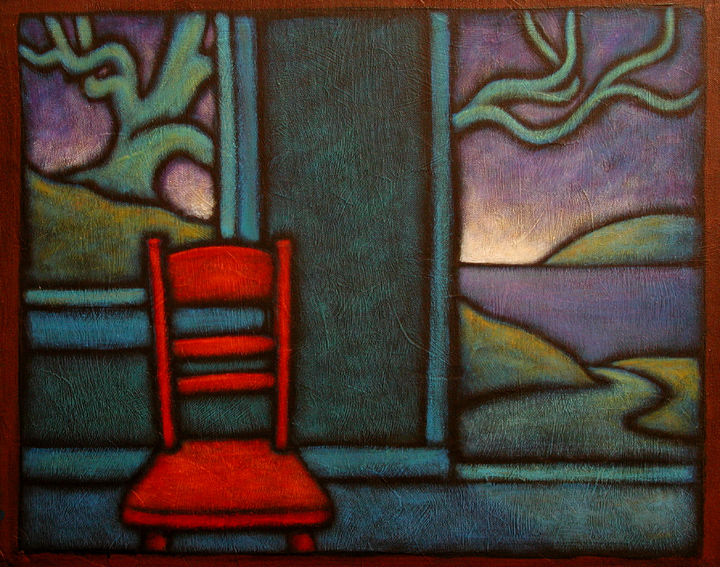
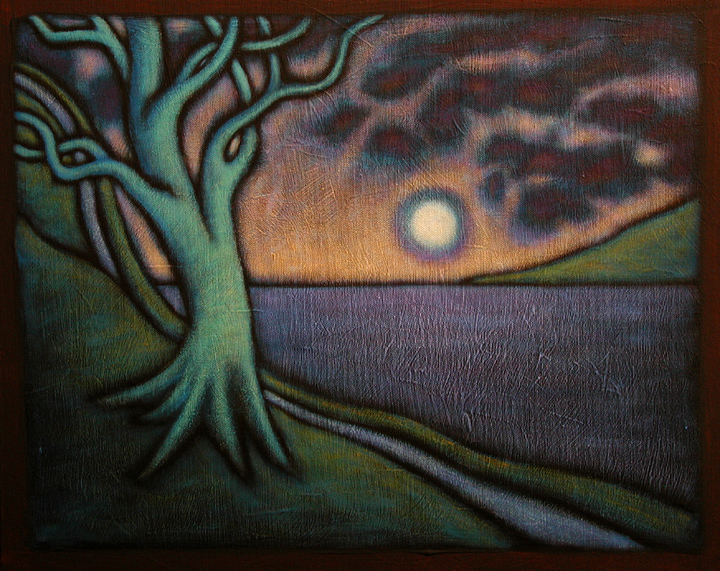
The pieces shown here are a good example of a style that I may well examine once more.  They are painted in a different way than I typically paint and, as a result, have a different look.  I only did them for a short while but I always find my eye being attracted to them whenever I look back at past work.  I see that style now and see things that would be exciting to revisit  with some new ideas.

So in the next few days I will continue to look back on the path I’ve traveled and maybe go back for a short while and find inspiration and a spark that will ignite into a new fire for the new year.Just Passing Through

Read Full Post »

The Deacon's New TieThis is another painting from the Exiles series, called The Deacon’s New Tie, a piece finished near the end of the series.  It is a bit lighter and more whimsical than the other pieces in the earlier post.  He has hung in my studio for many years now and is a fine companion.  

There’s really no back story to the Deacon.  He sort of just emerged from the surface.  I had no preconception of what he would be when I started.  I remember clearly starting this piece on a blank sheet and making a nose.  Slowly, the face formed and when his eyes with their hangdog look came around I knew he was different than my other Exile characters.

The funny thing about the Deacon is that several months after the piece was done and include in the Exiles show, I came across an article in the newspaper about a 95 year-old man in central Florida who had won a case where he was trying to be forced from the land he had lived on for nearly 70 years.  There was a picture of a  bald old man sitting on his veranda, a slight smile on his lips.  There was something slightly familiar in that face, something that caused me take a second look. There it was: he was the spitting image of my deacon.

Then, reading the article, it stated that he was a longtime member of a local church and was known to friends and neighbors as the Deacon!

So, perhaps this is a portrait,  of sorts.  Either way, have a great Christmas, Deacon.   Maybe you’ll get a new tie this year- you’ve been wearing that one for about 13 years now.

Read Full Post »

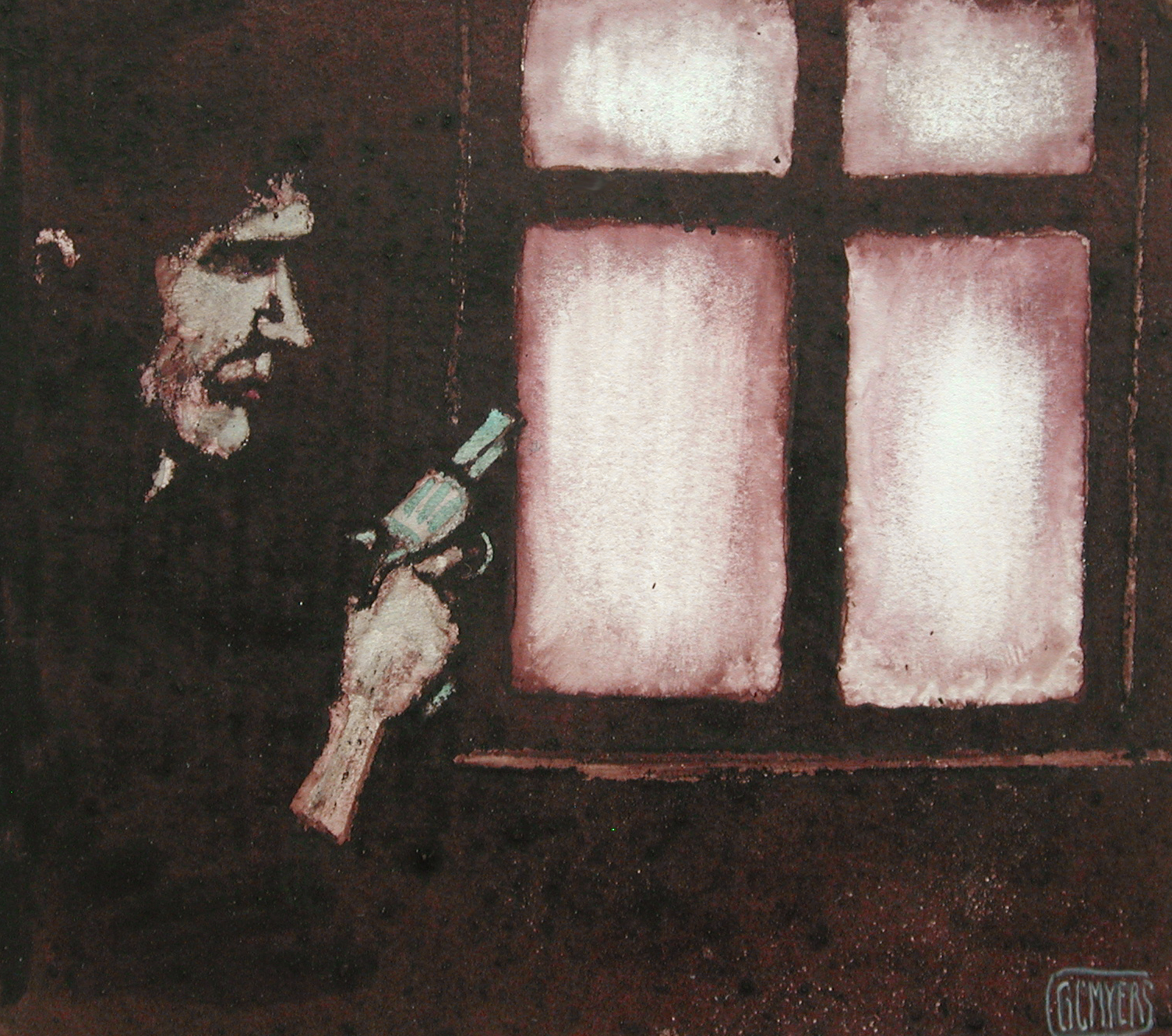
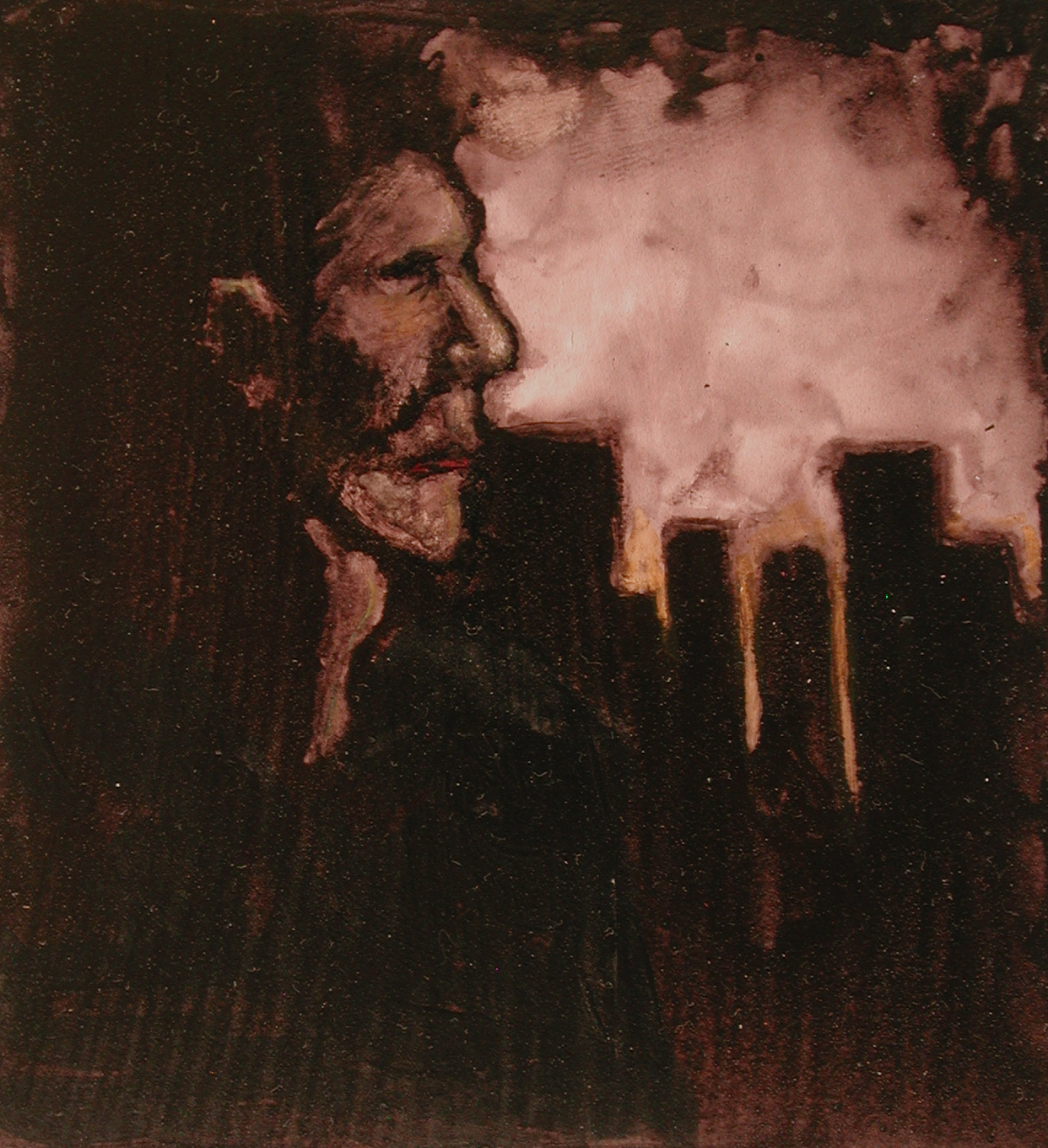
The FearA few days back I talked briefly about a series of pieces from 2006 called Outlaws, small and dark figurative paintings of individuals sometimes looking out windows, sometimes holding handguns.  They were a departure and some followers of my work were a bit put off.  Some were fearful of the figures, seeing them as menacing.  Most saw the fear in these characters, their past haunting them.

There was an observation I made concerning people’s reactions.  Those who were disturbed by the images saw the central figure as an intruder peering in through the window.  Those who were more empathetic with these figures saw them looking out the window.  They saw that these characters were the fearful ones.

These pieces were inspired by some silent films I was watching at the time.  These films from around 1918-1927 were made in the aftermath of the first World War, a time when expressionism emerged.  Many of these films were dark and gritty, filled with raw emotion and violence.  When two figures fought, it was not the clean, one-punch knockouts of later films.  They grappled, clawing at one another in a horrible realism.  One that stands out is  Sunrise  from the great F.W. Murnau, probably best known for his vampire classic,  Nosferatu.  It is the story of a married farmer seduced by a city woman who conspires to kill his wife and go to the city.  It’s a great story that is dark and full of wonderful imagery.  There is a train ride into the city that is a great piece of film.  Though most people think that Wings won the first Oscar for best picure, Sunrise won the award that year as Most Unique and Artistic Production, a short lived award that basically  split the Best Movie award into two parts.  It was great then and is still quite moving.Confession

Also, around that time I saw a group of Goya’s small pieces at the Frick in NYC.  They were done by covering  ivory palates with carbon and dripping water on to the surface then manipulating the puddle until an image emerges.  I was taken by them, mainly because I fully understood the technique.  It was how I had taught myself to paint.  I saw it as an opportunity to express the faces and figures that have inhabited my mind for decades.

I only do a few of these a year now and the handful I have in the studio are what I consider personal treasures that still provoke thought from me, time and time again.Night and the City

Read Full Post »

The Dark Work

A Journey BeginsMy work had a dramatic change for a while in the months after 9/11.  Like everyone, my worldview shifted that day and this was reflected in my work.   It became darker in appearance and tone,  a bit more ominous in feel.   A lot of this had to do, technically, with the way the pieces were painted.  I was using a dark base and adding color in layers on top of this base, slowly building up my surface.  Much like painting on black velvet.  Normally I start with a white base and add layers of colors, taking away color as needed to achieve a desire effect.  As I pulled paint off the surface, the light base would come through and give the picture plane a glowing presence.  My normal technique is basically a “reductive” style whereas this new work in 2002 was “additive”.  

Being untrained, these are terms I’ve adopted to sort of describe what I see as my technique.  They work for me.

Night TranceThis new work was not nearly so optimistic in feeling as my previous work.  People were a bit slower to embrace it and I wasn’t surprised at a time when our nation was still reeling.  But it was a true expression of how I felt at that time and I remember my time at the easel with these pieces as being very trance-like.  I would start a piece and have a hard time stopping.  A virtual intoxication of color.  Or maybe more of a refuge in the scenes.  I don’t know.

Since the public was a bit more lukewarm to this group , which the galleries call “the dark work”, I have several of these pieces still and I am still excited when I look at them.  They are rich and bold and very still in nature.  They may be dark but I still think there is hope in these paintings but it’s a wary type of hope.  

And in the end, hope is hope…

In the Flow

Read Full Post »

Elvis in the WildernessThis is a small oddity titled Elvis in the Wilderness from a series that I called Outlaws, first shown in 2006 and a series I will address more in future posts.  They were all fairly small pieces, usually 4 to 6″ square and were all much darker in nature and in appearance than my normal work.  They were, however, an extension of the faces that I would draw in my high school years so for me they were not a drastic change.  They were all part of me.  For many longtime viewers they were a sharp turn away from the style and light of my representative work.  Many approached me at the show at the Principle Gallery that year asking if this was a new direction and would it mark the end of the landscapes.  I explained that this was just another aspect of one person, that while I do show myself through my work I am only showing small facets of my whole at any given time.  Snapshots, if you will.

My paintings often represent who I am at any given point in time but sometimes they are more aspiration than reality.  I long for calmness and peace, in the world and in myself.  I desire a strong and brave outlook, to have the wisdom of the ages.  I want to shed my fears aside and live boldly.  Unfortunately, these wishes sometimes remain just that– wishes.

But so long as these aspirations remain, there is hope for more light  and less darkness.  Like Elvis in the Wilderness, sometimes one struggles to find a way to the light.

Read Full Post »

scan0081

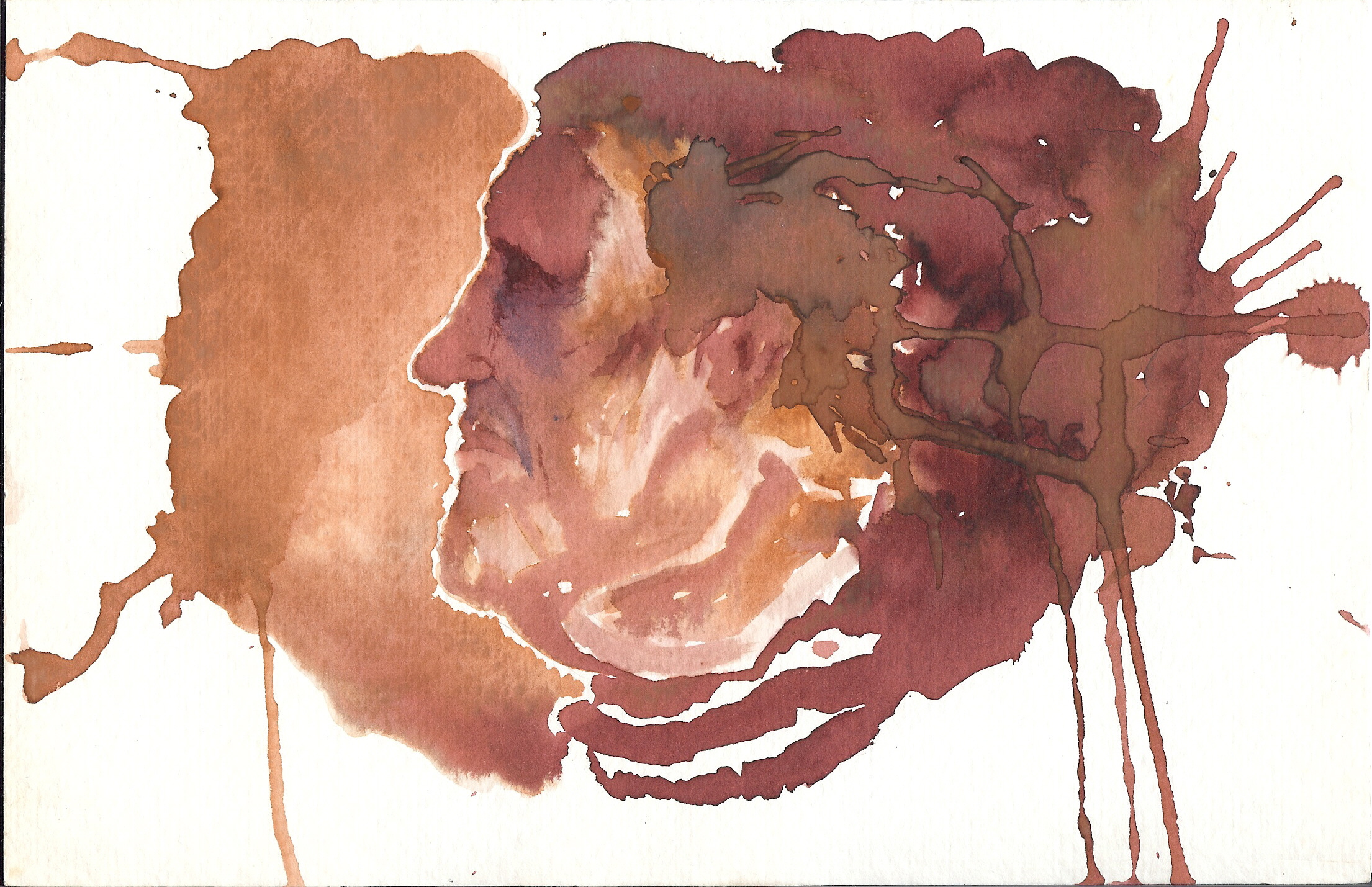
Painting for me has always been more like reading tea leaves than faithfully representing something sitting before me.  I have always found that the excitement in painting was in not knowing exactly what would emerge from the blank sheet of paper or canvas, having to deeply look into the surface trying to discern what movement or stroke might be next.  Trying to make out the outline of something, anything, in the first puddles of paint that might become something tangible.  Much like seeing things in the clouds except with this, the clouds are controllable, to a certain point.

It’s something I’ve done since I was a kid.  I remember laying on the living room floor in the old house on Wilawanna Road, looking up at the white curtains my mom had over every window.  At the edge they frilled out a bit and in that edge I could see faces- peering eyes, flaring nostrils and gaping mouths.  It filled a lot of time during my pre-teen years when I was often alone.

The piece above was one of the first things I did when I first picked up painting after my accident many years back.  It was done with airbrush paints that had been lying around for years.  It started with a large puddle of colors on the right and I simply started dragging paint from the puddle, forming the brow.  I didn’t know it was a brow but it began to look like one to me and that led downward to the nose.  That shape led to another and to another and soon an image emerged, something tangible that had its own power, its own life and story.  Like reading tea leaves…

That is pretty much how I still paint to this day, with variations in the technique.  I find it an exciting and always enlightening way to work.  Always the potential for something new and different, which keeps life in the studio interesting.

Read Full Post »

odd bodkins blue skies

Well, it’s the day before Thanksgiving and I’m in the studio on a wintry morning, getting ready to go to work on a couple of commissioned pieces.  I’m watching a group of deer that are laying down in the yard outside my window, not quite ready to start their day.  My studio is surrounded by woods and this is a group of deer that have occupied my property for many generations.  We get along pretty well.

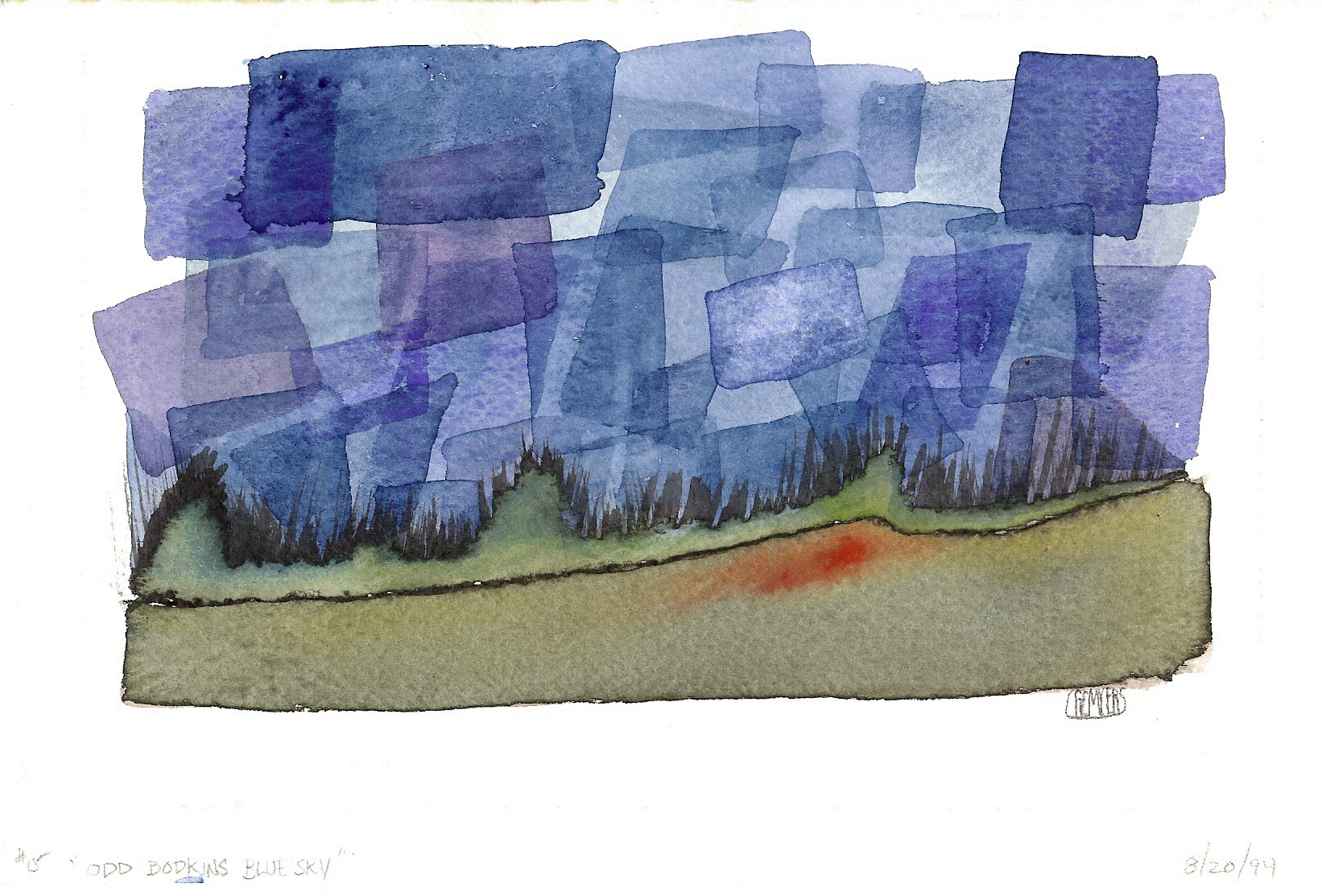
I spent a little time this morning looking at some older small pieces that were done before I started showing my work publicly.  I sometimes do this when I’m starting to think about where the work might be headed in  the future, something that I focus on at this point in the year.  It’s always interesting to see how the work has progressed, how the way the pieces are painted has evolved and how some elements remain and how some stayed behind, at least thus far.

The piece above struck my eye this morning.  It’s called Odd Bodkins Blue Skies and was done in 1994.  I can see my technique coming into shape and the beginning use of what I call complex colors.  I’m very pleased by the strength and clarity of this piece.  I think it has held up very well and even though it doesn’t resemble my typical work I can see my hand in this piece.  This piece always makes me smile when I come across it.

Maybe it will spur something new for the coming year, maybe not.  But it’s part of my history and in some way remains in me.  And for that, I am thankful.  A day early…

Read Full Post »

And All Is Clear

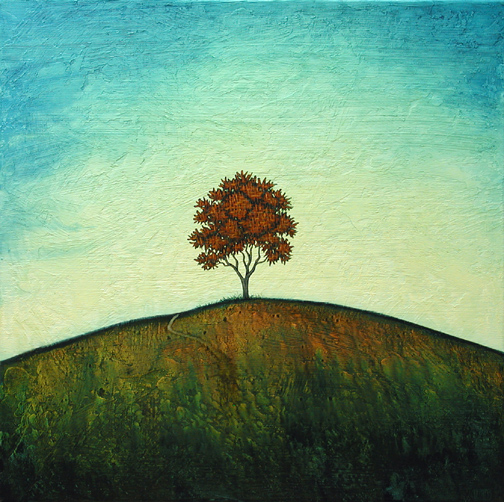
It’s always hard to describe what I am trying to accomplish with my painting.  The words I use sometimes feel vague and a bit clouded, words like feeling and rhythm and rightness.  All describing a quality that can’t be quantified.  The term “rightness” for me is just being able to look at something and visually weigh it, trying to see if there is an organic sense to it.  Does it make sense?  Does anything, a wrong or weak line or a flaw in the balance of the  composition, betray the reality of the piece?  By that I mean, does the piece create its own sense of believable reality?  In my work there may be red trees, houses without doors or windows, unnaturally colored fields and strangely shaped outcroppings of terrain, and skies that may never be seen on this earth but to me, they translate as being completely natural and logical.

And I suppose that is what I’m trying to do- make a world that sometimes appears totally illogical and in chaos seem to make a bit of sense.  To be in some form of harmony.

The piece shown here is And All Is Clear which is an 18″ by 18″ canvas. I think this is a piece that very much typifies the rightness and logic I was describing.  This painting is carried by its simplicity and the harmony of its colors, giving it a real sense of peacefulness.

It also is part of my show at the Haen Gallery in Asheville, NC which opens next Saturday, November 22.  If you’re in the area please stop in and say hello.  I’ll be giving a short talk, which always has a Q&A session, just before the opening at 5 PM. 

Read Full Post »

November 2008  I’m in the final steps of prepping for my upcoming show at the Haen Gallery in Asheville, NC, which opens next Saturday, November 22.  The last part of getting ready for a show includes the last day or so of framing the work, making sure all the work is properly  documented and just double-checking everything.

 For instance, looking at each piece and making sure that the title really fits the piece. It sounds goofy but I have seen really strong pieces sit for a long time until I have realized that the title did not really fit the piece.  It might send the viewer off in another direction completely different than the true feel of the painting or it might be a glib, light title for a piece that has more weight.  It’s funny how such a seemingly small thing can affect the whole perception of a painting.

 It’s also at this point where I may take a piece from the show, feeling it doesn’t really fit completely with the rest of the work.  It may be a very singular piece that may distract the focus from the rest of the show.  For example, I do a series of figurative pieces, faces actually, that are darker in nature and in execution than my normal work and would not work with a show where the primary feel of the show’s work is hope and harmony.  

 At this point in the process you have a pretty good feel for how the show will hang together.  I feel very good about this group, I think it will show pretty dynamically in the beautiful space at the Haen.  From this point on, the show is out of my control. 

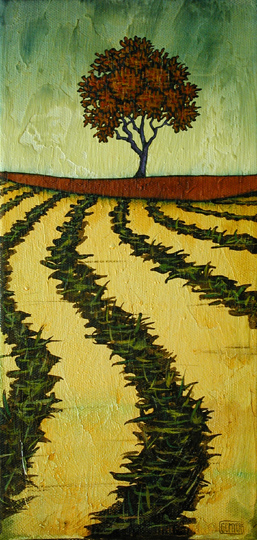
The painting shown is one of what I call my “work” pieces, one that I think celebrates the virtues of labor, something that can’t be overstated.  This painting is titled Its Own Reward  and is part of the show at the Haen.

Read Full Post »

« Newer Posts - Older Posts »