Feeds:
Posts
Comments

Archive for the ‘Uncategorized’ Category

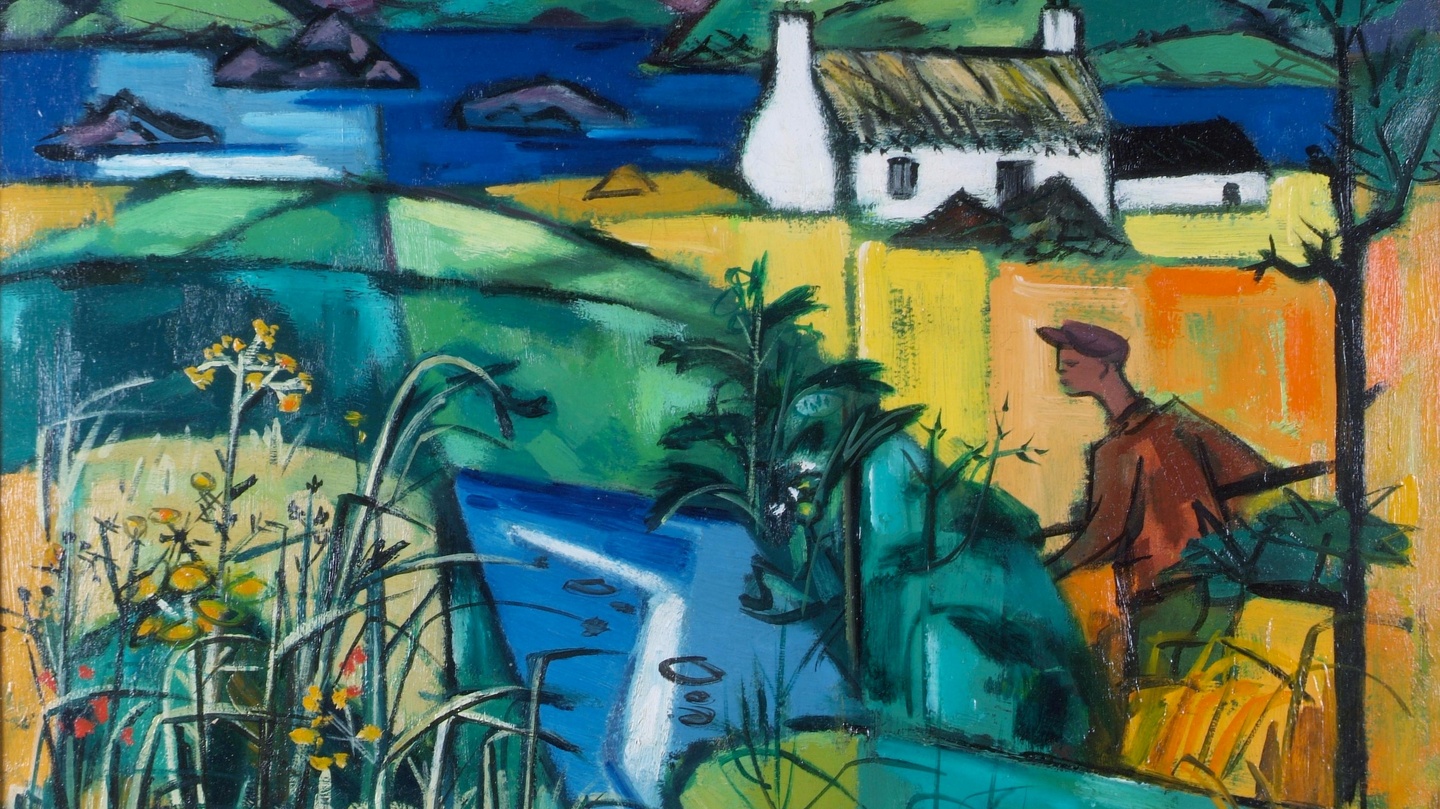
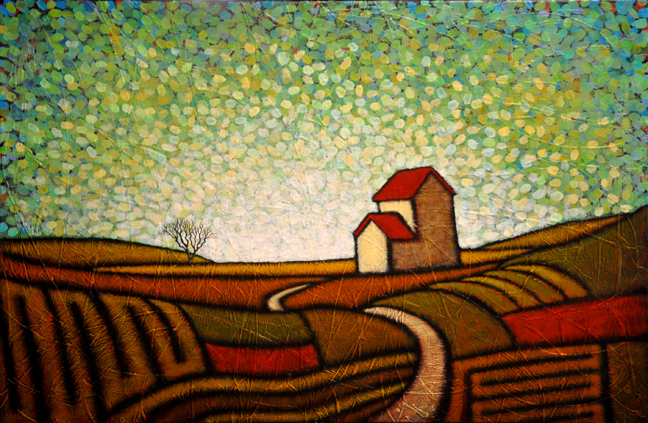
In Stillness and Rhythm-At West End Gallery


Through long December nights we talk in words of rain or snow,
while you, through chattering teeth, reply and curse us as you go.
Why not spare a thought this day for those who have no flame
to warm their bones at Christmas time?
Say Jack Frost and the Hooded Crow.

–Jethro Tull, Jack Frost and the Hooded Crow


I haven’t listened to much holiday music this year. Haven’t fully invested myself into the holiday spirit thus far, plus the local radio channels that play only holiday music endlessly play the same songs over and over, to the point that you can almost predict the next song. I don’t know if I can bear hearing Mariah Carey sing All I Want for Christmas Is You again without tearing out my hair. I just don’t have enough hair to spare.

So, I went hunting for a holiday song this morning to share. one that might have eluded your ears. It did mine. It’s from Jethro Tull who have recorded quite a number of holiday songs over the years. This is from the late 80’s, I believe, and is titled Jack Frost and the Hooded Crow. It’s basically an admonition to spread your joy and lend a hand to those in need during the holiday season.

It just hot the spot for me this morning and I bet you haven’t heard this on any radio channel or holiday playlist.

Well, maybe you have. What the hell do I know?

Now get out of here before I lose my holiday spirit…


Read Full Post »

2009


There’s a room out there somewhere with a woman in a chair
With memories of childhood still lingering there
How pretty the paper, the lights and the snow
How precious those memories of long long ago

We held hands and stared at the lights on the tree
As if Christmas was invented for you and for me
When the angel on the treetop requested a song
We sang, “Silent night all day long”

–John Prine, Silent Night All Day Long


Started the ADT (Androgen Deprivation Therapy) part of my treatment last Monday and it has gone pretty well thus far. However, I have had a creeping feeling of fatigue starting to show up in recent days, especially in the afternoon. It hit hard yesterday afternoon and this morning it was still with me, along with a sharp headache, which has eased a bit since I came into the studio, thankfully.

I can’t say definitively that any of this is related to the meds. I could just be tired this morning. Wouldn’t be the first time. But whatever the case, this is a going to be a quickie this morning, with a repeat of a favorite holiday song from John Prine that I shared a few years back. I really like the verses from the song at the top. They seem to capture Christmas from a kid’s perspective so well– as if Christmas was invented for you and for me. That’s probably why memories of Christmas past seem so vivid for many of us.

This is Silent Night All Day Long from John Prine.


Read Full Post »

The Peanuts Christmas Dance


I worry about this time of the year…I remember last year about this time… it was two o’clock in the morning, and I was sound asleep… Suddenly, out of nowhere, this crazy guy with a sled appears right on my roof… He was okay, but those stupid reindeer kept stepping on my stomach!

— Snoopy, Peanuts (23 Dec 66)


What better way to wash away the stench from the subject of yesterday’s post than to take a little break with the Peanuts gang? This little world created by Charles M. Schulz in 1950 represents the better parts of us. Empathy for others, a sense of innocence and humanity, and a joy in living immediately come to mind, all qualities that seem to be lacking with yesterday’s subject.

Below is a post from 2014 on how the Peanuts comics influenced my work. It contains the Christmas Dance scene from A Charlie Brown Christmas so how can you go wrong?


Snoopy and Schroeder DanceAt a gallery opening last week, a very pleasant man asked if my work was influenced by the Peanuts cartoons. He said the work had that same feeling for him.

The question kind of came out of the blue so I laughed at first. I went on to say that, of course, these cartoons had been a large influence on my work and probably the way I see things in general.

The Peanuts strip in the paper was a must-read every day and I remember vividly when A Charlie Brown Christmas first appeared in 1965, even though we had to watch on a black and white TV. Snoopy was the first thing I ever learned to draw, the result of an older boy on my school bus (thank you, Tom Hillman, wherever you might be) showing me how to do so in several easy steps. Throughout grade school Snoopy was drawn all over every piece of paper I came across, his Joe Cool and World War I Flying Ace characters being personal favorites.

I explained that many of those early cartoons — the great Chuck Jones’ Looney Tunes , the very early black and white Popeye cartoons, the Disney cartoons with their gorgeous color, and so many more–-informed and influenced the way I looked at things and set a pattern for the way I would later interpret the landscape. They created a visual shorthand in the work that simplified the forms in the surrounding landscape yet still gave a sense of place and time and emotion.

And that’s precisely what I try to do in my work today.

For me, A Charlie Brown Christmas is as close to perfect as any cartoon can be. It’s a wonderful blending of mood, movement and music with a smartness and sweet charm that never seems to diminish. For this time of year, what could be more fitting than the Vince Guaraldi’s Christmas Dance from it?

Have a great day and, if you feel like it, dance along with the Peanuts gang.  It’ll do ya’ good…


Read Full Post »

The Times’ Plague


”Tis the times’ plague, when madmen lead the blind.”

William Shakespeare, King Lear


I feel obligated to say something today. I’d rather not but my conscience won’t allow me to stay silent today.

I don’t know that I can even begin to comment on the despicable and demented recent statements from Trump after the murder of Rob Reiner and his wife by their son without it becoming a profanity filled rant. From his words and actions over the past decade it was already obvious to many folks, but the world is now witnessing the actions of a madman on full display.

From his orders to criminally murder fishermen off the Venezuelan coast and the masked ICE troops assaulting and brutalizing US citizens here to his betrayal of our historic allies to ordering the prosecutions of his political foes, every day reveals more and more of his descent into madness. And I am only scratching the surface here with this list.

And yet there are still those who accept each new depth of depravity as being the new normal.

It begs the question: Who is more insane, the madman or those who refuse to see it?

History will not be kind to this era and the mass hysteria that enabled a horrid, soulless creature such as this to assume such great power.

It has to stop. Now. There is no time to wait and see. That’s like watching a guy in camo carrying an assault rifle enter an elementary school and saying, “Hold on. Let’s wait and see what happens.

We’ve already said that too many times and now he’s in the school. Now we must stop him before he finishes the job.

That is our obligation and responsibility in this moment.

I apologize for writing this. I try to make this a place to get away from such things. But it cannot be avoided by any one of us any longer, try as we may.

It is never going to get any better than it is at this moment. It will continue to get worse unless we bring it to an end. Now.

Read Full Post »

The Present Nirvana

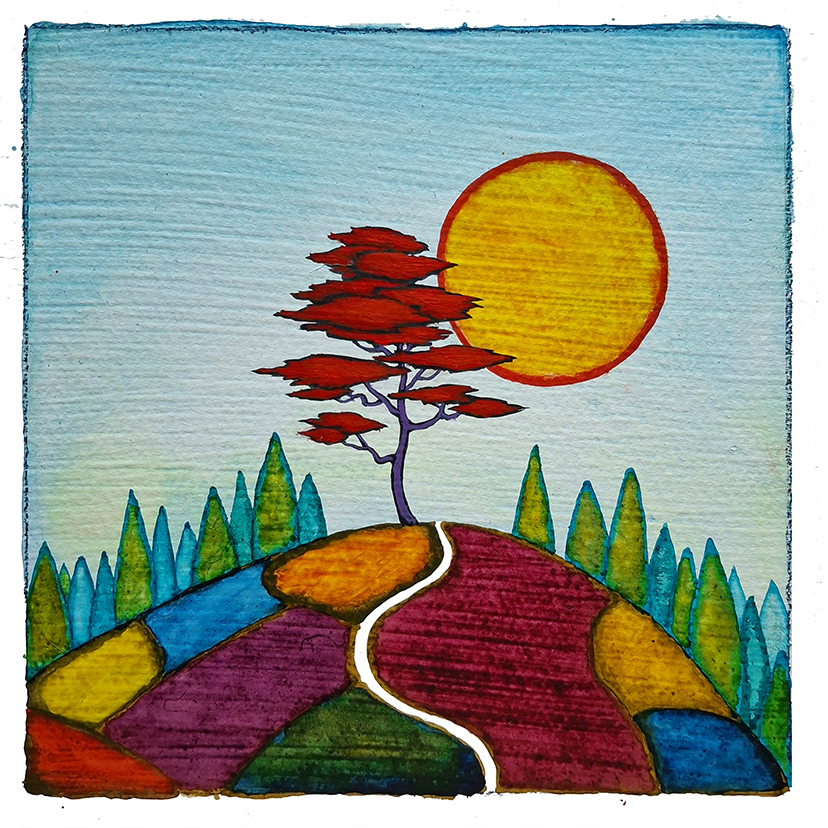
The Regeneration— At West End Gallery


Nirvana is right here, in the midst of the turmoil of life. It is the state you find when you are no longer driven to live by compelling desires, fears, and social commitments, when you have found your center of freedom and can act by choice out of that. Voluntary action out of this center is the action of the bodhisattvas — joyful participation in the sorrows of the world. You are not grabbed, because you have released yourself from the grabbers of fear, lust, and duties.

 Joseph CampbellThe Power of Myth


Not going to say much this morning. Maybe just give The Regeneration and the words from Joseph Campbell above some time to marinate and blend with the song below. There’s not much for me to add to this recipe this morning.

The song is the Beatles song Across the Universe. It seems right for this morning and this post, with its refrain of Jai Guru Deva Om which literally translates from the Sanskrit as glory to the shining remover of darkness. This version is from the Norwegian singer Aurora. It has an ethereal and delicate feel with beautiful harmonizing.

Seems like it goes well with the other ingredients for this breakfast dish.


Read Full Post »

Peace on Earth

2007


And in despair I bowed my head;
“There is no peace on earth,” I said;
“For hate is strong,
And mocks the song
Of peace on earth, good-will to men!”

Then pealed the bells more loud and deep:
“God is not dead, nor doth he sleep!
The Wrong shall fail,
the Right prevail,
With peace on earth, good-will to men!”

Henry Wadsworth Longfellow, Christmas Bells


The lines above are the last two stanzas of a poem Longfellow wrote in 1863 during the height of the American Civil War. Several years later, in 1872, the poem was incorporated into the Christmas carol we know as I Heard the Bells on Christmas Day.

There is a little more to add to the story which I thought I would add this morning.

At the time it was written, Longfellow was still deeply grieving the tragic death of his wife in July of 1861. Her dress caught on fire while using sealing wax on an envelope and despite Longfellow’s efforts which included trying to quench the flames with his body, died the next day from her burns. Longfellow suffered severe burns, to the point that he was unable to attend her funeral. It left deep scars on his face which prevented him from shaving and as a result he wore a full beard until his death in 1882.

After his wife’s death, Longfellow suffered extreme depression, turning at times to using laudanum to ease his sorrow. In the winter of 1863, as he began writing the verses above, he was deeply depressed by his continued grief, his worry over the war that raged between the states, and the fact that his son had been severely wounded in combat.

As he wrote, he heard two church bells pealing for the holiday and he felt his demeanor changed by it, feeling hope that indeed wrong would fail and that right would prevail.

It made for a powerful bit of verse and a memorable carol.

When I first shared this story of Longfellow’s poem back in 2016, it was with the hope that right would somehow prevail. It felt to me at that time that we were facing an upcoming period of darkness. Nine years later, we have staggered through chaos, pandemic, and insurrection. It doesn’t feel as though my fears were unwarranted.

And the same ominous sense of darkness still remains.

Even so, I still maintain the hope– no, the belief— that wrong will fail and that the bells will once more peal out right’s triumph.

I haven’t shared any holiday music thus far this year. I guess I am not in a holiday mood. Certainly not a festive one. But I thought I’d begin to at least make an attempt and share some seasonal music in the coming weeks. This version of I Heard the Bells on Christmas Day seemed appropriate for this morning. It’s from The Civil Wars, the fruitful but short-lived collaboration of Joy Williams and John Paul White.

I very much like their interpretation of this classic carol, especially this morning.


Read Full Post »

Perfectly Incomplete

The Restless Seeker– At West End Gallery


Great art, especially literature, but the other arts too, carries a built-in self-critical recognition of its incompleteness. It accepts and celebrates jumble, and the bafflement of the mind by the world. The incomplete pseudo-object, the work of art, is a lucid commentary upon itself… Art makes a place for precision in the midst of chaos by inventing a language in which contingent details can be lovingly noticed and obvious truths stated with simple authority. The incompleteness of the pseudo-object need not affect the lucidity of the mode of talk which it bodies forth; in fact, the two aspects of the matter ideally support each other. In this sense all good art is its own intimate critic, celebrating in simple and truthful utterance the broken nature of its formal complexity. All good tragedy is anti-tragedy. King Lear. Lear wants to enact the false tragic, the solemn, the complete. Shakespeare forces him to enact the true tragic, the absurd, the incomplete.

Great art, then,… inspires truthfulness and humility.

–Iris Murdoch, Existentialists and Mystics: Writings on Philosophy and Literature (1997)


I came across this passage from an essay from the late novelist/philosopher Iris Murdoch and it sent my mind racing. I have long extolled our imperfection as one of the functions and driving forces of art, particularly my own. In fact, one of my early exhibits was titled Seeking Imperfection. It continues to be one of my favorite titles because it says so much about what I do in those two simple words.

Perfection, and the pursuit of it, seems to be the antithesis of art, at least as I see it. Life is imperfect and forever incomplete so a perfect anything is a less than truthful depiction of who and what we are.

I guess that’s easy to say for someone who deals in imperfection and incompleteness, someone who doesn’t aspire for perfection in their work because they know it is simply not within the reach of their abilities.

But that admission might be making my point.

We– actually I– am  flawed and imperfect in many ways, so much so that the best I can hope for in my work is some form of perfect imperfection. Work that highlights and even celebrates the flaws and incompleteness that mark me and everyone else as human.

That I can do.

When I first read the Murdoch passage the first thing that jumped to mind was that I should title one of my upcoming 2026 shows Perfectly Incomplete.

I might just do that. And yes, even though I will be deep into the treatment for my cancer, I am going forward with my shows. I am excited to see what emerges in the coming months.

It should be interesting. And truthful. And real. But I can guarantee you this, it won’t be perfect.

Well, maybe perfectly imperfect and perfectly incomplete.

Read Full Post »

The Call of Wonder– At West End Gallery


The world will never lack wonders; what it lacks is wonder. We grow blind not because the light is dim, but because we forget to look. The moment a man learns to marvel again, he steps back into the richness of reality.

— G. K. Chesterton, Tremendous Trifles (1909)


When I came across the passage above from G.K. Chesterton, the lyrics to a Paul Simon song immediately came to mind. They were from his The Boy in the Bubble off his Graceland album.

These are the days of lasers in the jungle
Lasers in the jungle somewhere
Staccato signals of constant information
A loose affiliation of millionaires
And billionaires and baby

These are the days of miracle and wonder
This is the long distance call
The way the camera follows us in slo-mo
The way we look to us all, oh yeah

The way we look to a distant constellation
That’s dying in a corner of the sky
These are the days of miracle and wonder
And don’t cry baby, don’t cry
Don’t cry, don’t cry

The song was written in 1986, nearly forty years ago, predating the technology explosion that created so much that has been integrated into our daily lives, so much so that we now take for granted these things and the changes they produced in our world.

What once would have inspired awe and wonder now only brings a shrug.

I sometimes wonder if we have been beaten into submission by an unceasing stream of wonders over the past forty years. Has it made us drop our guard and made us too quick to unconditionally accept every new thing and change. In his song, Simon seems to understand the danger in this. He writes about a loose affiliation of billionaires using technology and information to surveil and control our lives, all while we go about our day to day lives unaware and without suspicion.

It seems to me that once we surrender our sense of wonder, we become susceptible to all manner of peril.

Perhaps a sense of wonder is one of our inborn protective instincts?

I don’t know, of course.

But I do wonder.

And maybe that simple act–this pondering of the who, what, and why of life– is more important for our survival than we might guess. 

Maybe. But then again, what do I know? I am still sometimes struck with awe when I see a jet fly overhead, thinking what a miracle this would have seemed to our not-so-distant ancestors. How would I even begin to explain satellites, cryptocurrency, or AI and all its ramifications to my great-grandparents from the 19th century who were still wonderstruck at the idea of a telephone– or even indoor plumbing?

Just wondering this morning and happy to still have even that small sense of wonder. 

Here’s that song:


Read Full Post »

Night’s Dream— At Principle Gallery


God, it was good to let go, let the tight mask fall off, and the bewildered, chaotic fragments pour out. It was the purge, the catharsis.

Sylvia Plath, The Unabridged Journals of Sylvia Plath


I came across an article this morning that had been forwarded to me by a friend several years ago in response to a blog post.  Appearing in the online magazine Psyche, it was written by three researchers –Julia Christensen, Guido Giglioni, and Manos Tsakiris— and was largely about how creativity and wellness were often boosted by allowing the mind to wander. It’s an interesting article that discusses the neuroscience behind their research into the wandering mind.

While those that daydream have often been chided through history as being lazy and counterproductive, there has also been a school of thought that encourages random thought and rumination, believing that it can lead to creative breakthroughs and greater productivity. The Germans had a phrase for this concept of the wandering mind, ‘die Seele baumeln lassen,’– ‘let the soul dangle.

Interesting stuff. One part of the article that struck a chord with me discusses how art causes biological responses and often serves as a prop for emotional catharsis. As they put it:

“…art can help us adapt to the immediate source of pain by acting as a prop for emotional catharsis. We all know the strange, pleasurable, consoling feeling that comes after having a good cry. This experience appears to be precipitated by the release of the hormone prolactin, which has also been associated with a boosted immune system, as well as bonding with other people. The arts are a relatively safe space in which to have such an emotional episode, compared with the real-life emotional situations that make us cry. Even sad or otherwise distressing art can be used to trigger a kind of positive, psychobiological cleansing via mind-wandering.”

I immediately responded to this point as this is something that I experience on a regular basis. I often am moved to tears by artistic stimulus while in the studio, most often in the form of music, film, or the written word. It is such a common occurrence that I have come to use this response as a barometer for how emotionally invested I am in the work I am doing at that time. When I feel most immersed in my work, I find that I am receptive and reactive to emotional stimuli, quick to tears. I have found that the work I consider my strongest comes at times when I am on this edge of induced emotional catharsis.

It’s something that has taken place with me for decades now and it’s interesting to see that there might be a neurological component behind my response. I think I am going to go now and see if I can produce some more prolactin this morning.

Click here to go to this article. It’s a relatively short read plus there is an audible version available on the page if you would rather listen.


This post ran a couple of times over the past decade. It felt relevant to the present for me.

Haven’t been productive at all in the past couple of months. Everything feels like a distraction designed to keep me from painting. It is obviously the result of my cancer diagnosis and the stress that comes with it. But I still am letting my mind wander freely when it can.

Letting my soul dangle.

I believe, from my own experience, that this an important aspect of the artistic process. It creates the space in the work that carries its emotional weight. A lot of the time this period mind wandering brings me to moments of emotional catharsis that the researchers described as a positive, psychobiological cleansing. It certainly has in recent weeks.

Now it is just a matter of moving from the act of cleansing to that of painting. By the presence and sensitivity of those internal emotional triggers, I can tell that transition is nearing.

Here’s a song from Chris Stapleton that is on point. With his roots in bluegrass, Stapleton is labeled as a country artist but his music, driven by his soulful voice, transcends genre. This is Sometimes I Cry.


Read Full Post »

Time Tells Me

Echoes of Time
— At West End Gallery


For all is like an ocean, all flows and connects; touch it in one place and it echoes at the other end of the world.

Fyodor Dostoyevsky, The Brothers Karamazov


I think we’re always listening for echoes.

Echoes of sound, of sight, of every sense. Echoes of history.

Echoes help us determine how we should react in a given situation.

With music, we listen for echoes of the music we know, to see if it rhymes with that music, if it pleases us in the same manner.

We do the same with words and images. When we look at a piece of art, we search for the echoes of past works of art in it. We try to find congruence with works we know that already echo some sort of emotion within us.

I think it’s a matter of comfort, this looking for the familiar, that thing to which we already know our reaction.

That’s probably why the new so disturbs us. It has few, if any, echoes from the past and the echoes that it does carry have been reshaped beyond our senses to the point they are barely discernible.

We can’t rely on echoes in gauging our reactions to the new. The new– the new sound, thought, or artform– has no echo and may not be comfortable, perhaps even shocking us.

We might, at first, dismiss it for that reason alone. But if it has merit, if it speaks to some part of us that has not yet echoed, we come to accept it.

And it creates echoes of its own.

Okay, let’s leave it there for the morning. I will have to read this again later to see if it makes any sense. Sometimes these early morning riffs seem better at first glimpse than they are in reality.

Some echo and some don’t.

I guess we should strive to create echoes. Words to live by.


After three or so years after posting this, I did read this again and it does seem to have an echo. That’s always good to discover in these things you put out there. They are often too much of their own time and there is little of substance to echo forward– or backward. But sometimes they hold something that makes me nod my head in agreement. 

It made me think of those times when my work ventures outside what might be considered its normal place, its normal look. This new work, though it might excite me and feel to me as though it is a natural echo of my prior work, sometimes doesn’t immediately capture an audience. Because it is such a departure from the earlier work, it doesn’t carry as loud an echo with it that people can relate to in their mind.

The work has to create its own echo going forward. Sometimes it does and sometimes it doesn’t. It is a bit disappointing when it fails to create an echo outside of myself. However, this underappreciated work often continues to speak loudly in my mind, allowing me to hold on to the hope that it still can echo at some time in the future for others.

Nick Drake seems to have created echoes with his music in this manner. He recorded three albums from 1969 to 1972 that never really found an audience at the time. He tragically died from an overdose of antidepressants in 1974 at the age of 26. In the years since, his work has gained that audience that eluded him during his short lifetime and has a cult following. His songs have a unique quality that draws me in but is hard to pin down. I’ve shared a couple of his songs before, and this one spoke to me this morning. It works for this post and painting. This is Time Has Told Me.


Read Full Post »

Older Posts »