There’s a part of me that’s slightly embarrassed by my reaction to the ads running for the the release of the movie version of Maurice Sendak’s classicWhere the Wild Things Are. I find myself smiling every time the ad concludes and a certain lightness, a kid-like giddiness rises in me at the prospect of seeing something magically special.
I don’t know why. I’m seemingly long past the age of kid-like excitement. I never read the book when I was a child so it doesn’t rekindle warm and fuzzy memories. I usually don’t even like the idea of trying to make movies from my favorite books, usually with good cause.
But there is something very engaging in the trailer for this film. Maybe it’s from the direction of Spike Jonze who is responsible for Being John Malkovich and Adaptation, two of the most unique films of recent years. His choice of costuming and the beautiful golden colors of his cinematography make it so that you can’t pull your eyes from the screen.
I can only hope it meets my now raised expectations. It opens this Friday.
There was a somewhat animated version from 1973 that was done by Peter Schickele ( AKA PDQ Bach) in collaboration with Sendak. It’s a short piece that definitely lacks the finish of more recent animations but is true to the story. Take a look…
Well, it’s Saturday and we could all use a break, maybe dream of catching a big breaker and hanging ten. Okay, it’s all in my head. But I do have fond memories of how much grab there was in those instrumental surf classics from the 60’s. When it came on, you couldn’t help but listen.
We had a copy of the Surfaris’ single , Wipeout , that had the kitschy Surfer Joe on the flipside. I must’ve heard both sides of that single a thousand times, if not more. Every listen was like a sonic sugar rush and I still smile when I hear either song.
For this Saturday, I am showing a version of Wipeout from the seminal instrumental surf band, the Ventures. It’s a really high quality version from a film when they toured Japan in the 60’s.
After working on the large painting whose progress I have been chronicling, I moved back to a few pieces that were incomplete and needed the final touches to come alive. This is one , a fairly large canvas measuring 30″ by 40″, painted in the same obsessionist manner as my recent work. This piece has a lot of things working for it- the way all of the landscape elements converge at the center, the pull of the alternating rows of the field, etc.
But the sky is the obvious star of this painting is the vivid sky. It has a real glow in the studio and my eye is always pulled to it. It is just calling for one’s attention. The sky is intentionally comprised of built up layers of colorful daubs of paint. I wanted the sky to have that appearance of the sky coming apart, separating into individual lights sources. The result is a really active sky, full of movement, that is a dynamic backdrop for the quietness of the landscape below.
As I was finishing it, I began thinking of the colorful daubs of color in the painting as being stained glass windows, kind of suspended in the sky. That reminded me of the poem, High Windows, from the late British poet Philip Larkin. It’s an interesting poem, one that seems full of cynicism at first glance, almost rejoicing in the loss of reverence in the world. But the last few lines have the cynic dissolving into a sort of new awe and reverence for the immense unknown, which are symbolized to him by high windows. That is the same immense unknown I see in the sky of this painting, which is now titled High Windows.
Anyway, here is the poem from Larkin. I’m also enclosing a video that has the voice of Larkin reading his poem. It’s always interesting to hear the author’s reading of the words, his rhythm and cadence. Gives you more of an idea of his aim in writing the piece. Hope it works for you…
High Windows
When I see a couple of kids
And guess he’s fucking her and she’s
Taking pills or wearing a diaphragm,
I know this is paradise
Everyone old has dreamed of all their lives–
Bonds and gestures pushed to one side
Like an outdated combine harvester,
And everyone young going down the long slide
To happiness, endlessly. I wonder if
Anyone looked at me, forty years back,
And thought, That’ll be the life;
No God any more, or sweating in the dark
About hell and that, or having to hide
What you think of the priest. He
And his lot will all go down the long slide
Like free bloody birds. And immediately
Rather than words comes the thought of high windows:
Sunday morning and we deserve a break from painting, at least in this blog. I was thinking of a song I first heard back in 1975 when Willie Nelson released his classic Red Headed Stranger album, which was a concept album composed of sparse compositions that told the story of a fugitive on the run. Just a beautiful group of disparate songs that come together to chronicle a tale.
When I heard Blue Eyes Crying In The Rain, I was hooked on the poetry and simplicity of the song, especially as performed in Nelson’s spartan manner. So simple but so filled with emotion and feeling. I think of this song often when I’m painting, trying to think how I can match that feeling of simple grace and depth of feeling in my own work.
I didn’t know much about the song then, always thinking that it was Nelson’s song. But it had a long history, written in 1945 by the legendary Fred Rose for Roy Acuff. Hank Williams recorded it in 1951 and a number of others have as well over the years. It is considered to be the last song that Elvis recorded at Graceland, the day before he died. But for me, there’s only one version that really stands alone.
I was looking for a video on YouTube and came across some old Smothers Brothers things from their 1960’s show. Time has kind of faded the notoriety they had at that time in America. Most people, especially those under 40, think of the Smothers Brothers and think of a couple of older, very straight looking guys in tuxes performing skits with the Boston Pops or Tommy Smothers doing his YoYo Man act. Hardly anything controversial there.
But in the late 60’s their Smothers Brothers Comedy Hour was a huge hit on CBS, bringing political irreverence and protest along with the best music of that era’s youth to a wide audience. They were cancelled at the peak of their popularity in 1969 in a dispute with CBS over censorship, an action that they later filed suit and won against CBS.
I loved the show when I was a kid. It was funny and smart and said the things that the news coverage of the time refused to say, particularly about the war in Viet Nam. You have to realize how much narrower the options were at that time for hearing something out of the mainstream.
I especially liked the music. Pete Townsend of the Who claims to have lost his hearing in one ear when Keith Moon exploded his drum set during a performance on the show. Pete Seeger had a famous appearance singing Waist Deep In the Big Muddy as a protest against the war. So much great stuff.
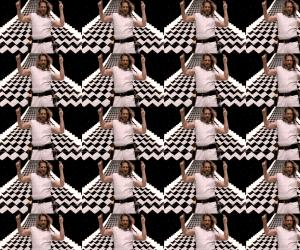
I happened across this segment featuring Kenny Rogers and the First Edition doing their hit Just Dropped In ( To See What Condition My Condition Was In), a song that most young people will no doubt associate with its part in The Big Lebowski‘s dream sequence with The Dude, as shown above. This video with Kenny Rogers in his pre-Gambler days has pretty much the same feel, in that 1960’s goofy TV psychedelic effect way. Take a look…
It’s funny sometimes how the truth behind a satire from another time seems to come to bear in the present.
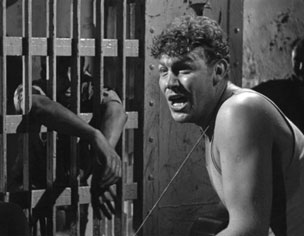
This past weekend, I watched part of A Face In The Crowd, the classic film that I’ve seen many times from 1957 starring Andy Griffith as slimy Lonesome Rhodes, a drunken Southern drifter who by virtue of circumstance becomes a media darling and mouthpiece for conservative populism a la Glenn Beck of today. It’s a great film, one that always provokes a strong reaction and always seems, even in its dated setting, to have something that we can see in our own circumstances today. It was a tour de force performance from Griffith and a far cry from the gentle, wise Sheriff Andy Taylor of Mayberry. Lonesome Rhodes was the type of character that would have had Barney Fife pretty nervous.
Lonesome Rhodes knows how to manipulate the people, spark them into a fiery force, yet has nothing but contempt for them. He has a natural ability, like many cons, of being able to read people, sense their drives and triggers while ingratiating himself at the same time. He is all charisma. But beneath this patina of charm and folksy wisdom lies a core of anger, sex and violence- a dangerous timebomb who strives to shape the public opinion into his vision.
It’s a great depiction of how the public reacts to a man of the people, even when he may be a wolf in sheep’s clothing. There is always talk of remaking this film and I always cringe at the thought. Like most remakes of great films, it would probably lose that intangible spark that makes the original blaze, be it a stellar performance and natural charm like that of Andy Griffith, a great supporting cast featuring Patricia Neal and Walter Matthau, or the sharp, angular storytelling from director Elia Kazan, a controversial figure himself. I really hope that they choose to leave this one alone.
Anyway, if you like social satire check out this film. Good stuff. Here’s the original trailer-
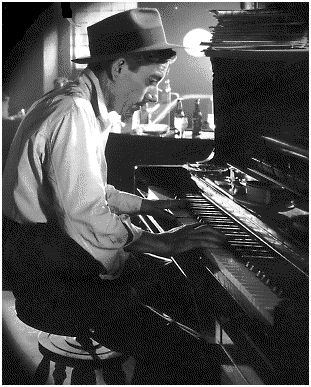
It’s Saturday morning and I just had a thought about Hoagy Carmichael, the great composer of some of the most recorded songs of the last century. Classics like Stardust, Georgia on My Mind, Am I Blue, Up a Lazy River and on and on. He also appeared in a number of films in parts that allowed him to showcase his piano playing and song skills, most memorably in as the bar-owner uncle to the Harold Russell character in the great The Best Years of Our Lives .
My favorite was from the Humphrey Bogart/ Lauren Bacall classic To Have and Have Not where he was the piano player in the island dive. He does a version of his Hong Kong Blues which has a real funky sound, very reminiscent of something Tom Waits might do forty or fifty years later. I couldn’t find that version but I found a later one from the Rosemary Clooney Show in the 50’s that’s still pretty good.
For my money he was a pretty cool customer. I may not have agreed with all of his views ( he once got into a fistfight with Bogart over Bogart’s pinko leanings) but how can you not like a gut who write songs with titles like I’m a Cranky Old Yank in a Clanky Old Tank on the Streets of Yokohama with my Honolulu Mama Doin’ Those Beat-o, Beat-o Flat-On-My-Seat-o, Hirohito Blues ?
It was announced this past Sunday that author/musician Jim Carroll had died at the age of 60 from a heart attack. He is probably best known for the critically acclaimed memoir of his youth, The Basketball Diaries, which was later made into a film featuring Leonardo DeCaprio in a portrayal of a young Carroll.
Carroll’s life as a youth was memorable. He was a star on the basketball courts of New York, earning national attention. He was also recognized as a budding talent as a writer and poet. This guy had a lot going for him. But at the same time he was well on the road to a heroin addiction and a stint as a street hustler, prostituting himself to feed his habit. That’s a lifetime of highs and lows by the time he hit his twenties.
I first became aware of him in 1980 or 81 when his Catholic Boy album came out. It was real NY stuff, out of the same vein that produced Lou Reed and Patti Smith. I liked the album a lot. It was one of those albums that you sometimes stumble across that you know will never find a huge audience but somehow speaks to you in a very personal way. I was never surprised that he never achieved the same type of popularity musically after that first album came out. Just on eof those rare moments of expression.
I was just thinking about him last week as I had been listening to his best known song, People Who Died, a song that has an infective driving sound and vivid imagery. I guess he could’ve added a verse for himself. Here it is. RIP Jim Carroll…
This will be the only time I mention September 11 but I was listening to some music and Thunder Road from Bruce Springsteen came on. While it’s always been a favorite song of mine, whenever I hear it now I flash back to the weeks and months after 9/11, to a news report covering the life and funeral of one of the victims. At this particular one they played Thunder Road, the victim’s favorite song. Since then whenever I hear it, I can’t help but think of that person and his funeral.
While it is basically as anthem of liberation, this acoustic version takes on an elegiac feel. Just a different sort of liberation…
So today is September 11 and I could mention the event that will forever be linked to that date but I’m going to write instead about poet Robert Service, who died on this date back in 1958. Service was called the Bard of the Yukon as he came from the Great White North and much of his work focused on tales of the life of that area, the miners of the Gold Rush and the trappers for instance in a way that reminds one of Rudyard Kipling. In his life Service achieved a huge degree of success and wealth from his poetry, something that would be remarkable in this day and age when the idea of a best -selling poet and popular culture icon seems ludicrous. I am always intrigued by artists in any field who are tremendously popular in one era but whose name is, for the most part, lost in the eras that follow.
Much of his verse was more about story than stringing words together for rhythm and sound, telling tales that dealt with the lives and deaths of the hard men of the north. There was The Shooting of Dan McGrew , The Ballad of Blasphemous Bill and many more with equally colorful titles but perhaps his most famous was The Creamtion of Sam McGee.
I had never really heard of Service or his poem about the end of Sam McGee until this past Christmas Eve when my nephew Jeremy’s good friend and partner, Eliza, gave our family a wonderful recitation of the poem. She had memorized it for a class recital as a young girl and has carried it with her since. Now, that’s good baggage.
Anyway, thanks for the gift of Service, Eliza. On this the day Robert Service died, enjoy an interesting reading by one of my favorites and another Canadian, Hank Snow.
 There’s a part of me that’s slightly embarrassed by my reaction to the ads running for the the release of the movie version of Maurice Sendak’s classic Where the Wild Things Are. I find myself smiling every time the ad concludes and a certain lightness, a kid-like giddiness rises in me at the prospect of seeing something magically special.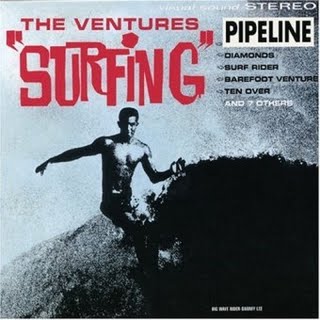



 Redtree Times