Feeds:
Posts
Comments
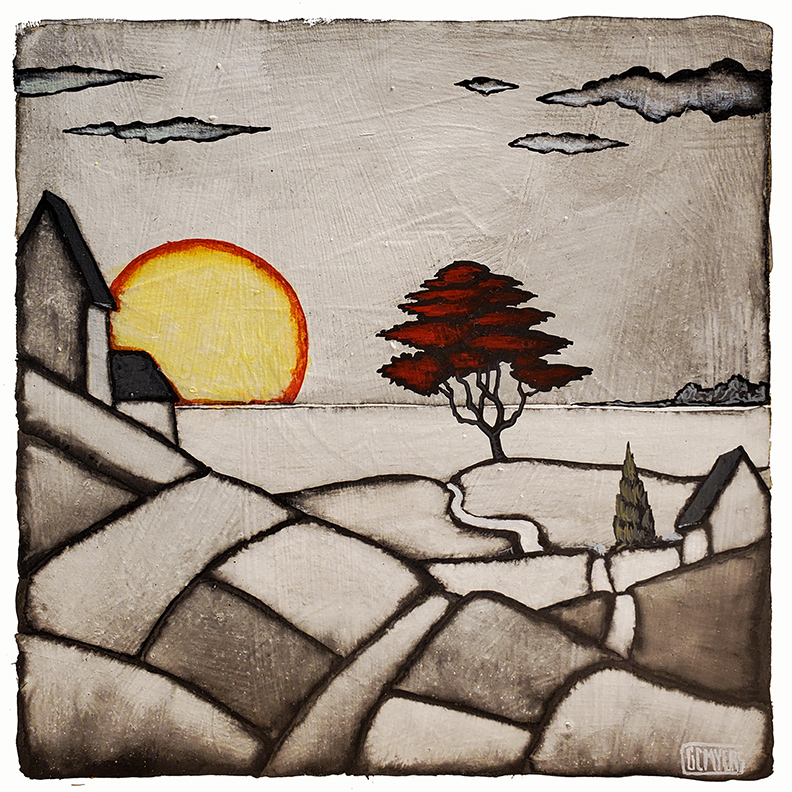
GC Myers- And Warmth Arrives 2023

And Warmth Arrives— At Little Gems, West End Gallery


There is no distress so complete but that even in the most critical moments the inexplicable sunrise of hope is seen in its depths.

–Victor Hugo, The Man Who Laughs, 1869


I’ve been featuring new small paintings that are included in this year’s edition of the Little Gems exhibit that is now hanging at the West End Gallery. The opening is this Friday, February 10 with an opening reception that runs from 5-7:30 PM.

The piece above is 6″ by 6″ on paper and is titled And Warmth Arrives. It’s part of a group of pieces I’ve been working on lately that are done in shades of gray and black with a small amount of color in the tree and sun. This contrast between the grays and the areas of color make the colors seem more intense and adds an animating quality to the piece. It also brings a sense of warmth and other positive things– hope, contentment, joy, etc.– to the more somber tone emanating from the black and grays.

This juxtaposition of dark and light feelings is nothing new in my work. Even my most color drenched paintings feature an underlying darkness that brings a contrasting tone to the optimism that might otherwise be indicated by the bright colors. This adds a realistic edge that keeps the work from seeming too naive or blind to the darker, grittier aspects of the world we inhabit.

Pragmatically hopeful. Maybe that is how this work should be described.

No matter how we describe it, I think we all look for signs of hope, especially in the darkest of instances. And that brings me to a song for today. It’s an older video of Willie Nelson doing his rendition of The World is Waiting For the Sunrise. The song was written at the end of World War I when the world was definitely in need of some pragmatic hope. It became a hit record in the 1920’s and later gained renewed fame as a 1952 hit for Les Paul and Mary Ford. It has been recorded 100’s of times over the past century but I like this swingy version from Willie who plays here with the late Paul Buskirk, who was a Texas music legend who made key contributions to Willie’s success.

Like the sunrise, this song is a good thing to wake up to.


Merit Badge


GC Myers- Merit Badge sm

Merit Badge at Little Gems

For art to be free and universal you must create like a god, command like a king and work like a slave.

–Constantin Brâncuși


I was looking for something to pair with this little painting and came across the quote above from the great Romanian sculptor Constantin Brâncuși. His words really hit the bell for me, both summing up what I feel about creating art and what I see in this very small painting.

I have long felt that the artist had to create their own inner world and universe. It might be based on the outer world in which they reside but it is a separate world. It has its own atmosphere, its own feel, its own sense of place and time.

This would be the create like a god part of Brâncuși’s words.

In that newly created world, the artist is the law. The artist determines what is right and wrong. If the artist says the trees shall be red, the fields purple or orange, and the sky green, that is how it shall be done. As Pharoah might have said: So it is written, so it shall be done.

This would be the command like a king part.

To make this world, with its own rules and sense of right and wrong, a reality requires hard work. It demands sweat and dedication, not half-hearted efforts, to maintain the vitality and viability of this newly formed world, those things it requires in order for others to accept and embrace this new world. Tens of thousands of hours of dedicated work and sacrifice go into it.

That, of course, is the work like a slave part.

I see all three parts in this new little piece that is part of the Little Gems show, opening Friday at the West End Gallery. It represents the world that has been formed in my work over the past 25+ years, with its own rules of how things are and can be along with its own symbol language. The fields in the foreground, for example, are always a symbol of hard work for me. Or I guess I should say that it’s a symbol for that which is created from hard work.

The slave part with its hard work and sacrifice might sound pretty unappealing and has been a deal breaker for many talented people. But I have found that once you have embraced the roles of God and King/Queen in your work, the Slave role becomes much easier to accept.

I call this little painting Merit Badge. When it was completed, I looked at it and thought that it summed up my world well. I also thought it would make a great merit badge if my work were some odd Scout category. Like, if you saw this patch on their sash you would know that they earned their God/King/Slave badge.

To go along with these words and image, I am including a favorite song of mine that I last played about 5 years back. This version is from a band called The Big Beats with vocalist Arlin Harmon. I don’t have a lot of info on either though from what I can glean Harmon was a highly esteemed singer out in the Northwest. It’s a solid rocking performance with a different flavor.

And in my world where I am God/King/Slave, that’s called good stuff.


GC Myers- Archaeology: The Red Shoe, 2023

Archaeology: The Red Shoe at the West End Gallery


Well, my poor man,
seems we’ve made some progress in my field.
Millennia have passed since
you first called me archaeology.

I no longer require
your stone gods,
your ruins with legible inscriptions.

Show me your whatever
and I’ll tell you who you were.
Something’s bottom, something’s top.
A scrap of engine. A picture tube’s neck.
An inch of cable. Fingers turned to dust.
Or even less than that, or even less.

Using a method
that you couldn’t have known then,
I can stir up memory
in countless elements.
Traces of blood are forever.
Lies shine.
Secret codes resound.
Doubts and intentions come to light.

If I want to
(and you can’t be too sure
that I will),
I’ll peer down the throat of your silence,
I’ll read your views
from the sockets of your eyes,
I’ll remind you in infinite detail
of what you expected from life besides death.

Show me your nothing
that you’ve left behind
and I’ll build from it a forest and a highway,
an airport, baseness, tenderness,
a missing home.

Show me your little poem
and I’ll tell you why it wasn’t written
any earlier or later than it was.

Oh no, you’ve got me wrong.
Keep your funny piece of paper
with its scribbles.
All I need for my ends
is your layer of dirt
and the long gone
smell of burning.

Archaeology, Wisława Szymborska, 1986


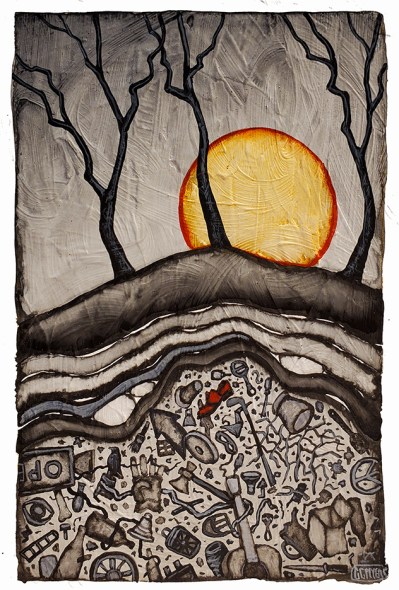
The new painting at the top, Archaeology: The Red Shoe, is included in the Little Gems show that opens this coming Friday, February 10, at the West End Gallery. The Archaeology series began in 2008 and was a reaction to me feeling blocked in advance of  my annual shows. I had three or four solos shows that year. The Red Tree had been my signature element for almost a decade at that point and I had lost a bit of confidence in it, felt that it may have run its course and that I could say little more with it. I was wrong about that, of course, but this concern pushed me to this series with their artifact fields beneath the trees and landscapes above.

It has been one of my more successful series and has had lasting appeal. I still hear from people around the world on this particular series even though I’ve only painted a few, maybe four, of these Archaeology pieces in the past six or seven years or maybe even longer.

I don’t exactly know why I don’t do more of them. Maybe I am fearful they say more about me than I want to share though I doubt that’s the case after 25 years of exposing myself via my work and nearly 15 years of this blog. I imagine that I have given enough data so that anyone who is paying attention — online archaeologists, if you will–would know much about me. Maybe too much.

No, I think it’s because they are draining to paint. They take full concentration as I am constantly weighing and balancing the composition. I like doing them but always feel a bit exhausted after working on them. And I like examining after they are done to see how things come together, to see if they tell a story or if there is any common ground between the objects.

They have a cryptic quality that appeals to that repressed archaeologist part of me, the one who wants to figure out how things might have come to be how and where they ended up.

The part that wonder what we leave behind will say to those in the future.

As the late Polish poet and Nobel Prize winner Wisława Szymborska said in her poem above:

Show me your whatever
and I’ll tell you who you were.

I wonder who she would say I was from viewing this painting?

For this Sunday Morning Music, here’s a song that borders just a bit on the idea of archaeology but it makes up for it in the fun factor. The song is The Mesopotamians from They Might Be Giants. No, it’s not about the people of ancient Iraq. It’s about a band called The Mesopotamians who hope that one day, perhaps long after they are gone, their work will be newly discovered by some musical archaeologist from the future.

Now, on with the day…


Sunrise Strum


GC Myers- Sunrise Strum sm

Sunrise Strum– At Little Gems Show

Come on sorrow
Take your own advice
This thundering and lightning gets you rain
I’m on a top secret mission
A Cousteau expedition
To find a diamond at the bottom of the drain
A diamond at the bottom of the drain

Magpie to the Morning, Neko Case


-5° when I went out the door this morning but the wind had stilled so it didn’t feel too bad. I guess you could call it brisk.

Could be better. Could be worse. Nothing to do but keep on keeping on.

I want to get to other things this morning so here’s a lovely song, Magpie to the Morning, from a favorite of mine, Neko Case, to accompany the little 2″ square painting, Sunrise Strum, that is part of the upcoming Little Gems show at the West End Gallery.

Stay warm. Or cool. Or dry, safe, loose, or whatever the heck the best condition is for you wherever you might be.

Here, we’re going with Stay Warm. It sounds more civil than the preferred Stay Away.

Now listen to the song then get out of here, okay? I got stuff to do…


Silent Dusk


GC Myers-  Silent Dusk

Silent Dusk– At the West End Gallery

From pure sensation to the intuition of beauty, from pleasure and pain to love and the mystical ecstasy and death — all the things that are fundamental, all the things that, to the human spirit, are most profoundly significant, can only be experienced, not expressed. The rest is always and everywhere silence.

After silence that which comes nearest to expressing the inexpressible is music.

–Aldous Huxley, “The Rest Is Silence” –Music at Night and Other Essays, 1931


The excerpt above is the first paragraph from an essay, The Rest Is Silence, from Aldous Huxley that speaks of the significance of silence in music. He says that our greatest emotions, sensations, and feelings are truly inexpressible with words, that silence has a much greater capacity for expression than our feeble verbal abilities and that music is the closest form with the capacity for describing the inexpressible.

Can’t say that I disagree.

Silence has been one of the things I have been looking for in my work since the very beginning back in the early 90’s when I first took up the brush. I had tried writing for years but it always came down to me scribbling about silence and I quickly saw that my words were insufficient to describe or get to that silence. Without reading Huxley, I knew that music would be the best route to finding that silence but never felt that I had the ability, knowledge, or confidence to create the kind of music that encompassed the silence I was seeking.

I knew that visual art was my only way to get to that silence. It had few rules–which was important because I have always been averse to following rules and wanted to set my own rules, if there were to be any at all. Plus, it was in itself a silent medium, one that relied on the eyes rather than the ears required for music.

But it could take its cues from music, employing parts of it like rhythm and melody. I often refer to rhythm when describing my work and I see melody and musical phrasing in the linework of many of my pieces.

And it could make use of silence in much the same way that it is used in music.

Silence is space.

This space contained in silence allows the true emotion that surrounds it to fill the void. Pure and uncontaminated by word or sound.

Trying to reveal and employ that silence is a never-ending task. Just when I think I understand the silence and that its essence can be captured in a visual form, I realize how much more there is to know of silence.

But I keep trying and sometimes it feels near to my efforts.

It may be wordless and soundless and even formless, but it will make its presence known when it arrives.

That’s the hope in this new small piece, Silent Dusk, that is at the West End Gallery for the annual Little Gems show. It opens next Friday, February 10. Jesse and Linda are in the process of hanging the show so if you want a sneak peek, the show will be available for previews before then.

Here’s a favorite piece from composer Philip Glass who celebrated birthday 86 this past week. His work often makes use of space and silence, allowing for expression of those things that seem beyond articulation. This piece, Metamorphosis II, was used in the score for the film The Hours. This performance of the Glass piece is from Dutch harpist Lavinia Meijer. Seeing her hands move over the strings gives this piece a visual aspect where the silences in it can almost be seen.

Good stuff…


Ring of Fire #5

Ring of Fire 5 detail 2

Ring of Fire 5 detail


And this do I call immaculate perception of all things: to want nothing else from them, but to be allowed to lie before them as a mirror with a hundred facets.

–Friedrich Nietzsche, Thus Spake Zarathustra


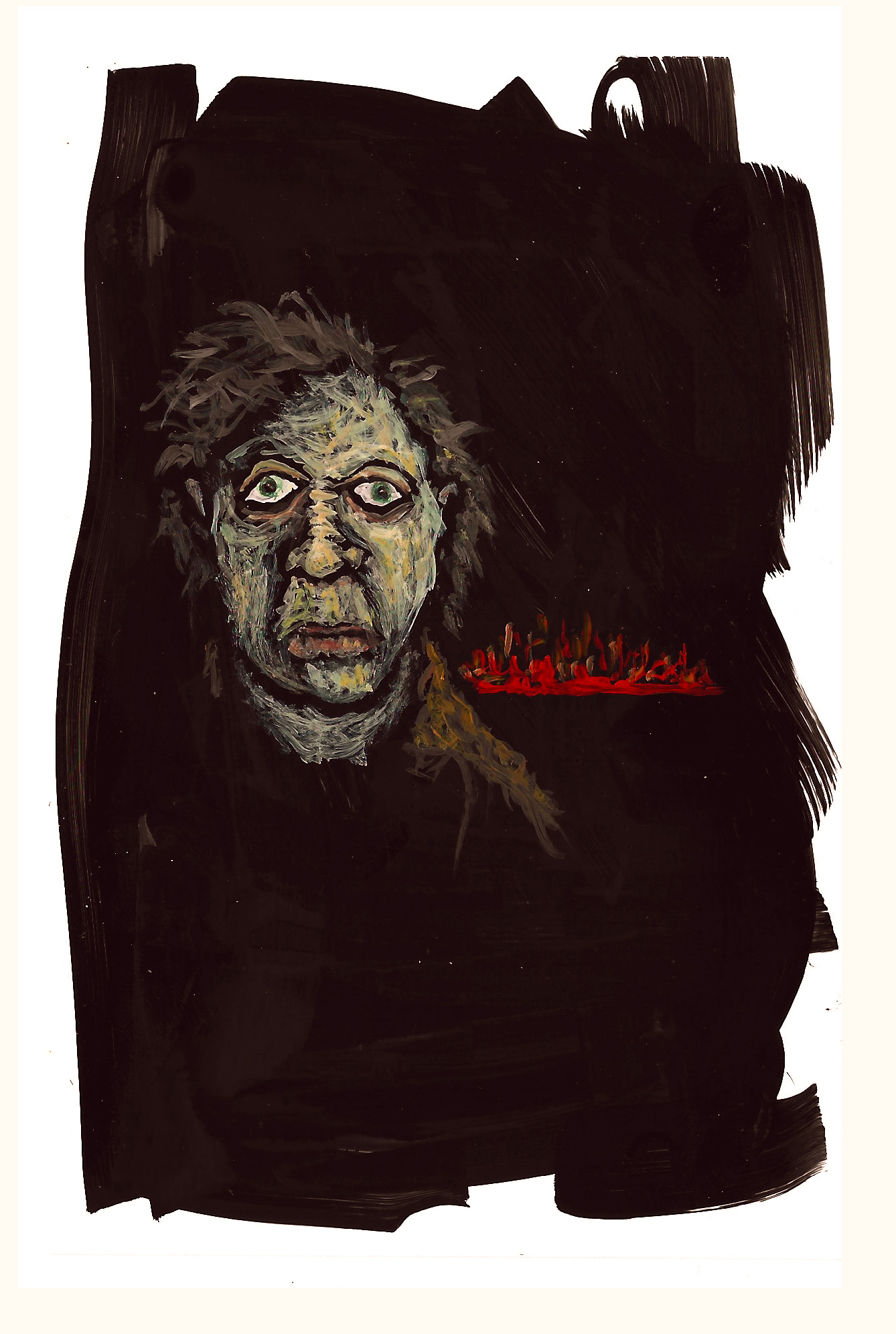
The annual Little Gems show at the West End Gallery opens next Friday, February 10. In my contribution to this year’s show, I have included a group of 6 small face pieces from what I call the Ring of Fire series. I wrote about that series a bit in the past couple of weeks, describing how they came about from an abundance of photo paper I didn’t want to throw away and a desire to shake some things free in my mind. 

GC Myers- Ring of Fire 5

Ring of Fire 5

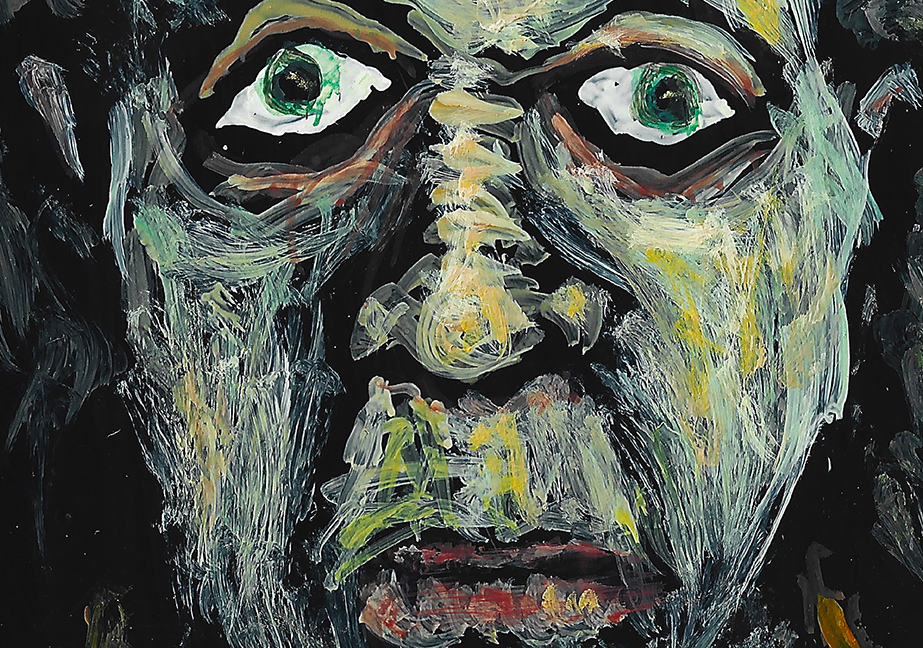
They are all painted quickly with little if any forethought. Watercolors are used and the brushes used are very small, nothing larger than a size 0 liner, so that the strokes are little slashes and rubs of color again the blackish background. It is meant to be done with an immediacy that brings whatever life is present to bear as soon as possible. A line of red and yellow fire is in the background of each and the faces have a reaction to being in proximity to that fire. The result are faces in various states of distress, some in anguish or terror. 

For me, they represent a release of some sort. They provide a form of release in psychological terms which might be as important for me as anything they provide artistically. They allow me to reveal those parts of my psyche that often left unexpressed or dealt with in other ways. 

From the perspective of the creative process, the brushwork is rough and barely controlled which is what I react to in each of these pieces. I love seeing the imperfection of the unblended strokes and swipes that build up and animate the faces, as you can better see in the detail shown at the top. This rough rendering might be the main takeaway for me, artistically.

I don’t know how these will be received but I have some idea based on other series that showed other aspects of my work in the past. For example, in 2006 I did a series called Outlaws that were pieces done with dark sepia backgrounds with figures that were often holding handguns. I chose the handgun for that series because there was no gray area in how one perceived a gun in a picture. One has an immediate visceral response. 

Some folks loved the work and some didn’t. Actually, some folks hated it.

And I understand that. I had a woman come up to me at the opening for my 2006 solo show that contained the Outlaws series at the Principle Gallery in Alexandria, VA. She was visibly distressed and spoke quickly, almost breathlessly. The work upset her greatly and she begged me to promise that this wasn’t the direction my work was heading in the future, that it wouldn’t replace the Red Tree landscapes she loved.

I assured her that the Red Tree would not go away and explained that, like all humans, I have multiple facets and shades in my personality. A variety of light and dark colors like the spectrum of color that comes from a single prism. I told her that this was merely another facet in the prism of who I was as a human. Perhaps not as visible as the Red Tree but still there.

Still me and part of the whole. Maybe it was the tails side of the coin on which the Red Tree was the heads side. Or maybe it was the yin to the Red Tree’s yang.

She seemed relieved but I understood her concern. We want things that we love to stay the same We don’t want them to not change or to suddenly challenge our perspective on them.

I know that by showing this other part of the prism, the work of the Outlaws and this Ring of Fire series, I am endangering how my other work is perceived. But I also trust that the people who really know and understand my Red Tree and other work have an understanding of the wholeness of each human, of the multiple shades of color n each our prisms.

After all, there is a bit of this work, this darker aspect, in even the brightest and most optimistic of my other work. If anything, this work acts as a complement to the Red Tree.

That’s my take on the Ring of Fire series. You will have your own reaction, good or bad. As it should be, it is yours to have.

Here’s an old video of the Outlaws series. It features a guitar composition, Variation on a Theme (Tales from the Farside), from the great Bill Frisell.


The Art Spirit


Robert Henri The Art Spirit


The object of painting a picture is not to make a picture — however unreasonable this may sound. The picture, if a picture results, is a by-product and may be useful, valuable, interesting as a sign of what has past. The object, which is back of every true work of art, is the attainment of a state of being, a state of high functioning, a more than ordinary moment of existence. In such moments activity is inevitable, and whether this activity is with brush, pen, chisel, or tongue, its result is but a by-product of the state, a trace, the footprint of the state.

–Robert Henri, The Art Spirit, 1901


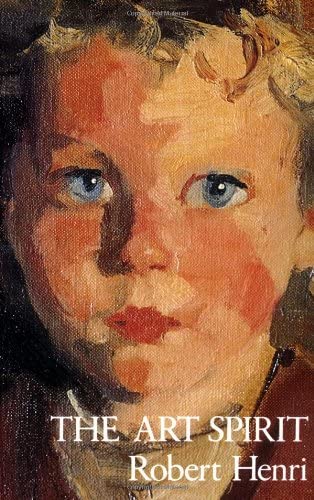
The Art Spirit by painter/teacher Robert Henri is a rare book. It might well be a work of art in its own right. First published in 1901, its observations on the making of art have maintained a contemporary feel for the last 120 years, always feeling as though its words could have been written today.

I never fail to either gain new insight or be reminded of some forgotten bits when I pick up the book. Leafing through, I often go page by page muttering “Aah…” or “Yes!” at his wise words.

It’s to the point that when I write something about making art in general, I find myself wondering if it is my own thought or came from Henri. I don’t know if it’s an echo or a form of harmony.

I guess it doesn’t matter so long as the words ring true.

For example, Henri describes the process of creating as a more than ordinary moment of existence. I have often felt that when I am painting, my chosen form of expression, and find myself in a deep groove, I feel as though it is an altered state of being in that moment.

Something beyond myself, beyond my ordinariness.

It might just be that it is not anything extraordinary. It might be that in these moments there is a deployment of parts of ourselves that we are not able to engage with under normal circumstances.

Things, emotions and concepts, we can’t express otherwise. I certainly have felt that at times in those more than ordinary moments I have experienced.

The part I don’t understand is that I sometimes find myself avoiding entering such states. That would be those times when I am feeling blocked, I guess. I usually feel emotionally empty in those instances, feeling as though there is nothing to express. Or that I am somehow fearful to go into that state, not wanting to face the unexpressed.

Fortunately, experience has taught me that simply by starting I am immediately taken past that fear and hesitancy and into that state of being that occurs when creating, that more than ordinary moment of existence.

There is something reassuring in that knowledge, which I find myself employing on a regular basis.

For anyone interested in the creative endeavor, I highly recommend Henri’s classic. I consider this book and Concerning the Spiritual in Art, written in 1910 by Wassily Kandinsky, as indispensable reads for any artist.

Just my two cents…

Day’s First Color

GC Myers- Day's First Color sm

 Day’s First ColorAt Little Gems, West End Gallery


This first glance of a soul which does not yet know itself is like dawn in the heavens; it is the awakening of something radiant and unknown.

–Victor Hugo, Les Misérables


I’m a morning person, an early riser, which means I know the dawn a bit. First rays of sunlight through the trees. Long shadows. Black and deep grays transforming into greens and browns.

First color of the day comes and with it the possibility of the new and the unknown. Every dawn offers the chance for the revelation of something fresh and exciting, something unseen and not thought of before that first sunlight crept through the trees.

Maybe something that changes everything.

Of course, most days don’t fulfill that promise. But the dawn, at least, offers one the chance to experience that awakening of something radiant and unknown.

And that’s all I am asking– just that chance.

That breaking dawn and the possibility accompanying it is what I see in this new piece at the top, Day’s First Color. It is 6″ by 6″ on paper and part of the annual Little Gems show that opens next Friday, February 10, at the West End Gallery.

Now, it’s time to make use of that chance.

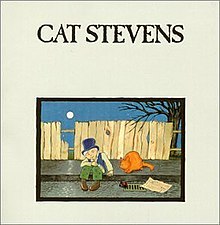
Teaser_&_the_firecatHere’s a song from Cat Stevens from his 1971 album Teaser and the Firecat. I played the hell out of that album when it came out, with this song, Morning Has Broken (which is an early 20th century hymn), Peace Train, and Moonshadow, among others. I was also greatly attracted to the artwork on the album cover which was painted by Cat Stevens. It has a naive quality and use of color that has probably influenced me in ways I haven’t recognized or acknowledged until recently. We all take in many things and synthesize them quickly, often not realizing how much they contribute to our whole.
Hmm…


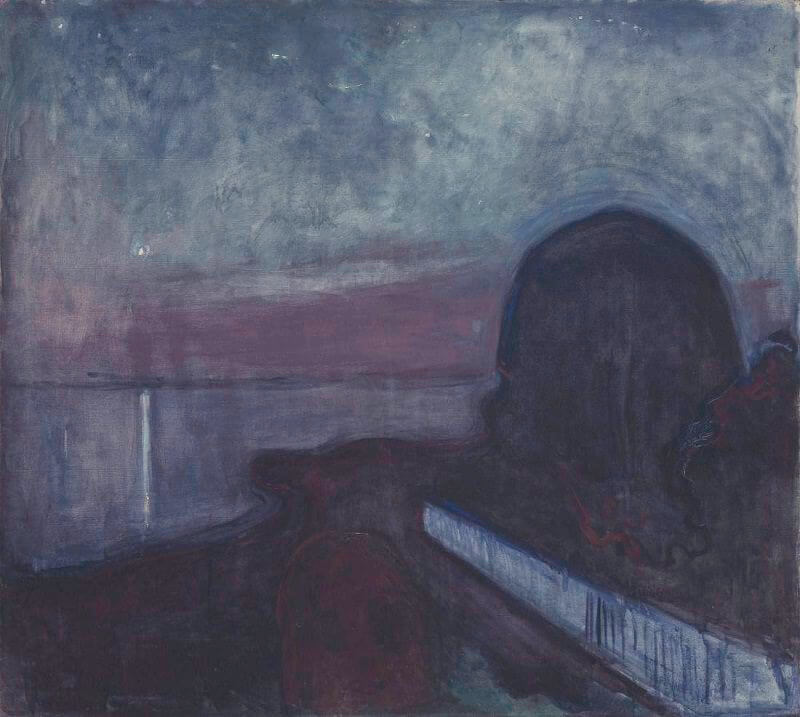
Edvard Munch-- Starry Night 1893

Edvard Munch– Starry Night ,1893


When seen as a whole, art derives from a person’s desire to communicate himself to another. I do not believe in an art which is not forced into existence by a human being’s desire to open his heart. All art, literature, and music must be born in your heart’s blood. Art is your heart’s blood.

–Edvard Munch, Manuscript (1891)


Agreed.

Things to do this morning so I am leaving it at that.

However, I am adding a piece of music at the bottom from a composition, 4 Themes on Paintings of Edward Munch, from contemporary composer Anthony Plog. This piece from the suite is based on the painting at the top of the page, Starry Night, and is written for trumpet and organ.

That’s it. You’re on your own from here…


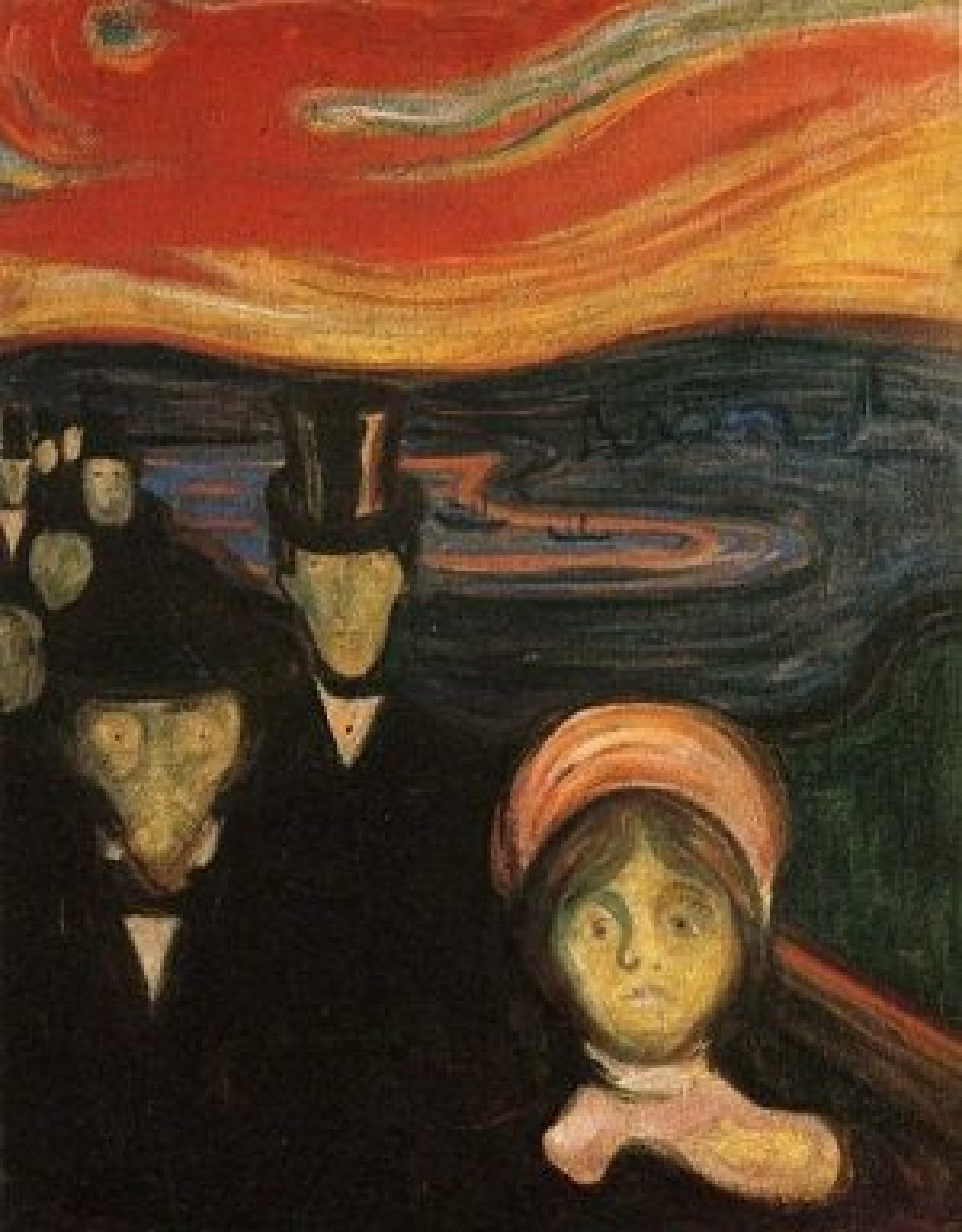
Edvard-Munch-Anxiety

Edvard Munch- Anxiety, 1894


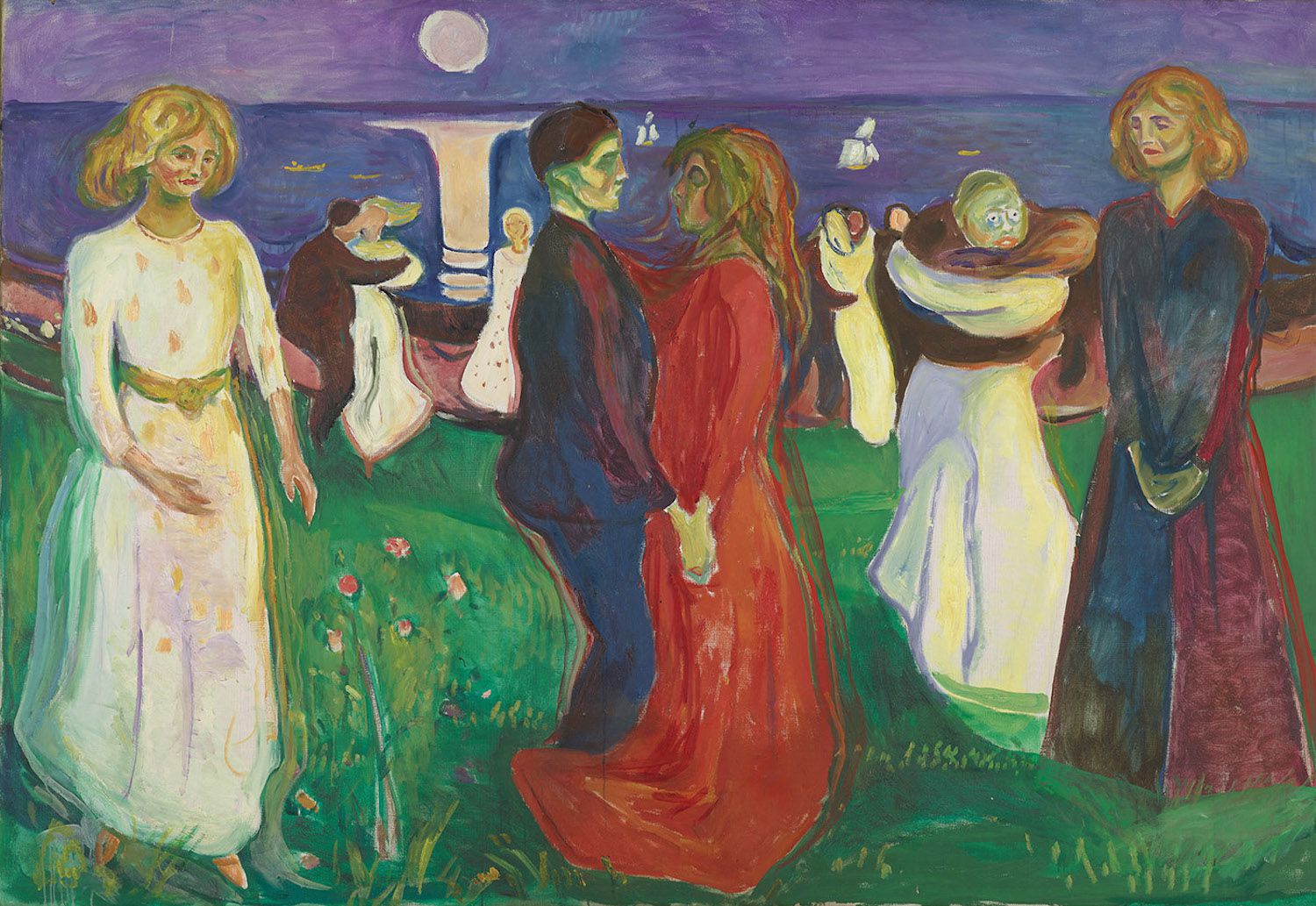
Edvard-Munch_The-Dance-of-Life_

Edvard Munch– The Dance of LIfe, 1899


Edvard Munch- Melancholy

Edvard Munch– Melancholy, 1894


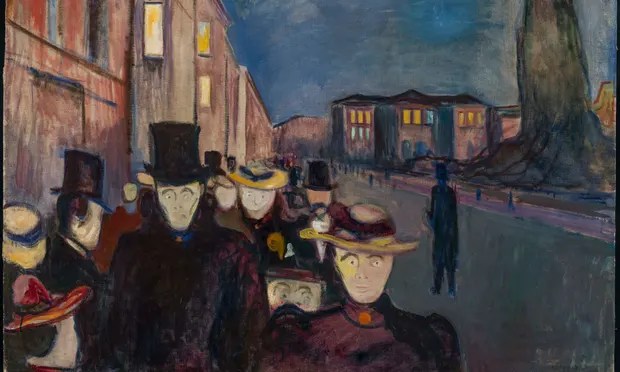
Edvard Munch Evening on Karl Johan Street 1892

Edvard Munch– Evening on Karl Johan Street, 1892


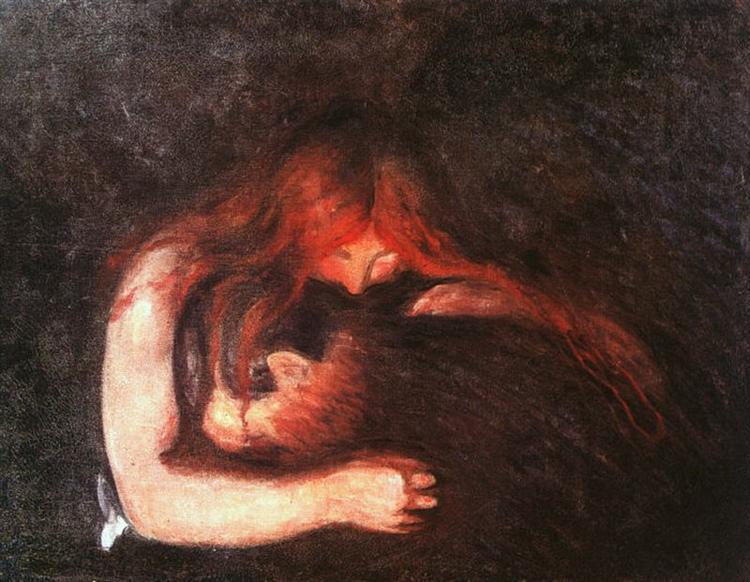
edvard munch vampire- love and pain -1895.

Edvard Munch– Vampire: Love and Pain , 1895


The Scarecrow


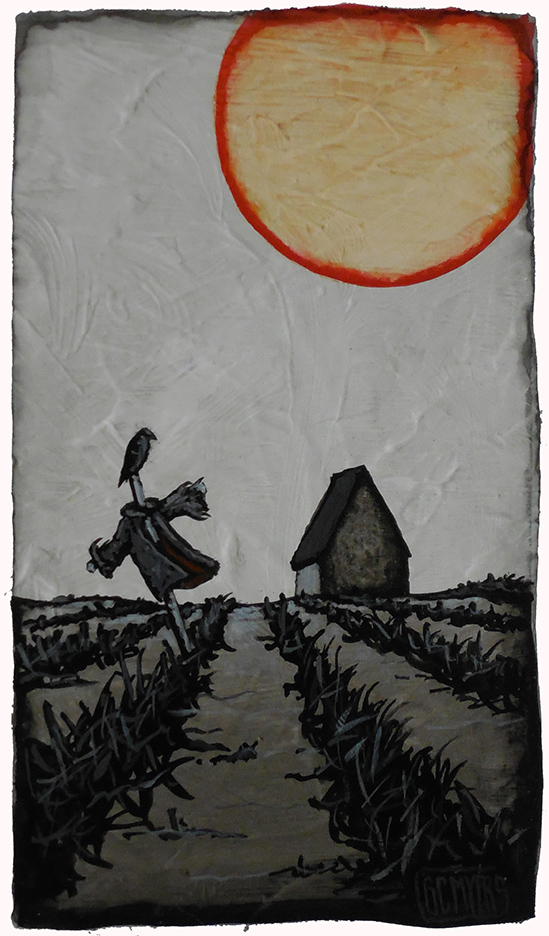
GC Myers- Unafraid

Unafraid— At Principle Gallery, Alexandria


“All the same,” said the Scarecrow, “I shall ask for brains instead of a heart; for a fool would not know what to do with a heart if he had one.”

“I shall take the heart,” returned the Tin Woodman; “for brains do not make one happy, and happiness is the best thing in the world.”

–L. Frank Baum, The Wonderful Wizard of Oz (1900)


Do you sometimes wonder which Wizard of Oz character might best sum you up?

Would it be Dorothy or the Scarecrow, the Tin Man or that Cowardly Lion? Or might it be the Wicked Witch or Professor Marvel?

Or a Flying Monkey?

Got to admit, I have seen aspects of all of these varied characters in myself. Sometimes there is Dorothy’s innocence, the Scarecrow’s lack of brainpower, the absence of a heart like the Tin Man, the false bravado of the Cowardly Lion, the mean-spiritedness of that Wicked Witch and the Con Man patter of Professor Marvel.

Maybe that’s why the story of Oz has resonated for so long with audiences– we can readily identify ourselves in some way with each of those characters.

Even those Flying Monkeys.

That leads me to this week’s Sunday Morning Musical selection, The Scarecrow, from British folksinger June Tabor, accompanied by a favorite guitarist, Martin Simpson, whose music I recently featured here. This song has a wonderful atmosphere and feel. It matches up well with the small painting above.