Feeds:
Posts
Comments
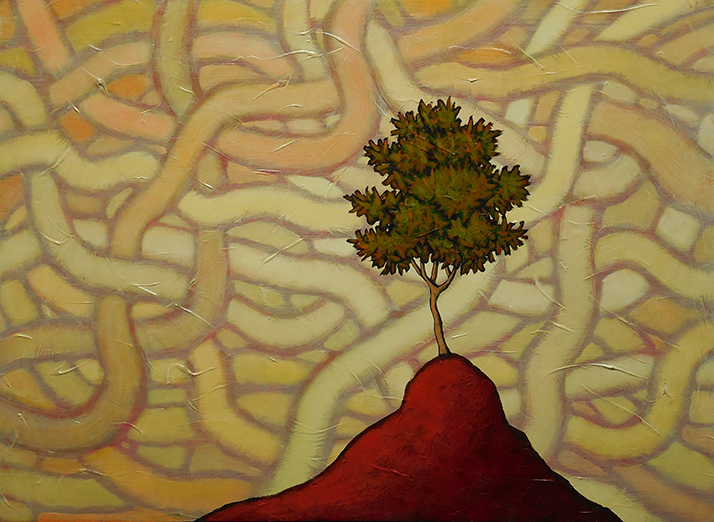
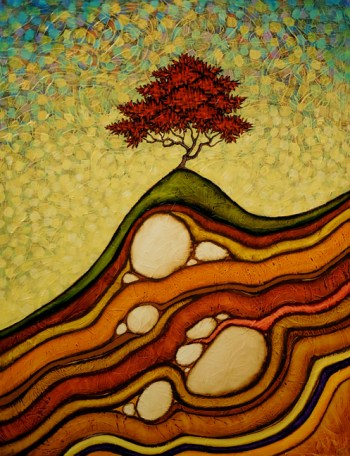
GC Myers-  In the Pocket of Time sm

In the Pocket of Time, 2014


Time is endless in thy hands, my lord.
There is none to count thy minutes.

Days and nights pass and ages bloom and fade like flowers.
Thou knowest how to wait.

Thy centuries follow each other perfecting a small wild flower.

We have no time to lose,
and having no time we must scramble for a chance.
We are too poor to be late.

And thus it is that time goes by
while I give it to every querulous man who claims it,
and thine altar is empty of all offerings to the last.

At the end of the day I hasten in fear lest thy gate be shut;
but I find that yet there is time.

–Rabindranath Tagore, Endless Time


I think about time often. Maybe too often. I don’t know.

Maybe it’s the fact that our time here is limited. You can’t gather and hoard time and our time on this earth is finite. As Tagore writes above: We have no time to lose,/ and having no time we must scramble for a chance./ We are too poor to be late.

Unlike the deity to which Tagore is comparing his earthly self, our time is not endless.

But it must be enough.

I guess that means that we should make each moment count for something.

I don’t know anymore.

I feel guilty talking about our limited time in the light of the Russian atrocities being exposed in Ukraine in recent days. Those people, those civilians, in those mass graves or lying in the streets after being executed, with hands bound behind their backs, came unwillingly to the end of their time here. They didn’t have the luxury of thinking about the limits of time while being safe and warm and full bellied.

Was their time enough?

Makes me wonder what we can do, without sounding hyperbolic or overly hawkish. I don’t want a war, don’t want to sacrifice the time of others’ lives. But all that I can think is that something must be done now, even if it comes at a great price.

Once evil has stepped forward and shown itself, it must be confronted, or it will take us to unspeakable depths.

History teaches us that all too well. But we hold on to a belief that this time, this emergence of evil, will be somehow different, that we can just go without being affected, that we can go on worrying about our remaining time with no concern for preserving the time of others. 

That’s the same belief folks in Europe in the late 1930’s held. We here in America certainly felt that way. There was little forethought and little belief that evil was moving in on them. Just a belief that it would all work out without them needing to spend a moment of their precious time on it.

I saw a sign from a recent rally in support of Ukraine that said: If you’re wondering what you would have done against the Nazis, you’re doing it now.

That says it all. We all want to believe we would react differently if we were faced with such a situation. That we would have surely recognized what was happening and would reacted heroically.

But maybe we are facing a form of it now. Like those folks in the 1930’s, we have no way of telling what will happen, that the worst might possibly come to be while we sit, disbelieving what we are seeing.

Hindsight is of little comfort when facing evil.

History teaches that whenever evil and barbarism shows its true face, we must fight against it. To paraphrase Pulitzer Prize winning journalist Anne Applebaum: Not so that the worst might not happen again. No, because the worst will happen again if we don’t fight against it.

That’s my early Sunday morning rant for the week. Thank you for your time, if you stayed with this to this point. For this week’s Sunday Morning music, here’s a song from my beloved Kinks that I haven’t heard in years, Time Song.

Seemed to fit.


Willie’s Tower

Ascendant– 2013


Now, you can say that I’ve grown bitter but of this you may be sure
The rich have got their channels in the bedrooms of the poor
And there’s a mighty judgment coming, but I may be wrong
You see, you hear these funny voices in the Tower of Song

–Leonard Cohen, Tower of Song


Feeling a little behind schedule on the work for my shows so I feel a nagging need to get to work quickly this morning.

The good part is that the work is percolating at the moment, the next piece starting to take shape in my mind while the piece I am at work on is still on the easel. I am very single-minded with my focus in most things, often to my detriment, so I am always thrilled when this multi-channel thinking arrives around this time of year.

It’s usually a good sign that everything is functioning well and that good work is ahead. Let’s hope.

Anyway, I saw that Willie Nelson just released his rendition of a Leonard Cohen song, Tower of Song, that is a favorite of mine. The original from Cohen is the gold standard, of course, but Tom Jones did a marvelous cover a few years back and Willie adds a little of his own charm to it here. I could see any aging singer adding it effectively to their repertoire.

Anyway, give a listen and let yourself out after your done, okay? I’ll be happily at work so the goodbye is implied.


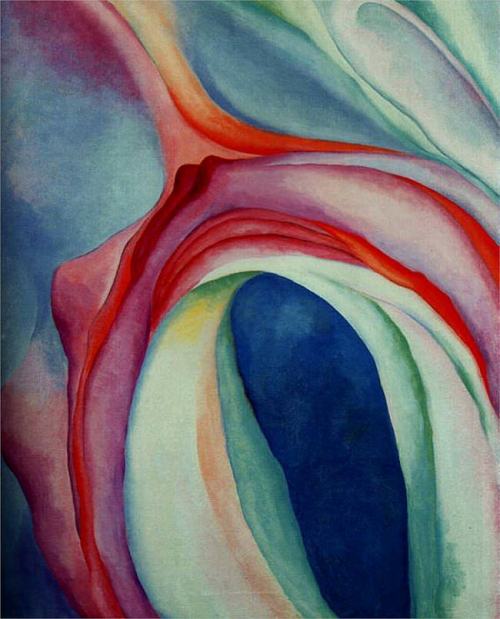
Georgia O'Keeffe music-pink-and-blue-ii

Georgia O’Keeffe – Music, Pink and Blue No. 2


Whether you succeed or not is irrelevant, there is no such thing. Making your unknown known is the important thing.

-Georgia O’Keeffe


I am going to make it short and sweet today. I have to be out early this morning to take our newest kitten, Sweet Babboo, to the vets for spaying later today. I decided to run a rework of a very short post that ran several years ago.

It  was about he painting at the top is Music, Pink and Blue No. 2 from Georgia O’Keeffe. I had a calendar page with this image tacked to the wall of my old studio up in the woods for about ten years. I took a lot of cues from this piece about color, organic shapes and rhythm within a work. These things made it a favorite of mine

More importantly, O’Keeffe’s ability to make her unknown known resonated with me. It makes the point that revelation, the willingness to expose one’s totality including weaknesses and unknowns, is perhaps the key, the most important thing, to creating one’s art.

Every time I see this painting, I am taken back to the decade that I spent in that rustic studio where the image of it was tacked to the wall. It was a rough space with barely sufficient heat, no phone, no internet and no plumbing.

It had few comforts but more than that, there were few distractions. It was a great space for creating and having that cheap glossy calendar page image of it on my wall was a constant reminder for me to not worry about succeeding but to simply try to make the unknown known.

And as O’Keeffe points out, that is the important thing.

Back in Shakeytown

Outside Shakeytown 1995 January GC Myers

Outside Shakeytown– 1995


I was looking through some old work again, something I often do when I feel like something is lacking. My thinking is that maybe I can find whatever it is I need or at least a hint as to how I might find it elsewhere. Sometimes it helps and sometimes it doesn’t. But it usually brings out thoughts or other questions which lead somewhere.

Looking through the older stuff this morning and comparing it with the new work here in the studio, a thought did come up. Realizing that I have been an exhibiting artist for over 27 years now, looking at this old work made me wonder how my work would look now if I had made different choices with technique or subject or style in those early years.

Would my work, my career, look very different? Or is where it is now a point to which the work would have always somehow found its way? 

Maybe those early works were just me picking at facets of my being, none fully capturing it. But maybe as the work aged and evolved, the work more fully captured a wholeness of self?

Thus, it was always going to end up here regardless of the route it took?

I don’t know, of course. And maybe it’s an unanswerable and futile question. But it’s all I got this morning and it keeps my mind off other things beyond my control. And that’s not a bad thing.

Here’s the piece that set me off along with a post I wrote about it several years back. I’ve added an old Jackson Browne song from 1977 at the bottom that partially inspired the title town. 


Looking through some older work, I came across this piece from January of 1995. It was from a time just before I first showed my work publicly. It seems like just yesterday in some ways but a hundred years ago in others. I was just finding voice in my work but still had some work to go before I  could fully utilize it.

This is called Outside Shakeytown and it’s obviously watercolor on paper. Shakeytown was the name I used sometimes at that time for a mythical dark and dank town that hovered under dirty gray skies and sooty foundries and factories. It is a name that could be used in place of any number of small Rust Belt cities and towns that have seen industries disappear over the past 40 or 50 years. These often impoverished towns often still have shuttered factories that stand like ugly monuments to a long gone past as they struggle to find a new identity in a modern world.

It can be a compelling setting, one filled with deep darkness that give rise to startling and dramatic contrasts. One of the birthplaces of art.

This piece is a favorite of mine, one that checks a lot of boxes in a list of what I want to see in my work. It always sends off sparks within me when I pull it out. For me, it acts as sort of a creative terminus from which all sorts of paths depart.

And like the beginning of any journey, it fills me with excitement and a bit of dread.

And those are good starting points for new work.

While I never had plans of showing this publicly, I had to laugh when I looked this morning and noticed that I had signed it twice. The one on the left is the original and the one on the right is from what I think is a much later date when I must have not noticed the other signature. They are both in pencil so I could just erase one but I am going to leave it as it. That way, a couple of hundred years in the future maybe someone will stumble across it– in a gallery or a junk shop or a junk heap, who knows?–and will wonder what was meant by the two signatures.

I won’t be there but I can chuckle at the possibility of it now.

And these days, here in Shakeytown, that’s a good thing.


Goethe/Art

GC Myers- Imitatio

Imitatio– At the Principle Gallery


There is no surer way of evading the world than by Art; and no surer way of uniting with it than by Art.

–Johann Wolfgang von Goethe, Maxims and Reflections


That Goethe guy sure knew some stuff, didn’t he?

I know that the aphorism above is a truth for myself.

Art, in all its many forms, takes me away from the world while also connecting me with it.

Art reveals my singularity in this world as well as my commonness.

Art centers me, keeps me from going too low or too high.

Art shows me what I am, what I am not, and what I might be.

Art gives me certainty when I need it and doubt when I need that.

Art supplies me with answers and questions. Beginnings and endings.

Art is a mighty thing, indeed.

If…–Once More

GC Myers- If...


If you can dream—and not make dreams your master;
If you can think—and not make thoughts your aim;
If you can meet with Triumph and Disaster
And treat those two impostors just the same;
.
-Rudyard Kipling, If… excerpt


A bit of mental exhaustion this morning, feeling like the proverbial frog in the pot realizing that the water is now boiling. A mix of blah and dread. Not a good place to be.

I still wanted to post something even though I didn’t feel like writing or thinking. I do like to adhere to some form of consistency. I need it, actually.

Looking for something about which I could post quickly, I went into a back bedroom here in the studio where I keep some older work and immediately was drawn to the painting at the top, a piece from a few years back called If… after the famed Rudyard Kipling poem.

It’s one of those rare pieces that hold a lot of meaning for me that never found homes for ne reason or another. I guess it just never was in the right place at the right time. But it’s a piece that always jumps out at me and declares itself loudly.

It practically yells out its title to me.

There is something to be said for trying to live by the words that Kipling laid out as a guideline as a father to a son. Sometimes we need a reminder of right living.

I sure did this morning. Glad I was able to have this piece to remind me.

Here’s actor Michael Caine, who cites this poem as a favorite of his, reading the whole Kipling verse, which is included below the video.


If you can keep your head when all about you
Are losing theirs and blaming it on you,
If you can trust yourself when all men doubt you,
But make allowance for their doubting too;
If you can wait and not be tired by waiting,
Or being lied about, don’t deal in lies,
Or being hated, don’t give way to hating,
And yet don’t look too good, nor talk too wise:

If you can dream—and not make dreams your master;
If you can think—and not make thoughts your aim;
If you can meet with Triumph and Disaster
And treat those two impostors just the same;
If you can bear to hear the truth you’ve spoken
Twisted by knaves to make a trap for fools,
Or watch the things you gave your life to, broken,
And stoop and build ’em up with worn-out tools:

If you can make one heap of all your winnings
And risk it on one turn of pitch-and-toss,
And lose, and start again at your beginnings
And never breathe a word about your loss;
If you can force your heart and nerve and sinew
To serve your turn long after they are gone,
And so hold on when there is nothing in you
Except the Will which says to them: ‘Hold on!’

If you can talk with crowds and keep your virtue,
Or walk with Kings—nor lose the common touch,
If neither foes nor loving friends can hurt you,
If all men count with you, but none too much;
If you can fill the unforgiving minute
With sixty seconds’ worth of distance run,
Yours is the Earth and everything that’s in it,
And—which is more—you’ll be a Man, my son!


Time

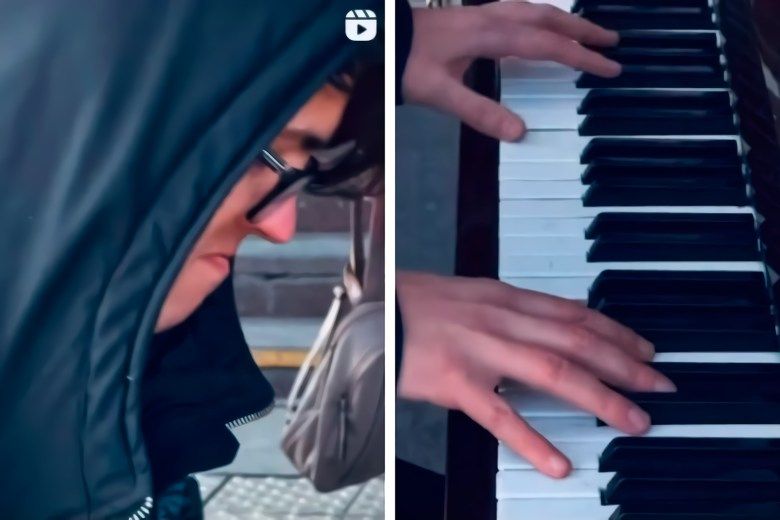
Ukraine Pianist Zimmer Time


I came across a short video yesterday of a young pianist, Alex, playing on the streets of Kviv last week just as air raid sirens began blaring, warning of potential incoming bombs. It was one of those rare moments of convergence with the sound of the sirens serving as a sort of choral accompaniment to the ever building tone and rhythm of the music.

With the music, the sirens, and the look of angry defiance on the player’s face, It felt like a perfect artistic interpretation of the tragedy of this war.

The piece being played, Time,  was from composer Hans Zimmer from his soundtrack for the highly regarded 2010 movie, Inception. I have never seen the Oscar winning film ( four of the awards, actually) which is a science fiction story that deals with the theft and manipulation of dreams so I am not aware of the original piece. The video from the film that goes with this piece of music is haunting and disturbing in the light of the devastation we are witnessing in the civilian spaces of the cities and villages of Ukraine.

As is this performance.

For this Sunday morning music, I am sharing a French site’s video of the original TikTok video of the street piano player that ends with Hans Zimmer, who is on tour in Europe right now with Ukrainian musicians in support of the people of Ukraine, watching the video onstage in front of a London audience before playing his own version of the song. I am also putting up a lovely simple piano cover of the song that shows only the hands of the player, which I find mesmerizing, though not nearly so powerful as the street musician’s version.

There is also a link to the video from the film. It is age-restricted because of the imagery from the film so it cannot be readily shared. But it is worth taking a look.


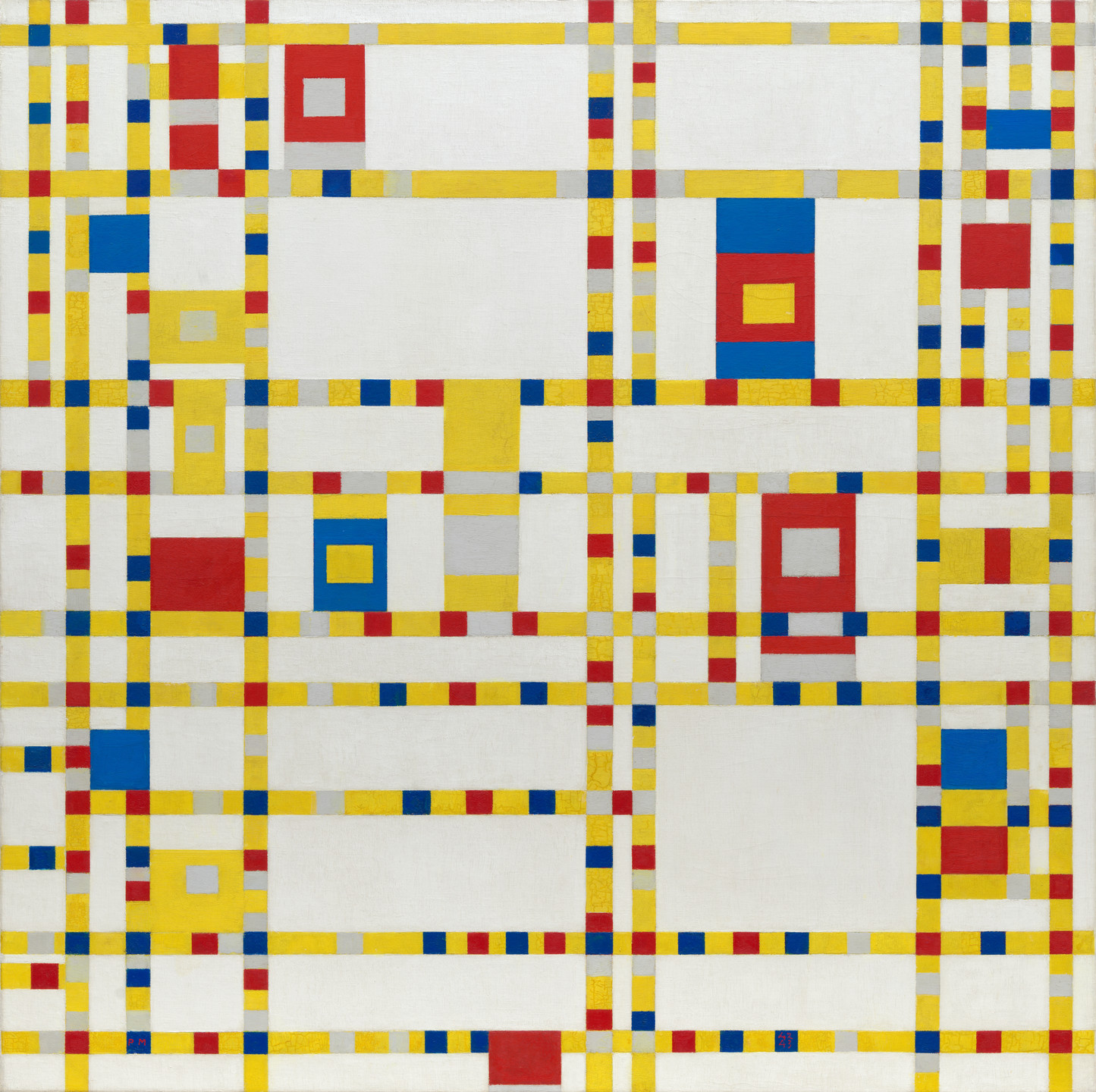
Piet Mondrian Broadway Boogie Woogie 1942-43

Piet Mondrian- Broadway Boogie Woogie, 1942-43


Every true artist has been inspired more by the beauty of lines and color and the relationships between them than by the concrete subject of the picture.

–Piet Mondrian


I came across the words above from Piet Mondrian and it immediately struck a chord. It’s something that relates to my own work, something I have been trying to say for years. It’s about how I see my work, about it being less concerned with what it portrays — the concrete subject of the picture, as Mondrian says– but more about the linework, colors, and shapes and the relationships between them. I would throw texture into the mix as well.

For me, my feelings on and reaction to every painting of mine comes down to how these elements come together regardless of the object that is being portrayed on the surface.

The Red Tree paintings, for example, are always about more than the tree and the surrounding landscape.

It’s about the dance of color, lines, shapes, and texture. The mixture of these elements have almost infinite potential for expression, each with its own level of depth.

That’s why I am seldom concerned with repetition of subject matter. Each piece is comprised of multiple levels and never quite the same. A Red Tree painted now may resemble a Red Tree from years ago but if you look at the elements of both you will see a different story.

piet-mondrian-dutch-1872-1944-title-composition-in-red-blue-and-yellow-1937-42Colors change and evolve. Texture and surfaces change. Shapes change. Perhaps the only constant is the linework, which serves as as sort of armature, to use a sculptural term, around which the other elements are applied.
Kind of like the lines in Mondrian’s signature work that we know so well, like the piece shown here.

Piet Mondrian (1872-1944) had a career that saw him involved with most of the great art movements of the Modern era. He created work in his long career that was Impressionist, Cubist, Fauvist, Expressionist, and Abstract. But because we have come to identify him solely with the works shown here, one would be hard pressed to identify some of this earlier work as being from Mondrian.

It was an interesting and continual evolution, one that I wrote about here several years ago. I am including a video from that post today that clearly shows this evolution, all set to the music of Philip Glass.

Take a look. I think you’ll see how his linework acted as the “armature” in his work as well.


GCMyers-  Boxed In  2019

Boxed In, 2019


there is enough treachery, hatred violence absurdity in the average
human being to supply any given army on any given day

The Genius of the Crowd, Charles Bukowski


I have been watching current events closely for years and it seems like we are in a convergence of crazy at the moment. You’ve got the wife of a Supreme Court justice fomenting an insurrection, senators saying they would support overturning the law which made interracial marriage legal while spouting pure bigotry at the recent confirmation hearing for Ketanji Brown Jackson, truckers driving in circles around DC for god knows what reason, and on and on.

And that’s without even mentioning the horror show of Putin’s War.

I don’t want to go into any of that right now. It’s maddening and chaotic. Not the chaos of which I wrote yesterday, that which spawns creation.

This is an ugly sort that destroys order and creates even more chaos to fill the void.It brings to  mind the poem The Genius of the Crowd. Charles Bukowski (1920-1994) wrote this in 1966 and it speaks of the ugliness and dangers of populism.

I am not a huge Bukowski fan but this one always makes me think. In it, he warns of those who tell you how to live and behave but don’t practice what they preach. He also warns of playing down to the lowest common denominator because at that level imagination and creativity is absent. In their place, those without imagination replace it with their sole area of genius, their hatred.

Their perfect hatred.

That seems to fit this moment. The unimaginative have rallied around their hatreds, finding a twisted sort of order in the chaos it creates.

I am not going to go on further. I will just share a reading of the poem from Tom O’Bedlam and let it go at that.


GC Myers- The Garden Beyond Chaos

The Garden Beyond Chaos


“Disorder is inherent in stability. Civilized man doesn’t understand stability. He’s confused it with rigidity. Our political and economic and social leaders drool about stability constantly. It’s their favorite word, next to ‘power.’

‘Gotta stabilize the political situation in Southeast Asia, gotta stabilize oil production and consumption, gotta stabilize student opposition to the government’ and so forth.

Stabilization to them means order, uniformity, control. And that’s a half-witted and potentially genocidal misconception. No matter how thoroughly they control a system, disorder invariably leaks into it. Then the managers panic, rush to plug the leak and endeavor to tighten the controls. Therefore, totalitarianism grows in viciousness and scope. And the blind pity is, rigidity isn’t the same as stability at all.

True stability results when presumed order and presumed disorder are balanced. A truly stable system expects the unexpected, is prepared to be disrupted, waits to be transformed.”

Tom Robbins, Even Cowgirls Get the Blues


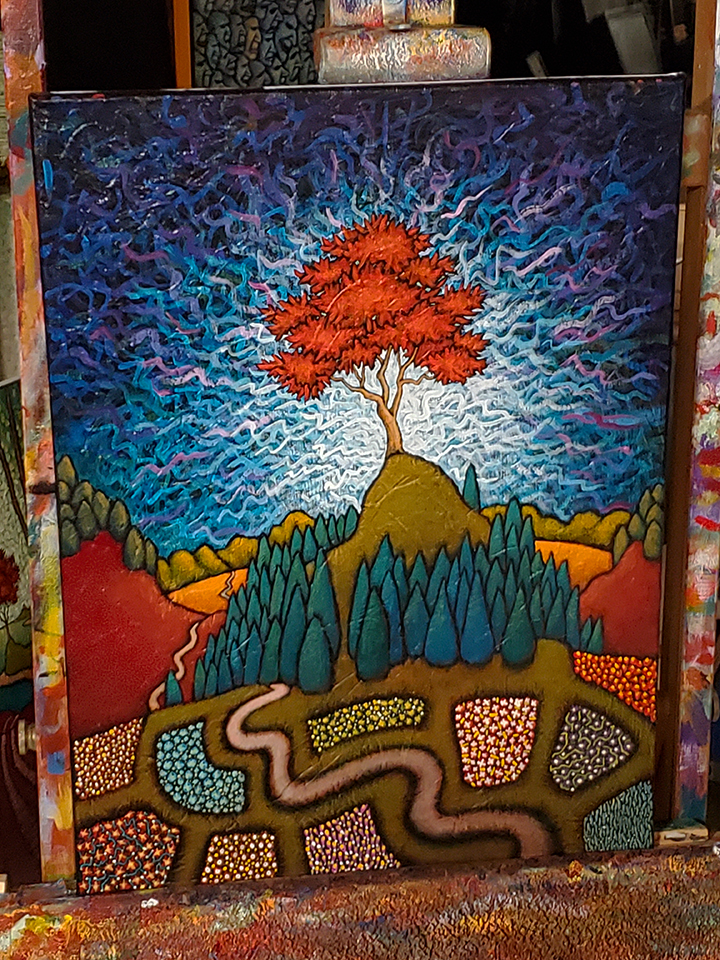
The new painting shown above is on my easel this morning, a piece that will be part of my June show at the Principle Gallery in Alexandria. It felt done at the end of yesterday’s session but this quick photo shows me a couple of small spots that need to be addressed this morning. Nothing big, nothing most folks would notice. Just a few little touches here and there.

There was a lot of energy in the painting of this piece. By that, I mean it moved quickly with little breaks in the process for me to ponder and make decisions. It felt like it was self-propelling.

That’s always a great feeling for me. Not just for the act of painting of the particular piece involved but because it usually translates to more energy in my work in the days ahead. Again, self-propelling.

Maybe the fact that this piece felt self-propelling gave me time to think about what meaning or symbolism it held for me. The paint strokes that make up the sky have a chaotic  energy that contrasts greatly with the order of the gardens of the foreground.

Chaos and order.

It’s this tension– and balance– between the two forces that make this piece work for me.

This is probably true for much of my work. And my life. And the rest of the world.

We need to have that balance of chaos and order. Chaos is the mother of creation and change in this world. Order makes sense of it, putting it in a stable, livable form.

The problems in our world and in ourselves come when we lose that balance between chaos and order and skew too far in either direction.

The excerpt above from Tom Robbins sums this up perfectly and much of what is taking place in the world serve as fine examples. An excess of chaos, either real or created, results in an overcompensation toward a more rigid form of order in the name of stability.

And as Robbins writes, rigidity isn’t the same as stability at all.

Finding that balance is the trick. We need both order and chaos. Maybe the purpose of art is to remind of this, to make us more tolerant of a little chaos and more wary of too much order.

It might just be me but I see this balance, this harmony, between the two forces, in this piece. And that’s all I can ask of it.