Feeds:
Posts
Comments


“It has always seemed to me that so long as you produce your dramatic effect, accuracy of detail matters little. I have never striven for it and I have made some bad mistakes in consequence. What matter if I hold my readers?”

― Arthur Conan Doyle


Who would have thought that the creator of Sherlock Holmes would have some good advice to offer to artists?

The words above from Sir Arthur Conan Doyle about how he he would sacrifice accuracy of detail in order to gain greater dramatic effect in his work are very enlightening.

And reassuring.

I have been going through a lot of older work from over twenty plus years back when I was still in a formative stage with my painting. I hadn’t read these words from Doyle but one of the first conscious decisions I made about my work was that I would not be a slave to detail, that I would slash away as much detail as possible while still conveying a sense of what was being represented. Oh, I would use smaller details when they served the greater effect of the painting but the fewer the better.

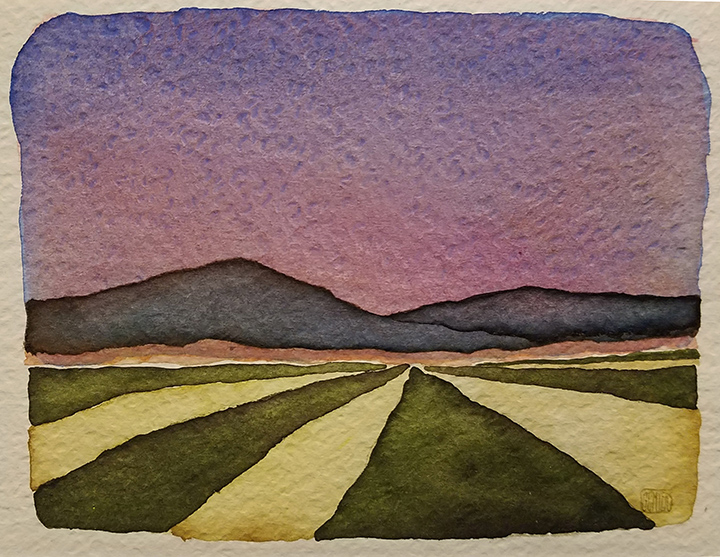
One example from this early work is the piece at the top that is from around 1997. I was surprised when I came across this small painting in a file folder that I hadn’t examined in many years. It was a solid example of the work I was doing at the time, mainly in watercolor with the beginnings of my relationship with the acrylic artist inks that have long been a staple of my work.

It is sparsely detailed with little consideration to trying to replicate natural color. It just allows the colors and the shapes do what they will in communicating a sense of place and feeling. It works pretty well for what I want from it.

Over the years, I sometimes have strayed from this credo of sparseness but I always find my way back to it. There just seems to be more space for the expansion of feeling when details are cut away. It’s a good thing to keep in mind.

So, thanks for the reminder, Mr. Doyle. I can use all the help I can get.


I am busy this morning so I am replaying the post above from a few years back.

I have never been a slave to detail or absolute accuracy in my work. Or, for that matter, in most other things. I am reminded of this when I sometimes finish a painting and notice that there are shadows cast by some of the objects in the painting while there are none cast by others. It seldom bothers me except in those times when the absence creates a distraction within the composition that keeps me from focusing on the overall impact of the piece. And that’s pretty rare.

How the piece comes across as a whole is far more important to me than a misplaced or absent shadow or an error here and there in perspective or any of a thousand other small flaws and mistakes that you can find in my work. If anything, they are part and parcel of it, a defining aspect of the work.

To paraphrase Mr. Doyle: What matter if I hold my viewer?
Show Dates 2022

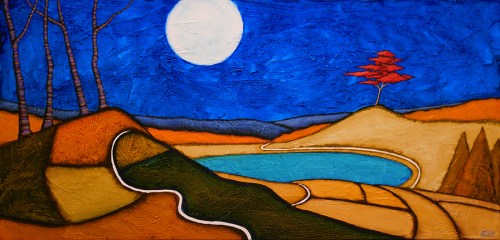
GC Myers- Clear Voice

Clear Voice— Now at Kada Gallery, Erie, PA


I announced the date of my annual show at the Principle Gallery the other day. I thought I should also give the dates for my other shows as well, since they are set and on my schedule. It includes, of course, my annual July show at the West End Gallery plus a highly anticipated return to the Kada Gallery after a two-year interval due to the pandemic and a change in gallery ownership.

As I mentioned the other day, we hope to resume some sort of Gallery Talk at each of the galleries but are not scheduling them at this time like we would normally. We will wait to see how the situation with the next variant of the coronavirus plays out before making any decisions on dates or format.

This year’s schedule goes like this:

  • Principle Gallery      Alexandria, VA  –  Opening Friday, June 3, 2022
  • West End Gallery     Corning, NY –  Opening Friday, July 22, 2022
  • Kada Gallery            Erie, PA-  Opening Friday, November 11, 2022

Of course, there will be previews of the new work in the coming months so I hope you’ll follow along and hopefully make it to one of the shows.


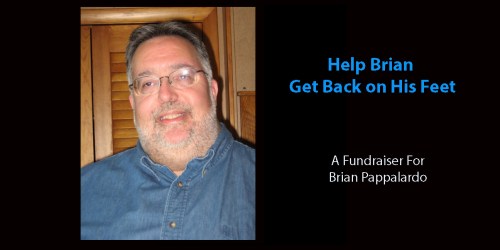
Please take a moment to visit the link below ( click on the image) for a fundraiser for a good friend of mine, Brian Pappalardo, who has been hospitalized for the past ten months. He has been waging a battle against severe illness on one front and against the financial strains of the costs of healthcare and disability on another. He’s a good and humble guy with a long road to recovery still ahead of him. He could use any help you can muster. Thanks!


Brian Pappalardo 2

The Galway Girl

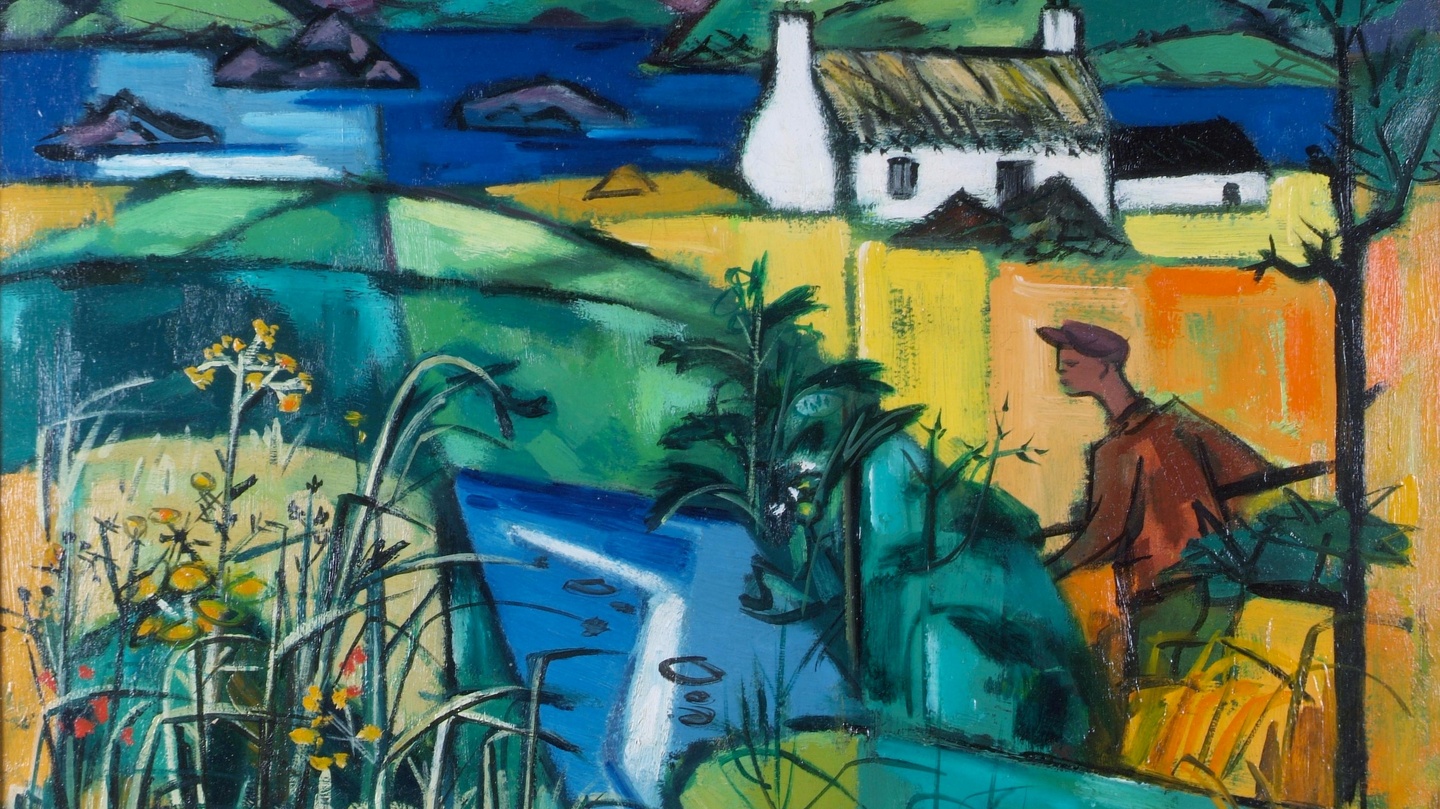
Norah McGuinness River to the Sea

Norah McGuinness (Irish, 1901-1980)– River to the Sea, 1959


St. Patrick’s Day 2022. 

My thoughts on this holiday always go to my mom whose birthday fell on this date. She would have been 90 today. I grew up thinking we had Irish blood through my mom’s family. Many of them had an Irish sounding name, after all. Found out through genealogy that it was not Irish at all.

Actually, they were English. Very English.

Turns out that the Irish part of our family came through my dad’s side. Took many years to find much on it but with DNA testing and the greater access to records via the web, I found that these ancestors came out of Tipperary in Ireland around 1850 as a whole family unit, first settling in Rhode Island. Both parents died within months after landing here and their children, many of adult age, dispersed across the country in the expansion that took place in the second half of the 19th century.

The typical American story.

For this St. Paddy’s Day, I thought I would share a piece of art above from a well known Irish artist and illustrator of the 20th century, Norah McGuinness. I really liked– and felt a kinship with– her use of color and forms in this piece. She worked in a visual language that I can understand.

Also, let’s hear an Irish song. Well, it’s an Irish song written by an American that has become a very popular song in the Irish culture. It’s The Galway Girl from Steve Earle. The version below is from the Irish musician Mundy who had a hit with this song in Ireland in 2008 that topped the charts for several weeks. I think you can hear why it caught on so well.

Have an enthusiastic St. Paddy’s Day.


Before going, I would like to pass on a link to a GoFundMe fundraiser that we set up for a friend of mine, Brian Pappalardo. I am not going to get into the whole story here right now but Brian went into the hospital back in the first days of June, 2021 and has been hospitalized since that time. He will soon be into his 11th month in a hospital setting. Outside of being in ambulances, he has only been outside once in that time.

He was intubated and on a respirator for the better part of three months, much of that time semi-conscious. He was left unable to move his head, arms, hands, and legs and could barely speak because of the tracheotomy tube in his throat. He has been going through extensive therapy after finally landing at the excellent Cayuga Medical Center, after a tour of several other hospitals and a nightmare stay in a notorious nursing facility that will remain unnamed. He has regained most of the use of his arms and hands and can walk short distances with a walker but will be wheelchair bound for at least the near future. Maybe longer.

His insurance coverage is nearly exhausted and he is facing mounting expenses plus the possibility of being discharged to fend for himself. He will be dependent on disability payments and without his mother, with whom he lived and cared for, since she passed away a couple of months ago.

For those of you who know Brian, who was formerly an editor at the Elmira Star-Gazette and a freelance journalist after downsizing, you know that he is a kind, humble and self-effacing person. The kind of person who would do what they could to help someone else in need and who would never think to ask for help for himself.

Since he won’t ask, I will.

Brian needs help now while he faces mountains of physical and financial challenges for the coming months, if not years. Please check out the fundraiser link below and help if you can or share it with your friends.

Help Brian get back on his feet, literally and figuratively.

Thanks so much.

https://www.gofundme.com/f/5agn9-help-brian-get-back-on-his-feet

https://gofund.me/a25b2096


<div class="gfm-embed" data-url="https://www.gofundme.com/f/5agn9-help-brian-get-back-on-his-feet/widget/medium/"></div><script defer src="https://www.gofundme.com/static/js/embed.js"></script>

Depths and Light

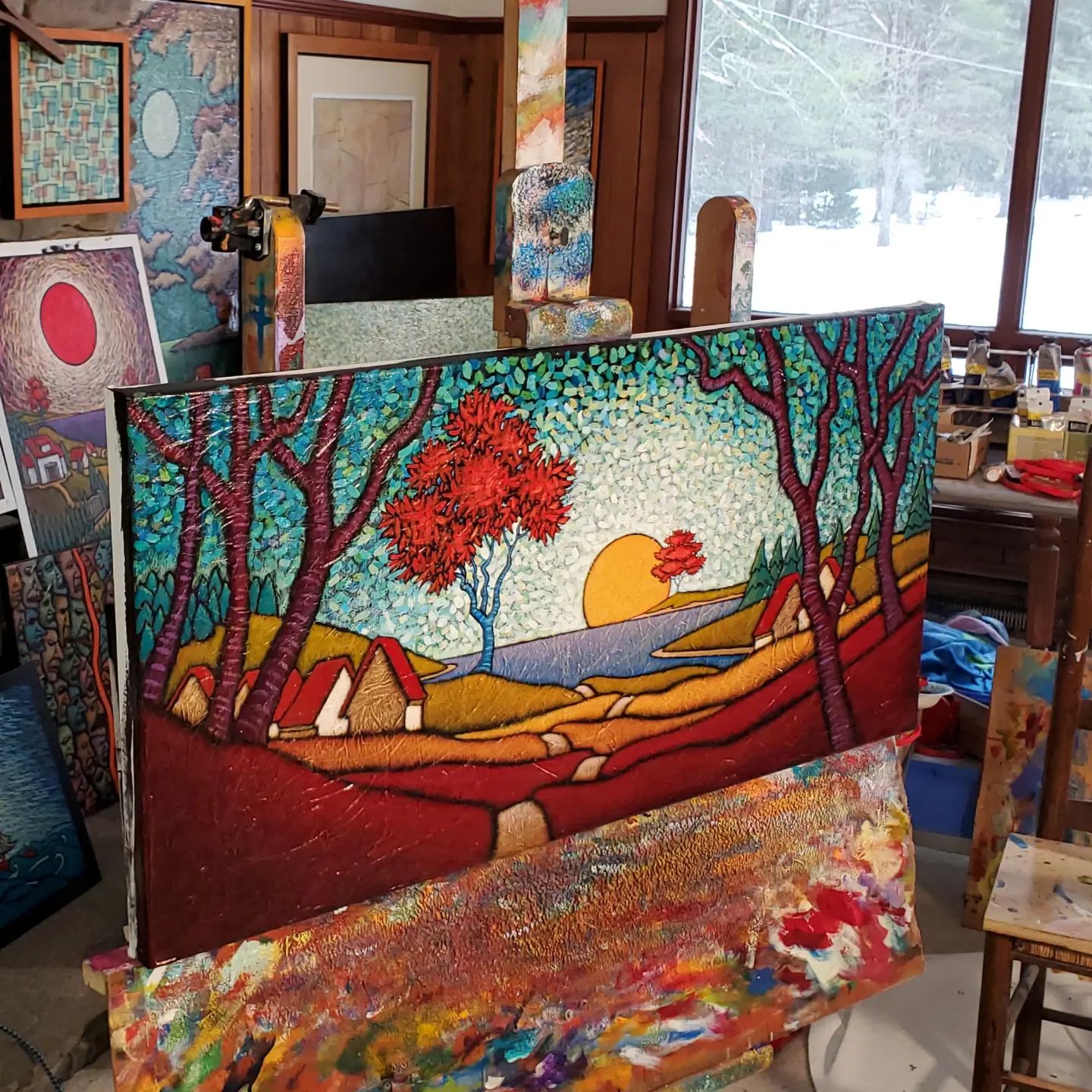
GC Myers- work on easel March 2022

Studio with new work on easel , March 2022


Say not, “I have found the truth,” but rather, “I have found a truth.”
Say not, “I have found the path of the soul.” Say rather, “I have met the soul walking upon my path.”
For the soul walks upon all paths.
The soul walks not upon a line, neither does it grow like a reed.
The soul unfolds itself, like a lotus of countless petals.

― Kahlil Gibran, The Prophet


Busy this morning but wanted to share info for this year’s annual solo show at the Principle Gallery in Alexandria, VA. This year will mark my 23rd solo show there. The exhibit opens on Friday, June 3, and is titled Depths and Light.

I am tentatively planning on being in attendance at the opening reception on June 3. We are still hoping for a gallery talk or similar event at the gallery later in the year. The last one there was in September of 2019. It would be good to talk with folks again.

Or maybe not, as I am way out of practice. Talking to Hobie, my studio cat, or the feral cats in my garage is not quite the same thing.

To sum up: Principle Gallery, Alexandria, June 3.


For how can you compete,
Being honor bred, with one
Who were it proved he lies
Were neither shamed in his own
Nor in his neighbors’ eyes;

— William Butler Yeats, From To a Friend Whose Work Has Come to Nothing


The post below is one of the more popular posts from this blog over the past several, getting a number of views each day. I read it again early this morning and though I remembered the part of the Yeats poem about the the almost impossible task of dealing with shameless liars, realized that I had forgotten much of the story behind the poem. I thought it would be worth running again. Yeats is always worth another look.

It starts with the situation in early 2019 so you’ll recognize the shameless liars referenced.


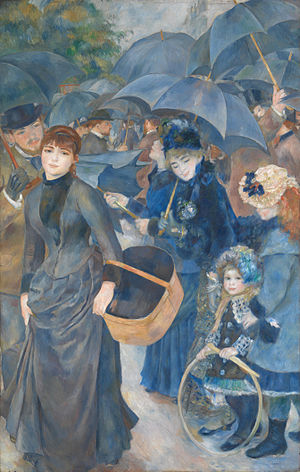
Renoir,_The_Umbrellas,_ca._1881-86I can’t say that I am a big Bill Kristol fan, the conservative political analyst, but yesterday he deftly used the excerpt above from a W.B. Yeats poem to describe the Mueller hearing of the day before. It so well described an honorable man dealing with the current occupant of the white house [thankfully now the former occupant] and his minions in congress [unfortunately, still there for the most part] that I wanted to know a bit more about that particular piece of verse.
It turns out that the poem from which those lines come is titled To a Friend Whose Work Has Come to Nothing that was included in a small volume of poems called Poems Written in Discouragement 1912-13.

The poem is at the bottom of the page and at first I thought it referred to someone in Yeats’ universe, a writer or artist or playwright, who had put their all into their work for years and years only to never be recognized for that work while others– who this person at least equals in talent and effort– gain greater recognition. That seems like a logical interpretation.

Turns out there is a different story behind the poem.

It has to do with an Irish art dealer named Hugh Lane who was trying to establish a public art gallery that would bring modern art of that time to Dublin at the beginning decades of the 20th century. He proposed to give the city his collection of 39 modern masterworks from Renoir, Manet, Degas, Monet, Daumier, Pissarro and Morisot so that they might establish a museum/gallery. The painting at the top from RenoirThe Umbrellas, was part of his collection.

To that time, Dublin had yet to display the new art of the age and its city fathers and religious leaders were not swayed by the offer. They viewed the new art as being decadent and with an air of libertinism to it. This turned into a heated public battle in which Yeats and others in the Irish artistic community fought to bring the new art culture to the country. They eventually lost and the collection ended up in the possession of the National Gallery of Great Britain after Lane died in the sinking of the Lusitania by German U-boats in 1915. He was returning from NY where he had sold two great pieces to what would become the Frick Collection. The Lusitania was only eleven miles from the Irish coast.

The battle for Hugh Lane’s collection has been fought continuously for the past century between the National Gallery and the Irish government. There are a lot more details so I am not going to get into the whole affair here. There is great article in the Guardian that goes into everything that transpired.

I just find it interesting how Yeats could turn a poem that dealt with the loss of a public debate about art and philanthropy into a poem that feels like it could be applied to many people who are in creative fields and may never realize the recognition their work may well deserve.

Or to a prosecutor dealing with shameless liars.

Here’s the whole poem:


Now all the truth is out,
Be secret and take defeat
From any brazen throat,
For how can you compete,
Being honor bred, with one
Who were it proved he lies
Were neither shamed in his own
Nor in his neighbors’ eyes;
Bred to a harder thing
Than Triumph, turn away
And like a laughing string
Whereon mad fingers play
Amid a place of stone,
Be secret and exult,
Because of all things known
That is most difficult.
-William Butler Yeats


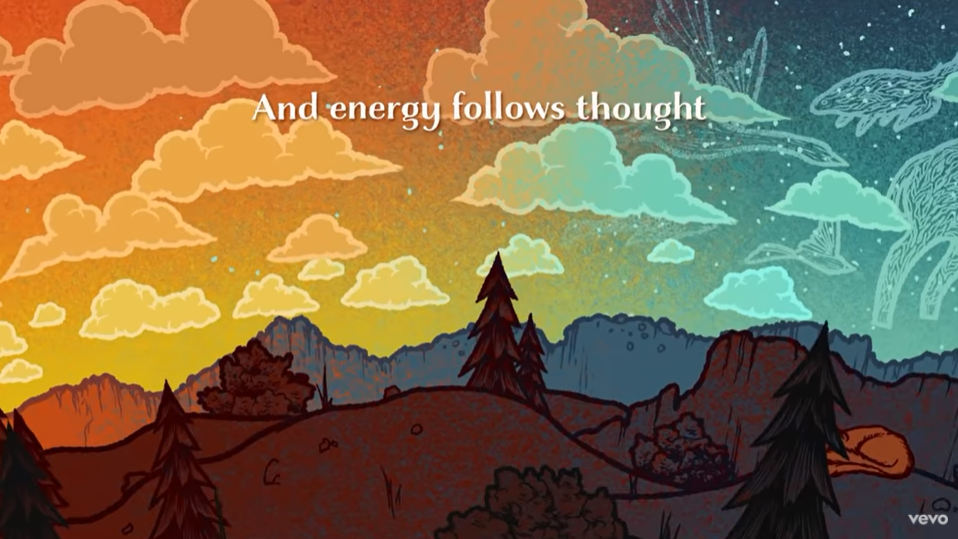
Willie Nelson Energy Follow Thought 1


Imagine what you want
Then get out of the way
Remember energy follows thought
So be careful what you say
Be careful what you ask for
Make sure it’s really what you want
Because your mind is made for thinking
And energy follows thought

Willie Nelson, Energy Follows Thought


Willie Nelson, still going strong at 88 years old, premiered a new song on Friday. A very Willie song in sound and thought with a bit of zen thrown in.

It’s called Energy Follows Thought. It’s something I have known and talked about for many years, this idea that we eventually become a form of what we say and think.

That can be a good or bad thing.

And I think Willie is putting it out there both as advice and as a cautionary notice. Too many of us speak and act (and react) without thinking, never realizing that our words and thoughts push us towards a future version of ourselves.

I think the first verse of the song shown above speaks volumes on this subject so I will step aside and let Willie’s music tell the rest.


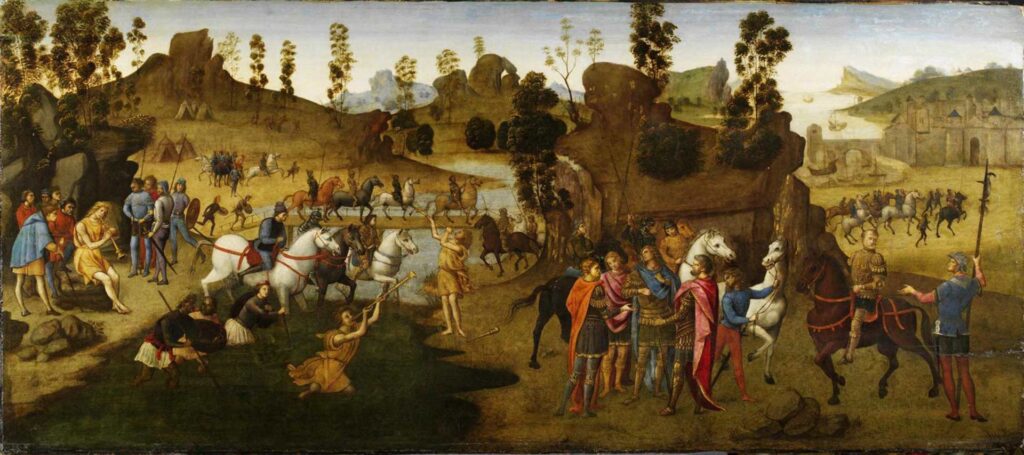
JULIUS CAESAR AND THE CROSSING OF THE RUBICON, FRANCESCO GRANACCI, 1494.

Julius Caesar and the Crossing of the Rubicon, Francesco Granacci, 1494


What are these dark days I see?
In this world so badly bent
I cannot redeem the time
The time so idly spent
How much longer can it last?
How long can it go on?
I embrace my love, put down my hair
And I crossed the Rubicon

Crossing the Rubicon, Bob Dylan


Alea iacta est

The die is cast.

Those were roughly the words Julius Caesar uttered before sending his troops south across the Rubicon River towards Rome. The Rubicon is a river, its waters tinged red from iron deposits, that once marked the boundary between Rome and its provinces. Crossing that boundary and bringing troops to Rome was outlawed by Roman law, considered an act of treason and insurrection. Julius Caesar’s decision to follow a course of treason set off a civil war that ended with his victory and ascendance as Dictator for life over the Roman Empire.

Crossing the Rubicon has become a well worn phrase since that time, representing a conscious act from which one cannot retreat from nor reverse.

The point of no return.

It is an action of great weight, one whose consequences often reverberate for great periods of time.

It feels like certain political leaders in this world have crossed the Rubicon several times in recent years and that as a result the world we once knew may soon exist only in memory.

The masses will live with the consequences from the conscious acts of a powerful few, those who saw the symbolic Rubicon before them and chose to cross it.

What those consequences will be are still to be determined and we do have a say in that outcome. That die is yet to be cast on that future.

It will be what we say it will be if we are willing to make it so.

For this Sunday Morning Music, here is a recent Bob Dylan song from 2020 that is custom made for this post. It’s Crossing the Rubicon.


Mark Rothko Untitled (Yellow and Blue) 1954 detail

Mark Rothko- Untitled (Yellow and Blue) 1954 detail


“You might as well get one thing straight. I’m not an abstractionist… I’m not interested in the relationships of color or form or anything else. I’m interested only in expressing basic human emotions—tragedy, ecstasy, doom and so on. And the fact that a lot of people break down and cry when confronted with my pictures show that I communicate those basic human emotions… The people who weep before my pictures are having the same religious experience I had when I painted them. And if you, as you say, are moved only by their color relationships then you miss the point.”

― Mark Rothko, 1956 Interview with Selden Rodman


Busy morning ahead with painting and plowing from what I hope is the last snowfall of this winter. But I thought I would share a Mark Rothko painting ( actually a detail of its lower section) and a video on it from Sotheby’s auction house ( where it sold for $46.5 million in 2015) along with several Rothko quotes.

Rothko (1903 -1970) was a big influence on my early work. The idea of expressing the big human emotions through simplified forms and color really spoke to me because I never looked at painting as a craft but more as a means to express those forms of emotion that well up inside because they are sometimes too difficult to express in words and voices.

Another aspect that attracts me to Rothko is that he, like Kandinsky, was often eloquent in speaking about his work and art in general. And in those words I found that my own already developed perspectives often largely meshed with and echoed both of these artists’ words and views.

For example, in the quote below the idea that a picture lives by companionship is one that is central to my work.

“A picture lives by companionship, expanding and quickening in the eyes of the sensitive observer. It dies by the same token. It is therefore risky to send it out into the world. How often it must be impaired by the eyes of the unfeeling and the cruelty of the impotent.”

Here a few more that also speak to me.

“It is the poet and philosopher who provide the community of objectives in which the artist participates. Their chief preoccupation, like the artist, is the expression in concrete form of their notions of reality. Like him, they deal with the verities of time and space, life and death, and the heights of exaltation as well as the depths of despair. The preoccupation with these eternal problems creates a common ground which transcends the disparity in the means used to achieve them.”


“When I was a younger man, art was a lonely thing. No galleries, no collectors, no critics, no money. Yet, it was a golden age, for we all had nothing to lose and a vision to gain. Today it is not quite the same. It is a time of tons of verbiage, activity, consumption. Which condition is better for the world at large I shall not venture to discuss. But I do know, that many of those who are driven to this life are desperately searching for those pockets of silence where we can root and grow. We must all hope we find them.”


Below are two links– I am not sure if the video will fully embed– that will take you to the short video on this Rothko painting. Well worth a couple of minutes.


//players.brightcove.net/104524641001/Q12GqRfew_default/index.html?videoId=4204776647001


https://www.sothebys.com/en/videos/mark-rothko-untitled-yellow-and-blue-1954

The Game is Back

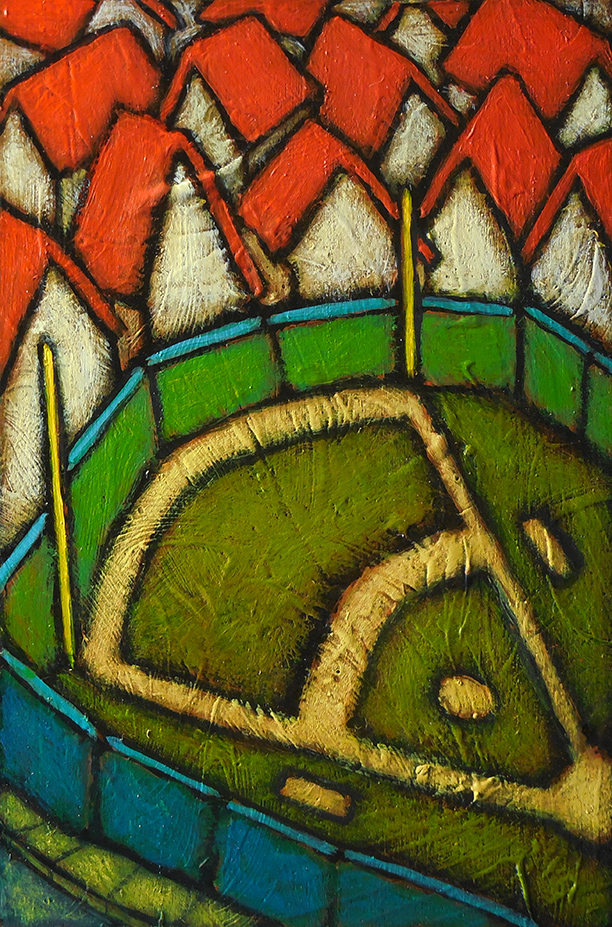
GC Myers-The Playing Field

The Playing Field– At Little Gems, West End Gallery


But purity has a brutal side. Sometimes a strikeout means that the slugger’s girlfriend just ran off with the UPS driver. Sometimes a muffed ground ball means that the shortstop’s baby daughter has a pain in her head that won’t go away. And handicapping is for amateur golfers, not ballplayers. Pitchers don’t ease off on the cleanup hitter because of the lumps just discovered in his wife’s breast. Baseball is not life. It is a fiction, a metaphor. And a ballplayer is a man who agrees to uphold that metaphor as though lives were at stake.

Perhaps they are. I cherish a theory I once heard propounded by G.Q. Durham that professional baseball is inherently antiwar. The most overlooked cause of war, his theory runs, is that it’s so damned interesting. It takes hard effort, skill, love and a little luck to make times of peace consistently interesting. About all it takes to make war interesting is a life. The appeal of trying to kill others without being killed yourself, according to Gale, is that it brings suspense, terror, honor, disgrace, rage, tragedy, treachery and occasionally even heroism within range of guys who, in times of peace, might lead lives of unmitigated blandness. But baseball, he says, is one activity that is able to generate suspense and excitement on a national scale, just like war. And baseball can only be played in peace. Hence G.Q.’s thesis that pro ball-players—little as some of them may want to hear it—are basically just a bunch of unusually well-coordinated guys working hard and artfully to prevent wars, by making peace more interesting.

― David James Duncan, The Brothers K


Hearing yesterday that major league baseball was going to resume once more after this last lockout made me happier than I had expected. It was easy to downplay the game and to find fault in greedy owners and wealthy players especially when the world is coping with a pandemic that refuses to leave and an unjustified war in Ukraine that is flirting on being genocidal.

Cynicism comes pretty easy. I mean, why should anyone care about a stupid game in times like these?

There might not be a satisfactory answer to that question.

All I know is that it made me feel a little lighter, filled with me with the anticipation of seeing games again, of reading box scores and comparing stats. Gave me some small but long sought sense of normality.

And that’s a good thing.

Maybe the excerpt above from The Brothers K, a 1992 novel from author David James Duncan, captures the true purpose of the game. Maybe it is a placeholder, a metaphorical diversion that fills in the void of aggression and the other emotional motivators that drive us to war.

I could believe that. Any reason that keeps people from wanting to physically decimate other people is fine with me. I would prefer a world where a video of a towering home run is much more common than one of a bombed out hospital or mass graves.

I can hope, right?

With that hope in hand and the prospect of the highs, lows and ultimate disappointment that baseball– and life– offers, let’s listen to a short clip of the late great Nina Simone doing a bit of Baseball Boogie. This bit focuses on Jackie Robinson which seems relevant since April 15 marks the 75th anniversary of him breaking the color barrier in baseball. It’s hard to believe it’s only been that long, seems like it should be even further removed in time but baseball, being a metaphor for many things in life, is sometimes unjust and unfair.

Let’s hope for sunny days, smoother infields and fair play in the days ahead.


I Feel Alright

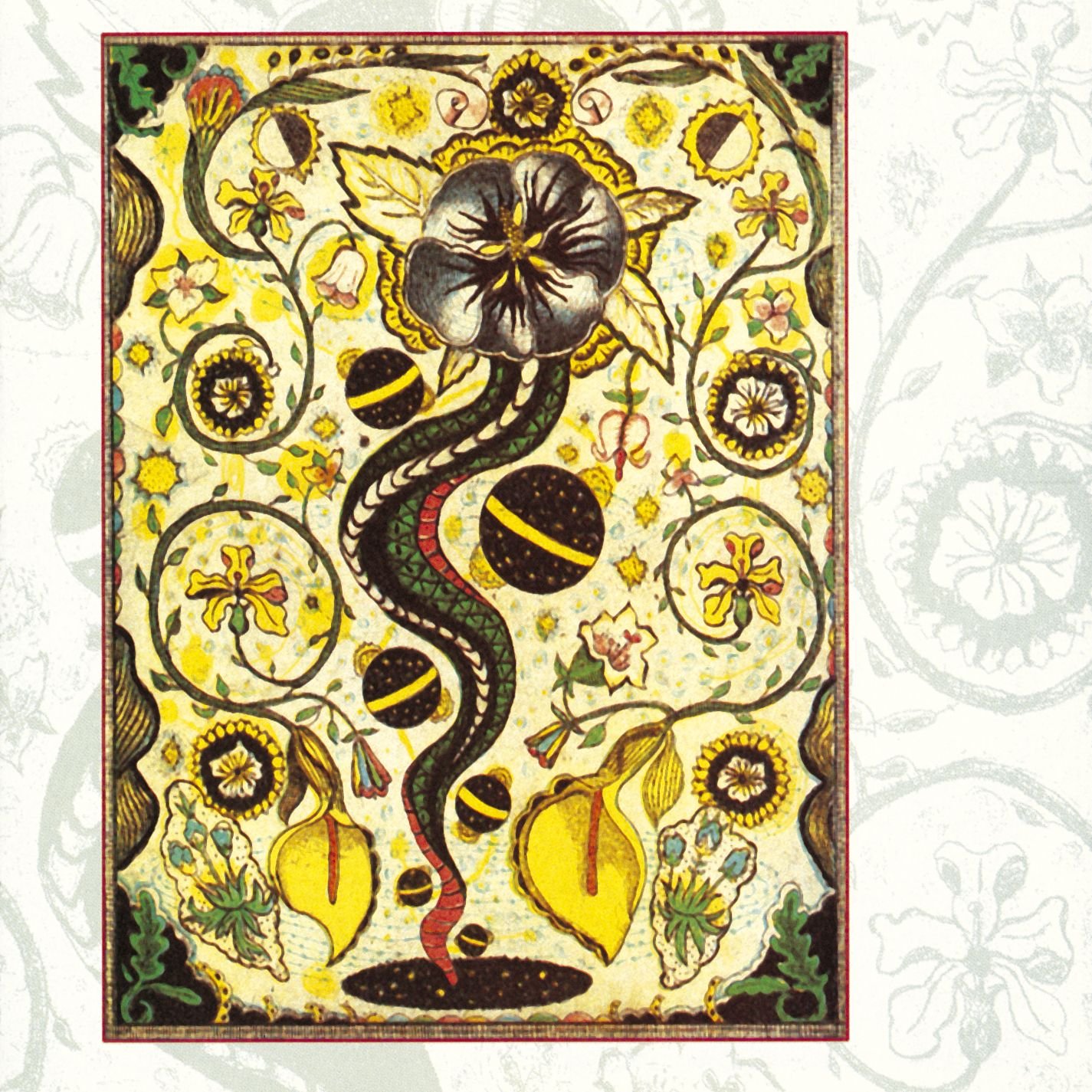
Steve Earle I Feel Alright Album Cover Tony Fitzpatrick artist

I Feel Alright Album Cover- Tony Fitzpatrick artist


I got everything you won’t need
Your darkest fear
Your fondest dream
I ask you questions
Tell you lies
Criticize and sympathize
Yeah, be careful what you wish for friend
Because I’ve been to hell
And now I’m back again

-Steve Earle, I Feel Alright


Don’t feel like droning on this morning, don’t feel like venting into the ether. One of those mornings that is a mix of frustration and weariness with little chinks of despair and anger thrown in just to make things interesting. I look for a song to act as a salve of sorts, something that will give me a little calmness and I come across a favorite from Steve Earle from back in 1996, I Feel Alright.

It’s one of those rare songs that both calms me down while pumping me up. I guess that’s a way of saying it centers me. All I know is that by the time the rhythm section kicks in, about 10 seconds in, I am already feeling alright.

Okay, got to get to work now. You can stay and listen if you want but don’t slam the door on your way out…