Feeds:
Posts
Comments

An Orderly Life

GC Myers- An Orderly Life sm

An Orderly Life– At the West End Gallery


The man who believes that the secrets of the world are forever hidden lives in mystery and fear. Superstition will drag him down. The rain will erode the deeds of his life. But that man who sets himself the task of singling out the thread of order from the tapestry will by the decision alone have taken charge of the world and it is only by such taking charge that he will effect a way to dictate the terms of his own fate.

Cormac McCarthy, Blood Meridian, or the Evening Redness in the West


I hesitated a bit about the use of the excerpt above from a book by author Cormac McCarthy, Blood Meridian, that I read probably thirty years ago.

It’s considered by some as McCarthy’s magnus opus and one of the greatest of American novels. My memory of it is of its powerful imagery of the relentless chaotic violence that marked the tale, which is set in  the Texas-Mexico borderlands in the late 1840’s. It’s a powerful told story that has the feel of the most lurid Hieronymus Bosch painting one could imagine.

It’s a book I would like to revisit but I keep putting off, especially in the context of America at this moment in time. It might be too disheartening to see parallels from that book in a contemporary reality.

Even so, the excerpt above describes what I see as the basis for much of my work, which is the need to seek some sort of order in the chaos, mystery, and seemingly senselessness which this world presents to us on a daily basis.

It might be a fool’s errand. I’ve said that many times before. But to not seek some sense of order in the swirl of chaos, some light in the dark, is unimaginable. Unacceptable.

To seek order means that we have not ceded control over our lives and fates to superstition and fear. That we have chosen to think and reflect on those mysteries of life.

And maybe if we can somehow pull one single thread of order from that vast tapestry of mystery and chaos, we will count ourselves among the fortunate ones who live outside the realm of chaos and fear.

Just one thread…

Little Gems 2022

sHEET


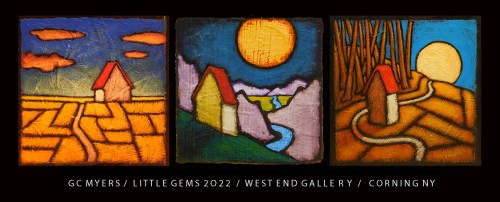
This year’s edition of Little Gems opens today at the West End Gallery in Corning, NY.

It’s an annual exhibit of small works that is near and dear to my heart as the 1995 show marked the first time I showed my work publicly. I have detailed that show here several times over the years, describing how I was torn between exhilaration and terror.

At the time, it was all new and unexpected. When I had started painting after injuries from a serious fall from a ladder left me with some time to fill, the idea that it could turn into something more than a way to burn off nervous energy wasn’t on my radar. But something clicked and it became an obsession, one that filled my evenings once my injuries healed.

A chance remark in a conversation with artist Tom Gardner, who co-owned the West End Gallery with his then wife Linda, led to an improbable critique of my work. Even then, I had no expectations and was anticipating that he would tell me politely that I had little talent.

But that didn’t happen. Linda came over as Tom was going through my ragtag milk crate portfolio of bits of paper and after a few minutes asked if I could have some of the pieces ready for their next show in couple of weeks.

That was that.

Though I had never framed or matted a painting in my life, I somehow got together 10 or 12 pieces for the show and suddenly began to believe in earnest that something could come from this thing that had been my preoccupation for the past year.

I didn’t know what that thing might be but it was exciting just to ponder the possibility.

The show itself is a blur now. I remember standing off to the side. I wasn’t close enough to let people know that they were my paintings but close enough that I could watch people and perhaps catch anything they might have to say about it.

That sounds creepy but, hey, I felt a bit desperate at that point. I viewed this as perhaps a narrow window of opportunity, one that might close as quickly as it had opened. So anything I could glean from the viewers’ reactions that might encourage or help me in keeping that window open was an imperative.

I didn’t sell anything from that show but I wasn’t discouraged. It served its purpose. It revealed a new path that could finally see with some clarity and strengthened my resolve to make my work speak with more force  so that I could move forward on that path.

And best of all, I knew that I could do it on my terms and in my voice, from my own mind and hands.

Something I could call my own.

You can see why I view this show with great regard.

This year’s version is a truly beautiful show and the gallery has went through a renovation with new flooring and improved lighting that illuminates the work at its absolute best. I hope you can make it out to the West End Gallery for this one.

The Audacity

GC Myers-The Audacity

The Audacity– At Little Gems show , West End Gallery


Men much more Loyal, tho’ not half so loud;
But these poor Devils were cast behind the Croud.
For bold Knaves thrive without one grain of Sense,
But good Men starve for want of Impudence.

–John Dryden, Epilogue to Constantine the Great by Nathaniel Lee


Another small painting that is part of this year’s edition of the Little Gems show which opens tomorrow, Friday, February 11, at the West End Gallery. This small piece, filled with warm tones, is titled The Audacity.

Audacity or boldness is something tat many of us run away from. It can be a scary thing, after all. Being bold means that you have put yourself out there for all to see which means there is the possibility for failure or ridicule.

And nobody wants that.

It’s sometimes easier to simply keep our heads down and blend in, never raising a fuss nor airing our desires. We just go with the flow.

As a result, those who are bolder among us, those who dare to yell the loudest and make the biggest spectacle– regardless of merit, honesty, righteousness, or popularity– often get the greater part of the attention and its accompanying rewards.

As they say, the squeaky wheel gets the grease.

This is in plentiful evidence since we live in a time where fools flourish in their boldness. Even encouraged to do so.

As Dryden wrote:

For bold Knaves thrive without one grain of Sense,
But good Men starve for want of Impudence.

Sometimes we can’t politely and timidly stand by for fear of failing or being ridiculed. You have to let the world know what you want and expect from it. This holds true for many aspects of our lives, both private and public..

You have to step up and let your voice be heard.

And hope that you are not of those knaves without one grain of sense.

But consider this: If you have any  concern at all about being that fool, you probably are not. So be audacious. It might do you a world of good.

Don’t take my word for it. As Robert Frost wrote:

Freedom lies in being bold.


GC Myers- Come Into the Clearing

Come Into the Clearing-  At the Little Gems exhibit, West End Gallery


It is a pity indeed to travel and not get this essential sense of landscape values. You do not need a sixth sense for it. It is there if you just close your eyes and breathe softly through your nose; you will hear the whispered message, for all landscapes ask the same question in the same whisper. I am watching you – are you watching yourself in me?

— Lawrence Durrell, Spirit Of Place: Letters And Essays On Travel


Author Lawrence Durrell was writing about travel in the excerpt above that describes the traveler looking for some part of themselves in each new landscape they come across.

I think the same can be said for art.

We look for something in each work of art that engages with a part of ourselves, something that either reinforces our self-identity or illuminates parts of it that we had not yet recognized.

That painting on the gallery wall might well be whispering that question as you stand before it: I am watching you – are you watching yourself in me?


Shaped By Life - GC Myers

Shaped by Life– At Little Gems, West End Gallery


In the clearing stands a boxer
And a fighter by his trade
And he carries the reminders
Of every glove that laid him down
And cut him ’til he cried out
In his anger and his shame
“I am leaving, I am leaving”
But the fighter still remains, mhmm

The Boxer, Paul Simon


I sometimes think of the Red Tree as a fighter, as a symbol of steadfast endurance scarred and shaped by every battle. Much like the boxer in the old Simon and Garfunkel song.

And as analogous as the lyrics are to the tree, they may be even more symbolic of Everyperson’s life. The opening stanza, for example:

I am just a poor boy
Though my story’s seldom told
I have squandered my resistance
For a pocketful of mumbles such are promises
All lies and jest
Still a man hears what he wants to hear
And disregards the rest, mhmm

As the opening lyrics point out, most of us live lives of relative anonymity, our stories seldom told. And as we move through our lives, we grow tired of the battle, the lies and promises. At a certain point some of us stop listening but for things we want to hear.

Asking only workman’s wages
I come looking for a job
But I get no offers
Just a come-on from the whores on Seventh Avenue
I do declare there were times when I was so lonesome
I took some comfort there

This verse has less to do with the Red Tree analogy but speaks to many of our lives. We often have points in our lives were we are lonesome and disenfranchised, sending us to seek comfort in distraction and diversion. Maybe not the whores on Seventh Avenue but some sort of pleasure that eases the pain of loneliness and alienation.

We each choose our own poisons.

Now the years are rolling by me
They are rocking evenly
I am older than I once was
And younger than I’ll be, that’s not unusual
It isn’t strange after changes upon changes
We are more or less the same
After changes we are more or less the same

And as we age and stand in the triumph of our persistence, we often reflect that despite the twists and bends that have changed and shaped us over the years, we do feel much the same. Our age and afflictions– like the the bends and twists seen in the Red Tree– seem detached from our spirit and spark, what we know and believe.

We are shaped by life, but some things remain the same.

This is the thought that was behind my interpretation of the new painting above, Shaped By Life. It will be part of the Little Gems show that opens Friday at the West End Gallery. I saw the twists and bends of the tree telling the story of the hardship of its existence. Yet, despite being pushed and bent by the stresses of life it still stands, persevering. It’s not a matter of winning or losing.

The triumph is in the being.

Here’s Simon and Garfunkel with their classic The Boxer, a longtime favorite of mine.


Featherlight

GC Myers-  Featherlight sm

Featherlight– At Little Gems


I always figured we were born to fly, one way or other, so I couldn’t stand most men shuffling along with all the iron of the earth in their blood. I never met a man who weighed less than nine hundred pounds.

― Ray Bradbury, A Medicine for Melancholy


This new small painting, headed to the West End Gallery for their annual Little Gems show, is titled Featherlight. I chose this title because the contrast between the weightiness of the earth and sun and the feathery lightness of the sky.

Plus, it seemed to me that the Red Tree here is filled with a distant longing, as though it knew it was born to fly.

Yet, again and again, it finds itself unable to break free of the heaviness of the bonds it holds with this earth.

But even though it finds itself trapped between the weight of the earth and the feather-lightness of the sky, it holds tight onto its dream of flight.

Even for a nine hundred pound man with all the iron of the earth flowing in his veins, simply having the dream creates its own lightness.

Inside, the tree is forever featherlight.

Ventura

GC Myers- Ventura 2022

VenturaLittle Gems at the West End Gallery


The only thing that makes life possible is permanent, intolerable uncertainty: not knowing what comes next.

― Ursula K. Le Guin, The Left Hand of Darkness


The painting shown above, Ventura, is a late addition to this year’s Little Gems show that opens this coming Friday, February 11 at the West End Gallery.

The title is taken from the Latin word that means future or the things that will come. And that is how I view the underlying meaning in this small piece.

A journey forward toward the future, forever following light but never truly knowing what lies ahead. As Le Guin points out, this uncertainty itself might be the thing that drives us forward.

If so, we must be aware of each step of the journey, to pause occasionally to take in and savor the colors and textures of the moment.

I think that sums up this painting well, at least in how I read it. You may well see it differently.

For this week’s Sunday Morning Music I am going with an old favorite that I haven’t heard in awhile, one that might fit well with Ventura. The song is Wayfaring Stranger from the late great Doc Watson. I sometimes forget to listen to Doc’s music and when I hear it again, the eloquence and power in his simple and plaintive voice is like a soothing balm. Good stuff.


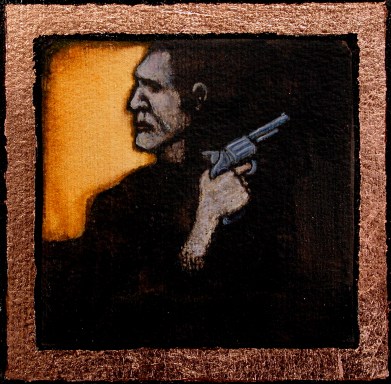
Assassins

GC Myers Two Sides  2006


“Legitimate political discourse”

Those three words set me off yesterday.

And to be honest, I am as angry this morning not to mention a little worried for what the use of these three simple words mean in the near future.

Legitimate political discourse” was how the Republican Party described the actions of the January 6 insurrectionists yesterday in their censure of Rep. Cheney and Rep. Kitzinger, the only two Republican members of congress who clearly viewed the events of January 6, 2021 for what it was– a violent threat to our democratic system.

As would any breathing human with a shred of honesty and integrity.  Or eyes.

The idea that someone could look at that day and the violence that it entailed and say that this was just a another example of citizens reaching out to their elected officials is maddening. Thus, my anger.

But as I said, it worries me as well.

It is a public declaration that such activity is now within the bounds of normal behavior. This acceptance and legitimization of political violence– along with the recent race to ban books, intimidate school boards and teachers, erase certain parts of our history, and continuously distribute falsehoods and misinformation–confirms my fear that the Republican Party has wholeheartedly embraced a form of fascism.

That is a dangerous proposition for every one of us, whether or not we choose to pay attention.

But I wonder how well they have thought out this public declaration. Where does the leadership of the Republican Party think this will lead?

There are always unintended consequences to any action, some favorable and some devastating. And declaring that violence and mayhem is okie-dokie seems to be leaning towards devastation, at least in my mind.

I mean, what is the dividing line between what they see as legitimate and illegitimate?

If I don’t see eye to eye on things with my congressperson, can I run them over with my car if I see them on the street?

And is Antifa, who stands against this new form of the GOP, now okay with them? After all, their most extreme actions are certainly as legitimate a form of political discourse as those who bear-sprayed police and beat them with flags and such.

Would John Wilkes Booth’s assassination of Lincoln be now seen as a citizen rightfully expressing his discontent with a public official?

Under today’s GOP, would Lee Harvey Oswald have qualified to run for congress under their banner?

Where does it take you when you have chosen a path built on the acceptance– and encouragement– of violence?

I am a person constantly filled with uncertainty and doubt but I can tell you with absolute certainty that the answer to that question is: Nowhere good.

That a major political party with all its resources, money, and mechanisms would choose to make such a declaration should open all of our eyes a bit wider and make the hair on the back of our necks stand up. Like a wild creature who senses a nearby predator and is ready to fight, flee, or hide.

There is danger at hand and we need to take action.

Fight, flee, or hide.

I am not going away and I am certainly not going to hide.

Here’s a clip from Assassins, the1990 Broadway musical from the recently deceased Stephen Sondheim. The show features the ghosts of nine prominent assassins and would-be assassins–John Wilkes Booth, Lee Harvey Oswald, Leon Czolgosz, Charles Guiteau, John Hinckley, Giuseppe Zangara, Samuel Byck, Lynette “Squeaky” Fromme, and Sara Jane Moore— and explores what their presence in American history says about the ideals of their life and country.

This song is the final reprise of Everybody’s Got the Right.

It might be the new theme song of the GOP.


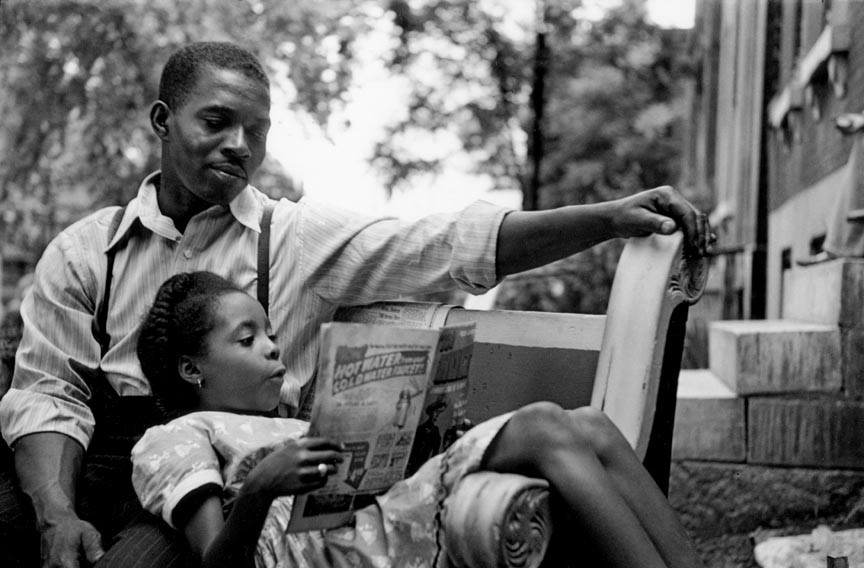
Gordon Parks Father Daughter St. Louis 1950

Gordon Parks- Father /Daughter, St. Louis, 1950


One of my favorite parts of writing this blog is the stream of consciousness part of it where I encounter something new. That part where I begin to research and one thing leads to another and another, wild tangent  to wild tangent. The result is that I end up learning of someone of whom I was previously unaware or some new concept or fact.

It often starts innocently. For example, this morning I stumbled across a short video from last night’s The Late Show with Stephen Colbert where the singer Dua Lipa turned the tables and asked Colbert about whether his comedy and his faith ever intersected. His answer was thoughtful and complete. I urge you to watch the clip at the bottom.

But in it, he invoked lines from the late poet Robert Hayden , from his 1970 book of poetry titled Words in the Mourning Time, that were very powerful and to the moment:

We must not be frightened nor cajoled
into accepting evil as deliverance from evil.
We must go on struggling to be human,
though monsters of abstraction
police and threaten us.

Words powerful enough that I immediately began looking up Hayden. I was a little embarrassed and ashamed that I didn’t know the name. His credits and the poems that I read were staggeringly impressive.

Hayden was an African-American born in Detroit in 1913 and died in 1980. He was the first African-American to hold the post Consultant in Poetry to the Library of Congress, which is now known as Poet Laureate.

Inspired by the poetry of W.H. Auden  and Stephen Vincent Benet, Hayden’s work often outlined the experience of the African-American throughout our history. But even so, Hayden rejected the idea of being called a black poet, referring to simply be recognized as a poet. This small distinction put him somewhat out of favor during the 1960’s with the black community though in essence his desire to be recognized without reference to his race represented one of the desired goals of the civil rights movement.

In fact, the whole of the verse from which Colbert quoted made just that point:

We must not be frightened nor cajoled
into accepting evil as deliverance from evil.
We must go on struggling to be human,
though monsters of abstraction
police and threaten us.

Reclaim now, now renew the vision of
a human world where godliness
is possible and man
is neither gook nigger honkey wop nor kike

but man

permitted to be man.

I am including a couple of his other poems below. One is Those Winter Sundays which movingly speaks of the simple duties of love carried out by parents that are often overlooked by their children. Powerful. The other is Frederick Douglass.

As I read this poem, I wondered as I have many time before how nobody had yet made a big biographical film about the life of Douglass, who I consider one of the most fascinating, impressive, and influential characters in our history. This led me to looking this up and it turns out that the production company formed by Barack and Michelle Obama have one currently in production based on the Pulitzer Prize winning biography, Frederick Douglass: Prophet of Freedom, from historian David Blight. Hope it brings his power and eloquence to the attention of a wider swath of Americans.

Glad I watched the video below and found out more about Robert Hayden. I feel a bit more complete now. And that’s always a good thing.


Those Winter Sundays

Sundays too my father got up early
and put his clothes on in the blueblack cold,
then with cracked hands that ached
from labor in the weekday weather made
banked fires blaze. No one ever thanked him.

I’d wake and hear the cold splintering, breaking.
When the rooms were warm, he’d call,
and slowly I would rise and dress,
fearing the chronic angers of that house,

Speaking indifferently to him,
who had driven out the cold
and polished my good shoes as well.
What did I know, what did I know
of love’s austere and lonely offices?


Frederick Douglass

When it is finally ours, this freedom, this liberty, this beautiful
and terrible thing, needful to man as air,
usable as earth; when it belongs at last to all,
when it is truly instinct, brain matter, diastole, systole,
reflex action; when it is finally won; when it is more
than the gaudy mumbo jumbo of politicians:
this man, this Douglass, this former slave, this Negro
beaten to his knees, exiled, visioning a world
where none is lonely, none hunted, alien,
this man, superb in love and logic, this man
shall be remembered. Oh, not with statues’ rhetoric,
not with legends and poems and wreaths of bronze alone,
but with the lives grown out of his life, the lives
fleshing his dream of the beautiful, needful thing.
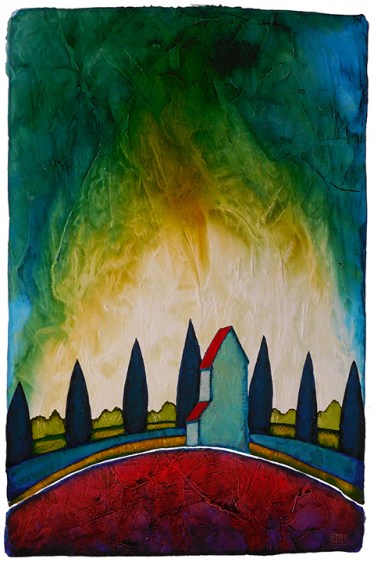
Hasten to the Light

9922104 Hasten to the Light sm

Hasten to the Light– Included in Little Gems at the West End Gallery


A bit of a mashup today with a new small painting, a Shel Silverstein poem and a Warren Zevon song.

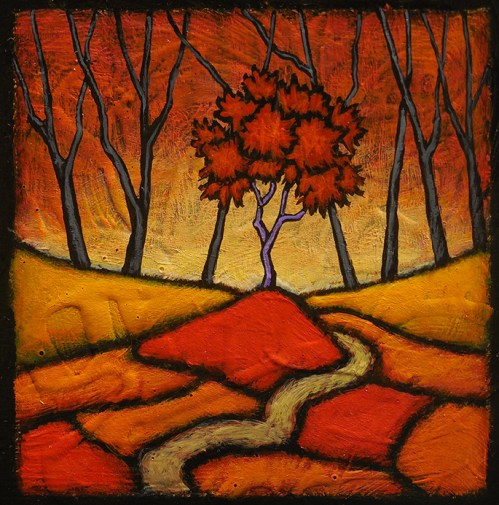
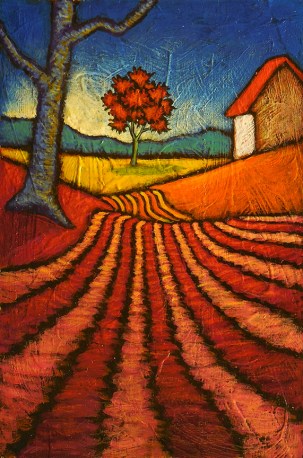
The painting above is Hasten to the Light which is part of the annual Little Gems show at the West End Gallery in Corning. 


Shel Silverstein Needles and Pins

Shel Silverstein- Needles and Pins


The poem and illustration above is from the Shel Silverstein book, Falling Up.

The song below is Hasten Down the Wind from the late Warren Zevon with accompanying vocals from the also late Phil Everly. Zevon wrote the song but most folks associate it with Linda Ronstadt who made it the title track of a popular album in the 70’s.

The connecting thread between these three pieces is the expression of a restless desire. Oh, and the use of the term hasten in two of them. And the allusion to sail and sailing in two others.

I am sure there are other connections one can find in the three but let’s just leave it at these and enjoy all or some of the three, okay?