Feeds:
Posts
Comments

Goodbye, Marty…

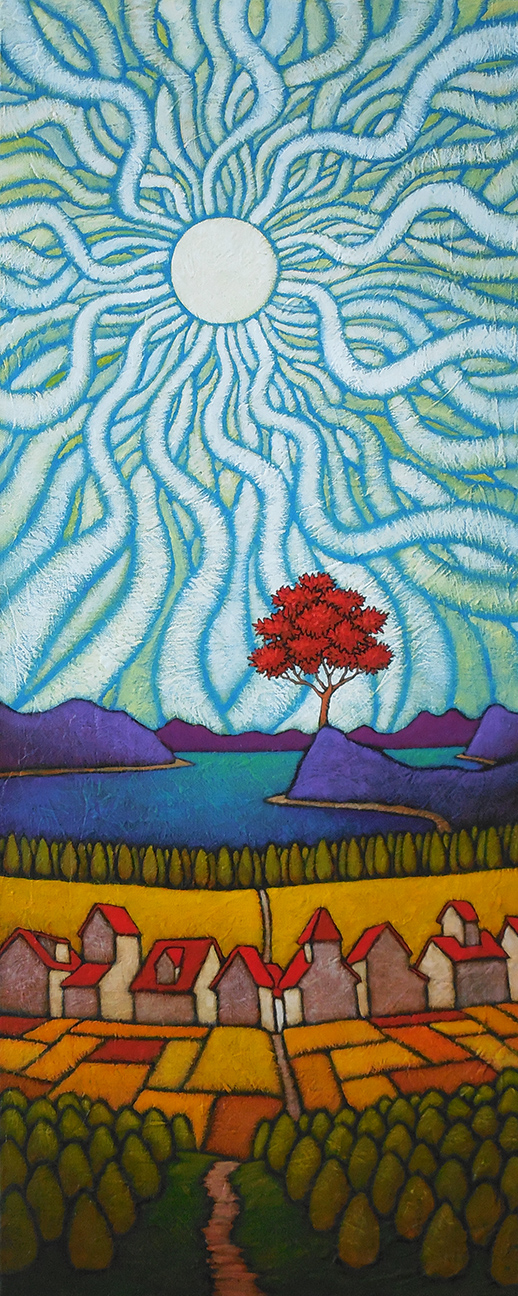
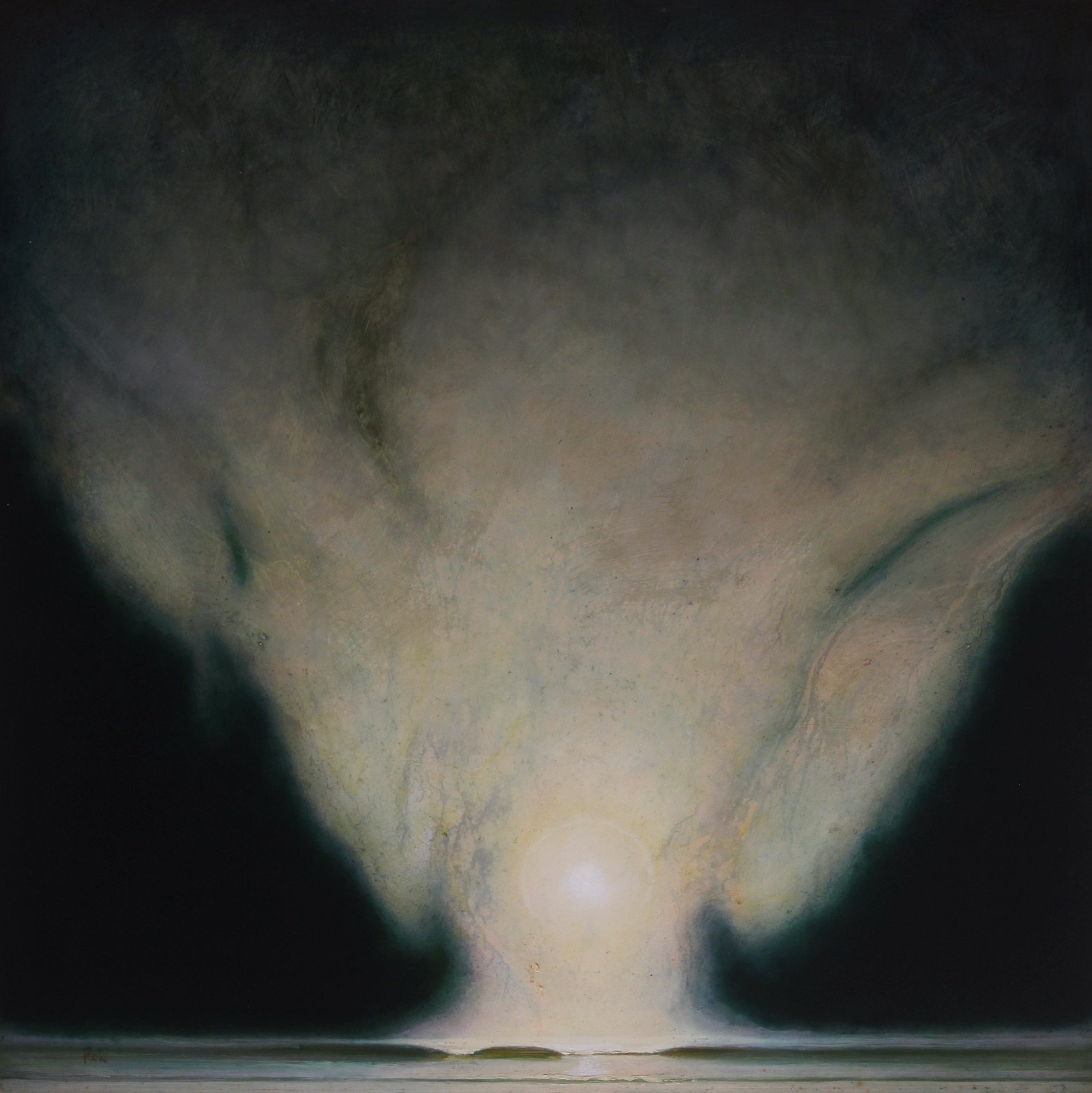
Martin Poole, Moon VII , West End Gallery


I never like writing about the death of a friend. It’s hard to express the complicated nature and meaning of friendship especially when the shock of their death is close at hand. It seems like words never say enough and often fail to capture the whole of the person. And with a friend with so many facets of being, it seems even more insufficient.

I learned yesterday afternoon of the death of the painter and longtime friend Marty Poole. He passed away this past weekend from a cardiac event at his home outside of Asheville, NC. 

I have known Marty for thirty years now. In fact, my introduction to the West End Gallery came as the result of buying a small Marty Poole painting the year before I began showing my own work there.

Marty was one of the stalwarts of the West End Gallery, having shown his work there for over 45 years. His work was always luminous, as though lit from within. You could see it in his broad, ethereal landscapes and especially in his mood-filled figurative work. I

I could go on and on about his painting. It was always special work, and both his talent and eye were remarkable. World class. But it was his mind that differentiated him from many artists. He had a wide and deep knowledge of painters and other artists that fed an analytical mind, allowing him to discuss in great detail almost any painting you might put before him.

And it didn’t stop with art. He could speak easily on a wide range of subjects, often delving deep into the esoteric aspects of philosophy and psychology. A simple comment could lead to a fascinating discussion

His mind along with his humility and kindness are the things I will miss about Marty. He was a friend and teacher to many artists in this area. 

It’s hard to believe that Marty is gone, that there will be no more Marty Poole paintings being gifted to us in the future or any more great conversations with him. The world lost a great one.

 Marty was, along with his great friend and painter Tom Gardner, were my first real artist friends when I began showing at the West End. They both accepted and embraced me as a fellow artist even when I was still a fledgling painter.  Their generosity of spirit meant the world to me then and without it, I don’t know that I would have followed the same path as the one I am following. I am forever in his debt.

As I said above, this is woefully insufficient in capturing the man, his talent, his warmth, or his legacy. It’s a hard task when the shock is still at hand.

Goodbye, Marty. Thank you for what you gave this world.

Good travels to you, my friend…

Anyone Who Had a Heart

In Harmony— At Principle Gallery


I have an idea that the only thing which makes it possible to regard this world we live in without disgust is the beauty which now and then men create out of the chaos. The pictures they paint, the music they compose, the books they write, and the lives they lead. Of all these the richest in beauty is the beautiful life. That is the perfect work of art.

― W. Somerset Maugham, The Painted Veil


There are so many things that I could use to demonstrate the chaos and ugliness currently taking place in this country, from masked ICE agents racially profiling then sweeping people off the streets of our cities to a host on Fox News unequivocally advocating for the euthanasia of the homeless and mentally ill, stating, they should be subject to “Involuntary lethal injection, or something. Just kill them.

That clip from Fox has haunted me since I first watched it yesterday. I found myself asking how people have allowed themselves to descend to such depths of inhumanity. How could they be so cavalier with the life of another person?

But more than that, I asked myself how people who possess any warmth and humanity towards others can get through times like this without themselves falling into a pit of anger and hatred.

I know the answer to that last question. It’s a thought that has been revisited here many times, one that perfectly captured in the passage above from Somerset Maugham.

People under stress react with the creative impulse.

Much like trees that produce more seeds when they feel under stress. I thought of this yesterday when I came across a acorn caps that had fallen from the oaks along the path between my home and the studio. I have seen it many times over the years as the oaks, hickories, and white pines on our land respond with big increases in their seed production when the weather is severely hot and dry.

Not being trees, humans react to stress by trying to change the world in the only ways they know–through their art, their writing, their music, and so on. 

And most importantly of all, by focusing on living in a way that creates a beautiful life, one filled with grace, harmony, honesty, compassion, balance, and courage.

As Maugham writes, that is the perfect work of art.

That’s not easy, of course. Creation is never easy. But by recognizing that one can create beauty in their own life, the path is at least created. And maybe that path will serve, like many works of art, as a symbol and guide for others.

I know it sounds naive, even weak, when faced with the vitriol and the hatred of the inhumanity we are facing. But you have to remember that creation takes strength, courage, and sacrifice. It ultimately comes from tough people with strong survival instincts.

If they have to fight to protect that which they have created, they do not hesitate.

That is the type of strength that defeats hatred and inhumanity.

Here’s this week’s Sunday Morning Music, an oldie from that perfectly matched team of singer Dionne Warwick and the songwriting team of Burt Bacharach and Hal David. This is Anyone Who Had a Heart from 1964. It seems right for the subject today.


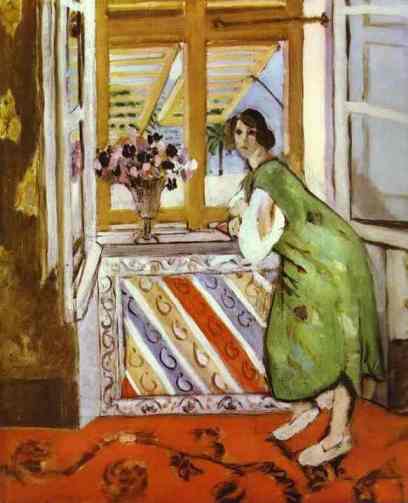
matisse-- Young Girl in a Green Dress 1921


It has bothered me all my life that I do not paint like everybody else.

–Henri Matisse


Well, Mr. Matisse certainly did not paint like everybody else and I, for one, am glad of it.

But I believe I know what he is saying. As an artist, you’re always torn between two poles of confidence, the high and the low.

When it is at its highest point, you believe so strongly in what you are doing that it doesn’t matter what everybody else’s work is like.

But at the low points, you lose confidence in the credibility of your own voice and vision. At these low points it seems like it would be easier to have the comfort of being able to judge your own work against others who do the same type of work so that you could gauge whether your creations were worthy of notice.

I certainly have swung wildly between these two poles and have at points wished that I painted more like other artists, as though I would somehow benefit from their credibility. I know that this sort of thinking is misplaced and the result of low self-esteem in that moment, but it happens.

And on a more regular basis than one might think.

But the work itself is usually the voice of reason, the thing that brings me around once more. Just getting lost in the creation of a piece and sitting in front of it in the aftermath, still fully immersed in the life force it then exudes, washes away that need to be like everybody else.

But even in that moment, I know that nagging feeling and the desire to be like everybody else will still be there waiting for me when I inevitably swing back to the low side.

So, Mr. Matisse, thank you for not being like everybody else. I know how hard it sometimes must have felt but we appreciate you staying true to your own voice.


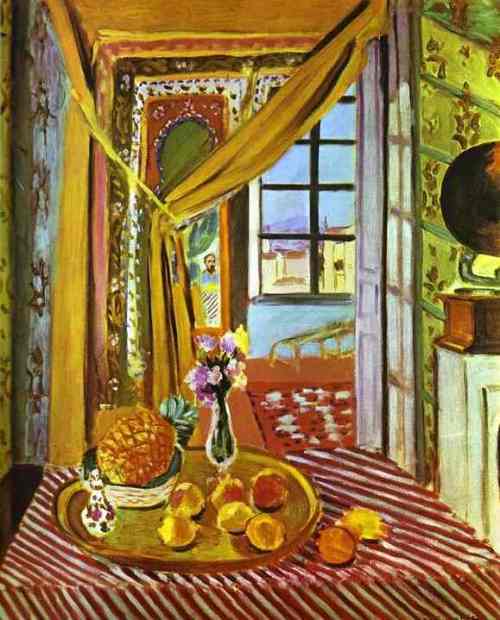
I apologize for replaying another blogpost again this morning. I am again tight on time and instead of not sharing anything and since I liked sharing the work of those other artists yesterday, I thought I’d share a post that ran (as a replay) three years back that feature a selection of Matisse’s interior scenes, which I very much admire.

Plus, I strongly identify with Matisse’s words here. When I am at a low ebb of confidence, which happens more than I would like, I wonder if should try to paint more like everybody else. Or even paint at all. Fortunately, I’ve done this long enough that there is almost a script for this situation by now, one where I tell myself that in these moments of doubt, I am failing to recognize that it is the fact that not being like everybody else is actually the strength of most artists.

Fresh material tomorrow. Promise.

Now let’s listen to the Kinks. They know what I’m talking about.


Matisse Interior with Phonograph 1924matisse the Window 1916matisse -- Studio Quay of Saint-Michel 1916Matisse - interior-at-nice 1921Henri Matisse -the red studioMatisse-The-Dessert-Harmony-in-Red-Henri-1908-fast

Final Paintings (Redux)


artists-last-works-Stuart davis 1964

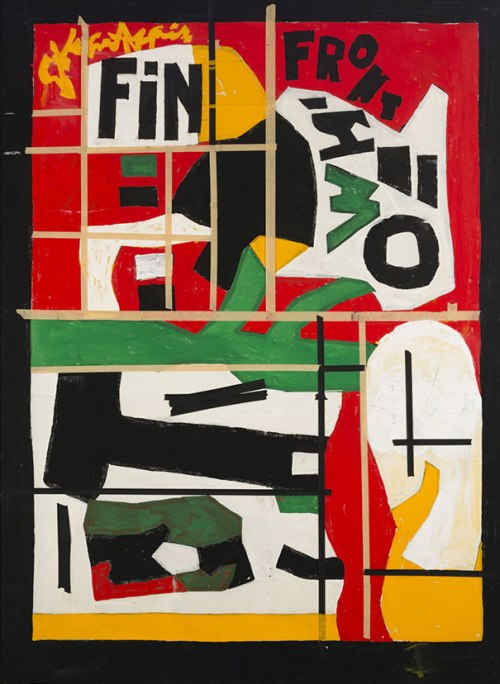
Stuart Davis — Fin ,1964


There’s no retirement for an artist, it’s your way of living so there’s no end to it.

― Henry Moore


Too much to do this morning so I am sharing a post from four years back about artists never retiring. I read a great quote about this the other day and failed to write it down. And now that I want it, the speaker and the words completely evade my memory. Instead, I’ll use the quote above from sculptor Henry Moore.


[From 2021]

We had dinner with our good friends last night and somehow the conversation came around to the idea of me painting until the last moment of my life. No retirement here, I guess. We agreed that my final painting should have a big slash of paint, most likely red, going down through the surface of the painting as I slump to the ground for the last time.

I suggested that maybe I paint one now just to insure that I am not caught off guard. Death can sneak up on you sometimes and foil your best laid plans.

Of course, that was all in fun but it made me think about the final paintings of well known artists. There are plenty of great examples. Some are complete and well known pieces by these artists in their final days. For example, Claude Monet‘s last work was the completion of his massive multipart mural the Grande Decoration. An epic and fitting way to finish to his painting life. Or you can look to the final painting Edouard ManetA Bar at the Folies-Bergère, which may be the best known of his works. Or there’s Paul Klee and his The Last Still Life, which was titled by his son after his death.

My favorite final painting is the one shown here at the top, Fin, from Stuart Davis. On a June night in 1964, after watching a French movie on TV that concluded with the word “fin” (which means “the end” in French), he added the word on the painting on his easel before going to bed. He suffered a stroke that very night and died in the ambulance while on the way to a NYC hospital. It truly was the last painting for him. Fin.

Both Diego Rivera and Frida Kahlo painted watermelons the subject of their final paintings. This is fitting because the watermelon is a symbol associated with the Mexican Dia de los Muertos, the Day of the Dead. In Rivera’s case, he didn’t want to paint it but did so at the insistence of a collector. Maybe he knew it would be his last painting?

There are some final paintings that are unfinished, the process cut short by death. I don’t believe Keith Haring‘s final piece, Unfinished Painting from 1990, shown below, falls in this category. I think it was meant to appear unfinished as a statement on the lives, his included, being cut short by AIDS at that time.

A favorite of mine from the unfinished last paintings is The Bride from Gustav Klimt, shown below, mainly because it reveals an interesting part of his process which was that he would paint his figures as completed nudes before painting on their clothing. I don’t know if that was simply part of his process or part of his deeper sexual obsessions. Either way, it’s kind of interesting.

There are plenty of other examples and there will be plenty more in the future, I am sure. Artists don’t really ever retire, after all.

Now, I have to go. There’s an unfinished painting waiting for me put a red slash through it…


artists-last-works- monet The Grandes Décorations 1920 26

Claude Monet- The Grandes Decorations mural

artists-last-works-haring 1990 Unfinished Painting

Keith haring- Unfinished Painting 1990

artists-last-works-Klee the last still life 1940

Paul Klee- The Last Still Life, 1940

adorn the bride with veil and wreath by Klimt.jpg

Gustav Klimt- The Bride, 1918

artists-last-worksKahlo Viva La Vida

Frida Kahlo — Viva La Vida, 1954

artists-last-works-Rivera The Watermelons 1957

Diego Rivera– The Watermelons, 1957

Still Can’t Let Go

Imitatio (2021)


The patient cannot remember the whole of what is repressed in him, and what he cannot remember may be precisely the essential part of it. He is obliged to repeat the repressed material as a contemporary experience instead of remembering it as something in the past.

― Sigmund Freud, Beyond the Pleasure Principle


I am sharing what might seem like an odd triad this morning– a passage from Sigmund Freud on compulsion, a Red Chair painting of the aftermath of what looks to be a wild party and a song, Can’t Let Go, from the odd and wonderful pairing of Alison Krauss and Robert Plant.

I think there’s a connection in there somewhere. Just can’t be sure if anyone else will see it.

A compulsion to repeat ourselves is an underlying theme in my work. I sometimes think I know there is something more than meets the eye in these familiar forms and colors and lines and icons –the omnipresent Red Tree, for example– and that if I keep delving into them, they will at some point reveal their secrets to me.

Some tidbits of wisdom, any iota of truth that will make it all make sense.

That must be close to a definition of compulsion. Probably much in the same way that we– both individually and collectively– seem to constantly repeat ourselves, making the same missteps and covering the same ground as though we have some sort of short-term memory dysfunction that prohibits us from seeing the patterns we have followed all along, that keeps us from learning from our mistakes.

I am hoping there is some constructive effect in my own compulsion. I would hate to think that the decades of work that have come with it are a matter of me simply making the same mistake over and over again.

Not that that would surprise me. I often make the same mistake again and again, somehow thinking that this time will yield different results.

Maybe I should stop contemplating my navel this morning and get to work. Who knows? Maybe today will be the day I figure it all out, the day that bit of long sought wisdom is finally revealed.

Or not. Doesn’t matter. My compulsion would most likely blind me to it and keep me at it even if I find it now.

In the meantime, enjoy this Alison Krauss and Robert Plant version of Can’t Let Go, from their second album together, Raise the Roof. It’s a song famously covered by Lucinda Williams on her great 1998 album, Car Wheels on a Gravel Road.

Good stuff.


This post is from several years back. I was going to comment on the many events taking place right now– the Kirk killing, the Russian drones probing NATO airspace, the Epstein revelations, the random abductions by ICE agents, the continued occupation by US troops within our cities, etc. Just thinking about it as a whole felt very much like what this post, especially Freud’s words. We repress the lessons of our past and continually repeat patterns of behavior, thinking that we can come up with different results than those from prior times.  

Like the title of the song, we just can’t let go.


Dusk of Time

Dusk of Time– Coming to West End Gallery


When philosophy paints its grey on grey, then has a shape of life grown old. By philosophy’s grey on grey it cannot be rejuvenated but only understood. The owl of Minerva spreads its wings only with the falling of the dusk.

–Georg Wilhelm Friedrich Hegel, Philosophy of Right (1821)


This is the first new painting from my October solo show at the West End Gallery that I am sharing here. I didn’t think it would be the first painting from the show to be shown, mainly since it is relatively small at 6 inches wide and 18 inches tall. There are much bigger pieces from the show, including the title painting, Guiding Light, that I could have shared here first. But it stood out to me this morning and it still does somewhat represent the title of the show with its prominent dropping sun.

You might see it as a rising sun and that’s fine. Art is subjective to our own personal interpretation. While I might see it one way and I am its creator, that doesn’t mean it must have only that meaning. Once I put it out in the open air it is on its own and it becomes what the viewer thinks it is.

But I am sharing my thoughts today, so we’ll call it a dropping sun at dusk. I felt that the passage at the top from the German philosopher Hegel truly fit what I was seeing in this painting. I saw it as being about the passage of time, the ending of a period of time, and the retrospection that comes after that time is gone. 

He is basically saying that we can only truly know and understand anything until it has fully run its course and is well beyond our efforts to bring it back to life. The Owl of Minerva that he employs here is an ancient symbol of wisdom. The owl flies when we gain the wisdom from any time or event only after it has completed the course of its existence. 

That makes sense to me. So often we lose understanding and insight when we are in the midst of the happenings of our time. We see and hear only bits and pieces of the truth along with a multitude of falsehoods, biased opinions, and myriad distractions. We are unable to see the full scope and perspective of events (or lives) while they are happening.

We can’t see them in their fullness until the arc of their being has been completed. Only then does there come clarity as time washes away the debris that obscured the truth while it existed.

Of course, sometimes this clarity is only gained after years, decades, and centuries. Sometimes eons and ages. 

In this painting, Dusk of Time, I see that clarity on a smaller scale in the reflection that sometimes comes at the end of the day, especially when that day has been an eventful one. Ideally, you can see the arc of the day and understand how it took shape and where it led you. Perhaps how you will go forward.

That’s a thumbnail explanation. There’s a lot of feeling in this smaller painting, much more that I can put down right now.

It just feels like it knows a story that it needs to share. I have a sense of the story and the truth it is telling me. But what that story is and what truth it reveals is up to whoever engages with it. 


An Eternity

Gaining Understanding— At Principle Gallery


There is no dusk to be,
There is no dawn that was,
Only there’s now, and now,
And the wind in the grass.

Days I remember of
Now in my heart, are now;
Days that I dream will bloom
White peach bough.

Dying shall never be
Now in the windy grass;
Now under shooken leaves
Death never was.

An Eternity, Archibald MacLeish (1892 –1982)


I am pretty busy this morning with a bunch of small but important tasks for my upcoming October show at the West End Gallery and my September 27th Gallery Talk at the Principle Gallery. But I had this short poem from Archibald MacLeish in my holster and felt like pulling it out. Seemed like the right bit of verse for the moment since its theme is timelessness and I am feeling pressured by a lack of time.

This idea that eternity exists in the present moment, one in which the past and the future have no place, is a concept in which I am trying to gain some understanding. See how I tied in the painting at the top? Bet you didn’t see that coming.

For the musical element of today’s triad, I am going a bit highbrow with a piece from George Frideric Handel, Eternal Source of Light Divine. It is an aria from his Ode for the Birthday of Queen Anne, composed in 1713 to celebrate the Queen’s birthday and the Treaty of Utrecht.

It’s an oldie but a goodie. It has a beautiful ethereal quality that lives up to its title. It is performed here by Marie-Sophie Pollak and the Ensemble Concerto München.

Got to run now. Time’s a-wasting. See? I still don’t get it…


Majesty of Creation

Pax Omnis– At Principle Gallery


We have lived by the assumption that what was good for us would be good for the world. And this has been based on the even flimsier assumption that we could know with any certainty what was good even for us. We have fulfilled the danger of this by making our personal pride and greed the standard of our behavior toward the world – to the incalculable disadvantage of the world and every living thing in it. And now, perhaps very close to too late, our great error has become clear. It is not only our own creativity – our own capacity for life – that is stifled by our arrogant assumption; the creation itself is stifled.

We have been wrong. We must change our lives, so that it will be possible to live by the contrary assumption that what is good for the world will be good for us. And that requires that we make the effort to know the world and to learn what is good for it. We must learn to cooperate in its processes, and to yield to its limits. But even more important, we must learn to acknowledge that the creation is full of mystery; we will never entirely understand it. We must abandon arrogance and stand in awe. We must recover the sense of the majesty of creation, and the ability to be worshipful in its presence. For I do not doubt that it is only on the condition of humility and reverence before the world that our species will be able to remain in it.

~Wendell Berry, The Art of the Commonplace (2002)


Poet/ environmental activist Wendell Berry wrote this is the early 2000’s. We haven’t changed much in the intervening years. There have been attempts and for a while it looked like we were making slow progress in learning to live on this planet as an integrated part of it rather than as a swarm of some alien parasites feeding on it.

Unfortunately, the current powers-that-be are paragons of arrogance and greed. They seem fixated on ruthlessly and spitefully defying any attempts at a peaceful coexistence with our planet. They wish to do away with many alternative/green energy initiatives, especially those having to do with wind. solar, or electric cars. Regulations put in place to protect our water and air are being gutted.

I believe that if they had their way, we would be moving around in coal burning cars and planes. Or that cities would be required to dump wastewater directly into the nearest body of water. Or that our National Parks will become vast drilling and mining reserves. Or that schools would have to put asbestos back in the classrooms. Maybe they would even heat the by burning asbestos logs in each classroom?

There is something in the crazy decisions they are making that goes beyond pure arrogance and greed, though both are still there as the industrialists clap their hands in glee. I used the word spitefully above. There seems to be an element of spite in their actions that defies common sense, or even their greed. Their choice in nearly every decision having to do with the environment is one that reeks of–and I hesitate in writing this–evil. It’s as though they are determined to damage the planet and its inhabitants.

Maybe they see it as some form of punitive action or maybe it is simply an arrogant show of the power which they believe they hold over the world and us. 

I don’t know. But I worry that since they are putting so much bullshit in the air right now (adding yet another form of pollution) on so many fronts that many of these environmental atrocities are going unnoticed, barely covered by the media.

But I do know that if it continues unabated, we will all pay a dear price. We will lose that sense of the majesty of creation of which Berry wrote. And from there it all downhill. We’re just beginning to get a taste of what in store for our future living on a planet made hostile.

Can we exhibit the humility and reverence required to keep this planet inhabitable?

It’s not looking good at the moment. But things can change, can’t they? If can if we, the people, decide things must change.

Can we make that decision?

Here’s some Marvin Gaye on this subject.


Our Town

The Elevating Eye— At West End Gallery


That’s why we feel so disoriented, irritated even, when these touchstones from our past are altered. We don’t like it when our hometown changes, even in small ways. It’s unsettling. The playground! It used to be right here, I swear. Mess with our hometown, and you’re messing with our past, with who we are. Nobody likes that.

–Eric Weiner, The Geography of Bliss (2008)


Everyone’s hometown changes over time. Some wither and slowly dwindle away. Some burn to the ground or are washed away by floods. Some prosper and grow. But even in the best-case scenario of these, they all change in ways that veer from the memory of that place that was formed while growing up there, at a time when we were younger and more carefree. We were more preoccupied with the desires contained in the moment and less concerned about the future.

And less likely to notice that change was already beginning to take place.

Change is the nature of things. And even those changes that we see as being good or beneficial often have that same unsettling feeling when it affects the picture of the past we have formed in our memory.

Maybe this is because this divergence causes us to question whether what we believed to be true then was really true. Or maybe it is just that the changes that occur in our hometowns remind us of the changes that are taking place in ourselves as we age, some good and some definitely not so good. The changes that took place in your 20-year-old self over time is very unsettling to your 60-year-old self.

Things change. In ourselves. In our hometowns. In our nation and the world.

We are going through a change right now in this nation that certainly is unsettling and disorienting, one that veers wildly from our memory of what it was before. I would like to say that it is just part of those changes that occur naturally, that we are just unrealistically holding on to an idealized past.

Unfortunately, it is not. It is an unnatural attempt to rewrite our memories of the past and take away our future. To take away our hope and make us desperately subservient, turning us into sharecroppers and serfs.

I hate writing this and am going to stop now. It always hurts to see your hometown– or country– deteriorate, leaving you with only a memory of what you once thought it was.

Here’s this week’s Sunday Morning Music. It’s from Iris Dement and the song is Our Town. Its lyrics have been rumbling around in my head for a while now. They are certainly on point for this post:

I buried my Mama and I buried my Pa
They sleep up the street beside that pretty brick wall
I bring them flowers about every day
But I just gotta cry when I think what they’d say

If they could see how the sun’s settin’ fast
And just like they say nothing good ever lasts
Well, go on now and kiss it goodbye but hold on to your lover
‘Cause your heart’s bound to die
Go on now and say goodbye to our town, to our town
Can’t you see the sun’s settin’ down on our town, on our town
Goodnight

Even so, I have hope for our town, but the window is closing fast. I’m not ready to give up on our town…


All Embracing–Coming to West End Gallery


People from a planet without flowers would think we must be mad with joy the whole time to have such things about us.

–Iris Murdoch, A Fairly Honourable Defeat (1970)


I am using this time this morning to remind you of my upcoming schedule:

  • Three weeks from today, on Saturday, September 27, beginning at 1 PM, I will be giving a Gallery Talk at the Principle Gallery in Alexandria, VA. Keep an eye out here for more updates in the next couple of weeks. As you may know, there is the possibility of a painting being given away at these Talks.
  • My annual solo show, this year titled Guiding Light, opens on Friday, October 17, at the West End Gallery in Corning, NY. The Opening Reception for the show runs from 5-7 PM.
  • On Saturday, November 1, I will be giving a Gallery Talk at the West End Gallery in Corning, NY, beginning at 11 AM. Again, keep an eye out for details and for possible prizes!

Hope to see you at one of these events.

I woke up with a song in my head. It was a version of the Tom Petty song Wildflowers performed by The Wailin’ Jennys. They are a trio that began performing together in Winnipeg, Canada back in 2002.

This is a fine rendition of Petty’s song. It has stuck in my head for quite a while, if you need some proof. But then again, I hold onto all kinds of stuff in my head that doesn’t mean much to anyone else…