Feeds:
Posts
Comments

Beyond the Sea

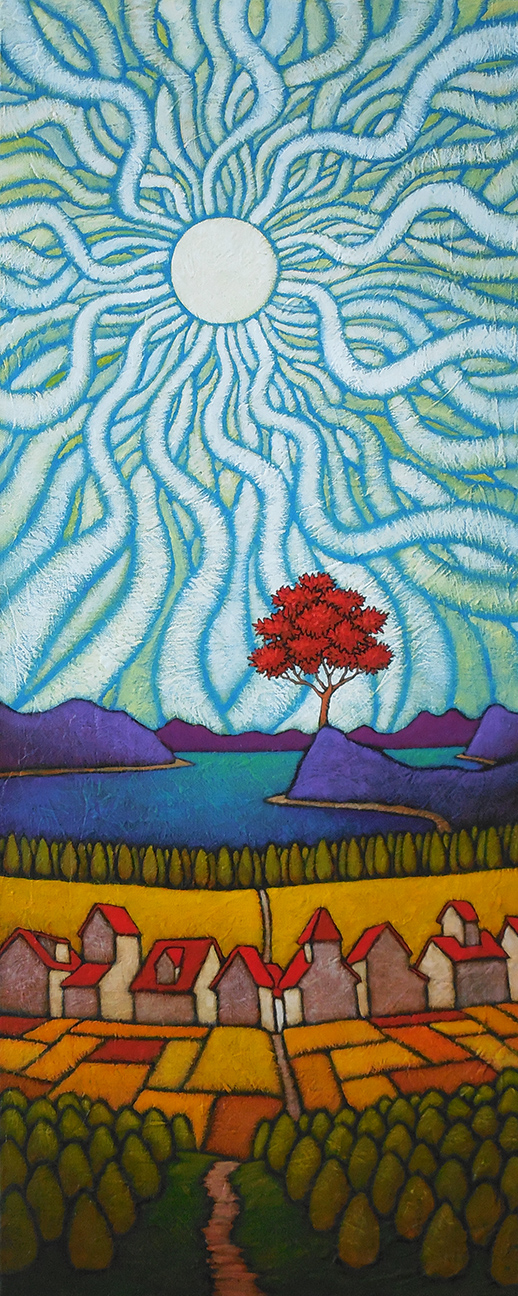
Trip the Light Fantastic— At Principle Gallery, June 2025


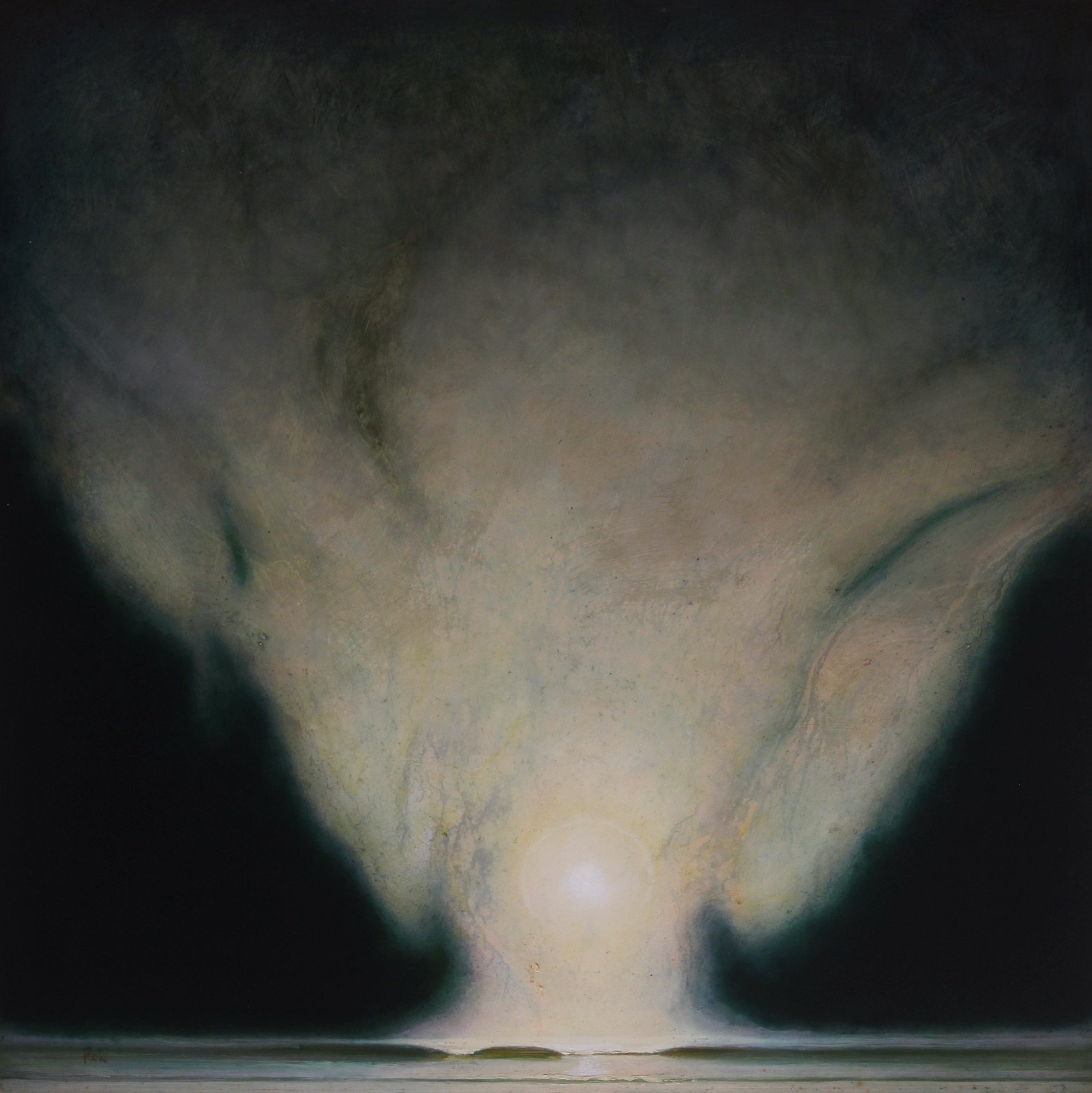
The voice of the sea is seductive; never ceasing, whispering, clamoring, murmuring, inviting the soul to wander for a spell in abysses of solitude; to lose itself in mazes of inward contemplation. The voice of the sea speaks to the soul. The touch of the sea is sensuous, enfolding the body in its soft, close embrace.

–Kate Chopin, The Awakening (1899)


Short on time this morning so, since we are in the last days of the Tour de France, I thought I’d share a favorite song, La Mer (Beyond the Sea), from French singer/songwriter Charles Trenet who wrote and recorded the now classic tune in 1946. I think it blends well with the words of Kate Chopin and the painting above.

Things need to be done now so I bid you adieu.


Theodore Rousseau- Under the Birches (1842)


It is better in art to be honest than clever.

–Theodore Rousseau


Theodore Rousseau (1812-1867) was part of the Barbizon School of painters, an art movement in 19th century France that was instrumental in moving away from formalism and towards naturalism and artistic expression of emotion. It was very influential on many of the painters who later created the Impressionist movement.

Rousseau and Jean-Francois Millet, best known for his peasant scenes, were the two artists from this school whose work really spoke to me, seeming to have honest emotional content in them. Perhaps that is why his short quote resonated so strongly with me. That and the fact that I have found myself less impressed with cleverness than honest expression through the years. I have always believed that art comes from tapping into the subconscious, something beyond that part of our brain that produces conscious thought.

I guess I just don’t think we are that smart. Or clever.

I know I am not. My work is at its best when it comes from a place of honesty and real emotion, when it is made with more intuition than forethought. When it is too thought out and directed it begins to feel stilted and contrived, losing its naturalness and rhythm and becoming heavy-handed.

That is probably the reason I tell young or beginning painters to focus not so much on the actual idea of a painting but more on things like paint handling and color quality, those things that make up the surface of a painting and convey the real meaning of the painting. And I think that is what Rousseau was probably getting at in his terse quote.

But maybe not.  Like I said, I am not that smart. Or clever.


The post above is from ten years back, but my admiration for this Theodore Rousseau painting– it’s a Red Tree! — and the message of his words remain evergreen with me. Even so, I often have to remind myself every so often to resist relying on forethought and to instead trust my intuition and reactions.

Emotional intelligence usually outshines brainpower. That holds true for both art and life in general.

Well, that’s the opinion of someone who admits to being neither smart nor clever so it might be wise to take this with a grain of salt.

Here’s a song, If I Only Had a Brain, that Ray Bolger sang as the Scarecrow in The Wizard of Oz I submit the Scarecrow and this song as evidence of my thesis. Pretty clever of me to call it a thesis, huh?

Anyway, here’s a fine version of the song from Harry Connick, Jr. from back in 1987.


Make Me Smile

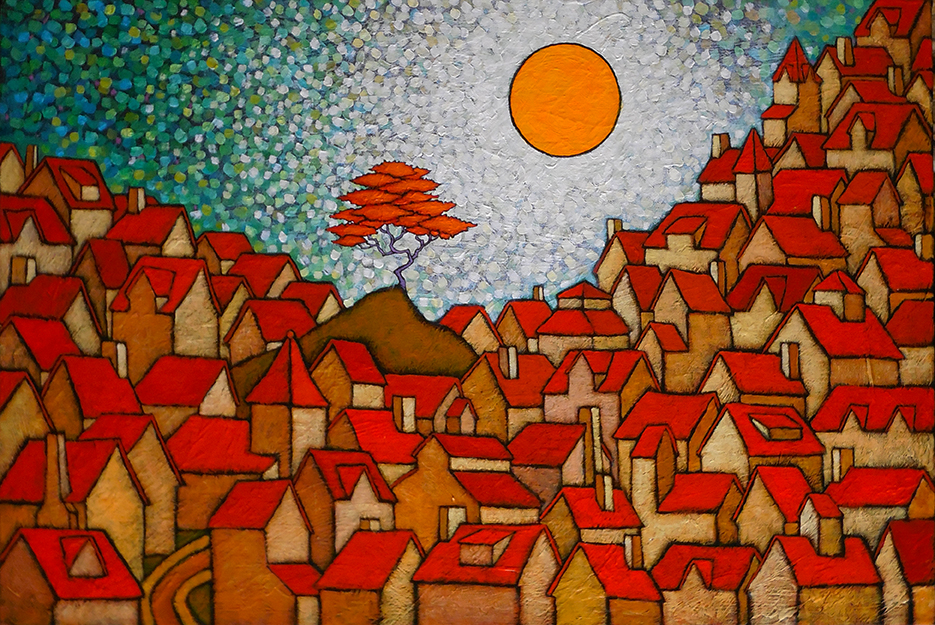
The Welcome Tree–At the West End Gallery


There is one thing one has to have: either a soul that is cheerful by nature, or a soul made cheerful by work, love, art, and knowledge.

—Friedrich Nietzsche, Genealogy of Morals (1887)


Nietzsche wrote a lot more about cheerfulness than one might expect. Not that I suspect that he himself was a cheerful soul. Maybe he was one of those, as the quote above implies, was made cheerful through work, love, art and nature.

I don’t know and I’m not interested enough right now to explore it any further at the moment. This quote seems to be one that is not verbatim from its source but was instead a compilation of thought.

That, too, doesn’t matter to me at the moment. I just like the quote as it stands, without full context.

It makes me wonder about my own nature and that of many others I know. Do I consider myself one who is cheerful by nature? I don’t believe I am though I have certain aspirations of being naturally cheerful, to not feel the weight of periodic depression or be eternally optimistic. I am not to that point yet and seriously doubt I will ever be there.

Actually, I know I won’t ever be that person. Whatever cheerfulness I possess comes from those potential sources that Nietzsche mentions. I think that holds true for most people, but I can’t say for sure. We all wear masks that sometimes cover our true natures.

I am sure we could go into a whole psychological examination of one another here but let’s save that for our diaries this time. 

Instead let us enjoy another song from Chicago that plays into the theme today, as does the painting at the top. This is Make Me Smile. I wasn’t a big Chicago fan when I was younger and they were in their heyday. But we change with time– hopefully and thankfully– and I have become quite a fan over the years.


The Exile’s Wilderness– 2020


For the first time in years, he felt the deep sadness of exile, knowing that he was alone here, an outsider, and too alert to the ironies, the niceties, the manners, and indeed, the morals to be able to participate.

― Colm Tóibín, The Master


The painting above, The Exile’s Wilderness, was originally painted in early 2020 but without the actual figure that represents The Exile, as seen in the bottom right of the image above. I thought that the painting as it was, sans The Exile figure, was really strong and it quickly became one of my favorite pieces from that period in the early days of the pandemic.

I originally felt that the painting didn’t need the figure, that it represented a view seen from the eyes of the exile. But over the past year or so [2021], as much as I liked this painting without the figure, I began to recognize that it actually needed The Exile in order to provide context.

In my mind, I was the context. I had to remind myself that not every person who looks at this will see themselves as The Exile.

So, The Exile entered the picture, literally. And, though I was apprehensive as I proceeded, I was pleased by its effect. It’s contrast to the emptiness of the streets and windows made the figure seem even more alone. More apart. It heightened the overall effect for me.

It completed the circle of feeling that I was seeking in it.

Now, it doesn’t need that caveat of being a favorite from a certain time period. It is simply a favorite. Period.

Here’s a 2001 song from Leonard Cohen, By the Rivers Dark. Though The Exile’s Wilderness doesn’t display a river, this song definitely has the mood that I glean from this painting. Maybe the buildings here are of a riverside street along that dark river?

Maybe…


Still feeling quite drained and under the weather. Trying to keep working but it is slow going. This a slightly reworked post from several years back about a favorite painting that is here in the studio. I thought I should point out that anytime I share a painting from the studio that doesn’t list a gallery location, you can contact me if you are interested in that piece, and I will let you know who to contact about obtaining it. I only mention this because I sometimes sound like I am hoarding certain pieces when, in fact, feel that most of my favorites here in the studio deserve a life that will continue someplace other than here where only I can experience them.  


Gordon Parks- Father /Daughter, St. Louis, 1950


The post below is from a couple of years ago and has been by far my most viewed post in recent days.  In light of the poorly veiled political and cowardly cancellation of Stephen Cobert’s Late Night show, I thought it might well be worth revisiting. I have added another chapter from the Robert Hayden poem on which the post is based.


One of my favorite parts of writing this blog is the stream of consciousness part of it where I encounter something new. That part where I begin to research and one thing leads to another and another, wild tangent  to wild tangent. The result is that I end up learning of someone of whom I was previously unaware or some new concept or fact.

It often starts innocently. For example, this morning I stumbled across a short video from last night’s The Late Show with Stephen Colbert where the singer Dua Lipa turned the tables and asked Colbert about whether his comedy and his faith ever intersected. His answer was thoughtful and complete. I urge you to watch the clip at the bottom.

But in it, he invoked lines from the late poet Robert Hayden , from his 1970 book of poetry titled Words in the Mourning Time, that were very powerful and to the moment:

We must not be frightened nor cajoled
into accepting evil as deliverance from evil.
We must go on struggling to be human,
though monsters of abstraction
police and threaten us.

Words powerful enough that I immediately began looking up Hayden. I was a little embarrassed and ashamed that I didn’t know the name. His credits and the poems that I read were staggeringly impressive.

Hayden was an African-American born in Detroit in 1913 and died in 1980. He was the first African-American to hold the post Consultant in Poetry to the Library of Congress, which is now known as Poet Laureate.

Inspired by the poetry of W.H. Auden  and Stephen Vincent Benet, Hayden’s work often outlined the experience of the African-American throughout our history. But even so, Hayden rejected the idea of being called a black poet, referring to simply be recognized as a poet. This small distinction put him somewhat out of favor during the 1960’s with the black community though in essence his desire to be recognized without reference to his race represented one of the desired goals of the civil rights movement.

In fact, the whole of the verse from which Colbert quoted made just that point:

We must not be frightened nor cajoled
into accepting evil as deliverance from evil.
We must go on struggling to be human,
though monsters of abstraction
police and threaten us.

Reclaim now, now renew the vision of
a human world where godliness
is possible and man
is neither gook nigger honkey wop nor kike

but man

permitted to be man.

Words in the Mourning Time is a longer poem comprised of ten separate chapters that explores and mourns the world in the time period in the era of the Malcolm X/ RFK/MLK assassinations, and the horrors of the Viet Nam War. It speaks equally to the time in which we now find ourselves in 2025. Below is another chapter from the poem, voice in the wilderness, that really struck a chord with me:

I am including a couple of his other poems below. One is Those Winter Sundays which movingly speaks of the simple duties of love carried out by parents that are often overlooked by their children. Powerful. The other is Frederick Douglass.

As I read this poem, I wondered as I have many time before how nobody had yet made a big biographical film about the life of Douglass, who I consider one of the most fascinating, impressive, and influential characters in our history. This led me to looking this up and it turns out that the production company formed by Barack and Michelle Obama have one currently in production based on the Pulitzer Prize winning biography, Frederick Douglass: Prophet of Freedom, from historian David Blight. Hope it brings his power and eloquence to the attention of a wider swath of Americans.

Glad I watched the video below and found out more about Robert Hayden. I feel a bit more complete now. And that’s always a good thing.


Those Winter Sundays

Sundays too my father got up early
and put his clothes on in the blueblack cold,
then with cracked hands that ached
from labor in the weekday weather made
banked fires blaze. No one ever thanked him.

I’d wake and hear the cold splintering, breaking.
When the rooms were warm, he’d call,
and slowly I would rise and dress,
fearing the chronic angers of that house,

Speaking indifferently to him,
who had driven out the cold
and polished my good shoes as well.
What did I know, what did I know
of love’s austere and lonely offices?


Frederick Douglass

When it is finally ours, this freedom, this liberty, this beautiful
and terrible thing, needful to man as air,
usable as earth; when it belongs at last to all,
when it is truly instinct, brain matter, diastole, systole,
reflex action; when it is finally won; when it is more
than the gaudy mumbo jumbo of politicians:
this man, this Douglass, this former slave, this Negro
beaten to his knees, exiled, visioning a world
where none is lonely, none hunted, alien,
this man, superb in love and logic, this man
shall be remembered. Oh, not with statues’ rhetoric,
not with legends and poems and wreaths of bronze alone,
but with the lives grown out of his life, the lives
fleshing his dream of the beautiful, needful thing.


Color My World

Further On Up the Road– At West End Gallery


Veil after veil of thin dusky gauze is lifted, and by degrees the forms and colours of things are restored to them, and we watch the dawn remaking the world in its antique pattern.

–Oscar Wilde, The Picture of Dorian Gray (1890)


Short and sweet this morning. Just a painting, a short passage from Oscar Wilde, and a song to round out this week’s Sunday Morning Music.

It all seems to nest together well.

The song is Colour My World from Chicago in 1970. Though it doesn’t have the power of the band’s normal horn section or the epically underrated guitar licks of Terry Kath, who sings lead here, and was only released as the B-side for two singles, and has only one single, short verse, the song had great impact with its quiet moodiness and haunting flute solo. Frank Sinatra is reported to have wanted to record it but wanted band member James Pankow, who wrote the song, to add a verse but Pankow and the band declined the offer.


Metamorphosis

The Regeneration— At Principle Gallery


Fixity is always momentary. It is an equilibrium, at once precarious and perfect, that lasts the space of an instant: a flickering of the light, the appearance of a cloud, or a slight change in temperature is enough to break the repose-pact and unleash the series of metamorphoses. Each metamorphosis, in turn, is another moment of fixity succeeded by another change and another unexpected equilibrium. No one is alone, and each change here brings about another change there. No one is alone and nothing is solid: change is comprised of fixities that are momentary accords.

–Octavio Paz, The Monkey Grammarian (1974)


It is almost banal to say so yet it needs to be stressed continually: all is creation, all is change, all is flux, all is metamorphosis.

–Henry Miller, Sunday After the War (1944)


Yesterday, I was working– more slowly than I would like– and a favorite Philip Glass composition, Metamorphosis II, came on.  Glass wrote five Metamorphoses piano pieces in 1988, taking inspiration from the Franz Kafka story, The Metamorphosis. I am sure most of you are aware of the story in which a young man, Gregor Samsa, awakens one morning to find that he has been transformed into a large insect. There has been a lot of conjecture over the years as to the meaning of Samsa’s transformation and, like most works of art, is subjective. We each see what speaks to our own circumstances, values, and concerns.

I am a big believer in personal metamorphosis. Certain constancies seem appealing, of course. To always be honest, fair-minded, or kind, for examples. I would hope they would remain unchanged. But in many other ways all I can think is how awful it would be to always remain the same, to never change even as the world around you constantly transform itself. And wouldn’t it be shameful to stay the same if you were to become aware of your own shortcomings or past errors of judgement?

I know that I have experienced some degree of metamorphosis in my life. And I am thankful for that because the idea of being that same exact person from 50 years ago seems terrifying in an almost Kafkaesque way. Kind of a reverse Gregor Samsa situation, where he wakes up one morning to find that he has totally been unchanged by the events– the tragedies and triumphs, the sorrows of loss and the joys of love– of his life. I think

I would prefer to be a large insect.

Maybe that is one way to look at Kafka’s story, that Gregor Samsa found that after everything that occurred in his life, he woke one morning to find himself changed not for the better. Instead, he found that he had become the absolute worst version of himself.

That’s a scary scenario and, unfortunately, I would not be surprised that there are many such Gregor Samsa’s out there.

You might be wondering, for good reason, what is the point I am trying to make here.

I don’t really know. except to say that change is a universal constant which no person can fully resist. Learning and adapting to these changes ultimately metamorphosizes, like that of the caterpillar into the butterfly, into something more, perhaps wisdom, truth, and beauty.

Resist change and instead of a butterfly, you’ll find yourself a big cockroach or maybe a stink bug. Your choice.

Probably not the ending you were expecting here. Oh, well.

It all really comes around to sharing the Philip Glass piece, Metamorphosis II. I recently found out that this piece was greatly influenced by another favorite piece, Fratres, from composer Arvo Pärt, whose work I have featured many times over the years. Probably why it so appeals to me.


Dissatisfied


“They are all in the same category, both those who are afflicted with fickleness, boredom and a ceaseless change of purpose, and who always yearn for what they left behind, and those who just yawn from apathy. There are those too who toss around like insomniacs, and keep changing their position until they find rest through sheer weariness. They keep altering the condition of their lives, and eventually stick to that one in which they are trapped not by weariness with further change but by old age which is too sluggish for novelty. There are those too who suffer not from moral steadfastness but from inertia, and so lack the fickleness to live as they wish, and just live as they have begun. In fact there are innumerable characteristics of the malady, but one effect – dissatisfaction with oneself. This arises from mental instability and from fearful and unfulfilled desires, when men do not dare or do not achieve all they long for, and all they grasp at is hope: they are always unbalanced and fickle, an inevitable consequence of living in suspense. They struggle to gain their prayers by every path, and they teach and force themselves to do dishonourable and difficult things; and when their efforts are unrewarded the fruitless disgrace tortures them, and they regret not the wickedness but the frustration of their desires. Then they are gripped by repentance for their attempt and fear of trying again, and they are undermined by the restlessness of a mind that can discover no outlet, because they can neither control nor obey their desires, by the dithering of life that cannot see its way ahead, and by the lethargy of a soul stagnating amid its abandoned hopes.”

― Seneca, On the Shortness of Life


I haven’t written any kind of diatribe in recent months. Still feeling under the weather but felt that I needed to let this one out, some of it written several months ago, before the 2024 election, and some in the months after the January 6 riot in 2021. I have not shared it here and know that it’s out of my normal lane, but I needed to have my say this morning. Like we all do once in a while.


I was reading an article that referenced the essay De Brevitate Vitae (On the Shortness of Life) from the Stoic philosopher Seneca that written sometime around 49 AD. The passage above really struck me because it seemed to describe the dissatisfaction so many people have with their lives and the actions that result from this.

I can’t quite put my finger on it, but it feels like the underlying current of what we’re seeing take place these days in this country. There is a lot of dissatisfaction that has morphed into anger among predominantly white middle-class men, which has been nurtured and encouraged by right-wing billionaires who seek to ride this angry tide to power.

But the question remains: Why are they so angry and what do they want?

They are, by and large, not the downtrodden nor poor. They are not without voice or political power. There’s a high probability that most of them have good livelihoods and assets that place them well above that of the average American.

They are not trying to gain rights for themselves. And certainly not fighting for the rights of others whose rights have been denied. If anything, they are angry because they believe that the others are attempting to get same rights that these guys have enjoyed for their entire lives.

They are not fighting true injustice or inequality. Far from it. If anything, they are fighting against justice and equality for all.

And if they succeed with their crusades of anger, they have no plans for a future. Certainly not a future that will be in any way better for most people.

All they have is anger and dissatisfaction with their lot in life. As entitled and privileged as they are in relation to most others, their lives lack purpose and meaning. It is a spoiled and bored existence, devoid of real consequences for bad behavior and fortified by the highs and unreality of video games, reality television, and action flicks that develops into their undeserved bravado, cosplay costuming, and an absolute trust in conspiracy over evidence so long as it suits their needs.

And that’s a recipe for disaster. Lacking meaning and purpose in life makes them susceptible to those who appeal to their sense of grievance, serving it up as a substitute for hope. As the Longshoreman Philosopher Eric Hoffer put it in his 1955 book, The Passionate State of Mind:

To have a grievance is to have a purpose in life. A grievance can almost serve as a substitute for hope; it not infrequently happens that those who hunger for hope give their allegiance to him who offers them a grievance.

This echoes a similar thought Hoffer put forth is his 1951 book on cults and mass movements, The True Believer, which was primarily written in reference to the Nazi and Fascist movements of WWII:

Passionate hatred can give meaning and purpose to an empty life. Thus people haunted by the purposelessness of their lives try to find a new content not only by dedicating themselves to a holy cause but also by nursing a fanatical grievance. A mass movement offers them unlimited opportunities for both.

This appeal to grievance in place of hope has been the obvious gameplan of the GOP and its totalitarian loving leader for years now.

I could be wrong here, but don’t think so. I wrote some of the above a few years back just after the January 6 riot., referring to the insurrectionists who descended upon the Capitol Building. I don’t think much of what I wrote then has been disproven in any way. I still have no idea why they are so angry or what they really want, outside of the freedom to be openly hateful and cruel. And they still have not exhibited a single plan that would work for a better future for anybody, themselves included.

Well, the billionaire class would be even better off and that is all that really matters once you sworn your allegiance to it.

It feels like they want to revel in their anger and dissatisfaction, using it as an engine for retribution against the others, those people on whom they seek to place responsibility for their own shortcomings. To use their sense of grievance as a rationale for the release and satisfaction they find in their cruelty.

Here’s a topical song, Unsatisfied, a favorite of mine from The Replacements and their very satisfying 1984 album Let It Be.

Be careful out there and have a good day.


The Pacifying Light– At Principle Gallery


A man’s work is nothing but this slow trek to rediscover through the detours of art those two or three great and simple images in whose presence his heart first opened.

-Albert Camus


These lines above are from an early essay, Between Yes and No, written by the French Nobel Prize-winning writer Albert Camus. It basically states, in sometimes grim detail, his belief that art “exalts and denies simultaneously.” In short, truth is generally somewhere in the middle, never absolutely in yes or no.

Yes or no is generally an oversimplified view, the extreme ends of the pendulum’s arc on which we swing.

While I may not fully understand all the subtleties of Camus’ essay, I do fully agree with the premise as I see it in my own simplified way. I think that art communicates best when it contains both the yes and the no— those polar oppositions that create a tension to which we react on an emotional level. For example, I think my best work has come when it contains opposing elements such as the light of hope or optimism tinged with the darkness of fear or remorse.

The Yes and The No of things. The certainty and uncertainty of all things.

Beyond that, I find this line about the artist’s effort to rediscover those few simple images that somehow first stirred something within their heart and soul intriguing. I certainly recognize it within my own work. I had no idea what I was trying to find when I first began to paint those many years ago. But the idea that there were some inner images that needed to be expressed nagged at me, even though I wasn’t fully aware of what those images were. They were slowly revealed to me and though I often didn’t fully understand their meaning, they somehow made sense and began to fill an emptiness.

That continues to this day. It is, as Camus, says, a slow trek. I still don’t know what to expect when I begin to paint and still have the nagging feeling that there is still an image out there– or in there– that eludes me. But I have some small degree of certainty, for whatever that is worth, that it is there waiting to be discovered. I just have to keep moving towards it.

Here’s a favorite song from a favorite artist, Rhiannon Giddens.  The song is the folk classic Wayfaring Stranger. It’s one of those songs that has been covered by a multitude of singers and is such a strong tune that every incarnation is equally wonderful.


Serene Gratitude— At West End Gallery


If you have built castles in the air, your work need not be lost; that is where they should be. Now put the foundations under them.

–Henry David Thoreau, Walden (1854)


I was going to write something else this morning but am feeling a bit foggy and tired. Instead, I thought I would share a post from a few years back and add the Don McLean song, Castles in the Air, at the bottom.


This is a well-known quote from Walden. Maybe the most well-known. It basically states, in my opinion, that we are meant to dream, to imagine better things and circumstances for ourselves. But there comes a time when we have to put the necessary work if these dreams are ever to become a reality.

Pretty sound stuff. The value of work and dreams is not lost on me. My life as it currently is, relatively simple and humble, was once a castle in the air. I was leafing through an old journal from when I was 16 or 17 years old and came across a list of goals for my future.

I had forgotten that I had made such a list and was surprised at how closely it matched the life I now live. Apparently, though I stumbled and fumbled around for too long a time, I somehow subconsciously made my way back to those castles I had built in the air with that list as a teenager.

I was pleased at first for it validated this idea that you somehow eventually reach destinations for which you set a course. Then I began to wonder what might have happened had I built my castles even further up in the sky.

Were the goals of an unexceptional and naive 16-year-old too restrained and self-limiting? Or did that 16-year-old know itself better than I currently think it did, that it already recognized its own core strengths and deficiencies? 

I don’t know the answer to that question. But I can say that I don’t regret placing the foundation under the castle that I first built in the air when I was young. It suits me.

My one wish is to have time enough to put other foundations under a few other castles that float in the air above me. We shall see.

As it is with most of the quotes I use here, I like to seek out the context in which they appear in their original form. I felt that the paragraphs that end with these words from Thoreau should be shared in full.

There’s still a lot of meat on this old bone from Mr. Thoreau:

I left the woods for as good a reason as I went there. Perhaps it seemed to me that I had several more lives to live and could not spare any more time for that one. It is remarkable how easily and insensibly we fall into a particular route and make a beaten track for ourselves. I had not lived there a week before my feet wore a path from my door to the pond-side; and though it is five or six years since I trod it, it is still quite distinct. It is true, I fear, that others may have fallen into it, and so helped to keep it open. The surface of the earth is soft and impressible by the feet of men; and so with the paths which the mind travels. How worn and dusty, then, must be the highways of the world, how deep the ruts of tradition and conformity! I did not wish to take a cabin passage, but rather to go before the mast and on the deck of the world, for there I could best see the moonlight amid the mountains. I do not wish to go below now.

I learned this, at least, by my experiment: that if one advances confidently in the direction of his dreams, and endeavors to live the life which he has imagined, he will meet with a success unexpected in common hours. He will put some things behind, will pass an invisible boundary; new, universal, and more liberal laws will begin to establish themselves around and within him; or the old laws be expanded, and interpreted in his favor in a more liberal sense, and he will live with the license of a higher order of beings. In proportion as he simplifies his life, the laws of the universe will appear less complex, and solitude will not be solitude, nor poverty poverty, nor weakness weakness. If you have built castles in the air, your work need not be lost; that is where they should be. Now put the foundations under them.