Feeds:
Posts
Comments
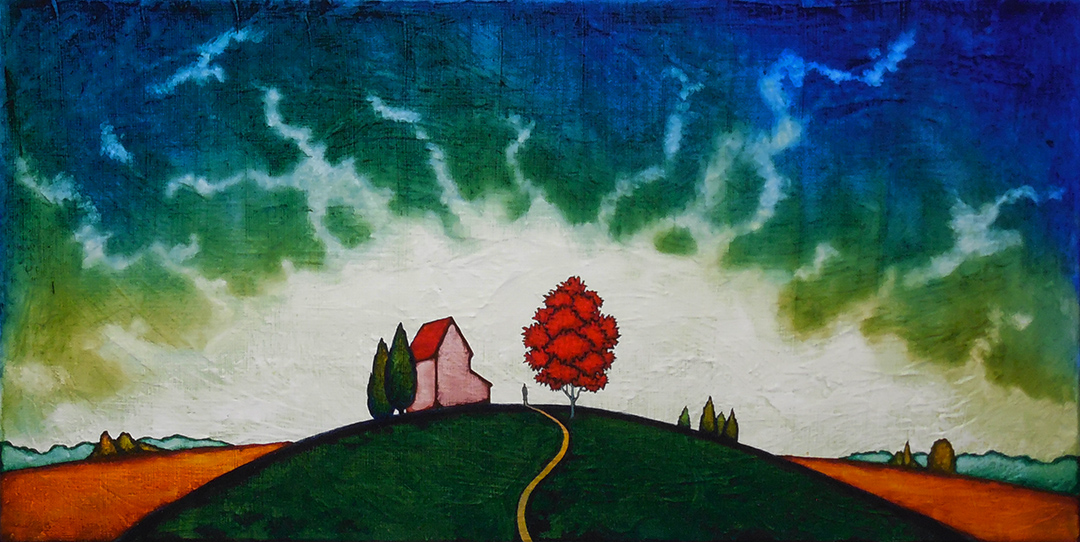
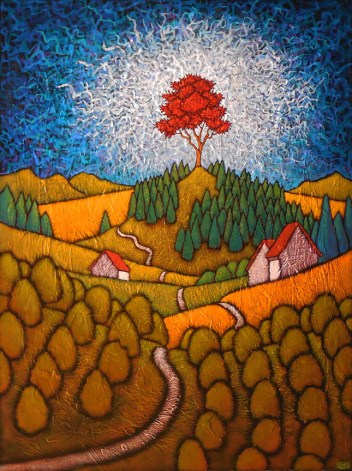
GC Myers- In the High Country

In the High Country– Coming to West End Gallery


The pause—that impressive silence, that eloquent silence, that geometrically progressive silence which often achieves a desired effect where no combination of words, howsoever felicitous, could accomplish it.

Mark Twain, Autobiography of Mark Twain


I was looking to write something about the painting above, In the High Country, which is part of my solo show at the West End Gallery, opening next Friday, July 21. In doing so, I came across this blogpost from about four years ago that seemed to sum up what I was seeing in it– a high and quiet place.

A place to pause and gather oneself in the stillness of nature. It’s a theme that runs like a ribbon through my work.

I think the following essay and the accompanying composition from Arvo Pärt fit the bill this morning.


We live in a time of chaos and confusion, amidst a constant bombardment of information and misinformation, an indecipherable babble of yelled opinions and enough stupidity to fill all the oceans and flood every coastline of this planet.

And that’s on a good day.

This morning I found myself longing for something, some music or reading, that would take me away from this maelstrom of madness. I came to the music of the Estonian composer Arvo Pärt whose piece Tabula Rasa was a big influence on my early work.

His work is the antidote to the turbulence of our time. It is what I would call slow music. It is the sort of music that requires you to pause to hear it fully. Doing so slows down the elevated heartbeat, syncs it to a pace that seems to be a meditative drone that has forever resided within us though we have long set aside our ability to tune in to it.

For quite some time I have rediscovered that ability to find pause in things with Pärt’s work, including this adaptation of My Heart’s in the Highlands. It is derived from a 1789 poem/song from the Scottish poet Robert Burns. This version is performed by vocalist Else Torp and organist Christopher Bowers.

Listening to it reminds me of the time spent alone wandering in the woods and fields in the hills around our home as a youth. Those times had that same pace, that same heartbeat and silence that made it so memorable in my mind.

Many times I have found my mind wandering back to those times and the spaces and silences that created a sense of home within me. Burns’ words speak a truth for me especially in these times so filled with sound and fury.

Allow yourself to pause for a moment and give a listen. Perhaps you will find your own heart in the highlands…

My heart’s in the Highlands, my heart is not here,

My heart’s in the Highlands a-chasing the deer –

A-chasing the wild deer, and following the roe;

My heart’s in the Highlands, wherever I go.

Farewell to the Highlands, farewell to the North

The birth place of Valour, the country of Worth;

Wherever I wander, wherever I rove,

The hills of the Highlands forever I love.

Farewell to the mountains high cover’d with snow;

 Farewell to the straths and green valleys below;  

Farewell to the forrests and wild-hanging woods;

Farwell to the torrents and loud-pouring floods.

My heart’s in the Highlands, my heart is not here,

My heart’s in the Highlands a-chasing the deer

Chasing the wild deer, and following the roe;

My heart’s in the Highlands, wherever I go.
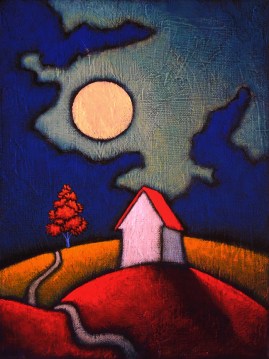


GC Myers-  The Illuminating Eye

The Illuminating Eye— Soon at the West End Gallery


The two ways of contemplation are not unlike the two ways of action commonly spoken of by the ancients: the one plain and smooth in the beginning, and in the end impassable; the other rough and troublesome in the entrance, but after a while fair and even. So it is in contemplation: If a man will begin with certainties, he shall end in doubts; but if he will be content to begin with doubts he shall end in certainties.

–Francis Bacon, The Advancement of Learning (1605)


I love this 400 and some year-old passage from Francis Bacon. It pretty much sums up what I have observed about how certainty and uncertainty operate in our lives.

When we cling to certainty, we close ourselves off to the possibility that truths exist beyond our belief. And when those truths ultimately reveal themselves, we are so dug in and defensive of our certainty that we refuse to acknowledge the evidence to the contrary. We are left with nagging doubts about all that we believe to be.

But if we hold on to a bit of uncertainty, acknowledging that we know little, we leave ourselves open to revelation of greater truths. Truths that lead to a validated certainty.

I think this idea represents a large part of what I hope comes across from my upcoming West End Gallery show, Eye in the Sky.I believe much of it is concerned with our search for some evidence of our place and role in this world and universe.

The revelation of a certainty that eases our uncertainty.

I can see this in this smaller painting, The Illuminating Eye, a 12″ by 9″ canvas from the show. For me, this is a piece about how we often search in darkness, waiting for a moment of illumination. And when that light finally reveals itself, a shadow of the darkness remains with us. The light reveals a truth yet some uncertainty always remains with us. That shadow represents the doubt we maintain that allows for an even greater truth, should it ever be revealed.

That’s how I see it for now. I am not absolutely certain that I will see it that way in the future. And, according to Bacon, that might be a bad thing.

GC Myers-- Passages: Toward Order 2023

Passages: Toward Order — Part of the West End Gallery Exhibit


It is the stretched soul that makes music, and souls are stretched by the pull of opposites-opposite bents, tastes, yearnings, loyalties. Where there is no polarity-where energies flow smoothly in one direction-there will be much doing but no music.

–Eric Hoffer, Between the Devil and the Dragon


As I am in the final days of prep work for my solo show, Eye in the Sky, which opens on Friday, July 21 at the West End Gallery, I am seeing the whole of the exhibit in one place for the first time. It reminds me of how someone could use an artist’s work as a roadmap or schematic of their mind and thought process, even though the artist might want to disguise and mask it.

It can uncover things that the artist doesn’t even know they are revealing at first. A body of work can often show all the facets of the artist’s personality prism. Flaws and strengths. Loves and desires, worries and fears. Highs and lows.

Art does that. And like the self-taught philosopher Eric Hoffer points out above, the music that makes up all art often comes when the artist is stretched and in tension between these polar oppositions.

That makes sense to me. The life of an artist is a very bipolar one, at least in my experience over the past quarter century. You’re always bouncing between polar opposites, all the time trying to find some sort of balance.

For instance, there is the desire to be isolated in privacy yet one’s livelihood is dependent on sharing your work– and by extension, yourself– in a very public way.  And artists are often very sensitive to the criticism and judgement of others yet work in a field that is almost solely based on the judgement of others. This, of course, leads to cycles of acceptance and rejection. Overoptimism and excessive pessimism. Periods of highs where the artist overestimates their abilities and value and lows where they question why they even try. Periods when your work is in sync with the times and highly sought– the flavor of the month– followed by times when you are a bit overlooked and out of favor.  

Then there is the most obvious comparison to bipolarism, the exuberance of those highly productive periods of creativity followed by the times when the artist has a creative block, leaving them feeling uninspired and in despair.

For some, it’s too much of a burden. I understand why someone would question putting themselves through that kind of stress and perpetual imbalance. It is certainly not for everybody. For me, it a way of living that makes sense since it mirrors what I would be going through in any other field in which I might be employed. In art, these tendencies have a place and even a purpose– if you can come to see and accept it in that way. 

And I guess it’s evident at this point that I have. Maybe you can see it in the work from this show. Maybe not. The control in creating the work versus the lack of control n how it is received is yet another part of the bipolarism of the artist.

On that note, let’s get to this week’s Sunday Morning Music. It’s a cover of Nirvana’s Lithium. See the connection? This cover is from back in 2009 by a group from Texas that I was not familiar with, Polyphonic Spree. They are a group that gives the choral treatment to rock songs. This is a fun and highly exuberant cover of the song. Kind of takes you to the high end of the polarity. Not a bad way to get your Sunday charged up.


Hermitage

GC Myers-  Hermitage 2023

Hermitage— Part of the upcoming West End Gallery Show


Silence, solitude, what is more essential to the human condition? “Maternal silence” is what I like to call it. Life before the coming of language. That place where we begin to hear the voice of the inanimate. Poetry is an orphan of silence. The words never quite equal the experience behind them. We are always at the beginning, eternal apprentices, thrown back again and again into that condition.

— Charles Simić, The Uncertain Certainty: Interviews, Essays, and Notes on Poetry, 1985


I am at that point in the process of getting the work prepared for my upcoming show where everything is chaotic. Little time for silence or stillness. This hectic point is the polar opposite from the quietness of mind needed to actually create the work. It makes me appreciate the time I get to do just that.

Makes me want to get back to my hermitage on my little private island of silence. I usually consider my studio in this way but at this point the work has bridged itself to the outside world. It is an island now. Just a busy, buzzy studio.

Small islands often appear in my work. They represent a desired place of solitariness for me, free from the sounds and stirrings of others. They carry an almost sacred meaning in the dialogue I have with my work. 

The title of the smaller piece shown at the top, Hermitage, reflects that meaning. It is a small island bearing only the Red Tree and a lone figure that stands looking back at the mainland. I should note here that my islands are often not so isolated from larger land masses. They are not so far removed to be totally isolated and independent from the world beyond their shoreline.

They remain visible and in contact. They are just quietly there, unbothered and bothering no one.

A perfect place for a would-be hermit.

Here is a song from Gregory Alan Isakov that lines up pretty well with this post. This is Before the Sun.


Hermitage is an 8″ by 16″ ink and acrylic painting on canvas. It is included in Eye in the Sky, my solo exhibit opening Friday, July 21, at the West End Gallery. I will be in attendance for the opening reception on that evening beginning at 5 PM.  We are still working out details for a Gallery Talk. Stay tuned for details.


Eye in the Sky

GC Myers- Eye in the Sky  2023

Eye in the Sky— Coming to the West End Gallery


A man must dream a long time in order to act with grandeur, and dreaming is nursed in darkness.

–Jean Genet, The Selected Writings of Jean Genet


My annual solo exhibit at the West End Gallery opens two weeks from tomorrow, Friday, July 21. This year’s show is titled Eye in the Sky, as is the painting above. Below is the statement for this year’s show.


I’ve been exhibiting my paintings at the West End Gallery since 1995, doing many group and solo shows. I believe this year’s solo show, Eye in the Sky, is my 22nd at the place I consider my home gallery, since it is the closest gallery to my home. More importantly, my career as an artist began at the West End Gallery 28 years ago.

Like many other things that take place over an extended period, my painting has evolved and changed. The techniques and process of my painting have constantly shifted, sometimes dramatically. And though I remain primarily a landscape painter, elements have been added to my paintings. There were red-roofed houses, red chairs, sailboats, paths, eyeless faces, and fields of flowers, among others. And, of course, the Red Tree that became a sort of trademark, being present in the majority of my paintings over the years.

But there has also been another element that has been present and almost as ubiquitous as that Red Tree. It is the sun or moon that often appears as a large ball in the skies over my imagined landscapes.

Over the years, this sun/moon orb has taken on a greater role in my paintings. Looking back at older work, the sun/moon was not shown often and was quite small in size when it did appear. It was often just a minor compositional element. However, in the intervening years, this sun/moon has grown in size and prominence in the paintings. It now has a real presence in the paintings, often serving as either the central figure or as a spiritual partner or guide for the Red Tree. The two often seem engaged in a silent conversation in many of the works.

There are probably many reasons for this evolution but the best explanation, at least to my mind, comes from a dream I had a number of years ago. It occurred in the months before the West End show of whatever year it was, at a time when I was struggling with my confidence. I felt more deeply blocked and dejected in my work than I had ever experienced before.

I felt empty, like I had perhaps given all I had to give in my work.

I had a dream one night during this time. In the dream, I was standing under a dark night sky that was colored in dark green tones. I was experiencing the same sort of anxiety that I was feeling in my waking life. Then there appeared an opening in the sky, as though a small sliding panel were opened in the sky.

An eye appeared in the opening. Tinted green in the light of the sky, it seemed to be a clear and ancient eye, surrounded by deep creases and wrinkles that were visible as it peered down at me through the opening.

No words were spoken, no singular message transmitted, or wisdom imparted. It was just there.

It had a great pacifying effect on me in the dream as though I instantly knew that there was something overseeing me and that I was not alone, that all was as it should be.

I woke up with that same pacified feeling of assurance, knowing that everything was as it should be. It was a drastic change from my demeanor of the days and weeks before. Its effect has carried me through that time and in times of anxiety since. The sun/moon has come to symbolize that dream and the ensuing feeling. I believe that dream was the starting point for the increased prominence of the sun/moon orb in my work.

The sun/moon has become a vital element in my work, nearly as much as my Red Tree. It serves many roles, often as a steadying force, symbol of hope and a sense of communion with the universe. I think this year’s show, Eye in the Sky, gives ample evidence of that.

Childe Hassam Rainy Day Fifth Ave

Childe Hassam- Rainy Day, Fifth Ave 1916


And I don’t know a soul who’s not been battered
I don’t have a friend who feels at ease
I don’t know a dream that’s not been shattered
Or driven to its knees
But it’s alright, it’s alright
For we lived so well so long
Still, when I think of the
Road we’re traveling on
I wonder what’s gone wrong
I can’t help it, I wonder what has gone wrong

–Paul Simon, American Tune


Another Fourth of July. Independence Day, marking this day in 1776 when the Second Continental Congress adopted our Declaration of Independence. Since that day, for the last 247 years we have been in a constant struggle to live up to the promise that this country offers.

It seems it is always one step forward, one step back. We have always had to contend with the forces of hatred, bigotry, and greed as we try to achieve America’s promise of freedom, equality, and opportunity for all.

It’s a hard journey but worth the effort. For all of us.

Paul Simon wrote the song American Tune in 1973, at the height of the Watergate scandal, the continued war in Viet Nam and widespread social unrest. It felt like we were on the brink three years before our bicentennial.

50 years later, it feels much the same. Different scenarios, same reasons.

At this year’s Newport Folk Festival, Paul Simon performed American Tune with Rhiannon Giddens. The original song had the lines:

We come on the ship they call The Mayflower.
We come on the ship that sailed the moon.
We come in the age’s most uncertain hours
And sing an American tune.

For this occasion, Simon wanted to point out that many of our citizens did not come on the Mayflower or even by their own design. Many were here already. Simon changed those lines to:

We didn’t come here on the Mayflower.
We came on a ship on a blood red moon.
We come in the age’s most uncertain hour
And sing an American tune.

The blood red moon is an Old Testament reference to the book of Joel that prophesizes: The sun will become dark, the moon red as blood, before the overwhelming and terrible day of the Lord comes. It is a warning of the apocalypse that will occur when people lose their sense of love and justice.

We are certainly in the age’s most uncertain hour so this song seems appropriate to the day. 247 years later, the promise of America might be teetering but we are still standing. The experiment and the struggle continue.

And that’s reason to take a moment or day to celebrate before we get back to the fight.

Here’s Rhiannon Giddens and the revised version of American Tune.


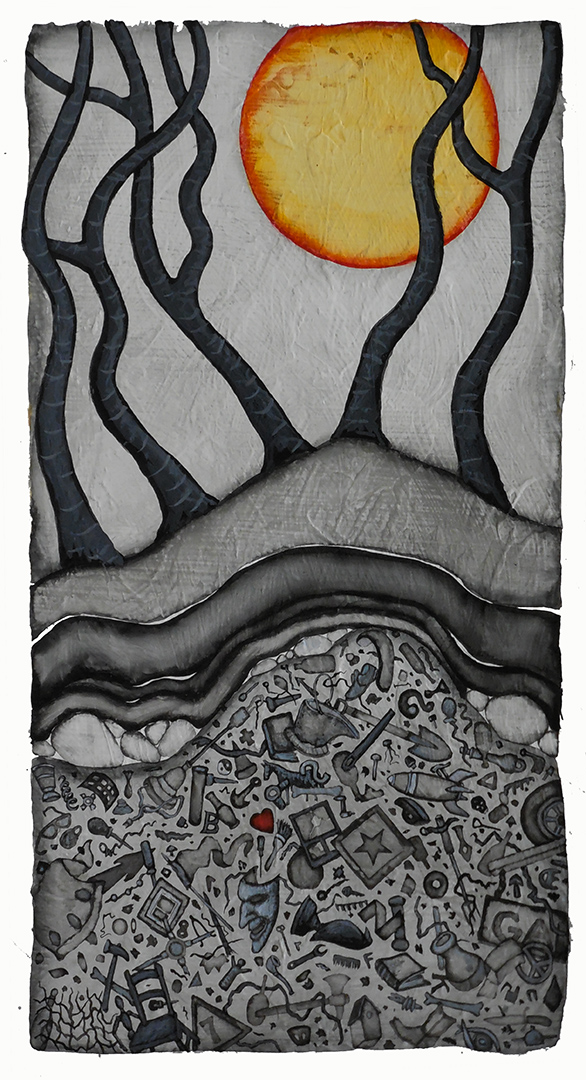
GC Myers- Archaeology: The Things We Leave sm

Archaeology: The Things We Leave— At Principle Gallery

The endless legacy of the past to the present is the secret source of human genius.

–Honoré de Balzac, Seraphita: Works of Balzac


Nearing the end of my hiatus from writing this blog but still feel some obligation, if only in my head, to share some Sunday Morning Music. I am also including an Archaeology piece from my current show at the Principle Gallery and a quote from Balzac, both of which I hope mesh with the song.

Not sure about the Balzac line. Oh, it is true. I think all that we are in the present is formed by what we learned in the past. No doubt about that. But we cannot let the past dictate our future nor can we return to a world of the past. We have to shed and bury those ideas from the past that keep us from achieving a sustainable and equitable future for all.

Maybe that’s the genius to which he refers– our ability to learn from our mistakes of the past.

Hmm… I want to say something here about our Supreme Court but I will refrain. Why spoil the moment?

Anyway, here’s the song that hopefully ties all three elements of this post together. It’s the old standard Please Don’t Talk About Me When I’m Gone which has been recorded by a multitude of vocalists over the past century. I’m sharing a poolside performance from the always entertaining Gunhild Carling, who has appeared here several times before. I like the fresh, summery feel of the video. It feels more normal, free of the 100°+ temperatures that have been smothering our friends in Texas and the Southwest, the constant barrage of tornadoes that have been battering the Midwest, or the constant smoky haze that blankets the Northeast.

Like a summer from our past memories.

Enjoy your holiday weekend and I will see you here again sometime this week.


The Tour

TDF


Life is like riding a bicycle. To keep your balance you must keep moving.

–Albert Einstein, Letter to his son Eduard (5 February 1930)


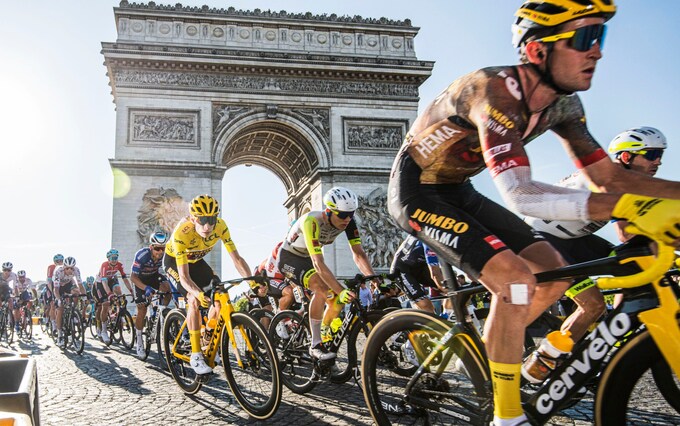
While I am still enjoying my hiatus from the blog (returning next week sometime) I felt compelled to point out that this year’s edition of the Tour de France begins this morning. They just started with the ceremonial start in Bilbao, Spain as I write this. The Tour has been a big part of my July mornings ever since I began painting on a fulltime basis back in 1998. The sheer physical and mental test it provides over three grueling weeks is unlike anything in sport.

If you want to get a better idea of what goes into it, I urge you to take a look at the film Tour de France: Unchained on Netflix. Some of the footage will take your breath away. The shots from within the peloton are absolutely claustrophobic. It gives you a better idea of the skill it takes to compete.

Here’s a little bit of France and bicycling to go with the Tour’s start. This is Yves Montand and La Bicyclette.


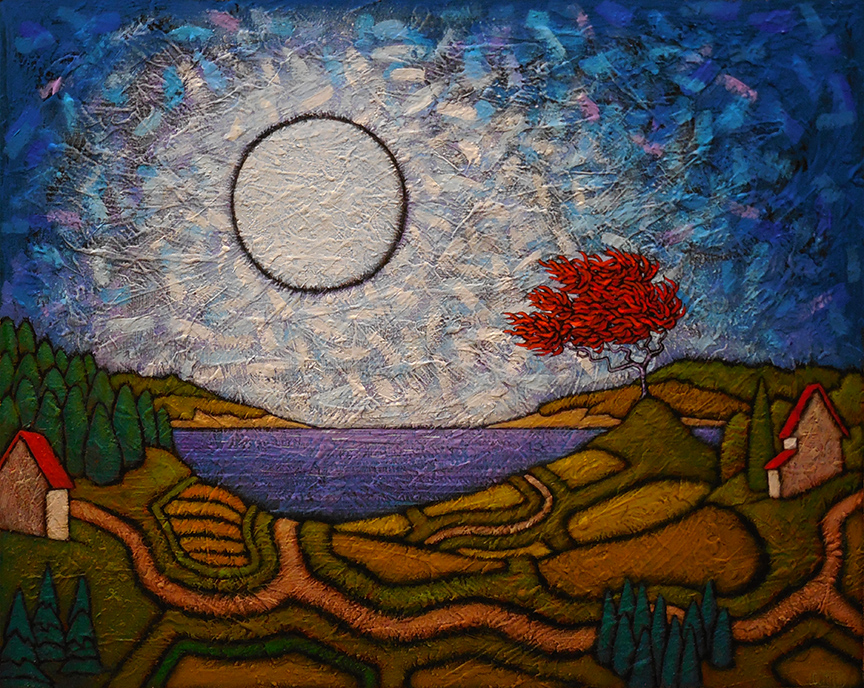
GC Myers-  Elan Vital sm

Elan Vital– Now at Principle Gallery, Alexandria, VA


I know of no more encouraging fact than the unquestionable ability of man to elevate his life by a conscious effort.

–Henry David Thoreau, Walden, 1854


Don’t get this wrong– I am still on a hiatus from doing this blog. This is a mere aberration. A Janis Joplin favorite came on this morning and it just felt like it needed to be shared. So, here it is.

And like that, I’m gone.


GC Myers-  The Welcome Tree

The Welcome Tree–At the Principle Gallery, Alexandria, VA


No farther will I travel: once again
My brethren I will see, and that fair plain
Where I and song were born. There fresh-voiced youth
Will pour my strains with all the early truth
Which now abides not in my voice and hands,
But only in the soul, the will that stands
Helpless to move. My tribe remembering Will cry,
“‘Tis he!” and run to greet me, welcoming.

–George Eliot,  The Legend of Jubal (1869)


I am still on a short hiatus but thought I’d briefly return for Sunday Morning Music along with an updated rerun of this post from just a few months ago that is about a new painting that is part of my annual June show at the Principle Gallery in Alexandria, VA. This year’s show is called Passages which refers to both the actual movement into the painting as well as the phases of our lives through which we all pass. This painting, titled The Welcome Tree, falls neatly into those categories.

For me, it represents the idealized memory of home we sometimes carry with us, the thought that somewhere there is a place where you belong. A place with people who instantly recognize and embrace you as one of their own.

A place much like that described in the lines above from the epic poem from George EliotThe Legend of Jubal. It is her version of the story of Jubal, a minor biblical figure who is only mentioned once, who is considered by some to be the inventor of music. Jubal, a descendent of the murderer Cain, is portrayed in Eliot’s long poem as a roaming artist who invents music then sets out to explore the world for inspiration for new songs. In the process, he spreads music and melody wherever he travels. Years pass and as his renown grows, Jubal dreams of a homecoming, as the lines above indicate.

This painting might well represent that warmly imagined and hoped for reunification with his early home and family.

In Eliot’s poem, Jubal returns home to find that he is now revered and worshipped as a god there for his gift of music. Unfortunately, he is now old and nobody recognizes him. He is seen as a sacrilegious imposter and beaten to death by those he once thought would be embracing him.

Of course, I am not representing this part of Jubal’s tale in my painting. But maybe that’s the danger that comes in dwelling in idealized memories. Perhaps Jubal’s fate is one of the reasons that many folks through the years have said that you can’t go home again. As Thomas Wolfe noted in his book You Can’t Go Home Again:

You can’t go back home to your family, back home to your childhood … back home to a young man’s dreams of glory and of fame … back home to places in the country, back home to the old forms and systems of things which once seemed everlasting, but which are changing all the time – back home to the escapes of Time and Memory.

But that doesn’t keep us from keeping those fantasies of coming home and being embraced in our minds. There might be some comfort in that fantasy even though the rationalizing part of our mind tells us it cannot ever happen.

Maybe we should not try to dwell in that mythical home of the past but instead carry home with us, appreciating those who welcome and embrace us as we are in the here and now.

I chose the title The Welcome Tree because I have come to see the Red Tree that marks so many of my paintings as a symbol of welcoming. It is often the first thing that the viewer latches onto and serves as a kind of welcome mat into the painting. Often, though the painting might seem to be about the Red Tree itself, the real meaning is contained in the other parts of the piece– the color, the textures, the composition, etc. All the things that create mood and carry feeling.

I think that’s the case here though I like to think of it as a personal tip of the hat in recognition of the importance the Red Tree has had in my work over the past quarter century. This simple tree has been my boon companion.

For this week’s Sunday Morning Music, here’s a lovely cover of a favorite song. The song is from David Byrne and the Talking Heads, This Must Be the Place (Naive Melody). This version is from Andrew Bird playing with the Lumineers. It fits this painting for me this morning.