I’m not an art historian. I try to maintain a certain knowledge about artists, especially those work I have seen and taken something from in the form of influence for my own work. But I am often reminded by how little I really know. A friend recently stopped by the studio and, while looking at a couple of my large landscapes, said that their compositions reminded him of some of the panoramic pieces from Hans Memling.
I hesitated before responding, running the name through my mind, wondering if it was someone that I should really know if I wanted to call myself an artist and deciding if I should just feign knowledge of the name– “Memling? Oh, yeah…” But I finally admitted that I wasn’t familiar with the name or the work. Of course, after my friend left, I was online looking for Hans Memling.
And was pleasantly surprised at the beauty and power in his work.
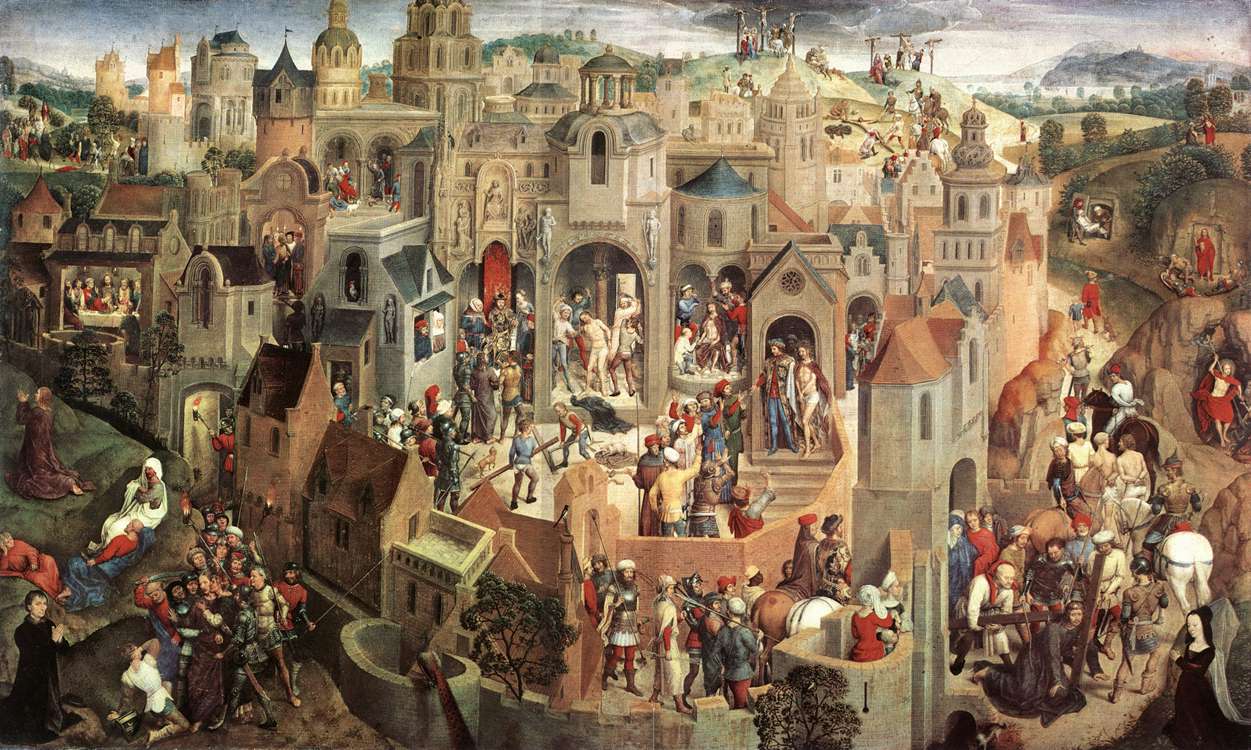
Memling was a German-born painter who lived in the 15th century, painting in the style of the Dutch masters. Painters, not cigars. His work employed beautiful contrasts and deep, rich colors. His panoramas, such as Scenes From the Life of Mary shown above, were feasts for the eyes. Every glance offered a new and compelling vignette, each which would make a powerful painting on it’s own. Just beautiful stuff, to use a technical term.
I know many of you will look at his work and wonder how in the world my friend could see any equivalency between his and mine. And that’s a fair question because they are worlds apart in time, expression and style. But I see a similarity in the rhythm of the composition, the way each part plays off the other to create a harmony of movement throughout. That’s what I take from them because I have no desire to paint like Memling or express the things he conveyed in his work. I want to paint in my own way and express feelings that dwell within me now. But I am moved by the rhythm and the way they’re put together. Looking at them made me aspire for even more in my own work. More detail. More areas of concentrated interest. Greater depth into the picture plane.
Just more.
Now I know who Hans Memling is and another item is taken from the list of things I don’t know. Hey, you do what you can…
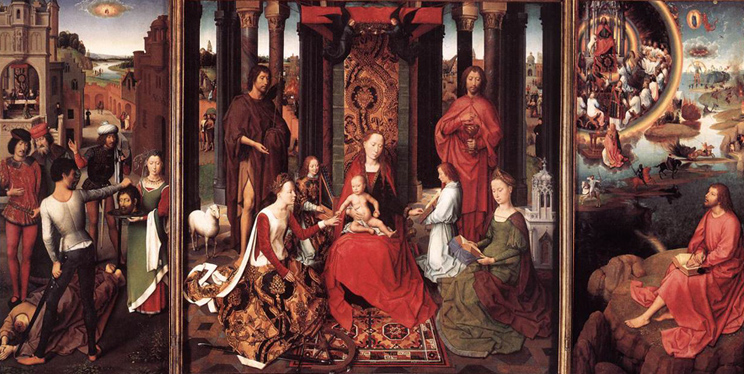
Here are some other magnificent Memlings-

 Redtree Times
Interesting. The connection I made immediately was between Memling and your archaeology pieces. In each case, what seems to be clutter draws the eye in and leads to exploration of a feast of marvelous details.
I posted the follow-up to the “Shedding Daylight” saga last night. How there can be so many connections among people who’ve never met continues to astound me, but it’s certainly been fun!
OK. Hans Memling. I recognized the center panel of that first triptych as an image I have long loved for itself alone, but never bothered to find out more about. His paintings hearken back to a time when few could read and churches were “graphic Bibles” with biblical stories illustrated in their murals, altarpieces, carvings, and stained glass. There was a whole graphic language involved in the religious iconography of the time. Appreciate them though we will, and pour over the details as we do, there’s still so much about such paintings we don’t “get” because we don’t know the “language.”