
Andrew Wyeth– Spring Fed,1967
I’m not at all interested in painting the object just as it is in nature. Certainly I’m much more interested in the mood of a thing than the truth of a thing.
Earlier this morning, I was looking for an image from Andrew Wyeth to accompany the words above. Wyeth is one of those artists for me whose words and works seem to speak directly to me.
I love the work of many artists but their words on their work or anything sometimes lack the perspective and feel that I see in their work. They most likely work from a different place in themselves or are looking for other things in their work than I do in my own work. Or they simply have a different way of seeing their work and process and expressing it in words.
But Wyeth’s words, like his images, hit me directly. I don’t need to figure out what he is saying and can immediately see the application of his words in his work. I can also see what I would like to believe are parallels in my own motivations and work.
But while looking up a painting to match this particular passage, I came across a bit of important trivia about Wyeth that I hadn’t known before. I found it very interesting. It seems that Wyeth had an absolute obsession with a 1925 silent film, the anti-war classic from director King Vidor, The Big Parade. Wyeth saw it first as an 8 year old and watched it around 200 times over the course of his life. One Wyeth scholar puts the figure at possibly 500 times.
That is an obsession.
He even wrote to Vidor in the 1940’s to describe his love for the film ( he called it the greatest film ever made) to the director and outline how it had influenced many of his paintings over the course of the decades since first seeing the film. They met in later years, in the 1970’s, where Wyeth again told how many of the scenes from the film showed up in different ways in many of his paintings.
Like many things from Wyeth, this particular bit of information echoed my own obsessions in film, the films I watch over and over again in the studio. Films with strong imagery and meanings in their dialogue make up most of these studio companions. Films like The Grapes of Wrath and Watch on the Rhine and so many more have elements that trigger emotional reactions with each viewing, even after that number has reached into the many dozens.
I understand that kind of obsession. Each viewing reveals more and more details that add even more depth to my perception of the film. I know that emotional tone and other elements of these films influence my work. I also think that it ties into my own willingness to constantly revisit certain elements and imagery within my work, something that is echoed in another passage from Wyeth:
Most artists look for something fresh to paint; frankly I find that quite boring. For me it is much more exciting to find fresh meaning in something familiar.
Don’t know what to make of this. I guess I just find it interesting.
There’s a short article along with a audio recording of lecture on Wyeth’s obsession with The Big Parade at the site for the National Gallery. You can see it by clicking here.
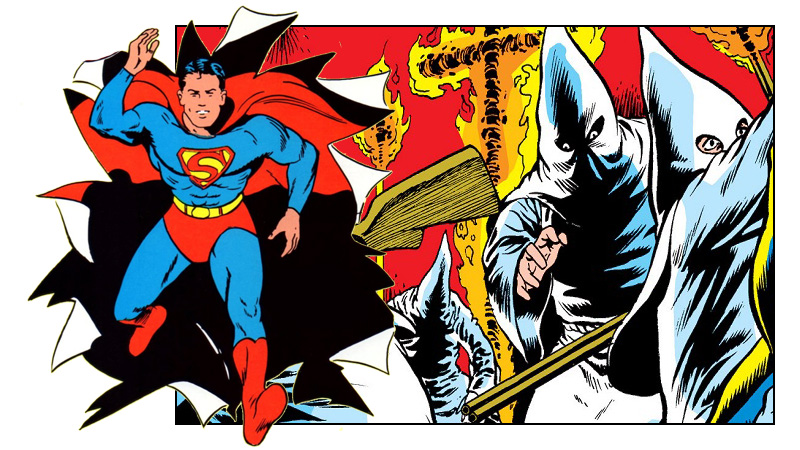
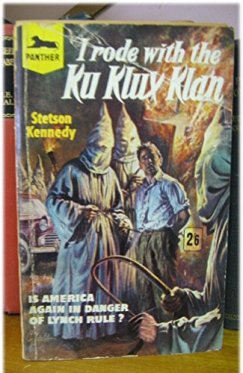 Unable to serve in WW II because of a back injury, Kennedy turned his efforts to righting some of the injustices and dangers he saw in his own part of the world, primarily racial hatred and inequality. He infiltrated the KKK and wrote a book, I Rode With the Ku Klux Klan, which exposed the rituals and actions of the group and that ultimately led to a governmental crackdown on it, crippling the hate group for decades to come.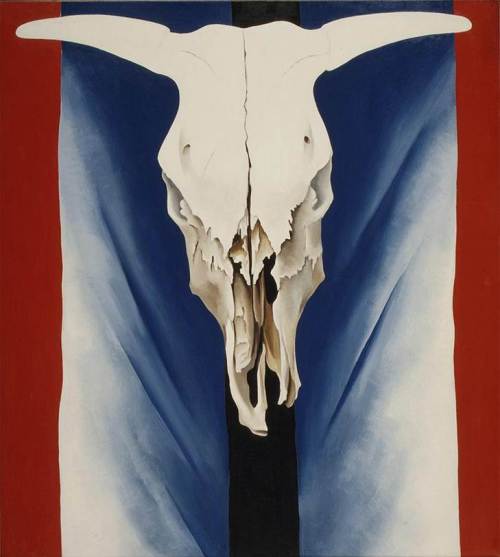
 I don’t know if I have talked much about Georgia ‘OKeeffe (1887-1985) here on the blog. Her work was a big influence on me when I was starting, especially with her use of bold, clear color and in the way she pared away detail in her compositions, leaving only the essential. Her lines and forms were always organic and natural, something in them almost creating a harmony or vibration that easily meshed with the viewer on a gut level.
 Imagine your child (or your nephew or grandchild) at age 12. Imagine them spending 10 or 12 or even 14 hours a day, six days a week in one of the breaker rooms of a coal mine like the one shown here on the right. Hunched over in the gritty dust of the coal, they picked the coal for differing sizes and to sort out impurities. Imagine the men who are shown in the photo with sticks poking your child, perhaps kicking him to speed him up. Imagine all of this for seven and a half cents per hour.






 Redtree Times