Feeds:
Posts
Comments

Archive for February, 2025

Elvis in the Wilderness (2006)


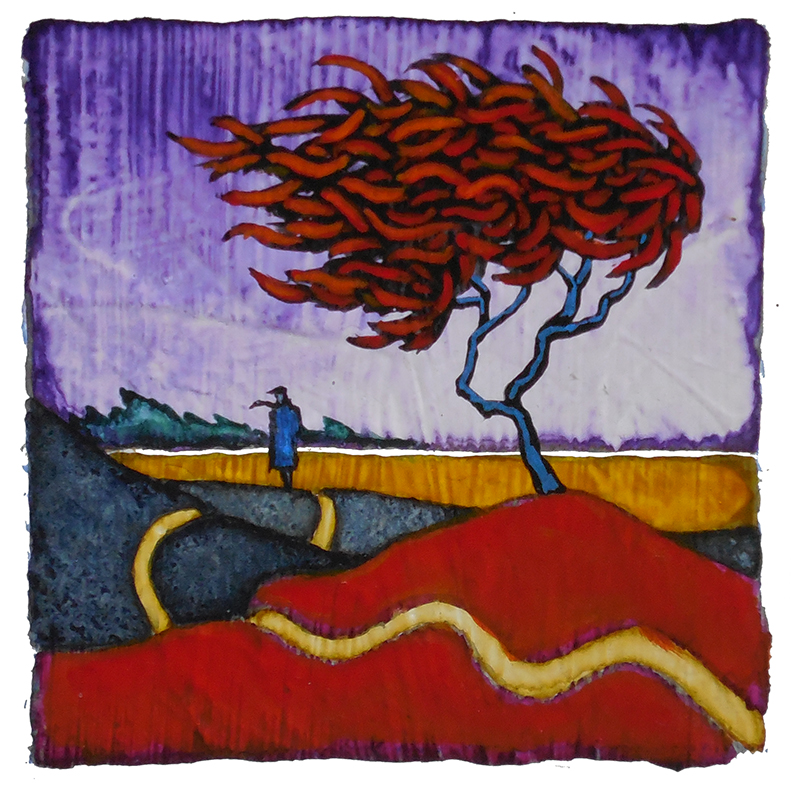
No failure in America, whether of love or money, is ever simple; it is always a kind of betrayal, of a mass of shadowy, shared hopes.

–Greil Marcus, Mystery Train (1975)


I’ve been reading all sorts of stories across the media about people who for whatever reason voted for Trump, cheerleading him on while thinking they themselves would be spared from his rash actions, that punishment would only be meted out to those they felt deserved it. You know– the others.

These same people have discovered in the past 38 or so days that they are not immune from the reckless gutting of America that is taking place. Many have lost jobs that they thought were safe and are left to wonder why. After all, they believed and supported Trump and knew they were honestly doing useful, necessary jobs that supported their families.

They weren’t the problem with America– it was the others.

Or there are stories of the Trump supporting retirees or families who depend on Social Security and Medicare or Medicaid who are realizing that the lifelines that were in place throughout their lifetimes might suddenly be dramatically slashed or even taken completely away. Or that these agencies’ staffs would be cut to the point that they would be able to function properly, if at all.

Then there are the military veterans who in many cases have sacrificed their time and wellbeing to serve this country who are learning that the support that was solemnly promised to them was going to be carved away willy nilly.

There are many other stories like these coming to light from across America. From farmers and private agencies that selflessly help those in need. From small businesspeople and scientists and researchers who have developed the medicines and technologies that have protected and grown this nation.

I’m working off the top of my head here so I am not going to list them all. I couldn’t do that even if I were better prepared. There are too many cases across nearly all fields that are beginning to feel the pain.

All people who thought they would be safe because they knew they weren’t the problem.

It was the others.

And now they feel betrayed and abandoned by the Trump/Musk band of gangsters. And they have been betrayed. As we all have. I have some sympathy for them but could certainly have more had they themselves not been so willing to betray and punish the others, who turned out to be their fellow citizens who, like them, were honestly doing useful work that served this nation. People who most likely share a love of this country, for the better angels so often extolled.

I am not saying that there wasn’t a need for reforms or greater efficiency in our government. Of course there is. But that’s not what we’re witnessing. This is more akin to a hostile corporate takeover where a group of investors– corporate raiders— comes in with little or no interest in running the company. They only want to tear it down and sell it off for parts.

And as it is in such cases, it is the little people who bear the brunt of the damage done. In this case, it those same people who unwittingly voted for this takeover. They betrayed not only the others but themselves and their own self-interest.

And America.

I am sorry to vent this morning. I am trying to stay away from such commentary, if only for my own mental wellbeing. But I am tired of hearing these stories of people surprised that the Grizzly Bear they were feeding suddenly ripped off their arm. There are no stories about those folks who clearly saw this coming for years and years, only to be continually ridiculed and told they were crazy or hyperbolic.

I guess a story about betrayal is far more attractive than an I-told-you-so story. To be honest, there’s not much comfort in either story. Both will feel the effect of this betrayal, along with countries and people around the globe.

Most likely, for a long time to come. Betrayal has a lingering effect.

The quote from journalist Greil Marcus at the top from his wonderful book, Mystery Train, on the link between America’s growth and that of rock and roll culture set this all off this morning. Here’s the iconic version from Elvis Presley of the song of that same title. The song was written and originally recorded in 1953 by the great Junior Parker.

Read Full Post »

Where the Road Ends— At West End Gallery


We need limitations and temptations to open our inner selves, dispel our ignorance, tear off disguises, throw down old idols, and destroy false standards. Only by such rude awakenings can we be led to dwell in a place where we are less cramped, less hindered by the ever-insistent External. Only then do we discover a new capacity and appreciation of goodness and beauty and truth.

–Helen Keller, Light in My Darkness (1927)


I came across the passage above from Helen Keller and felt it pretty much summed up what I often try to describe here about the inner landscapes that we create within ourselves, those places that I attempt to represent in my work.

This passage comes from a chapter called Opening the Inner Eye, where she writes of how the limitations set upon her by her disabilities forced her to find compensations that allowed her to function in the outer world. More than that, it opened up an inner landscape to her, a place where she could be her best self. This allowed her to realize that happiness or self-contentment has little to do with outward circumstances but comes from within.

She writes of those who are not physically disabled, people who are living without limitations which has made them “mentally blinded” to this inner world. They are never forced to seek new capabilities within themselves and, as a result, resist anything– society, church, etc.– that expects them to display what Keller describes as nobler things from them.  She adds that they then stumble through life with their mental blindness, saying in effect, in her words, “I will be content if you take me for what I am — dull, or mean, or hard, or selfish

It makes me wonder if perhaps the great divide in this world right now is between those who have opened their inner eye and those who are mentally blind, sometimes willfully so. Might it be a conflict between those who seek to grow into those nobler things and those who refuse to recognize– or are blind to– their lack of them?

Just wondering this morning. I don’t know that there is an answer. In my inner landscape, that’s okay.

Here’s a wonderful piece of music for strolling through that place. This is Cavatina as performed by guitarist John Williams. It was written in 1970 by British composer Stanley Myers (no relation!) for the film The Walking Stick. This version from Williams is better known as the theme for the film The Deer Hunter.


Read Full Post »

The Resistance– At West End Gallery


The aim of every artist is to arrest motion, which is life, by artificial means and hold it fixed so that a hundred years later, when a stranger looks at it, it moves again since it is life. Since man is mortal, the only immortality possible for him is to leave something behind him that is immortal since it will always move. This is the artist’s way of scribbling “Kilroy was here” on the wall of the final and irrevocable oblivion through which he must someday pass.

–William Faulkner, Paris Review interview (1958)


Faulkner perfectly captures something I have been writing about here for years, the urge to leave something behind as evidence of your onetime existence in this world. It’s the driving force behind creation of all sorts, from human procreation to multiple forms of artistic expression, from the caves of Lascaux to the Sistine Chapel to the simplistic image of Kilroy left all over the world by American soldiers in WW II. Graffiti, which might be the purest form of saying I was here, has been around as long as mankind.

For the artist, it is an act of faith that your work will somehow survive into the future. You can never know with any degree of certainty. Oh, it may well make its way into museums or collections that span generations. It might well exist.

But will it be truly seen? Will it stay relevant, will its voice clearly speak in the future? Will it still maintain its movement, its life?

This idea of relevance– or rather irrelevance– is not a concern that only applies to the future for the artist. As an artist, after decades of creating work, I often question the relevance of my work at any given moment. Is it alive in this present, let alone the future?

I don’t know that you can fully know the answer to that question for anyone but yourself. Your relevance, now or a hundred years in the future, is not something you have a lot of say in.

The best you can do is to focus only on creating something that feels alive now. If it captures the motion, the feeling, the voice, and the humanity of our existence, it might well escape oblivion and might make its presence known in the future.

If it does, great. If not, you at least created something for this moment in time. And that’s great in its own right.

I chose the painting at the top, The Resistance— currently part of the West End Gallery’s Little Gems show– not only because of the obvious motion of it but because so much of what we do as humans is comprised of acts of resistance, of fighting to be heard or not relegated to some form of oblivion, one where we have no control over who and what we are.

I guess that could be applied to creating unique work, as well. Here’s a performance that I shared here several years ago. It is Ukrainian guitarist Nadia Kossinskaja performing an Asor Piazzolla composition, Oblivion. Felt like it went well this painting this morning.


Read Full Post »

Completeness— At West End Gallery


We do not belong to those who only get their thought from books, or at the prompting of books, — it is our custom to think in the open air, walking, leaping, climbing, or dancing on lonesome mountains by preference, or close to the sea, where even the paths become thoughtful.

–Friedrich Nietzsche, The Gay Science (1882)


Below is a poem from the late Nobel Prize-winning Polish poetess Wislawa Szymborska (1923–2012) called Possibilities. I featured it here back in 2015 but it struck my fancy this morning and I thought I’d share it again and maybe add a bit to the original blogpost. It is basically a laundry list of her personal preferences. Some are small and some significant but all contribute mightily to her wholeness as a person. We are all the totality of our own laundry lists of preferences that define our character and personality just as our DNA determines our physical characteristics.

It’s a simple yet thought-provokingly complex poem that leave me wondering about my own preferences, my own possibilities. What are those small things that give you shape, make you who you are? Do we rely solely on these preferences in making the choices that we face in this life? Or do we sometimes make choices that do not align with our own preferences?

There are a lot of Symborska’s preferences that strike a chord with me. For instance:  I prefer myself liking people to myself loving mankind. That certainly has been my preference for most of my conscious life.

Then there’s: I prefer the absurdity of writing poems to the absurdity of not writing poems. Like writing poetry, painting can often seem like an absurd thing to do. I often find myself asking why I am alone in the woods smearing paint on surfaces. Is there a purpose or meaning in it?

But I have known the other side of that coin, living a life where I wasn’t painting, and that existence was far more absurd for me. Absurd to an unsustainable degree.

And that final line says it all: I prefer keeping in mind even the possibility that existence has its own reason for being. We may never know whether there is a reason for our being but that should not take away from the life we have here.

If this is all we get, live by the possibility of your own preferences and not those of any other.

Live as you are. As you want to be.

You might not agree with some of her preferences. That’s okay– they’re not yours to determine. She is simply giving us a loose outline of her individual nature, her humanity. And there’s poetry in that for any of us.

I am also including a song which was a favorite of Symborska, who requested that the version below from Ella Fitzgerald be played at her funeral. The song is Black Coffee and since being written in 1948 by Sonny Burke it has been covered by some of the great vocalists of our times– Sarah Vaughan, Peggy Lee, k.d. lang and so forth. You could pick any as your preference and they are all special. It’s that kind of song. But this version from the great and grand Ella Fitzgerald is extra special.


POSSIBILITIES

I prefer movies.
I prefer cats.
I prefer the oaks along the Warta.
I prefer Dickens to Dostoyevsky.
I prefer myself liking people
to myself loving mankind.
I prefer keeping a needle and thread on hand, just in case.
I prefer the color green.
I prefer not to maintain
that reason is to blame for everything.
I prefer exceptions.
I prefer to leave early.
I prefer talking to doctors about something else.
I prefer the old fine-lined illustrations.
I prefer the absurdity of writing poems
to the absurdity of not writing poems.
I prefer, where love’s concerned, nonspecific anniversaries
that can be celebrated every day.
I prefer moralists
who promise me nothing.
I prefer cunning kindness to the over-trustful kind.
I prefer the earth in civvies.
I prefer conquered to conquering countries.
I prefer having some reservations.
I prefer the hell of chaos to the hell of order.
I prefer Grimms’ fairy tales to the newspapers’ front pages.
I prefer leaves without flowers to flowers without leaves.
I prefer dogs with uncropped tails.
I prefer light eyes, since mine are dark.
I prefer desk drawers.
I prefer many things that I haven’t mentioned here
to many things I’ve also left unsaid.
I prefer zeroes on the loose
to those lined up behind a cipher.
I prefer the time of insects to the time of stars.
I prefer to knock on wood.
I prefer not to ask how much longer and when.
I prefer keeping in mind even the possibility
that existence has its own reason for being.

–Wislawa Szymborska


Read Full Post »

All of Time-At West End Gallery


My delight and thy delight
Walking, like two angels white,
In the gardens of the night:

My desire and thy desire
Twining to a tongue of fire,
Leaping live, and laughing higher:

Thro’ the everlasting strife
In the mystery of life.

Love, from whom the world begun,
Hath the secret of the sun.

Love can tell, and love alone,
Whence the million stars were strewn,
Why each atom knows its own,
How, in spite of woe and death,
Gay is life, and sweet is breath:

This he taught us, this we knew,
Happy in his science true,
Hand in hand as we stood
‘Neath the shadows of the wood,
Heart to heart as we lay
In the dawning of the day.

— Robert Bridges, My Delight and Thy Delight (1899)


I have things to attend to this morning, so I am sharing a simple trio that deals with something other than the state of the world or even the creative process. The trio today has more to do with love. I guess you could argue that love– or the lack of it– plays a vital part in both the state of the world and the creative process. So, maybe it is pertinent?

I don’t know. I just like this group and felt they all interwove well with each other, all dealing in a way with the theme of two angels. The poem above is from Robert Seymour Bridges (1844-1930) who was a British poet and the Poet Laureate of Britain from 1913 -1930. I was going to include just the first verse but the poem is not that long.

The song, Two Angels, is a longtime favorite from Peter Case. The painting at the top, All of Time, is at the West End Gallery. It’s one of those pieces that stick in my mind, maybe because its creation didn’t come easily. I began it then set it aside for a long time, often looking at what was there and wondering what the next step would be. It was a bit of an enigma. I was finally able to complete it so that it both pleased me deeply and found its own voice. That’s always satisfying.

The hard-fought ones often leave the deepest impressions—in painting as well in love and in life.


Read Full Post »


Twilight Time–At West End Gallery


If the outer world is diminished in its grandeur, then the emotional, imaginative, intellectual, and spiritual life of the human is diminished or extinguished. Without the soaring birds, the great forests, the sounds and coloration of the insects, the free-flowing streams, the flowering fields, the sight of clouds by day and the stars at night, we become impoverished in all that makes us human.

–Thomas Berry, The Great Work: Our Way into the Future (1999)


I came across the passage above this morning from Thomas Berry (1914-2009), someone who I have to confess I didn’t know anything about before this morning. But I found much in reading about him that piqued my interest.  Berry was a Catholic priest, cultural historian, and scholar of world religions who, later in life, studied the confluence of geology, ecology, and evolution. I came across one article that described him as an ecologian, or ecotheologian though it is said he preferred geologian.

There was one paragraph from his Wikipedia article that really struck a chord:

Berry believed that humanity, after generations spent in despoiling the planet, is poised to embrace a new role as a vital part of a larger, interdependent Earth community, consisting of a “communion of subjects not a collection of objects”. He felt that we were at a critical turning point, moving out of the Cenozoic era and entering into a new evolutionary phase, which would either be an Ecozoic Era, characterized by mutually-enhancing human-Earth relations, or a Techozoic Era, where we dominate and exploit the planet via our technological mastery.

With the astounding speed which AI ( along with the huge ecological cost that it requires) is infiltrating every aspect of our lives along with the ability of Big Tech to surveil us in most every way, it seems that Berry was prescient in his predictions when he first formulated this theory in the late 70’s and 80’s about the possibility of our entrance into a Techozoic Era. With everything that is happening at such an accelerated rate, I fear that an Ecozoic Era is moving quickly out of the realm of possibility.

And in the passage at the top, Berry warns that a decision to further exploit the planet will create a harsher environment for all living things, potentially causing us to lose those many things in the natural world we take for granted. Bees. Birds. Clean water. And much more. Things, that if lost, diminish the quality of our existence. I

Anecdotally, I know that when the woods around the studio are filled with the sound of birds, I am a much happier human being. When I was working in my first studio further up in the woods, I loved to hear the buzz of the bees in spring and summer as they made their hives in the hollows of trees. That sound is gone now. Seeing more a handful of bees at a time now, let alone hearing them, is a rare thing these days.

But who knows? Maybe there will be a turnaround at some point, a rejection by the citizens of the Techno Masters and a return to a gentler relationship with the Earth.

A rebirth of sorts where we and all the other living beings so affected by our decisions rise from the ashes like the mythical Phoenix.

I will maintain that hope.

That leads us into this week’s Sunday Morning Musical selection. This song, Ascending Bird, is based on the Persian version of the Phoenix myth, of a bird who flies higher and higher toward the sun until it is engulfed in flames. It falls back to the Earth then rises from the ashes as a new creature.

Ascending Bird is a traditional Persian folk melody, played here by the Silk Road Ensemble which is a large and loosely knit group of musicians, including the great Yo-Yo Ma, who hail from along that fabled route and play many of the traditional instruments. The Silk Road was the network of ancient routes that traders used in linking the Eastern and Western worlds over the centuries, transporting both goods and ideas from China through the Middle East to the Mediterranean.


Read Full Post »


O Courage, could you not as well
Select a second place to dwell,
Not only in that golden tree
But in the frightened heart of me?

— Tennessee Williams, Night of the Iguana


The 1964 film Night of the Iguana was on TCM yesterday and I listened along as I painted yesterday. Based on the 1961 Tennessee Williams play, the film is one that has slowly become a favorite of mine.

By that, I mean it was hardly a favorite when I first saw it many years ago. Not sure I even watched the whole thing then. It felt grim to the younger me who wanted a neater and tidier story with sharply defined protagonists and an ending that tied up all the loose ends in a satisfying way. The younger me didn’t see any of that in this film then.

But with age, you realize that life is never neat and tidy, try as you might to make it so. The brokenness of the main characters in this film that once turned me off now seemed more pertinent to the world I now know, taking on a much deeper reality and meaning for me. Like much of the work from Tennessee Williams, it deals with broken people trying to make their way through this world. His work is seldom an easy thing to take in. But it is usually worth trying and over the years, I have myself growing into this film. 

I am not going to go into the story or the film here this morning. Nor am I endorsing this film for you. It is certainly art and is therefore subjective. Where I see light or hope in it, you might see darkness and despair. 

That’s art for you. As it should be.

I only mention the film this morning because I wanted to share the poem from the old poet, Nonno, who has ended up at the seedy Mexican resort where this takes place with his middle-aged granddaughter, who is an itinerant painter. She is played by Deborah Kerr who is an absolute favorite of mine. They have been traveling for a long time as he attempts to complete a poem that he has long labored over, one that deals with having a feeling heart in a corrupt world. 

The final version, in the video at the top of the page, delivered beautifully by Nonno, portrayed by Cyril Delevanti, is a wonderful scene and I thought it deserved to be shared. I also added the text of the poem below as well as a song, Night of the Iguana, from Joni Mitchell.


How calmly does the olive branch
Observe the sky begin to blanch
Without a cry, without a prayer,
With no betrayal of despair,

Sometime while night obscures the tree
The zenith of its life will be
Gone past forever, and from thence
A second history will commence.

A chronicle no longer gold,
A bargaining with mist and mould,
And finally the broken stem
The plummeting to earth; and then

An intercourse not well designed
For beings of a golden kind
Whose native green must arch above
The earth’s obscene, corrupting love.

And still the ripe fruit and the branch
Observe the sky begin to blanch
Without a cry, without a prayer,
With no betrayal of despair.

O Courage, could you not as well
Select a second place to dwell,
Not only in that golden tree
But in the frightened heart of me?

— Tennessee Williams, Night of the Iguana


Read Full Post »


Chaos & Light — At Principle Gallery


It is usual to think of good and evil as two poles, two opposite directions, the antithesis of one another…We must begin by doing away with this convention.

— Martin Buber, Good and Evil (1952)


The idea of polar opposites has been a subject here on this blog many times over the years. Light and dark, right and wrong, positive and negative, etc. I had always included good and evil in that list, thinking them as two sides of a coin or two poles of a magnet that pulls one in their direction.

But reading the passage from philosopher Martin Buber (1875-1965) that contained the quote above made me rethink that. We are not inherently either good or evil.

Both are simply directions available to us.

But one, Goodness, is more like a pole in that it is a destination that must be worked toward. There must be an awareness of it in order to set one’s course for it. It requires dedicated work and conscious decisions. It often entails sacrifice and service, as well a willingness to accept one’s responsibilities for one’s own actions and how they affect others.

To seek goodness means that you set a course for it and work hard to stay on that path. It might be well described as having a moral compass.

Evil, on the other hand, is simply the absence of direction. No moral compass nor desired destination.

As a result, evil thrives in all its many forms where goodness is set aside as a destination. The virtues of goodness are diminished then. There is then no sense of responsibility nor sense of shame. Empathy, compassion, and self-sacrifice are lost, and are viewed as weakness when they do appear.


I wrote the above a year or so back. It sat in the draft section and I would periodically pull it up and read it. Never felt like it was the right time to use. Wasn’t sure there was a right time. But this morning it reminded me of how I sometimes refer to our human existence (and my painting) as a balancing act between chaos and order.

I hadn’t thought of that chaos as being simply an absence of direction– a rejection of goodness that goes along with a lack of a moral compass to follow– that has the potential to morph into some form of evil.

It’s a simplistic point, probably disputable by finer minds than mine, but one that felt illuminating this morning for me.

How that illumination can be applied to the reality of this world is another thing altogether. It’s certainly beyond me this dark, cold morning.

This post did remind me of some of my paintings, such as the one at the top, that deal with my concept of the chaos present in this world. Here’s a 1989 song from David Byrne called Good and Evil such to fill out our dance card. I only became aware of this song recently but find a lot to like in it. As with most things from David Byrne, it is interesting.


Read Full Post »

Oblivion

Uncertain Times— At the West End Gallery


Ignorance is not bliss — it is oblivion. Determined ignorance is the hastiest kind of oblivion.

–Philip Wylie, Generation of Vipers (1942)


As concerned as I am about the horror show taking place within our country at this time, I am even more worried about the apathy about it that seems prevalent among a majority of our citizens. Hoping for the best and other forms of wishful thinking are no better than ignoring it completely. And the only thing to be said for burying your head in the sand is that it might spare your head when it all inevitably blows up.

Even that little bit of protection is doubtful, of course.

Philip Wylie said it best with the words above from his 1942 book, Generation of Vipers, which was a scathing diatribe against the malaise, ignorance, and self-interest that he saw taking place in this country in the run up to our eventual involvement in WW II. In the paragraph that precedes this passage, Wylie writes that though you might try to build a wall around yourself to insulate yourself from harm or responsibility from the outside world, both will eventually make their way to you. Therefore, you have a responsibility for the fate of all men, in the same way that they are responsible for your fate.

It is very much in the spirit of John Donne and his Meditation XVII from 1624:

No man is an island, entire of itself; every man is a piece of the continent, a part of the main; if a clod be washed away by the sea, Europe is the less, as well as if a promontory were, as well as if a manor of thy friend’s or of thine own were; any man’s death diminishes me, because I am involved in mankind, and therefore never send to know for whom the bell tolls; it tolls for thee.

This apathy has obviously been a problem throughout the history of mankind. Apathy has a strong foothold in who we are as Americans. We have been led to believe that we rose up en masse to fight for our independence during the American Revolution. The fact is that only about a third of our citizenry fervently desired our independence while another third wanted to remain loyal to the British crown. The final third didn’t care and didn’t want to be involved.

They would go in whichever direction the wind blew.

And that’s not always a good thing.

I submit a song as evidence of that. It’s I Don’t Care Much from the musical Cabaret, which dealt with people who turned a blind eye to the growing authoritarian regime that was taking over Germany in the 1930’s. The cabaret was a symbol for those people who just didn’t want to take a side, didn’t want to think about right or wrongs. People who just wanted to have a good time and hope that things would just work out without their participation.

Wanted to believe that they didn’t have to care much.

That belief, thinking that one could just ignore the coming atrocity without being touched, proved to be less than effective. Ask the 60 or 70 or 80 million folks who died in WW II. I am not saying that is where this all leads at this point, but I cannot say with any certainty that it isn’t the path we’re on. Especially with so many of us willing to say “Oh, well. It is what it is…

Here’s the song I Don’t Care Much performed by Alan Cumming as the Emcee from the 2013 Broadway production of Cabaret:


FYI:  Philip Wylie wrote the book, Gladiator, on which the Superman comics were based. It’s a good read.


Read Full Post »

Solitude and Reverence


Perhaps the primary distinction of the artist is that he must actively cultivate that state which most men, necessarily, must avoid: the state of being alone. That all men are, when the chips are down, alone, is a banality — a banality because it is very frequently stated, but very rarely, on the evidence, believed. Most of us are not compelled to linger with the knowledge of our aloneness, for it is a knowledge that can paralyze all action in this world. There are, forever, swamps to be drained, cities to be created, mines to be exploited, children to be fed. None of these things can be done alone. But the conquest of the physical world is not man’s only duty. He is also enjoined to conquer the great wilderness of himself. The precise role of the artist, then, is to illuminate that darkness, blaze roads through that vast forest, so that we will not, in all our doing, lose sight of its purpose, which is, after all, to make the world a more human dwelling place.

–James Baldwin, The Creative Process (1962)


I’ve been looking quite often recently at the painting at the top which is here with me in the studio. It’s from about ten years ago and is titled Solitude and Reverence. It was an instant favorite for me when I finished back in 2015 so when it returned to me after its tours of the galleries, while I was surprised it had come back, I was pleased to have it back with me. I believe it’s a piece that says a lot about me and my work and the role solitude has played in it.

This morning, coming across an image of this painting used on the blog several years ago reminded me of a couple of things that I have shared over the years on the role of solitude and being alone for the artist. One is the passage at the top from a 1962 essay from James Baldwin and the other is below, from an early (2008!) blogpost where I wrote about advice I gave to young wannabe artists. I thought both worked well with this painting. At the bottom I am adding a song from Billie Holiday, at the peak of her powers, on the same subject. The song is Solitude from her 1952 album of the same name. Just a beautiful recording.


I’m showing the picture to the right to illustrate a bit of advice I often give when speaking with students or aspiring painters. This is my first studio which is located up a slight hill behind our home, nestled in among a mixed forest of hardwoods and white pine. This photo was from last February [2007]. It was a fine little space although it lacked certain amenities such as running water, bathrooms and truly sufficient heat. However, it served me very well for about a decade.

The advice that I give to aspiring artists is this:  Learn to be alone.

The time spent in solitude may be the greatest challenge that many artists face. I have talked to many over the years and it is a common concern. Some never fully commit to their art for just this reason. To be alone with your own thoughts without the feedback or interaction of others can be scary especially for those used to being immersed in people and conversation.

I like to think that I have been prepared for this aspect of this career since I was a child. For much of my youth we lived in the country, in houses that were isolated from neighbors. I had a sister and brother, 8 and 7 years my senior, and they were often my companions at times. But as they came into their middle teens, I spent more and more time alone. This is not a complaint in any sense. Actually, it was kind of idyllic. I lived a fairly independent life as a kid, pretty much coming and going as I pleased. I explored the hills and woods around us, going down old trails to the railroad tracks and old cove that ran alongside the Chemung River. I studied the headstones at an old cemetery tucked in the edge of the woods overlooking what was then a thick glen, filled with the family who resided at a late 1700’s homesite that had stood across the road from our home. All that remained of that place was a stacked stone chimney which served as a great prop for playing cowboy.

In the woods there were immense downed trees that served as magnificent pirate ships. There were large hemlocks with thick horizontal branches that were practically ladders, easy to climb and sit above the forest floor to watch and dream.

My life– and my work– would be very different without this time alone. Sure, maybe I’d be a bit more sociable and comfortable with groups of people, something which is sometimes a hindrance. But it prepared me for the time I spend alone and allowed me to create my own inner world that I occupied then and now. The same world that appears in my work, the same world that is my work.

This is only a short post on a subject I could drone on about for pages and pages. But, to aspiring artists, I say learn to love your time alone. Realize what a luxury and an asset it can be to you as an artist. It is gift that is available to us all if we only recognize and accept it as such. Learning to be alone will make your work grow and distinguish itself in ways you can’t yet see.


Read Full Post »

Older Posts »