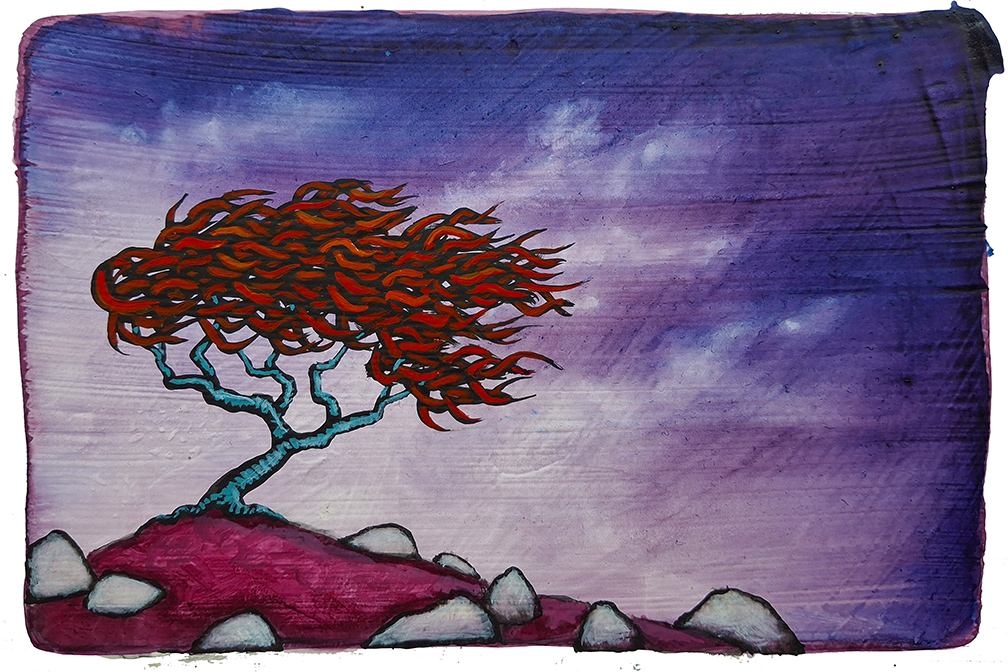
Speaking Truth to Power — Coming to West End Gallery
Throughout history, it has been the inaction of those who could have acted; the indifference of those who should have known better; the silence of the voice of justice when it mattered most; that has made it possible for evil to triumph.
–Haile Selassie I, the Emperor of Ethiopia, address to the United Nations General Assembly, October 4, 1963.
The Greek playwright Euripides first coined the word parrhesia in the fifth century B.C. It means to speak candidly and freely. It implies not only freedom of speech, but the obligation to speak for the common good, to speak the truth for those who are being unjustly treated by the powers that be, even when doing so entails personal risk.
In short, the concept of speaking truth to power has been with us for over 2500 years and has been the cornerstone of this country’s identity for the last 250 years.
Speaking truth to power has got folks through a lot of dark times, crystallizing the voice of the people to bring down tyrants and to secure and protect the hard-fought rights of the people.
The phrase itself, speak truth to power, was popularized by civil rights leader and Quaker Bayard Rustin in the 1940s, writing in the 1955 Quaker pamphlet Speak Truth to Power: A Quaker Search for an Alternative to Violence. Though it has been a concept that has come down through the ages, Rustin’s term became a modern rallying cry for non-violent resistance and human rights.
I often see the blowing Red Tree, such as the one in the new painting at the top, as a symbol of resistance. It represents those who stand tall and firm against the ill winds that sometimes beat down on us. It has a feeling of righteous strength and defiance that is willing to put itself in harm’s way because that is the right thing to do.
The only thing to do.
The painting here is titled, Speaking Truth to Power, of course. It is a small piece headed to the West End Gallery for the February Little Gems show. It may be small and simply constructed but it carries a lot of feeling in the play and tones of its colors and the arrangement of its few elements. Much like the truth, its simplicity is its strength and attraction. That’s something I am shooting for in much of my new work in the coming months. It is a painting that very much pleases a big part of me.
Let’s have a song that is about speaking truth to power. This is a rousing tune called Ya Bassa from the Scottish drum and pipe band Clanadonia. They play tunes that capture the tribal nature and rebel spirit of their Scottish ancestry. Ya Bassa is a Glasgow derivation of the Scottish Gaelic phrase ‘Aigha Bàs’ which is a war cry that is roughly translated as ‘victory or death‘ or ‘joyous death.’
To my ear, it sounds like a Scotsman is saying ‘You bastard!‘ right before he takes a swing at me. Same energy and meaning, I guess.
Interestingly, there is a similar sounding Spanish phrase– ¡Ya basta! –that means ‘Enough is Enough.’ This phrase has become a rallying cry for opposition forces in Latin America, Italy, and other countries.
If this tune doesn’t stir the leaves in your tree, doesn’t make you want to bring the next bully you encounter down to size, then I think you’re in the wrong place. If so, get out of here and don’t let the door hit you on the way out.
¡Ya basta!
FYI: Speaking Truth to Power is 4″ by 6″ on paper, framed and matted at 8″ by 10″ and included in this year’s Little Gems exhibit at the West End Gallery. The exhibit opens Friday, February 6 with an Opening Reception that runs from 5-7 PM.
 Redtree Times
It’s probably unnecessary to point out that spouting off anonymously on social media isn’t exactly ‘speaking truth to power.’ Of course, neither is posting platitudes, which I’ve spoken to my Congressman about.
You’re right, Linda. The secured anonymity that social media provides allows cowards to take stances that would have once caused them to be shunned. Knowing they are risking nothing, they make statements they would never dare to utter in person to someone else. I worry that I sometimes fall into that category of spouting without risk. Actually, that’s the first thing that came to mind when I read your comment. But then I remind myself that I have lost followers and collectors in the past because of what I write here. It’s a miniscule amount of risk compared to that taken by the protesters in the streets of Minnesota, Chicago, Portland and other American cities but it is more than the cowardly platitudes and excuses of so many politicians who have the actual ability to affect change. The way I see it is that if I lose every collector and gallery because of what I say here, so be it. Better to live and die broke than to live with the shame of having compromised my voice and values.
Ok Gary, is it just me or is there a face hiding in the sky of that little gem?
I hadn’t noticed one while I was working on it but now that you mention it, Gary, there may be one in there somewhere. Hell, there might be three or four! But I am not the right person to ask, I’ve been seeing faces in everything I look at since I was a kid.