Feeds:
Posts
Comments

Archive for the ‘At the Movies’ Category

It’s fitting that on this American holiday that we mark the passing of an actor who represented an idealized slice of Americana.  Andy Griffith, who died yesterday at the age of 86, was best known for his portrayal of Sheriff Andy Taylor on The Andy Griffith Show.  On the show he and his deputy, the immortally funny Barney Fife, prowled the mean streets of Mayberry, a gentle North Carolina that has come to symbolize  America’s rural past for many.  Andy administered an equally gentle brand of justice with folksy common sense  and patience.  Of course, no real town could live up to the idyllic nature of Mayberry where everyone got along and even Otis the town drunk was lovably comic but it didn’t matter.  It was a lovely comic fantasy that was easy to buy into.

I know that I did.  I can still watch the show and laugh out loud or be touched when Andy straightens out Opie with a folksy moral tale.  A pure slice of goodness.

The flipside of that goodness was exhibited in Griffith’s performance in the 1957 film from Elia Kazan, A Face in the Crowd.  It’s a dark satire that chronicles the rise of Griffith’s character Lonesome Rhodes from drifting drunkard to a national media star  with great influence over public opinion that he wields in a cynical fashion.  Lonesome Rhodes is a classic film character, a larger than life personality that is a little over the top  with a veneer of charm and charisma that hides a truly nasty inner core.  He’s a far cry from anyone ever seen in Mayberry.   A Face in the Crowd is a great, great film that still rings true today.  I periodically hear rumors of people wanting to remake it today and I always hope that they let it be as it is.  I don’t think you could have a better Lonesome Rhodes than Andy Griffith.

Have a great 4th of July.  Here’s a taste of Lonesome Rhodes:

Read Full Post »

One of my favorite actors is the late Charles Laughton, the portly Englishman who is perhaps most famous for his portrayal of Captain Bligh in Mutiny on the Bounty from 1935.  His looks were not like those of a typical leading man but he was able to overcome this with his sheer acting abilities and a screen presence that enhanced everything in which he was cast.  He could pay both despicable villain or the comic hero with ease.  But one of his most amazing performances for me was that of  the director of the movie The Night of the Hunter from 1955.

His first attempt at directing for the big screen, the film  was a flop at the box office and was panned by critics causing Laughton to forever give up directing.  But over the years the film has grown in stature and Laughton’s beautiful treatment of the creepy tale has garnered accolades, making me wonder what other great films he might have made if he has found greater initial success with The Night of the Hunter.

I am really drawn to his use of stark black and white imagery, using the contrasts to really accentuate the struggle within the tale between good and evil.  Robert Mitchum’s evil preacher, Harry Powell, with tattoos reading LOVE and HATE on his knuckles is contrasted with the delicate strength of Lillian Gish’s character.  It seems as though every scene is composed like a beautiful black and white painting. with imagery that reinforces the tension of the tale.    Just a wonderful film to look at.

TCM is showing The Night of the Hunter on July 5 at 10 PM.

Here’s a great scene with Mitchum and Gish.

Read Full Post »

I recently saw a short film called The Chapel which is from filmmaker Patrick Kizny.  It is a high-def timelapse film that explores the interior of a decrepit Protestant church in Zeliszów, Poland, designed by  architect Karl Langhans and built in 1796-1797.  It has obviously been in a horrible state of disrepair for many years but Kizny manages to evoke the architectural beauty of the building with his moody film.  At first, I thought it was all computer generated, like a video game, but this is real photography.  And a great and real building.  If you are a fan of the art in great architecture, this is quite striking.

If you are interested in seeing how the photography and look of this film came about, I have included The Making of The Chapel below.

Thanks to Via Lucis, a terrific  site specializing in the photography of religious architecture,  for pointing out this film. 

Making Of The Chapel from Patryk Kizny on Vimeo.

Read Full Post »

Thought today deserved a lighter touch.  As I’ve  said here, I’ve always been a big fan of the movies, enjoying most aspects of the crafting of them from their direction to the cinematography of the films to the acting that takes place.  One aspect that I’ve always enjoyed is the movie trailer, a condensed version of the film that gives a preview of the film without really giving away the entire story.  Well, ideally.  There is a real art and rhythm to the best movie trailers that really jumpstarts a movie to life, sometimes coming off far better than the actual film. 

The modern movie trailer has become a different sort of animal than the older trailers that used to more gently promote the film with a genial sort of hyperbole.  Today’s movie trailers are often way over the top, with volume turned up to eleven (for you Spinal Tap fans out there) and enough fast paced scene changes to induce epileptic seizures.  I’m not so much a fan of these. 

After this years Oscar awards, comic Jimmy Kimmel  had a special version of his late-night talk show and on it he unveiled the trailer for his film, MOVIE: The Movie.  It combines every modern stereotypical movie genres into one gargantuan film that feature the willing participation of some of filmdom’s biggest stars such as Meryl Streep, George Clooney and Tom Hanks, to name just a few.  Oh, and Matt Damon, as shown at the top here.

Anyway, if you enjoy movie trailers, you might get a chuckle from this epic (?) production.


Read Full Post »

Scene From”Black Narcissus”

Last month I wrote here about color influences and focused on the film work of filmmaker Jack Cardiff, particularly in the the movies of Michael Powell and Emeric Pressburger.  Tonight, Turner Classic Movies (TCM) is featuring an entire evening of the Cardiff-shot films of Powell and Pressburger as well as the documentary, Cameraman: The Life and Work of Jack Cardiff.  If you like films with a distinct look and a unique storyline, this is a great night to tune in.

 
The Cardiff documentary is very good and gives great insight to this innovative mind behind the movies.  For instance, it talks about the film Black Narcissus which is set in a convent in the Himalayas, with spectacular shots such as the one shown above.  The film is so wonderfully shot and lit that the viewer always feels that the film was shot on location in the high mountains.  Their is depth and naturalness in every view yet it was completely shot on a British studio lot with long views composed of papier-mache mountains and painted backdrops.   One of the people who worked on the film said that the sets were so brilliant that when you walked by a window with the mountains in the distance, you forgot for a moment where you were and believed you were  in the Himalyas.
 
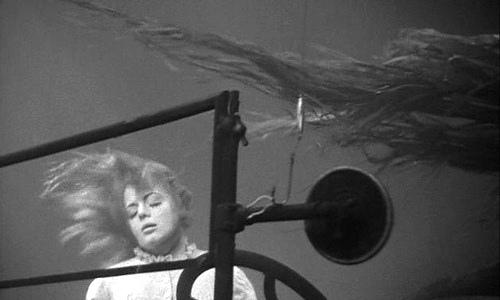
The evening starts with The Life and Times of Colonel Blimp  , a movie I really hold in high esteem, and moves on to the Cardiff documentary.  That is followed by A Matter of Life and Death which was originally released as Stairway to Heaven .  It’s a great film with wonderful fantasy scenes shot in a reverse Technicolor monochrome that are quite striking.  The film, though not well known here, is considered by many film critics to be one of the greatest British films.
 
Then comes the incredible color and beauty of the ballet-based The Red Shoes.  I don’t know ballet but this is a spectacular film. The evening finishes up early in the morning with Black Narcissus
 
All are beautiful to see.  All have stories that are a bit unusual.  All have great impact.  I can’t speak for every taste here, knowing that many might see these and just not see what I see in them.  But for those who love great films, this is a great night to see some of the best.

Read Full Post »

The other night, I saw the end of the 1958 movie Auntie Mame, starring Rosalind Russell as the iconic title character.  The film was on TCM and at its end, host Robert Osborne came on and, as he normally does,  wraps up the film with an interesting bit of trivia about its stars or the folks who made it.  I really enjoy these stories as they usually give you some info that I didn’t know before that often adds a layer of understanding and interest to the film.

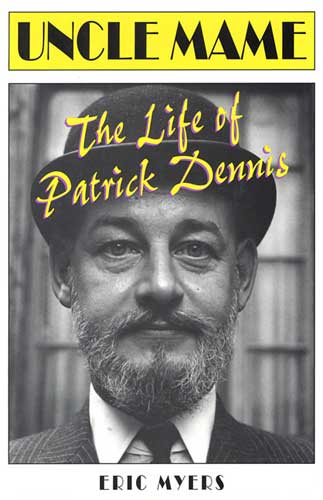
On this particular occasion,  Osborne spoke for a minute about the author, Patrick Dennis,  who wrote the book behind the film,  Auntie Mame: An Irreverent Escapade in 1955 Although I knew of the stageplay and film as well as the later musical versions, Mame, I knew nothing about the author.  Patrick Dennis was an unknown quantity to me.  It turns out that his story is a fascinating one that was documented in a book , Uncle Mame: The Life of Patrick Dennis , from author Eric Myers.

Patrick Dennis, whose real name was Edward Everett Tanner, was spectacularly famous as an author in the 1950’s, the toast of the NY publishing world.  He wrote 16 books, mainly comic novels and almost all bestsellers, which made him many, many millions of dollars.  Auntie Mame alone was on the NY Times Bestseller List for 112 weeks.  He was married with two children and seemed to be living the American Dream but that was a mere facade.  He lived another life as a gay man and also washed away all traces of who he really was with torrents of hard drink.  His fame steadily waned in the 1960’s as his books fell from fashion and his boozy, freewheeling lifestyle left him near broke.

His life entered a second (or third) act. 

He reverted to his original name and, knowing well the world of wealth,  became a butler.  He buttled for the family of McDonald’s founder, Ray Kroc, and a few others who had no idea that the bearded gentleman managing their home was the famous author responsible for Mame.  He worked anonymously.  After several years, he was diagnosed with pancreatic cancer which ended his life in 1975.  He was 55 years old.

While the play and film stand well enough on their own, the story of Patrick Dennis is a truly interesting  footnote to Auntie Mame.

Read Full Post »

Scene from Black Narcissus

As an artist, I am of course influenced by color in many things.  Obviously, the colors I have seen in the work of the great painters played a part in how I came to view color, such as the bold use of it by Van Gogh and the deepness of the greens and reds in Holbein’s masterpieces.  But even beyond painters I am influenced by color in so much that I see. 

This makes me think of a Coke television commercial from a number of years back, probably in the late 80’s or early 90’s.  It was in an urban setting with a Latin vibe but it wasn’t the setting that caught my eye.  It was the color of the whole ad.  Deep, dark throbbing colors.  Reds that looked like they poured out of a beating heart.  Gorgeous rich golds.  All shot in a very cinematic manner, much richer in texture than one would expect from a TV ad.  Every time I would see it I would stop and just stare, taking it all in.  I don’t think I was painting yet and it really made a big impression on how I viewed color and made me think that I could find expression in color.

Another influence is in the work of the great cinematographers of the movie world.  I especially think of the movies from the earliest years of color use in the films, movies like Gone With the Wind and The Wizard of Oz, which both were extraordinary in their use of color.  But, for me, the work of Jack Cardiff in the films of Michael Powell and Emeric Pressburger takes the cake.  In movies like The Red Shoes, Black Narcissus, A Matter of Life and Death, The Tales of Hoffman and The Life and Times of Colonel Blimp ( a favorite of mine), Cardiff used color in a way that added even more depth to the story, making the eye want to settle on the scene at hand and take it all in.  The images and the opulent color  from these films often lingered in my head for weeks after seeing them and when I am at the easel I find myself still trying to capture that same atmosphere that he was able to create on film.

I mention this today because I want to remind anyone interested that TCM is featuring the work of Jack Cardiff in January and will be airing a documentary, Cameraman: The Life and Work of Jack Cardiff  along with a number of the films that showed off his great skill, both as a cinematographer and a director.  It’s a great opportunity to see some of his color work that that been called decadent by some writers.  When I read that description, I nodded because that is exactly what it felt like– grand, luscious decadence.

Good stuff.

Read Full Post »

We saw Martin Scorsese’s newest film Hugo yesterday, the story of a young orphan who lives in the clockworks of a Paris rail station.  I enjoyed it very much even with though I am still not yet sold on the need for 3-D in this film.  Or most films, for that matter.  Some of its use in the film was interesting but often I found it distracting and sometimes downright irritating.

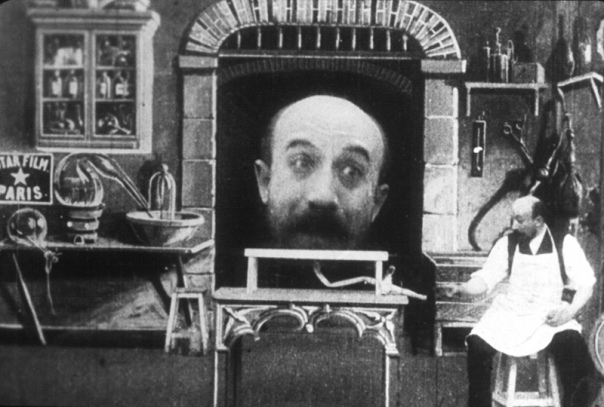
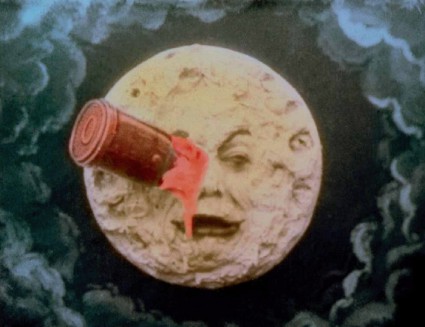
But what I really did like was that one of the main characters in the story was the great pioneering filmmaker, George Melies.  His life and body of work were key elements in the storyline.  It gives an overview of his life from his birth in 1861 through his early years as an illusionist and magician, as well as a maker of automatons, which are self-operating machines that often resemble human forms.  Clockwork robots– another important part of the film. It then documents his career in film , telling how he used his background in magic and illusion to create wonderous worlds in the new medium of film.  He created some of the first special effects seen on film and even toda, with all the CG effects available,  they are quite interesting to see.

The film also tells of his fall from the public eye and the destruction of many of his films, many of which were sold to the French military to be melted down to make celluloid heels for boots.  As in the film, Melies ended up running a toy booth at a Paris rail station before a new generation rediscovered the genius of his early work.  Though much of his work is lost forever, many have been recovered and restored.

Being a fan of early fims, I am glad that Scorsese was able to so beautifully pay homage to this early giant of cinema in Hugo.  I’m hoping that a few moviegoers will find in Melies’ work a huge imagination and inventive spirit  worth exploring more.  There is an amazing amount of wonderful film from the earlest days of the medium and I hope that a new generation will discover these hidden treasures, much like those who rediscovered Melies after World War I. 

Here is a restored Melies film, Le Diable Noir. Like many early films, it is short and a simple story.  For modern filmgoers, the acting will seem a little over the top but you have to remember the time frame here.  In early films, as well as the theatre of the time, gesture was big part of getting across emotion.  But that aside, the effects Melies incorporates are tremendous for the time.  Actually, ahead of his time.

Read Full Post »

Most people think of anything that falls on the eleventh day of the eleventh month as being a time to commemorate the brave men and women who have served in the Armed Forces.  That, obviously, is a wonderful tribute to their sacrifice and is a worthy use of this day.  But this year, there is an added element to the gravity of the day.

This day in this year, 11/11/11, Nigel Tufnel Day.  I believe this has something to do with some apocalytic countdown attached to the Mayan Calendar. 

Nigel Tufnel was, and is, the lead guitarist for the band Spinal Tap, the heavy metal rockers who were the subject of  the celebrated film mockumentary This is Spinal Tap from director Rob Reiner back in 1984.  As played by Christopher Guest, Tufnel is best remembered for the part of the film where he is showing his guitars to Reiner and explains why the dials on his amps all go to eleven rather than ten, the normal top number on most numeric dials.  It is a classic bit.

The film has become a classic, deemed “culturally, historically, or aesthetically significant” by the Library of Congress in 2002.  The film popularized the mockumentary style and Guest has made a great series of films based on this format of a traditional looking film dockumentary using a reperatory of actors and improvised (and often very funny) dialogue.  Best in Show, A Mighty Wind  and Waiting For Guffman are all exceptional examples.

So, today, at the clock strikes the eleventh minute of the eleventh hour of this eleventh day in the eleventh month in the eleventh year of this decade, I will first say a silent thank you to honor the service of all the troops, past and present.  Then I will plug my guitar into my amp and turn it up to eleven. 

I can’t embed the actual  that started the ball rolling for Nigel Tufnel Day but you can watch it on Youtube by clicking here.

Read Full Post »

I was going to write about an essay that I read in the magazine Foreign Affairs by George Packer titled The Broken Contract.  It’s a summary of the timeline for the growth of the wealth inequality in our country that has recently started coming to a head, focusing on congressional actions that have enabled this disparity.  I had some problems with some of his views but overall found the article to be very enlightening and downright depressing in the end.  So I decided to not go any further into it this morning except to say that the country has definitely lost sight of the  contract of social responsibility implied in Packer’s article. 

 According to Packer, if the world were represented by the movie It’s a Wonderful Life ( we are quickly heading into the holiday season, after all), the most egregious actions of the greedy Mr.Potter have become the accepted norm and are no longer subject to any sort of public shaming, as they had once been.  George Bailey would be even more helpless to the economic and legal machinations of Potter. 

That’s my analogy, not Packer’s. 

Anyway, that’s as far as I want to take it this morning.  Here’s a little music to fit the tone of this subject, at least in title.  It’s Wicked Game from Chris Isaak from back in 1989.  Hard to believe this song is that old.

Read Full Post »

« Newer Posts - Older Posts »