Feeds:
Posts
Comments

Archive for the ‘Influences’ Category

Collectors

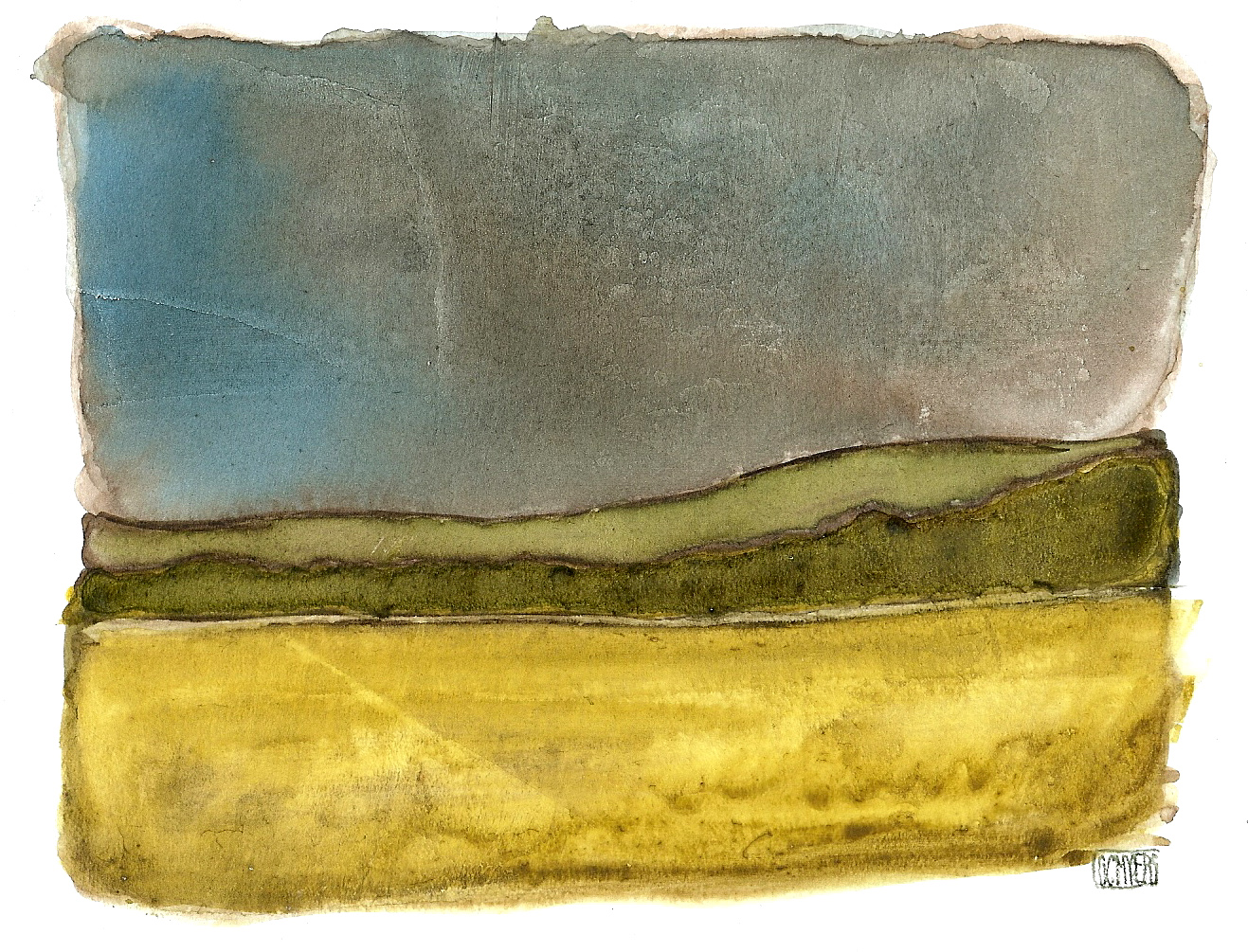
I pulled up this early study today, a smallish piece on paper from 1994 that was one of my first efforts in the technique that I developed for myself from which all my subsequent work derived in some way.  I can still remember the excitement of discovery that was in every piece at that point, how each brushload of paint seemed filled with the possibility of  showing me something I hadn’t seen before.  It was all I needed then– me and the paint and a place to lay it down.  My own eyes were enough.

There was a comment yesterday that inquired as to my use of the word collector in describing the attendees of my shows and buyers of my work.  I’ve been thinking about the importance of  these people for some time and this comment brought back the debate I have internally in describing them.  Customers and clients seem too cold and businesslike as words for how I view them.  As does buyers.

I’ve always felt funny using the word fans to describe  my collectors.  I don’t exactly know why but there’s something a little too egotistical, too self-aggrandizing,  in  saying my fans

Followers is close to being okay but there is an element of the cultish in it that makes me nervous.  Besides, there are plenty of collectors who have bought several apintings of mine without following the progress of the work over the years, people who happen to simply like the work and come back again to add to their collection.

So, I’m left with the word collector.  I like the sound of it and have earmarked as an important word to myself ever since I realized that there were people who might someday collect my work, which was a short time after I began working on pieces like the small study at the top of the page.  The word has become more important to me over the years.   There is the obvious reason, in that collectors provide the income that sustains me.  But collectors have provided me with more than mere money.

There have been times, over the years, when that initial excitement as I described above had faded and the process itself was not motivation enough to make me want to spend my days alone in my studio.  Though I think I am well suited to isolation, there are times when it is daunting.  But it has been during these times when the remoteness has been overbearing that the thought of my collectors, of people who take an active interest in my work, who give it thought and time in which to flourish, have pulled me through.  Given my work a purpose.  Knowing that there were collectors out there willing to view the work I made in the solitude of my studio made the isolation fade away, as though there were hundreds of eyes looking over my shoulder as I worked.  It’s hard to describe the gratitude I feel for this presence that they give me in the studio, not to mention the motivation they provide.  I find myself always wanting to push for something more, something new to pass along to these collectors, if only as a small repayment for what they have provided me.  I feel that they have placed a trust of some sort in my work and it’s imperative that I not betray that trust by giving less than my full effort.

So, if  there’s a better word, please tell me.  But it will be hard to push out the meaning and importance of the word as I perceive it for those who I refer to as my collectors.

Read Full Post »

The Guardian Seat

This is a small painting that is part of my show, Toward Possibility, which opens at the Kada Gallery this coming Saturday, November 6.   I call this painting The Guardian Seat and it is a small piece  that measures about 6″ by 6″.

It’s a very quiet scene and a simple composition that depends on the spaces between the objects seen here to carry the emotion and feel of the piece.  When I look at this piece I am instantly reminded of a small story relayed to me recently that fits this piece very well.

I was told of a farmer who worked the fields near where the person who was telling the story grew up.  He worked a group of fields that spread for quite a distance and out among them sat a chair where, at the end of many days, he would sit and just take in his domain, his guardianship.  I can clearly imagine that image of a man sitting on a straight-backed chair with plowed fields spreading out from him in all directions as the sun lowers to the distant horizon across them.

Anyway, after many years of doing this the farmer eventually passed away.  However, the chair remains in the fields.  His family maintains the chair as a small memorial to the farmer.  The person who told me the story said they always look for the chair when they go home.

A more lovely and fitting memorial for a man of the soil, I cannot imagine.

I suppose that is where the title for this piece emerged.  This story gives me the feeling of a man who had a sense of guardianship and love for the land he worked, who felt himself as both keeper and part of the earth.  There is a peaceful dignity to the tale that I hope shows in this little painting.

Read Full Post »

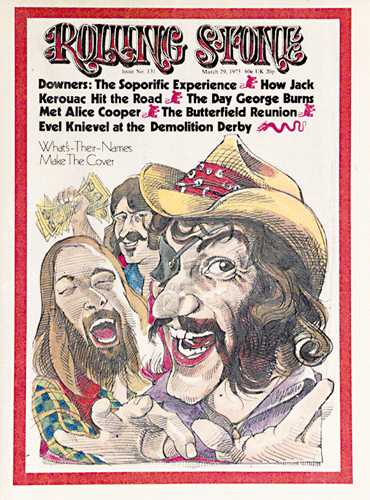
Last week, I picked up Rolling Stone: Cover to Cover, a set that includes a book on the history of the magazine and a digital archive that includes every issue from 1967-2007.  When it arrived I installed the viewer on my computer and within a few minutes was knee deep in an issue from the 70’s. 

I haven’t read Rolling Stone for many, many years now except for the random article or interview that I pick up online.  It’s just a little too slick and polished now, at least in my perception.  But looking back at these old issues brought back what I saw in the magazine as a young man.  The issue I was viewing was from 1971 and has the frantic, ink splattered drawings of Ralph Steadman illustrating a serialization of Hunter S. Thompson’s Fear and Loathing in Las Vegas, a book that I used to read every year or so with great glee.  If you’ve read the book, you know how perfectly the drawings mesh with the story.

 Leafing through on the computer screen, I could almost feel the rough newsprint of the paper. 

Inside, it came back immediately.  The ads for Marantz tuners and Ovation guitars.  The classifieds at the end of the magazine with multiple ads for rolling papers of all sorts.  Ads hailing new albums from bands long gone and sometimes barely remembered.  An ad offering any 2 Rolling Stone albums free with a subscription to the magazine.   It was like dropping back into a time, as from a time machine of sorts. 

Dr. Hook Finally on the Cover of the Rolling Stone

But the thing that struck me most was the amount of print on the pages.  It was jammed with page after page of print.  Oh, there were ads and pictures.  But it was primarily the written word.  I had forgotten how long their articles were then, how the interviews sometimes went on for 12 or more pages and were truly in depth. It was wonderful to see all those words and sentences and paragraphs. 

 It made me wish I still had an attention span.

Perhaps in the dead of this winter, when the snow is piled up and I feel like idling away a few hours, I will be able to muster up a remnant of my existing attention span and read more of those pages.  But for now, I just jump in here and there when I have a minute and browse, taking in the artifacts of our culture and my youth. 

And hum along to Dr. Hook’s refrain that’s playing in my head—-Gonna get my picture on the cover, gonna buy five copies for my mother…

Read Full Post »

Sometimes there is a coming together of influence and the end product in creating a painting.  Such is the case with this painting, a new piece that is an 18″ by 18″ canvas, that will be going to my next show, Toward Possibility, at the Kada Gallery in Erie, which opens November 6.

I watched a segment on The Colbert Report featuring a song, You Are Not Alone,  from Wilco frontman Jeff Tweedy written for Mavis Staples, the legendary R & B/ gospel singer.  The two performed the song and I’ve had it in my head ever since.  During the next few days, as I was working on this canvas, the sound of that song and Mavis Staples’ voice constantly seemed to be pushing this piece along.  It affected how I viewed it as I was painting it and affected the determination of its endpoint, its completion.  It was pretty evident to me that this piece was destined to be called You Are Not Alone.

I like the ambiguity in the title.  It could represent not being alone in the obvious spiritual sense but in the human sense as well.  We all share commonalities in our travels through this life although it often feels as though we are going absolutely alone down our chosen paths.  It’s an important reminder that while our paths might be unique, the feelings that we experience are often the same as others on other journeys.  We react as humans.

This is a very simple painting but there is a lot going on within it, as far as color and texture, that give it the needed depth to carry the mood.  The feeling I carried from the song led me to keeping the composition sparse, with no distant landscape in the background and the Red Tree being the sole focus of the canvas.  I wanted that pure focus in this piece and everything in it pushes the eye to that central figure, creating an atmospheric feel that carries the weight of the painting.

Okay, I’ve said enough.  Here’s an acoustic version of the song with Mavis Staples and Jeff Tweedy.  Hope you’ll see what I heard…

Read Full Post »

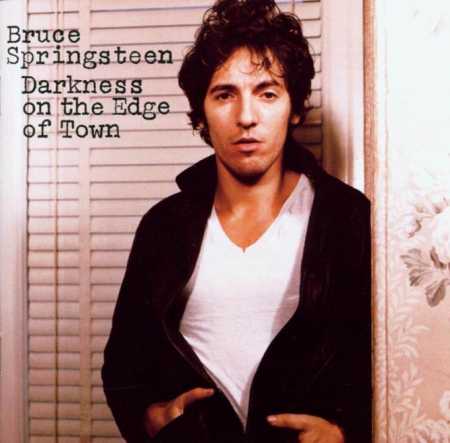
Watched the new documentary on HBO called The Promise.  It concerns itself with Bruce Springsteem and the making of his album Darkness on the Edge of Town in 1977-78.  It gives a real inside look at the creative process behind the album, highlighting the immense amount of work and effort that went into its creation.

I was intrigued by several things that were said in the film and was able to easily identify with the process that Springsteen employed in making his album.  They talked about wanting to create a cinematic feel and sweep with the music, one that evoke a visual image with the sound.  Sound pictures, they said.  I immediately understood what they meant in that I have always viewed my paintings in the reverse of this, as being visual music.  As though the message or feel he (and I) wants to get across is caught somewhere in between the two mediums.

They used the word feel often in describing how the songs came around, how Sprinsteen depended on an intuitive sense of rightness in finishing and assembling his songs.  Again, I immediately understood what they meant, even the terminology they used which surprised me because I often struggle with words to describe the process.  His obsessive-compulsive mania for his work also seemed somewhay familiar.

All in all, I found it pretty interesting and if you have an interest in the creative process or Bruce’s music, it’s well worth a watch.  There’s a lot more I could write but I’ll let the film speak for itself.

Here’s the title track from a show in Passaic, NJ right after the album came out:

Read Full Post »

A few weeks ago, at the gallery talk at the Principle Gallery, I was trying to explain my process and how my work comes around to being what it is and why there is often a repetition of form and subject.  It’s a difficult thing to describe and has always evaded the limit of my words.  In doing so that day I used an example of an apt description that I had seen once on televison and had written of in this blog.

It was from a segment on PBS’ Masterpiece Mystery series called Wallander: Sidetracked starring Kenneth Branagh as a Swedish police detective involved in solving a series of murders.  There is a point at the end where he is forced to shoot and kill the killer who is a disturbed and abused young man.  Wallander (Branagh) is deeply affected by this and goes to see his father, played by the great British character actor David Warner (I’ll always remember him best as Evil in the film Time Bandits from  Terry Gilliam) who is shown above.  He is a painter of landscapes and is struggling with the onset of Alzheimer’s.

While trying to find a way to comfort his distraught son, the father reminds him of the times when Wallander as a child would ask why he painted what he did, why they were always the same.  He gives an answer that struck me deeply when I first heard it because it was so near to the heart of what I do as a painter.

 I used this example that day and as I describing the scene to the folks there at the talk, I was wishing I could just show them the scene to better illustrate what I had meant.  Anyway, I was able to find the scene which is definitely enhanced by camerawork and background music. I hope it gets the point across as well as I think it does.

Read Full Post »

Prendergast

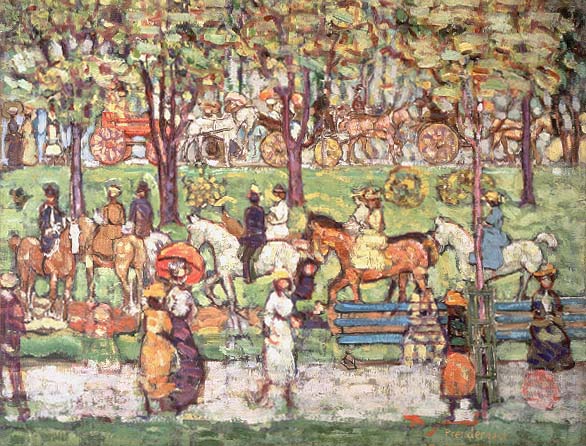
People are sometimes surprised by the names artists give as influences because they can’t see any obvious connection between the works of the two.  My citing of Maurice Prendergast as an influence and a favorite might be such an example. 

Painting at around the turn of the 20th century, Prendergast’s paintings in oil and watercolor were dense compositions usually filled with figures and motion.  There is a busy, swirling feeling to his work that seems the antithesis of the quiet I seek in my work.  Even his skies are usually churning and filled with multiple colors.  Yet for me there is a great harmony in the compositions that creates a sense of stillness for me. 

I’ve wanted to show his work for some time on this blog but I could never find images online that capture the brilliance and visceral impact of his work when seen in person.  The captured image doesn’t capture the depth or texture of his pieces, the luster of the surfaces.  And while they are still lovely and interesting, they don’t have that same oomph as when seen on  a wall before you.  The work of some artists suffer from this and I’ve often wondered how many artists have had their widespread popularity hindered by this factor. 

But, for me, how an artist is ranked by anyone doesn’t counter the sheer imapct of their work on my gut.  There is something in Prendergast’s work that is pure brilliance, something I would like to see in my own work.  But what that is in his work cannot emerge the same from my hand, my mind.  It can only come out in my own vocabulary of imagery, color and texture and whether anyone would ever see anything that suggests Prendergast to them is doubtful.  Even though it might be there.

Read Full Post »

Old Stuff

At the gallery talk I gave a few weeks back at the Principle Gallery, I referenced my early work, before the Red Tree emerged in my work and the landscapes were less centered on a central figure.  Whenever I talk about how the work evolved over the years I always turn and look at the paintings of mine that are hanging and try to find something that has some sort of equivalency and never really see anything there that fits the bill. 

I was reminded of this yesterday when I was going through some old work on the computer and came across this scan of a small piece from about 15 years back.  It’s about 4″ by 5″  on a piece of illustration board and is very emblematic of the work I was trying to produce at the time.  It was all about blocks of color and their relationship to one another and how atmosphere and feeling  was created by them.  They were extremely quiet, almost mute.  Stoic.

There is always a part of me that wonders, when seeing examples of this early work, what my work would be now if I had chosen to stay in that mode of expression, if I had not been sparked by the energy of the red tree.  Would the work have grown in a different way, with a different feel and appearance? 

 Perhaps it’s not wise to ask such questions.  I suppose we are what we are at this point in time and to reflect back with such questions serves no purpose. 

But looking at this work, I can see the beginnings of what has become my work.  I see the point where I was at that time in the progression of how I mix colors and how the paint is applied.  I can see the things in this piece that would spark other pieces which would contribute to the work’s evolution.  That’s one of the aspects of painting I seldom talk about – how work begets work, how each piece is a step forward in the evolution of a body of work.  It’s a process of constant change and adjustment, always moving hopefully ahead.

Maybe that’s the purpose in looking back on earlier work- to see if one has truly changed or grown.

I don’t know…

Read Full Post »

Turner

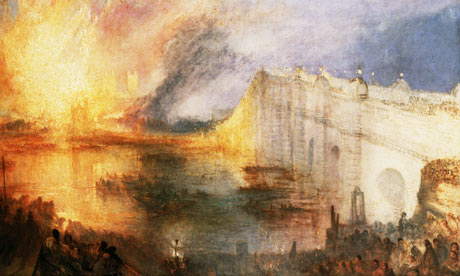
I was looking for a small painting I had done a number of years ago to illustrate this post but came up empty in my search.  It was an image of a barn on fire in one of my landscapes.  A bit of an oddity for me but a striking image.  So, I decided to change my subject and in its place I chose this masterwork, The Burning of the House of Lord and Commons, from the great  19th century British painter JMW Turner.  To me, his work is so unlike anything of its time.  It is at its best when it is fluid and wild and free.

I looked at a lot of Turner when I was first starting to paint.  He single-handedly transfromed watercolor into an accepted artform and the tales of the extremes he went to with his media and paper to achieve the incredible effects in his watercolors inspired me.  His oil paintings were often done in washes of color that was absent in the more restrained and formal paintings of the era and seemed so forward thinking to me.  He was a leading edge of modern painting.

I don’t have a lot to say except that Turner remains a favorite.   I am humbled and inspired to want to be better whenever I see his work.

Read Full Post »

Labor Day

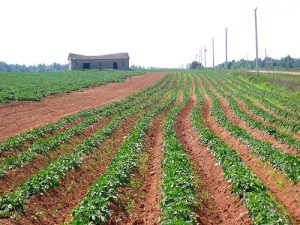
pei-potato-farmAnother Labor Day has come. Most folks have forgotten that this holiday was first celebrated back in 1894, signed in as a federal holiday as an effort to bring an air of reconciliation to the nation which had just endured the widespread and violent Pullman Strike. It is meant to honor the Labor Movement and the workers it represents.

For me, the day reminds me of the first time I worked outside of our home for someone else as a child, a memory that was recently reawakened at a wedding of an old friend near the fields where I first used my hands and back for labor. There was an old potato farmer on the road where I grew up and a friend of mine would periodically go down there and work, most of the time picking or bagging potatoes. One day he asked if I wanted to come along as the farmer was going to lay irrigation pipe that day and could use some extra help. Being eleven years old and wanting to make some extra cash and having no idea what I was getting myself into, I agreed.

It was hot and dusty work. The long pipes weren’t heavy but were awkward and each time they began to dip towards the ground as you carried them brought a gruff yell from the crusty old farmer, was not one to wear out his smile from use. He certainly did a lot of yelling and cursing at us that day.

We had just a short break to eat the sandwich each of us had brought with us and after about eight hours in the fields, I was exhausted and covered with alternating layers of sweat and gray, grimy dust. It was the first real day of work I had experienced. It had been a tough for an untested eleven year old but now I would be rewarded.

As my friend and I prepared to mount our bicycles and head tiredly home, the farmer stood before us in his dusty bib overalls, unsmiling, of course.

“Suppose you want to get paid?”

It came out of his mouth not so much like a question but more like a complaint. We silently nodded, eager in our anticipation of our sweet reward. He stuck his thick, strong farmer hand into a pocket and pulled out a handful of change. He counted out three dollars in quarters to each of us and said, “Okay?”

Again, not really a question. More of a dismissal, more like okay, we’re done here, now go.

We were just kids but we knew we had been taken advantage of that day. But we were eleven years old and afraid to death to talk back to the surly old man, to say that this was unfair. We never worked another day for him and I found out later that this was his modus operandi, working the hell out of kids then underpaying them. If they didn’t come back, so what? There were always kids looking  to make some money.

It was a small incident but it shaped how I viewed labor and the way many people are exploited. It was a clear object lesson, in microcosm, on the value of the labor movement in this country as a unifying force for those of us most susceptible to being exploited.

The labor movement is underappreciated now. Our memories are short and we lose sight of the abuse and exploitation of workers that have taken place over the ages. We take for granted many of the rights, rules and protections in the workplace, thinking they have always been in place. But they are there only because people in the labor movement stood up against this exploitation and abuse. These folks willing to stand against injustice deserve our gratitude on this day. We could use a hell of a lot more of them now.

So, as you spend your holiday in a hopefully happy and relaxing manner, remember those who made this day possible. Happy Labor Day.

Read Full Post »

« Newer Posts - Older Posts »