Feeds:
Posts
Comments

Archive for the ‘Technique/History’ Category

I’ve been continuing this recent series of  patterned  landscapes, most on paper,  in the studio the past few weeks, falling into a very nice rhythm as I proceed.  This is a recent completion, an 18″ by 25″ image on paper, that has the Red Tree as the central figure in a quiet but bright composition.  The patterned fields of the landscape, like many of the paintings in this series, takes up about half of the composition, solidly built as a foundation to hold up the breaking sky above.

I’m still thinking about what to call this piece.  There is a sense of the idyllic in the scene, hunkered away safely from the intruding fingers of the greater world.  I suppose that’s why I find this work so satisfying as I paint.  There’s a comforting aspect in this work for me.  Soothing. Pacifying.

There’s also a simplicity in it but I would not call it naive.  I have a feeling that while this is an idealization and the landscape portrays the comfortable and safe, there is also an awareness of the world outside.  As though the Red Tree is cognizant of its good fortune in being rooted in this tranquil place.  Perhaps that should be its title- Good Fortune.

Let me think on that…

Read Full Post »

Walk while ye have the light, lest darkness come upon you.

—— John Ruskin

 
*******************
 
These words from Ruskin might have meaning in both a practical and a spiritual sense.  Simply put words of advice for the traveler: Move forward while the road ahead is visible.  Words that apply also to the internal traveler, those trapped in a twilight world inside where they always seem on the edge of darkness.
 
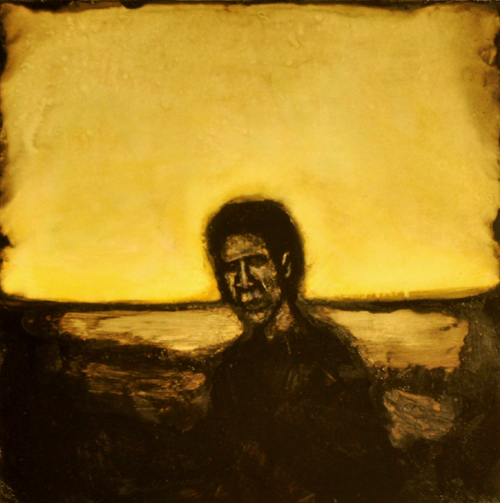
I think this fits this new piece that I call Knowing Darkness.  It’s a small painting, just 6″ by 6″ on masonite, done in a style that I have used periodically pver the years, most notably in my Outlaws pieces of a few years back.  The Outlaws were  singular figure, some with handguns, all done in this same dark black/sepia tone where the image is not really light  painted on but darkness carved away.  The technique is a throwback to my earliest attempts at painting when I was still thinking of the surface as being a solid surface in which the image was sculpted. 
 
While these pieces are always darkly introspective, they always seem to bring me a certain excitement in doing them, as though the bits of light being revealed are new light for me as well.  Like I am pulling away a certain personal darkness with each bit of white surface that breaks through.  In that respect, I find these pieces more hopeful than their outward appearance suggests.
 
This piece is no different.  When I look at this piece it says to me that you can know darkness without dwelling in it. 

Read Full Post »

In between the new work I’ve been featuring here as of late, I’ve also been continuing to produce a few other pieces of my black and white ( or gray, as I sometimes refer to it) work.  As I said before, I enjoy the challenge these pieces present in trying to create emotion and feeling without the use of color.  No deep reds or yellows to warm up the scene and give it an inviting glow.  Only the composition and lines and shading to give the piece its lifeblood.

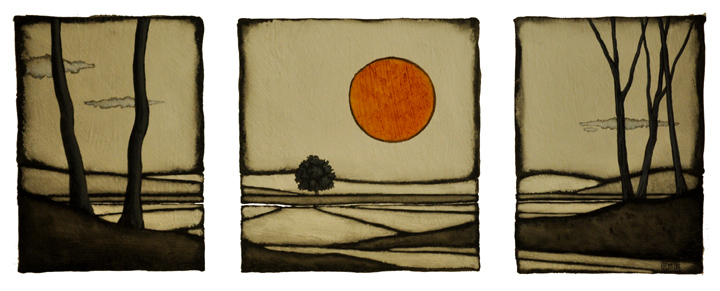
Oh, there is a touch of color.  The most recent group features red and yellow sun/moons which gives this group a great sense of continuity between the individual pieces.  The tryptych shown above, an image about 7″ tall by 18″ wide on paper that I’m calling The Warming, is an example.  In some of my gray work I have reserved the touch og contrasting color for the crown of a red tree but with this group I wanted the color to be only in the orb of light in the sky.  So with this piece the tree has gray foliage.

I like the feel of a tryptych, the way the three images are compartmentalized and relate to one another.  Each stands alone but is strengthened by the next and the sum of the three is infinitely more compelling than any one alone.  Thi breaking apart of the scene also brings a further sense of remoteness that I feel in the work, a feeling that is aided by the removal of color in the foreground.  The dark grays create a somber now from which the viewpoint originates and the yellow of the sun/moon creates a more optimistic future which approaches.

I’ve got plans for another in this series with four or five asymetrical segments creating different visual weights.  I’m still working it out in my head but will show it here-  if it works as I’m envisioning it.

Read Full Post »

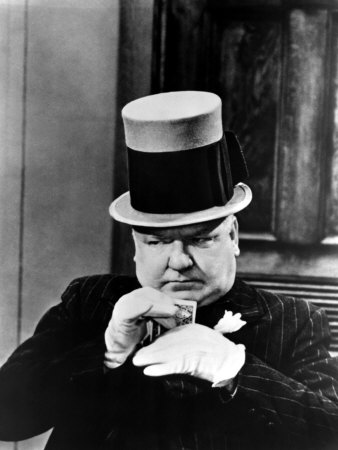
If at first you don’t succeed, try, try again. Then quit. There’s no point in being a damn fool about it.


-W.C. Fields
 
*********************
Okay, maybe those aren’t the most inspirational words ever uttered.
– 
But I’ve been thinking about the nature of failing and succeeding ever since reader Tom Seltz posed a few questions on the subject to me the other day.  I wrote yesterday about how failure for what I do was truly subjective, completely comprised of shades of gray.  But as I thought about it through the day I came to same conclusion for what is considered success for my paintings.  The perceived success of a piece is also truly subjective.  It has happened many times that a piece that I felt succeededgreatly for me has languished and raised little attention in the galleries.  I know that this doesn’t necessarily designate it as a failure but it points out the subjective perception of art.
I think this differs for various types of art.  Obviously, in portraiture there are more objective aims that must be met in determining the success or failure of a piece.   Ask anyone who has taken on a portrait commission.  I immediately think here of a portrait of George Stephanopoulos that was painted by Joseph Solman in the 1990’s when Stephanopolous was still part of President Clinton’s team.  Solman, who died  in 2008 at the age of 98 and one of the leading lights of the Modernist movement of the 30’s, painted Stephanopoulos in tints of green.  I thought it was a spectacular painting, a rousing success, when I saw it but Stephanopoulos had a differing view, seeing it instead as a failure, refusing to buy it.  Two polar views of the same painting.  Sadly, I can’t find an image of it to show here.   Painters who work in an ultra-realistic manner face the same objective viewing of their work. 
My work tends to be more about expression and emotion rather than sheer representation so this creates even more gray area for objective analysis.  I don’t really care about exactitude in rendering so long as the emotion that I’m seeking comes out and a sense of rightness exists around whatever I am depicting.  While I don’t have a great concern for the object being perfect, it can’t be absolutely wrong.  This emotion and sense of rightness are the main objectives for my work  so there is little to go by as far as judging a work a failure or a success.  And I like that.  I would rather the individual judge my work for what they see and sense in it rather than than by having them judge how it compares to reality.
I know I’m way off target here and not sure I’ve made my point  but I’m leaving it to be at this point.  Keep in mind, this is just thinking out loud here.  I may change my mind about the whole thing completely by tomorrow. 

Read Full Post »

Failure

In response to yesterday’s post concerning a very large blank canvas that is waiting patiently for me, I received several very interesting questions from my friend, Tom Seltz, concerning the role that failure and the fear of failure plays in my work.  He posed a number of great questions, some pragmatic and some esoteric,  that I’ll try to address.

On the pragmatic side, he asked if there is a financial risk when I take on large projects like the  4 1/2″ by 7′ canvas of which I wrote.  Actually, it’s not something I think about much because every piece, even the smallest,  has a certain cost in producing it that, after these many years, I don’t stop to consider.  But a project such as this is costlier as a larger canvas is more expensive right from the beginning simply due to the sheer size of it.  The canvas is heavier and more expensive and there is more used.  I use a lot more gesso and paint.  And while the cost of materials is a larger cost the biggest financial risk comes in the time spent on such a project.  It takes longer to prepare such a large canvas, longer to paint and, if it works out, longer to finish and frame.  This is time not spent on other projects.  Wasted time is by far the biggest risk in facing such a project and that is something I have to take into consideration before embarking on large projects.

He also asked whether I can reuse the materials if I don’t like what I’ve painted.  Sure, for the most part.  Especially canvasses.  Actually, the piece shown here was such a piece.  I had a concept in my head that floated around for months and I finally started putting it down on this 30″ square canvas.  I spent probably a day’s worth of time and got quite far into it before I realized that it was a flawed concept, that I was down a path that was way off the route I had envisioned.  It was dull and lifeless, even at an early stage.  It was crap and I knew that there was no hope for it.  I immediately painted it over, mainly to keep me from wasting even more time by trying to resuscitate it,  and this piece emerged, happily for me.

Tom also asked if I ever “crashed and burned” on a piece or if the worst sort of failure was that a piece was simply mediocre.  Well, I guess the last paragraph says a bit about the “crashed and burned” aspect, although that is a rarer event than one might suspect.  The beauty of painting is that it’s results are always subjective.  There is never total failure.  It’s not like sky-diving and if your parachute doesn’t open you die.  At least, that hasn’t been my experience. 

Mediocrity is a different story.  That is the one thing I probably fear most for my work and would consider a piece a failure if I judged it to be mediocre.  I have any  number of examples I could show you in the nooks and crannies of my studio but I won’t.  They have a purpose and some have remaining promise.  The purpose is in the lessons learned from painting them.  I usually glean something from  each painting, even something tiny but useful for the future.  But most times,  the mediocre pieces teach me what I don’t want to repeat in the future.  A wrong line here.  A flatness of color there.  Just simple dullness everywhere.

But, being art, there are few total failures, and many of these somewhat mediocre pieces sit unfinished because there are still stirs of promise in them.  I can’t tell you how many times I’ve come to what I felt was a dead end for a painting, feeling that it was dull and lifeless, and set it aside.  Months and months might pass and one day I might pick it up and suddenly see something new in it.  A new way to move in it that brings it new life.  These paintings often bring the greatest satisfaction when they leave the gallery with a new owner.  Sometimes failure is simply a momentary perception that requires a new perspective.

Okay, that’s it for now.  I’m sure I have more to say about failure but it will have to wait until a later date.  I’ve got work waiting for me that doesn’t know the meaning of the word failure and I don’t want to risk that it might learn it.

Tom, thanks again for the great questions.  I’m always eager for good questions so keep it up!

Read Full Post »

Daunting

Here’s a shot from my studio at about 6:45 this morning.  If you look out the window to the lower right of the canvas you can see one of the deer who seem to be always in my yard trying to find a bit of grass that is finally showing through the remaining snow.  The canvas itself has been hanging around the studio for a couple of weeks now since I stretched it.  It’s a looming presence at 4 1/2 ‘ high by 7’ wide, easily the largest canvas I have ever faced.  A long way from the tiny paintings, some as small as 1″ square,  with which I began my career.

As I said, it’s been hovering for a couple of weeks and the sight of it is both exciting and terrifying.  On one hand, it holds the potential for something big and exciting.  But on the other hand, it sits like a black hole threatening to absorb everything around it.  It’s so large that to fail is to do so on a grand scale with nowhere to hide the flaws.

So it has just sat there, waiting for me to face it.  I don’t know if today is the day to start the journey into whatever this will offer or if I will again set it aside and do something different.  Something  smaller and less daunting.  Normally, I just start and kind of let the painting take me where it will without a lot of foreplanning.  But I’m torn here, thinking that I need to at least have a clue of the final destination for this large piece.  Some sort of plan.

But I don’t have one.  I’m tempted to go with a huge version of the new work with a sky full of clouds, thinking that the visual impact of it on such a scale would be really dynamic.  I can somewhat see it in my head and if I can catch the right subtlety of color that I’m seeing, it would bang off the wall.  But there’s a little hesitation on my part and I’m not fully committed yet.  And before I start something on this scale I want to be fully invested in the belief that I will draw something alive out of this. Sitting here now, I’m beginning to feel that I need another few days to consider it more, to try to see something more concrete in my mind before I embark on this journey.

Hmm.  We’ll have to see what comes from this.  I’ll let you know.

Read Full Post »

This is a 30″ by 30″ painting that I’ve finished in the last week or so.  It’s very much in the manner of other work that I’ve been locked in to recently, with a green/blue mosaic sky light breaking in contrast over the horizon.  There is a large difference in this piece in that there is more attention paid to the trees surrounding the central figure of the red tree.  There is less open space  and the assemblages of trees create compositional masses that appear almost monolithic in appearance which makes for a warmer, less stark feel while still maintaining the same effect compositionally.  I have used these large grouping of trees sparingly  for some time but did use themmore often in the years before the red tree made its first appearance in 2000.  I was browsing through some older work and realized that they had not emerged in my work in some time and there seemed to be a place for them now, particularly in this style of work that I’ve been focusing on recently.

I call this piece The Hidden Heart for the way the red tree is held in a pocket with the trees and hills around it.  There’s a feeling that it would remain unseen but for one following the field rows that seem to forge a trail to it.  I often refer to the red tree as the heart in my paintings probably because they often are the focal point of the paintings with everything revolving around them.  Or maybe I’m thinking of the red in the tree as being symbolic of life blood.  Maybe both.  I’m not completely sure.

As I said, this piece has less starkness and more warmth than some pieces while maintaining a sense of quietude which is enhanced by the scope of the sky above.  There has been a lot to look at in the studio recently but this piece continues to draw my attention and I am continually filled with a sense of completeness by it.

Read Full Post »

This was a case of a painting dictating what is was to be, against my efforts to make it otherwise. 
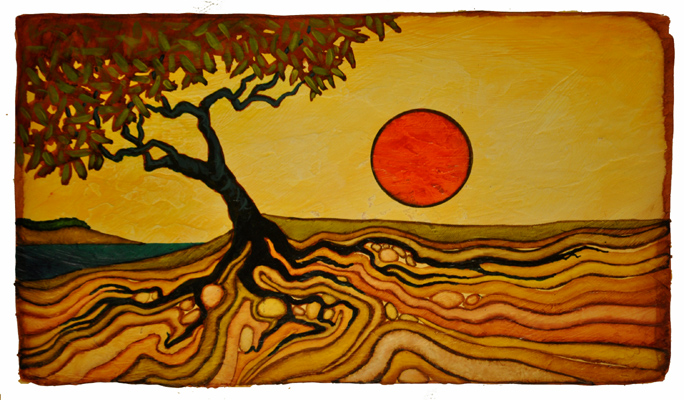
 This new 24″ by 24″ canvas grew slowly and once I was painting  in the sky I kept telling myself that it had to be lighter and lighter.  Since  2002 when I was featuring paintings that featured darker tones (referred to as my “dark work“), I have resisted working in this series.  That work was not as well received as most of my work  and I was responding to the market.  Personally, I felt that this was very strong work, work that excited my sensibilities.  But if they had no place in the galleries, I was hesitant to spend my time on the work.

So when I was in the midst of this piece I began to naturally steer away from the darkness that marked these earlier works.  I saw the sky as being brighter and having high contrast but with each stroke there was a nagging feeling that that was not what was meant for this piece.  I went so far as to load my palette with lighter colors and stand, brush in hand, before the canvas, ready to change this painting in a way that would alter everything about it.

But there was something that told me to stop, that this was where the sky stopped, that this was the destination.  This was what this piece was meant to be.  I stepped back and put down the palette.  It would stay dark.

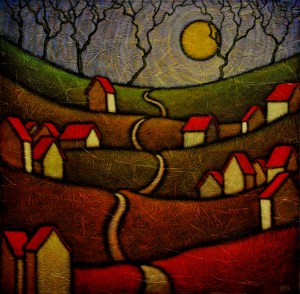
Now, maybe this will not fit into the marketplace for my work but that doesn’t matter.  When I look at this piece, that is the last thing in my mind.  I am immediately pulled into the picture plane and upward, over the knolls, toward the top of the rise where the sun/moon hovers, urging me to continue climbing.  It is complete and has its own life, its own momentum.  It is what it is and that is beyond me now.

Read Full Post »

Incomplete

In my studio I have several pieces that sit in varying states of  incompletion.  Some have sat for quite a long time, waiting for the possibility of a few strokes here or there to bring them to life.  Most have obvious flaws, the result of me taking the painting in a wrong direction in some way.  Some still have possibility and I will at some point revisit them.  Others have no chance to ever see the outside world and will be consigned to the failure heap.  I keep them around because often they possess certain concepts that just weren’t brought to fruition properly at the time but might work with a different approach.  So in that way they are useful.

Then there are pieces like the one above.  It’s from early last year, a piece that’s about 9″ by 16″ on paper.  For all intents and purposes, it is done.  But there’s something about it that nags at me, that tells me that it’s incomplete.  So for the past year I have been looking at this painting on and off, trying to ascertain what doesn’t click for me or if there’s a chance of making it work.  Or if it’s even worth trying to save.

In this case, I tend to think it’s worth saving.  I keep seeing things that I like a lot in it and think that sometime soon I might go back in and try to bring it to some satisfactory completion.  At least I hope I see things that make it worth going back in.  It may be that I know how much time I put into this painting initially and don’t want to see it squandered without a fight.

We’ll see.  Hopefully, it won’t be relegated to the failure heap.

Read Full Post »

I’ve started working on a few new pieces on paper, taking a short break from the larger additive paintings that have occupied me for the past few months.  One of the first was this painting, about 7″ by 12″, which is a continuation of last year’s black and white series.  I thought it would be best to dive back into this work with some black and white work to regather the feel and rhythm of the medium.

I call this black and white but it’s pretty evident that this is not completely accurate.  I still use bits of color, usually muted tones of red or yellow, and the rest is really black and gray.  Actually, now that I think about it, I think I was calling this my gray work several months back.  Writing or talking about the work is the only reason I try to label the styles I use.  In my mind, they are simply different and labels don’t matter.

This reentry into this work on paper is always interesting because there are always tweaks in the colors.  The time away from this style has cleansed the palette and gives me a new chance to see the colors and combinations in a new light.  While there is a continuum with obvious traits and colors in my work,  going back through the years and reviewing my work on a year by year basis shows these tweaks in an obvious way.  Some years, the predominant work is very bright with almost a gleaming white underneath that makes the work glow.  Very clean, very bright and light.  Other years, the colors are deeper and crowd together densely giving the work a very rich feel.  Some years are dominated by cerain colors. In these years there will be mainly blues or golden yellows or deep oranges that seem to jump out from every piece.

Every year is different even in a similar fashion.  So as I go back in for this year I am eager to see how the year evolves and what trail I will follow.  Looking at this piece allows me to see several pieces into the future.  Many new pieces have that effect.  They spark something, some new idea or rhythm, that I instantly visualize and, if things go as I see them, eventually find their way out into the world.  Sometimes they evaporate before I can capture them and I then find myself struggling to recall that spark, that idea.  It’s like trying to recall a story, something someone told you in passing several before.  You can remember being told something but the details just won’t come.  So you let it go and one day something will spark that thought and suddenly bring back the whole story in detail.  That’s what often happens when I look at my work– it brings back ideas that have laid dormant in my mmemory for a long period of time.

So when I look at a piece like this, I take pleasure in the painting itself but also in the inspiration it provides for subsequent pieces.  When this is happening, I know I’m back in rhythm and the work usually shows this.

Read Full Post »

« Newer Posts - Older Posts »