Feeds:
Posts
Comments

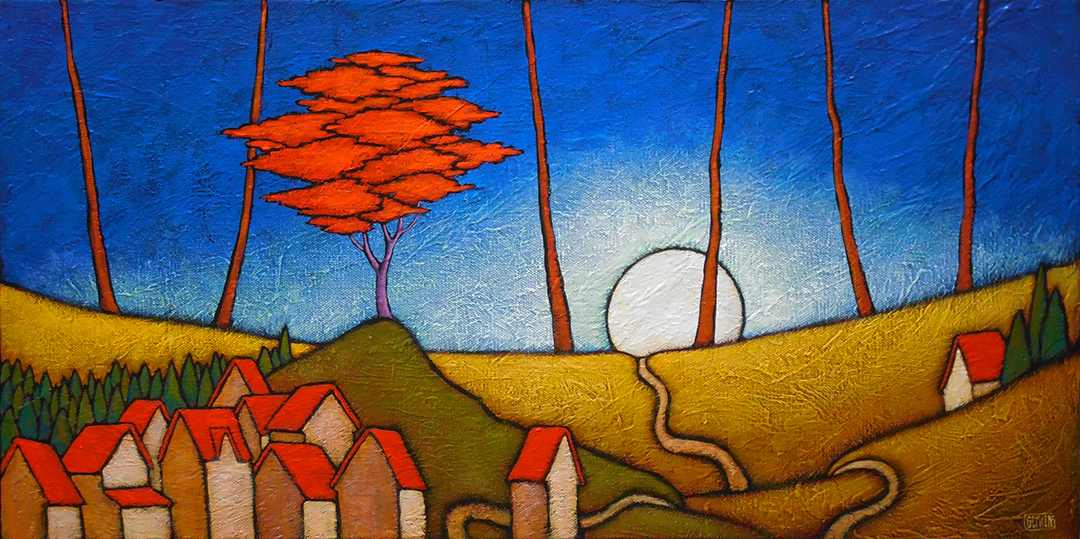
White in the Moon— At West End Gallery


I have always fought for ideas — until I learned that it isn’t ideas but grief, struggle, and flashes of vision which enlighten.

–Margaret Caroline Anderson, The Strange Necessity: The Autobiography (1969)


There’s a lot of anger, shocked disbelief, and trepidation here and abroad at the systematic disassembling of our government currently taking place.

As there should be.

Because no matter how they try to package and sell it to the rubes, the whole of it makes little sense to anyone willing to look past the sales pitch and really examine what they are doing with their attack on our nation’s institutions. Looking at the totality of the stupidity, cruelty, corruption, and treachery that drives it, one would be hard-pressed to not respond with some mixture of anger, shock, and fear.

But perhaps the most overlooked response is one of grief. I know that it is a big part of my personal reaction. 

Why wouldn’t one grieve for the loss of something one loved and held so highly? I am talking about the idea of America as the symbol of the promise of freedom, opportunity, justice, and hope for both its citizens and others around the world that it has been for past century or so. Even when it wasn’t living up to that promise, as was sometimes the case, it usually rightfully adjusted its course, putting us back on a path that moved us once more toward that more perfect union as outlined in our Constitution. 

But if we cannot soon stem this destructive tide, it feels that we will have little chance of ever returning to that path. The dream of America, the one with a conscience that showed us as a compassionate, welcoming, and generous nation, will be lost. Nearly two hundred and fifty years of slow but steady progress will be crushed and reduced to ash.

And once the dream is crushed, it will not be soon revived. It’s hard to rebuild with ashes.

The grief for a crushed and lost dream lingers and aches. 

I sit here this morning as stewpot of anger and grief. The thought of what might have been, of what heights we could have achieved, haunt me. I feel like the figure in the painting at the top of the page who is looking back at what once was but forever remains distant, never to be revisited.

Here’s a song for this Sunday Morning Music that captures that feeling.  At least for me, it does. It’s from Melanie, who died this past year, and her Look What They Done to My Song, Ma from 1971. The overall tone of it and this verse really sums it up best for me:

Look what they’ve done to my song, ma
It was the only thing I could do half right
Turning out all wrong, ma
Look what they’ve done to my song

Good intentions turning out all wrong… 


FYI- The quote at the top is from Margaret Anderson (1886-1973) who was the founder and publisher of the art and literary magazine The Little Review in the first half of the last century. She was responsible for introducing Ezra Pound, T.S. Eliot, James Joyce and many others to the American public. A very interesting life.


The Demon’s Mirror– illustration Arieh Zeldich


Now we are about to begin, and you must attend; and when we get to the end of the story, you will know more than you do now about a very wicked hobgoblin. He was one of the worst kind; in fact, he was a real demon.

One day he was in a rare good humor because he had invented a very special mirror with this peculiarity, that everything good and beautiful reflected in it shrank away to almost nothing. On the other hand, every bad and good-for-nothing thing was magnified a thousand times and looked its ugliest. The most beautiful landscapes reflected in it looked like boiled spinach, and the best people became hideous, or else they were upside down and had no bodies. Their faces were distorted beyond recognition, and if they had even one freckle it appeared to spread all over the nose and mouth.

The demon thought this immensely amusing. Anytime a good or gentle thought passed through any one’s mind, it turned to a grin in the mirror, and this caused the demon to roar with laughter.

All the trolls in the demon’s school, for he kept a school, reported that a miracle had taken place: now for the first time it had become possible to see what the world and mankind were really like.

The trolls ran about all over with the mirror, till at last there was not a country or a person which had not been seen in this distorting mirror. They then decided to fly up to heaven with it to mock the angels and Our Lord Himself.

Trolls Carrying Mirror to Heaven- illus Boris Diodorov

The higher they flew, nearer and nearer to the Angel and God, the more violently the mirror grinned. It grinned so hard so much so that they could hardly hold it, and at last, the mirror quivered with frightful laughter and slipped out of their hands. It fell to the earth and shivered into hundreds of millions and billions of bits.

But even broken apart, it did more harm and caused more misery than ever. Some of these bits were not as big as a grain of sand, and these whirled about all over the world, blowing into people’s eyes and getting stuck there. And to these unlucky people, everything seemed warped and twisted. They could only see the ugly side of things since each tiny grain of glass kept the same power as that possessed by the whole mirror. Some people even got a bit of the glass into their hearts, and that was terrible, for the heart became like a lump of ice.

Some of the fragments were so big that they were used for windowpanes, but it was not advisable to look at one’s friends through these panes.

Other bits were made into eyeglasses. But woe betide to those who made use of those eyeglasses! Their vision became warped and their judgement distorted.

The bad demon was so tickled at the mischief he had done that he laughed till he split his sides. And still some of these bits of glassed were still left floating about the world…

–Hans Christian Andersen, The Snow Queen (1845)


This is the opening chapter to The Snow Queen from Hans Christian Andersen. You can take it as a mere fairy tale, if you would like. But as is the case with all myths, legends, and fairy tales, it is the underlying truths and lessons contained within them that makes them forever relevant.

This particular tale feels as though it could not be more relevant. It has evil demons and Trolls– yes, it has trolls! It has ugliness magnified a thousand times and goodness and beauty shrinking to nothingness then being mocked. Then there is the perception of reality and the judgement of those affected by the specks of glass becoming warped and distorted. 

Sometimes seeing similarities to our own lives and times that exist in myths and fairytales gives us clarity, putting things into an order that our brains have been seemingly trained to understand through the ages.

However, you may not see the same parallels, if any at all. Maybe you even have a speck of glass in your eye or, heaven forbid, your heart. I doubt that is the case because you would have stopped reading this blog long ago. 

Just laying this out there on a cold Saturday morning. I didn’t go into the rest of Andersen’s fairytale, but the setting here at the moment seems perfect for the evil Snow Queen with large whirling snowflakes. Hope she’s not around…

Cloud Flyer— At West End Gallery


It is better to have your head in the clouds, and know where you are, if indeed you cannot get it above them, than to breathe the clearer atmosphere below them, and think that you are in paradise.

–Henry David Thoreau, Letter to Harrison Blake, April 1853


This morning, I spent a few minutes looking intently at the image of the painting above. It’s a small piece that is part of the Little Gems exhibit now hanging at the West End Gallery. Something in it captured my attention this morning. Not one thing that I can spell out in words. Just a brief flash of feeling that for that moment held me happily spellbound.

Maybe it was just a quick escape from things in this world that have been harassing my mind as of late. I don’t know and, for that matter, I don’t care. We all need to climb into the clouds for dreaming and introspection every so often so that, like Thoreau wrote in a letter to an old friend above, we know where we truly are. We can sometime be deceived or misled, by others and ourselves, so that we don’t clearly see our placement in this world clearly.

We might think too much or too little of ourselves. We might respect the opinions of others while ignoring our own. We might place too much trust in the wisdom of others and too little in our own.

We sometimes need to get up above it all, to place ourselves in and above the clouds. Oh, we can’t stay there, much as we might like, but the clarifying effects of a short sojourn there are mighty.

It centers one’s soul.

The paragraph from Thoreau’s letter from which the passage above was taken also makes the point about that if we trust and respect ourselves, we have the ability to elevate our lot in life and live a fulfilled existence:

It is worth the while to live respectably unto ourselves. We can possibly get along with a neighbor, even with a bedfellow, whom we respect but very little; but as soon as it comes to this, that we do not respect ourselves, then we do not get along at all, no matter how much money we are paid for halting. There are old heads in the world who cannot help me by their example or advice to live worthily and satisfactorily to myself; but I believe that it is in my power to elevate myself this very hour above the common level of my life. It is better to have your head in the clouds, and know where you are, if indeed you cannot get it above them, than to breathe the clearer atmosphere below them, and think that you are in paradise.

That was very much in the same spirit of what I saw in that brief flash I felt while looking at the image at the top this morning. Feet-on-the-ground-head-in-the-clouds kind of satisfaction. Or should I say, Hand-on-the rudder-head-in-the-clouds?

Not sure on that one.

Here’s Joni Mitchell and her classic song, Both Sides Now. This is a favorite version of mine from her 2000 album, Both Sides Now. It is different in tone and sound to her original. Deeper and more world-weary. As you would expect. I read that it was as though the 24-year-old Mitchell wrote this song specifically for her 57-year-old self to sing.


The Dream Eater


The human mind is inspired enough when it comes to inventing horrors; it is when it tries to invent a Heaven that it shows itself cloddish.

–Evelyn Waugh, Put Out More Flags (1942)


King of the Night Forest 

I had two pieces in this year’s Little Gems show at the West End Gallery that were a bit different than my typical work. The liberty to experiment and show work that is a little out of your normal lane is one of the things I love about this particular show, which ends a week from today.

These two distinct outliers, King of the Night Forest and Eye of the Trickster, were featured here. They were representations of beings or demigods from a not fully formed mythology that only existed in my mind. I am not sure this mythological world will ever be more defined than it is in these paintings.

Eye of the Trickster

And maybe that’s as it should be. Maybe they should exist only to serve as a jumping off point for someone who might stumble across them someday in the future when they are deciding what should be saved and what should go in the dumpster. Maybe they will inspire that person’s imagination, playing to their fears and dreams.

Maybe. Maybe not, Who knows for sure?

After doing these first two Demigods— I decided just now that is what I am calling them– I felt I wasn’t through. I wanted to explore and expand this world a little more. I did three more pieces, all 14″ by 18″. a bit larger than the first two from the Little Gems show. The last of these three, The Dream Eater, is shown at the top.

The Dream Eater is a being that does just that– takes away and devours your dreams. Greedy and cruel, he is never satisfied. Even when all the dreams and hopes are sapped from his victims and they have been pulled down into his hellish pit in the netherworld, he is already hungering for his next target. 

That sounds familiar, doesn’t it? Perhaps that’s why I felt the need to paint this creature. I don’t know for sure. When I start these things, I have no idea where they will go or what I will see in them when they are complete. They obviously represent some other thing that is rolling around in my mind as I work.

I doubt these last three Demigod pieces will ever see the wall of any gallery and I imagine the first two will join me soon after the end of the Little Gems show. I’m fine with that. In fact, these pieces and those from other years that share this same sort of difference give me a special sort of pleasure when I experience them here in the studio.

Maybe it’s because I know they are those parts of me that I’ve wanted to, but have failed to, withhold from eyes other than my own. There’s something freeing sometimes in letting the outside world get a peek at your inner world. 

I’ll show the other two Demigods sometime soon. But for now, I am just going to try to keep this thing from feasting on my dreams while I listen to Goodbye Yellow Brick Road from Elton John. It’s a song about the loss of dreams, one that loomed large in my youth and somehow got lost in the hubbub of the intervening years. I can’t remember the last time I pulled out the album or consciously listened to it in any other way. Probably decades. But I recently watched a reaction video of the song and was instantly reminded of all it was and is. Felt a bit foolish for taking it for granted for all these years.

We sometimes do that with great things, don’t we?


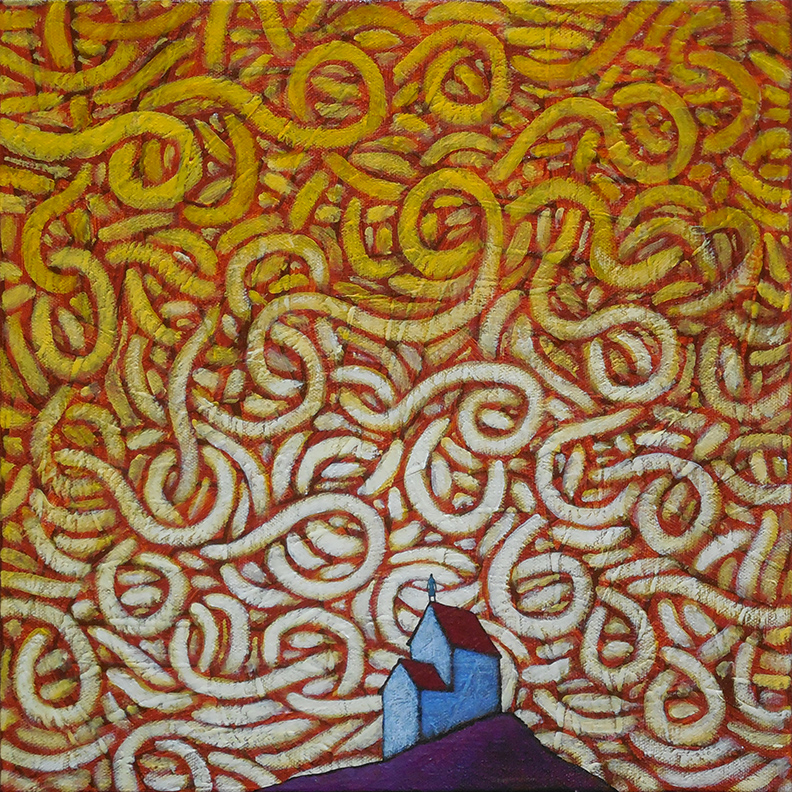
Hello in There

Summerdream (1995)– At West End Gallery


The creative action is not voluntary at all, but automatic; we can only put the mind into the proper attitude, and wait for the wind, that blows where it listeth, to breathe over it. Thus the true state of creative genius is allied to reverie, or dreaming.

–Oliver Wendell Holmes, Sr., The Autocrat of the Breakfast Table (1858)


Many of us walk a fine line between remaining engaged with the outer world with all its chaotic madness and escaping into the dreamlike quietude of our inner world. I think we need to keep the two somewhat in balance, to never reside fully in one.

For as much as the inner world nourishes our souls and dreams, we can’t reside in that place entirely. And try as we may, we can never fully retreat from intrusive reality of the outer world. It is always lurking nearby and must be dealt with.

But we need to maintain that inner world, that place to dream and expand. A place where we can float on a warm breeze, unburdened by the weightiness and gravity of the real world.

I am not sure what brought this on this morning. Maybe I felt the need to avert my eyes from the outer world for a moment? Nobody could be blamed for that in this strange moment. We all need to visit that inner world for at least a short time every now and then, if only to be reminded of what we are looking for in the outer world.

The question is: Can the dreams of our inner world ever come to reality in the outer world?

That’s a big philosophical jumping off point that I am not willing to leap from just this minute. Like most people, I have outer world needs to which I need to attend. But in doing so, I will bring my inner world along with me.

Maybe I’ll ponder that question at some point while I am floating on a breeze. Maybe not.

Here’s a song from the late John Prine that I’ve loved for a long, long time. It still gets to me after hearing it countless times. It’s a live performance of Hello in There from 2001. It’s a song about aged folks who live in an outer world that has passed them by and now ignores and they have retreated into their inner world which is filled with more memories and images from the past and fewer dreams for the future. But in those remaining dreams, they might sometimes be floating on a summer breeze. And this line from the song’s chorus surely might be echoing there as well:

Ya’ know that old trees just grow stronger
And old rivers grow wilder ev’ry day


Art’s Refuge

Island Getaway– At West End Gallery


The power of the good has taken refuge in the nature of the beautiful; for measure and proportion are everywhere identified with beauty and virtue.

— Plato, Philebus (ca. 350 BC)


Philebus is a fictional work presenting a conversation between Socrates and two young Athenians on the value of pleasure in relation to the highest level of Good. The two younger men see pleasure as being this Absolute Good.

As might be expected, Socrates, disagrees. He points out that there are different forms of pleasure. Some are of little value and some, such as pleasure for pleasure’s sake, are harmful to man and which should be avoided.

Just before the line at shown here at the top. Socrates points out the harm in such pleasure:

That any compound, however made, which lacks measure and proportion, must necessarily destroy its components and first of all itself; for it is in truth no compound, but an uncompounded jumble, and is always a misfortune to those who possess it.

This passage sure feels like it was written around 2500 years ago for such a moment such as we are experiencing here in this country. It seems to be an uncompounded jumble that is set on destroying itself and all of which it is comprised. It without measure, proportion, and reason. It has become a land governed by beings that appear to be soulless and artless, devoid of any measure of Beauty or Absolute Good.

When I read this, it made me think of the value and necessity of art as a refuge from this world. As Socrates pointed out, there is goodness and virtue in those things by which we define beauty. We are on the brink of an artless and ugly world. Engaging with art or creating art in times such as these serves a valuable purpose. It reminds us that these is and will always be goodness and virtue in that which appears beautiful to the human spirit.

Art is our refuge.

It comes in the literature and poetry we read. In the music we play and in the movement of our dances. In the films we watch, and in the statues and paintings that we experience.

As difficult as times may be in the near future, we must remember that Art is a both a refuge and a repository for Good, as well as a link, a path, to the world and future we desire.

Take refuge in your art.

Here’s song I last shared about four years ago. It fittingly titled Shelter and is from Lone Justice from back in the mid 1980’s. Led by vocalist Maria McKee, they were very hot for a few years but they couldn’t hold together long enough to reach the potential that so many saw in them. They disbanded in 1987 and Maria McKee went on to a solo career. I thought their two albums were very good and they were regulars on my turntable back in the day. The chorus from this song pops into my head every now and then. It was produced and cowritten with McKee by the multi-talented Steve Van Zandt, who was the subject recently of a wonderful documentary, Stevie Van Zandt: Disciple, that centered around his efforts that were instrumental in using his art to cast light on apartheid and end it.

Such is the power and refuge of art.


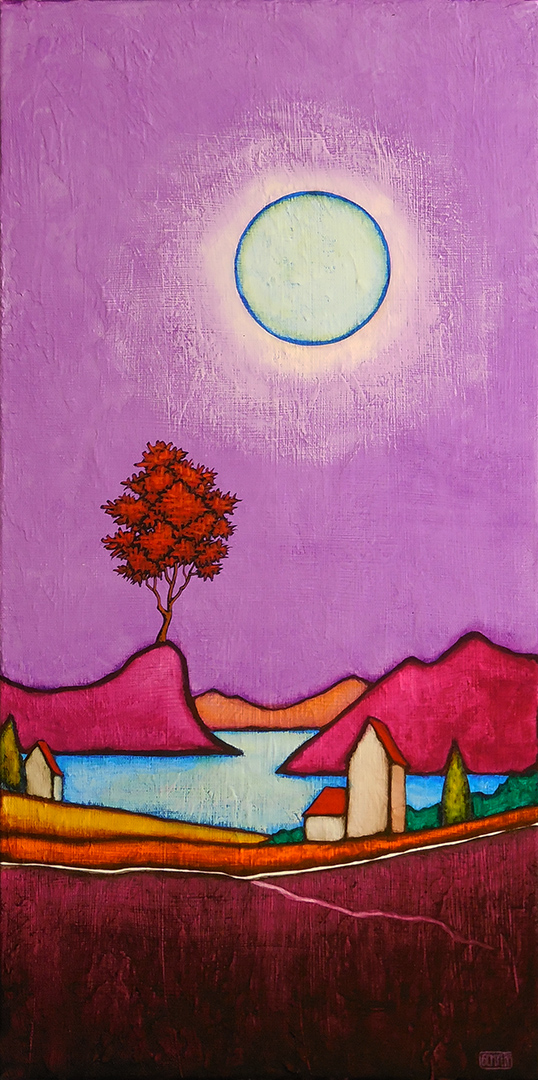
Land of Seven Moons— At West End Gallery


The first progressive step for a mind overwhelmed by the strangeness of things is to realize that this feeling of strangeness is shared with all men and that human reality, in its entirety, suffers from the distance which separates it from the rest of the universe.

–Albert Camus, The Rebel: An Essay on Man in Revolt (1951)


I live a pretty isolated existence so I can’t speak for everyone, but it seems like a lot of people are feeling alienated by the jumbled strangeness that is taking place. It’s an overwhelming sense that the landscape around you as well as the people within it and their customs are foreign to you, that you somehow don’t fit in. 

It’s a sense of feeling like a stranger in a strange land, to use that term that descended to us from Moses in the book of Exodus and its later use as the title for the sci-fi classic from Robert Heinlein. It’s a term I’ve employed a number of times through the years to describe the sense of alienation with which I have sometimes struggled.

I have to admit that this feeling is in air around me in recent times. However, this sense that many others may well be experiencing that same sense of estrangement from an existence that once felt naturally homelike makes me believe, like the words at the top from Camus, that there is a progressive step, a way forward from this, at least for us as a group.

Though it overwhelms our minds now, we have to understand that the reality that we observe in this moment does not have to last forever. And because there are so many of us feeling this new sense of strangeness, it will not. 

That’s just my feeling this morning. There may not be anything instructive in it. But it perhaps it can provide some comfort, as strangers in this strange land, knowing that beyond the now alien emptiness around us there are others who are looking up at those same seven moons, wondering as I do how they came to be and if they will always be there. 

Here’s song that sprang to mind just now. Actually, the lines from the chorus:

Nobody told me there’d be days like these
Strange days indeed
Most peculiar, mama

It’s Nobody Told Me from John Lennon, recorded near the end of his life and released several years after his murder. 

Strange days indeed…


Mark Rothko –Untitled (Yellow and Blue) 1954


“You might as well get one thing straight. I’m not an abstractionist… I’m not interested in the relationships of color or form or anything else. I’m interested only in expressing basic human emotions—tragedy, ecstasy, doom and so on. And the fact that a lot of people break down and cry when confronted with my pictures show that I communicate those basic human emotions… The people who weep before my pictures are having the same religious experience I had when I painted them. And if you, as you say, are moved only by their color relationships then you miss the point.”

― Mark Rothko, 1956 Interview with Selden Rodman


I used a representation yesterday of the colors of the flag of the Ukraine that was actually a detail, shown above, taken from the large Mark Rothko painting shown at the top. I had used this detail before in a post around this time in 2022, one which drew a lot of attention yesterday. Enough so that I went back to check out that post which I am sharing again today as the quotes in that post from Rothko speak so clearly to a lot of things that I have been focusing on recently, on both this blog and in my work.

And since it is Sunday, I am also sharing some Sunday Morning Music at the bottom. In light of what is taking place in this country, the calming effect of Gnossienne No. 1 from Erik Satie seems like the right choice to accompany Rothko as Satie’s work followed similar paths of deep expression and silences. The version I am sharing is a mesmerizing performance from celebrated Finnish guitarist Otto Tolonen.


Busy morning ahead with painting and plowing from what I hope is the last snowfall of this winter. But I thought I would share a Mark Rothko painting (the image at the top is only a detail of its lower section- the whole painting is shown here on the left) and a video on it from Sotheby’s auction house (where it sold for $46.5 million in 2015) along with several Rothko quotes.

Rothko (1903 -1970) was a big influence on my early work. The idea of expressing the big human emotions through simplified forms and color really spoke to me because I never looked at painting as a craft but more as a means to express those forms of emotion that well up inside because they are sometimes too difficult to express in words and voices.

Another aspect that attracts me to Rothko is that he, like Kandinsky, was often eloquent in speaking about his work and art in general. And in those words I found that my own already developed perspectives often largely meshed with and echoed both of these artists’ words and views.

For example, in the quote below the idea that a picture lives by companionship is one that is central to my work.

“A picture lives by companionship, expanding and quickening in the eyes of the sensitive observer. It dies by the same token. It is therefore risky to send it out into the world. How often it must be impaired by the eyes of the unfeeling and the cruelty of the impotent.”

Here a few more that also speak to me, things I have often written about here, about the need of emotional expression in art and of the searching for silence.

“It is the poet and philosopher who provide the community of objectives in which the artist participates. Their chief preoccupation, like the artist, is the expression in concrete form of their notions of reality. Like him, they deal with the verities of time and space, life and death, and the heights of exaltation as well as the depths of despair. The preoccupation with these eternal problems creates a common ground which transcends the disparity in the means used to achieve them.”


“When I was a younger man, art was a lonely thing. No galleries, no collectors, no critics, no money. Yet, it was a golden age, for we all had nothing to lose and a vision to gain. Today it is not quite the same. It is a time of tons of verbiage, activity, consumption. Which condition is better for the world at large I shall not venture to discuss. But I do know, that many of those who are driven to this life are desperately searching for those pockets of silence where we can root and grow. We must all hope we find them.”


Oops!


“…I never can think of Judas Iscariot without losing my temper. To my mind Judas Iscariot was nothing but a low, mean, premature, Congressman.”

– Mark Twain, “Foster’s Case,” New York Tribune, 10 March 1873


I guess I was a little quick on the trigger in writing about Trump’s betrayal of his voters and many other Americans. If I had known that less than twelve hours later that he would be betraying our allies and the established world order, I might have held off. 

It was the most hideous spectacle I have ever witnessed from an American president as he and his toady VP ambushed Ukrainian President Zelensky in the White House. I am not going to go into the details of the event. You have to see it for yourself and not depend on the milksop coverage from the media. If you can watch Trump’s performance yesterday– and that’s what it was, a performance– and not feel a combination of revulsion, anger, shame, and dread then we are living in two very different countries.

Maybe even on different planets.

I’ve been around awhile and have seen some things. I have been proud of this country and what it has come to represent at times. And there have been a few times when I have been less proud. But there has never been a moment when I felt what I am feeling now. Words fail to express my anger and shame at what we have become.

But even worse is the dread that came with them. This betrayal of our longtime allies and all democracies around the globe was so brazen and obvious that it made me worry that these people– if I can call them that– believe that they have everything in place, or nearly so, to stay in power indefinitely. 

They have pretty much deconstructed all guardrails and oversight that might check their acquisition of absolute power.  With their total control of all agencies and branches of government nearly at hand, they no longer need to keep up the pretense that they are obligated to faithfully serve anyone other than themselves and their authoritarian partners abroad. They answer to no constituency other than themselves. 

They operate now with open hubris, believing they are untouchable going forward. 

I get irked and sometimes laugh when I hear journalists or politicians talk about approval polls or the need to find a way to work in a bipartisan manner with this government. I believe that they feel that they cannot be defeated at the ballot box now, that they have the ability to either produce the results they desire or, if not, have the authority and means to overturn undesirable results in upcoming elections. When voting no longer matters, they don’t have to try to win over voters or keep the empty promises made on the campaign trail.

And as far as working with them in a bipartisan way, when you’re dealing someone with total power and no fear of reprisal from within or without, there is no compromise that they will accept except for total subjugation to their demands. 

And as for hoping to shame them with the hope they will do the decent and right thing, that went out the window in Trump’s first term. Actually, before that to some degree.

In short, what we saw yesterday is the most obvious demonstration yet of what is to come. As awful as it was, it might well not be the worst we will see.

I hate to say this and don’t want to believe it, but I don’t feel we can stop them electorally. I don’t really know what that might end up meaning. However, I can say with some certainty that however it goes, good or bad, it ain’t going to be pretty.

Let’s start working so that decency and humanity wins at the end of the day. 

I apologize for not being able to distract you or make you feel better or allay any fears you might have today. I would love to do just that, to write about art and literature and music, and will attempt to do just that in the near future. I read somewhere about James Baldwin speaking about how he felt he had a mission to inform that kept him from staying silent on those things that disturbed him. I think I understand and answer to a similar feeling at times like this.


Betrayal/ Mystery Train

Elvis in the Wilderness (2006)


No failure in America, whether of love or money, is ever simple; it is always a kind of betrayal, of a mass of shadowy, shared hopes.

–Greil Marcus, Mystery Train (1975)


I’ve been reading all sorts of stories across the media about people who for whatever reason voted for Trump, cheerleading him on while thinking they themselves would be spared from his rash actions, that punishment would only be meted out to those they felt deserved it. You know– the others.

These same people have discovered in the past 38 or so days that they are not immune from the reckless gutting of America that is taking place. Many have lost jobs that they thought were safe and are left to wonder why. After all, they believed and supported Trump and knew they were honestly doing useful, necessary jobs that supported their families.

They weren’t the problem with America– it was the others.

Or there are stories of the Trump supporting retirees or families who depend on Social Security and Medicare or Medicaid who are realizing that the lifelines that were in place throughout their lifetimes might suddenly be dramatically slashed or even taken completely away. Or that these agencies’ staffs would be cut to the point that they would be able to function properly, if at all.

Then there are the military veterans who in many cases have sacrificed their time and wellbeing to serve this country who are learning that the support that was solemnly promised to them was going to be carved away willy nilly.

There are many other stories like these coming to light from across America. From farmers and private agencies that selflessly help those in need. From small businesspeople and scientists and researchers who have developed the medicines and technologies that have protected and grown this nation.

I’m working off the top of my head here so I am not going to list them all. I couldn’t do that even if I were better prepared. There are too many cases across nearly all fields that are beginning to feel the pain.

All people who thought they would be safe because they knew they weren’t the problem.

It was the others.

And now they feel betrayed and abandoned by the Trump/Musk band of gangsters. And they have been betrayed. As we all have. I have some sympathy for them but could certainly have more had they themselves not been so willing to betray and punish the others, who turned out to be their fellow citizens who, like them, were honestly doing useful work that served this nation. People who most likely share a love of this country, for the better angels so often extolled.

I am not saying that there wasn’t a need for reforms or greater efficiency in our government. Of course there is. But that’s not what we’re witnessing. This is more akin to a hostile corporate takeover where a group of investors– corporate raiders— comes in with little or no interest in running the company. They only want to tear it down and sell it off for parts.

And as it is in such cases, it is the little people who bear the brunt of the damage done. In this case, it those same people who unwittingly voted for this takeover. They betrayed not only the others but themselves and their own self-interest.

And America.

I am sorry to vent this morning. I am trying to stay away from such commentary, if only for my own mental wellbeing. But I am tired of hearing these stories of people surprised that the Grizzly Bear they were feeding suddenly ripped off their arm. There are no stories about those folks who clearly saw this coming for years and years, only to be continually ridiculed and told they were crazy or hyperbolic.

I guess a story about betrayal is far more attractive than an I-told-you-so story. To be honest, there’s not much comfort in either story. Both will feel the effect of this betrayal, along with countries and people around the globe.

Most likely, for a long time to come. Betrayal has a lingering effect.

The quote from journalist Greil Marcus at the top from his wonderful book, Mystery Train, on the link between America’s growth and that of rock and roll culture set this all off this morning. Here’s the iconic version from Elvis Presley of the song of that same title. The song was written and originally recorded in 1953 by the great Junior Parker.