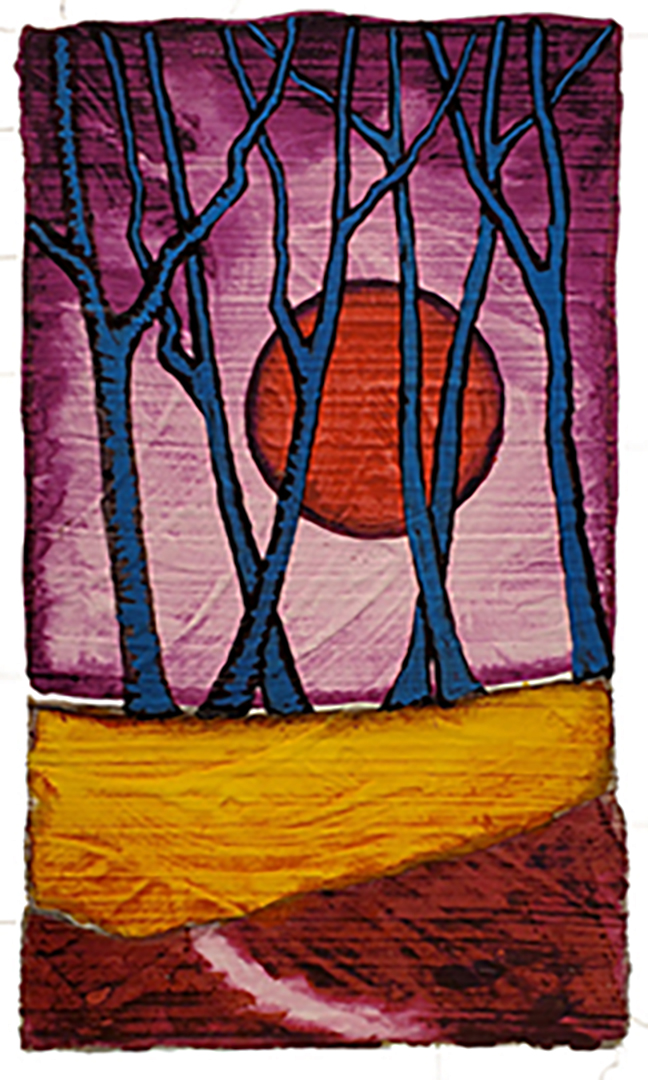
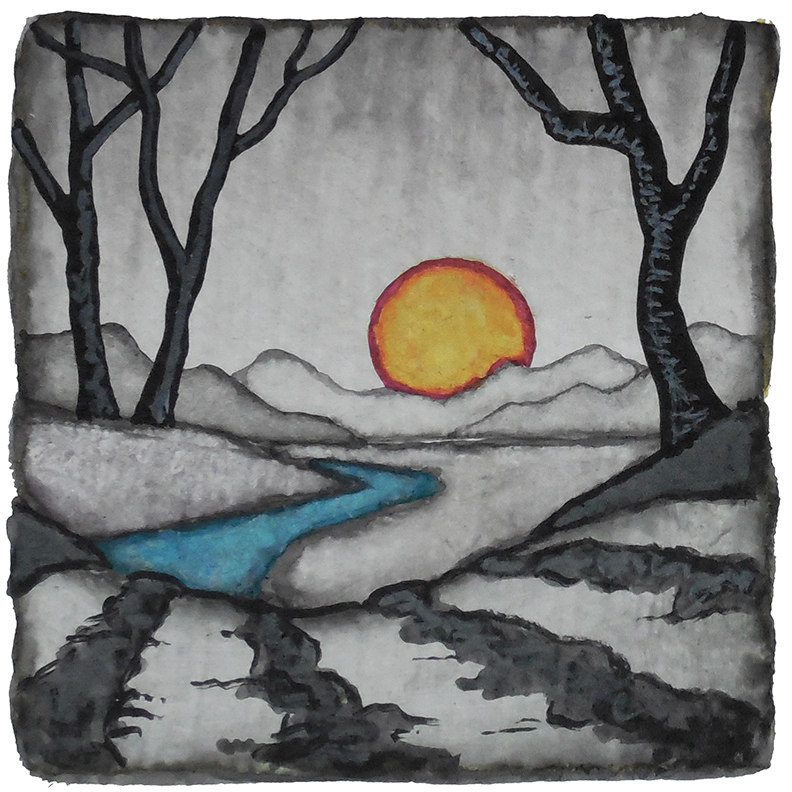
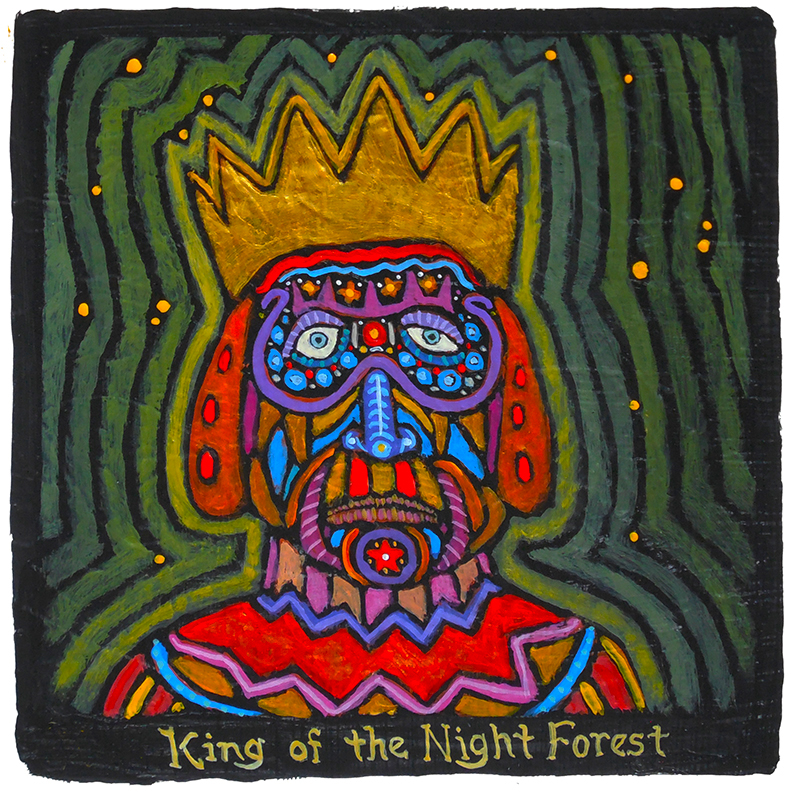
I can pass days Stretch’d in the shade of those old cedar trees, Watching the sunshine like a blessing fall,– The breeze like music wandering o’er the boughs, Each tree a natural harp,–each different leaf A different note, blent in one vast thanksgiving.
–Letitia Elizabeth Landon (1802-1838)
Day before Thanksgiving, that single day we set aside to express our gratitude. One day doesn’t seem enough, does it?
The verse above says it all. Just lazing in the woods, taking in the sights and sounds of the beauty and grace that surrounds us always, makes that one day seem woefully insufficient.
I guess it comes down to us– as does everything, actually– to spread our thanks more broadly throughout the year.
That’s it. That’s today’s message. Be thankful I didn’t go on and on. Now go out and spend some time with some trees.
FYI: Letitia Elizabeth Landon was an English poet and novelist who was a great influence on the generation of writers that followed her. Elizabeth Barrett Browning, Christina Rossetti, Robert Browning, and Tennyson are noted as being influenced by her. In her time, Landon was sometimes referred to as the female Byron. Her story is interesting and tragic, but I am not going to go into here in great detail except to say that she was forgotten or overlooked for many decades due to the misinformation and rumors of immorality that were leveled at her.
Here’s a song for this morning that goes somewhat with the subject of appreciating the bou nty of nature. It’s a favorite of mine, Nature Boy. I’ve shared the story of this song and the man who wrote and originally performed it, eden ahbez, several times here in the past. Another interesting story. If you know this song it is probably from the magical version of Nat King Cole. Certainly my favorite. But today I am sharing a performance from from the Swedish a cappella group, The Real Group. I shaed it here a couple of years back and really love the way their voices blend on this gracefully simple song.
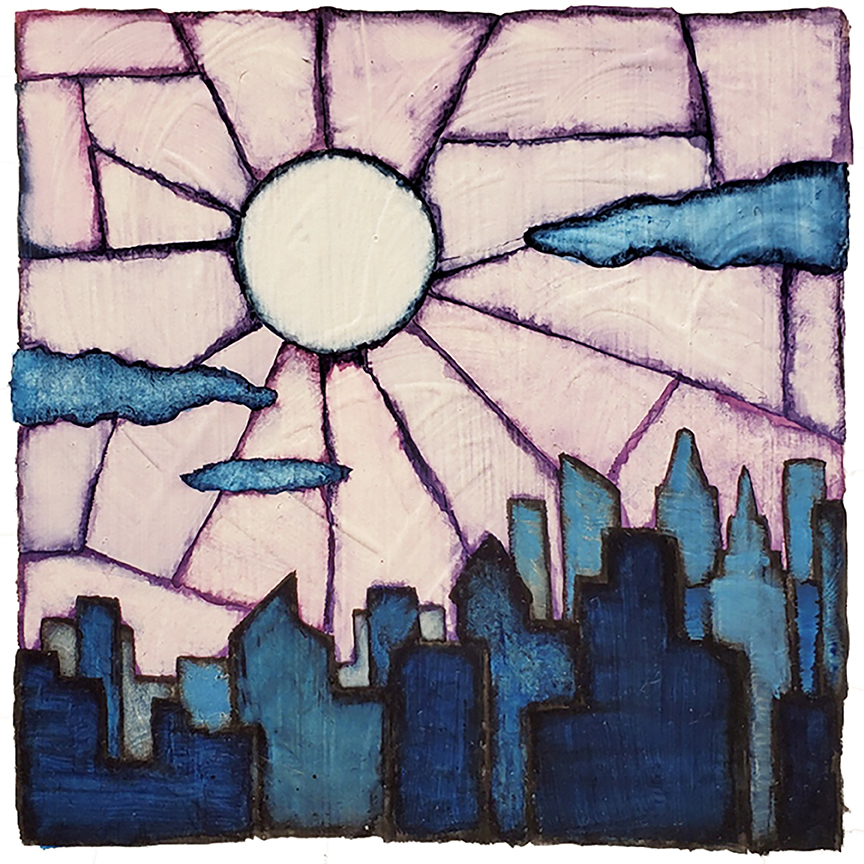
Natural Anthem– At Principle Gallery, Alexandria VA
To Mercy, Pity, Peace, and Love All pray in their distress; And to these virtues of delight Return their thankfulness.
–William Blake, Songs of Innocence (1789–1790)
Speaking of thankfulness in this week of thanks, I might add silence or quietude to those virtues of delight that Blake listed above, though that probably falls under his definition of Peace. I know that I am always thankful when I am gifted with silence or quiet when I am in the midst of some sort of distress. It stills the waters, in a manner of speaking.
There are others that I might add, as well. Understanding and compassion for example. Again, you might classify them under Blake’s Mercy and Love, respectively.
I guess it doesn’t matter how you classify them. Receiving any of these virtues of delight are gifts of the highest order, gifts of the soul that inspire thankfulness in most of us. Unfortunately, there are some who don’t recognize these gifts when given and are stingy in offering these gifts to others. I feel bad in a way for such people. There seems to be an incompleteness to them, a void of virtues that should be filled with gratitude. As the Roman orator Cicero stated: Gratitude is not only the greatest of the virtues, but the parent of all of the others.
Anyway, that’s my spiel for this morning. Thank you for reading.
Here’s a piece of music for which I am very much thankful. It’s the first movement, Ludus: Con moto, from Tabula Rasa. a 1977 work from Estonian composer Arvo Pärt. I picked up this album back in 1999 and listened to it over and over during my early years as a full-time painter. The feel of this music and its themes of love, empty space, and silence seemed to fit well with my work at that time. Hope it still does. This features violinist Gil Shaham along with the Gothenburg Symphony Orchestra.
As life becomes harder and more threatening, it also becomes richer, because the fewer expectations we have, the more good things of life become unexpected gifts that we accept with gratitude.
–Etty Hillesum, An Interrupted Life: The Diaries of Etty Hillesum, 1941-1943
I was looking for something to share about gratitude since this is the week of Thanksgiving. I came across the quote above from a name that I didn’t recognize, Etty Hillesum. I loved the sentiment she expressed but wondered who she was.
Turns out she was young Dutch Jewish woman born in 1914 who chronicled her spiritual growth in her diaries and letters until her murder at the hands of the Nazis in the Auschwitz concentration camp in late November of 1943. She was only 29 years old, a mere 81 years ago.
Her writings had been turned over to a friend before her internment so that they might someday be published. Though many attempts were made, it wasn’t until 1979 that they finally found their way into print as the book An Interrupted Life. In 2006, the Etty Hillesum Research Centre was founded in the Dutch city of Ghent to research and promote her writings.
As I pointed out, Etty Hillesum is new to me so I can’t speak with any authority on her writings. However, many of the passages I have read exhibit great depth. Some of my favorites thus far:
Suffering has always been with us, does it really matter in what form it comes? All that matters is how we bear it and how we fit it into our lives.
But I do believe it is possible to create, even without ever writing a word or painting a picture, by simply moulding one’s inner life. And that too is a deed.
Never give up, never escape, take everything in, and perhaps suffer, that’s not too awful either, but never, never give up.
Many of her observations, especially about how suffering plays a large role in one’s meaning of life, echo those of Viktor Frankl, a psychoanalyst and survivor of Auschwitz who wrote Man’s Search for Meaning. And that second one here, about the creation of an inner life adding to the meaning of one’s life, is something I believe all too many of us overlook in our own lives.
Inner creation is as important as any outward creation. Maybe more so.
Anyway, let’s kick off this week of being grateful with a nod of gratitude to Etty Hillesum for sharing the wisdom she uncovered in her brief stay here. Her life’s search for meaning adds to our own.
Our American character is marked by a more than average delight in accurate perception, which is shown by the currency of the byword, “No mistake.” But the discomfort of unpunctuality, of confusion of thought about facts, of inattention to the wants of to-morrow, is of no nation. The beautiful laws of time and space, once dislocated by our inaptitude, are holes and dens. If the hive be disturbed by rash and stupid hands, instead of honey, it will yield us bees.
–Ralph Waldo Emerson, Prudence (1841)
Just going to share the words of Emerson, the image of a recent painting, and a song that will serve as this week’s Sunday Morning Music. It’s a song that I was surprised to learn was last shared here over ten years ago. I always think that I just recently shared it. Maybe because it so often feels appropriate to the time.
The song is What’s Going Onfrom Marvin Gaye. It is from his 1971 album of the same title that is considered by many as one of the greatest albums of all time. This is a poignant and elegant song of protest that was written by a member of The Four Tops, Renaldo “Obie” Benson, who witnessed a violent confrontation between police and anti-war protesters in Berkeley in April of 1969, while on the band’s tour bus. He couldn’t understand what he was seeing, why the police were brutally beating on those kids, kids much like those being sent every day to fight in Viet Nam. It made no sense to him, and he ended up writing this song based on what he witnessed with Motown songwriter Al Cleveland.
His bandmates vetoed recording the song, saying that they didn’t want to record a protest song. Benson later spoke of his response, saying, “My partners told me it was a protest song. I said ‘No, man, it’s a love song, about love and understanding. I’m not protesting. I want to know what’s going on.’“
It’s a great song, mixing great emotional impact with a cool, rational detachment that seeks a calm response to the question, “Why?”
By health I mean the power to live a full, adult, living, breathing life in close contact with what I love — the earth and the wonders thereof — the sea — the sun. All that we mean when we speak of the external world. A want to enter into it, to be part of it, to live in it, to learn from it, to lose all that is superficial and acquired in me and to become a conscious direct human being. I want, by understanding myself, to understand others. I want to be all that I am capable of becoming so that I may be (and here I have stopped and waited and waited and it’s no good — there’s only one phrase that will do) a child of the sun. About helping others, about carrying a light and so on, it seems false to say a single word. Let it be at that. A child of the sun.
—Katherine Mansfield (1888- 9 January 1923)
October, 1922, Her final journal entry
About ten years back, I came across this final journal entry from the Modernist writer Katherine Mansfield, who died much too early from tuberculosis at age 35, and employed it for a painting called Proclamation. The feel of that painting very much mirrors that of the painting above, Proclaim the Day, which is at the West End Gallery as part of their Deck the Walls show which opened yesterday. The sense I get from both paintings remind me very much of the emotions expressed by Mansfield.
This is a painting that speaks to me of having come to an understanding of oneself, to be willing to stand strong against the prevailing winds in order to show that true identity. It is at once strong yet fragile, flawed yet beautiful. A strength derived from the challenges it had overcome and a fragility in that it recognizes its limits and mortality. Flawed by the scars of attained wisdom and change. Beautiful because it is honest and authentic, open to the elements and all who look upon it.
In these ways, it has become a source of light in its own right or, to use Mansfield’s term, a child of the sun.
A child of the sun.
If only we could all see ourselves in that way.
Here’s a song I shared a couple of years back. It often comes back to me in a haunting kind of way. It’s a remake from horn player Takuya Kuroda of the 1976 song, Everybody Loves the Sunshine, from jazz artist Roy Ayers. The original is great, but I personally prefer Kuroda’s remake. Has more of that child of the sun feel in my opinion. But, hey, that’s just me…
…Perhaps The truth depends on a walk around a lake, A composing as the body tires, a stop To see hepatica, a stop to watch A definition growing certain and A wait within that certainty, a rest In the swags of pine-trees bordering the lake. Perhaps there are times of inherent excellence
–Wallace Stevens, Notes Toward a Supreme Fiction (1942)
This new small painting, Someway Somehow, now showing at the West End Gallery as part of their Deck the Walls holiday exhibit, might well represent finding beauty and color amidst the ashes of the everyday. Much like the lines from Wallace Stevens above.
For me, it has the feel of dreaming for me. Maybe it would be better to say dreams set against reality.
Maybe that’s the same thing as what I derived from Stevens’ lines. Not sure this morning.
The lower part of the image is in tones of gray that symbolize the sometimes grayness and monotony of our everyday existence, that workaday part of our lives when we set aside our hopes and dreams to focus on tasks and responsibilities. The upper part is set in colors that represent for me the rare times we find in order to return to those hopes and dreams.
We often find ourselves living in that area that straddles both gray and color, with the hope that we can find a way to live in the color of our dreams. Getting to that place is sometimes a hard road to follow and too many people give up early on. But those who continue do so withe thought echoing in their mind that someday somehow they will reach that place.
The dream of the dream.
Here’s a tune to go along with it. It’s Follow That Dream from Bruce Springsteen. It’s often referred to as a cover of the Elvis Presley song from his 1962 movie of the same name. Springsteen has often referred to the Elvis song as a favorite and covered it a number of times in early concerts. I had a bootleg version of his cover that I can’t locate much to my dismay as it was a wonderful performance. The version of Follow My Dream from Springsteen that people might know is a reinvention of the song with altered melody, pace, and lyrics that he began performing in the early 1980’s. Not really the same song except for a few lines and its message.
But still effective. I think it fits well with this painting.
As I noted above, Someway Somehow is at the Deck the Walls show at the West End Gallery that opens today, Friday, November 22, with an opening reception that runs from 5-7 PM.
Pictures must be miraculous: the instant one is completed, the intimacy between the creation and the creator is ended.
—Mark Rothko
I came across the words above from the late painter Mark Rothko and found myself relating very much to their meaning. The process of creating a picture is ideally a period of intimacy, one where the maker ideally opens their inner self and exposes their totality to the surface. There is a transference of energy and thought in that moment that forms the new life taking place on that surface.
Each move, each change to the surface pulls bits from the inner stores of the creator and alters the new reality being formed. For a rare moment, the two entities– the maker and the surface–are locked together.
They are one.
But as the picture takes shape and form, beginning to express its own life force, it moves away from the maker. At completion, the painting takes on its own being and at that point is beyond the reach and influence of the maker.
As a maker of pictures, I can say that this moment is both wistfully sad and exhilarating. When that moment of completion is at hand, I immediately miss that time of transference when the air is still filled with excitement and possibility. But seeing the new picture, self-contained and speaking for itself, brings a kind of parental pride. I know that I will never be as close to that picture as I was in that moment. But that moment binds us forever, even if it will be always as a faint memory when I glimpse its image in the future.
I chose the piece at the top for this post- fittingly titled Moment of Pride– because it sums up the feeling felt when that transference has taken place and the piece stands apart, living and breathing on its own. I certainly felt the feeling depicted when completing this piece.
There was a definite moment of transference when this painting made the leap from being me to being it. It had its own story to tell that was then beyond me, speaking with its own voice, its own meaning that it will someday make known to someone other than me.
And they will hopefully experience their own rare moment….
This is a reworked post from 2016. It seemed to perfectly fit the painting at the top, Moment of Pride, which is now at the West End Gallery as part of their Deck the Walls exhibit, opening tomorrow. I’ve been adding songs to most every post lately and I’ll keep that going today.
Don’t think this song fits the painting here but it has a wistful feel much like that feeling felt when you realize that you’ve lost a closeness with someone or something that you will never be able to recapture, so it might. Whether it does or not, it’s a song that like a lot from an album that I like a lot and that’s good enough for me. It’s the title track from the Anodyne 1993 album, the last album from Uncle Tupelo before splitting up the next year as its members moved on separately to form the bands Son Volt and Wilco.
The tune and lyrics have a weary, disenchanted feel that seems to fit my own lately and probably a lot of others out there:
You threw out the past When you threw out what was mine Throughout the years It was hard to make it last
Anodyne, anodyne
No sign of reconciliation It’s a quarter past the end Full moon from on high Across the board, we lose again
Give a listen if you are so inclined. And don’t slam the door when you leave, okay?
We’re so engaged in doing things to achieve purposes of outer value that we forget the inner value, the rapture that is associated with being alive, is what it is all about.
—Joseph Campbell, The Power of Myth
Just wanted to share the small painting above that is headed to the West End Gallery who will be hosting an opening this Friday for their annual Deck the Walls holiday show. This piece is 6″ by 6″ on panel and is titled The Heart Still Beats.
This painting holds a simple message for me. Whenever apparent bleakness seems to engulf us, it is important to hold on to the fact that there is still beauty and wonder to be found so long as we keep our hearts open. So long as we don’t allow the sometime harsh bleakness of the world to harden our hearts.
The opened beating heart– and its accompanying active mind– is forever free to find and to create worlds of beauty and wonder.
I see the Red Tree with its bit of color set against the drab gray of the landscape as that open heart. The sun rising over the horizon, also with a bit of warm color, as that distant thing keeps us moving forward. You might call it hope. You might call it a sense of purpose, that thing– a task, a goal, an obligation– that sustains one as they work toward it.
In short, I see this small piece saying that so long as we continue to think freely and keep a sense of purpose, the heart that sustains us will continue to beat.
And that might be enough. It might have to be.
Okay, here’s a song about the heart from Jackson Browne. This is Love Needs a Heart. from his 1977 album, Running on Empty. Hard to believe this song is that old…
Waiting for the end, boys, waiting for the end. What is there to be or do? What’s become of me or you? Are we kind or are we true? Sitting two and two, boys, waiting for the end.
–William Empson, Just a Smack at Auden
I feel like we are in a period of waiting right now. I don’t know what exactly, but it feels like we are kind of frozen in place as we wait for something to happen that will put everything into motion, for better or worse. Like we are waiting for someone to push over that first teetering domino.
Maybe it’s just me in feeling this way. Maybe it’s just the time of the year as we enter the holiday season and I am reminded of the intolerable waiting for Christmas’ arrival when I was a kid. I am not quite so eager for whatever surprise is in store for us to arrive as I was then.
But whatever it is or isn’t, we– or maybe just me– remain somewhat frozen in place, biding our time. Finding a way to get through this waiting period is all we– or I– can do.
That brings me to the painting at the top, an older piece from 2007 that is titled Biding Time. I used to periodically paint pieces like this that were extremely simple and quiet. I viewed them then and now as meditations, as a means to finding stillness amidst the surrounding chaos. I haven’t painted one in quite some time for reasons I can’t determine which is odd because I always found most of them quietly effective., remaining in my mind for long periods of time.
This particular piece has not been shown publicly in many years and I thought it was time for it to make an appearance once again. The time seems right. It is headed to the West End Gallery tomorrow, in time for their annual Deck the Walls holiday show.
FYI– The verse at the top is from William Empson, a friend and colleague of poet W.H. Auden. In the poem Empson both pays homage and pokes a bit of fun at Auden while capturing the anxiety of post-WW II Europe that was struggling to gain its bearings amidst the nuclear threat that had risen.
Let’s have a song to go with such waiting. Here’s a favorite, Waitin’ Around to Die from the late Townes Van Zandt. This is from the 1976 documentary Heartworn Highways, a film that captured the beginnings of the alt-country movement of that time. This clip features Townes singing to his girlfriend and his neighbor Uncle Seymour Washington, a retired blacksmith born to ex-slaves.