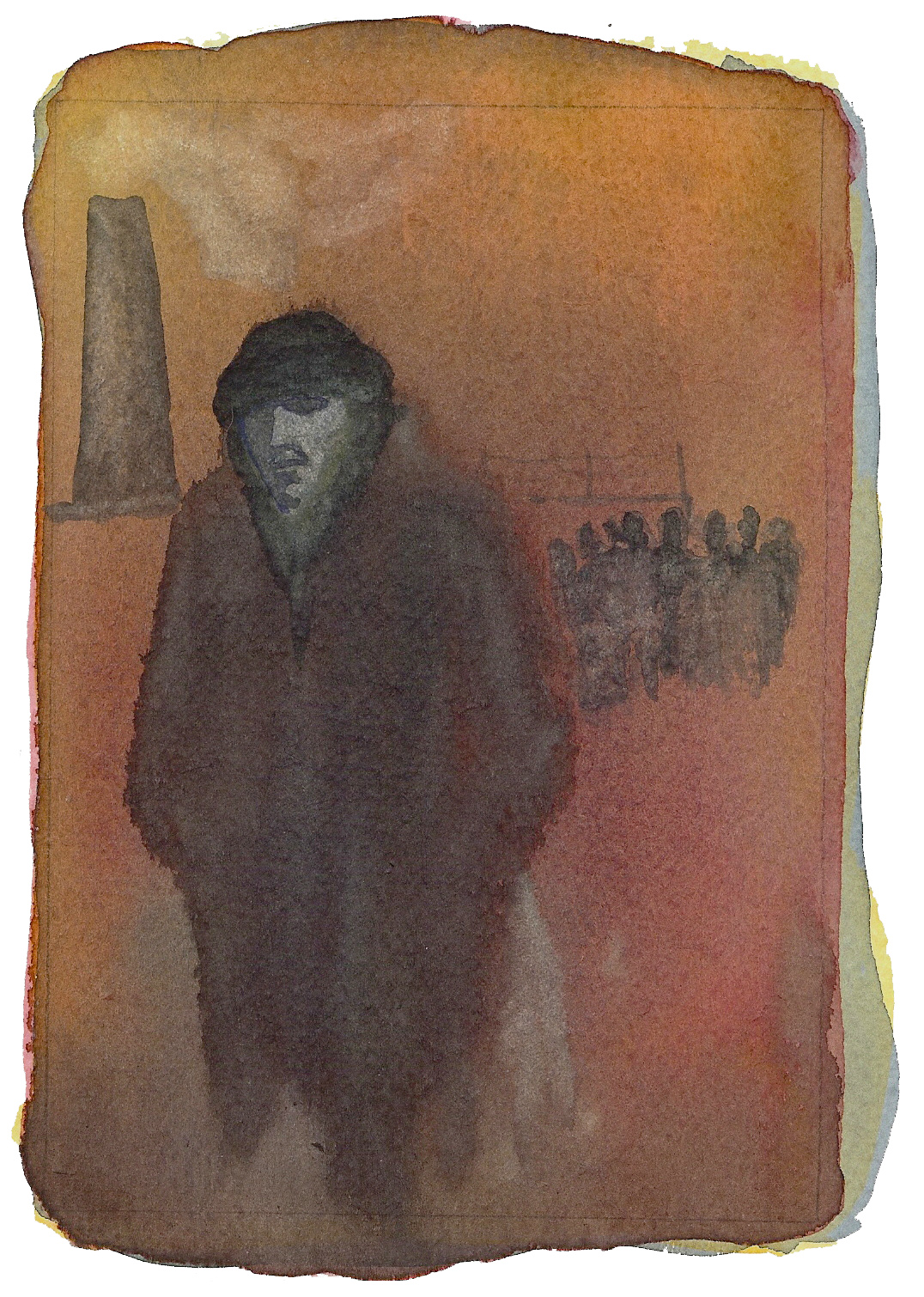
Camp – January 1995
The concentration camps were swarming with photographers and every new picture of horror served only to diminish the total effect. Now, for a short day, everyone will see what happened to those poor devils in those camps; tomorrow, very few will care what happens to them in the future.
–Robert Capa, Slightly Out of Focus (1947)
Robert Capa is considered by many to be the greatest combat photographer. The only civilian photographer to land with the troops on Omaha Beach on D-Day, Capa captured the horrors of war around the world throughout the 30’s, 40’s and 50’s. His life ended in 1954 after stepping on a landmine in Vietnam.
The passage above from his 1947 memoir was written about the final days of WWII as the Allied troops swept through a nearly defeated Germany. At this point, he observed that the conflict there had changed from, as he put it, a shooting war into a looting war. Troops searched for souvenirs such as Lugers and cameras in the clean little villages they encountered going from the Rhine to the Oder. They also sought and found plenty German frauleins willing to fraternize with them.
Capa noted that the soldiers who had been the liberators of the concentration camps–Dachau, Belsen, and Buchenwald— were the only troops who refused to fraternize with the frauleins. The scenes they witnessed in those would not allow them to suddenly embrace those people who had witnessed and turned a blind eye to such horror.
The passage above is just a quick observation from Capa about how though the flood of images emerging from those places shocked and horrified people in the moment, they might also someday serve to dull our response to similar images in the future.
What was once thought to be unimaginable was now imaginable with tangible evidence of the dark potential within all humans.
That brings us to the early painting I am featuring today. It was painted on January 11, 1995 and has the title Camp scrawled at the bottom of the sheet of watercolor paper on which it was painted. In the entry in my painting diary for this piece on that day, I wrote: Very dark. Concentration camp, remnant of dreams past. Hard to critique this objectively.
It is still hard to critique this piece.
It doesn’t really matter how I see it in qualitative terms, whether it’s a good or bad painting. I just don’t care. Seeing it always affects me in some deep, dark spot that I don’t really know in myself. Certainly not in this life. But it’s in there and it still emerges at certain times to let me know it is there, that it occupies a space in me.
It’s hard to even write superficial observations about what I mean here. I don’t know why it came about at that time in 1995, what compelled me to create it. It may have been something as simple as a color or combination of colors in it that sparked something to come out of that deep, dark spot. Something that perhaps sparked a flash of an image in that part of me that is connected to our collective memory.
I write about this painting today because it has been on my mind in recent times. It began to emerge several years ago when I first hear about private for-profit prisons. That idea just horrified me. A business whose sole purpose was to profit from keeping as many people imprisoned for as long as possible is fraught with the potential for abuse. And worse.
Then as these detention centers have become to pop up around the country, ostensibly to hold illegal immigrants for deportation, this image has begun to haunt me more and more. Especially as many the detained are shown to be not criminal nor threats to us. Just people looking for a better life who are swept up by masked men in combat gear looking for a monetary bonus for their cruelty.
It’s not a coincidence that this potential has arisen now. It’s been over 80 years since the end of WWII. Most of the witnesses, the survivors and liberators of the concentration camps, are dead. And though the images from those camps still inspire feeling of horror within us, they seem far removed now. Our memory has faded, replaced with the hubris of thinking it can’t happen to us here.
It now feels like we have foolishly allowed ourselves to be led to the top of an exceedingly slippery slope that we will soon find ourselves whooshing down.
And at the bottom there waits a horror that we once knew and were once shocked and horrified by its very existence. Those German farmers and villagers in the Rhine Valley, along with those fraternizing frauleins, probably once thought that the horrors that had taken place in their name could ever happen.
Unimaginable.
But it did happen. And it is now easily imaginable. And therefore possible.
That’s the power in this image for me. Then and now.
Here’s the great Itzhak Perlman playing the Schindler’s List Theme, composed by John Williams. I know it’s a bit on the nose but for a subject like this, one with such weight, that is what is required.
 Everyone has his own specific vocation or mission in life; everyone must carry out a concrete assignment that demands fulfillment. Therein he cannot be replaced, nor can his life be repeated, thus, everyone’s task is unique as his specific opportunity.
 Redtree Times