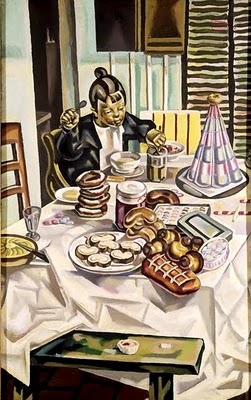
 I often highlight artists here whose work has been little known or appreciated or those who have overcome great obstacles in finding their artistic voice. Maria Blanchard is one who falls into both of these categories. Born in Santander, Spain in 1881, Maria was dealt a harsh hand due to a damaging fall her mother took during her pregnancy. She suffered from dwarfism, was hunchbacked and had great difficulty in walking due to a hip deformity. Unfortunately, these disabilities made her the subject of much ridicule throughout her life. But through it all, she had her art and made the absolute most of it.
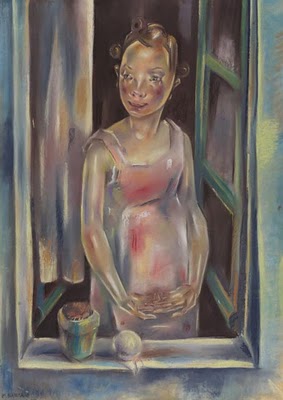
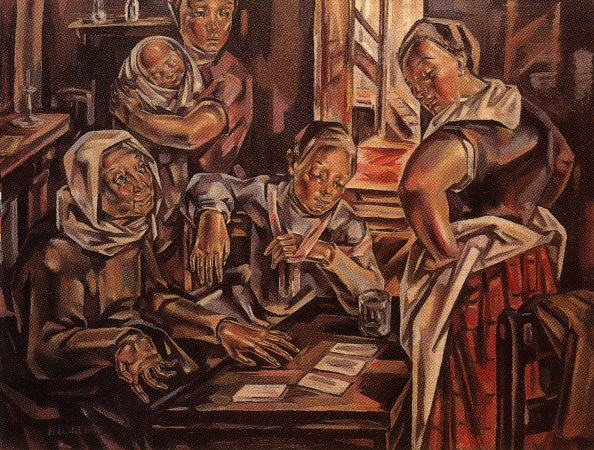
In 1903, she went to Madrid to study painting and reveled in the expression it offered. She learned much and worked hard, finally winning a grant in 1909 to continue her studies the Academy Vitti in Paris. It was during this time in Paris that she broke free from her traditional training and was introduced to Cubism, the art movement then in its formative years. Her work became very cubist at this point but evolved over time into a distinct style that incorporated elements of cubism and traditional sensibilities of form and composition.
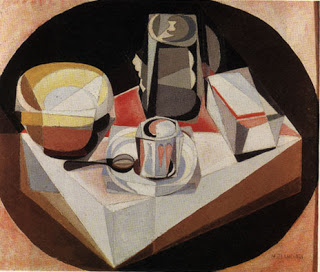 In 1914, she returned to Spain, taking the chair of drawing in Salamanca. But her appearance brought her taunts from the students and in 1916 she returned to Paris where she still painted in a Cubist manner, producing work such as the still life shown here on the left. Around 1920, she made the move to the incorporated style that she worked in for the remainder of her life. With her work, Maria supported herself along with her sister and her children who had come to Paris to live with her.
 However, the economic bust of the late 20’s caused her sales to suffer and she struggled mightily, her already fragile health suffering from the added stress of trying to produce work that would create enough income for her family. She continued to deteriorate and finally passed away in 1932 at the age of 51.
As I said, her name and her work is not well known to the casual observer. She has remained collectible, however, with her work’s value continually rising. For example, an early Cubist painting of hers from around 1917 sold at auction in 2012 for over $700,000 and her work regularly sells well at auction for hundreds of thousands of dollars. Of course, this is small comfort for the harsh life she endured. But this recognition by collectors of the enduring quality of her work is testimony to the strength of her vision and the way in which she expressed it. Her legacy lives on. Such is the beauty of art…


 Redtree Times