
Feeds:
Posts
Comments

Posts Tagged ‘Philip Glass’

The Regeneration— At Principle Gallery


Fixity is always momentary. It is an equilibrium, at once precarious and perfect, that lasts the space of an instant: a flickering of the light, the appearance of a cloud, or a slight change in temperature is enough to break the repose-pact and unleash the series of metamorphoses. Each metamorphosis, in turn, is another moment of fixity succeeded by another change and another unexpected equilibrium. No one is alone, and each change here brings about another change there. No one is alone and nothing is solid: change is comprised of fixities that are momentary accords.

–Octavio Paz, The Monkey Grammarian (1974)


It is almost banal to say so yet it needs to be stressed continually: all is creation, all is change, all is flux, all is metamorphosis.

–Henry Miller, Sunday After the War (1944)


Yesterday, I was working– more slowly than I would like– and a favorite Philip Glass composition, Metamorphosis II, came on.  Glass wrote five Metamorphoses piano pieces in 1988, taking inspiration from the Franz Kafka story, The Metamorphosis. I am sure most of you are aware of the story in which a young man, Gregor Samsa, awakens one morning to find that he has been transformed into a large insect. There has been a lot of conjecture over the years as to the meaning of Samsa’s transformation and, like most works of art, is subjective. We each see what speaks to our own circumstances, values, and concerns.

I am a big believer in personal metamorphosis. Certain constancies seem appealing, of course. To always be honest, fair-minded, or kind, for examples. I would hope they would remain unchanged. But in many other ways all I can think is how awful it would be to always remain the same, to never change even as the world around you constantly transform itself. And wouldn’t it be shameful to stay the same if you were to become aware of your own shortcomings or past errors of judgement?

I know that I have experienced some degree of metamorphosis in my life. And I am thankful for that because the idea of being that same exact person from 50 years ago seems terrifying in an almost Kafkaesque way. Kind of a reverse Gregor Samsa situation, where he wakes up one morning to find that he has totally been unchanged by the events– the tragedies and triumphs, the sorrows of loss and the joys of love– of his life. I think

I would prefer to be a large insect.

Maybe that is one way to look at Kafka’s story, that Gregor Samsa found that after everything that occurred in his life, he woke one morning to find himself changed not for the better. Instead, he found that he had become the absolute worst version of himself.

That’s a scary scenario and, unfortunately, I would not be surprised that there are many such Gregor Samsa’s out there.

You might be wondering, for good reason, what is the point I am trying to make here.

I don’t really know. except to say that change is a universal constant which no person can fully resist. Learning and adapting to these changes ultimately metamorphosizes, like that of the caterpillar into the butterfly, into something more, perhaps wisdom, truth, and beauty.

Resist change and instead of a butterfly, you’ll find yourself a big cockroach or maybe a stink bug. Your choice.

Probably not the ending you were expecting here. Oh, well.

It all really comes around to sharing the Philip Glass piece, Metamorphosis II. I recently found out that this piece was greatly influenced by another favorite piece, Fratres, from composer Arvo Pärt, whose work I have featured many times over the years. Probably why it so appeals to me.


Read Full Post »

I am sharing a favorite of mine for this week’s Sunday morning music selection. It’s from composer Philip Glass and is a piece originally from a soundtrack of the 1985 film Mishima: A Life in Four Chapters. The full title of this particular selection is String Quartet #3 Movement VI (also called Mishima Closing) and is performed by the Dublin Guitar Quartet. I have listened to this piece performed by a variety of artists and groups with different instruments and all are wonderful. But I like this version and it just seems to fit this morning.

The story behind the film that this piece is taken from concerns the life of the Japanese novelist Yukio Mishima. Born in 1925, Mishima was considered one of the most important writers of modern Japan. That would be notable enough on its own but it was the end of his life that more often than not associated with his name.

Mishima was an avowed nationalist of sorts and for many years trained physically and mentally according to the bushido, the code of the samurai. He formed a civilian militia with the purpose of defending the emperor in the event of a communist revolution and takeover. On November 25, 1970, Mishima and four members of this militia, the Tatenokai or shield society, entered a military base in Tokyo and barricaded themselves in the office of the base commandant, who they detained, tied to a chair.

Mishima then went out onto the balcony and delivered a manifesto he had prepared to the soldiers of the base who were gathered below. His speech was intended to inspire a coup within the ranks that would restore the powers of the emperor.

But the soldiers only mocked and jeered at Mishima.

Finishing his manifesto, he went back into the commandant’s office and performed seppuku or harikari, a suicide ritual in which he would stab himself and then be beheaded with a sword by one of his aides. The aide failed in three attempts at the task of beheading Mishima and another took over the task. This aide then performed the same act on the first aide who had failed in his original task.

It was a strange event and one of which I have to admit I was not aware until several years ago. I also have never seen the film but Glass’ soundtrack is powerful and beautiful. Give a listen and have a good Sunday.

Read Full Post »

Mad Rush

End of year blah.

Too much of some and not nearly enough of others.

Gray light and the clock races to an endpoint in a mad rush.

Then the new year. Tick tock.

Thought this might be a good point to play Mad Rush from Philip Glass as the last choice for this year’s Sunday morning music selection.  It has an ethereal, almost cosmic feel that seems appropriate for the frantic race to the end of one year and the transition to the subdued and tenuous beginning of the next.

It’s a gorgeous piece which was written for the Dalai Lama‘s first North American address back in 1979. Written originally for organ– it was written on the organ at the Saint John the Divine Cathedral in NY– it was meant to be a open-ended piece that could be shortened or extended without the audience noticing to accommodate the vague timetable of the Dalai Lama’s scheduled appearance. It has been recognized over the years as an iconic piece of modern music. Glass performs it here in Montreal from 2015.

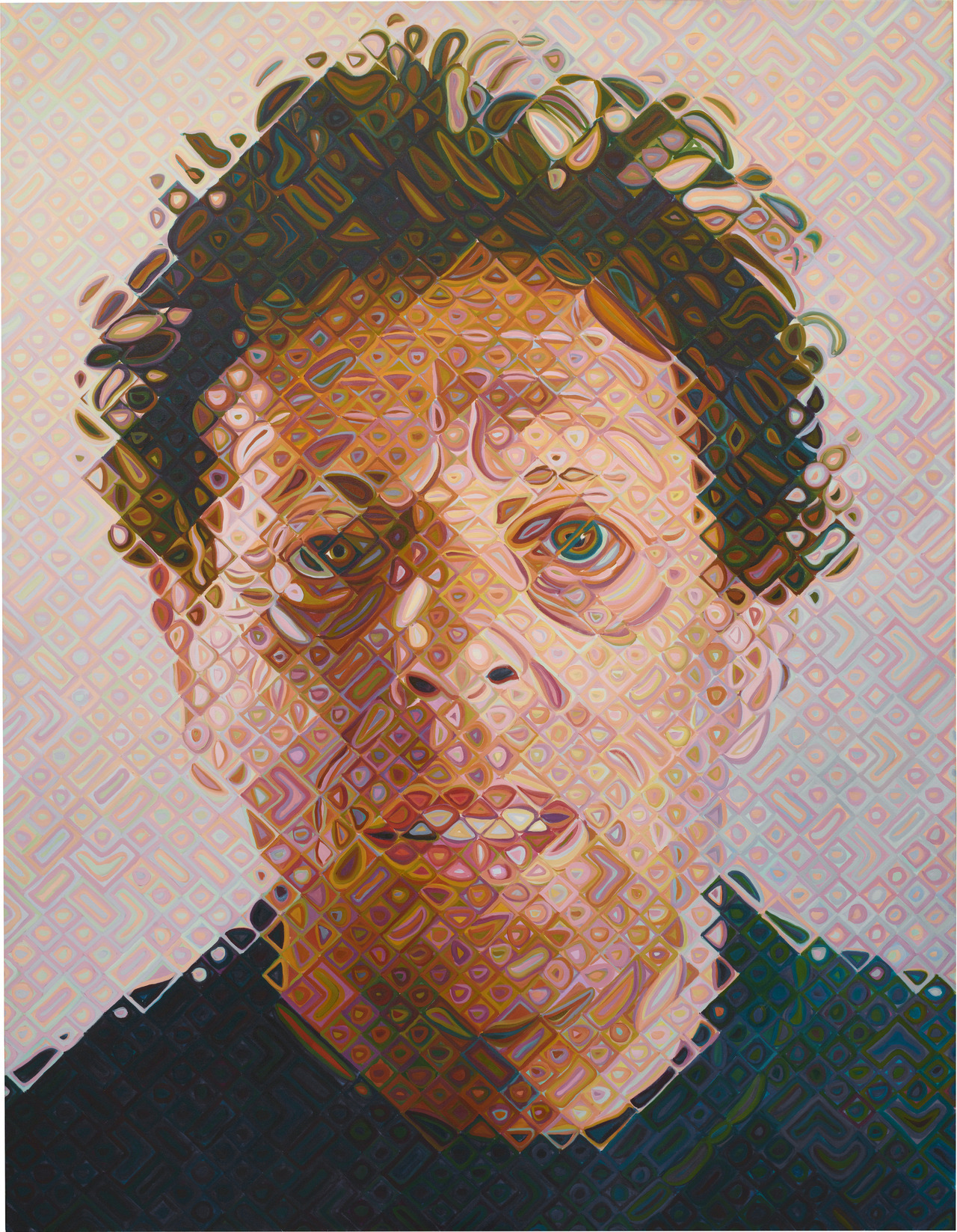
The image at the top is a painting of Glass by Chuck Close who has painted the composer several times including one done solely with fingerprints that I featured in a favorite blog entry that I’ve run a couple times. If you look closely, you can see how this painting is a great example of  Close’s unique style of pixelation.

Enjoy the last Sunday of this mad year. Have a great day.


Read Full Post »