Feeds:
Posts
Comments

Posts Tagged ‘Roberta Flack’


brassai_1899_1984__-paris-11I thought for this Sunday’s music I’d do something with a Valentine’s Day theme.  I also wanted to use the Brassai photo shown here, one of his famed Paris photos that I used in a post from a few years back. I decided to incorporate a post from a few years back about the song The First Time Ever I Saw Your Face.

Most people immediately think of Roberta Flack when they think of the song  and for good reason.  Her 1972 version was  truly beautiful and deserved every bit of the acclaim it earned.  But the song didn’t originate with her and has had many, many versions through the years, including one of my favorites from Johnny Cash, which you can see below along with the Roberta Flack version.

The song’s history began in 1957.  It was written by Ewan MacColl,  a British folk singer who is a very interesting character in his own right.  He was a married man who fell in love with the much younger Peggy Seeger, the half-sister of folk icon Pete Seeger.  He later married Seeger.  MacColl wrote the song about her and for her to perform.  She needed a song for a play she was appearing in here in the USA so MacColl wrote the song and taught it to her via the telephone as he was barred from entering the States because of his Communist ties.  As I said, he was an interesting character.

Her original version has much different phrasing than the better known Flack version and while it is not my favorite, it is nonetheless lovely. It is said that MacColl despised all the later versions of the song, preferring his wife’s.  Hey, it was written for her, after all.

Cash’s version is much more ponderous, closer in tone to the Flack version.  It is from his American series near the end of his life.  His voice was weaker and even rawer than in his younger days but Cash used it in an incredibly expressive way, giving the song  the feeling of a dirge as he looked back from a point near the end of his and his wife’s life, to an earlier time in his life and the fresh discovery of love.  It is both beautiful and sad– much like life and love.

Just a great song. Have a good Sunday…

Read Full Post »

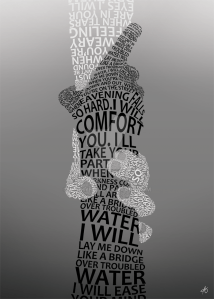
bridge_over_troubled_water_by_aethyrdSeptember 11.  I don’t want to dwell too much on this date.

That day has already taken so much from us that to dwell on it gives it too much power over us, keeping us tied to a moment that is becoming more and more distant.

No, I will never forget that day or this date but it must be as a memory of the departed and not as a source of fear or anger for that moment.  We can not remain in that past.  The world moves on and we must go with it.

I thought that for today I would share a song that is synonymous with unity and coming to the comfort of others, Bridge Over Troubled Water.  There are so many great versions of this song, from original by Simon and Garfunkel to the powerful Aretha Franklin and earthy Johnny Cash covers, that it was hard to choose one.  But this version from Roberta Flack is so delicately powerful and soulful that it sometimes seems like a different song when I hear it.  Just a lovely performance of a great song.

Have  a good day.

Read Full Post »

Most people immediately think of Roberta Flack when they think of the song The First Time Ever I Saw Your Face, and for good reason.  Her 1972 version was  truly beautiful and deserved every bit of the acclaim it earned.  But the song didn’t originate with her and has had many versions through the years, including one of my favorites from Johnny Cash, which you can see below. 

The song’s history began in 1957.  Iy was written by Ewan MacColl,  a British folk singer who is a very interesting character in his own right.  He was a married man who fell in love with the much younger Peggy Seeger, the half-sister of folk icon Pete Seeger.  He later married Seeger.  MacColl wrote the song about her and for her to perform.  She needed a song for a play she was appearing in here in the USA so MacColl wrote the song and taught it to her via the telephone as he was barred from entering the States because of his Communist ties.  As I said, he was an interesting character.   Her original version is lovely with different phrasing than the better known Flack version.  I’ve also included a similarly performed and charming version from Peter, Paul and Mary.

Cash’s version is much more ponderous.  It is from his American series near the end of his life.  His voice was weaker and even rawer than in his younger days but Cash used it in an incredibly expressive way, giving the song  the feeling of a dirge as he looked back from a point near the end of his and his wife’s life, to an earlier time in his life and the fresh discovery of love.  It is both beautiful and sad. 

Just a great song.


Read Full Post »