Feeds:
Posts
Comments

Archive for the ‘Influences’ Category

de chirico_mysteryA turning point for me when I was first stumbling around with my own painting was when I encountered the work of Giorgio de Chirico, an Italian painter of darkly toned metaphorical works.  He lived from 1888 until 1978 but was primarily known for his early work from 1909-1919 which is called his Metaphysical Period.  Metaphysics is  devoted to the exploration of what is behind visible reality without relying on measurable data.  Very mystical.  De Chirico’s work after 1919 became more realistic and less appreciated.  It is the work from this earlier period that defines him.

I was immediately drawn to the work.  It was full of high contrast, with sharp light and dark.  The colors were bold, bright and vibrant, yet there was darknessde-chirico-the-great-tower implied in them.  The compositions were full of interesting juxtapositions of forms and perspectives.  It was a visual feast for me.

At that time in my own painting, I was still painting in a fairly traditional manner, especially with watercolors.  That is to say that I was achieving light through the transparency  of my paint, letting the underlying paper show through.  It was pretty clean which was fine.  But it wasn’t what I was looking for in my work.

Seeing de Chirico’s paintings made me realize what I wanted.  It was that underlying darkness that his work possessed.  Almost a grittiness.  I immediately began to experiment with different methods that would introduce a base of darkness that the light and color could play off.  My work began to change in short order and strides forward came much quicker as a result of simply sensing  something in de Chirico’s work that wasn’t there in my own.

Perhaps that is what is meant by metaphysical…

de-chirico


Read Full Post »

mark twain on steps at quarry farmWhen I was younger I could remember anything, whether it happened or not.

Mark Twain


I sometimes go to quote pages on the net just to read Mark Twain quotes when I need a laugh.  Always been a big fan of his work and his humor.  It was pretty easy because he has a large presence in the area in which I live.  Twain spent many summers here after marrying Olivia Langdon, from a well-respected Elmira family and was buried here after his death in 1910.  The Twains divided their year between their home in Hartford, Connecticut and their summer home here at Quarry Farm, which sat on the side of a hill overlooking the valley in which the city sits.

quarry farm studyIn his study at Quarry Farm, which has been moved to the campus of Elmira College, Twain spent his summer days writing many of his classics.  The family of my grandfather lived at the very base of the hill on which Quarry Farm is located and as a kid I wondered if my grandfather ever saw Twain as he ambled down the hill into the city.  My grandfather at that time was a stagehand at the Majestic Theatre, one of the numerous theaters that once graced Elmira and Twain was a frequent guest to establishments in that vicinity.  Perhaps they nodded hellos on the street.  I could certainly imagine it, whether it happened or not, as Twain says above.

I know that’s a small and inconsequential bond, but it brought the person much closer to a reality when I was younger, made his words seem that much closer to my own existence rather than words in an old library book.  I am gratified that this vague connection is with someone whose words and humor still resonate with people today.

Read Full Post »

Walk-Off WinI’m up surprisingly early this morning, after watching about a 5 1/2 hour Yankees/Angels playoff game last night, one that ended well after 1 AM.

It was a classic with everything that a fan could want.  Great performances.  Drama.  Heroics.  Sheer elation.

And humility.

Yeah, that’s right.  Humility.  I’m not talking about the “Aw, shucks, it weren’t nothing, Ma’am …”  kind of humility.  I’m talking about the built in humility of the game.  This a game where you will fail nearly every game in a game that is played nearly every day, often in crucial moments.  If you only fail as a hitter 70% of the time you could very well end up in Cooperstown, in the Hall of Fame.  As a fielder, there will inevitably be moments where, even if you are the best,  you will fail, making an error.  As a pitcher,  you are an ace if you only give up 3 or 4 runs a game.

Yet with all this failure, there is still the possibility of victory.  Take for instance, the night Derek Jeter had last night.  The Yankee captain started the scoring early with a home run.

Top of the world, ma, to quote Jimmy Cagney.

But as the game progressed he struck out a couple of times, hit into a costly double-play  and made an error in the field that could have been disastrous.  Yet, through all of this failure, his team emerged victorious.  That’s what I like about baseball.  It’s not about physical dominance but is most often about consistency and persistence, slogging forward despite the failures.  Shrugging them off and looking forward to the next at-bat, not as a chance to again fail, but as an opportunity to succeed.

There’s a life lesson for us all in there somewhere.  The most successful players in baseball have the ability to sweep away the memory of the last failure and move on to the next opportunity.  They try to learn from their failures.  Adjust.  And dare to fail again.  Something we should all remember.

That’s the humility in baseball.

Go, Yanks…

Read Full Post »

 Peers -GC Myers 2003I was looking through some older images on my computer, searching for a painting that I had completed several years back.  As I scanned through the paintings, I noticed several pieces through the years that were different from most of the work I’ve been doing recently.  They were multiples, such as Peers, shown here.  They were  paintings with several windows with a new scene in each, although most of the scene were very similar to the others.

It was a format in which I really enjoyed working and one that I have not revisited in a couple of years.  I really don’t know why. Four Moments  GC Myers 2006 They have a very graphic appearance and really stand out on a wall, making them pretty well received as a rule.  I guess in the past few years I’ve been focusing more on working on texture and heightening the color, as well as working in the Archaeology series, so that I haven’t even thought of revisiting this format.

I remember some  of the early ones very well.  One had 48 cells and had a great look, the result of overlaying the paint with layers of chalk and pastel.  Another was the same number of cells with 48 individual small paintings,  each window having a separate opening in the mat.  It was a pretty difficult piece to mat and frame but it also popped off the wall.   I will have to go through my slides from that time (pre-digital) and see if I can wrangle up a few shots.  I would like to see them again to see how they really hold up against my memory.

Fourfront  - GC Myers 2003Maybe I will revisit the multiples sometime soon.  I often run across things that have slipped from the front of my painting mind when I go back looking for something else.  It may be a format such as these multiples or may be a small compositional element.  It’s always interesting for me to try to re-insert this older element into the new work, to see how the inevitable evolution of the work will change this older concept.  We’ll have to see what this brings…

Read Full Post »

Millet- The Gust of WindIn reading yesterday’s paper, I came across an article describing an exhibition opening at the Everson Museum in Syracuse called From Turner to Cezanne: Masterpieces of the Davies Collection.  It is in Syracuse until the beginning of next year when it moves to the Corcoran in Washington, DC.  The exhibit features works from many of the greats- Renoir, Monet and Van Gogh, to name a few.

The thing that caught my eye though, was this painting by Jean-Francois Millet, The Gust of Wind.  There was a real familiarity in seeing it and I immediately recognized the similarity of this piece with the compositions of a number of my paintings.  The tree blown to one side from the wind.  The way the tree sits at the top of the hillock.  Even the shape of the ground and the way it dominates the picture plane.

Of course, I could do this with many, many paintings by a variety of painters.  It’s a simple composition of a tree on a rise, after all.  But because it was Millet, it struck me because I have always so admired his work and often felt a kinship to it.  As a youth, a piece of his at our local museum, the Arnot, was always a favorite.  His paintings of field workers always drew me in with their sweeping fields and expansive skies.

Millet-  The SowerAnd then there was The Sower.

The Sower was arguably Millet’s most famous image, a simple depiction of a farmer spreading seed.  It has great motion and a  beautiful diagonal line through the sower’s body.  Like the painting above, there has always been a sense of familiarity with this image.  I have memories of a pair of bronze bookends from my childhood, probably from a garage sale and now long lost, that had the image of The Sower on them.  Something in that figure clicked in me even then and I have always responded when seeing it.

This image was further immortalized by Van Gogh in several of his paintings, one a pure copy albeit in his own distinctive style.

Millett After   Van GoghMillett's Sower Van Gogh

Seeing Millet’s figure in Van Gogh’s paintings made a huge impression on me many years ago.  It triggered a chain of creative impulses that I still feel to this day.  Seeing The Gust of Wind in the paper brought them back to the surface for me and I may well be working off this little surge of inspiration for weeks or months to come.

So, if you get a chance check out the exhibit and the Millet…

Read Full Post »

William Kamkwamba 2009Last night on The Daily Show, Jon Stewart interviewed a young man from Malawi in Africa by the name of William Kamkwamba, who has recently published a book.  The book, The Boy Who Harnessed the Wind, tells his story of how as a 14 year old boy in famine devastated malawi, with more adversity than anyone should face at such an age, decided to build a windmill so that his family might have electricity to run lights and give then running water.

Kamkwamba had went to school for a while until the famine fully hit his family’s meager farm, at which point his parents could no longer afford the 80 dollar annual tuition.  Left with only a few textbooks and a small library funded by the US government, he set to work building the windmill after having seen a picture of one in a book.

With absolutely no resources, he scavenged bits of tractor parts, pieces of wood and metal and eventually built a working windmill.  He designed and built switches and circuit breakers for his system that , while crudely built from found common objects in a way that Jon Stewart equated as being MacGyver-like, were testaments to the power of desire and human creativity.

He has subsequently built other windmills for his village and  word of the young man’s drive and intelligence spread.  With financial assistance,  he is currently here in the US studying for his SATs and hopes to use his education to further help his countrymen.

How can you not be touched by a story like that?  It makes me realize how important desire and drive is in the creative process especially when the circumstances are dire.  I think many of us have lost that inventive, manically forward driving spirit and I have no idea how we can regain it.  But William Kamkwamba’s story gives me hope and let’s me know that the human spirit to overcome is definitely alive.

Check out his book and story at his blog by clicking on the book cover above.

Read Full Post »

High WindowsAfter working on the large painting whose progress I have been chronicling, I moved back to a few pieces that were incomplete and needed the final touches to come alive.  This is one , a fairly large canvas measuring 30″ by 40″, painted in the same obsessionist manner as my recent work.  This piece has a lot of things working for it- the way all of the landscape elements converge at the center, the pull of the alternating rows of the field, etc.

But the sky is the obvious star of this painting is the vivid sky.  It has a real glow in the studio and my eye is always pulled to it.  It is just calling for one’s attention.  The sky is intentionally comprised of built up layers of colorful daubs of paint.  I wanted the sky to have that appearance of the sky coming apart, separating into individual lights sources.  The result is a really active sky, full of movement, that is a dynamic backdrop for the quietness of the landscape below.

As I was finishing it, I began thinking of the colorful daubs of color in the painting as being stained glass windows, kind of suspended in the sky.  That reminded me of the poem, High Windows, from the late British poet Philip Larkin.  It’s an interesting poem, one that seems full of cynicism at first glance, almost rejoicing in the loss of reverence in the world.  But the last few lines have the cynic dissolving into a sort of new awe and  reverence for the immense unknown, which are symbolized to him by high windows.  That is the same immense unknown I see in the sky of this painting, which is now titled High Windows.

Anyway, here is the poem from Larkin.  I’m also enclosing a video that has the voice of Larkin reading his poem.  It’s always interesting to hear the author’s reading of the words, his rhythm and cadence.  Gives you more of an idea of his aim in writing the piece.  Hope it works for you…

High Windows


When I see a couple of kids

And guess he’s fucking her and she’s

Taking pills or wearing a diaphragm,

I know this is paradise


Everyone old has dreamed of all their lives–

Bonds and gestures pushed to one side

Like an outdated combine harvester,

And everyone young going down the long slide


To happiness, endlessly. I wonder if

Anyone looked at me, forty years back,

And thought, That’ll be the life;

No God any more, or sweating in the dark


About hell and that, or having to hide

What you think of the priest. He

And his lot will all go down the long slide

Like free bloody birds. And immediately


Rather than words comes the thought of high windows:

The sun-comprehending glass,

And beyond it, the deep blue air, that shows

Nothing, and is nowhere, and is endless.

—Philip Larkin

Read Full Post »

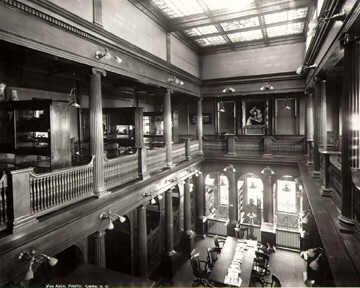
Old Steele Memorial LibraryI love books.  I like the feel of books, the smell, the whole tactile sensation of holding a book.  To me, there is always a feeling of holding a talisman of some sort.  As though there is magic within the the two covers, just waiting to be activated by someone opening it.

I think this partly came from my first experiences with a shrine to books, our local library, the old Steele Memorial Library in Elmira.  It was an older Carnegie-built library from the 1890’s, a beautiful building that oozed charm and opulence. Old Steele Library Interior It had real character, with stacks behind the front desk that you accessed via cast iron stairs and had translucent glass floors that allowed a little light into the dark nooks.  There was a real sense of intimacy in this building, a feeling which seeped into the region between the reader and the books.   I remember sitting in the comfortable wooden chairs at the long, cool wooden tables and reading entire books while there.  Many, many hours were spent there in other worlds.

I have very specific memories of that place. I remember that my sister first introduced me to the child’s section there and that I devoured those books there and how excited I was to finally move out into the adult sections of the library, where new horizons of adventure loomed. I remember how excited I was to find the Paddington Bear books and how I carried an armful of them through the streets to my grandparents’ home on the East Side of town. I remember that they were both there outside the house and that my grandmother’s face was very pleased to see the books I carried. I was no more than eight years old and felt like the world was in my hands.

The old library was moved in the late 1970’s or 80’s- I can’t really remember- to a new and shiny building. Oh, it’s a nice facility with better lighting and spacious aisles with room for computers and other activities. Better parking and all the modern conveniences. Everything one could want.    Except for personality.  That sense that makes you feel as though you were entering a private and sacred place, a place of stored wisdom just waiting for you.

Just for you

There was a real sense of intimacy in this building, a feeling which seeped into the region between the reader and the books.  I remember sitting at the long wooden tables and reading entire books while there.
I have very specific memories of that place.  I remember that my sister first introduced me to the child’s section there and that I devoured those books there and how excited I was to finally move out into the adult sections of the library, where new horizons of adventure loomed.  I remember how excited I was to find the Paddington Bear books and how I carried an armful of them through the streets to my grandparents’ home on the East Side of town.  I remember that they were both  there outside the house and that my grandmother’s face was very pleased to see the books I carried. I was no more than eight years old and felt like the world was in my hands.
The old library was moved in the late 1970’s or 80’s- I can’t really remember- to a new and shiny building.  Oh, it’s a nice facility with better lighting and spacious aisles with room for computers and other activities.  Better parking and all the modern conveniences. Everything one could want.   Except for personality, one that makes you feel as though you were entering a private and sacred place, a place of stored wisdom just waiting for you.

Read Full Post »

guitarSunday morning and we deserve a break from painting, at least in this blog.  I was thinking of a song I first heard back in 1975 when Willie Nelson released his classic Red Headed Stranger album, which was a concept album composed of sparse compositions that told the story of a fugitive on the run.  Just a beautiful group of disparate songs that come together to chronicle a tale.

When I heard Blue Eyes Crying In The Rain, I was hooked on the poetry and simplicity of the song, especially as performed in Nelson’s spartan manner.  So simple but so filled with emotion and feeling.  I think of this song often when I’m painting, trying to think how I can match that feeling of simple grace and depth of feeling in my own work.

I didn’t know much about the song then, always thinking that it was Nelson’s song.  But it had a long history, written in 1945 by the legendary Fred Rose for Roy Acuff.  Hank Williams recorded it in 1951 and a number of others have as well over the years.  It is considered to be the last song that Elvis recorded at Graceland, the day before he died.  But for me, there’s only one version that really stands alone.

Here’s the lovely Blue Eyes Crying In The Rain

Read Full Post »

big lebowski multiI was looking for a video on YouTube and came across some old Smothers Brothers things from their 1960’s show.  Time has kind of faded the notoriety they had at that time in America.  Most people, especially those under 40, think of the Smothers Brothers and think of a couple of older, very straight looking guys in tuxes performing skits with the Boston Pops or Tommy Smothers doing his YoYo Man act.  Hardly anything controversial there.

But in the late 60’s their Smothers Brothers Comedy Hour was a huge hit on CBS, bringing political irreverence  and protest along with the best music of  that era’s youth to a wide audience.  They were cancelled at the peak of their popularity in 1969 in a dispute with CBS over censorship, an action that they later filed suit and won against CBS.

I loved the show when I was a kid.  It was funny and smart and said the things that the news coverage of the time refused to say, particularly about the war in Viet Nam.  You have to realize how much narrower the options were at that time for hearing something out of the mainstream.

I especially liked the music.  Pete Townsend of the Who claims to have lost his hearing in one ear when Keith Moon exploded his drum set  during a performance on the show.  Pete Seeger had a famous appearance singing Waist Deep In the Big Muddy as a protest against the war.  So much great stuff.

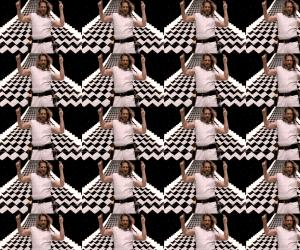
I happened across this segment featuring Kenny Rogers and the First Edition doing their hit Just Dropped In ( To See What Condition My Condition Was In), a song that most young people will no doubt associate with its part in The Big Lebowski‘s dream sequence with The Dude, as shown above.  This video with Kenny Rogers in his pre-Gambler days has pretty much the same feel, in that 1960’s goofy TV psychedelic effect way.  Take a look…

Read Full Post »

« Newer Posts - Older Posts »