Feeds:
Posts
Comments

Archive for the ‘Motivation’ Category

“What does that represent? There was never any question in plastic art, in poetry, in music, of representing anything. It is a matter of making something beautiful, moving, or dramatic – this is by no means the same thing.”

 Fernand Leger

******************

I found it hard to believe that the French artist Fernand Leger (1881-1955) hadn’t shown up on this blog before. I’ve always enjoyed his work, especially his use of simplified forms, visible line and dark-tinged color. These were qualities that I knew I wanted for my own work in the early days when I would look at his work and that of a few other artists. I liked most of his work, from his early Cubist inspired abstractions and his later more figurative work.

But I really identify with his words above. The idea of painting moving past the idea of pure pictorial representation into something more like the expressive phrasing of dance, music or poetry is an idea that has clanged around in my head for a long time.

It is to look at a painting of a cow, to use an example, and feel the same sort of response which comes with experiencing the grace of a dance or the beauty of a musical passage.  The gesture of the painting, its movement and rhythm, and the emotions that it evokes have transcended the apparent subject it portrays. The cow as the subject of the painting is replaced by the emotional response to the forms, lines and color in the painting. That response becomes the subject and that cow becomes less of a symbol for a cow and more of a representation of the emotions that the painting brings forth.

Some magical cow, huh? Don’t know why I chose a cow as an example. It was the first thing that came to mind and it is early, so bear with me.

The point is that I see often this in Leger’s work. I feel an emotional response to some of his work without even recognizing what might be considered the obvious subject on the surface.

It’s something I desire for my own work. I would imagine that most other artists do, as well. But I don’t know if there is an actual way of ensuring that it takes place within one’s work. Maybe it’s either there or it’s not. Maybe it has to come without conscious thought, from a clear and empty mind.

I don’t know. But I can hope.

Here’s video slideshow of some more of Leger’s work.

Read Full Post »

.

The value of the prototype does not consist in the rarity of the object, but in the rarity of the quality it represents.

–Victor Vasarely

*******************

I have to confess up front that I am not a big fan of Victor Vasarely (1906-1997) or the Op-Art movement of which he is at the forefront. It’s not that I am denigrating it. I have seen a number of pieces that I do like and I can certainly see people being intrigued by its color and forms and how it can reverberate in certain environments.

If I had a mid-century home with lots of glass and chrome, I might think about hanging this type of work. But I live in a cabin in the woods.

It’s just not to my particular taste, that’s all.

That being said, I immediately nodded in agreement when I read the quote above from Vasarely. As I read it, it jibes well with my own views on the intrinsic value of art and how the artist behind it affects the artwork’s value beyond that of a mere object.

When I have spoken with students in the past I try to impress on them that while they must learn their craft, they should also focus on making themselves fully rounded humans with an individual voice that reflects their uniqueness and individuality.

I urge them to read more, listen more, and to look at more things, all preferably outside their own known preferences.  I believe it creates a sense of fullness that will extend into their work, giving their work a greater sense of that quality that takes a piece beyond being a mere object of decoration.  And today, when there are more artists than at any other time at any point in history, its that rare sense of this quality that can make the difference in how seriously an artist’s work is viewed.

I don’t know if that ever gets through to these kids or if it even holds true in reality, but it seems right to me. I personally try to view each piece as a combination of skill, experience, acquired knowledge and influences, and the flaws and strengths of my own character–hopefully, the better parts of it.

Sometimes it works and at those times I see the quality represented by it that Vasarely described. When it doesn’t, I see a mere object that lacks the fullness that I am trying to put in it. I can see that I have somehow withheld some part of myself from that work and I try to figure out how to overcome that deficiency.

But most of all, I keep trying to find that rare quality…

Read Full Post »

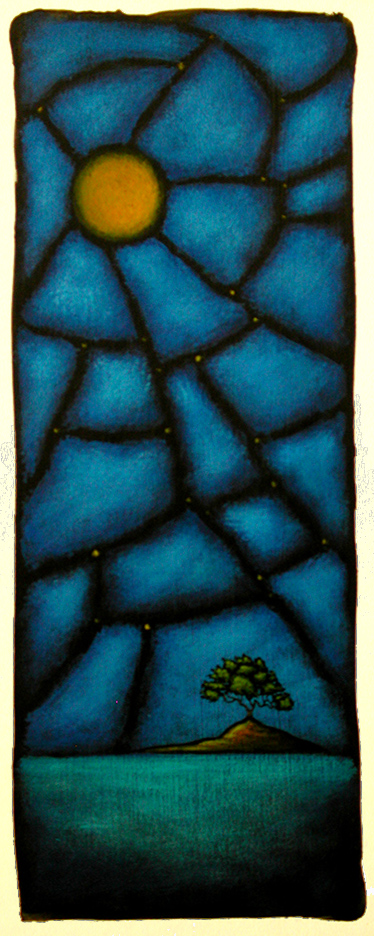
I was recently going through some old work and came across some paintings from 2002 that had slipped my mind. There were several done in the same style as the piece shown here, Night Blossom, with chunky, mosaic-like skies in deep blues and greens.  They had a dark, moody tone and a sense of weight in them that really drew me to them when I pulled them up on my screen.

It made me wonder why it was a path that I didn’t follow a bit further at that time. Maybe I felt it was too reminiscent of stained-glass. It does have that feel in the way it goes together.

Or maybe I just was headed in another direction that had a little more pull on me at the time. I was in the midst of my Dark Work in the aftermath of 9/11 which took me directly into my Red Roof series so perhaps that is the main reason for not doing more in this vein.

So, it may be as simple as it turning out to be that there is not enough time in the day to follow up on all the flares that are sent off in one’s head sometimes. Who knew?

But seeing this again and examining it closely re-ignites that flare and I see this as a new possibility in a larger scale done with skills that have evolved in the past 16 years.

And that is exciting for me.

Whether it turns outs to be what I see in my head is another thing. Sometimes those things I envision turn out much different in reality and not always in a positive manner.

We shall see…

Read Full Post »

Like everything genuine, its inner life guarantees its truth. All works of art created by truthful minds without regard for the work’s conventional exterior remain genuine for all times. 

Franz Marc

******************

Franz Marc is not one of my favorite artists but that is not to say I am not a fan of his. I like many of his paintings and some do little for me. And that’s okay.

But I greatly admire the fact that he created an impressive body of work in a short period of time– he was only 36 years old when he was killed in the Battle of Verdun in World War I in 1916— that has survived and prospered during the last hundred years. Under Hitler’s Nazi Third Reich, his work was labeled as degenerate art and was subject to destruction. But his work persisted.

I also admire the fact that he chose to carve out his own niche, creating work that is instantly identifiable as his. His use of bold primary color, the animal subjects that populated many of his pieces and the use of Cubist elements make his work easy to distinguish when you come across one. Many of you are probably familiar with his famous yellow cow or his blue horses.

I also admire and am in agreement with many of his writings about art. We both tend to look at art as having an inner life of its own so long as the artist allows that truth to manifest itself and creates the work with true emotion and feeling.

His desire to create work that remains genuine for all time is mine as well. The idea of connecting and communicating with future generations is deeply appealing. You always hope your work speaks beyond time or language or place.

So, while I may not number Franz Marc among my favorite artists, he is nonetheless a great influence on my work.

Read Full Post »

.

Visible things can be invisible. However, our powers of thought grasp both the visible and the invisible – and I make use of painting to render thoughts visible.

― René Magritte

******************

It’s an interesting thought, that our power of thought grasps both the visible and the invisible.

I, a seemingly visible thing, have sometimes felt invisible.

And I have sometimes seen things that turned out to not be there at all.

Thought is a magical thing.

And maybe that is why some folks paint, to attempt to capture those things they think they see and to take away their own invisibility.

Gotta chew on that one for a while…

Read Full Post »

Botero

An artist is attracted to certain kinds of form without knowing why. You adopt a position intuitively; only later do you attempt to rationalize or even justify it.

Fernando Botero

.
*********************
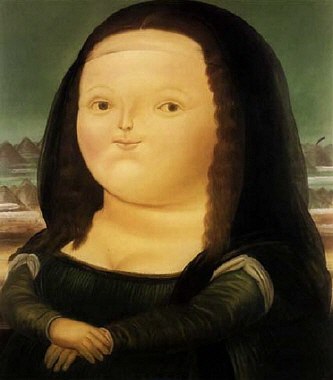
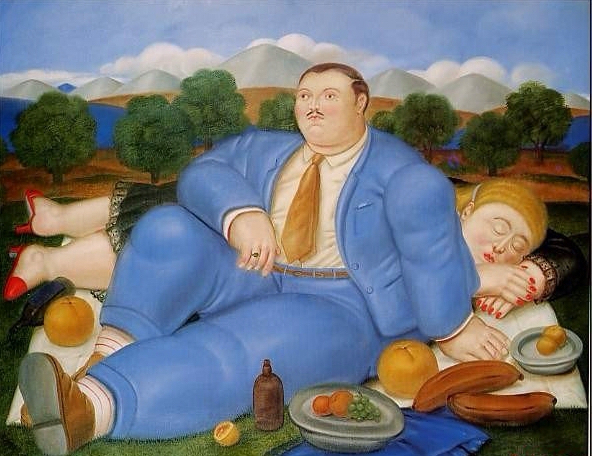
I don’t know much about artist Fernando Botero, who was born in 1932 in Medellin, Colombia. But it is obvious that his work represents his attraction to a certain kind of form– the round and the over-sized. While I would not count him among my favorites, I am impressed by the impression his work makes, how you never doubt that a painting or sculpture is his work.
.
His work is boldly and instantly identifiable. And that is saying a lot.
.
I think a lot of artists struggle in finding that certain kind of form that speaks to them intuitively, a form that becomes part of their true voice. Botero found it in the form of rotund figures and listened to his intuition. I think the impressive body of work he created over his long career justifies his decision.

Read Full Post »


It is not a matter of painting life. It’s a matter of giving life to a painting.

-Richard Diebenkorn

***********************

I am going through a period where I am struggling to find focus. My ability to concentrate seems limited and everything, even small tasks, seem like huge distractions which I allow to take over much of my day. Even writing a short blog entry has become an epic struggle to complete, taking twice as long as normal to write a few lines that say little.

It’s frustrating and a little scary, with a nagging fear that this will become the new normal, that every task will become a struggle. I worry that the spark that has sustained me for the past two decades has somehow diminished.

I’ve been through these episodes before, as I’ve noted here in the past. I can’t say that this is any worse than any of those although it probably seems that way while I’m in the middle of it. I’ve always been able to muddle through it and have usually come out at the other end back in form, the spark in full blaze.

But part of me worries that this time might be a different thing. Maybe it’s watching my father living a shallow existence with his dementia in a local nursing home. I find myself worrying that my current lack of concentration might morph into the same short attention span that bedevils him.

I tell myself that this a baseless fear but when you’re running on a low spark, your confidence in your own beliefs and strengths becomes a bit strained. Fears, once unthinkable, become plausible.

So, trying to find inspiration, I spend some mornings looking at the work of other artists and reading a bit about how they perceived their work and how they coped with the struggles they faced. I’ve been a fan of Richard Diebenkorn’s work for some time, especially his Ocean Park series. Ocean Park #79 is shown at the top. I was looking at some of his work this morning and reading a few short quotes from him. The one at the top resonated because it reminds me of what I am trying to do.

Another, about the beginning of his process, also spoke to me: Of course, I don’t go into the studio with the idea of ‘saying’ something—that’s ludicrous. What I do is face the blank canvas, which is terrifying. Finally I put a few arbitrary marks on it that start me on some sort of dialogue. I need a dialogue to get going.

That is where I am right now. I am trying to start a dialogue, a conversation, with a blank surface. The problem is that on some recent mornings I feel as blank as the empty canvas. That doesn’t make for sparkling dialogue.

But I keep trying because it is what I do. And I have to believe that the spark is there, waiting to spring into a full blaze. Maybe it’s today…

Read Full Post »

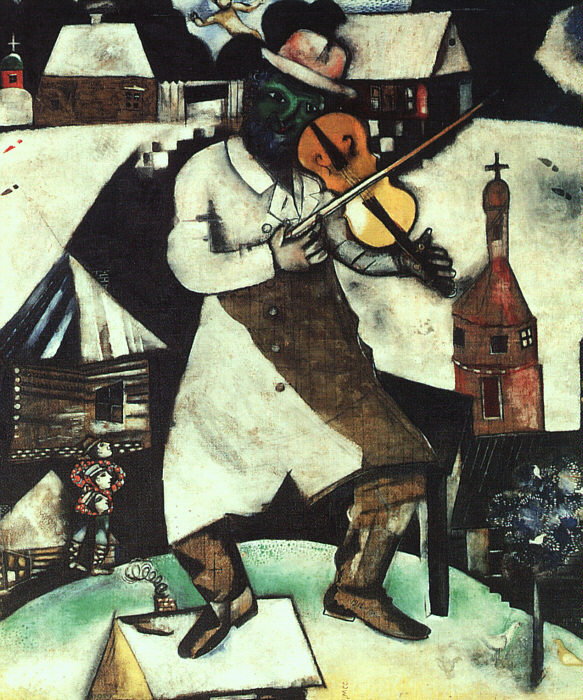
If I create from the heart, nearly everything works; if from the head, almost nothing.

― Marc Chagall

********************

So true…

Read Full Post »

There can be no failure to a man who has not lost his courage, his character, his self respect, or his self-confidence. He is still a King.

Orison Swett Marden
***********************

It’s fitting that one of the only things I’ve actually finished in this new year should be a painting that I see as a personal motivator. This new piece is a 30″ by 20″ canvas that I am calling Still a King for the time being.

The title is taken from the quote at the top from Orison Swett Marden, who was a writer in the late 19th and early 20th century who focused on inspiring people to make the most of their lives in business. This was the time of Horatio Alger and many rags-to-riches stories, with the world exploding with invention and innovations. Marden was an early self-help writer, trying to motivate would-be entrepreneurs to make the most of their opportunities.

I periodically go through crises of confidence, some shallow and short-lived while others are deeper and a bit more difficult from which to escape. I have observed that when I feel my self-confidence is nowhere to be found, my courage and self-respect are also missing in action. In these deeper ruts, I can only hope my character is strong enough to carry me up and out, at least to a point where those other attributes decide to rejoin the struggle.

When they all come back together I know I will be okay.

And it is that moment that I see in this painting. The Red Tree in this piece represents the coming together of those four qualities: courage, character, self-respect and self-confidence. The path to this point winds through a landscape that goes up and down until it comes to a higher point and the realization that it is still a king , even if its realm is only its own little landscape.

Anyone with those attributes can– and should– walk as a king.

Or a queen.

There was definitely male dominance in the time of Marden and he probably gave little thought to the idea that these concepts, simple and universal as they may seem, would apply to a woman. But times have changed and are still changing, thankfully. There is still male dominance in most fields but if women can hold on to and display their  courage, character, self-respect and self-confidence, they will be queens.

I’ve been an artist long enough to see this evolution take footing in the art world. In recent years, there are more and more women artists coming to the forefront. For me, much of the most interesting work I see is created by women and, more often than not, it is the result of seeing themselves as courageous rulers of their own realm.

And that is a very good thing.

Which leads me to one last epigram from Orison Swett Marden that I think also applies to this painting and what I written here:

Nothing else so destroys the power to stand alone as the habit of leaning upon others. If you lean, you will never be strong or original. Stand alone or bury your ambition to be somebody in the world. 

Now, I only have to put these words into action. Wish me luck…

Read Full Post »

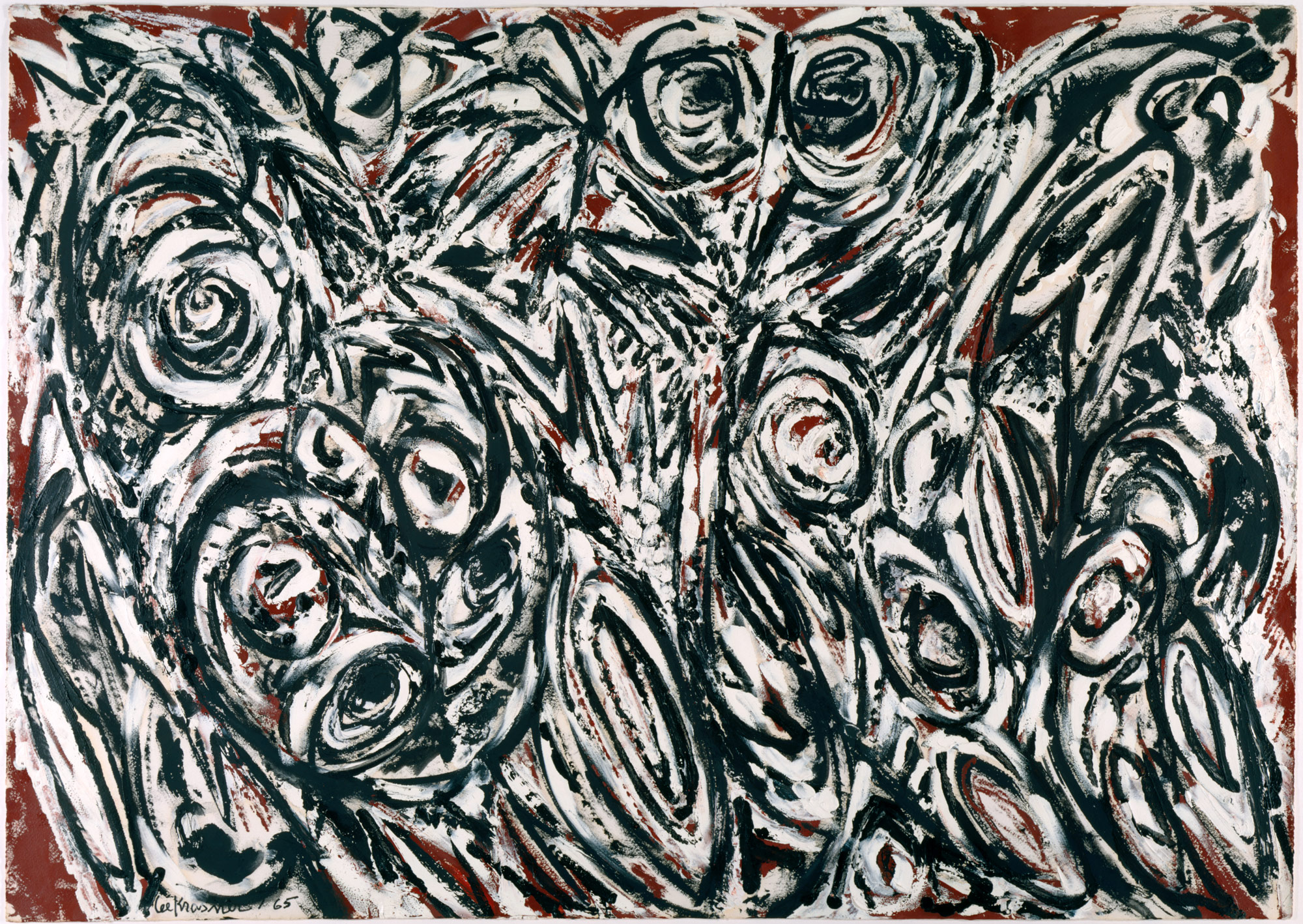
Lee Krasner- Night Creatures

My own image of my work is that I no sooner settle into something than a break occurs. These breaks are always painful and depressing but despite them I see that there’s a consistency that holds out, but is hard to define.

Lee Krasner

***************

I’ve been in a funk with my work lately, one that makes it hard to even want to pick up the brushes. It reminds me of the one I felt at this exact time ten years back. My Archaeology series emerged from the depths of that funk so even though there is general sense of blah, I am optimistic.

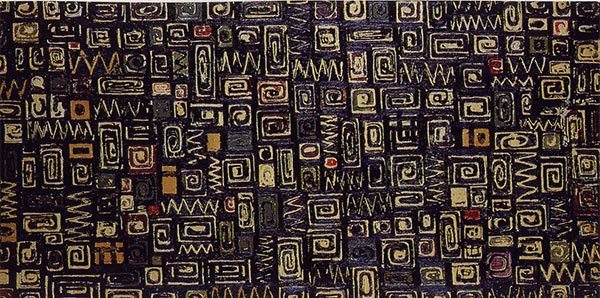
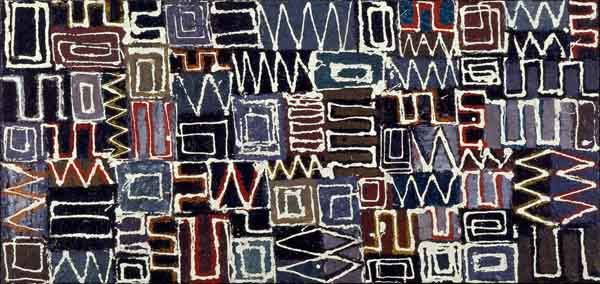
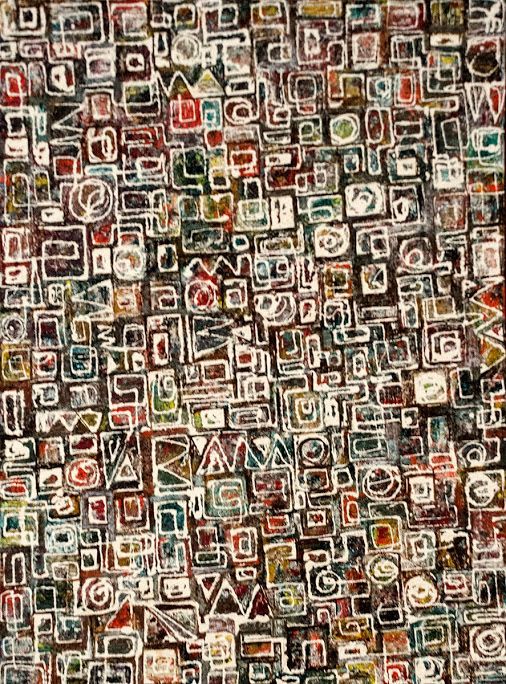
Part of my process in clawing out of a funk is looking at work– my own and others– and reading on the experiences of others. I came across the quote above from the late artist Lee Krasner (1908-1984) and it spoke to how I have been feeling as of late. I spent a little time looking at her work and chose several that sparked my interest immediately.

Now, I am not well schooled on Abstract Expressionism so I am able to speak with any authority on her work or on her place in art history. But I do like these and a number more by her, finding something in them that inspires me with their rhythm, forms and composition. Born into a Jewish family in what is now the Ukraine, many scholars find elements of Hebrew script in the forms of some of her works.

Most of you, if you know her name at all, recognize her as the wife of Jackson Pollock.  It’s unfortunate that she is mainly known in this way because her own work has had an enduring power that has been sometimes overshadowed by Pollock’s notoriety. She is an interesting figure in modern art. Take a look sometime. Here is short video with much of her work.

Lee Krasner- Untitled (Little Image)

Lee Krasner- Noon

Lee Krasner- Composition 1949

Lee Krasner- Promenade

Read Full Post »

« Newer Posts - Older Posts »