Feeds:
Posts
Comments

Archive for the ‘Opinion’ Category

During the ongoing nuclear event taking place in Japan, I have numerous proponents of nuclear power here in the States make claims on television defending the safety record of the industry here by stating that there have been no deaths caused by nuclear reactors here.  But they state it with a caveat: there have been no deaths at commercial nuclear power plants.  There have been other incidents at military and research reactors that have resulted in the deaths of workers at these facilities.

There is, for example, the SL-1 reactor in a remote part of Idaho.  SL-1 stood for Stationary Low-Power Reactor Number 1 and was a very small experimental reactor operated by the US Army.  On January 3, 1961 , there were three workers present as the plant was being powered down for maintenance.  The control rod was pulled from the core too quickly and there was an instantaneous ( 4 milliseconds) heat ing and steam explosion, killing all three workers, athough one survived the intial blast and died soon after from head injuries.  The descriptions of their deaths are pretty gruesome.  All were buried in lead-lined caskets and special vaults.  That is, the body parts of the workers that weren’t buried in the Idaho desert as radioactive waste.

The plant was ultimately buried in  the same Idaho desert and the SL-1 design was discontinued, replaced by designs that benefitted from the lessons learned from this tragedy.  The incident is seldom mentioned in any discussions of nuclear safety and remains pretty small on the radar screens of most folks.  While it should not be held up as the primary evidence against nuclear power as a major source of energy  it does illustrate the immense power and risk involved in nuclear energy. 

So when you hear those words about the safety of nuclear power  and how there have never been any deaths, listen for those words that take the SL-1 out of the equation for their claims: in a commercial power plant.  They know the real truth.

Read Full Post »

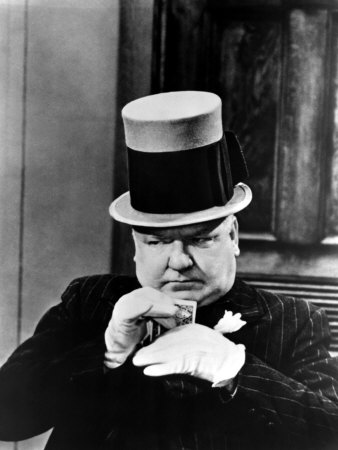
If at first you don’t succeed, try, try again. Then quit. There’s no point in being a damn fool about it.


-W.C. Fields
 
*********************
Okay, maybe those aren’t the most inspirational words ever uttered.
– 
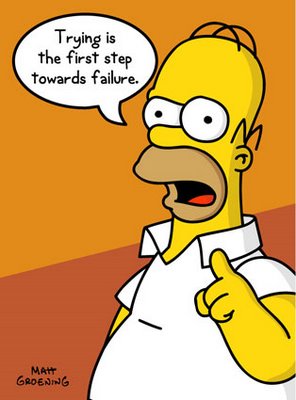
But I’ve been thinking about the nature of failing and succeeding ever since reader Tom Seltz posed a few questions on the subject to me the other day.  I wrote yesterday about how failure for what I do was truly subjective, completely comprised of shades of gray.  But as I thought about it through the day I came to same conclusion for what is considered success for my paintings.  The perceived success of a piece is also truly subjective.  It has happened many times that a piece that I felt succeededgreatly for me has languished and raised little attention in the galleries.  I know that this doesn’t necessarily designate it as a failure but it points out the subjective perception of art.
I think this differs for various types of art.  Obviously, in portraiture there are more objective aims that must be met in determining the success or failure of a piece.   Ask anyone who has taken on a portrait commission.  I immediately think here of a portrait of George Stephanopoulos that was painted by Joseph Solman in the 1990’s when Stephanopolous was still part of President Clinton’s team.  Solman, who died  in 2008 at the age of 98 and one of the leading lights of the Modernist movement of the 30’s, painted Stephanopoulos in tints of green.  I thought it was a spectacular painting, a rousing success, when I saw it but Stephanopoulos had a differing view, seeing it instead as a failure, refusing to buy it.  Two polar views of the same painting.  Sadly, I can’t find an image of it to show here.   Painters who work in an ultra-realistic manner face the same objective viewing of their work. 
My work tends to be more about expression and emotion rather than sheer representation so this creates even more gray area for objective analysis.  I don’t really care about exactitude in rendering so long as the emotion that I’m seeking comes out and a sense of rightness exists around whatever I am depicting.  While I don’t have a great concern for the object being perfect, it can’t be absolutely wrong.  This emotion and sense of rightness are the main objectives for my work  so there is little to go by as far as judging a work a failure or a success.  And I like that.  I would rather the individual judge my work for what they see and sense in it rather than than by having them judge how it compares to reality.
I know I’m way off target here and not sure I’ve made my point  but I’m leaving it to be at this point.  Keep in mind, this is just thinking out loud here.  I may change my mind about the whole thing completely by tomorrow. 

Read Full Post »

Failure

In response to yesterday’s post concerning a very large blank canvas that is waiting patiently for me, I received several very interesting questions from my friend, Tom Seltz, concerning the role that failure and the fear of failure plays in my work.  He posed a number of great questions, some pragmatic and some esoteric,  that I’ll try to address.

On the pragmatic side, he asked if there is a financial risk when I take on large projects like the  4 1/2″ by 7′ canvas of which I wrote.  Actually, it’s not something I think about much because every piece, even the smallest,  has a certain cost in producing it that, after these many years, I don’t stop to consider.  But a project such as this is costlier as a larger canvas is more expensive right from the beginning simply due to the sheer size of it.  The canvas is heavier and more expensive and there is more used.  I use a lot more gesso and paint.  And while the cost of materials is a larger cost the biggest financial risk comes in the time spent on such a project.  It takes longer to prepare such a large canvas, longer to paint and, if it works out, longer to finish and frame.  This is time not spent on other projects.  Wasted time is by far the biggest risk in facing such a project and that is something I have to take into consideration before embarking on large projects.

He also asked whether I can reuse the materials if I don’t like what I’ve painted.  Sure, for the most part.  Especially canvasses.  Actually, the piece shown here was such a piece.  I had a concept in my head that floated around for months and I finally started putting it down on this 30″ square canvas.  I spent probably a day’s worth of time and got quite far into it before I realized that it was a flawed concept, that I was down a path that was way off the route I had envisioned.  It was dull and lifeless, even at an early stage.  It was crap and I knew that there was no hope for it.  I immediately painted it over, mainly to keep me from wasting even more time by trying to resuscitate it,  and this piece emerged, happily for me.

Tom also asked if I ever “crashed and burned” on a piece or if the worst sort of failure was that a piece was simply mediocre.  Well, I guess the last paragraph says a bit about the “crashed and burned” aspect, although that is a rarer event than one might suspect.  The beauty of painting is that it’s results are always subjective.  There is never total failure.  It’s not like sky-diving and if your parachute doesn’t open you die.  At least, that hasn’t been my experience. 

Mediocrity is a different story.  That is the one thing I probably fear most for my work and would consider a piece a failure if I judged it to be mediocre.  I have any  number of examples I could show you in the nooks and crannies of my studio but I won’t.  They have a purpose and some have remaining promise.  The purpose is in the lessons learned from painting them.  I usually glean something from  each painting, even something tiny but useful for the future.  But most times,  the mediocre pieces teach me what I don’t want to repeat in the future.  A wrong line here.  A flatness of color there.  Just simple dullness everywhere.

But, being art, there are few total failures, and many of these somewhat mediocre pieces sit unfinished because there are still stirs of promise in them.  I can’t tell you how many times I’ve come to what I felt was a dead end for a painting, feeling that it was dull and lifeless, and set it aside.  Months and months might pass and one day I might pick it up and suddenly see something new in it.  A new way to move in it that brings it new life.  These paintings often bring the greatest satisfaction when they leave the gallery with a new owner.  Sometimes failure is simply a momentary perception that requires a new perspective.

Okay, that’s it for now.  I’m sure I have more to say about failure but it will have to wait until a later date.  I’ve got work waiting for me that doesn’t know the meaning of the word failure and I don’t want to risk that it might learn it.

Tom, thanks again for the great questions.  I’m always eager for good questions so keep it up!

Read Full Post »

History of Labor in the State of Maine- Judy Taylor Studio

This is a mural that adorns the Department of Labor in the state of Maine. Measuring 8′ high by 36′ long, it was created by Maine artist Judy Taylor in  2007/2008 to commemorate significant moments in Maine’s labor history, including the adoption of child labor laws, better working conditions for all workers and the increasing signifigance of women in the labor force.  It also memorializesMaine native  Frances Perkins, who was the Secretary of Labor under FDR, the first female to hold any cabinet post.  It glorifies the plight of the worker in an appropriate setting, the Department of Labor, and is a striking and significant piece of public art.

Maybe it’s just me but this seems like a no-brainer but recently this mural has come under attack.  Maine Governor Paul LePage (R)  has ordered that is be taken down as he has had complaints from business factions that it is unfairly biased against business owners.  As proof, they released an anonymous fax signed “A Secret Admirer” who claimed that he felt he was in North Korea viewing public political propaganda and this was nothing more than an effort to further the Union movement. 

The governor also plans to change the name of several meeting rooms in the building named after people in the Maine labor movement.

From looking at the mural and its short descriptions of each panel ( to do so, click on the image above and it will take you the artist’s site), I saw only moments of history that elevated the average worker and protected the vulnerable from exploitation.  How anyone could see child labor laws as being biased against business and not a positive step forward for our society is beyond me.  And this is in the Department of LABOR.   But there is a movement afoot to squash the labor movement, mainly trade unions,  in this country which many think people will not affect them and their lives.  After all, how many people are union members today?  But there is more at stake with this attack than the rights of the unions.

It is both a beginning erosion of the rights we have garnered through the efforts of labor unions and others in the past and a political maneuver to destroy the only organized group that represents the worker in any political sense.  Unions are the only organized political donors who somewhat check the unbridled money injected by business concerns into the political arena.  And even the money spent by unions pales in comparison to that spent by businesses and their lobbyists.  But it is still opposition and must be destroyed and this move by Gov. LePage is symptomatic of this effort.  Demonize and destroy.

I might have a kinder eye toward the efforts of LePage and his ilk if they gave me a reason but all I can see is that our manufacturing base has been stripped away and moved to places around the world where these companies can operate like they were mill or mine owners in the 19th century.  I have even heard recent rumblings that child labor laws are considered unconstitutional in some circles.  These political leaders seem bent on doing whatever they can to take us back to a pre-union world and this small effort to take away an innocuous mural in a government building (the Dept. of LABOR!) is yet another step. 

We must continue to speak out against this sort of action.

Sorry for straying into the political world but they baited me when they crossed into the art world.

Read Full Post »

EmpathySymbol.com

“I told you once that I was searching for the nature of evil. I think I’ve come close to defining it: a lack of empathy. It’s the one characteristic that connects all the defendants. A genuine incapacity to feel with their fellow man. Evil, I think, is the absence of empathy.”

 – Gustav M. Gilbert, prison psychologist at Spandau prison,  where Nazi war crimes defendants were held, 1945

********************************************

I know that the quote above sounds pretty dark for a character trait that most people would recognize as being positive but it has haunted me for some time.  Empathy is something I take for granted as being a large part of everyone’s psyche and to think that there are are large segments of the population without the ability or the willingness to put themselves in others’ shoes or to imagine how the world looks through others’ eyes was disturbing to my simplistic worldview. 

 Disturbing , yes.  Surprising, no.  There was always ample evidence of a lack of empathy in the world and we have often exhibited a large capacity for cruelty and selfishness.   Just glimpse through history or read the newspapers on any given day.  There are scores of examples.

So I am not surprised so much as I am disheartened, especially when I came across a report that was released last year concerning a study from the University of Michigan that  surveyed over 14,000 college students over a thirty year timespan, beginning in 1979.  They were examining the degrees of empathy and found that over this timeframe that empathy had decreased severely among students, with the most dramatic drop taking place in the last ten years.  Today’s college student is likely to be 40% less empathetic than  students from 20 or 30 years ago.  They are less likely to consider how they would feel in someone else’s situation, less likely to have concerns for others’ problems  and less likely to feel pity for those being treated unfairly.

I know that this is only a study and may have large flaws in it so I am taking this with a grain of salt.  But to contemplate those numbers and what it may mean for us as a society is a scary thing.  Perhaps we need some sort of emapthy training, something that shows the young how to walk in the shoes of others, that explains how the suffering of one is the suffering of all.  I don’t know.  I just know that if these numbers are vaguely representative of the true nature of our youth then we are in for some tough days ahead.

Sorry for being so downbeat especially at a time when the world needs positive reinforcement.  Maybe I’m using this as scare tactic.  Whatever the case, we need to close the empathy deficit.  You can take the U. of Mich’s Empathy Test and see how you stack up against the numbers.  There are also several good articles  online that go further on the results of this study.

For those of you with a bit of empathy here are the current totals on the ongoing auction:

#1 Full Silence-- Current High Bid $650

#2- Seems Like a New Sun - Current High Bid $800

Read Full Post »

Tomorrow is the first day of March.  It was in this month 100 years ago, that the Triangle Shirtwaist Factory caught fire, killing 146 garment workers, mostly women and children.  It was discovered that the factory owner had locked the exits to prevent workers from leaving early.  This was an event that brought to light the plight of workers and how they were often subjected to exploitation and dangerous work environments.  It led to the growing support of labor unions and a crusade for labor and safety reform.

Tonight, PBS is airing an episode of The American Experience that features all the grisly details of the Triangle Fire, highlighting the events and factors leading up to the fire along with its consequences.  It’s an interesting time to be showing this show with this national movement currently afoot to destroy labor unions and strip away many of the regulatory controls placed on businesses.  It’s an object lesson in what can happen in an unregulated environment and I recommend it for all those who feel that an unbridled free market will solve all our ills. 

This episode airs at 9 PM in most areas and will be available also on the PBS website within a week or so.

Read Full Post »

The labor movement was the principal force that transformed misery and despair into hope and progress. Out of its bold struggles, economic and social reform gave birth to unemployment insurance, old-age pensions, government relief for the destitute and, above all, new wage levels that meant not mere survival but a tolerable life. The captains of industry did not lead this transformation; they resisted it until they were overcome. When in the thirties the wave of union organization crested over the nation, it carried to secure shores not only itself but the whole society.

Martin Luther King, Jr.

**********************************

I had promised myself that I would stop interjecting political views into this forum but watching the events of the last week taking place in Wisconsin and across this country has forced me to break that promise.  Labor is, and has been for some time, under attack from the so-called captains of industry and their minions in government and that is truly a tragic event for the working class of this country, many of whom have no idea of the history behind the labor movement.  Most don’t realize that many of the things they take for granted  in the workplace , like a 40 hour workweek and minimum wages, are there because of workers from prior generations banding together to demand tolerable working conditions and a living wage.  They can’t see that unions have raised the boats of all workers, union and non-union. 

This nation has been seeing a decline in the middle class for some time now, with there now being the greatest disparity in wealth between the upper and lower classes since the years just before the Great Depression.  It has been shown historically that we prosper as a whole when the workers of this country prosper and the workers are under attack now.  We have been convinced in the great echo chamber of the media controlled by powerful corporations that taxcuts and bailouts for corporations (the faceless captains of industry) are acceptable and necessary, costing us countless billions of dollars.  It is forbidden to ask corporations making billions of dollars in profits to pay their true tax liabilities without concessions but to demand that the rights and benefits of those with the least power, the workers, be sacrificed is acceptable.  

Those in power, and those who kowtow to them, will always seek more and more from those they hold power over and will use all the means within their reach to hold on to this staus quo.  As King said, the prosperity of the middle class was not given freely by the captains of industry.  They were forced in to it and the nation as a whole, the powerful included, benefitted.

There’s so much to say on this subject, so many words to spew out about the value of the working class and how we must lift it back to its feet if we ever hope to once again see widespread prosperity in this country.  Too many for this simple blog.  This is not a small fight in Wisconsin.  It affects all America and should not be taken lightly.  Unions have long been demonized and, admittedly, have had some problems.   But we need the unions if only as a firewall against the ever increasing greed of the powerful and to give many small voices a larger voice. 

As the great Union leader John L. Lewis said: Let the workers organize. Let the toilers assemble. Let their crystallized voice proclaim their injustices and demand their privileges. Let all thoughtful citizens sustain them, for the future of Labor is the future of America.

Stand strong, Wisconsin.

——————————————–

After I posted this I came across an interesting article by Constitutional scholar Linda Monk titled How Unions Saved the Constitution that states:

Make no mistake: What is at risk in Wisconsin, and every state in America, is the quality of life that American workers have fought — and died — for during the past century. When plutocrats like the Koch brothers tell the governor of an American state to roll back the clock on public employees, they are seeking to end protections for all workers. The Kochs are part of an ideological movement that hopes to end all legislation controlling wages, hours, and workplace safety — returning America to a “Social Darwinism” that ensures survival of the fittest (read: richest). This is the constitutional theory that prevailed before the New Deal. To these extremists, Ayn Rand is on par with James Madison.

If you can, plesase check out this article.

Read Full Post »

 Man versus machine.  John Henry and his hammer versus the steam drill. Now Jeopardy.

I’ve watched with interest the first two nights of the exhibition on Jeopardy pitting the two top players in its long run, Ken Jennings and Brad Rutter against Watson, the IBM supercomputer that contains something like 15 trillion pieces of data.  It’s been a pretty impressive display in these first two days for Watson as it racked up over $36,000 in winnings versus Jennings’ $4,800 and Rutter’s $10,400.  In the Double Jeopardy round, Jennings and Rutter only managed 5 correct answers.

Maybe I’m rooting too much for the human mind to defeat a machine that takes a room of servers and a huge team of techs to operate but I found this whole thing pretty frustrating.  It wasn’t that the machine defeated these two players in knowledge but that it seemed to have a definite mechanical advantage in ringing in first to answer.  Outside of a couple of questions, which all the contestants, including Watson, missed, this was not an extremely difficult game.  You could see that the two champions knew the answers but were simply defeated mechanically.  It was irritating to watch and there seemed to be a bit of frustration on the two humans’ faces at the end. 

When the machine missed, it missed wildly.  For instance, the Final Jeopardy question was in the category U.S. Cities and asked which city had an airport named after a World War II hero and one named for a WW II battle.  The answer, of course, was Chicago.  Watson answered Toronto, which doesn’t even fall under the final category.  With the thirty seconds given to answer, it seems there was breakdown in its comprehension.

I have some question as to how the machine is given the questions.  I believe that Alex Trebek stated that the computer was digitally  fed the questions simultaneously.  So this was not voice recognition technology.  It was, instead, just a very large computer pulling up data at a fast pace then beating its opponents to the buzzer with superior mechanical timing.  Timing is vital in ringing in on Jeopardy so a tuned mechanical device would have a definite advantage against even the most adept human.

I sound like I’m a bit technophobic here.  I do appreciate the advances of technology and am constantly amazed at how quickly our world changes with each new breakthrough.  It’s mind-boggling  how different our world is today when compared to even a mere thirty years back due to the changes in technology.  And I’m sure that there are applications where Watson’s power and speed will greatly benefit us as a species in the future.  But for now I find this whole thing a bit frustrating and secretly wish for a John Henry moment where Brad Rutter pulls out a sledge hammer and takes it to this irritating machine.

Here’s my favorite version of that great folk song, John Henry, sung by Johnny Cash:

Read Full Post »

Is It Time?

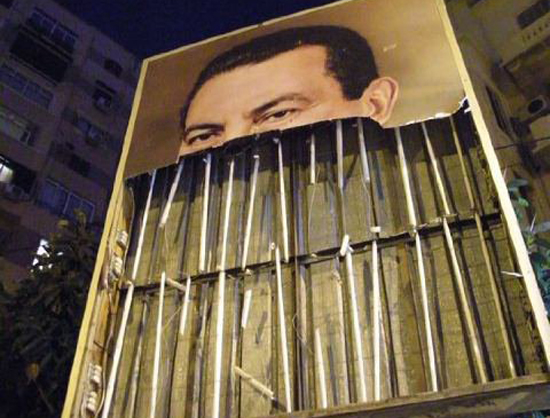
Watching Egyptian President Mubarak last night address his nation and the world brought the quote I used the other day in this blog from Wendell Phillips more clearly into focus.  He was defiant as a pharoah who believed his authority was the word of God and gave no hint of leaving office until every last card he had was played.  His taste for power was still strong.  It’s as though he has no sense of the reality of the situation and, as several analysts have pointed out, he has lived for 30 years in a world surrounded by sycophants who never point out shortcomings.  The idea that his absolute power is being challenged is a concept that hasn’t yet cracked his nut.

It’s been interesting watching this evolve over the last two weeks, to see how it has grown in scope to include a representative swath of the Egyptian people.  It is no longer a protest of students or the political opposition.  It is shopkeepers and cab drivers.  Lawyers and clerks.  Young and old.  The poor and not so poor.   It is Egypt.

I have been impressed by the bravery to come forward and maintain this protest against such an imbedded regime.  Also impressive is the love of their country that is expressed in their restraint as a mob.  They are steadfast yet don’t seem willing to destroy the country they are not fighting to take back.  There’s something noble in that.  I’m hoping Mubarak has that same type of respect for his land and his citizens and doesn’t try to destroy Egypt in his fight to stay in control.

I heard an interesting analogy from Congressman Gary Ackerman of NY yesterday.  He said Mubarak is like a neighbor you’ve lived next to for 30 years.  He keeps an eye on your house when you’re not around.  He’s always there to lend a hand.   He lets you park in front of his house and shovels your walk when the snow has fallen.  He’s a great neighbor.

  But he beats his kids.

And, no matter how great a neighbor, your allegiance has got to come down on the side of the kids.

It will be interesting to see how this plays out.  Revolutions, as a rule, don’t go backwards and the genie is out of the bottle now.  Let’s hope the will of the people is honored and a peaceful and quick transition is soon underway.

UPDATE: 8:00 AM.  Well, perhaps I hoped for a peaceful transition too soon.  The TV is now showing clashes between the crowd and pro-Mubarak forces, many on horseback.  It looks pretty ugly.  Obviously Mubarak loves his power more than the people of Egypt.

Read Full Post »

Revolution

Wendell Phillips Monument, Boston Commons

Revolution is the only thing, the only power, that ever worked out freedom for any people.  The powers that have ruled long and learned to love ruling, will never give up that prerogative until they must, til they see the certainty of overthrow and destruction
 if they do not.
 
—-Wendell Phillips


************************
I wanted to say a few words about the current political unrest spreading through the Middle East and these words from Wendell Phillips, the American abolitionist and advocate of Native Americans of the 19th century, came to mind.  These words seem to echo the root of the problem in Egypt  and in other areas where revolution is in the air.  Maybe in the US in times to come.
                                                                                                                .
            In Egypt and other countries, there has been an ever expanding chasm between the haves and have-nots, with the haves possessing all the political power,  bending it to serve their wills.  They control the government and shape the laws and policies in a way that only benefits them, usually at the expense of the have-nots.  Injustice and inequality become the norm and an aristocracy is formed to lord over a growing class of the poor and oppressed.  The government which always speaks of serving the people is now only serving a select few and an anger begins to simmer at the unfairness of the situation.  A tipping point begins to materialize and nears and is finally reached.  The streets fill with the angry populace.
                                                                                                                  .
      Maybe this is very, very much oversimplified but it is the spine of any revolution.  I worry for the US , not for what is happening in Egypt, but for what is happening here, with a government and judiciary more and more attuned to serving the interests of the wealthiest citizens at the expense of those less affluent citizens who need the protection of our government.  We have evolved into a corporate  aristocracy, even giving the benefits (without the responsibility) of citizenship to corporations in the Citizens United ruling from the Supreme Court.  The chasm between the haves and have-nots is nearing historic proportions and in a nation of over 300 million people that was formed from revolution, those in the have camp should take heed from what is happening in the Middle East.
                                                                                                             .
As Phillips also said: 
  Governments exist to protect the rights of minorities. The loved and the rich need no protection: they have many friends and few enemies.
 

Read Full Post »

« Newer Posts - Older Posts »