Feeds:
Posts
Comments

Archive for the ‘Photography’ Category

While writing yesterday’s post on Adolphe Valette, I came across a photo that stopped me in my tracks.  It was a photo by early British photographer Robert Howlett of a man in stovepipe hat and dress of the 1850’s  standing in front of an immense spool of chain comprised of links that were a couple of feet in length.  The man’s hands were jammed in his pockets and a cigar jutted from the corner of his mouth as he leaned in a jaunty manner against the chain.  This man had confidence. And rightfully so.

His name was Isambard Kingdom Brunel, a name that I was sure I hadn’t heard before because I would certainly have remembered it.  But my ignorance of the name couldn’t hide the achievements of the man.  Born in 1806, Brunel was a n engineer who designed and built some of the great structures and projects of his age.  He designed and built numerous bridges and tunnels, built and innovated  railroads and engineered some of the greatest ships of that era.  The photo above is of him in front of the launching chains for the ship The Great Eastern.   At first named Leviathan, The Great Eastern was  the biggest of its time, over 700′ in length and  with a capacity of over 4000 passengers.  Although a commercial failure as a passenger ship after its launch in 1860, it was used for laying trans-Atlantic cables and remained the largest sea-going vessel for over 40 years.  The great photo below, also by Robert Howlett, is a wide shot of the Great Eastern being built.

I think that both of these photos are remarkable images, perfect documents of the scale and power of the Industrial Age.  The cocky confidence of Brunel as he stands dwarfed by the great chains and the huge ship towering above the ant-like workers represent to me our ability to do great things.  Big things.  To see possibility and find solutions to the hurdles that stand between us and that possibility.  It’s a quality that I sometimes feel is lacking today for most of us.  We could all use a little of Isambard Kingdom Brunel’s vision and confidence.

Read Full Post »

Rhea

I am always stunned by the photos sent back to us from our robotic spacecraft as they explore our solar system.  The sheer beauty and magnitude of these images really puts our own world into a different perspective, one that is humbling to say the least.  The vastness of these shots makes our personal concerns seem small and insignificant yet, at the same time, inspiring.There’s also an elegance to them that is so appealing.

I can’t explain this fully so early in the morning.

This photo from a few years back is one of my favorites.  Take from NASA“s  Cassini-Huygens craft which is exploring around Saturn, this image is like a beautifully constructed abstract painting with cool colors and stark geometry.  Beautiful.  The image consists of one of  Saturn‘s moons, Rhea with the gray atmosphere of Saturn acting as a backdrop.  The image is taken in a way that looks directly at the very edge of the rings of Saturn which creates the black band that cuts across the image.  The result is just a beautiful image, one that I find myself just staring at for long moments at a time while I consider how we fit into this vast puzzle.


Read Full Post »

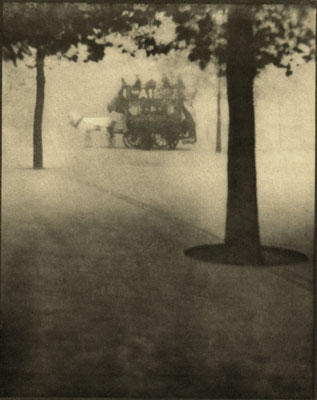
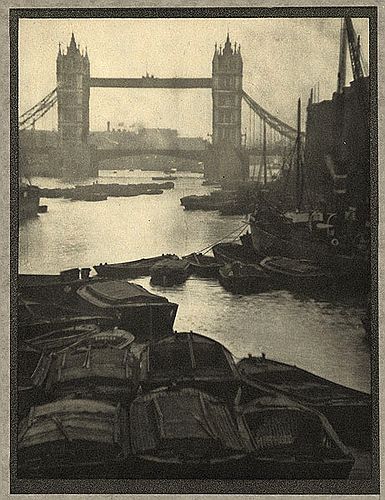
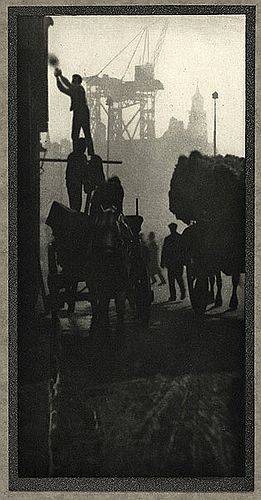
I came across a group of photos that caught my eye on Luminous Lint, one of my favorite sites to visit and one that I have mentioned here a number of times in the past.  They were by a photographer who I was not familiar with, not that is an unusual thing.  The name was Alvin Langdon Coburn and the photos were scenes of London from the turn of the  twentieth century.  They were quite beautiful and evocative, gray and misty in an artistic way that captured all the preconceptions one might have about London of that time.  The photo shown above, one of Hyde Park from 1905,  was the first one I saw and it immediately struck a chord with me.  I loved the composition with the way the trees jutted into the picture frame and how the ghostly carriage hovered in the background.

Coburn was an American from Boston who had a most impressive biography photographing the great men and places of his time  over the course of his life which ended in 1966 at the age of 84.  He eventually became a British citizen and lived  the last 54 years of his life in Britain.

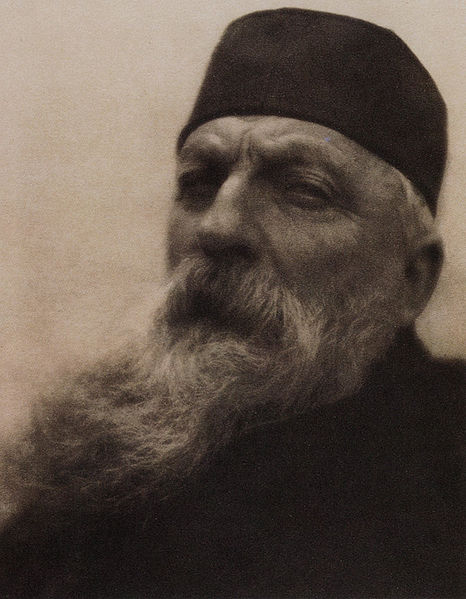
Here are some of my favorites from his London scenes  as well as a wonderful portrait of sculptor Auguste Rodin, best known, of course, for his  The Thinker sculpture .

Read Full Post »

I wrote  here last year about my admiration for the photography of Robert and Shana ParkeHarrison contained in their beautiful book,  The Architect’s Brother.  They are spectacular and moody allegorical images that really captivate the imagination.  What I particularly liked is that they are true photographs– no computer manipulation.  Everything you see is really in their viewfinder.  They create their visions as an old  film producer might have, with elaborate sets  consisting of detailed painted backdrops and theatrical props.  I think that staying away from computer generated effects gives their work a fuller sense of reality and possibility.  Maybe it’s that sense of rightness I often mention on this blog.

Whatever the case, it’s powerful work.  Here’s a neat video I came across that features a very wide cross-section of  the ParkeHarrisons’ work, including works in full color rather than the sepia tones that mark that work in The Architect’s Brother.  These striking images are set to music from Canadian indie band, The Bresnard Lakes.


Read Full Post »

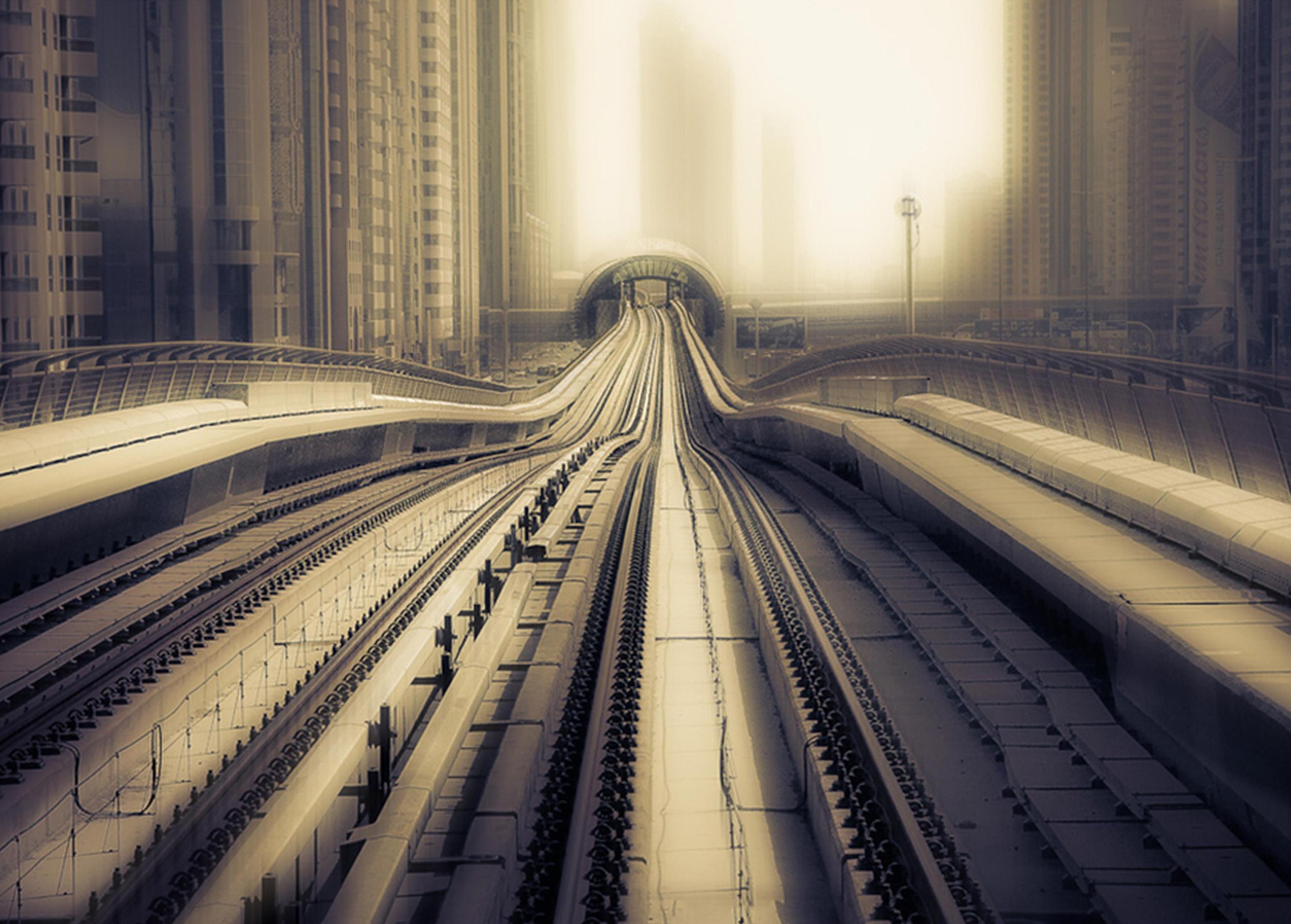
I wasn’t going to post anything today but there was this photo on a site  to which I subscribe, PhotoBotos.com, from photographer Nima Moghim.  It was of the tracks of the metro line in Dubai.  It is  an image of converging lines and stark tones that is at once both wonderful and terrifying.  It has a feeling that is devoid of anything natural besides the beautiful curve of the lines as they race towards each other in the distance.

Moghim’s own description of the photo only enhances the dark, dystopian nature of the image:

I took this photo in Dubai metro in late spring of this year. When I am on the metro train and pass all of these modern life indices which have been arranged like the children logo in this new city, I asked myself where the end of this luxurious life is and whether we don’t get closer to the Apocalypse with progress. The following sentences are my statement to the “Apocalypse now “and my declaration for this photo: 

“Apocalypse now….the words which hear frequency at these days and we almost fear. But who takes us toward the Apocalypse ? Who melts the Antarctic ices? Who makes a frightful weapon such as HAARP instead of music? Who throws bomb on his head? Who pours oil in the dark depth of ground in the clear waters? Who leaves his kin at the bottom of well for gaining power? Who prepare the blood baths for the naïve people on the pretext of freedom? Who focus the best trade in the world on the weapon? Who ridicules his fellow citizen on the pretext of inspection? And who transgresses all ethical virtues on the pretext of modernization? All people on the modernity express train are directed to a great explosion and we don’t know where the end is, 2012 or the next thousands of years? God is very patient …..”

Sorry for such an unsettling photo on a Sumday morning in the summer but it was too intriguing to not pass along.  Awful beauty…

PS– The HAARP mentioned in his declaration stands for High Frequency Active Auroral Research Program, which is a US Military research project that deals with the ionosphere and has been called the Moby Dick of conspiracy theorists who claim it is responsible for all sorts of recent natural disasters.  It was new to me but you can read a bit by clicking the link above.

Read Full Post »

I know that I just had a post on vintage photos the other day  and I don’t usually like to have similar posts too close to one another but I found these photos too interesting to not mention here.   They are called Hidden Mother photos and come from the Victorian era of studio photography.  They are photos of small children taken with their mother holding them while she is under a drape of some sort.  The photo is then matted with a window that crops out the mother so that the drape appears as a backdrop for the child.  In present times,  these  photos, now without their mats to expose the whole photo, have become very collectible.  What was intended to be a sweet image of a toddler now has a ghostly figure cradling a child, giving it a strange and slightly creepy feel that appeals to collectors.  Some are a little creepier than others.  Just found these interesting…

Read Full Post »

Last week I had a post that featured a photo of a French boy with cigarette and rooster that I found interesting.  It was from Luminous Lint, one of my favorite sites that features great and historic photography.  But I also love looking at some other photo sites that feature vernacular photography.  Everyday stuff.  Posing around the Christmas tree or day at the beach family photos that  often have an unusual quality that I’m sure  that the people who originally took the photos never expected or even noticed.  Probably the latter since most of these sites pick up most of their photos from flea markets.  Not all of the photos have any artistry at all but there is often humor, humanity or have an air of mystery around them that conjures up all sorts of possible stories about them in one’s mind.

One such site is The Boat Lullabies which is ran by the person behind Square America, a downed site that was amazing and one that I documented here several times over the years.   Then there is Accidental Mysteries from the collection of John and Teenuh  Foster which features found photos that really do have a mysterious quality about them.  Time Tales is a  neat Dutch site that features photos from around the world that are categorized into time frames.  And there’s Big Happy Funhouse  which offers found photos and free pie and GargantuaPhotos which has vintage photos for sale, including the photo below of Rivets, the terrier whose photo lists him as being the mascot of the USS Nitro in 1945.


These are all great sites where you could spend way too much time so be careful.  But do give them a minute to at least let your mind take in some of the imagery and let your imagination off of its leash for a bit.  I guarantee you will find at least one thing that will make you smile or at least feel as though you might somehow know these people or have worn that same goofy Halloween costume.

Have a great day…

Read Full Post »

I check one of my favorite sites, Luminous Lint, periodically to see what is new .  It’s a treasure trove of great and historical photography and there is always something interesting in the new images that are seemingly added daily.

The photo shown here immediately caught my eye and made me chuckle.  It’s titled Portrait of Henri Groulx and a Rooster and is from a Parisian photo studio from around 1920.  In these all so politically correct times, it’s kind of refreshing to see this French kid with his cigarette dangling.  That world-weary look on his face and the confidence  of his stance as he sits with legs crossed say that he’s six years old and he’s seen it all.  Probably waiting for the next cockfight with his superchicken.

Another interesting photo is this one from 1847 taken by Boston area photographers Southworth and Hawes.  It documents an operation at Massachusetts General that features one of the earliest uses of ether as an anesthetic.  I’m not sure if the man credited with introducing ether as an anesthetic, William T.G. Morton, is in this photo but he was known to have demonstrated ether in this use in the Boston area at that time.  I just find this photo a remarkable historical image which makes me really appreciate modern medicine, especially modern anesthesia.

With that in mind, I must get to work.  My health insurance won’t pay for itself…

Read Full Post »

I thought I had mentioned the work of photographer Paul Strand here before but can’t seem to locate it.   Strand lived from 1890 until 1976 and was part of the Modernist era of the early 2oth century, using his camera to capture the urban landscape’s abstracted forms in a way that no photographer had to that time.  The image shown here, Wall Street, is perhaps one of his most famous.

His portraiture is also quite striking.  Doing a Google image search, the page is immediately filled with multiple fairly closely cropped images of  faces in black and white.  They’re shot in a way that might make you think it would be difficult to discern any particular photographer’s eye but seeing them altogether shows clearly how he saw his subjects and show the continuity in his work.  Strand was a student of the great Lewis Hine and carried on Hine’s use of the camera as a tool for social reform.  His photos of the inhabitants of the city streets are powerful and gritty.

One of his projects was a film, Manhatta,  with the great Modernist painter/photographer Charles Sheeler, another of my favorites.  It is a really interesting view of the bustling, swelling city from 1921 taken from Strand’s and Sheeler’s unique perspectives.  Just great imagery.

Read Full Post »

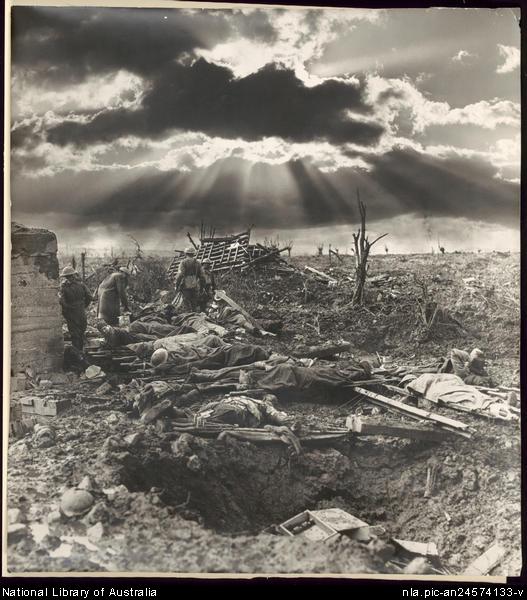
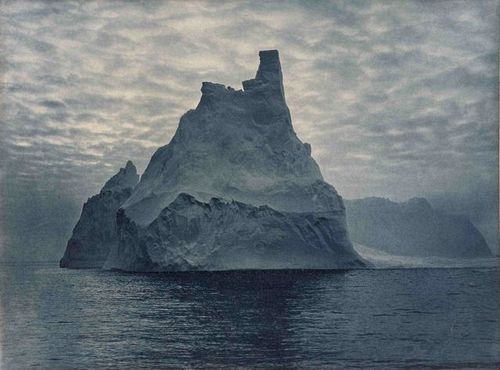
I came across a photo recently and it really pulled me in immediately with an almost mystical appeal.  It’s an image of an iceberg taken under a midnight sun by during one of the great Antarctic expeditions of  the early part of the 20th century.  The photographer was Frank Hurley and doing a quick search revealed an amazing life of a man from Australia who documented with his camera some of the most storied explorations into Antarctica and both World Wars.  This being Memorial Day, I thought I’d share a couple of his WW I photos that mix artistry and the  hard reality of the battlefield.

The photo above shows the newest forms of warfare at the time, the biplanes,  swooping over soldiers coming out of the trenches.  I can only imagine the  element of terror that the plane hovering menacingly above must have added to the reeling minds of those soldiers trapped in that deadly cacaphony.

The second shows the battlefield under an icredible sky with light filtering from behind a dark cloud, casting an eerie radiance down on the trenches and bodies that gives it an end-of-the -world feel, which for many of the combatants, it was just that.  It makes me appreciate how easy and soft my own life is, how I have been spared the horrors of war.  It puts context behind the imagery of the rows of flags fluttering in blue skies that we often associate with Memorial Day and makes the words Lest We Forget have reall meaning.

Have a great holiday and try to remember what is behind the celebration.  If only for a moment, try to give it a bit of the reverence for which it stands.

Here is the photo of the iceberg [ further inspection reveals that it is not an iceberg but  land] that brought me to Mr. Hurley’s work.  It was taken during the Mawson Expedition which is the subject of a great book, Mawson’s Will, that tells an incredible story of survival of explorers trapped for two winters in the harshness of Antarctica.   I read it many years ago and highly recommend it.

Read Full Post »

« Newer Posts - Older Posts »