Feeds:
Posts
Comments
PG GCMyers-- Comforter sm

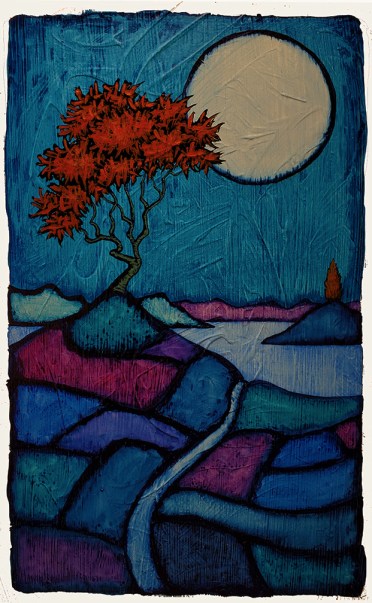
Comforter“- At the Principle Gallery


There are so many bad things taking place in this world where you see people fleeing for their lives with sometimes minutes to decide what things they can grab and take with them. You see it with the Afghan refugees who are most likely forever leaving their homeland to the folks now evacuating before the incoming hurricane down in Louisiana and Mississippi or those who flee the wildfires out in the west. They run fearing the worst but still having hope that they might soon return to find little or no damage. My nephew and his family recently experienced such a thing with the wildfires out in California. They were spared by winds that were favorable to their location but their neighbors in the opposite direction were not so fortunate.

These scenes make me wonder what I would grab if I only had moments to choose what mattered to me. Paperwork, I guess. You know, stuff I might need to prove who I am or what I possessed before whatever I am fleeing came to bear. Perhaps some photos. A change of clothes. Our pets, of course.

But beyond that, I don’t know. I look around here in the studio and there is a wide variety of paintings, artwork, books and other things that mean a lot to me.

But would losing them or losing my home destroy me?

I doubt it. I want to say no but until something like that happens to you you can’t be absolutely sure of your reaction in the moment.

But I have been at the end of my rope before and know how quickly one can adapt to the circumstances at hand. You learn to savor simpler things and experiences that are often overlooked when things are going well. There’s even a sense of freedom that comes in such moments because you don’t feel encumbered by your responsibility to those things that you watched over and maintained before.

I’m not saying it would be a good situation. It would be awful to have to go through something like that, to be forced out of your home and your way of living by events that out of your control. No, I am saying that if it were to happen, that while it would no doubt be a struggle to move on, the fact that I knew I could persevere as I am would be enough to sustain the effort.

Like the song from Hair says: I got life.

And that, in itself, is reassuring.

So, with all hope for and best wishes going out to those before the storms or fires or to those who flee the violence and death of their homeland, here’s this week’s Sunday morning music. It’s Nina Simone‘s performance of her memorable mashup of two songs from Hair Ain’t Got No and I Got Life.

Powerful stuff and something to bear in mind if ever you have to run from oncoming disaster. Let’s hope that we don’t ever have to do such a thing.


9919197 Faces From the Wood sm

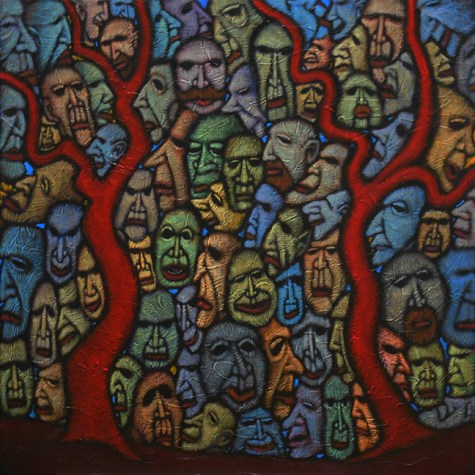
Faces From the Wood“- At the West End Gallery


I wish I loved the Human Race;
I wish I loved its silly face;
I wish I liked the way it walks;
I wish I liked the way it talks;
And when I’m introduced to one,
I wish I thought “What Jolly Fun!

― Sir Walter Alexander Raleigh


On a morning when I am feeling more than a bit misanthropic, I thought I’d express it in the lightest manner I could muster. I guess the verse above from English poet Sir Walter Alexander Raleigh (1861-1922) might do the trick.

I don’t know much about this particular Raleigh and, feeling as I do this morning, don’t really care. Don’t know if he was descended from the more famous Walter Raleigh, the one I best knew from seeing his face on my one aunt’s cigarette packs as a kid. I would imagine so but what does it really matter?

For those of you more interested, this particular Walter Raleigh was a professor of literature at Oxford and that bit of light verse was titled Wishes of an Elderly Man, Wished at a Garden Party, June 1914.

It might be titled Wishes of a Near Elderly Man, Wished in an Art Studio, August 2021.

I thought of going with a different piece of verse this morning, like this short bit from Ape and Essence, the lesser known dystopian novel from Aldous Huxley:

The leech’s kiss, the squid’s embrace,
The prurient ape’s defiling touch:
And do you like the human race?
No, not much.

Or I guess I could have went with this simple quote from the great German painter Caspar David Friedrich (1774-1840):

You call me a misanthrope because I avoid society. You err; I love society. Yet in order not to hate people, I must avoid their company.

It’s not verse but maybe it gets closer to the bone. Perhaps even closer is this passage from Sinclair Lewis, as laid out it in his It Can’t Happen Here:

… he loved the people just as much as he feared and detested persons…

That might best describe my misanthropic urge this morning. And every other morning.

I like and love people individually but on the whole very much dislike persons in the collective sense.

I am not talking about you guys. No, you’re okay.

Really.

I hope you will excuse my curmudgeonly behavior this morning. Now get out of here.

And stay off my lawn…

Everything Ends

GC Myers- Compilation WE Show 2021

Through the Trees” at the West End Gallery Ends Today


Let me give my love to you
Let me take your hand
And as we walk in the dimming light
Oh darling understand
That everything, everything ends…
Meet Me on the Equinox, Death Cab For Cutie


This edition of my annual solo exhibit at the West End Gallery, this year titled Through the Trees, comes down at the end of business today. I offer many thanks to those of you who were able to visit the gallery to take in the show and much gratitude to those who gave new homes to so many of the paintings in this show.

I don’t know the exact number but I have done somewhere in the area of sixty of these solo shows around the country over the past twenty-some years. Without exception, from the most highly successful show to the least, there is always that same mix of satisfaction and sadness at the end of each of them. 

I always find myself at this point, grateful for simply having the experience and a little wonderstruck that anyone attends at all, let alone purchases my paintings. The idea that someone finds something worthy in something I do never fails to amaze me, even after all the years and the many shows.

I still often pinch myself at my good fortune just to make sure it’s not one of those wonderful dreams that sometimes visit us in our sleep. The ones that feel too good to be true, that leave you feeling disappointed when you wake up and your world is as it was before you closed your eyes.

And I guess that’s where the sadness comes into the picture as each show ends. Even when I feel as though I have done as much as I could with the work in a show and even when it has exceeded all expectations for myself and the gallery involved, it’s difficult to let go of a wonderful dream and get back to the reality of the moment.

But as the songs, everything ends.

And I know how to do it now. I’m an old hand at it and have the scars and calluses to prove it.

So, again, many, many thanks to all, especially to Jesse and Linda Gardner at the West End Gallery, for allowing me to have another wonderful dream. I cannot be more grateful.

Here’s that song I mentioned. It’s Meet Me On the Equinox from Death Cab For Cutie.


Get Off of My Cloud

stones


Rest in peace, Charlie.

Charlie Watts died yesterday at the age of of 80. He was the rock-solid base, the drummer and the keeper of all rhythms for the Rolling Stones for nearly 60 years. He didn’t have the aggressive flash of Keith Moon from The Who or the goofy affability of Ringo, the other drummers in the holy trinity of British Invasion bands. He was just a stoic, understated presence that provided, along with bassist Bill Wyman, the foundation that lifted so many great Stones songs to greatness.

Growing up in the 1960’s, I knew his work, his sound, long before I knew his name. Some of his work became hard-wired in the brains of many listeners. I know it did for me. The Stones songs that I count among my favorites invariably feature his strong rhythms out in front. Upon hearing of his death, I immediately thought of his work on many of the  band’s early hits, most notably Paint It Black and Get Off of My Cloud.

The latter has been carving a wormhole in my brain since I first heard it all those many years ago. Maybe it was the idea of just telling people to back off, leave me alone and let me do my own thing that made it stick so in my mind.

That’s a powerful thing when you’re a kid.

It’s that same attitude that probably drove me to become an artist. And as I age, I find it’s the same attitude I take concerning most other things– just leave me alone. It’s a song of youth but maybe they should have done a version for old guys that substitutes the word lawn for cloud.

Hey. You. Get off of my lawn!

I don’t know about that but I do know that my brain kicks into high gear when I hear that beat-beat-fill-beat-beat lead in from Charlie Watts’ drum set on this song. Like I said, it’s hardwired at this point and whatever chemical reaction that takes place is firing down those lines instantly when those first beats come out at me.

Thanks for that, Charlie, and for a lot of other great work. It gets me through a lot of hard days.

I am playing the old mono track because it seems to push the drums further out front than the later remastered versions. Plus it reminds me of listening to this and other great songs of that era on a 45RPM single that looked just like the one at the top or hearing it from the speaker of an old Chevy as my dad drove into town.

Give a listen.

Then get off of my lawn.

And off of my cloud.


GC Myers- Elbow Room sm

Elbow Room“- Currently at the West End Gallery


Alone he trod the shadowed trails;
But he was lord of a thousand vales
As he roved Kentucky, far and near,
Hunting the buffalo, elk, and deer.
What joy to see, what joy to win
So fair a land for his kith and kin,
Of streams unstained and woods unhewn!
” Elbow room! ” laughed Daniel Boone.

–Arthur Guiterman, Daniel Boone


“Elbow room!” cried Daniel Boone. 

This phrase always comes to my mind whenever the name of Daniel Boone or the phrase elbow room comes up.

This doesn’t come about often but it happens.

I think I must have read or heard the poem from Arthur Guiterman, whose verse is shown above, as kid. Guiterman (1871-1943) was an American poet who wrote mainly humorous verse that often dealt with those things that are lost in the rush of modern progress.

Things like elbow room.

For example, here’s his On the Vanity of Earthly Greatness:

The tusks that clashed in mighty brawls
Of mastodons, are billiard balls.

The sword of Charlemagne the Just
Is ferric oxide, known as rust.

The grizzly bear whose potent hug
Was feared by all, is now a rug.

Great Caesar’s bust is on my shelf,
And I don’t feel so well myself.

I think knowing the Daniel Boone poem from an early age ingrained the idea of elbow room in me, that desire for wide open spaces or forests free from the encroachment of people. It certainly shows up in my work, even in the title of piece at the top. I know when I was considering a title for this painting after it was completed, that line “Elbow room!” cried Daniel Boone immediately entered my thoughts.

I don’t want to get into the reality or the myth of Daniel Boone this morning. I don’t know or care if he killed a b’ar (that’s bear, for those of you who didn’t know the old TV series and song) when he was just three though I kind of think that this particular claim might be bordering on myth. I just bring him up for his place in this poem and the idea of elbow room.

He and I share an affinity for that.

I will end with the last lines of the final verse of Guiterman’s poem on the man. In the afterlife, this poem has him frolicking among the heavens in what feels like a weird sci-fi scenario, one that made me laugh out loud when I read this poem again for the first time in probably 50 years:

He makes his camp on heights untrod,
The steps of the shrine, alone with God.
Through the woods of the vast, on the plains of space
He hunts the pride of the mammoth race
And the dinosaur of the triple horn,
The manticore and the unicorn,
As once by the broad Missouri’s flow
He followed the elk and the buffalo.
East of the sun and west of the moon,
” Elbow room! ” laughs Daniel Boone.

Old Dan Boone out hunting unicorn on the plains of outer space.

Strange and a little politically incorrect? Yeah. But that’s what you get when you mix together myth, reality and a little elbow room.

” Elbow room! ” laughs Daniel Boone.

End of the Line

"Harmonium" - GC Myers 2021

Harmonium” – At the West End Gallery Final Week!!


Well, it’s alright, even if you’re old and grey
Well, it’s alright, you still got something to say
Well, it’s alright, remember to live and let live
Well, it’s alright, the best you can do is forgive

–End of the Line, The Traveling Wilburys


It’s the last few days of my show at the West End Gallery. The works included in this year’s show, Through the Trees, comes off the walls after this coming Thursday, August 26.

The end of any show generally carries a little sadness or wistfulness. It’s always a time to look back at the show, to put it all in some sort of perspective.

To see what sold. And what did not.

To get an idea of how people reacted to certain pieces. Or did not.

To determine if I would have changed anything about the work in that particular show and to begin to chart a course for my new work.

Sometimes the answers and conclusions I draw from this retrospection are clearly defined and leads me directly into the next phase of my work, seamlessly.

Other times, it’s not so clear cut. There might be no obvious conclusions. These instances are the more confusing and frustrating periods for me where I find myself looking for some push from the past, some given direction to follow. But there is none offered or recognized.

In a way, these times without direction are the most exciting even though they often put me on edge and fill me with frustration. I guess it’s because they are filled with unknown quantities, discoveries, and potentials. And that is where the breakthroughs, those sometimes elusive fresh paths of creativity, lie.

I am still in the measurement phase with this show. There are things I want to carry forward and some small things I might have changed or added. I was pleased with the reactions to some works and slightly disappointed by the reactions to some pieces who I felt deserved more attention.

I don’t really mean disappointed because in every show there are works that, going in, I feel will be among the first that find new homes. The painting at the top of the page, Harmonium, is such a piece.

It has become an accepted fact for me that these pieces inevitably are among the last to leave the galleries. It didn’t use to be that way. Early in my career, I could tell instantly that a new piece would be swooped up quickly once it hit the galleries. But as time went on, I lost that capacity and the works I often felt most strongly about were slow to find homes.

I think this came about because my criteria for judging my own work has evolved and changed over time, perhaps becomes bit narrower and esoteric. In the beginning, my perspective was no doubt closer to the typical viewer than it is now. I was new in my career and was really only doing what I did because it was work I wanted to see and was not finding elsewhere. Everything was fresh and new.

Time has added many changes and evolutions, some dramatic and some less perceptible and more nuanced.

Okay. The point is that there are things to be considered and absorbed at the of a show. I am in that process now and so far, so good– for the end of the line.

That was a lot of work to get to this song. Here’s a song, End of the Line, from the Traveling Wilburys Bob Dylan, George Harrison, Roy Orbison, Tom Petty and Jeff Lynne. I often forget how much I enjoy this song until I hear it again. See if that’s the case for you with this slightly extended version.


Fujiyama


Hokusai- Fujiyama 1


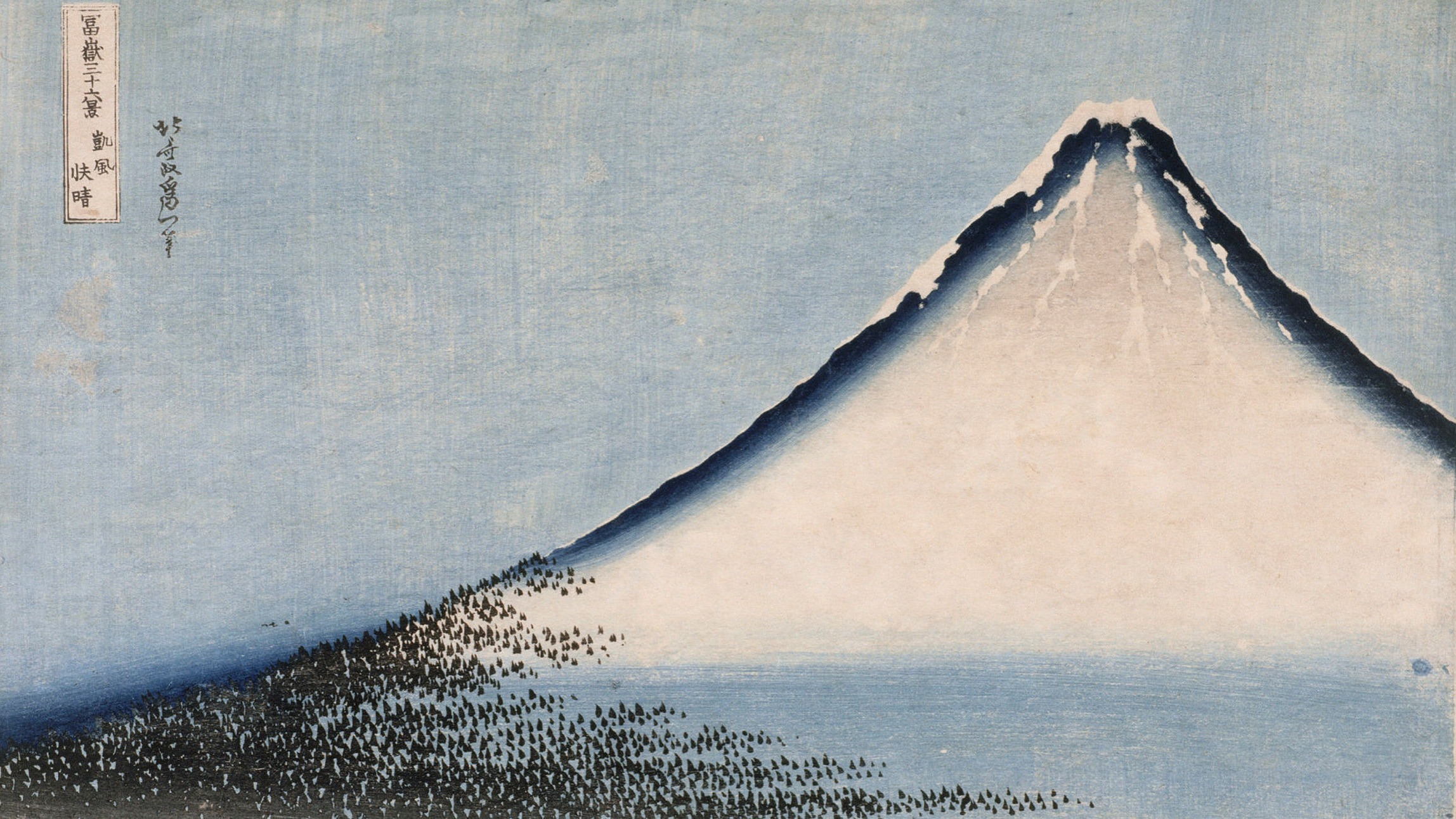
Aspire to be like Mt. Fuji, with such a broad and solid foundation that the strongest earthquake cannot move you, and so tall that the greatest enterprises of common men seem insignificant from your lofty perspective. With your mind as high as Mt Fuji you can see all things clearly. And you can see all the forces that shape events; not just the things happening near to you.

― Miyamoto Musashi


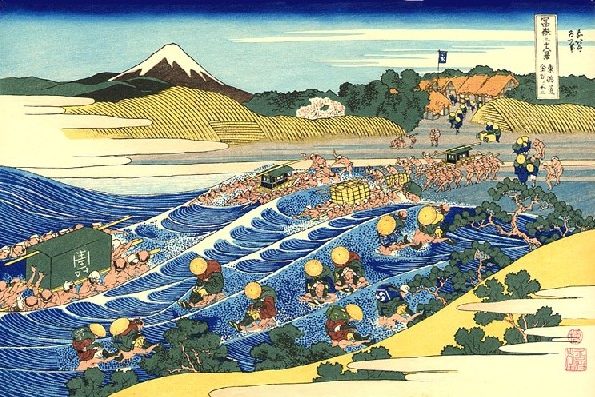
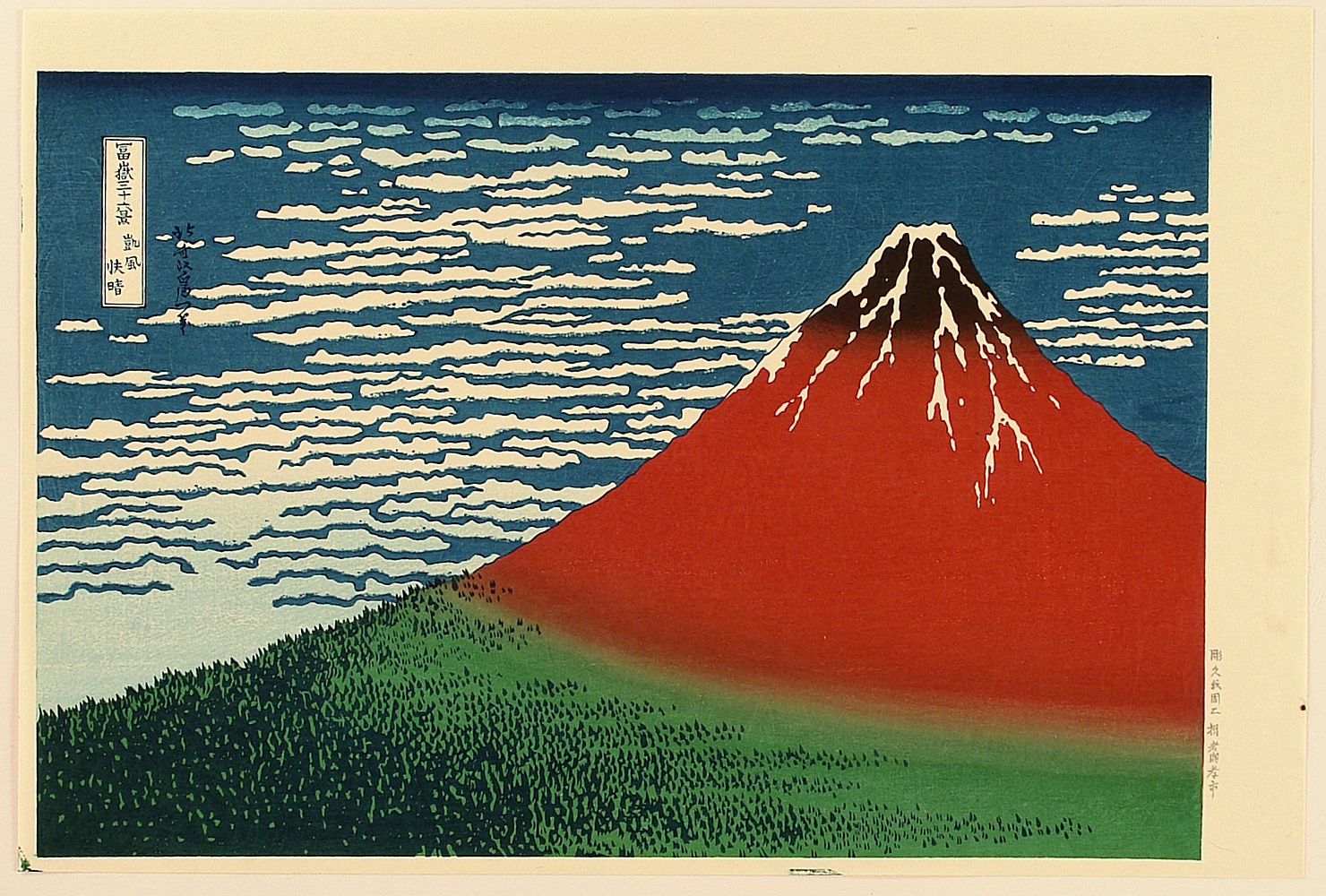
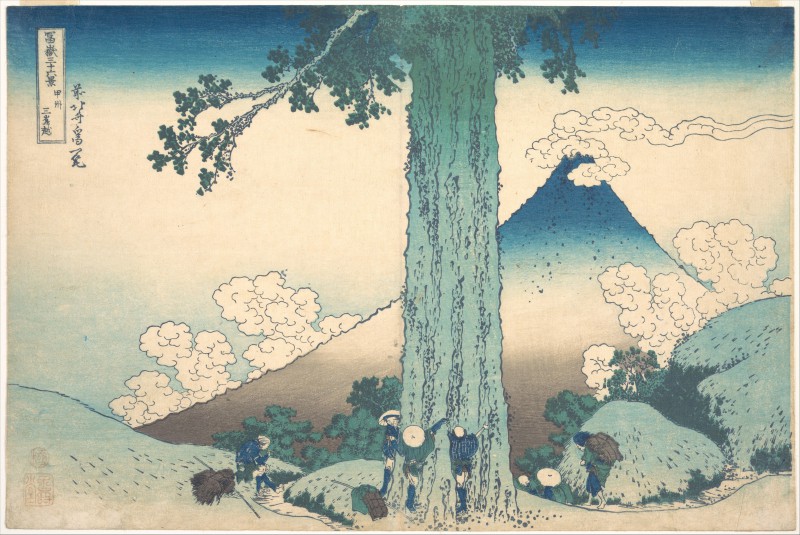
Want to be quiet this Sunday morning. Enough noise and chaos in the world without me kicking in my two cents. What better way to quench that desire than a little art from Hokusai and his Thirty-Six Views of Mount Fuji. Doesn’t get much better than that.

By the way, the passage above is from Miyamoto Musashi who was a Japanese swordsman/writer/artist of the early 17th century. He had 61 sword duels– his first at age 13– in his life and prevailed in all. Pretty interesting figure. 

To continue the Fuji theme, let’s hear Fujiyama from Dave Brubeck for this week’s Sunday morning musical selection. The accompanying video is a slideshow of Hokusai’s Fuji prints. Good stuff as always from Mr. Brubeck and his ensemble.

Myself, I am just going stay quiet and try to follow the advice from Musashi to be more like Mt. Fuji.


Hokusai- Fujiyama 2Hokusai- Fujiyama 3Hokusai- Fujiyama 4Hokusai- Fujiyama 5Hokusai- Fujiyama 6


A Mirror or Window?

GC Myers-Mirrors and Windows For I do not exist: there exist but the thousands of mirrors that reflect me. With every acquaintance I make, the population of phantoms resembling me increases. Somewhere they live, somewhere they multiply. I alone do not exist.

― Vladimir Nabokov, The Eye


The painting shown here, Mirrors and Windows, hangs here in the studio and I pass it several times a day–it’s on the way to the bathroom. But even though it’s been in this spot for several years now, it usually draws my attention. It’s been that way since it was painted back in 2013.

As I wrote back then:

I found myself looking at this piece quite often in the studio, trying to ascertain what it was that was pulling me in. As I looked, I began to be more aware of the road running through which signified to me our life’s journey. We spend our lives looking in mirrors and out windows, living in reflections of ourselves and the outer world.

There must be some perfect balance in this. Somewhere, somehow, we hopefully reach a point where we know who and what we are and turn away from mirrors and begin to look for windows in which we can expand our vision of the outer world and gain greater wisdom.

Years later and it has carried the meaning well that I gleaned from it back then, that real art serves as both a window and a mirror, giving the viewer insights and views into the world and reflecting their place within it.

Just this morning, I stood in front of it and wondered if was looking at it as a mirror or a window.

I came to the conclusion that it might be both.

close_chuck_2Chuck Close died yesterday at the age of 81. His work made an interesting evolution from large scale photorealist portraits to portraits formed from pixel-like blocks that contained abstract forms. Though my own work doesn’t outwardly reflect it, I always found his work engaging and found motivation for myself in it. He also made an interesting statement concerning work and inspiration that I have shared here before. It’s worth revisiting:

chuck-close-phillip-glassI’ve been a fan of the work of Chuck Close for some time, admiring the grand scale that much of his work assumes as well as his evolution as an artist, especially given his challenges after a spinal artery collapse left him paralyzed from the neck down in 1988. He regained slight use of his arms and continued to paint, creating work through this time that rates among his best.

He also suffers from prosopagnosia which is face blindness, meaning that he cannot recognize faces.  He has stated that this is perhaps the main  reason he has continued his explorations in portraiture for his entire career. The piece shown here is a portrait of composer Phillip Glass that was made using only Close’s fingerprints, a technique which presaged his incorporation of his own unique form of pixelation into his painting process.

His determination to overcome, to keep at it, is a big attraction for me and should be an object lesson for most young artists (and non-artists, also) who keep putting off projects until all the conditions are perfect and all the stars align. Waiting for the muse of inspiration to take them by the hand and lead them forward. Sometimes you have to meet the muse halfway and Close has this advice for those who hesitate:

The advice I like to give young artists, or really anybody who’ll listen to me, is not to wait around for inspiration. Inspiration is for amateurs; the rest of us just show up and get to work. If you wait around for the clouds to part and a bolt of lightning to strike you in the brain, you are not going to make an awful lot of work. All the best ideas come out of the process; they come out of the… work itself. Things occur to you. If you’re sitting around trying to dream up a great art idea, you can sit there a long time before anything happens. But if you just get to work, something will occur to you and something else will occur to you and something else that you reject will push you in another direction. Inspiration is absolutely unnecessary and somehow deceptive. You feel like you need this great idea before you can get down to work, and I find that’s almost never the case.

Amen to that.

I’ve stumbled around for some time trying to say this but never could say it as plainly and directly as Close has managed.

A lot of would-be artists believe they have to wait for inspiration before they begin. That can be a long wait.

To begin with, it’s a rare event when and if it does come around. There’s no guarantee that it will ever come.

It has to be invited and generally the only invitation it responds to is hard work.

Work invites inspiration.

Work creates inspiration.

Thanks, Chuck. I think I’ll take your advice and get to work.

chuck close at work

Can’t Let Go

GC Myers- Show's Over, Folks

Show’s Over, Folks“- At the Principle Gallery, Alexandria, VA


The patient cannot remember the whole of what is repressed in him, and what he cannot remember may be precisely the essential part of it.. He is obliged to repeat the repressed material as a contemporary experience instead of remembering it as something in the past.

― Sigmund Freud, Beyond the Pleasure Principle


I am sharing what might seem like an odd triad this morning– a passage from Sigmund Freud on compulsion, a Red Chair painting of the aftermath of what looks to be a wild party and a song, Can’t Let Go, from the odd and wonderful pairing of Alison Krauss and Robert Plant.

I think there’s a connection in there somewhere. Just can’t be sure if anyone else will see it.

A compulsion to repeat ourselves is an underlying theme in my work. I sometimes think I know there is something more in these familiar forms and colors and lines and icons –the omnipresent Red Tree, for example– than meets the eye and that if I keep delving into them, they will at some point reveal their secrets to me.

Some tidbit of wisdom, an iota of truth, that will make it all make sense.

That must be close to a definition of compulsion. Probably much in the same way that we– both individually and collectively– seem to constantly repeat ourselves, making the same missteps and covering the same ground as though we have some sort of short term memory dysfunction that prohibits us from seeing the patterns we have followed all along, that keeps us from learning from our mistakes.

I am hoping there is some constructive effect in my own compulsion. I would hate to think that the decades of work that have came with it are a matter of me making the same mistake over and over again.

Maybe I should stop contemplating my navel this morning and get to work. Who knows? Maybe today will be the day I figure it all out, the day that bit of long sought wisdom is finally revealed.

Or not. Doesn’t matter. My compulsion would most likely blind me to it and keep me at it even if I find it now.

In the meantime, enjoy Alison Krauss and Robert Plant‘s version of Can’t Let Go, from a soon to be released album. It’s a song famously covered by Lucinda Williams on her great 1998 album, Car Wheels on a Gravel Road.

Good stuff.