Feeds:
Posts
Comments

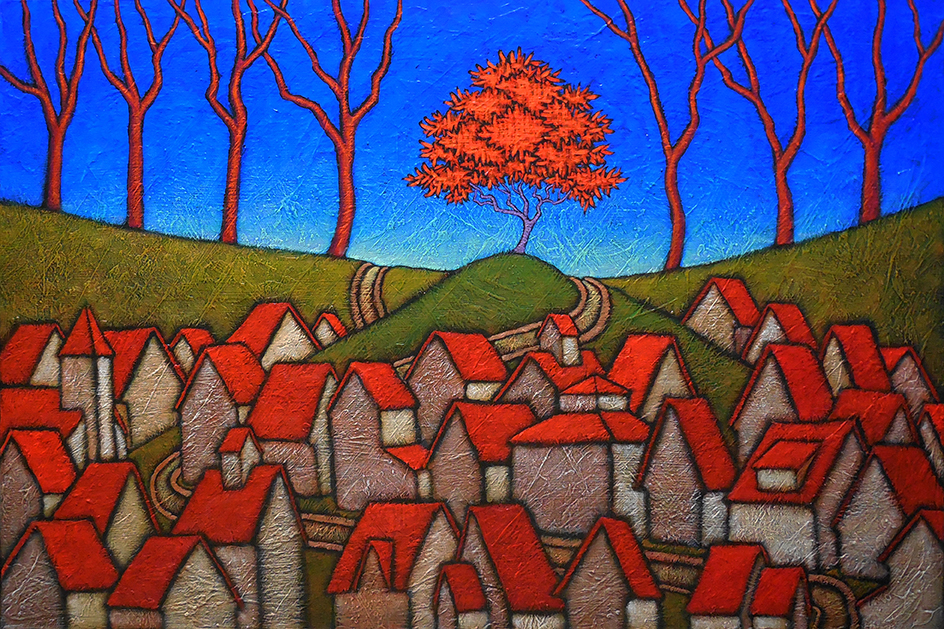
Height of Achievement


Height of Achievement– At West End Gallery


“All who are not lunatics are agreed about certain things. That it is better to be alive than dead, better to be adequately fed than starved, better to be free than a slave. Many people desire those things only for themselves and their friends; they are quite content that their enemies should suffer. These people can only be refuted by science: Humankind has become so much one family that we cannot ensure our own prosperity except by ensuring that of everyone else. If you wish to be happy yourself, you must resign yourself to seeing others also happy.”

— Bertrand Russell, The Science to Save Us from Science, NY Times (19 March 1950)


The final sentence above from Bertrand Russell from 75 years ago seems almost quaint in the selfish and cynical times in which we find ourselves. The idea of making others happy as a measure of our success or our satisfaction with our lives is not particularly popular these days.

It raises many questions for me.

How does anyone define success? Or happiness?

Can anyone be successful and happy while denying the same to others? 

That would be the old climb-to-the-top-and pull-up-the-ladder-behind-you trick that’s so popular these days. We have sadly come to believe that our own success and happiness is somehow diminished or devalued by the success and happiness of others. Many see it as some sort of reality show competition and not only pull the ladder up behind them but roll boulders down at those attempting to climb a bit higher.

This all came from thinking about what I was seeing in this new small painting, Height of Achievement, that is part of the Little Gems show now hanging at the West End Gallery. I see it as being about defining your success and happiness on your own terms, about claiming your own small pinnacle and laying a path that gives others the opportunity to climb as well. I see the Red Tree here as not a ruler over a domain but as an explorer or guide showing the way.

I also saw a slightly different interpretation, one where the Red Tree has climbed to the top, achieving the success it sought, and found it a lonely place. And happiness was in short supply, as well, since it was forever preoccupied about keeping its place up there. It never was able to enjoy the view or share it with others.

I guess both translations say much the same– strive for yourself but for others, as well.

That works for me this morning.

Here’s a song that is well-worn, both in airplay and on multiple film soundtracks, for good reason. Just a great song. This is the 1967 hit, Ain’t No Mountain High Enough, written by Ashford & Simpson and performed by Marvin Gaye and Tammi Terrell, who both died tragically young. Diana Ross did a great version of the song as well in 1970 but I thought I’d go with this one.


Twilight Time


Twilight Time–AT West End Gallery

And even if you were in some prison the walls of which let none of the sounds of the world come to your senses—would you not then still have your childhood, that precious, kingly possession, that treasure-house of memories? Turn your attention thither. Try to raise the submerged sensations of that ample past; your personality will grow more firm, your solitude will expand and become a place where you can live in the twilight, where the noise of other people passes, far in the distance.

–Rainer Maria Rilke, Letters to a Young Poet


Little time this morning as I have some maintenance issues around here that demand immediate attention. Before I get to those issues, I thought I would share a triad of image, word, and song to serve as a reminder that the annual Little Gems exhibit of small works is now hanging at the West End Gallery and that the opening reception takes place this Friday, February 7, from 5-7 PM.

Above is a new painting, Twilight Time, 6″ by 12″ on canvas, that is included in the show. The words at the top are from the always relevant Letters to a Young Poet from Rainer Maria Rilke.  This passage is from a letter where he was instructing a struggling young poet to stop trying to satisfy the critics or publishers and focus on creating an inner world where his work can grow and prosper.  It then takes on its own life based on the poet’s unique self, instead of an imagined criteria set by other people. It then takes on a reality that others will recognize.

For the music, I am selecting the obvious song, Twilight Time. I probably should share the old beautiful Platters hit that most will recognize but I am going with a version from Willie Nelson. I enjoy his takes on the American songbook of standards. It always gives the work a somewhat different dimension, an easiness that is comforting to my ears. 

Okay, got to run. There are things to do that cannot wait.


On the Lake Road


On the Lake Road

What if culture itself is nothing but a halt, a break, a respite, in the pursuit of barbarity?

–Slavoj Žižek, Living in the End Times


This is another new small painting (only 2″ by 4″!) that is included in the Little Gems show now hanging at the West End Gallery. It’s called On the Lake Road. The first thing that came to mind for me was that it reminded me of the feel of the some of the roads that run around the edges of the lakes here in the Finger Lakes region of NY, especially in the summer when the roads are filled with summer residents and vacationers all seeking a pastoral break from their regular lives. There’s an almost palpable feeling of ease as you drive on those roads with the lake right there with you amid the quaint summer cottages.

I saw that feeling in this piece and named it accordingly.

While looking for a literary bit to pair with it, I came across this quote from Slovenian philosopher Slavoj Žižek and it stopped me in my tracks. It made me wonder if our natural instinct as a species was one of barbarity and if art was one of the few things that kept from fully following that instinct.

Were all forms of art just a means to stifle our barbaric impulse? Is it meant to remind us that we have another option beyond our inborn tendency toward cruelty, selfishness, and tribalism? Does it exist to let us know that, though it is naturally within us, we have ability to reject that instinct and instead choose compassionate kindness? 

I don’t know. I am sure there all sorts of examples and differing definitions of art that contradict this but sitting in the dark in the computer screens glow at 5 AM, it sounds plausible. After all, so much great art in all forms has come from times when we were battling our own barbarity, often offering us another vision of what might be. And I believe we might find that the barbarians among us, those who are without empathy and compassion, also have no room in their life for art.

I might expand the old saying music has charms to sooth the savage breast (which, by the way, goes back to the first line from the 1697 play The Mourning Bride by William Congreve) to include all forms of art. 

Can even a small painting like On the Lake Road serve as a levee against our potential floods of barbarity?

Maybe. I would like to think so.

Here’s a song I’ve loved for many years now from the legendary bluegrass duo of Flatt & Scruggs. This is their cover of a Bob Dylan song, Down in the Flood.


Daytripper


Daytripper– At West End Gallery

The best kept secret in America today is that people would rather work hard for something they believe in than live a life of aimless diversion.

–John W. Gardner, Living, Leading, and the American Dream, 2003


This is another new Little Gem that is now at the West End Gallery for their annual exhibit of small works. This piece really hit me in a visceral way when it was done. It exuded a lot of different things that all hit the mark for me. The color was right on with its mood, tone, and temperature harmonizing perfectly. The shapes and forms felt right in relation to each another and the small figure in the foreground added great depth to the scene.

There was a lot packed into this very small painting. Yet, I struggled with what it was saying to me. The wildfires in LA were burning at the time and I thought that with its extra warm coloration it might be saying something about fleeing the heat and flames.

But that didn’t feel right. The nature of the tiny figure was a nagging question for me. Was it fleeing the city’s hustle and bustle? Or was it returning from the city to its home in a cooler, calmer remote place? I couldn’t answer that definitively, but I loved the ambiguity. It didn’t really matter whether the figure was  seeking diversion in the heat of the city or in the cool of the country. The point I saw was that it was seeking something different, if only to provide a contrast to what it experienced every other day.

The daytripper, of course. 

I looked for a short quote or passage that somewhat summed up what I was seeing here and came across this short passage from a posthumously published book the late John W. Gardner (1912-2002) who had served as the U.S. Secretary of Heath, Education, and Welfare under LBJ. I wasn’t sure it spoke directly to this painting, but it spoke to something that had been on my mind, something that seemed to manifest itself in recent times.

It was this idea that we have become a country that leans into constant diversion, that we seek easy, instant, and short-lived gratification in lieu of working or sacrificing for something that would more deeply satisfy our needs and desires. Something that would benefit us in a lasting manner. It’s a tendency that has been exploited by the powerful and influential for their own benefit

It is a hard offer to resist. We all want things to come easy., with little thought or effort. on pour part. And after being exposed to easy diversion for so long, we expect and demand it. We no longer value the day trip– we expect it each and every day.

It’s all an illusion. And a dangerous one at that. We have lost that muscle memory of the need for work and sacrifice for something greater, something more lasting.  We have exchanged that ability for shiny trinkets. 

I know that sounds much like the rants of an old codger at the local diner crowing about how things were so much better back in the day. To be honest, it wasn’t any better. We still wanted everything to be easy and thoughtless. That desire just wasn’t being as fully exploited as it is now. 

I’m going to stop now because I can’t fully link that thought to the painting outside of saying that we need diversion and the occasional day trip. But it should remain that– a day trip. Not a life filled with diversion that keeps us from attending to the real needs of ourselves and others. We need to pay attention, to look away from the shiny and easy a little more often. 

Divert ourselves not with the meaningless, but with things that feel our souls. 

And I think John W. Gardner was correct in believing that most people today would be willing to shuck constant diversion in order to have something worth working or fighting for. 

Maybe that tiny figure is turning its back on the diversions presented to it in order to seek its purpose? Or maybe the painting itself is a diversion?

I don’t know.

But like I wrote earlier, this little painting has a lot of things packed into it. 

Here’s the song that gave the title to this little guy, Daytripper. I am sharing both the Beatles’ original along with a wonderful version from fingerpicking wiz Tommy Emmanuelle that also includes Lady Madonna from the Beatles. If you like watching a master guitarist play, this is a must see.

A little diversion, yes, but it feeds the soul. Or so I think.


Lost in Memory

Lost in Memory— At West End Gallery


Every man has some reminiscences which he would not tell to everyone, but only to his friends. He has others which he would not reveal even to his friends, but only to himself, and that in secret. But finally there are still others which a man is even afraid to tell himself, and every decent man has a considerable number of such things stored away. That is, one can even say that the more decent he is, the greater the number of such things in his mind.

–Fyodor Dostoyevsky, Notes from Underground (1864)


This very small piece, Lost in Memory, is another included in the annual Little Gems show opening this coming Friday at the West End Gallery.

This painting may be little and simply constructed but it packs a potent punch, at least for me. It has its own atmosphere, one that reminds me of deeply hidden memory that sometimes pokes its head out when you least expect it. The kind of sharply felt reminiscences that are more like suddenly revealed secrets about yourself. The kind where a memory of a past moment suddenly takes on a new shape and form, one that you had either missed or denied at the time.

And its disconcerting because it changes your understanding of much of what came after that moment. In some cases, it brings new understanding. In others, it only raises further questions that may never be answered. It remains hanging there in the void of your memory, occasionally bumping against your consciousness to remind you that it still lingers with you.

You may or may not understand what I am saying here. It’s not something one can fully clarify without releasing parts of themself that beg to remain packed away in their secret store of memories.

That is what I see in this little piece. Something in it– perhaps the saturation of the colors or the placement of the sparse elements– adds a quality that is hard to put a pin in.

To go with this Little Gem, this week’s Sunday Morning Musical selection is a jazz standard that seems to possess that same sort of atmosphere that I am getting from this painting. It’s Goodbye Pork Pie Hat from legendary jazzman Charles Mingus in 1959.

It’s a song written as an elegy for saxophonist Lester Young who had died several months before and was known for always wearing that particular style of hat. This song has been reinterpreted in multiple ways by a wide variety of artists and had a couple of differing sets of lyrics added to it but the original stands alone for me with its depth and moodiness.


Eye of the Trickster

Eye of the Trickster— At West End Gallery


You have but little more to do than throw up your cap for entertainment these American days…. Farmers’ sons will stare by the hour to see a juggler draw ribbons from his throat, though he tells them it is all deception. Surely, men love darkness rather than light.

–Henry David Thoreau. The Succession of Forest Trees speech, 1860


This is another Little Gem that like King of the Night Forest, which I featured here several days back, is a bit of a departure from my normal landscapes. Like that painting, this one, The Eye of the Trickster, is based on a mythology not yet fully formed. Not sure it ever will be completely fleshed out.

Maybe it doesn’t need to be. I think we all understand and recognize the role of the trickster, the charlatan, in our world, though it is seldom, if ever, a necessary or beneficial role. Maybe the purpose of the trickster in myths around the world is to warn us about being deceived by diversion or sleight of hand or of being too trusting of those who promise us magical results. 

I hadn’t thought of this until just now but perhaps that is what the eye in the upper right-hand quarter of this piece represents– an appeal to us to keep our eyes sharply focused on the trickster, to not fall prey to his attempts to divert our attention away from the true nature of his actions. 

As I said when writing about King of the Night Forest, I enjoyed working on these unusual pieces as well as how they emerged in the end. Going into each piece, I never know who or what is going to emerge. Or why. Maybe that uncertainty is what makes it a very satisfying process, along with the fact that it takes a lot of focus to maintain a constant balancing of color and shape and marks.

I end up feel a little like the juggler Thoreau referenced in the passage above. A lot of balls in the air and when done, I will pull a seemingly endless multicolored ribbon from my throat.

Maybe the Trickster here is me? 

Could be. I never said I wasn’t. A true Trickster would never admit to that.

But then again, maybe the trick is on me and everything that seems real to me is just illusion. I end up not being the trickster, only a pretender. 

Hmm…

Here’s a song that kind of ties into this. It’s a song to which I have always responded strongly but for some reason often falls out of my listening rotation for many years. This is The Pretender from Jackson Browne.  


The Resistance

The Resistance– At West End Gallery


We have been silent witnesses of evil deeds: we have been drenched by many storms; we have learnt the arts of equivocation and pretense; experience has made us suspicious of others and kept us from being truthful and open; intolerable conflicts have worn us down and even made us cynical. Are we still of any use? What we shall need is not geniuses, or cynics, or misanthropes, or clever tacticians, but plain, honest, straightforward men. Will our inward power of resistance be strong enough, and our honesty with ourselves remorseless enough, for us to find our way back to simplicity and straightforwardness?

–Dietrich Bonhoeffer, Letters and Papers from Prison


I see this new painting, The Resistance, as being about the willingness to stand one’s ground when the prevailing winds bellow against, trying to force you in a direction in which you do not want to go. You can read that interpretation as being political, topical, or merely symbolic of one holding tight to their principles. It’s a painting, ostensibly a piece of art, so that’s up to you.

Whatever the case, it’s a little piece that speaks loudly for me which is why I had not hesitation in coupling it with the words at the top from Dietrich Boenhoeffer. He and his writings, especially his posthumous Letter and Papers from Prison, are the subject of what has easily been my most popular blog post, On Stupidity.

Dietrich Boenhoeffer (1906-1945) was a German pastor and theological writer who stood in direct opposition to the Nazi regime and spoke out against its programs of eugenics, euthanasia, and genocide. He fled Germany and had an opportunity to stay in the US in the late 1930’s, safe from the reach of the Nazis. But after only two weeks in NYC, he insisted on returning, believing that if he were to rebuild the German church in the war’s aftermath, he must endure the conflict with its people.  In June of 1939, he returned and joined the German resistance to Hitler and Naziism.

He was imprisoned in a German prison in 1943 and later transferred to a concentration camp. He was implicated in a plot to assassinate Hitler in April of 1945 and was sentenced to death after a court martial trial in which there were no witnesses, evidence or any form of defense provided for him. He was hanged in the final days of the war. The legacy of his courage and the strength of his resistance are still celebrated around the free world today.

As I said, this painting may represent that sort of resistance for you. You might well just see it as simply being about a strong wind blowing against a person and a tree. Or you might be a bit of a contrarian (as I am) and see it as a symbol of not being swayed by popular opinion as symbolized by the wind’s effect here. Or you might expand that reading of this painting and see it in an existential sense. Again, that decision is your privilege and responsibility.

However you see it, I hope you see something for and of yourself in it.

This small painting, The Resistance, is 3″ by 3″ on paper, and is now at the West End Gallery for their annual Little Gems exhibit. The show is hung in the gallery for viewing now and the opening reception is next Friday, February 7.

Here’s a song from Bob Seger and the Silver Bullet Band to go with this all. Maybe it’s a little too on the nose but the song is Against the Wind. For some unknown reason, I have never shared anything from Bob Seger here even though I was big fan of his work, especially in the 70’s and 80’s. I think it’s just a case of holding on to some things and losing track of others. But it’s almost always solid stuff.


Cloud Flyer

Cloud Flyer– At West End Gallery


In a time of sceptic moths and cynic rusts,
And fattened lives that of their sweetness tire
In a world of flying loves and fading lusts,
It is something to be sure of a desire.

Lo, blessed are our ears for they have heard;
Yea, blessed are our eyes for they have seen:
Let the thunder break on man and beast and bird
And the lightning. It is something to have been.


–G. K. Chesterton, The Great Minimum (1917)


The new small painting at the top is titled Cloud Flyer and is now at the West End Gallery as part of their annual Little Gems exhibit. I showed my work for the first time ever at their first Little Gems show back in 1995. The show has proven to be one of their most popular shows every year since. I know it’s one of mine, both in painting for it and seeing the small work of the other artists.

It seems to go against logic but there seems to be something freeing in painting on a small scale. Maybe it’s because it feels less daunting facing a small unintimidating surface than being confronted with the broad blankness of a large canvas.

Or maybe because of the size there is only one take, to use a movie term. There are no preliminary sketches or studies. I know many artists who work in a 3-step process of first creating a small loose study then transfer it to a slightly larger version that is a bit tighter in its painting. They then attempt to transfer everything they have gleaned from the first two studies to a large and totally finished final painting. With few exceptions, when I get to see all the stages of a painting done in this way, the first sketch is generally the most alive of the three. It is fresh and free and, unlike the later stages, not trying to recapture something that may have been unintended when it emerged. The final painting often ends up feeling like a copy of something else other than what it is.

I don’t work that way. My belief has been that every painting ends up being a rehearsal for the next. Therefore, you should strive to paint each piece, no matter its size or significance, in the same manner. I think it creates consistency in the quality of the work, something that transcends its size. I feel that every small piece I have done for all the Little Gems shows over the years is a work unto its own.

That’s certainly how I feel about this small painting. It has things in it that I know I would be hard-pressed to recreate it on a larger scale and still maintain the original unique feel of this one. An angle here or there would be off, the composition and colors would be altered in some way, and it might feel a little stilted. Contrived. It wouldn’t be the same. And for me, that’s the way it should be.

This piece has its own life and a sense of freshness. This was one of the first pieces I worked on for this show and I can’t tell you how much I springboarded off the energy this little guy provided. It was like a little jolt of lightning hitting me at a time when I needed it.

That’s the reason I chose the section from the G.K. Chesterton poem, The Great Minimum, at the top. That final line– And the lightning. It is something to have been. — just kills me. The rest of the poem, as I read it, is about the small joys of being alive, how each small thing brings value to this world, and nothing is insignificant.

Little things mean a lot.

Of course, I could be wrong. We all read things differently with our own set of filters and desires for what we want to see and hear. 

For me, it fits this painting. And this exhibit.

Below is a version of the poem performed as a song by the Nicole Ensing Band. I liked this better than some of the dryer straight recitals of it. They do a nice job with it. Below that is the whole poem if you would like to read along.


The Great Minimum

It is something to have wept as we have wept,
It is something to have done as we have done,
It is something to have watched when all men slept,
And seen the stars which never see the sun.

It is something to have smelt the mystic rose,
Although it break and leave the thorny rods,
It is something to have hungered once as those
Must hunger who have ate the bread of gods.

To have seen you and your unforgotten face,
Brave as a blast of trumpets for the fray,
Pure as white lilies in a watery space,
It were something, though you went from me today.

To have known the things that from the weak are furled,
Perilous ancient passions, strange and high;
It is something to be wiser than the world,
It is something to be older than the sky.

In a time of sceptic moths and cynic rusts,
And fatted lives that of their sweetness tire,
In a world of flying loves and fading lusts,
It is something to be sure of a desire.

Lo, blessed are our ears for they have heard;
Yea, blessed are our eyes for they have seen:
Let thunder break on man and beast and bird
And the lightning. It is something to have been.

— G.K. Chesterton


A Secret Sun

A Secret Sun— At West End Gallery


And they’re only going to change this place
By killing everybody in the human race
They would kill me for a cigarette
But I don’t even wanna die just yet

There has to be an invisible sun
It gives its heat to everyone
There has to be an invisible sun
That gives us hope when the whole day’s done

–Invisible Sun, The Police, 1981


After finishing this new small painting, it reminded me of something but I couldn’t figure out what. I wanted to find the connection so that it might help me find a title for this piece. That’s how I often title my work, from subtle — and some not so subtle– nudges coming from the work that spark loose connections in my mind.

Was it something I saw or read? Was it because of the red sun? It bugged me for a while but I finally let it go and just worked from what I was seeing.

The red of the sun here made me think that it was not normal, that it had a significant difference for those that saw it. The way it was partially obscured by the trees made me think it was trying to remain unseen, as though it were not for everyone’s eyes.

A secret sun? That’s pretty much how the title to this small painting, A Secret Sun, came about.

But that first reminder of something I couldn’t put my finger on still vexed me. I carry bunches of these vexing little questions around in my head– names, faces, movies, songs, books, and so on that I can’t quite remember. Every so often I will be painting or doing something else, maybe making my way through the woods to the studio in the morning, and suddenly the answer to one of these questions pops into my head.

The initial question and everything around it seems suddenly clear. I sometimes yell out, “That’s it!” like I’m Charlie Brown after the psychiatrist Lucy asks if might be suffering from pantophobia, the fear of everything.

Just remembering the answer one simple and sometimes stupid questions that naggingly lingers in my mind is as satisfying a thing as I can’t think of at the moment. I will probably think of something else later and will be equally pleased then.

Just the other day, the connection that couldn’t recall to this little painting, suddenly came to mind. It was an old Police song, from their 1981 Synchronicity album. It was a favorite album back in the day but one that I hadn’t heard fully in many years. The song was Invisible Sun. which was about a sun we couldn’t see but gave us warmth and hope.

It fit perfectly with what I was seeing in this painting. It seems today that we almost need a secret sun to keep us warm and hopeful as the one that we all can see now gives us heat but not much hope.

And maybe that secret sun is not even a sun. Maybe it is something else that fills us with hope but goes unnoticed by many others?

I don’t know. That question will nag at me, no doubt. But I feel pretty good about getting the one about A Secret Sun out of my head.

Here’s the original Police song, Invisible Sun.

A Secret Sun is 3″by 5″ on paper and is now hanging with the Little Gems exhibit at the West End Gallery. The show opens with a reception on Friday, February 7 but the work is up and available for previews and presales.


Blue Flow

Blue Flow– At West End Gallery


“To overcome the anxieties and depressions of contemporary life, individuals must become independent of the social environment to the degree that they no longer respond exclusively in terms of its rewards and punishments. To achieve such autonomy, a person has to learn to provide rewards to herself. She has to develop the ability to find enjoyment and purpose regardless of external circumstances.”

― Mihaly Csikszentmihalyi, Flow: The Psychology of Optimal Experience


This is another new small painting now at the West End Gallery in Corning, NY. It is titled Blue Flow and is a tidy 2.5″ by 2.5″ on paper. It is right on the mark for the annual Little Gems show at the gallery which opens on February 7.

I chose the passage above from late psychologist Mihaly Csikszentmihalyi to go along with this painting today. Csikszentmihalyi first introduced the concept of flow in 1975 and his 1990 book, Flow: The Psychology of Optimal Experience, which I have discussed here in the past, became a classic in the field of positive psychology.

Flow is basically being in the zone in a creative sense, shutting out all external noise and distraction to deeply focus on the task at hand. It is described as being at that point of balance found when one’s skill level meets its highest challenge. Flow has become a well-worn term for musicians of the highest skill level. You now often hear the word used to describe the soaring solos of guitarists like Jimi Hendrix or Stevie Ray Vaughan.

I often use the term rhythm in describing that hyper focused state of creating. It also involves doing whatever is being done for the sole purpose of doing it. It doesn’t depend on the approval or consent of anyone other than its creator.

It’s a letting go of that which is outside– fears and doubts– and just going with the flow.

There’s a lot more involved in his book on the subject but for my purposes today I am going with the simplest form of flow and how it symbolically relates to this little piece. I see the blue stream as being the flow of creativity and the distant sun as its endpoint. Everything around it is in tones of gray and black, their colors lost in the act of focusing on the flow of creation.

It’s a simple reading of it, of course. But sometimes the best pieces find their power in that simplicity. I think that’s the case here.

I came across a song from an artist who was not on my radar. His name is Shawn James and the song is fittingly called Flow. I liked the song a lot, both in sound and meaning, and have enjoyed listening to his other music this morning. Solid stuff. Look forward to hearing more. Here’s a taste:

So you think you got it all figured out?
All this money in the bank and the women all about
Well, now what you gonna do when your ship starts to sink?
Caught in a monstrous sea and you won’t be able to think
Yeah, and it’s there you’ll learn what I know
That all of this world will fade
You gotta learn to let it all go, oh
And flow like the river