Feeds:
Posts
Comments

Posts Tagged ‘Johnny Cash’


brassai_1899_1984__-paris-11I thought for this Sunday’s music I’d do something with a Valentine’s Day theme.  I also wanted to use the Brassai photo shown here, one of his famed Paris photos that I used in a post from a few years back. I decided to incorporate a post from a few years back about the song The First Time Ever I Saw Your Face.

Most people immediately think of Roberta Flack when they think of the song  and for good reason.  Her 1972 version was  truly beautiful and deserved every bit of the acclaim it earned.  But the song didn’t originate with her and has had many, many versions through the years, including one of my favorites from Johnny Cash, which you can see below along with the Roberta Flack version.

The song’s history began in 1957.  It was written by Ewan MacColl,  a British folk singer who is a very interesting character in his own right.  He was a married man who fell in love with the much younger Peggy Seeger, the half-sister of folk icon Pete Seeger.  He later married Seeger.  MacColl wrote the song about her and for her to perform.  She needed a song for a play she was appearing in here in the USA so MacColl wrote the song and taught it to her via the telephone as he was barred from entering the States because of his Communist ties.  As I said, he was an interesting character.

Her original version has much different phrasing than the better known Flack version and while it is not my favorite, it is nonetheless lovely. It is said that MacColl despised all the later versions of the song, preferring his wife’s.  Hey, it was written for her, after all.

Cash’s version is much more ponderous, closer in tone to the Flack version.  It is from his American series near the end of his life.  His voice was weaker and even rawer than in his younger days but Cash used it in an incredibly expressive way, giving the song  the feeling of a dirge as he looked back from a point near the end of his and his wife’s life, to an earlier time in his life and the fresh discovery of love.  It is both beautiful and sad– much like life and love.

Just a great song. Have a good Sunday…


Read Full Post »

Dr. Seuss Slaying "America First" 1941

Dr. Seuss Slaying “America First” 1941

I don’t fear the dark.

I don’t fear the forest or the city.

I don’t fear being alone.

I don’t fear losing everything or being without.

I do not fear the rain or snow or wind.

I do not fear god.

And I don’t fear terrorists.

And I don’t fear criminals.

And I don’t fear missiles raining down from the sky.

And I don’t fear foreign nations invading this country.

And I sure as hell don’t fear any child or mother or father who flees to this nation to escape war and death.

But what I do fear is your fear.

I fear your cowardice and indifference.

I fear your apathy and distraction.

I fear your tiny attention span and your short-sightedness.

I fear your willingness to accept an evil done in your name.

I fear your preference for dividing people into us and them.

I fear your lack of empathy and compassion.

I fear how you mask your prejudices.

I fear the cruelty of your greed.

I fear your ignorance of your civic responsibilities.

I fear your sense of entitlement.

I fear your indifference to education, history or knowledge.

I fear the blatant stupidity and gullibility you proudly display like a new tattoo.

Don’t mistake this as attack on others– I am as much the you in this as anyone else.

And that is to my great shame.

Our great shame.

Enough is Enough.

************************

No more to say.  For this Sunday morning music I am carrying the tone of the above right into the song.  It’s some late Johnny Cash, from his American Recordings period when his scarred voice carried his age and emotion so eloquently.  It’s his cover of I See a Darkness from Bonnie “Prince” Billy  aka Will Oldham with the following as part of its chorus:

Oh, no, I see a darkness.
Did you know how much I love you?
Is a hope that somehow you,
Can save me from this darkness.

Have a day.


Read Full Post »

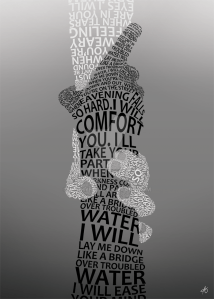
bridge_over_troubled_water_by_aethyrdSeptember 11.  I don’t want to dwell too much on this date.

That day has already taken so much from us that to dwell on it gives it too much power over us, keeping us tied to a moment that is becoming more and more distant.

No, I will never forget that day or this date but it must be as a memory of the departed and not as a source of fear or anger for that moment.  We can not remain in that past.  The world moves on and we must go with it.

I thought that for today I would share a song that is synonymous with unity and coming to the comfort of others, Bridge Over Troubled Water.  There are so many great versions of this song, from original by Simon and Garfunkel to the powerful Aretha Franklin and earthy Johnny Cash covers, that it was hard to choose one.  But this version from Roberta Flack is so delicately powerful and soulful that it sometimes seems like a different song when I hear it.  Just a lovely performance of a great song.

Have  a good day.

Read Full Post »

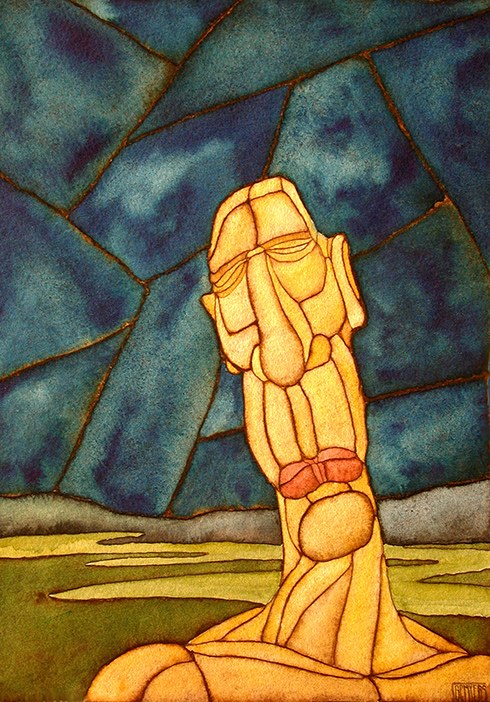
Gc Myers -Exile Series 1995 smNovember sneaks in on a gray and damp Sunday morning this year.  It’s one of those months that bring about mixed memories.  Some, like those from Thanksgivings from the past , are warm and fuzzy while others bring much different emotions.  For instance, next week marks twenty years since my mother died.  Hard to believe that it’s been so long, a thought that comes to mind every year at the beginning of November.

I try to not remember Mom in terms of those last pain-filled months leading up to her death, instead focusing on better days and moments that I hold in my mind.  Despite that,  November reminds me of those last days and I find myself digging through the files to look at some of the images from my Exiles series that were painted back when she was going through her final days in 1995.  Looking at them now brings back a rush of emotions and memories, some that I try to avoid most days.

But ultimately, you can’t avoid those things we all must experience.  Life has its own way and we have to accept what it gives us as a gift.  Perhaps those painful moments and the tears we shed are proof of the preciousness of that gift.

I don’t fight back the tears in November.  Like any gift, I accept them now with what I hope is gratitude.

That brings us to this Sunday’s musical interlude.  I have chosen Johnny Cash‘s cover of the Loudon Wainwright song, The Man Who Couldn’t Cry.  I really like this version of this song about a man who finally learns to cry,  becoming a real human.

Have a great Sunday.  And if you feel like crying, go ahead…

Read Full Post »

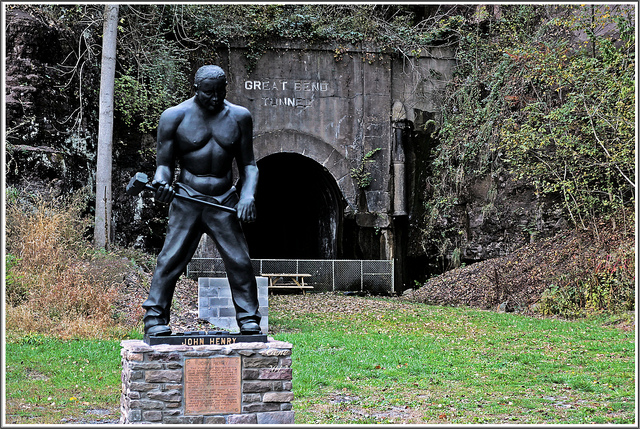
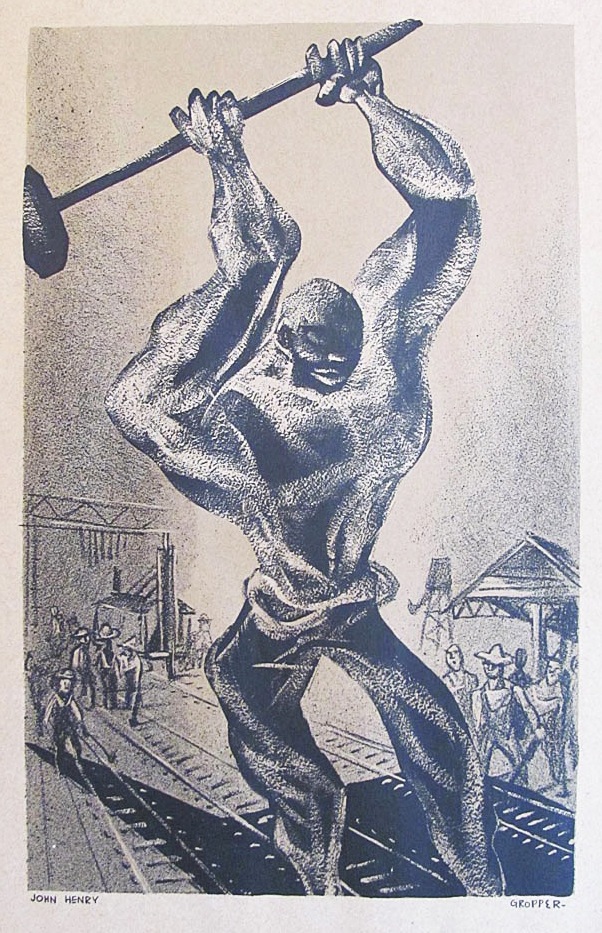
John-Henry-statueAnother Labor Day weekend.

I usually focus on the labor aspect of this holiday when writing about it, trying to point out how much our country was shaped by both the toil of the workers as well as the labor unions who fought for and won many of the rights that we now take for granted.  But this year I thought I would focus on a folk song that addresses the role and importance of labor in our lives:

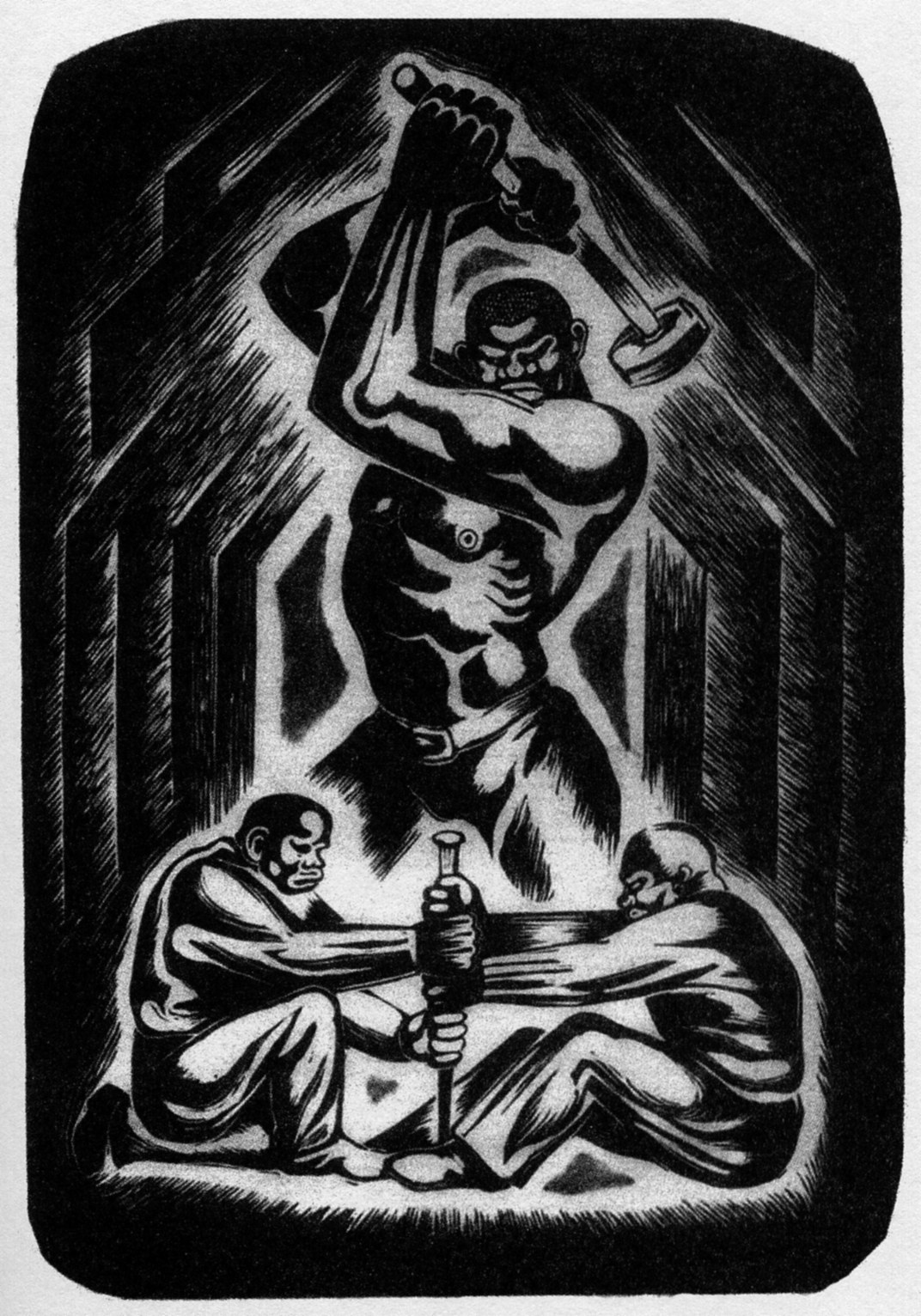
John Henry–  that steel driving man who faced off in an epic battle of man against machine, defeating the steam drill that threatened to take away his job.  Well, sort of defeating it.  I guess a victory is still a victory even if you die in the wake of your triumph.

john_henry_by_fw_long_dehtUnfortunately, John Henry’s great efforts ultimately didn’t save the jobs of the workers who would be displaced by the steam drill.  But it did illustrate the importance of  labor and the purpose it adds in our lives.  Labor has always been that thing by which we have provided for ourselves and our families, from the time we were primarily hunter/gatherers and farmers (which was not that long ago) to the present day.  To take away that ability to provide is to strip away one’s pride and definition as a human.

In that aspect, John Henry’s victory  was more than a triumph of blood and bone over steel and gears.  It was a triumph of the human spirit, a crying out of our need to be necessary in some way, to be undiminished.  And despite John Henry paying the ultimate price for his victory, I think that is why this song still strikes a strong chord with us.

So for this Sunday’s music I will play one of my favorite versions (among many) of John Henry.  It’s from Johnny Cash from his 1963 album, Blood, Sweat and Tears, an album which focused on labor.  I think it captures that idea of purpose really well.

Have a great Labor Day weekend but try to remember the idea behind the holiday.

John Henry William Gropper
 

Read Full Post »

GC Myers-Family Path smYesterday’s Gallery Talk at the Kada Gallery went really well.  Many,many, many thanks to Kathy, Joe and Morgan at the gallery for providing a comfortable setting and the many folks in attendance for taking time out on a rare sunny Saturday afternoon to spend it with me.  They were an absolutely wonderful group –attentive and inquisitive–which made my task much easier, making me feel very welcomed and at ease in front of them.

Hopefully not so much that I over-talked  or came across as too full of myself.  I always worry about things like that on the ride back home, agonizing over things I said or didn’t say.  It comes easy because at that point I am pretty tired of hearing my own voice, tired of pretty much being the public me at that moment.

One thing I forgot to mention which bothered me as I was on my way home was that it was the input that I get from the encouragement and stories shared by the folks that attend these events are such a huge inspiration and the motor that drives my work.  I work untold hours alone in my studio and it is their reaction to the work and the fact that they allow me to glimpse briefly into their lives that make them seem almost present at times in my studio.  Distant eyes looking over my shoulder.

I shared one recent inspirational story that took place very recently right there at the Kada Gallery.  A week or so ago, they received an email inquiry from a lady in Switzerland about a large painting, titled Family Lines with the Red Tree with a Red Chair in its branches.  It turns out that she had recently lost her husband to Alzheimer’s and one of their final exchanges was about that very painting, obviously seeing it in online.  Her husband said that he was the Red Tree and she was the Red Chair.  I have to admit to being made teary-eyed by that.  How can something like not stick with me, not find its way into my thoughts when I am alone in the studio?

That story, like so many others shared with me over the years, brings a sense of purpose to the sometimes abstract and introverted act of painting.  I can never fully thank these people for the gift in their sharing.

991126 Color RisingOne of the ways I do try thank folks at these talks is by having several giveaways, including an original painting.  We had a very good time with it yesterday and the group was so receptive that I thought they deserved another.  I had a painting, Color Rising, from a few years back that won by a young lady in her 90’s which leads me to this week’s Sunday music selection.  The painting, shown left, was a monochromatic piece, shades of back and gray with just a dash of color.  I explained that I do these paintings periodically to just more less refresh my color palette in the period between working on shows and that seeing one of my compositions with the color removed was a bit like hearing a song that you’ve heard a thousand times before done by one person done by somebody else.  The song has the same notes, chords, melody and lyrics but it is somehow different, somehow changed.

That brings me to this musical example, a version of the Beatles‘ song In My Life from 1965‘s Rubber Soul album.  My god, I can’t believe this song is fifty years old!  This version is from the American recordings of Johnny Cash, done in the final months of his life.  His age and ailments changed his delivery and imbued the songs with real heart-felt emotion and purity.  A powerful group of music.  This version of the Beatles’ song is not so different but it has  his own personal meaning which makes it his own.

Again, so many thanks to everyone who came yesterday.  It was my great pleasure to spend the day with you all.  Hope your Sunday is a good one…


Read Full Post »

GC Myers- Storms Are on the OceanI’ve been working recently on some very small pieces for the upcoming Little Gems show at the West End Gallery in Corning.  I’ve mentioned here before that this particular show is always  a sentimental favorite of mine as it was in this show that I first publicly showed my work twenty years ago.  It represents the first step on to the path that I now follow and that makes it special for me.  Plus I enjoy working in the smaller scale for a bit.  It allows for easily easing back into older themes and forward into newer ones.

One of these pieces that just finished yesterday is shown here at the top.  It’s a 4″ by 6″ painting that I call Storms Are on the Ocean.  I haven’t done a boat painting in some time and thought the smaller format would be the perfect opportunity to re-visit the theme.  I am always drawn to the motion in these pieces and the billow of the sail.  It reminds me of a fable or a dream in some way that I find appealing.

I thought this would be the perfect match for this week’s Sunday morning music which is the song after which this painting is titled.  It’s The Storms Are on the Ocean, a song first done by the legendary Carter Family back in the late 20’s.  This version is from June Carter Cash‘s last album, Wildwood Flower, which was released in the year, 2003, after her death.  Like the final recordings of her husband, the great Johnny Cash, this album shows her in a fragile state of health which adds greatly to the emotional impact of the songs.

It definitely comes through on this lovely song with its haunting chorus:
The storms are on the ocean
The heavens may cease to be
This world may lose its motion, love
If I prove false to thee

Enjoy and have a great Sunday.

Read Full Post »

Painting is a blind man’s profession.  He paints not what he sees, but what he feels, what he tells himself about what he has seen.

–Pablo Picasso

********************

I love this quote.  I think that is what all art really is– an expression of  feeling.  Emotion.  I know my best work, or at least the work that I feel is most directly connected to who I truly am as a human being, is always focused on expressing emotion rather than depicting any one place or person or thing.  At its best, the  piece as a whole becomes a vehicle for expression and the subject is merely a focal point in this expression.  The subject matter becomes irrelevant beyond that.  It could be a the most innocuous object,  a chair or a tree in my case.  It doesn’t  really matter because the painting’s emotion is carried by the painting as a whole-  the colors, the texture, the linework, the brushstrokes, etc.

In other words, it’s not what you see but what you feel.

I think many of  Vincent Van Gogh‘s works are amazing example of this.  They are so filled with emotion that you often don’t even realize how mundane the subject matter really is until you step back to analyze it for a moment.  I’ve described here before what an incredible feeling it was to see one of his paintings  for the first time, how it seemed to vibrate with feeling, seeming almost alive on the wall.  It was a vase of irises.  A few flowers in a pot.  How many hundreds of thousands of such paintings have been created just like that?  But Van Gogh resonates not because of the subject matter, not because of precise depiction of the flowers or the vase.  No, it was a deep expression of his emotion, his wonder at the world he inhabited, inside and out.

I also see this in a lot of music.  It’s not the subject but the way the song is expressed.  How many times have we heard overwrought , schmaltzy ballads that try to create overt emotion and never seem to pull it off?  Then you hear someone interpret a simple song with deep and direct emotion  and the song soars powerfully.  I often use Johnny Cash‘s last recordings, in the last years  and months before his death, as evidence of this.  Many were his  interpretations of well known songs and his voice had, by that time, lost much of the power of his earlier days.  But the emotion, the wonder, in his delivery was palpable.  Moving.

Likewise, here’s Chet Baker from just a few months before his death.  He, too, had lost the power and grace of youth due to a life scarred by the hardship of drug abuse and violence.  But the expression is raw and real.  It makes this interpretation of  Little Girl Blue stand out for me.

Read Full Post »

Most people immediately think of Roberta Flack when they think of the song The First Time Ever I Saw Your Face, and for good reason.  Her 1972 version was  truly beautiful and deserved every bit of the acclaim it earned.  But the song didn’t originate with her and has had many versions through the years, including one of my favorites from Johnny Cash, which you can see below. 

The song’s history began in 1957.  Iy was written by Ewan MacColl,  a British folk singer who is a very interesting character in his own right.  He was a married man who fell in love with the much younger Peggy Seeger, the half-sister of folk icon Pete Seeger.  He later married Seeger.  MacColl wrote the song about her and for her to perform.  She needed a song for a play she was appearing in here in the USA so MacColl wrote the song and taught it to her via the telephone as he was barred from entering the States because of his Communist ties.  As I said, he was an interesting character.   Her original version is lovely with different phrasing than the better known Flack version.  I’ve also included a similarly performed and charming version from Peter, Paul and Mary.

Cash’s version is much more ponderous.  It is from his American series near the end of his life.  His voice was weaker and even rawer than in his younger days but Cash used it in an incredibly expressive way, giving the song  the feeling of a dirge as he looked back from a point near the end of his and his wife’s life, to an earlier time in his life and the fresh discovery of love.  It is both beautiful and sad. 

Just a great song.


Read Full Post »

 Man versus machine.  John Henry and his hammer versus the steam drill. Now Jeopardy.

I’ve watched with interest the first two nights of the exhibition on Jeopardy pitting the two top players in its long run, Ken Jennings and Brad Rutter against Watson, the IBM supercomputer that contains something like 15 trillion pieces of data.  It’s been a pretty impressive display in these first two days for Watson as it racked up over $36,000 in winnings versus Jennings’ $4,800 and Rutter’s $10,400.  In the Double Jeopardy round, Jennings and Rutter only managed 5 correct answers.

Maybe I’m rooting too much for the human mind to defeat a machine that takes a room of servers and a huge team of techs to operate but I found this whole thing pretty frustrating.  It wasn’t that the machine defeated these two players in knowledge but that it seemed to have a definite mechanical advantage in ringing in first to answer.  Outside of a couple of questions, which all the contestants, including Watson, missed, this was not an extremely difficult game.  You could see that the two champions knew the answers but were simply defeated mechanically.  It was irritating to watch and there seemed to be a bit of frustration on the two humans’ faces at the end. 

When the machine missed, it missed wildly.  For instance, the Final Jeopardy question was in the category U.S. Cities and asked which city had an airport named after a World War II hero and one named for a WW II battle.  The answer, of course, was Chicago.  Watson answered Toronto, which doesn’t even fall under the final category.  With the thirty seconds given to answer, it seems there was breakdown in its comprehension.

I have some question as to how the machine is given the questions.  I believe that Alex Trebek stated that the computer was digitally  fed the questions simultaneously.  So this was not voice recognition technology.  It was, instead, just a very large computer pulling up data at a fast pace then beating its opponents to the buzzer with superior mechanical timing.  Timing is vital in ringing in on Jeopardy so a tuned mechanical device would have a definite advantage against even the most adept human.

I sound like I’m a bit technophobic here.  I do appreciate the advances of technology and am constantly amazed at how quickly our world changes with each new breakthrough.  It’s mind-boggling  how different our world is today when compared to even a mere thirty years back due to the changes in technology.  And I’m sure that there are applications where Watson’s power and speed will greatly benefit us as a species in the future.  But for now I find this whole thing a bit frustrating and secretly wish for a John Henry moment where Brad Rutter pulls out a sledge hammer and takes it to this irritating machine.

Here’s my favorite version of that great folk song, John Henry, sung by Johnny Cash:

Read Full Post »

« Newer Posts - Older Posts »