 **********************
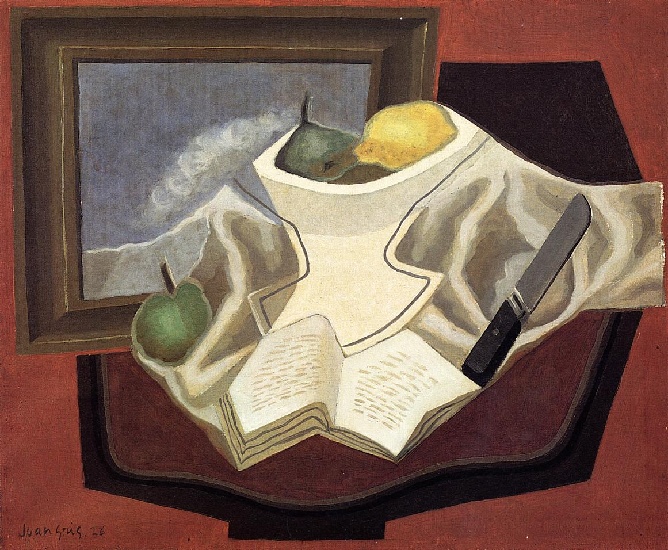
Painting for me is like a fabric, all of a piece and uniform, with one set of threads as the representational, esthetic element, and the cross-threads as the technical, architectural, or abstract element. These threads are interdependent and complementary, and if one set is lacking the fabric does not exist. A picture with no representational purpose is to my mind always an incomplete technical exercise, for the only purpose of any picture is to achieve representation.
–Juan Gris
**********************
I like this idea of painting being a fabric with a weft and a warp of elements that bring the representation to its full realization. It’s this idea that allows for such differing versions of the same image. One set of threads bring the recognizable form while the other allows for the individual artistic interpretation. Some fabrics are richer and some are coarser. Some are stronger and some are weaker.
I may not be explaining it very well but I understand it.
This comes from the great Cubist painter Juan Gris, who was born in Spain in 1887 and died in France in 1927, leaving behind a consistently wonderful body of work. He is thought of as one of the most important of the Cubists, perhaps only eclipsed by Picasso and Braque.
Since he died at such a relatively young age– 40 years old– it makes one wonder how his work would have evolved in the later years of maturity that he never obtained. As it is, there is a lot to see in his work.
His most famous piece, Still Life with Checked Tablecloth from 1915, is at the top of this page. It sold at auction in 2014 for $57.1 million and is in the collection of the Metropolitan Museum. You can click here and go their Met Collects site to get a closer look at the painting. Being able to look closely at the surfaces is very illuminating to me. Take a look for yourself.




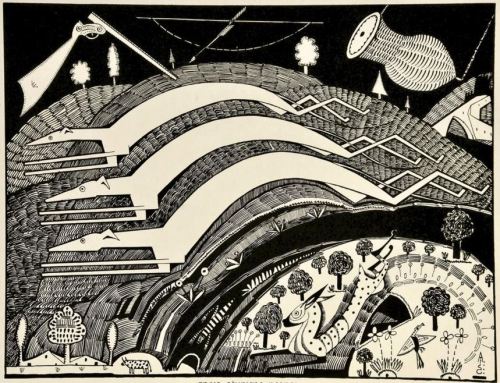
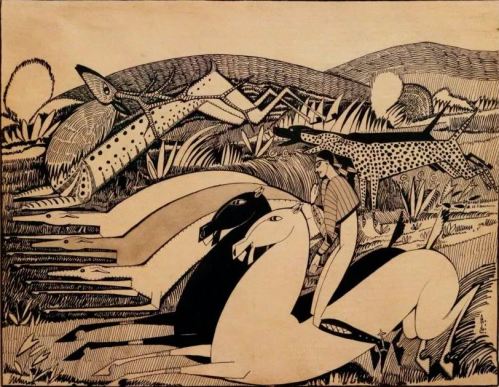
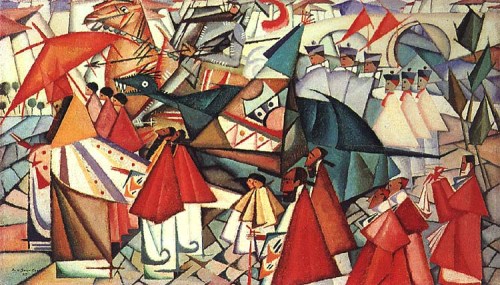 There is an exhibit of paintings currently hanging at the Grand Palais in Paris that features the work of the early 20th century Portuguese artist Amadeo de Souza-Cardoso. It is only the second major retrospective of his work and the first since 1958. He is another of those artists who are probably not on your radar– I know I was unaware of his work. But once I found it, I couldn’t shake the memory of it.
 He was born in the north of Portugal in 1887 near the small city of Amarante. While still a teen he made his way to Paris where he absorbed the fertile art scene that was in place. He began painting and drawing while becoming close friends with many artists and writers such as Gertrude Stein, Modigliani, Juan Gris and Brancusi.



 Redtree Times