
Paul Klee- Fish Magic 1925
He has found his style, when he cannot do otherwise.
-Paul Klee
Paul Klee always seems to have something in his works and his words to which I can relate. I know these words relate to my own experience as an artist.
I do what I do. I am what I am.
I just can’t do anything else.
It can be frustrating at those times when I feel blocked and find myself wishing I was someone else with different and greater talents and skills. Or when people ask me why I don’t paint in a different way or ask me to do something outside of my artistic realm or area of interest.
So, I do what I do and I live with that.
There was a scene from a PBS series years ago that I have mentioned here before (and borrow from in what follows) that perfectly encapsulates this situation.
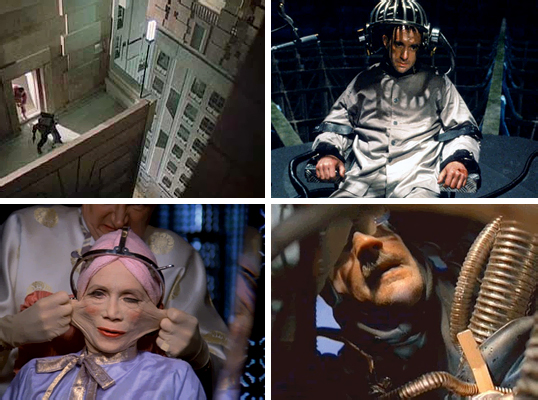
It was an episode of Mystery! on PBS starring Kenneth Branagh as the Swedish detective Wallander. It was an okay, nice production but nothing remarkable in the story. But there was a part at the end that struck home with me and related very much to my life as a painter. Wallander’s father, played by the great character actor David Warner (I always remember him best for his portrayal of Evil in the Terry Gilliam film Time Bandits) was, like me, a landscape painter. Now aged and in the beginning stages of Alzheimer’s, his son comes to him and intimates to his father, after having recently killed a serial killer, that he can’t go on as a detective, that he can’t take the stress.
The painter tries to comfort his son then recalls how when Wallander was a boy he would ask his father about his painting, asking, “Why are they always the same, Dad? Why don’t you do something different?”
He said he could never explain. Each morning when he began to paint, he would tell himself that maybe today he would do a seascape or a still life or maybe an abstract, just splash on the paint and see where it takes him. But then he would start and each day he would paint the same thing- a landscape. Whatever he did, that was what came out. He then said to his son, “What you have is your painting. I may not like it. You may not like it. But it’s yours.”
That may not translate as well on paper without the atmospheric camera shots and the underscored music but for me it said a lot in how I think about my body of work. Like the father, I used to worry that I would have to do other things- still lifes, portraits, etc.- or paint in a more realistic and less idiosyncratic manner in order to prove my worth as a painter. But at the end of each day I found myself looking at a landscape, painted in the only way I know, most often with a red tree.
As time has passed, I have shed away those worries. I don’t paint portraits. Don’t really paint still life. I paint what comes out and most often it is the landscape. And it usually includes that red tree that I once damned when I first began painting it had become a part of who I am.
I realized you have to stop damning who you are…
 I’ve been going through some books on my shelves that I haven’t looked at for some time and came across a smallish book on the work of Richard Lindner, who was a German born (1901) painter who moved to New York during World War II. He taught at the Pratt Institute then later at Yale before his death in 1978.
 guided the hand of the film’s artist who most people think was Peter Max. However, the artist was Heinz Edelman . This misconception probably shows Lindner’s influence on Max as well. I also can see Lindner in some of Terry Gilliam‘s animations for Monty Python. The Beatles paid tribute to Lindner by inserting his image in the group of figures on the cover of their classic Sgt. Pepper’s Lonely Hearts Club Band album. He’s between Laurel and Hardy in the second row.
 One of my favorites is shown to the left here, FBI On East 69th Street. I have no idea whether he was influenced by Lindner’s work (although I wouldn’t be surprised), but when I look at this painting I can only think of David Bowie, especially in the early 70’s in the Glam era. Again, the strength of the color and shape,s as well as how his figures fill the picture frame, excite me. How I might take this excitement and make it work within my own work is something that remains to be seen. It may not be discernible but seeing work that makes your own internal wheels spin will show up in some manner. We’ll have to see if this comes through in the near future.


 Redtree Times