Feeds:
Posts
Comments

Archive for the ‘Favorite Things’ Category

Yesterday one of my all-time favorite baseball players, Mariano Rivera, was elected to the the Baseball Hall of Fame in Cooperstown. He was the first player in the history of a hall of fame filled with legendary names to be elected unanimously. Every one of the voters recognized his ability and respected all that he contributed to the game. His stoic, respectful dominance is the ideal for lovers of the game. I know I sure miss seeing his number 42 running out of the outfield towards the mound. Here’s a post about Mo from back in 2011.

****************

I am a big fan of baseball. I classify myself as a Yankees fan currently but, though I revel in the rich history of the organization with names like Babe Ruth,Lou Gehrig, Joe Dimaggio, Yogi Berra, Mickey Mantle and on and on, it is the group of players that started their current run of success that made me fans of this team. Bernie Williams, Jose Posada, Andy Pettitte and, of course, Derek Jeter were constants over the last 15 years. All played significant roles in the restoring the Yankees to the top of the baseball heap.

But any fan who cares a lick about baseball knows that much of their success is due to one player, a rail thin man from Panama with the name Mariano Rivera, known to fans simply as Mo. Today he stands as the all-time leader in saves, meaning he is the pitcher who comes in at the ends of games when the outcome is in the balance and shuts down the threat from the other team. He is the closer, the most demanding position  in the game so far as absolute consistency is concerned. He either preserves the win or loses the game. No excuses accepted.

No one has been as consistent in protecting the lead for wins as Mo for the past 15 years, a remarkable time for a position where the strain and stress usually drains most closers after 7 or 8 years. Yankee fans have long felt the welcome comfort that comes with seeing number 42 come jogging through the outfield from the bullpen to enter the game. Even that number 42 is special.  Mariano will be the last player to wear the number since he is the last active player who was wearing number 42 at the time when Major League Baseball retired the number to honor Jackie Robinson.

Greener Pastures: 42

It’s hard to explain to non-baseball fans what Mo has meant to the Yankees and to baseball in general. He has carried himself for these years with great modesty and dignity, never showing up an opponent. On the mound, he has the appearance of the old gunfighter in the movie westerns of years gone by– wary but calm and collected, knowing that he must control his emotions to do what he must do. When the game is over, there are no histrionics, no yelling or posing or excessive fistpumps. He expects his success and usually flashes a small and sometimes sheepish grin as his teammates congratulate him.

It’s an attitude that has won him great respect around the game. Yesterday, when he broke the record, the Minnesota Twins, who came up short against Mo in this game, stayed after the game and gathered on the dugout steps to join the Yankee faithful in applauding the embarrassed star as he stood alone on the field. Even diehard Red Sox fans, who boo Jeter like he killed their mother, often give Mo a hearty cheer when he is announced at post-season or All Star games. [Note: When Mo retired in 2013, Red Sox fans gave him a long and loud standing ovation on his last appearance at Fenway]

He is a man of respect, both giving and receiving, a quality that hopefully will rub off on younger players.

Mo’s 41 years old and when he takes off his cap his scalp is bald now. He shows his age a bit but still performs at the highest level. As a fan I know there will not be many more times when number 42 calms the anxious Yankee fans as he jogs across the outfield toward the mound. I relish every appearance now, knowing that I am watching a legend, a player who will be talked about in the same breath with Ruth and Gehrig.

Deservedly so.

Read Full Post »

Ben Shahn

Ben Shahn -Jersey Homesteads (Roosevelt NJ) Mural

********************

The artist must operate on the assumption that the public consists in the highest order of individual; that he is civilized, cultured, and highly sensitive both to emotional and intellectual contexts. And while the whole public most certainly does not consist in that sort of individual, still the tendency of art is to create such a public – to lift the level of perceptivity, to increase and enrich the average individual’s store of values… I believe that it is in a certain devotion to concepts of truth that we discover values.

–Ben Shahn

********************

Born in Lithuania in 1898, Ben Shahn emigrated to America with his family in 1906. Throughout his career, up until his death in 1969, Shahn’s early training as a lithographer and graphic designer played a large part in his work, giving it a symbolic visual impact that made him one of he leading lights of social realist artists. His work often dealt with the human condition, particularly that of the common man.

Ben Shahn- The Passion of Sacco and Vanzetti

While many of the themes in his work were labeled as leftist, his work championed civil rights and workers’ rights and stood against injustice and prejudice. He did a large series of works devoted to Sacco and Vanzetti. Designed to communicate a distinctly human point of view, his work always had a profound voice, one that called for the betterment of all people.

His was the work of the Everyman.

As he said: The natural reaction of the artist will be strongly towards bringing man back into focus as the center of importance.

I think that is a very important thing to keep in mind as is the quote at the top of the post, about how an artist must aspire to the highest human values of the public, even though they may not actually possess these qualities, with the hope that the artist’s work can lift them to a higher level. It’s a thought that should linger in the mind of any artist who hopes and desires to make a true difference in this world with their work.

I am not giving a lot of details here about the life and career of Shahn. But I hope the few that I have shared along with some of his images will inspire you to take a closer look at this interesting and important voice in modern art.

Ben Shahn- Father and Child 1946

Ben Shahn- The Burial Society

Ben Shahn- Nocturne

Ben Shahn- Four Piece Orchestra 1944

Ben Shahn- Self Portrait Among Churchgoers

Ben Shahn- Two Witnesses

Ben Shahn- Unemployment


Read Full Post »

Snowing like made still. Been out plowing for a couple of hours already this morning, just trying to keep the driveway open, and there is definitely a few more hours of plowing ahead. But I thought I’d take a break, drink some coffee and try to throw out some music for a snowy Sunday morning.

Came up with an old song, Valley of Tears, written and performed originally in 1957 by Fats Domino and covered by a number of other artists over the years. Buddy Holly did a version that charted in 1961 that had a skating rink/ magic organ quality to it but I really like this version from the late great Solomon Burke accompanied by one of my favorites, Gillian Welch, and her husband David Rawlings.

Solomon Burke was one of the early greats in the transition period between R&B and Soul. He was a real preacher and blended the spiritual and the physical aspects of soul– the sex and the salvation– into his music. He never got the acclaim as some of the other big names of 60’s Soul but he is is revered.

This is a great, heartfelt performance of the song. Give a listen while I get back to my own valley of tears. If you consider the falling snow tears, that is. Have a good day.


Read Full Post »

The American poet Mary Oliver died yesterday at the age of 83. I can’t claim to know much about poetry but I always found her work engaging and enlightening. There was a plain-spoken quality to her work that gave her musings the feel and clarity of newfound wisdom. She is gone but her voice will carry on. Here’s a post from a couple of years ago that was about the relationship of a painting of mine to one of her better known poems, Wild Geese.

**********************

GC Myers- The Singular HeartYou do not have to be good.
You do not have to walk on your knees
For a hundred miles through the desert, repenting.
You only have to let the soft animal of your body
love what it loves.
Tell me about your despair, yours, and I will tell you mine.
Meanwhile the world goes on.
Meanwhile the sun and the clear pebbles of the rain
are moving across the landscapes,
over the prairies and the deep trees,
the mountains and the rivers.
Meanwhile the wild geese, high in the clean blue air,
are heading home again.
Whoever you are, no matter how lonely,
the world offers itself to your imagination,
calls to you like the wild geese, harsh and exciting —
over and over announcing your place
in the family of things.

Mary Oliver

****************

A while back, a person interested in my work sent me the poem above, Wild Geese.  It was written by the esteemed Pulitzer Prize winning poet Mary Oliver. This person wanted to know if I would be interested in translating this poem into into one of my paintings for them. I replied that when I had some time I would gladly do that as I think the poem strikes a chord that very much resonates in my work.

After a short while, this person contacted me again and said they had been looking at my work and had found a painting that they felt captured the spirit of the poem. The painting is the one shown at the top, The Singular Heart.

I was thrilled by the choice. It had the feeling and message of the poem without being absolutely literal.  It’s exactly how I wanted to portray it. And the message and title of the painting fell perfectly in line with Oliver’s poem.  The Red Tree stands, singular and alone, with the realization that it has a unique place, as does every being, in the family of things.

I told this person a bit about this painting and an experience I had with it that stuck with me.  Once it hung in my home area gallery, the West End Gallery, and I met with a local college art class there. One of the questions was which of the pieces there was my favorite. I normally don’t answer that question because I have always felt that any painting that I decide to show has something unique to it, some quality that makes it special to me. Kind of like a parent with their kids.

But on this occasion I didn’t hesitate and pointed at this painting.  I told them if I were to try to describe in one painting what I wanted to say with the body of my work and what I hoped for myself as a person, that this piece would summarize it perfectly.

I told this person that I felt it was perfect choice and was pleased when they chose this painting to represent the poem in their home. It means a lot when any painting finds a home but is even more special when I know that it resonates on many levels with its owner, that it goes deeper than the surface.

Here’s a clip of Mary Oliver reading her poem, Wild Geese:

Read Full Post »

**********************

Painting for me is like a fabric, all of a piece and uniform, with one set of threads as the representational, esthetic element, and the cross-threads as the technical, architectural, or abstract element. These threads are interdependent and complementary, and if one set is lacking the fabric does not exist. A picture with no representational purpose is to my mind always an incomplete technical exercise, for the only purpose of any picture is to achieve representation.

–Juan Gris

**********************

I like this idea of painting being a fabric with a weft and a warp of elements that bring the representation to its full realization. It’s this idea that allows for such differing versions of the same image. One set of threads bring the recognizable form while the other allows for the individual artistic interpretation. Some fabrics are richer and some are coarser. Some are stronger and some are weaker.

I may not be explaining it very well but I understand it.

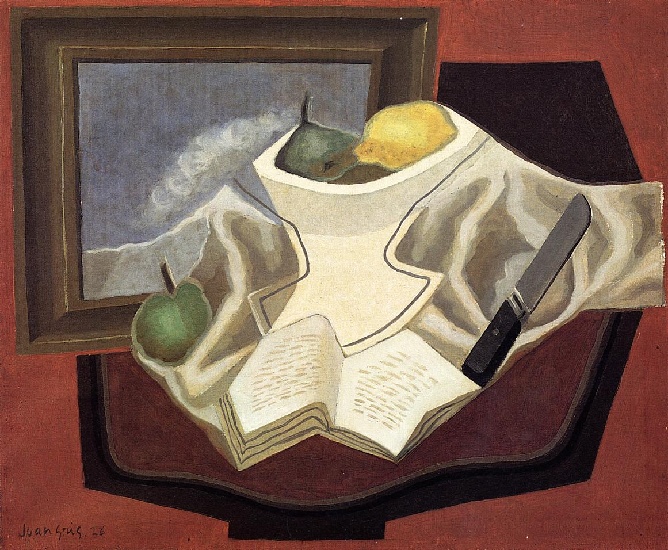
This comes from the great Cubist painter Juan Gris, who was born in Spain in 1887 and died in France in 1927, leaving behind a consistently wonderful  body of work. He is thought of as one of the most important of the Cubists, perhaps only eclipsed by Picasso and Braque.

Since he died at such a relatively young age– 40 years old– it makes one wonder how his work would have evolved in the later years of maturity that he never obtained. As it is, there is a lot to see in his work.

His most famous piece, Still Life with Checked Tablecloth from 1915, is at the top of this page. It sold at auction in 2014 for $57.1 million and is in the collection of the Metropolitan Museum. You can click here and go their Met Collects site to get a closer look at the painting. Being able to look closely at the surfaces is very illuminating to me. Take a look for yourself.

Read Full Post »

We’re in the midst of mad, chaotic times and my thought was to play something calming here on this Sunday morning. We could all use a breather.

And for music that soothes, you can’t get much better than Claude Debussy and Clair de Lune. Here is a wonderful performance from contemporary classical guitarist Roxane Elfasci who beautifully captures all the nuance and sensitivity of the composition.

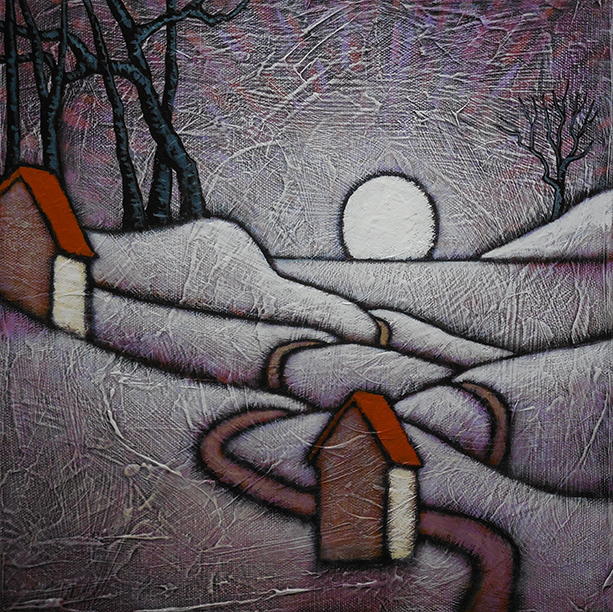
The painting shown is from a few years back and carries the title of this piece of music. I look at it and can immediately sense the melody and flow of the music. There is something calming in the atmosphere and quietness of this painting. For me, this piece of music and it serve a definite purpose in these disturbed days.

Give a listen and relax a bit. Have a good day.

Read Full Post »

*******************************

My days, my years, my life has seen up and downs, lights and darknesses. If I wrote only and continually of the ‘light’ and never mentioned the other, then as an artist, I would be a liar.

–Charles Bukowski

*******************************

This is a painting, Sleepwalk, from back in 2002. It is part of what I call my Dark Work which was when I first began working on a black painted surface. The idea was to make the blackness part of the painting, to give the painting the darkness against which I could set the contrast of the light.

Like the poet Charles Bukowski says above, I felt that in order to be honest as an artist I had to incorporate my own darkness in my work. Utilizing the darkness kept the perceived optimism of the work from wandering into the territory of cockeyed Pollyanna-ism. It provided contrast in the form of a sense of reality, a basis for validating the optimism of the light and the color.

Light needs dark, plain and simple.

The Dark Work was very important for me and I continue to paint using the same process and techniques I developed in that time. This particular piece has lived with me for many years now and I love pulling it out to study it from time to time. There always seems to be something new to focus on. A brushstroke. A section of the texture. The transition of one color into another.

It provides lessons that memory has long forgotten as I continue my own sleepwalk through this life.

Read Full Post »

Under the weather this morning but stumbled across this song that I featured here back in 2011. It’s been 7 or 8 years so I guess that’s not too repetitive. Plus, it’s just such a great song from an artist that deserves a lot more attention. Enjoy and have a good Sunday.

**************

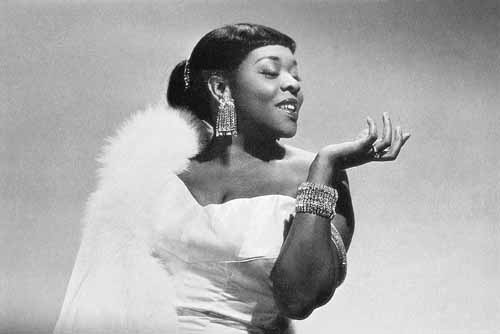
This song is That’s a Rockin’ Good Way sung by Dinah Washington and Brook Benton which made it to #7 on the Pop charts and #1 on the R&B charts in 1959. I heard this song on the radio yesterday for the first time in a long time and it made me think about Washington’s career and legacy.

Known as both the Queen of the Jukeboxes and Queen of the Blues, Washington was one of the biggest recording stars of the 1950’s, singing jazz, blues and pop songs with her earthy delivery.  Her body of work is impressive yet she is seldom mentioned alongside the other jazz greats such as Ella Fitzgerald or Billie Holiday. In fact, she is little known today which is a shame not only because so many are missing out on her vast talent but because her story is such a compelling story.

There are all the elements of great drama in her biography, her rise from a poor girl in Alabama to her great success as a major recording artist being only one aspect. There were all the men in her lives including 8 or 9 marriages, depending on which source you believe, and a number of other lovers. There was her battle with drugs and alcohol as well as a struggle with her weight which led to emotional swings that found her fighting with everyone around her, including her fans at times. There was the constant struggle with her record company for the respect she deserved. She had a big, big personality and finally seemed to be coming into her own as an artist when an accidental overdose brought her life to a close in 1963.

She was only 39.

So, here’s just a small sample of her talent. Hopefully, her legacy will continue to grow…

Read Full Post »

Chagall/Work to Live

*************************

Work isn’t to make money; you work to justify life.

Marc Chagall

*************************

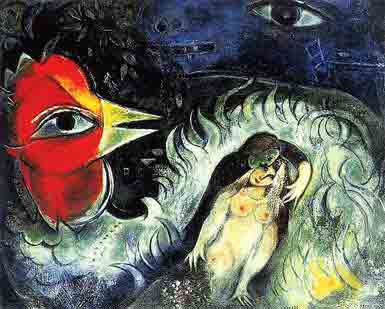
Whenever I am feeling frazzled or creatively blocked, there is always comfort in turning to Marc Chagall. Both his work and his words work wonders for me. I can’t speak for other artists but making using money as an incentive to create never turns out well for me. The work must validate my existence, give me a reason for being. Otherwise, it is hollow and lifeless.

Art is life and life is art.


Read Full Post »

***************************

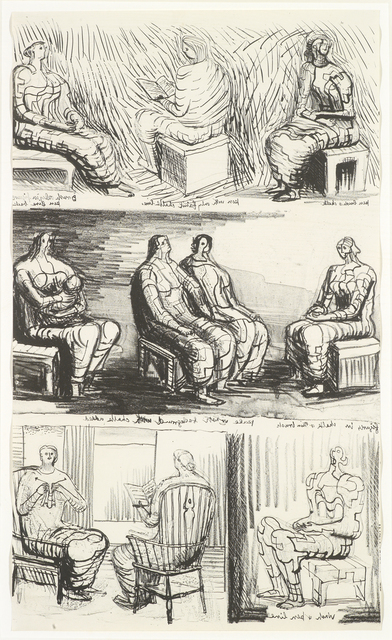
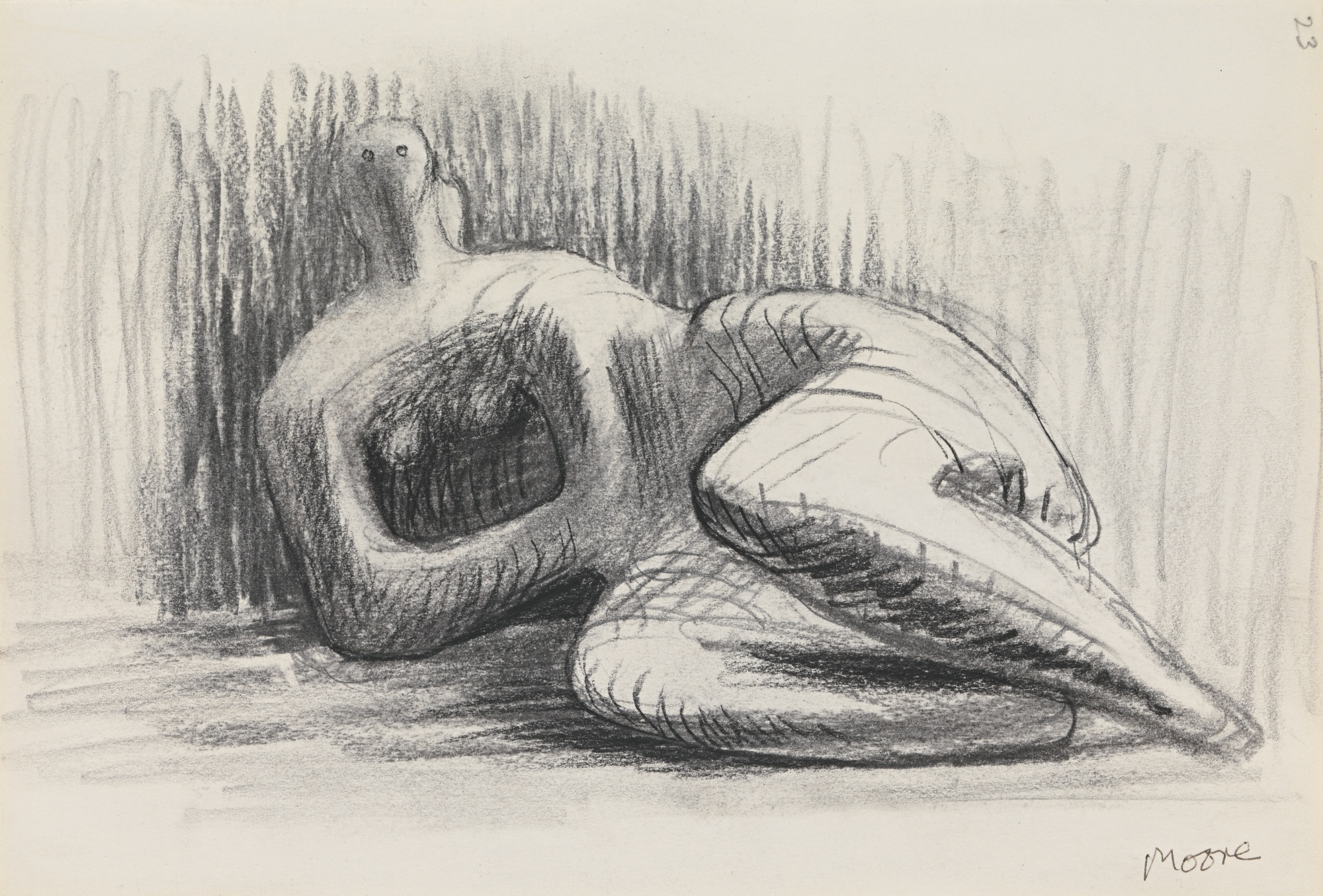
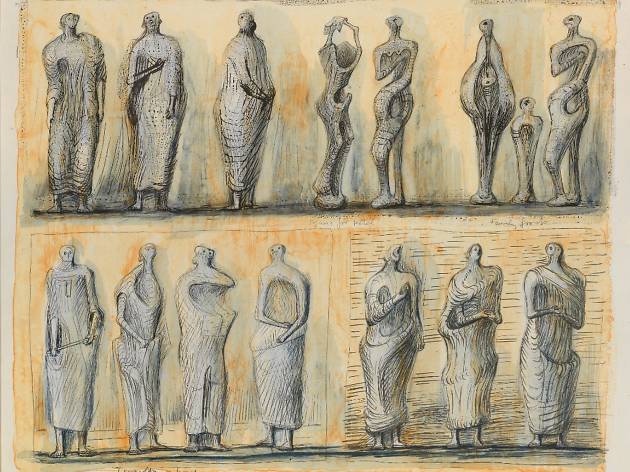
Discipline in art is a fundamental struggle to understand oneself, as much as to understand what one is drawing.

–Henry Moore

***************************

First day of work in 2019 and I am looking to the great sculptor Henry Moore for some guidance. I understand his idea that discipline in art comes with the need to understand oneself, as though the image or object created reveals as much about the artist’s inner self as it does about whatever it supposedly represents. The discipline to continue bringing oneself to that act of self-revelation is certainly a fundamental struggle, one where the artist is constantly presented with diversions, most of their own making, to keep them from the task.

Today I return to that discipline.

Figures in Settings & Sculptural Ideas 1949 Henry Moore OM, CH 1898-1986 Presented by the artist 1976 http://www.tate.org.uk/art/work/P02354

Read Full Post »

« Newer Posts - Older Posts »