Feeds:
Posts
Comments

Archive for the ‘Favorite Things’ Category

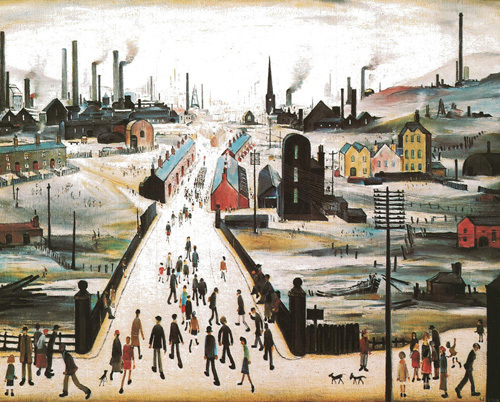
I came across this post below from back in 2012 about my first encounter with the artist LS Lowry. Since then I’ve looked at a lot more of his work and read more on his life, all of which has made me realize how much I was missing before then. He was an interesting figure, providing me with one of my favorite responses when once asked what he was doing when he wasn’t painting: Thinking about painting.  I know all too well what he was saying.

Anyway, I thought I’d repost this if only to once again play the song about the distinct figures that populate his world, Matchstick Men. Take a look and give a listen.

***************

I feel sort of embarrassed to admit this but I had never heard of L.S. Lowry until I stumbled across him the other day.  I am most likely not alone in this but would have thought he would have crossed my radar screen at some point, especially given his prominence in the British art world and in British culture. Not that I know a lot about British art or pop culture. But this is a beloved painter there who has sold many works in the multi-million dollar range, one selling for a record $9+ million last last year [2011].  This is not an anonymous artist.

I am still discovering more about this  painter  with a most individual style but here is a very short summation.

He was born in the north of England in 1887 and died in 1976, having spent most of his life as a rent collector for a property company.   Although he is often referred to as a self-taught artist, through much of his working life he studied art in the evenings at various schools. He used this study and the environment around him to find the distinctive style that marked his work, one that is populated with matchstick figures walking through   urban scenes, often heavily filled with images of  the English industrial landscape.
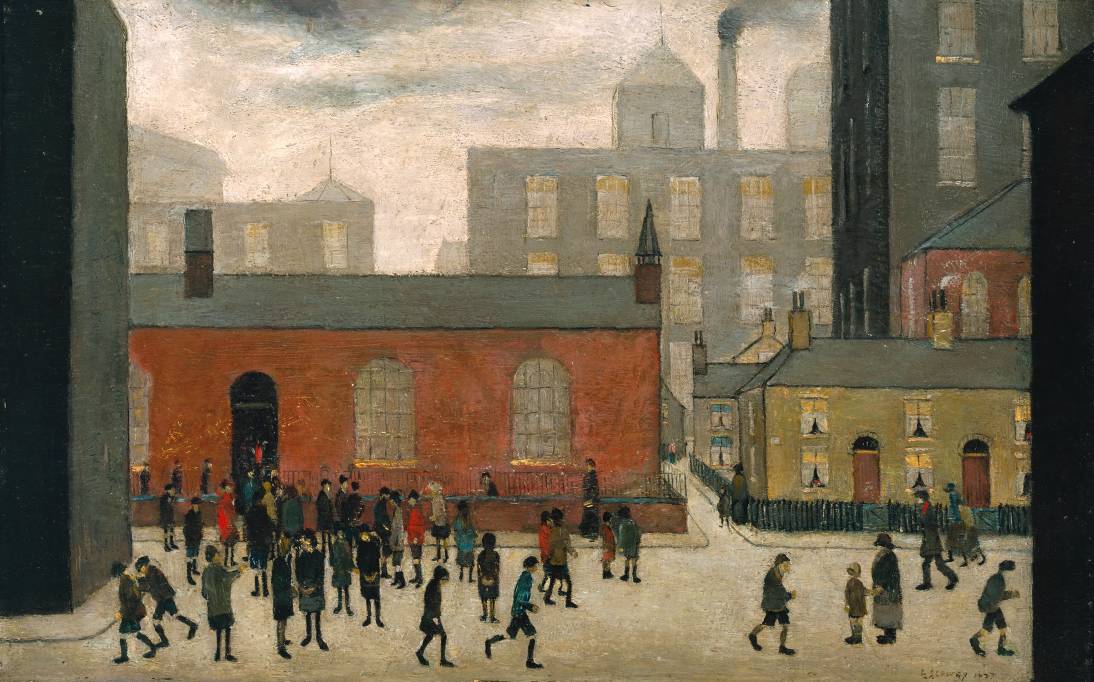
His work has permeated British popular culture as well. His matchstick figures were the basis for a 1967 rock song, Pictures of Matchstick Men, from Status Quo that was later became a hit  here in the States when covered by Camper Van Beethoven in the 80’s. And more recently, the British group Oasis had a video, The Masterplan, featuring the band members as matchstick men walking through animated scenes from Lowry’s paintings. In fact, Noel Gallagher, one of the leaders of  Oasis, has joined a growing chorus of fervent Lowry fans in Britain who have been calling for greater displays and recognition of the late painter’s work there.  As a result, the Tate is mounting a major retrospective of Lowry’s work for 2013.

There’s a lot for me to like about Lowry which makes just finding him now more puzzling. But I have found him and will continue to learn more.  For now, here is the both the Status Quo song and the Oasis video.

Read Full Post »

.

 I will give a proof to demonstrate with facts that there are no rules in painting and that oppression or servile obligation of making all study or follow the same path is a great impediment for the young who profess this very difficult art.

–Francisco Goya

*********************

The great Spanish painter Francisco Goya (1746-1828) is one of those artists whose work doesn’t always move me, especially that work that came before he was fifty year old and was serving as a Court Painter to the Spanish Crown. That work is fine but remains, for me, unremarkable. It feels academic and restrained and not unlike the work of any number of other Master painters.

It adhered to all the rules.

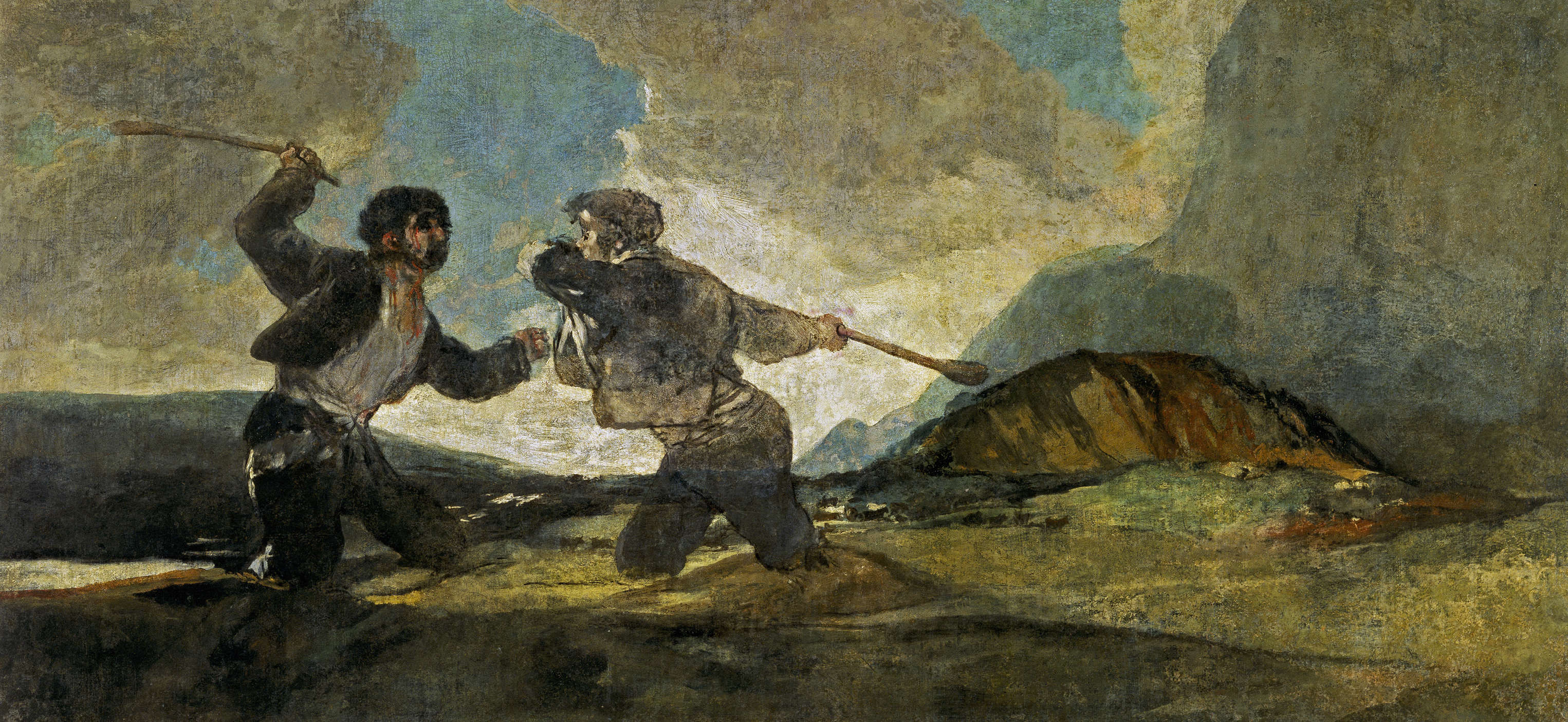
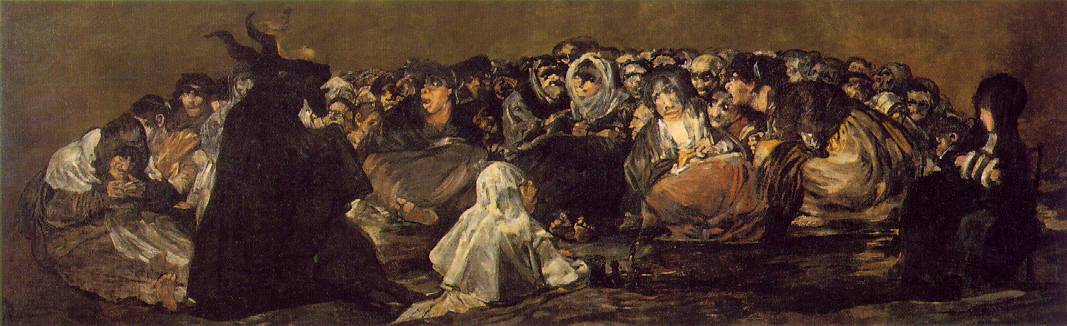
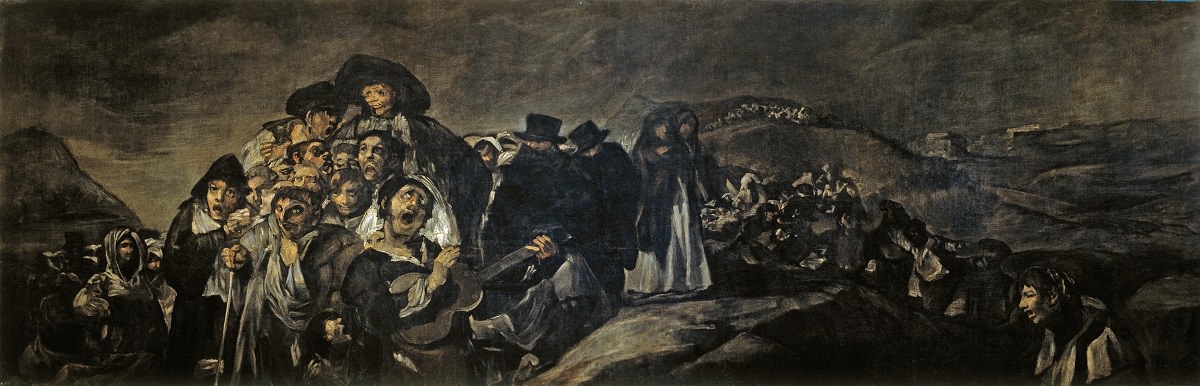
But with an illness in 1793 that left Goya with the deafness that profoundly affected him, his work began to move in an altogether different direction, one that would mark him as one of the great transitional artists in the move from the Old Masters to the modern era.

The work began to grow darker and was not centered around portraiture and genre paintings that would please the upper classes. The work from this time dealt with themes based on mythology, superstition and witchcraft, and the wars and political upheaval in the Europe of that era. It is often disturbing work that often eschewed the traditional rules of painting and created a new art form would come to define his name. One of his most well known paintings, The Third of May 1808, shown at the top, is considered a groundbreaking work in that it left behind many of the ideas that had ruled painting before it.

No Rules is an idea I have tried to embrace throughout my career. It’s nice to know that someone like Goya was one of the first painters to embrace it.

Here’s another thing that Goya said that strikes close to home for me:

Fantasy, abandoned by reason, produces impossible monsters; united with it, she is the mother of the arts and the origin of marvels.

Reason in painting is a quality that is not often discussed. But I believe that there has to be a sense of orderliness– reason— in painting that allows the viewer to connect with it, even if they don’t always fully understand why. Even the seemingly most chaotic abstractions usually possess a rhythm and sense of reason that allows an interaction.

I have really come to admire Goya’s work more and more over the years. The more I look the more I like. His work has directly– my Outlaws series came about as a result of seeing a group of his miniatures– and indirectly, with his words and thoughts, influenced my own work. Here are a few of my favorites. I encourage you to look on your own. Here is a link to a site with 700 images of his works.


Read Full Post »

Another Valentine’s Day. We often think of it as a day to express your fondness for the one you love. But at its heart, there is an element of yearning and loneliness in the day.

To give someone a Valentine as a kid– or maybe even when you’re a little older–is to make a plea for their attention and affection. It is an admission of need and vulnerability that is very human, as is the need to know that you are indeed loved by another.

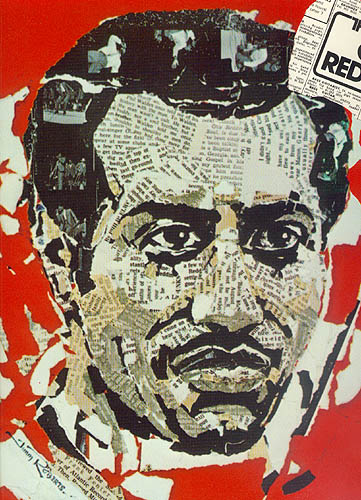
This song, These Arms of Mine , is from Otis Redding. For me, Otis can do no wrong and nobody better expresses the yearning that I am talking about here than Otis.

Have a good day. And if you love someone, let them know every day, not just on this day.

Read Full Post »

Writing, like life itself, is a voyage of discovery. The adventure is a metaphysical one: it is a way of approaching life indirectly, of acquiring a total rather than a partial view of the universe. The writer lives between the upper and lower worlds: he takes the path in order to eventually become that path himself.

Henry Miller, Reflections on Writing

********************************

This is one of my favorite passages from an essay in the Henry Miller book, The Wisdom of the Heart. I think you can easily insert any creative endeavor in place of the word writer and still be correct. The idea that the path of art concerns itself with acquiring a total view of the universe rings like absolute truth to my ears.

It’s a good thing to keep in mind on those days when you question the path you’re on and can’t recognize your purpose. Knowing that you are your own path somehow eases that anxiety.

Read Full Post »

Paul Nash, Messenger

I am no longer an artist interested and curious, I am a messenger who will bring back word from the men who are fighting to those who want the war to go on for ever. Feeble, inarticulate, will be my message, but it will have a bitter truth, and may it burn their lousy souls.

Paul Nash

****************

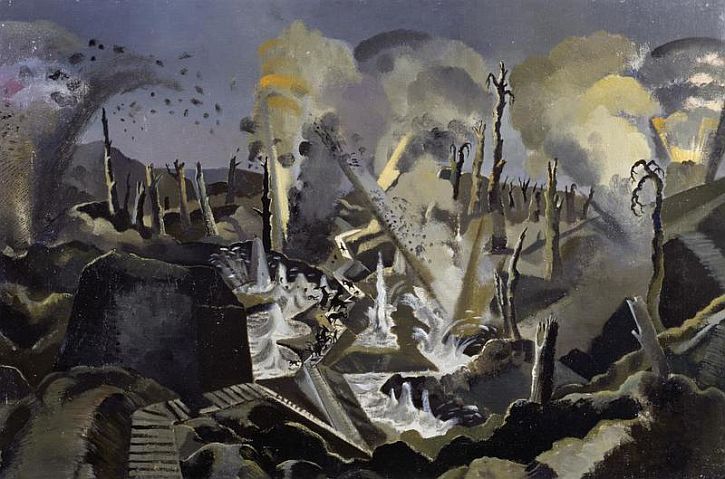
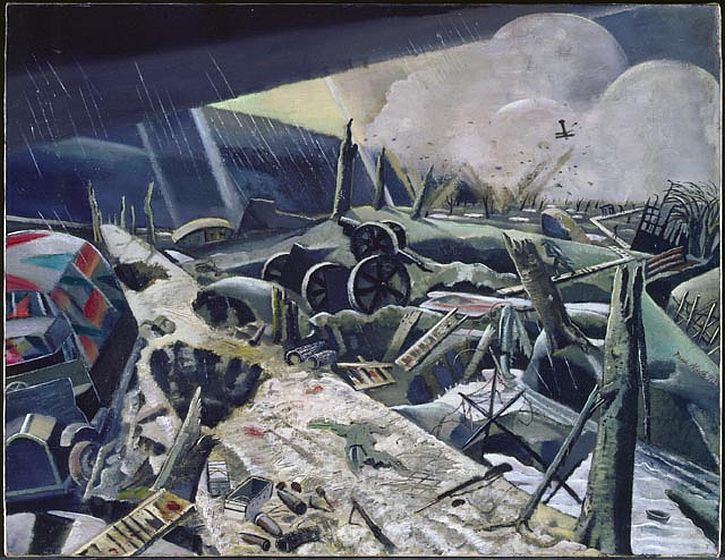
You most likely don’t know the name of British artist Paul Nash. I wasn’t familiar with the name until just recently.

He lived from 1889 until 1946 and was a force in bringing Modernism to British painting. But perhaps he is best known for his scenes of war, primarily from WW I. They have a surreal otherworldly quality that creates a sense of disturbing unease.

As they should.

Nash knew the horror of war firsthand, fighting in the British trenches of the Great War. His quote at the top is a powerful indictment of homeland politicians, chicken hawks and war profiteers who go on and on, seemingly unaffected as others die for their words and deeds and bottom lines.

The sentiment still rings true today.

There was a tremendous amount of paintings of the time that depicted the terrible reality of the first World War. It was the first modern war that used technology that was designed to kill the enemy in mass and it left a psychic scar that still hasn’t healed to this day. Nash’s work was among the best of this work.

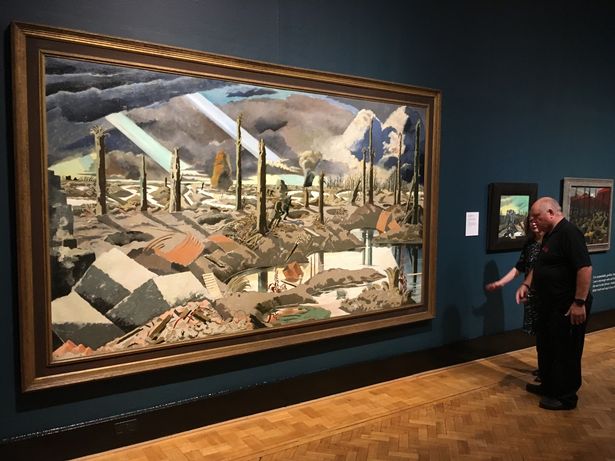
The painting at the top is The Menin Road. It’s a powerful image that is large in scale, as you can see in the photo at the bottom.

5.1.5

Read Full Post »

I was looking for a song for this morning that might relate to Valentine’s Day since it is only a few days away. I wanted something that wasn’t too schmaltzy or too on the nose. And something that you might not have heard before.

I went through all of my favorites first and, while there were plenty of choices there, most of them were a little too well known. Then, as I was listening to another artist on YouTube– Louis Jordan rocking out on Caldonia— I noticed a song on the side, in the suggested-for-you videos that line right column of the screen.

Instantly, I knew this was the right one.

It’s  Ella Fitzgerald doing a horned up version of the classic Sunshine of Your Love from the 1960’s band Cream, which featured Eric Clapton and Ginger Baker.

What more can you ask for? You get the undisputed Queen of Jazz rocking out a love song from the seminal rock power trio of the 1960’s and nailing it hard. You can’t do much better than Ella.

Happy Valentine’s Day right in your face.

It makes me smile. Hope you like it as well and that you have a good Sunday.


Read Full Post »

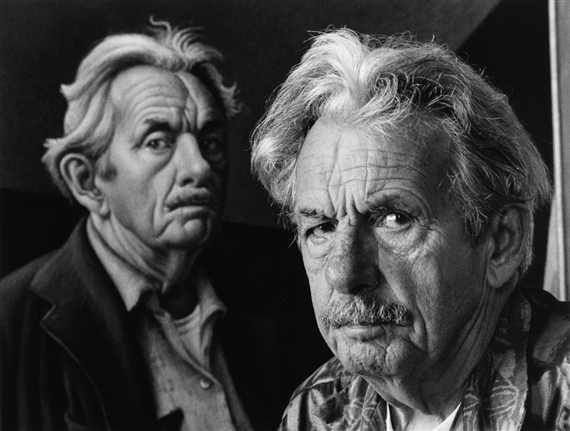
Along with the photo of the drum major that was featured in yesterday’s blog, I also came across another Alfred Eisenstadt photo. Shown above, it is of one of my painting heroes, Thomas Hart Benton, standing in front of a self-portrait. It’s a face that definitely belongs in one of his paintings. It reminded me of the post I’ve included below from a few years back that contains a video about the making of one of his famed murals. If you have ten or eleven minutes and are interested in the painstaking efforts that went into the making of this masterpiece, give it a look. 

************

Thomas_Hart_Benton_-_Achelous_and_Hercules_-_SmithsonianBack in June, I wrote about going to the Smithsonian’s American Art Museum to see the painting shown above,  Achelous and Hercules, a wondrous mural from the great American painter Thomas Hart Benton.  It was commissioned to hang in a now-defunct Kansas City department store in 1947 and after the store closed in 1984 this masterpiece was given to the Smithsonian.

The photo of this mural doesn’t do it justice. Its size and scale, 5′ high and 22′ on a wide wooden panel that Benton painted in egg tempera, is lost in fitting its image on a small screen.  Take my word, it’s imposing and grand, a piece I could stand in front of for hours, losing myself in the rhythms and colors.

That being said, I came across a video taken from an old film that shows the incredibly elaborate process that Benton used in the making of this mural, which took about eight months.  It is fascinating and unusual to see a known masterpiece all the way through the process and coming together in all its stages.  It makes me appreciate this painting even more.

Here is that video.  It’s about 11 minutes long and worth the time spent.

Read Full Post »

This morning I was shuffling through some stuff and came across the great photo shown above. It’s a photo the great photographer Alfred Eisenstaedt took in 1950 of a University of Michigan drum major leading a group of kids across the campus lawn.

It has a wonderful effect in that it never fails to make me smile broadly. The joy in those kids mimicking the drum major is palpable.

Now, that’s a parade.

Which brings me to the news that broke last night that a certain person in Washington has given his directive to the Pentagon that they plan for a huge military parade with columns of marching soldiers, tanks and all sorts of armaments flowing down Pennsylvania Avenue in the District of Columbia.

At first blush, you might think that sounds great. Why not?

But when you consider the history and symbolism of such parades, you begin to ask, “Why?”

Military parades are not part of our national identity and have happened infrequently, the exceptions being at the ends of those wars when we have had citizen troops returning.

When you think of such parades, images of those in the Soviet Union, China and North Korea come to mind. These were conceived as shows of strength from these countries but were, in fact, signs of weakness and insecurity. The need for bravado and the flexing of military muscles is meant not so much to impress the outside world. Were we in the US really filled with fear at the sight of tanks and troops marching in Red Square?

No, these parades are designed from a stance of weakness and are meant to instill unquestioning, fervent nationalism as well as to stifle dissent within their own countries by showing the absolute might of those in power.

And this proposed parade falls into that same category, in my opinion.

These shows of strength not who we are and are not necessary. They show our weakness in a pitiful need to conspicuously show the military strength that everyone in the world knows we have. When we spend more than all of the other major powers in the world combined, they know.

Not to mention the cost, most likely in the range of a hundred or so million dollars. At a time when we are adding a trillion dollars to the national debt this year, wouldn’t there be better places to direct those funds? Maybe in helping those many, many soldiers suffering with PTSD, post-traumatic stress disorder?

I doubt those folks will be marching in these parades.

And all to appease the vanity of a weak and needy leader who kowtows to despots and dictators while constantly attacking his own government, a fool who believes that we are somehow constitutionally bound to stand and applaud for him.

Nobody can tell me when to stand and when to clap.

This ability to defy acts of authoritarianism might be the right that makes me feel truly American. Not some ridiculous military extravaganza.

Give me a drum major and a bunch of kids any day. Now, that’s a parade.

Read Full Post »

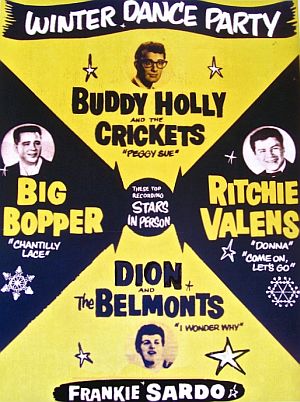
Forgot to mention yesterday that it was the anniversary of the Day the Music Died as Don MacLean called it in his 1971 mega-hit American Pie. It was early in the morning on February 3, 1959 that the small plane carrying Buddy Holly, Richie Valens and J.P. “The Big Bopper” Richardson to their next show in North Dakota crashed into an Iowa cornfield, killing all three.

Holly and Valens were key players in the transition from the early days of rock and roll to the next generation that was marked by the rise of the Beatles and the Rolling Stones, both bands that very heavily influenced in their early work by the music of Buddy Holly. Think of modern rock/pop music being a genealogy chart, a family tree with Buddy Holly as a parent and his offspring and their children and so on all branching out in front of him. Most likely, he is a direct musical ancestor of many artists you listen to today, even though they may not even recognize it themselves because each subsequent generation adds lines of influence from which they synthesize their own music.

Just like Buddy Holly was the result of country music, folk blues and early rock and roll, each generation is a distinctly unique blend.

So, 59 years ago it was a huge loss when that plane crashed outside Clear Lake, Iowa. I have to admit that I sometimes overlook Buddy Holly, shifting him into a hidden file in my mind, until I am reminded by something, such as yesterday’s anniversary just how unique an artist he was and how much I enjoyed his music. I’ve spent much of this morning revisiting his discography, listening to songs that had a huge impact on so many other artists: That’ll Be the Day, Not Fade Away, Maybe Baby, Peggy Sue, Well..All Right, Oh Boy and many others. Just plain good stuff.

Here’s a favorite of mine, Rave On. Have a great Sunday.

Read Full Post »

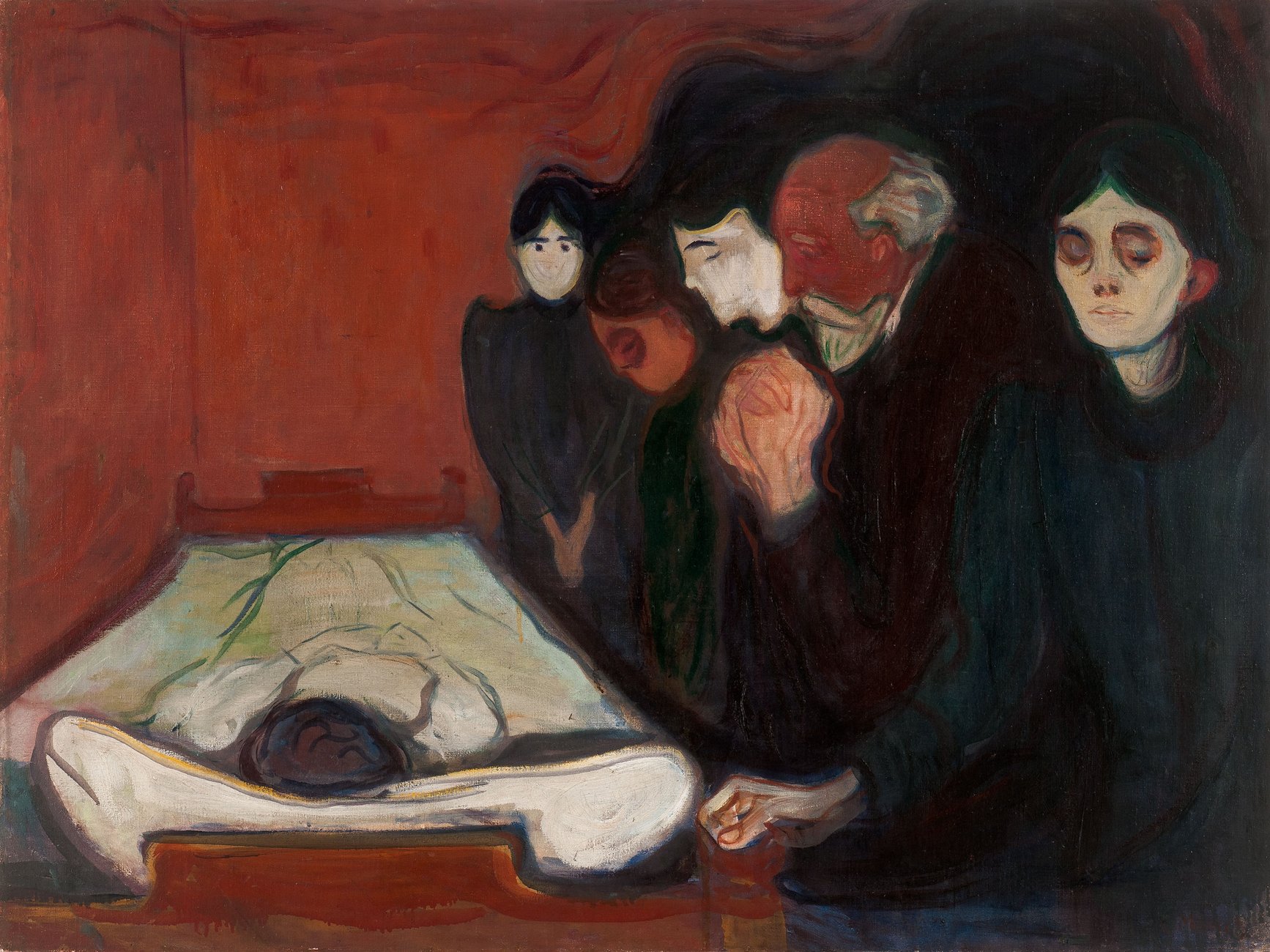
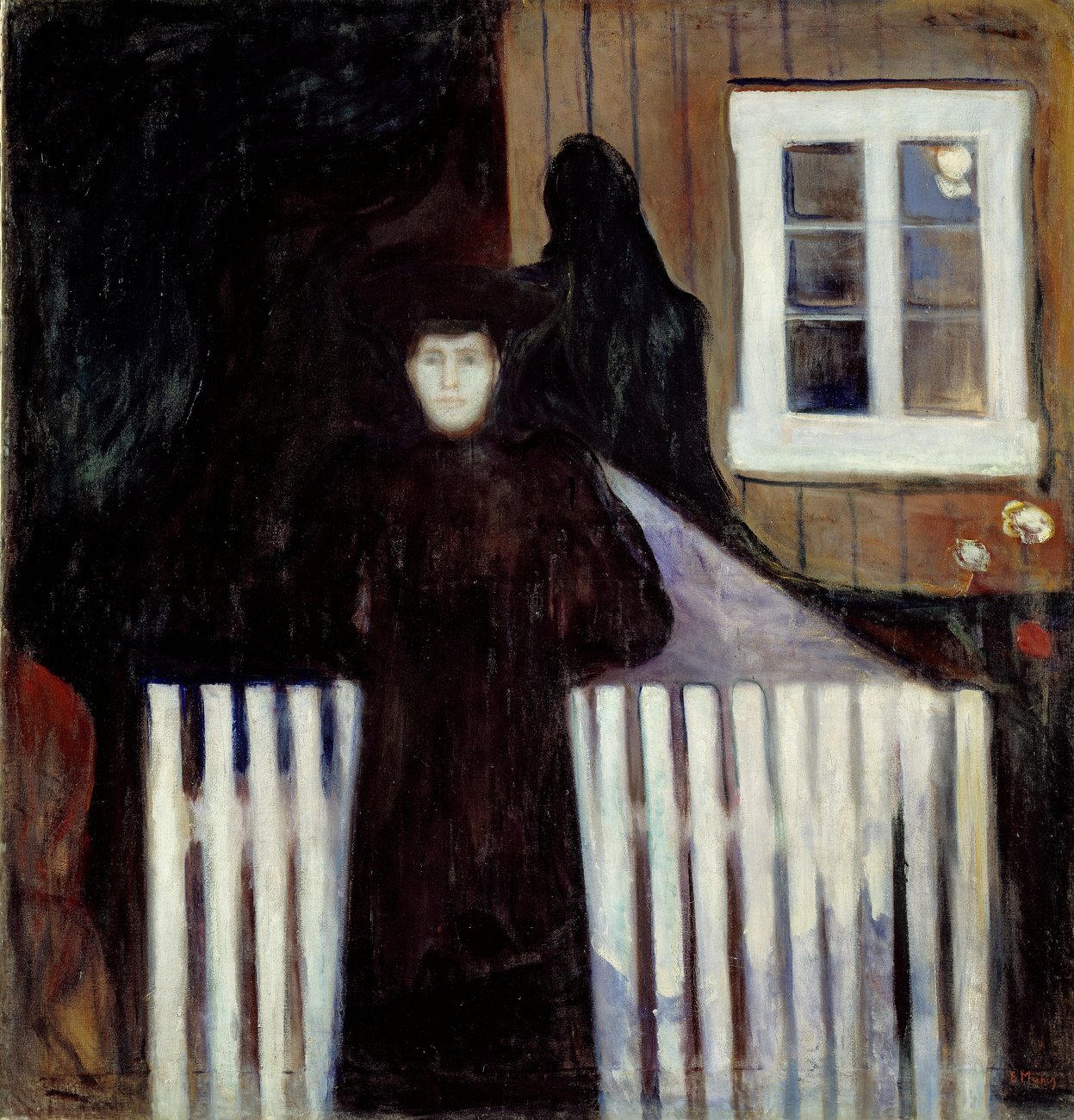
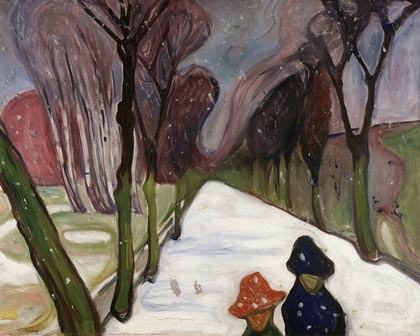
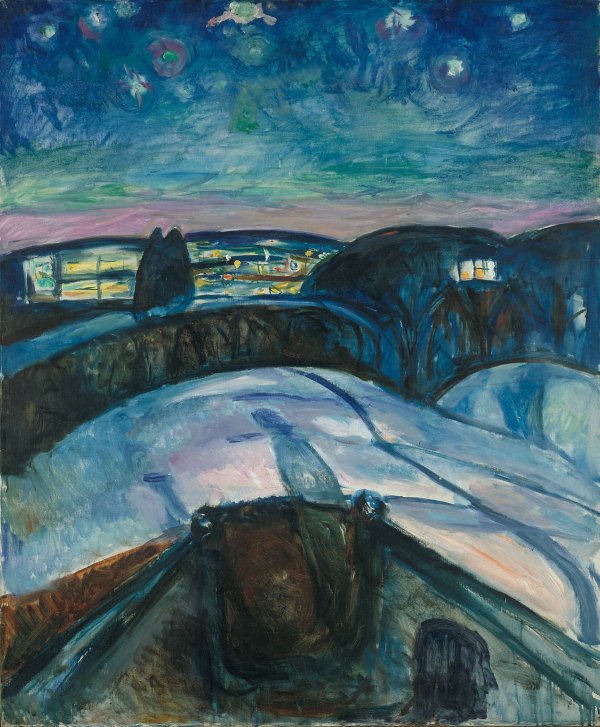
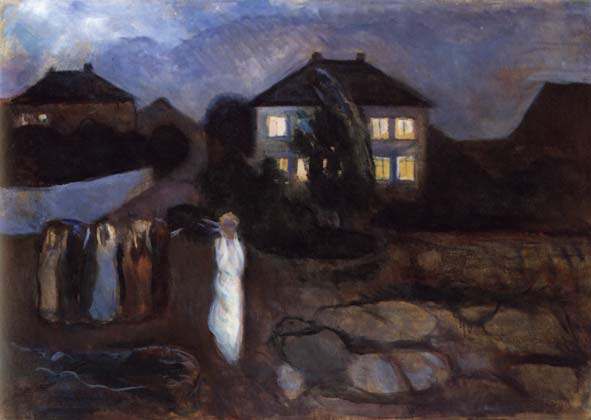
I do not believe in the art which is not the compulsive result of Man’s urge to open his heart.

–Edvard Munch

*****************

Edvard Munch, the Norwegian painter who lived from 1863 to 1944, is best known for his painting The Scream. Unfortunately, that’s the only painting of his most folks can recall. But he had a long and very productive career, creating work that was often dark and filled with anxiety. But it was always his own, pulling deeply from his own inner life and emotions.

His work may not resonate with you– not all of his work hits the mark for my own tastes–but there is no denying that it has the emotional power that can only come from an opened heart that seeks meaning in life, his ultimate goal as an artist.

Or as he said: In my art I have tried to explain to myself life and its meaning. I have also tried to help others to clarify their lives. 


Read Full Post »

« Newer Posts - Older Posts »