I’ve been a fan of the late mythologist Joseph Campbell for many, many years. In his many books on myth, including his classic The Hero With a Thousand Faces, as well as a great PBS series, The Power of Myth, with Bill Moyers , Campbell documented myths from around the world but more importantly showed how intimately they related to our individual lives. Campbell showed us that we all had lives that very much followed the patterns that ran through the classic myths of all cultures.
In short, we are all, in our own way, heroes. We may not slay dragons or find great treasures, but we all at a point experience some form of the hero’s journey.
There’s a wonderful animated short film called What Makes a Hero? from TED Ed and educator Matthew Winkler that succinctly illustrates Campbell’s premise, including the eleven stages of the hero’s journey. It’s a delightful short that will hopefully help you to begin to see the mythic elements that make up your own life.
Time for some Sunday morning music and since I was up extra early this morning the idea of something to pick me up seems like a good idea. Something like some black coffee.
Not the drink, though I am sipping my coffee as I write. I mean the song.
The sultry Black Coffee was written in 1948 by Sonny Burke and originally recorded by Sarah Vaughan and a few years later by Peggy Lee. There have been many, many covers of this song and most are very good. But there are four versions that really stick out for me, all very distinctly different. They are Vaughan’s original, the one from Peggy Lee, k.d. lang‘s darkly twangy version and the one I am featuring this morning from the great and grand Ella Fitzgerald.
Her version is elegantly spare with her voice and piano interweaving beautifully. It is darkly tinged but there is such strength in her phrasing that it keeps the song feeling surprisingly upbeat. Just a great, great song.
A little bit of trivia about this version: It was the favorite song of Nobel Prize winning poetess Wislawa Szymborska , who requested it be performed at her funeral. You might remember Szymborska from a blog entry here last month that featured her poemPossibilities.
So,give a listen as you sip the morning beverage of your choice. Maybe a little black coffee…
I’ve been thinking a lot about stained glass lately, both as the influence it has been on my work and as a possible future foray. Growing up around Corning, glass was always in high visibility and trying to capture some of the luminosity of glass was always a goal in my work. My fondness for the use of defining lines in my paintings most likely stems from a deep affection for stained glass.
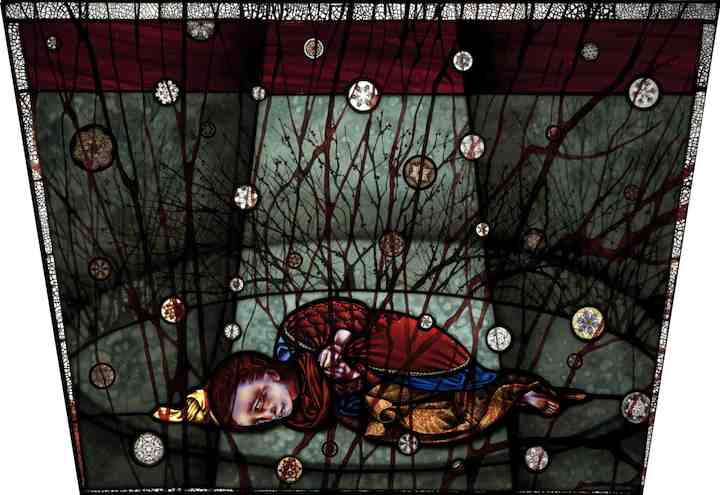
When the new (and spectacular!) Contemporary Art + Design Wing opened recently at the Corning Museum of Glass, among all of the epic glass works it was a more modest sized piece of stained glass tucked away to one side that most caught my eye. It was from Philadelphia-based stained glass artist Judith Schaechter and it was titled Cold Genius. The photo of it at the top does not do it justice, doesn’t capture the inner glow created by the integrated lightbox. Believe me when I say it is a striking piece of art.
Judith Schaechter -Wreck of the Isabella 2005
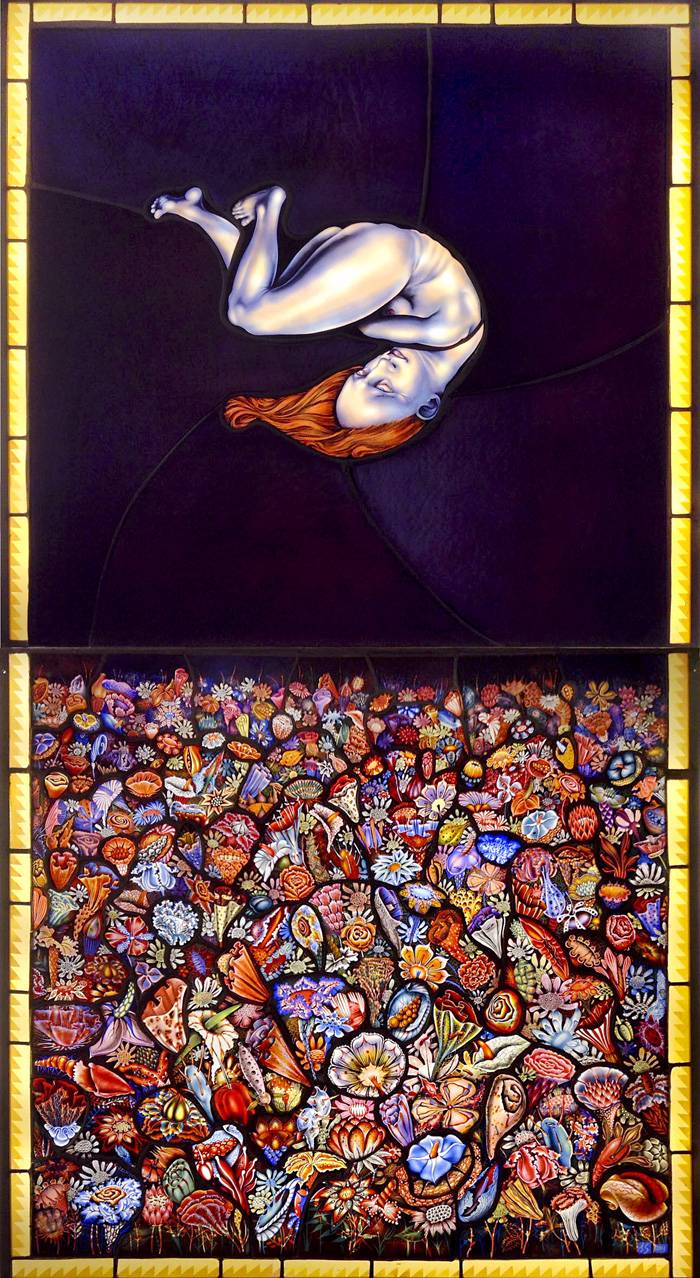
I knew nothing of the work of Judith Schaechter beforehand but this image just triggered something. Looking her up and finding her work on her website as well a number of others, I discovered that she was one of the pioneers in modern stained glass, having been at the forefront of the medium for over 30 years. I was overwhelmed by her productivity, her creativity and innovation as well as the consistency of her vision. As I’ve shown here before, one of my ways of quickly taking in an artist’s personal style is in viewing a page of their work on Google. As you can see at the bottom, Schaechter’s work has a completeness of voice that any artist would envy.
While it is often macabre in nature, it is always beautiful having a transcendent quality that glows from within. It feels both contemporary and timeless, which is the goal of any artist.
It was hard to not be in awe and easy to be inspired, to see things in her work that fed my own desire for expression, that set off pangs of wanting to make an attempt in that medium. It’s not a feeling I often experience with many contemporary artists so you can understand my excitement at finding her work.
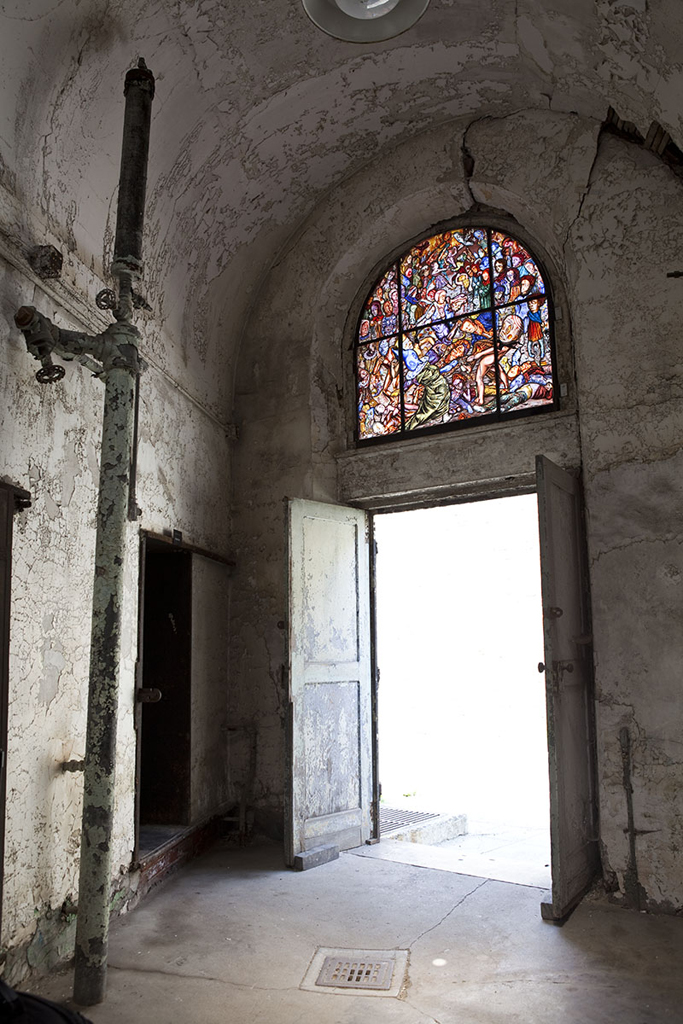
The few images and my short paragraphs here may not fully do her work justice. Check out her work for yourself on her website. It includes a very interesting project where she installed windows at the infamous Eastern State Penitentiary in Philly. There’s also a great recent interview online that is very enlightening– I think many artists will see many things that jibe with their own experiences.
Judith Schaechter Eastern State Penitentiary Project
Judith Schaechter -Battle of Carnival and Lent/ Eastern State Pen.
There were some folks at the Gallery Talk the other day who told me that they were either signed up for or were planning to attend the two-day workshop I will be giving in September in the beautiful Finger Lakes. I was really pleased to hear this and the fact that they were eager for the experience. I told them I was a bit excited myself as this is the first time I’ve tried my hand at teaching but that I would give them a real behind-the-scenes look at my process. I promised that I would make it entertaining and that they will hopefully walk away with new ideas about how they use their materials and look at their own work.
Thinking about that this morning led me to consider what materials would be required for the workshop and the first thing that came to mind was my 1″ squirrel mop, a brush that is always near me when I am at my wet work. This reminded me of a bog post back in 2009 where I wrote about my brushes and the Good Soldiers they are for me, sacrificing themselves for the good of a painting. There’s a before and after photo that shows their sacrifice.
Thought I would share that post today:
I was looking at the brush in my hand the other day and I realized how rough I am sometimes on my brushes. It was a natural bristle brush that was new just a few weeks ago, when it looked like the brush to the far left in the photo.
Over those few weeks, I caressed paint on to canvas. I also pushed paint into the canvas. I ground the paint against the canvas, using a lot of force, to almost burnish the surface. I stroked. I poked. And when I looked down the brush had turned into that poor guy shown second from the left.
I can be rough on my brushes.
For my normal wet technique I use a natural hair squirrel mop like the two shown on the right. It’s a big, soft brush that holds a lot of paint and is a staple in my studio. The brush on the left is new and the one on the right is obviously not. This erosion of the bristles shown here represents about 6 or 7 months of use.
Hard use.
I like the way the bristles whittled themselves down to the angle my hand takes when I normally strike the painting surface. Unfortunately, it has eroded to a point where its capacity to hold paint makes it a hindrance to my technique. So he is put aside and maybe I will find a use for him at some point, so I keep him with my other spent brushes. I could never throw such loyal workers to the trash heap.
I have amassed quite a number of brushes, both well used and brand new, over the years. I have tiny detail brushes that I go through quickly. I have some cheapy brushes that work perfectly well for certain techniques. I have some of my favorite medium priced brushes that I have stockpiled because they’re no longer made. I also have some pretty expensive brushes. I have a set of beautiful Winsor & Newton Series 7 brushes that are handmade with soft, luxurious Kolinsky sable. I’ve had them for about 13 years and have only used one or two of them for a few minutes. They’re lovely in the hand but I never felt comfortable with them and just wouldn’t feel right grinding them roughly into the surface.
So they sit and wait for a day when I’m ready to put them in the game.
Yesterday’s Gallery Talk at the Kada Gallery went really well. Many,many, many thanks to Kathy, Joe and Morgan at the gallery for providing a comfortable setting and the many folks in attendance for taking time out on a rare sunny Saturday afternoon to spend it with me. They were an absolutely wonderful group –attentive and inquisitive–which made my task much easier, making me feel very welcomed and at ease in front of them.
Hopefully not so much that I over-talked or came across as too full of myself. I always worry about things like that on the ride back home, agonizing over things I said or didn’t say. It comes easy because at that point I am pretty tired of hearing my own voice, tired of pretty much being the public me at that moment.
One thing I forgot to mention which bothered me as I was on my way home was that it was the input that I get from the encouragement and stories shared by the folks that attend these events are such a huge inspiration and the motor that drives my work. I work untold hours alone in my studio and it is their reaction to the work and the fact that they allow me to glimpse briefly into their lives that make them seem almost present at times in my studio. Distant eyes looking over my shoulder.
I shared one recent inspirational story that took place very recently right there at the Kada Gallery. A week or so ago, they received an email inquiry from a lady in Switzerland about a large painting, titled Family Lines with the Red Tree with a Red Chair in its branches. It turns out that she had recently lost her husband to Alzheimer’s and one of their final exchanges was about that very painting, obviously seeing it in online. Her husband said that he was the Red Tree and she was the Red Chair. I have to admit to being made teary-eyed by that. How can something like not stick with me, not find its way into my thoughts when I am alone in the studio?
That story, like so many others shared with me over the years, brings a sense of purpose to the sometimes abstract and introverted act of painting. I can never fully thank these people for the gift in their sharing.
One of the ways I do try thank folks at these talks is by having several giveaways, including an original painting. We had a very good time with it yesterday and the group was so receptive that I thought they deserved another. I had a painting, Color Rising, from a few years back that won by a young lady in her 90’s which leads me to this week’s Sunday music selection. The painting, shown left, was a monochromatic piece, shades of back and gray with just a dash of color. I explained that I do these paintings periodically to just more less refresh my color palette in the period between working on shows and that seeing one of my compositions with the color removed was a bit like hearing a song that you’ve heard a thousand times before done by one person done by somebody else. The song has the same notes, chords, melody and lyrics but it is somehow different, somehow changed.
That brings me to this musical example, a version of the Beatles‘ song In My Life from 1965‘s Rubber Soul album. My god, I can’t believe this song is fifty years old! This version is from the American recordings of Johnny Cash, done in the final months of his life. His age and ailments changed his delivery and imbued the songs with real heart-felt emotion and purity. A powerful group of music. This version of the Beatles’ song is not so different but it has his own personal meaning which makes it his own.
Again, so many thanks to everyone who came yesterday. It was my great pleasure to spend the day with you all. Hope your Sunday is a good one…
One of the books in my to-read pile that is more of a tower now is one called Tom and Jack from writer Henry Adams. It details the long relationship between Thomas Hart Benton and Jackson Pollock, two painters seemingly worlds apart– Pollock known for his vibrant abstracted drip paintings and Benton for his distinct but more objective view of the American landscape.
But Benton was a mentor, teacher and surrogate father for Pollock and many of his lessons found form in Pollock’s work, particularly the ability to create a rhythm in each painting. Both were masters of the graceful organic rhythms that run through their works.
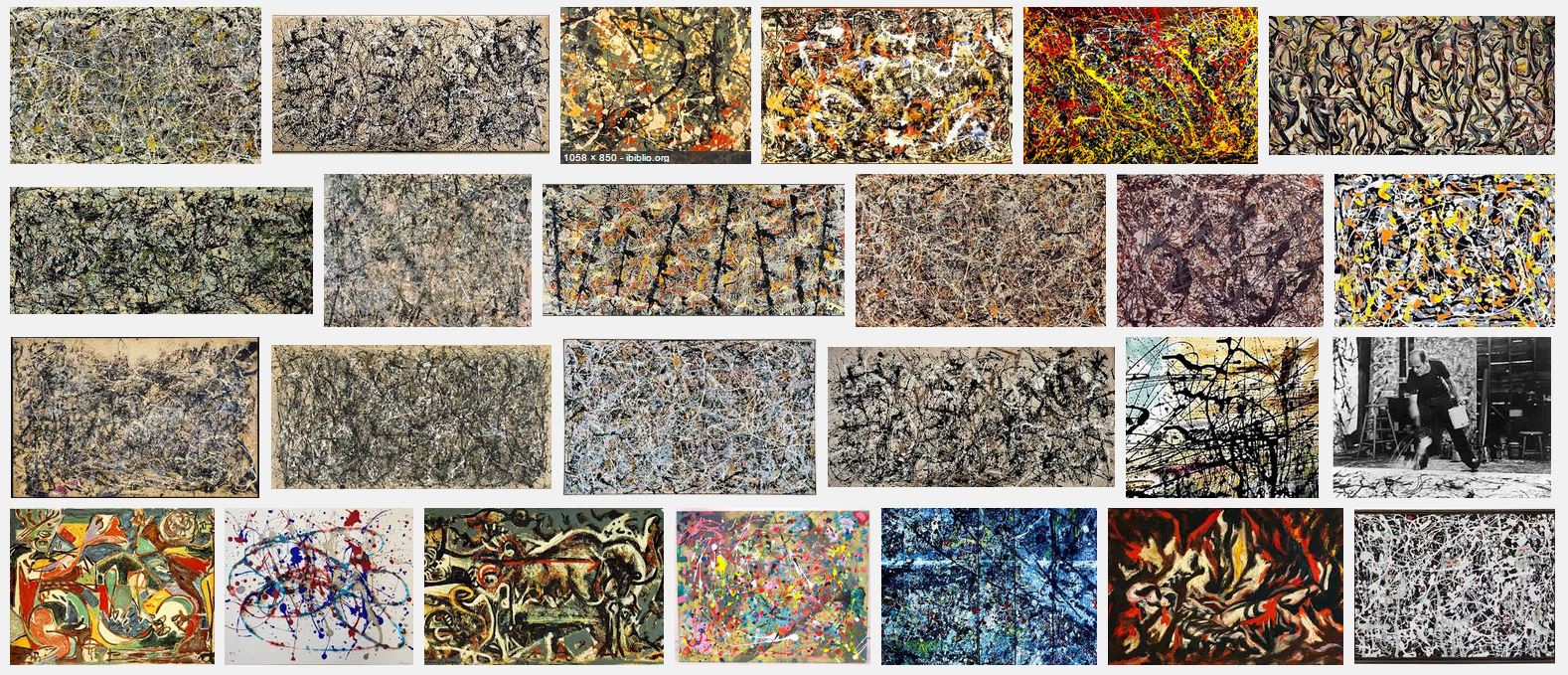
One of the things I often do when looking at the work of other artists is to do a Google image search for that artist. Seeing the work grouped together, as you can see in the images at the top and bottom of the page, allows me to quickly take in the overall tone and feel, to get an idea of the general fingerprint of that artist. At the top is a screenshot of Benton’s landscapes and the thing that immediately jumps out at me is the beautiful organic roll of the landscape that creates a rhythm that instantly draws me in.
One of the paintings from the Benton page is shown here on the left, The Trail Riders, and is a great example of this rhythm. It creates a sense of movement and gives the forms of the landscape an almost human quality in its curves and rolls which makes it seem familiar. Part of us, who we are. For me, that rhythm in Benton’s work was a revelation. The landscape became something more that a static backdrop. It was alive and breathing and moving, very often the central character in the work.
And I knew that was what I wanted in my own work, just as I believe Pollock observed it and wanted for his own work. And he found a way to take that rhythm and create his own living landscape through his distinct visual vocabulary. Much different than Benton but built on the same underlying energies.
Seeing both their works is really motivating for me, making me chomp at the bit this morning. Each spurs me in many directions, but always fast and forward moving.
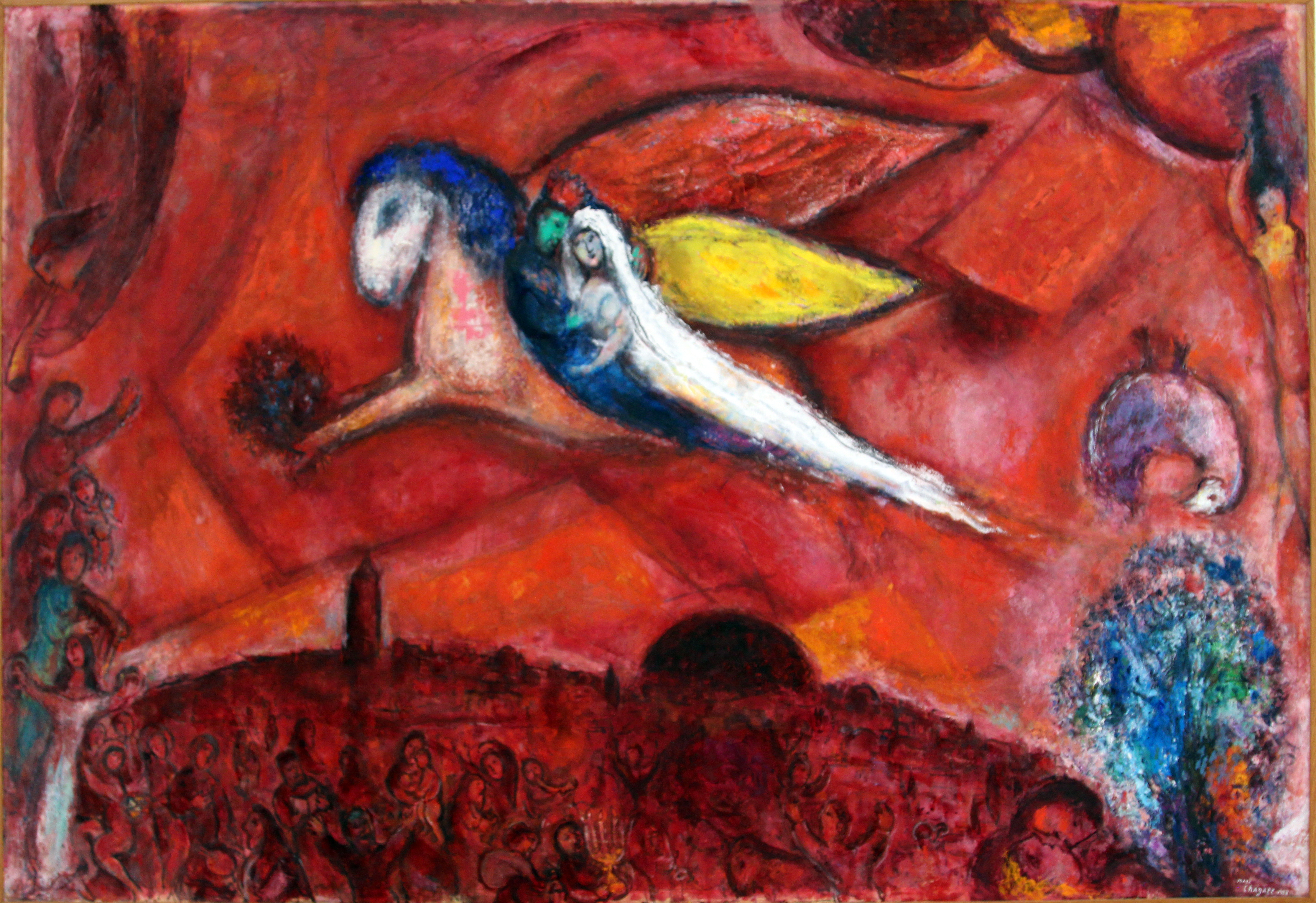
When I am finishing a picture I hold some God-made object up to it / a rock, a flower, the branch of a tree or my hand / as a kind of final test. If the painting stands up beside a thing man cannot make, the painting is authentic. If there’s a clash between the two, it is bad art.
–Marc Chagall
**************
I haven’t mentioned Marc Chagall here but once over the 6+ years I have been doing this blog and I very seldom list him as one of my influences or even one of my favorite artists. But somehow he always seems to be sitting prominently there at the end of the day, both as a favorite and an influence.
One way in which his influence takes form is in the way in which he created a unique visual vocabulary of symbology within his work. His soaring people, his goats and horses and angels all seem at once mythic yet vaguely reminiscent of our own dreams, part of each of us but hidden deeply within.
They are mysterious but familiar.
And that’s a quality– mysterious and familiar– that I sought for my own symbols: the Red Chair, the Red Tree and the anonymous houses, for examples. That need to paint familiar objects that could take on other aspects of meaning very much came from Chagall’s paintings.
He also exerted his influence in the way in which he painted, distinct and as free-flowing as a signature. It was very much what I would call his Native Voice. Not affected or trying to adhere to any standards, just coming off his brush freely and naturally.
An organic expression of himself. And that is something I have sought since I first began painting– my own native voice, one in which I painted as easily and without thought as I would write my signature.
So to read how Chagall judged his work for authenticity makes me consider how I validate my own work. It’s not that different. I use the term a sense of rightness to describe what I am seeking in the work which is the same sense one gets when you pick up a stone and consider it. Worn through the ages, untouched for the most part by man, it is precisely what it is. It’s form and feel are natural and organic. There is just an inherent rightness to it. I hope for that same sense when I look at my work and I am sure that it is not far from the feeling Chagall sought when he compared his own work to a rock or a flower or his own hand.
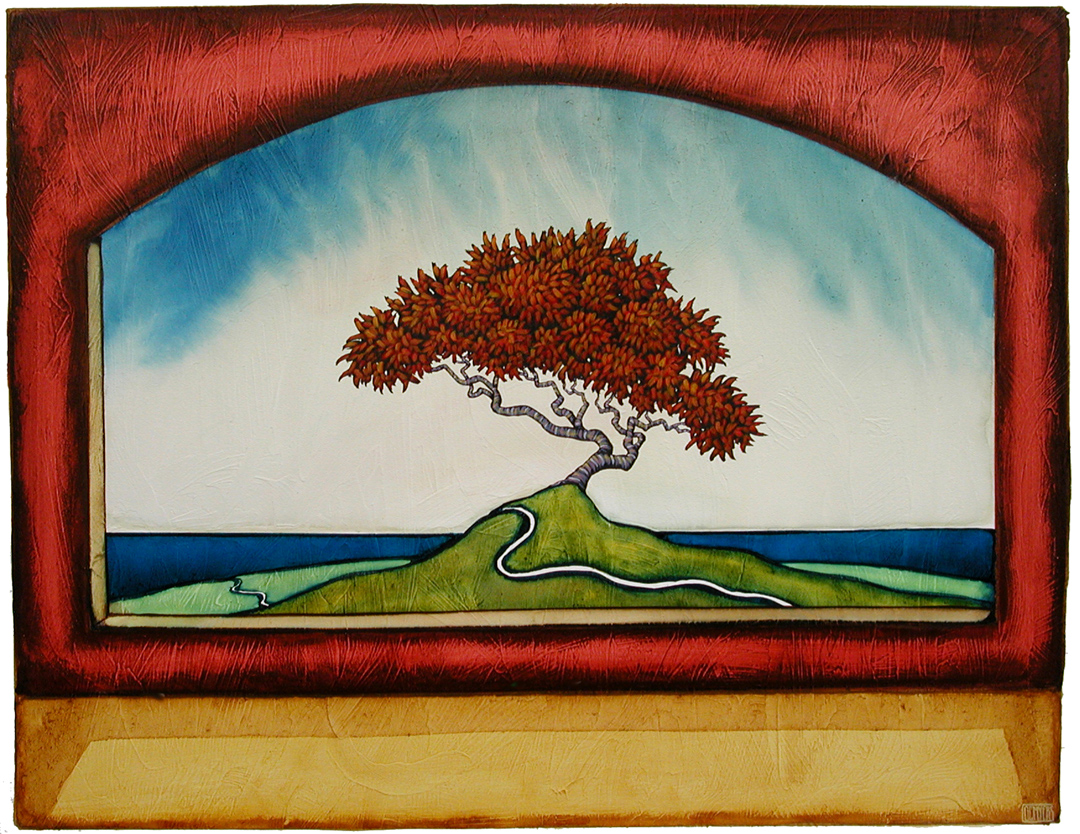
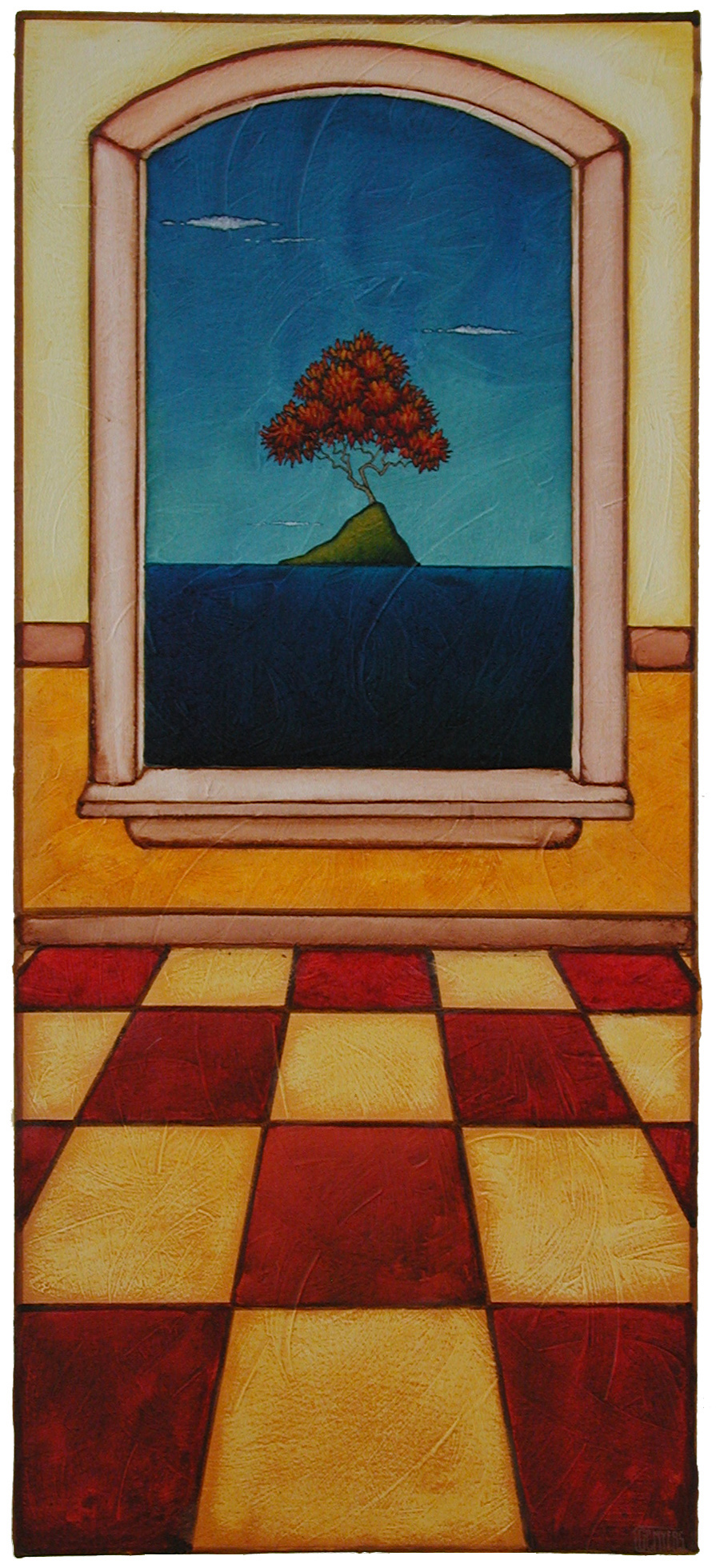
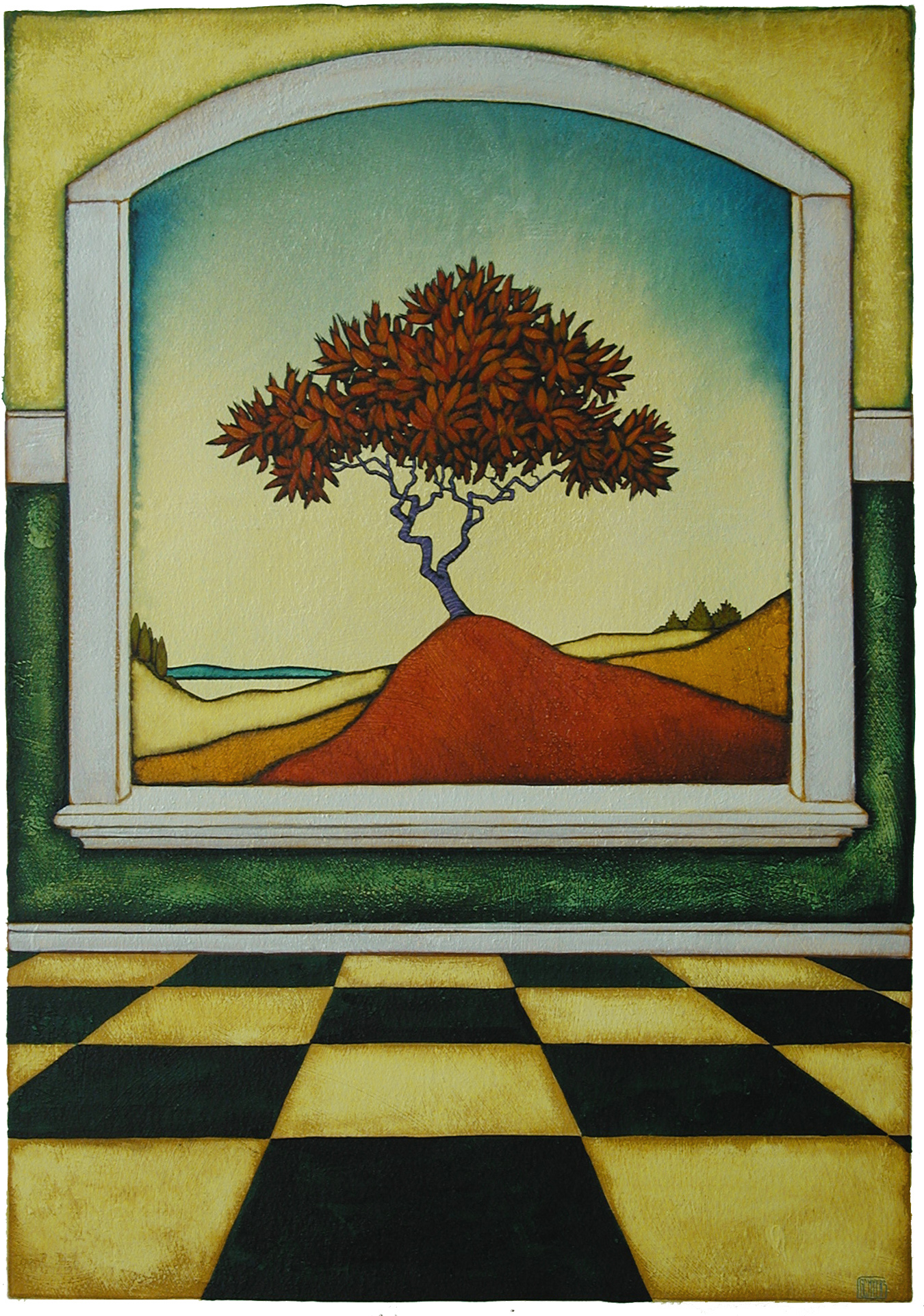
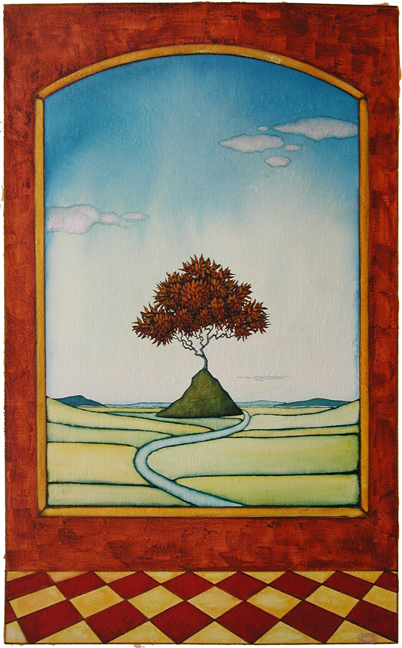
I wasn’t going to do a re-post on the blog today but when I was going through some images I came across an image from a series that I did in 2005 called In the Window which had my typical landscapes with the Red Tree as seen through a window in various interiors. This series was pretty well received but never found its way into my regular rotation of work. It remains an isolated series from that time but is one that is very close to me personally. I guess an example of this fondness might be that there is one piece in the series, the one above bears my late mother’s name. Its title is In the Window: Flower of Doreen.
Seeing that her birthday is next week I felt like I should pay her a little tribute here. She never witnessed my work in a gallery, never knew that I would find a career doing this. But I think she would be pleased by the fact that her name lives on in a painting and that the flowers she planted many years ago are doing well.
Here’s what I wrote several years back along with a few more examples from this series at the bottom:
A question asked of me this weekend inspired me to go back into my archives and pull out the images of a few pieces done several years back. I was asked if I used this time of the year as a starting point for new work and I said that I often did, using it as a time to begin new ideas that I want to try. I explained that it was important for me to continue trying new things as it excited me in the studio and that this excitement was important to all of my work. This new work provides a vibrancy that permeates all my work and helps me find the new in compositions that I have painted in the past.
I explained that I liked to try new concepts in series in most years and that some are more embraced than others and become part of my regular painting vocabulary for years. The Red Roof series is such a series. I have painted examples in this series for several years and it has become ingrained. The Archaeology series is another.
Other series last but a season. While they may be popular from a sales standpoint, they soon exit my routine. The In the Window series is an example of such a series. Done in 2005, they were a series of paintings that featured simple interior scenes with large windows that were highlighted by examples of my typical landscapes. The idea was that the interior scene acted as a setting to show the landscapes in a different manner, much like the setting for a piece of jewelry dictates how a gem is seen. The gem here was my landscape.
This painting shown on the left, In the Window: Dream Away, was the first piece. It seemed to jump off the paper on which it was painted. Very vibrant. The setting of the window pushed the scene of the tree atop the mound overlooking the water out of the frame and seemed to intensify it. I was immediately taken with the concept and a number of others soon followed, including the one at the top. These pieces sold pretty well but they eventually lost steam for me from a creative standpoint. While I still felt that they were vibrant , I sensed that I had done as much as I could with the concept and didn’t want it to become labored and tired. My excitement was passing and I wanted to stop near a peak rather than at a low when the work was completely played out when I was viewing it as a toil rather than a joyous activity.
I still feel excitement personally when I see these pieces from this time and I know they are of a certain time for me. I want them to stand as they are in my body of work. As I described this this past weekend, I explained that the interesting thing about stopping a series is that it creates a finite number of pieces within it. They become more distinctive over time, more representative of a certain time in my own artistic continuum. So while these series, such as the In the Window series, are short-lived they have a longer viewpoint.
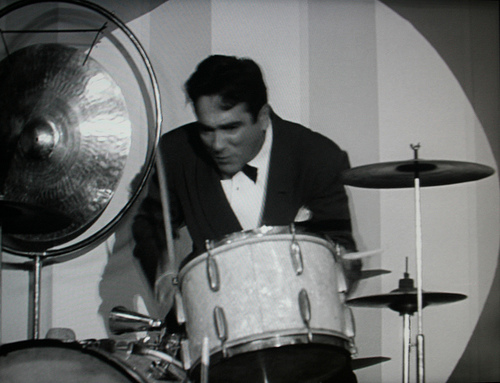
I’m running a little late this morning and thought I’d fill today with a little music. It’s a great piece of film from legendary drummer Gene Krupa and his trio doing Big Noise From Winnetka. I’ve been a big fan of Krupa since first seeing him perform the very swinging Drum Boogie in the Barabara Stanwyck/Gary Cooper movie, Ball of Fire. Avery flamboyant and strong presence on the stage, he was more famously known for his work on the classic Benny Goodman track, Sing, Sing, Sing, which is the anthem of big band swing.
Anyway, give a listen and watch for some of Krupa’s famous showmanship. It’s just good stuff and a great way to kick off a tired Tuesday morning.
Hard to believe it’s March first. With the snow falling and the cold temperatures, it definitely looks to be following the old adage where it comes in like a lion. I am hoping the lamb is not too far away but this year, who knows? We might be saying the same thing for April.
Crazy world. Which brings me to this Sunday’s musical interlude. I’ve been doing this blog for about 6 1/2 years now (which is hard to believe, as well) and have played a lot of different music over that time. But for some unknown reason, the one and only Temptations have never made an appearance. How I could have waited so long is beyond me but I will fix it today.
For many folks, the music of the Temptations could well be the soundtrack of the 60’s and 70’s. Motown at its very best. If you grew up in that time frame, their music most likely was part of your life in some way. My Girl, Just My Imagination, Papa Was a Rolling Stone, Ain’t Too Proudto Beg, and on and on. I mean, come on!
So today, with another blast of winter weather confusing this corner of the world and the rest of the world in a constant state of chaos, I thought I’d share the tempting Temptations’ Ball of Confusion. If the world is indeed going to hell as some fear, at least let it go with a beat laid down by the Funk Brothers, Motown’s incredible band of musicians who performed the music on this and so many other immortal hits. Have a great Sunday!
 I’ve been a fan of the late mythologist Joseph Campbell for many, many years. In his many books on myth, including his classic The Hero With a Thousand Faces, as well as a great PBS series, The Power of Myth, with Bill Moyers , Campbell documented myths from around the world but more importantly showed how intimately they related to our individual lives. Campbell showed us that we all had lives that very much followed the patterns that ran through the classic myths of all cultures.












 Redtree Times