Feeds:
Posts
Comments

Archive for the ‘Photography’ Category

leningrad-gas-mask-drill-1937This old photo I recently came across fascinates me.  From 1937, it depicts a gas mask drill and the participants are the Pioneers of Leningrad.  The Pioneers were a Soviet youth organization similar to the Boy Scout movement of the west.  They learned skills related to civic and social cooperation with social gatherings and summer camps in order to create good, loyal Soviet citizens.

Beyond the obvious weirdness of the image, the photo carries the haunting thought that just four short years later many of these young people would most likely perish in the Siege of Leningrad.

For 900 days, the Nazis held Leningrad, which it had been unable to take by force, in siege attempting to starve the city into submission. Over a third of the city’s population- over 800,00 people– died during the Siege.  Most died from the depths of starvation that found the citizens eating anything at their disposal– sawdust, wallpaper, and any and all pets.

It’s a horror that is hard for us, so far removed from that place and that war, to fathom yet it happened just a little over 70 years back.  Some of those children in the photo, if they were fortunate to survive the war and the siege, could easily be alive today. I am sure when the photo was taken they felt strong and prepared to face whatever adversity lay ahead. They had no idea what the future truly held.

For today’s Sunday morning music I am using a song that relates in a way to the photo. It’s Red Army Blues from the Irish band The Waterboys‘ 1985 album, A Pagan Place.

The song tells the story of a Soviet soldier in WWII who somehow survives the war and comes in contact with American troops.  Joseph Stalin felt that troops who were taken prisoner were weak and traitors to the Soviet state and that troops who came in contact with Allied troops were in danger of being Westernized. So after the war, many Red Army troops who had been held as POWs or had much contact with western troops were considered a threat to the state and were sent directly to the gulags where many would die while working and starving in forced labor camps. We’re talking in the millions here.

I bring up this dark page in history because of our current head of state’s recent warming up to Russia where Vladimir Putin has began reintroducing Stalin era thinking to that country. Time and fading memories have made the horrors that Stalin inflicted on his people somehow palatable. The gulags, the purges, and the artificial famines that killed millions of Soviets seem to be a distant memory now and there is actually a bit of nostalgia for Stalin. Hence, Putin’s rise.

But the memory of these things, these atrocities against his own people and humanity, should never be relinquished.  If forgotten they are only a moment from becoming the present.

This is a pretty interesting video of Red Army Blues with a lot of great Soviet footage of that time which means that some of it is grisly and disturbing. Unfortunately, that is what much of our  history entails. It’s worth a listen and a view.

Have a great day


Read Full Post »


brassai_1899_1984__-paris-11I thought for this Sunday’s music I’d do something with a Valentine’s Day theme.  I also wanted to use the Brassai photo shown here, one of his famed Paris photos that I used in a post from a few years back. I decided to incorporate a post from a few years back about the song The First Time Ever I Saw Your Face.
Most people immediately think of Roberta Flack when they think of the song  and for good reason.  Her 1972 version was  truly beautiful and deserved every bit of the acclaim it earned.  But the song didn’t originate with her and has had many, many versions through the years, including one of my favorites from Johnny Cash, which you can see below along with the Roberta Flack version.

The song’s history began in 1957.  It was written by Ewan MacColl,  a British folk singer who is a very interesting character in his own right.  He was a married man who fell in love with the much younger Peggy Seeger, the half-sister of folk icon Pete Seeger.  He later married Seeger.  MacColl wrote the song about her and for her to perform.  She needed a song for a play she was appearing in here in the USA so MacColl wrote the song and taught it to her via the telephone as he was barred from entering the States because of his Communist ties.  As I said, he was an interesting character.

Her original version has much different phrasing than the better known Flack version and while it is not my favorite, it is nonetheless lovely. It is said that MacColl despised all the later versions of the song, preferring his wife’s.  Hey, it was written for her, after all.

Cash’s version is much more ponderous, closer in tone to the Flack version.  It is from his American series near the end of his life.  His voice was weaker and even rawer than in his younger days but Cash used it in an incredibly expressive way, giving the song  the feeling of a dirge as he looked back from a point near the end of his and his wife’s life, to an earlier time in his life and the fresh discovery of love.  It is both beautiful and sad– much like life and love.

Just a great song. Have a good Sunday…


Read Full Post »

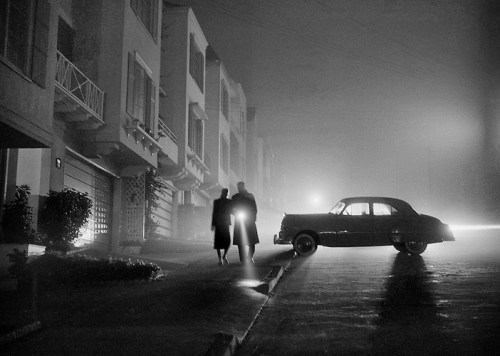
fred-lyon-san-francisco-1953Sunday morning. Time for a little music.

I saw this photo online earlier.  It’s from the great San Francisco based photographer Fred Lyon who is still active at age 91.  His photos of San Francisco from the 40’s and 50’s are wonderful.  This image, called Foggy night, Land’s End, San Francisco, 1953, really captured my imagination. It just seems filled with all sorts of stories that are begging to be told. Magnificent shot.  See more of Fred Lyon’s work at his website by clicking here.

I wanted to come up with a song that might come out of this photo and I settled on Because the Night. It was written by Bruce Springsteen for Patti Smith in 1977 and she had her biggest success with that song.  Great version.  But I personally prefer the Springsteen version.  This particular performance is from Largo, MD in 1978. Hard to believe it’s been that many years.

I also just wanted to take a moment to talk about the refugee controversy in this country.  I know you’re probably sick to death dealing with everything that is going on but I just wanted to remind ourselves that the thing that have long separated us from other countries around the world is not based on power,  It was never about military strength. It wasn’t about our wealth and the privileged few that control it.

It was about us.  It was about our music, our films, our literature which reflected our entrepreneurial spirit– that every person had a value and a purpose and was free to make the most of it.  The freedom with with we expressed these things was the rare thing that made us the desired landing place for the disenfranchised people around the world.

You see it in our films.  Think about just about any Frank Capra movie– who was an Italian immigrant, by the way. Those values he so lovingly extolled in his films are the very things that have defined America around the world. The people who rail against refugees and immigrants out of fear, ignorance, selfishness or hatred go against these values, the very things that have made us special.

It’s the freedom to define yourself, to mold yourself into what you think you should be.

It’s still there and it is still the beacon, the light in the darkness, that draws people to our shores. Fear and ignorance can end that freedom, extinguish that light. And when we no longer attract the world, we have lost our real power, our real strength.

Sorry.  You most likely don’t need to hear any more diatribes but sometimes they need to be said if only for the speaker’s sake.  And I needed to say that.

Give a listen and have a good day. And keep your eyes open!


Read Full Post »

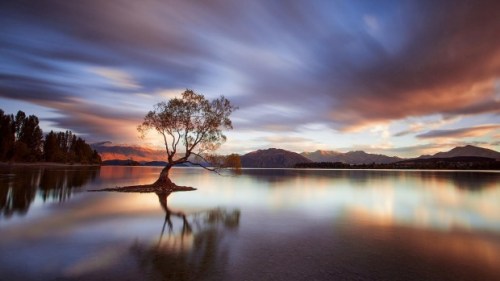
lake-wanaka-nz-lone-tree-2I don’t know much about New Zealand, have never been there and most likely will never get to see that country.  But I have long heard about its spectacular natural beauty with its soaring mountains and forests.  Out of all of this beauty, I recently came across a photo of what is considered perhaps the most photographed and beautiful spots in all of New Zealand.
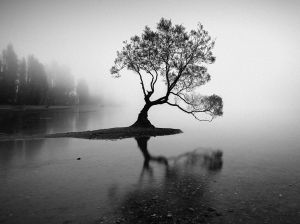
lake-wanaka-nz-lone-tree-5-bwIn the foothills of the Mount Aspiring National Park on New Zealand’s South Island, beneath the snow-capped peaks of the southern alps, there is an alpine lake and on the shore (and sometimes in the lake itself) stand a willow tree.  It is the Lone Tree of Lake Wanaka.

It started its life years ago as a hewed off willow branch acting as a fence post.  The tree sprouted from that post and stands alone now, the fence line long gone. That’s determination, a will to exist.

It’s a powerful image, this single tree standing amidst all the powerful glory of nature.  While it may attract crowds of tourists to snap pictures of the tree and themselves beside it, it is obviously the solitary determination of the tree that speaks to those who see it.  I think that is something that speaks to most of us, this need to know that we can withstand this world, can stand alone.

I know it sure speaks to me and certainly looks familiar to much of my work.  I did  a quick search and chose a few great images out of the many out there of the Lone Tree.  Take a look.  It is peaceful yet strong and defiantly determined.  Heroic.

If only it were red…

lake-wanaka-nz-lone-tree-7 lake-wanaka-nz-lone-tree-1 lake-wanaka-nz-lone-tree-3 lake-wanaka-nz-lone-tree-6 lake-wanaka-nz-lone-tree-4

Read Full Post »

Far, Far Away

Jupiter From Below-  NASA-JPL-Space Science InstituteThe week after a show’s opening is an odd time for me.  Even though you might think it would be a time to relax and savor the success of the show, it seldom is.  Yes, I do get to let out a deep sigh of relief just to have the task done and to have not fallen on my face. But I am often fatigued from writing and speaking so much about myself and my work.

It’s a fatigue that makes me feel a bit grimy and  greasy.  I feel like I’m covered with an unpleasant layer of ego sweat that can’t be washed away.  It has to fade away slowly.

I’ve always viewed the work of self-promotion as simply being a necessary aspect of the job of being an independent artist.  In simplest terms, I am basically a small business that produces a product and every small business must promote their product or they will not stay in business for very long.  So I do what I can to promote the work, writing about and pushing the paintings out into the world of social media to raise the profile of my product.

But when the product is  the art which is at its core you and your internal self, there is a sense that you are selling your very being.  That ups the stakes a bit because to not succeed feels like a diminishing of yourself.  It feels as though it is not just the art that is or is not being embraced, it is you.

You try to keep that view at bay, to keep the self and the art separate, but when you are putting so much of yourself into the work it is a hard thing to do.

So you either embrace the task as a necessary evil and forge ahead, risking the rejection of work and yourself by the public or you avoid it altogether.  But avoiding it is like avoiding exercise– you know it’s good for you but it is so much easier to skip it and make excuses for why your time is better spent doing just about anything else.  No sweating and no effort required.

I choose to do this work and part of that is accepting that grimy ego sweat and the fatigue from always pushing my product and myself.  But like anything that you do over and over again, you come to know that feeling and realize that eventually the effort yields positive results.

That’s where I am today– sweaty and tired.  But the feeling will fade and I will soon be ready to go at it again with all the effort I can muster.

But until then I am letting my mind wander and I find myself far away.  In this case, I find myself completely intrigued by this image from NASA that captures Jupiter in a stereographic image taken from below its South Pole.  I’ve looked at this image about a dozen times over the past couple of days and I find myself mesmerized by it.  It is just about as far away as I can get and it cools the ego sweat in a most wonderful way.

Read Full Post »

Portrait of a Group of LumberjacksI’ve got a soft spot for pictures of lumbermen.  I’ve written here before about my great-grandfather, Gilbert Perry, who was a pioneer in the Adirondack logging of the late 1800’s.  It was in the days before chainsaws and gas-powered tractors when everything was done with axes, crosscut saws, teams of horses and the brute force of large crews of men.  My aunt once had a photo of him alongside a huge stack of logs atop a horse-drawn sled but it was lost before I able to see it.
But besides Gilbert, early loggers from the Eastern forests are pretty numerous in my family and in my wife’s family.  I am always surprised at how many turn up when I am doing research. Being a lumberjack was a rough and dangerous job, one that was romanticized in the late 1800’s in magazines such as Harper’s Weekly and the Atlantic as the Eastern equivalent of the Western cowboys of that time.

A number of those in our families lost their lives in the forests.  Among them, Cheri’s great-grandfather was crushed beneath a large log and died before he could be extracted.  I read an account of a great-uncle of mine in the Pennsylvania Black Forest whose leg was crushed between two logs in a sluice that was being used to move them.  The article tells how they  rushed him to a train and sped at breakneck speeds towards Williamsport trying to save him.  Unfortunately,  he passed away as they pulled into the city.

So whenever I run across a photo from of early lumberjacks I have to stop and take a look.  I don’t know anything about the photo at the top, when or where it was taken.  I suspect it’s from around the turn of the century but whether it is from the Eastern forests, the Northwest or the great forests of the upper Midwest is beyond me.  Regardless, it’s just a great photo on so many levels and is one of my new favorites.

Read Full Post »


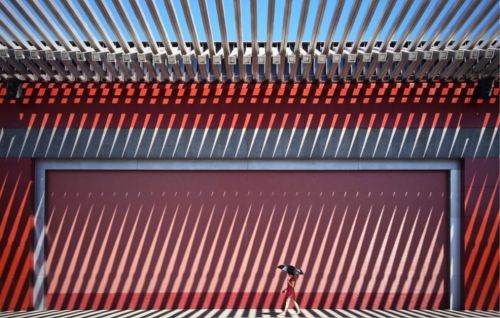
2016 Smithsonian Photo Contest Winner- The China Red- Jian Wang

2016 Smithsonian Photo Contest Winner- The China Red- Jian Wang

I came across the photo above this morning which is titled The China Red.  It was shot by photographer Jian Wang at Olympic Forest Park in Beijing, China and is the winning image in the Mobile Category of the Smithsonian’s 13th Annual Photo Contest.  I spent about five minutes just staring at it, transfixed by the pattern of the shadows and colors.  Just a great image.

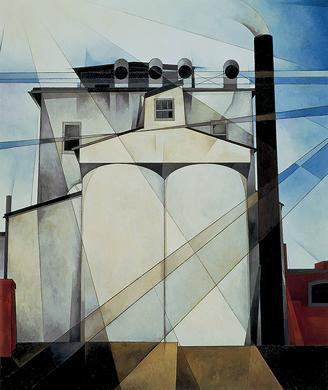
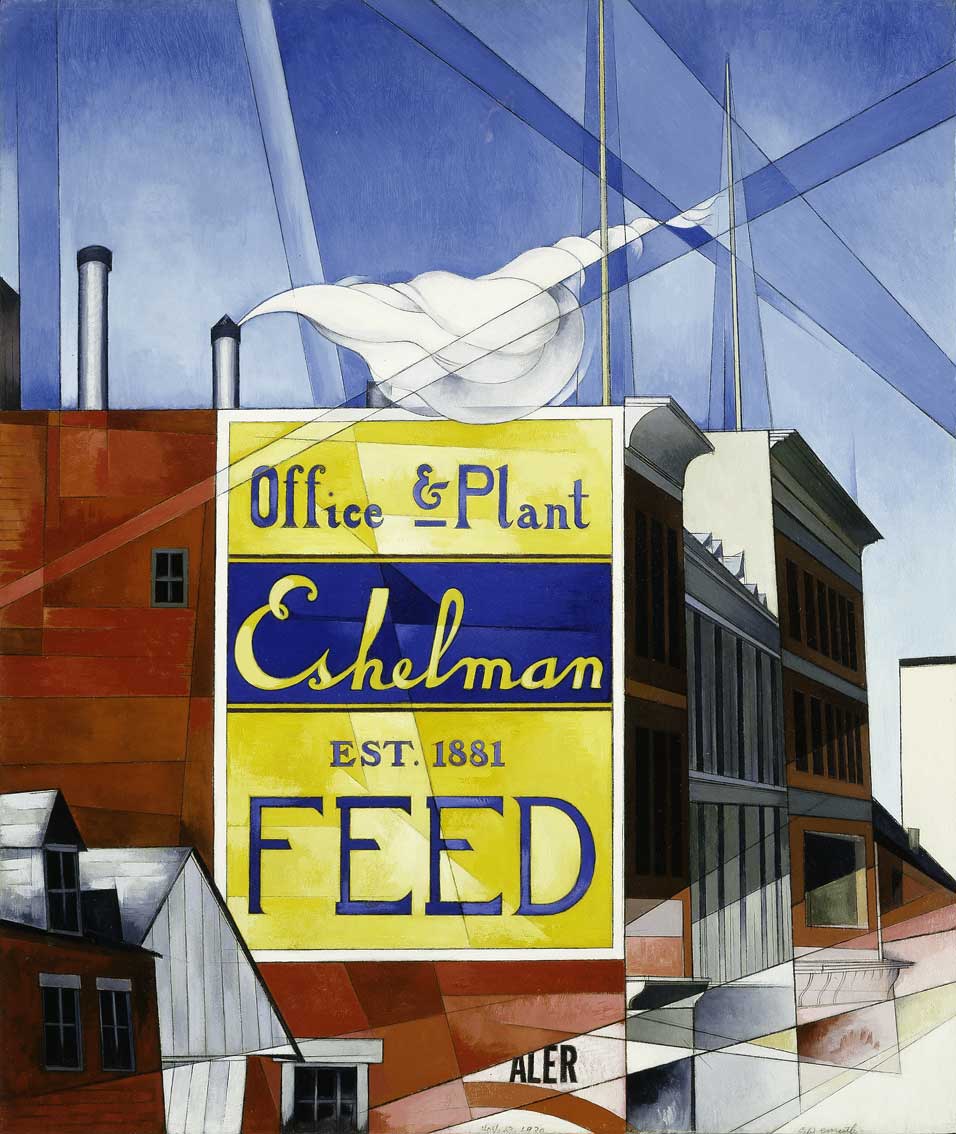
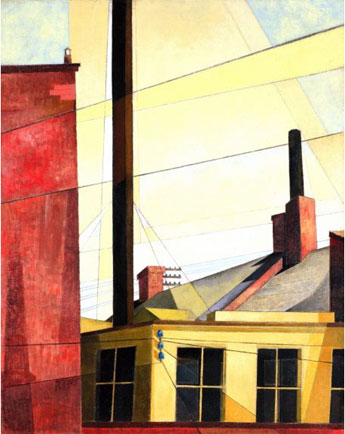
The color and forms incorporated in the photo reminded me of some of the work from the Precisionist painters such as DeMuth and Sheeler.  I thought I would share the following post from back in 2009 about Demuth:

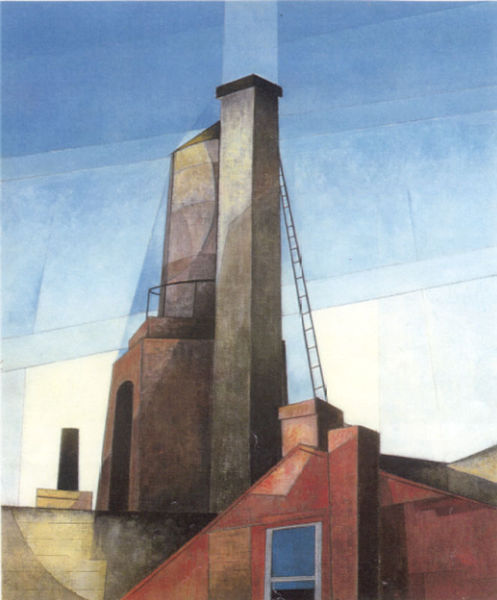
demuth-number-5I’ve been a fan of Charles Demuth since the first time I saw his work.  He was considered a part of the Precisionist movement of the 20’s, along with painters such as Charles Sheeler and Joseph Stella among many others, with his paintings of  buildings and poster-like graphics such as this painting, I Saw the Figure 5 in Gold.  He was also one of the prominent watercolorists of his time and while they are beautiful and deserve praise in their own right, it’s his buildings that draw me in.

Demuth’s work has a tight graphic quality but still feels painterly to me.  There’s still the feel of the artist’s hand in his work which to me is a great quality.  There are photorealist painters out there whose craftsmanship I can really admire but who are so precise that they lose thatdemuth-my-egypt feel of having the artist’s hand in the work.  I like seeing the imperfection of the artist.  The first time I saw one of the Ocean Park paintings from artist Richard Diebenkorn, it wasn’t the composition or color that excited me.  It was the sight of several bristles from his brush embedded in the surface.  To me, that was a thrill, seeing  a part of the process.  The imperfect hand of the artist.  I get that feeling from Demuth.

He also had a great sense of color and the harmony and interplay of colors.  His colors are often soft yet strong, a result of his work with watercolors.  His whites are never fully white and there are subtle shades everywhere, all contributing to the overall feel of the piece.  His work always seems to achieve that sense of rightness I often mention.

His works, especially his paintings of buildings, have a very signature look, marked by a repeated viewpoint demuth-after-all where he views the buildings above him.  His paintings are usually fragments of the building’s upper reaches.  There’s a sense of formality in this view, almost reverence.  I don’t really know if he was merely entranced by the forms of industrial buildings or if he was making social commentary.

Whatever the case, do yourself a favor and take a look at the work of Charles Demuth.  It’s plain and simple good stuff…

Buildings, Lancaster 1930demuth-from-the-garden-of-the-chateau

demuth_charles_aucassiu_and_nicolette_1921

Read Full Post »

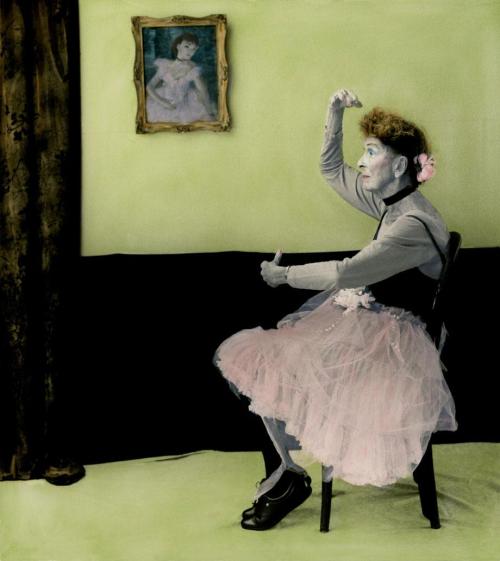
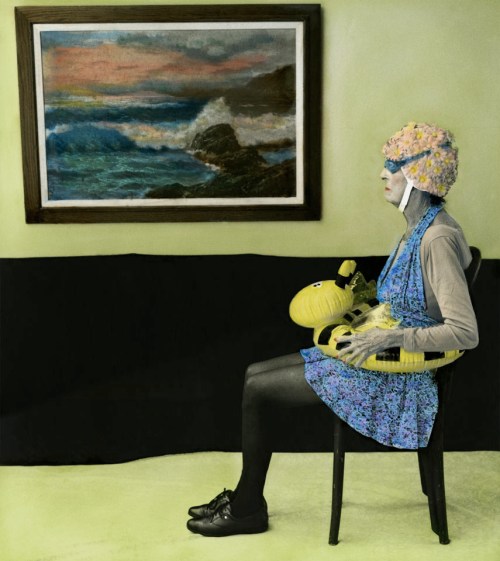
Aline Smithson Arrangement in Green and Black CompilationJames McNeill Whistler- Arrangement in Grey and BlackI have written here in the past about the composition from the iconic James McNeill Whistler painting Arrangement in Grey and Black— better known as Whistler’s Mother.  It’s a beautiful, solidly structured composition that works as a wonderful template for creating a solid visual image of any subject.

Several years, ago, contemporary photographer Aline Smithson used Whistler’s image as the basis for a series of photos that she called Arrangement in Green and Black: Portraits of the Photographer’s Mother.  Inspired by a print of Whistler’s painting that she found at a rummage sale and using her then 85 year-old mother (an obviously loving and patient woman who unfortunately passed away before seeing the finished series) as the subject, Smithson created 20 images with varied takes on the famous composition.

They are quietly comical individually and as a group. I just find them interesting.  Below are some of my favorites.

For more on Aline Smithson’s work, please follow this link to her website where you will find many more portfolios featuring her distinct eye for observation.  She also has a current exhibit, Aline Smithson: Self & Others, at the Griffin Museum of Photography in Winchester, Massacusetts.  It closes May 1 so if you’re in the area, don’t waste any time in getting to the museum.

Aline Smithson_Arrangement-14 Aline Smithson_Arrangement-11 Aline Smithson_Arrangement-10 Aline Smithson_Arrangement-1 Aline Smithson Arrangement Aline Smithson Arrangement in Green and Black a Aline Smithson_Arrangement-3

Read Full Post »

Vintage Baseball Photos 1800'sFor me,  Punxsutawney Phil is not the ultimate predictor that winter is coming to an end.  No, it is those first reports from Florida and Arizona that baseball’s Spring Training is beginning that does it for me.  The baseball is in the air  once more and I feel so much better when I am immersed in the rhythms of baseball.
And there is such a rhythm.  With its 162 games played over its six month season, it is present in some form on a daily basis for those who follow the game.  Each day brings something new that adds to the game’s long history, to its poetry and legend, to its voluminous statistics, to its never-ending debates over the superiority of teams, players and eras.  For someone like me who is a huge fan of the game’s folklore and history, nothing could be better.

Speaking of folklore, the photo at the top is perhaps the oldest image of the game, taken sometime before 1870.  It sold a few years ago on eBay for  $3800.  It shows a group of schoolboys at the Bluff School in Claremont, New Hampshire.  It was used in  Ken BurnsBaseball documentary and was taken by the early photographic studio of French & Sawyer which operated in Keene, NH.   Their partnership dissolved in 1870 so the photo was taken before that time.  It could be as early as the late 1850’s,  pre-Civil War.  The interesting thing is that there is action in the photo, a rarity for any photos of the era.  It also shows the players in positions that closely resemble today’s game which adds to that feeling of connection through time that is a part of the game.

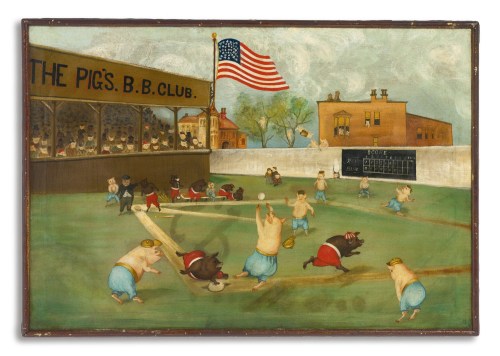
The painting below is an early painting of the game.  I don’t know who painted it or when and can’t find anything about it.  It was listed on a folk art site and is no longer there so details on it are sketchy.  I think it’s a fun piece and reminds me that baseball is coming soon and winter is coming to an end.

The Pigs Baseball Club Ca 1890 21 x 30

Read Full Post »

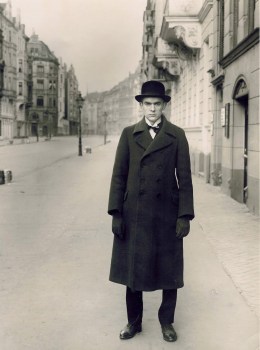
august-sander-man-on-street-portraitI was listening this morning to the song 20th Century Man from The Kinks.  Released in 1971 — don’t do the math, it’s a long time ago– it is a song of a man decrying his existence in a time in which he feels he doesn’t fit.  Ray Davies may have felt that he would have been more at home in the 19th century but the odd thing is that the song’s words still fit very well for someone like myself whose life consists of mostly time spent in the 20th century.

Even though we’re well into the 21st century– that new century smell has pretty much worn off by now– I am still basically a 20th century man.

It struck me that the next generation that is quickly coming of age and into their own will be a group born in the 21st century, never experiencing a second in that distant time.  I never gave that a thought before but their time will be spent entirely in a time unlike mine or people of my age.  The 20th century might be just a distant thing to them, a source of old people’s memories and dry historic fact.

Relics.

And maybe that’s a good thing.  I don’t know.  For as pivotal as the 20th was in so many ways, it was mightily flawed and maybe trying to see the world beyond its lenses will be refreshing.

Hey, let me hope, okay?

So for this Sunday Morning Music here are The Kinks and 20th Century Man.  The accompanying photo which jumped off the screen at me is from the great German photographer August Sander who I will be discussing here in the near future.

Have a great Sunday and enjoy your time in the 21st Century…

Read Full Post »

« Newer Posts - Older Posts »