Feeds:
Posts
Comments

Auction Update

A Clearing Comes- Auction for Australian Wildlife

Here’s the 4 PM Update on the Auction for the Painting Above to Benefit the Wildlife of Australia Affected by the Recent Fires:

The Current High Bid is $ 1650.00

There is still room to get in on this piece as I have set a Buy Now price of $ 1750.00. A bid of 1750 ends the auction.

Auction Closes Saturday at 12 Noon EST


I have written a little in the last week or so about the wildfires that are devastating the landscape, people and wildlife of Australia. It’s on a scale that I don’t think we can really envision. I saw the diagram above that allowed you to move a circle the approximate size of the acreage  that has burned in Australia over a map so that you can see how it would affect an area that you might recognize.

The image above is from an area that encompasses my home, extending all the way to NYC, covering all of the Pocono Mountains along with most of the Endless Mountains and the Catskills, most of central and eastern Pennsylvania and northern New Jersey, down to Philadelphia and into Delaware. If you’re familiar with this area, you know that it’s a substantial area.

Imagine, one day as you drive to NYC, that everything is suddenly gone. Every tree burned and every inch of ground scorched. The once verdant valleys that extend off of the highways for miles and miles in all directions stripped of all life. And not for just a short stretch of highway but for the entire drive.

Hour after hour of a suddenly empty, barren landscape extending as far as you can see.

There are no animals. There is nothing– no food nor shelter–there for those that may have somehow survived. And nowhere to go.

That’s pretty much the scenario that is taking place in Australia.

They are saying that perhaps a billion and a half creatures have perished in the fire. That is an incomprehensible figure, one that makes any effort to help seem so small, so insignificant.

But that is what it takes to recover from such a great blow– one small step to begin. Instead of wringing our hands and saying that there’s nothing we can do, we can do one small thing. A lot of people doing seemingly small things suddenly becomes a large and effective thing.

I don’t have many resources but what I can do, my small step, is to auction off a painting and direct the funds to a wildlife charity in Australia that is deeply involved in the rescue and rehabilitation of the affected wildlife in Australia. My research has led me to the organization, Wildlife Rescue Australia or WIRES as they are known. They are largest wildlife rescue organization in Australia. Though they are especially suited to this mission, they are in need of all the assistance they can get. This will require years and much effort to restore the environment and animals to this land.

The painting I am auctioning is below. It is titled A Clearing Comes and is a piece that is a favorite of mine, one that I had to convince myself to part with. I also think it’s one whose message and feel is relevant to this circumstance. I see the crow in the dead tree as being symbolic of the wildlife enduring the devastation. The sky, while dark and portentous, is clearing and the Red Tree and the richly colored fields in the distance represent a better, more hopeful future.

The painting is on paper and is matted under glass in my standard hand stained 16″ by 20″ frame. It has a value of $1600. The bidding starts at $500, please. I will end the auction at once if there is a bid reaching a maximum $1750. You can bid in the comments section or, if you desire privacy, you can email your bid ( please put AUCTION in the subject line) to info@gcmyers.com. I will ship the painting at my expense and will include a few additional doodads and geegaws to the winning bidder. Unless someone bids the maximum $1750, the bidding ends Saturday, January 18, at 12 noon EST. I will provide proof of all funds being donated to the winning bidder, as well.

I will post updates throughout the next few days.

So, if you can, take a step and help in some small way.

9:45 AM Update: There is a bid for $500.

10:15 AM Update: Current bid is now $1000.

A Clearing Comes- Auction for Australian Wildlife

The Wombat

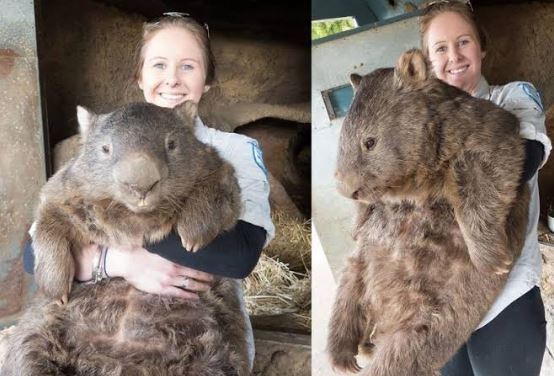
This recent photo of a wombat rescued in Australian fires has went viral on social media over the past few days along with a story that the creatures were seen shepherding other animals into their vast burrows to avoid the firestorm. Unfortunately, the shepherding part has been ruled out as wombats are extremely short-sighted, their vision focusing on finding available food immediately in front of them.

It was simply a baseless but hopeful rumor.

But while the shepherding behavior has not been witnessed, the sharing of the burrow has been noted in a number of cases. Of course, that doesn’t mean that it’s like a scene from the Fantastic Mr. Fox down there. The animals are not having dinner parties and passing around canapes while their wombat host makes toasts. Most likely, it is the sheer size of the burrows that allows a diverse group of animals to share them without infringing on each other’s space too much. They often cover areas stretching well over 300 feet in length with multiple entrances and enough depth and ventilation to shield a large number of critters.

The wombat host may not even have to see his guests. Sounds like a perfect situation.

But the thing that most people comment on is the sheer size of the wombat in the photo, some thinking it is a doctored image. I had no idea of the size of a wombat. I thought they were like the size of a Corgi, small and stout. Maybe twenty or twenty five pounds.

Nope, they are fairly big, coming in at between 45 and 77 pounds on average. That’s an armful.

Another Couple of interesting wombat facts:

While they are generally slow moving, they can scoot along at about 25 mph when threatened. That is surprisingly fast. It reminds me of the first time I saw our late and beloved Jemma, a rescued Corgi, take off running. Again, surprisingly fast.

Their poop comes out in the shape of cubes. Yes, in cubes. Think about that.

Their rear ends are very tough (probably from creating those cubes!) being comprised mainly of cartilage. They use their rumps as defensive shields against their predators, so that when retreating to a tunnel it is the only part of them that is exposed. They will sometimes allow a predator to force its head above the wombat’s back then crush it against the tunnel walls with their powerful legs. Or they use those same powerful legs to donkey kick at it.

They live until about 15 years of age in the wild and from 20-30 years in captivity.

A group of them is called a wisdom. A wisdom of wombats. What a lovely sound.

They are pretty fascinating creatures. Unfortunately, their world and, by extension, the wombat itself, is in jeopardy from the devastating fires that are ravaging Australia.

Like I wrote the other day, we can’t do much by ourselves, a half a world away. But we can try. I am going to be putting a painting up for auction within the next day with all proceeds going to WIRES, a well respected Australian wildlife rescue organization that is doing yeoman’s work during this fire. There is much to be done to rescue and rehabilitate the affected animals but even more to be done in providing them a world –food, water and shelter– in which they can thrive in the aftermath.

Keep an eye out for the auction.


Obligation

Rene Magritte- The Empire of Light – Guggenheim Museum

*********************

Life obliges me to do something, so I paint. 

–Rene Magritte

*********************

I wasn’t sure what this post was going to be about when I started. Still don’t know, to be honest. I was simply going to put up a short quote with a painting or two by an artist, as I sometimes do. In this case the artist was the famed Surrealist Rene Magritte.

I liked the quote above. Simple. Concise. Right to the point.

Plus, I think it lines up with an answer that I sometimes give when someone asks how I became a painter. I will answer, “Hey, everybody has to do something.

That opens up what could be a whole philosophical discussion about what our obligations really are in our lives as humans.

Are we really obliged to do something?

I don’t know.

Maybe. I guess not doing something is, in it’s own way, doing something. I know that when I am not a painter I am, among many things, sometimes a lazy slob.

Life obliges me to do something, so I do nothing.

That doesn’t have quite the same cache as Magritte’s statement but it is sometimes true.

But for the most part, when life obliges me to do something, I paint.

Not like Magritte. In my own way, at my own pace and of my own choosing.

Hey, life can push me around but only so far.

**************

PS: I was going to write about the painting at the top which is one version of a painting, The Empire of Light, that Magritte painted fourteen times. The subject was not going to be about the night scene of this painting with a blue sky above. Rather, it was to be about the repetition of forms by artists, a subject to which I am well acquainted. Maybe next time.

Now, let’s look at some other Magritte paintings.

Rene Magritte- Decalcomania – 1966

Rene Magritte- The Mysteries of the Horizon 1928

Rene Magritte- The Son of Man 1964

Rene Magritte- The Beautiful Relations 1966


This Bitter Earth

The Australian wildfires are still raging. Sheer devastation. Well over 18 millions acres (think about it as every single inch of Vermont, New Hampshire and Massachusetts being burnt to the ground) up in flames along with dozens of lives, thousands of homes and a staggering amount of wildlife. The current estimate that the number of animals and birds is that well over a billion creatures have perished. Those that survive face a grim future with an environment that will take years to rebound.

That is, if it ever can.

It’s heartbreaking. No, it’s more than that. Heartbreaking seems almost too trivial a word for the holocaust taking place. It’s more like a jagged rip in the very fiber of our souls. As helpless as we feel here on the other side of the globe, as hopeless as it seems from such a distance, we must not turn away.

Their horror may well be the future for many of us.

We have been warned for decades that this time was fast approaching but hubris and greed made us ignore and even scoff at the suggestion that we were destroying the environment that had once been so hospitable to us.

I don’t know what the answers are for climate change or even how to properly help our animal and human friends in Australia. But I know I can’t ignore the problem, can’t just shrug and say that my time here is short now that I am well into middle age and that it’s a problem for those younger than me. It’s that sort of ignorance and carelessness that allowed this to happen in the first place.

I am looking for answers, even if they are small. I can’t save Australia with my small donation but maybe it can help one small displaced creature, plant a tree or two or do anything to alleviate the pain caused by our treatment of this earth.

I hope you will look for answers as well.

This Sunday morning music is a song from the great Dinah Washington from back in 1960 called This Bitter Earth. I am also including a version of the song that combines her original vocals with a musical piece from contemporary composer Max Richter, On the Nature of Daylight, which is  a piece of music that I have played here before. The two combine to create a powerful statement that is fitting for this subject and this time.

I hope you’ll listen to both. And don’t turn away. Do even one small thing to help someone on this bitter earth.


__________________________________________________________________

Clue: “Grieg was displeased with his own ‘In the Hall of’ this monarch from ‘Peer Gynt’, writing, ‘it reeks of cow-turds & super-Norwegianism'”.
Answer: “What is The Mountain King?”

Jeopardy Question January 10, 2020

__________________________________________________________________

It’s interesting how an artist sometimes severely views a piece of their own work. Even more interesting when that same piece of work that fell under their critical eye becomes extremely popular. In the case of the great Norwegian composer Edvard Grieg, that piece became arguably his signature piece of music.

This came to my attention last night when there was a question on the current Jeopardy Greatest of All Time Tournament (big fan- been watching Jeopardy since the 1960’s when Art Fleming was the host on the daytime version) that made me laugh out loud.  It had to do with Grieg’s work that he was composing as music for Henrik Ibsen‘s epic verse drama based on a Norwegian fairy tale, Peer Gynt. His work for the play was meant to be just incidental music but turned into 26 pieces for the long five act drama, much more than he had anticipated when initially agreeing to work with Ibsen. It was obviously a very trying collaboration and Grieg was not impressed with some of his work.

He wrote the following to a colleague about one of the pieces, part of which was also the question ( or answer, as the format requires) on last night’s Jeopardy:

And I have done something for the hall of the troll king in Dovre which literally I can’t bear to hear, it reeks so of cow-turds, ultra Norwegianism, and to-one’s self-enoughness! But I am hoping that the irony will be able to make itself felt.

The answer (or question) was : What is In the Hall of the Mountain King.

That he thought that this piece which is now so associated with his name reeked of cow turds just made me laugh. Maybe it was just the idea that he used that term. Okay, maybe that’s a little sophomoric but, hey, he said it first!

You most likely know the piece in question here. It is surprisingly short and has been performed and used in many ways over the years. It always makes an impression. I am sure it was used in a Warner Brothers or Disney cartoon at some point and I liked a version from the early 70’s from the Electric Light Orchestra.

Here’s a performance of the In the Hall of the Mountain King section from the ballet Peer Gynt from the Zurich Ballet in 2008. Great visuals to go with the music.

Blues Twilight

I was going back through some old things on this site and came across this piece of music that I shared here several years ago. Listening to it took my mind far way from the subject I had intended to write about this morning.

So far, in fact, that I can’t even recall that original thought stream. It must not have been too important.

So, forget what I was going to say and, if you’re so inclined, give a listen to that piece of music. It’s called Miss Sarah off the album Blues Twilight from jazz trumpeter Richard Boulger.

Maybe it will distract you from something you intended on doing, as well.

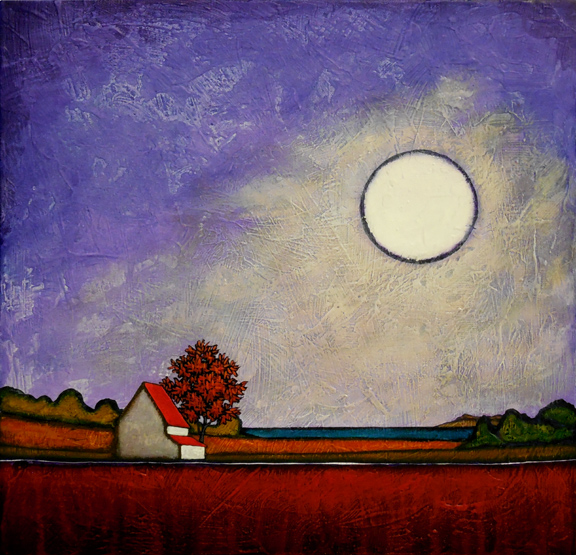
PS: The painting at the top is a fave of mine, Pause in the Moonlight, which is at the West End Gallery.


Zurab Martiashvili- Couple in Love

**************************

I hear babies cry

I watch them grow

They’ll learn much more

Than I’ll never know

And I think to myself

What a wonderful world

–Bob Thiele and George David Weiss, What a Wonderful World

**************************

On a morning when it would be so easy to focus on the many wrongs of this world, I think I want to just listen quietly to a song and ponder the small things that make living in this world worth all the trouble. The song is What a Wonderful World, originally performed, of course, by the legendary Louis Armstrong.

It was written in 1967 by Bob Thiele and George Weiss in response to the tensions, anger and division that the Vietnam War  and race riots were spawning here. The songwriters chose Armstrong to perform the song because of what they believed was his ability to bring people of different races and backgrounds together.

The song as performed by Armstrong, as you most likely know, became a classic. But it wasn’t an instant hit. While it was the best selling song of 1968 in the UK, it went pretty much unnoticed here at the time. In fact, its original pressing as a single sold only around 1000 copies here. But it is the kind of song that doesn’t just fold up its tent and leave town. It had staying power and over the coming decades gained great popularity. Twenty years later, in 1988, it’s use in the Robin Williams film, Good Morning, Vietnam pushed it into our collective consciousness, here and around the globe.

A lot of other artists have recorded it but the Louis Armstrong version is the gold standard, the crème de la crème. It seems almost sacrilege to play any other version but I am playing a lovely version by Mark Knopfler and Chris Botti. Hope you’ll take a few moments to give a listen and focus on some small things that make your world a decent place.

For me, right now it’s looking out my window at the snow coating the tree branches backlit brilliantly by a cool sun. As I’m looking, a doe slowly crosses under the taller trees and disappears into the dark green of the pines below.

For the moment, it’s my own peaceable kingdom.

The whimsical artwork in this video and at the top of the page is from artist Zurab Martiashvili, an artist born in Tbilisi, Georgia in 1982 and now working in Ukraine. Wonderful work. Wonderful world.

Have a good day.

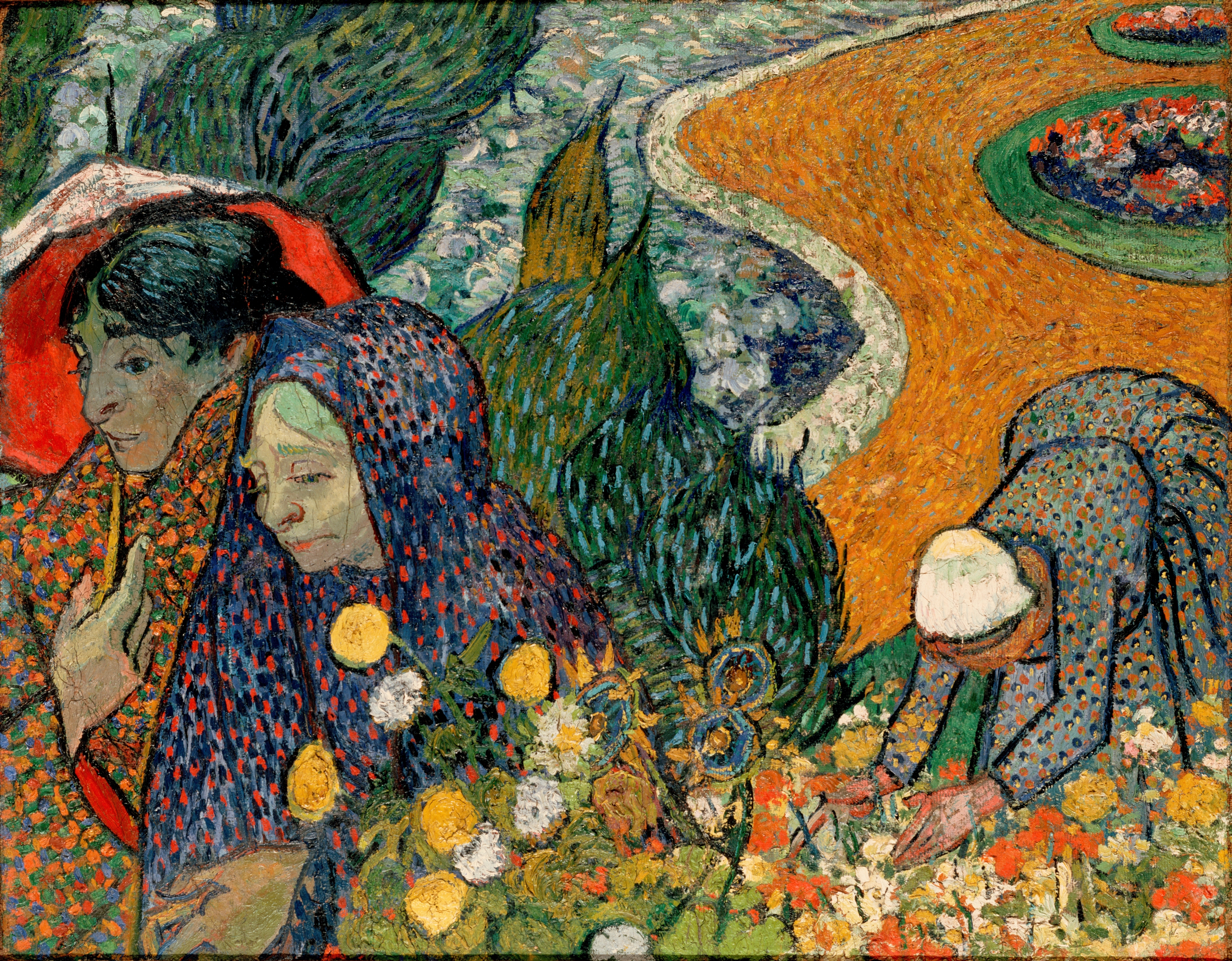
Vincent Van Gogh- Memory of the Garden at Etten 1888

*******************

My aim in life is to make pictures and drawings, as many and as well as I can; then, at the end of my life… looking back with love and tender regret, and thinking, ‘Oh, the pictures I might have made!’ But this does not exclude making what is possible…

–Vincent Van Gogh

*******************

Love this painting from Vincent Van Gogh with its wonderful color and the abstraction of the forms that comes from eliminating the horizon line. It was a piece that came to mind when I ran across this passage from Van Gogh. The words reminded me of something else, a thought that has been on my mind in recent times.

I was asked at my Gallery Talk at the Principle Gallery this past September if I ever had thoughts of retiring from my painting career. I think I made a bit of a joke about it, saying that I would no doubt die working away at a painting.

And that’s most likely true. I couldn’t imagine ever saying I am done as a painter.

It goes back to Van Gogh’s words above. I still see my artistic future brighter than my past, still envision important projects and better works to come. I still see my best work as being in the future, not dwelling in the distant past.

I can’t imagine that feeling ever changing. I can see myself on the day of my death, if I am capable of taking a moment to reflect on that day, will have that same regret that Van Gogh expressed: Oh, the pictures I might have made!

That being said, I must get to work. I am not retired yet and there are pictures to be made. The future is calling.

GC Myers- Listening to the Muse

**************************

I thought I would rerun the blog entry below that first ran in January of 2015. It might be the only piece of advice I truly feel comfortable in giving to aspiring artists in any discipline. Plus, it can be applied to everyone in their lives even if they aren’t engaged in creative endeavors because, at its base, it’s not just about making things, as much as it might seem at first glance. It’s about an attitude of being proactive in altering the world around us in what we see as being a positive manner. It’s about seeing something that doesn’t fully satisfy you and taking action to change that.

Moreover, at its root, it is about determining the person we want to be and moving consciously towards that goal.

Take a look and decide for yourself:


I spent quite a bit of time this morning looking at the image of the painting above, Listening to the Muse. It’s part of my show at the Kada Gallery [That show opened in December of 2014] which is in it’s last weekend there. This painting really captivates me on a personal level and reminds me of  a thought that once drove me forward as a younger painter. It’s a thought that I often pass along as a bit of advice to aspiring artists:

Paint the paintings you want to see.

Sounds too simple to be of any help, doesn’t it? But that simplicity is the beauty and strength of it.

For me, I wasn’t seeing the paintings out there that satisfied an inner desire I had to see certain deep colors that were being used in a manner that was both abstract and representative. If I had seen something that fulfilled these desires, I most likely would not have went ahead as a painter. I wouldn’t have felt the need to keep pushing.

It was this simple thought that marked the change in my evolution as a painter. Before it, I was still trying to paint the paintings that I was seeing in the outer world, attempting to emulate those pieces and styles that already existed as created by other artists. But it was unsatisfying, still echoing the work of others, forever judged in comparison to these others.

But after the realization that I should simply paint what I wanted to see, my work changed and I went from a bondage to that which existed to the freedom of what could be found in creating something new. For me, that meant finding certain colors such as the deep reds and oranges tinged with dark edges that mark this piece. It meant trying to simplify the forms of world I was portraying so that the colors and shapes collectively took on the same meditative quality that I was seeing in each of them.

In my case this seems to be the advice I needed. But I think it’s advice that works for nearly anything you might attempt.

Paint the paintings you want to see.

Write the book you want to read. [Toni Morrison said this very thing at one point]

Play the music you want to hear. Make the film you want to see. Cook the food you want to eat. Make the clothes you want to wear.

Make the world in which you want to live.

Simple.

Now go do it.