Feeds:
Posts
Comments

Sunshine of Your Love

I was looking for a song for this morning that might relate to Valentine’s Day since it is only a few days away. I wanted something that wasn’t too schmaltzy or too on the nose. And something that you might not have heard before.

I went through all of my favorites first and, while there were plenty of choices there, most of them were a little too well known. Then, as I was listening to another artist on YouTube– Louis Jordan rocking out on Caldonia— I noticed a song on the side, in the suggested-for-you videos that line right column of the screen.

Instantly, I knew this was the right one.

It’s  Ella Fitzgerald doing a horned up version of the classic Sunshine of Your Love from the 1960’s band Cream, which featured Eric Clapton and Ginger Baker.

What more can you ask for? You get the undisputed Queen of Jazz rocking out a love song from the seminal rock power trio of the 1960’s and nailing it hard. You can’t do much better than Ella.

Happy Valentine’s Day right in your face.

It makes me smile. Hope you like it as well and that you have a good Sunday.


Seeking Home

Memory of the Crow

“If men had wings and bore black feathers, few of them would be clever enough to be crows.” 

~ Rev. Henry Ward Beecher

*********************

The new painting shown here on the right is titled Memory of the Crow and is included in the Little Gems show at the West End Gallery which has its opening this evening.

I’ve always felt there was something special about crows, especially in regard to their intelligence. I couldn’t agree any more than I do with the words above from Henry Ward Beecher.  Especially about the cleverness of men.

But the intelligence of crows is obvious to anyone who watches them for any amount of time. This was evident to the Native Americans who held these birds and their wisdom in high esteem as part of their belief system and their mythology.

Maybe because they are always near, always in close proximity to man as they live off the refuse he creates, the crops he plants and the vermin he attracts. This omnipresence gives the crow a sense of being a constant, unblinking witness to all that happens. And maybe this constant watching breeds that sense of wisdom that some of us see in them.

It makes me wonder what the crow sometimes thinks or remembers.  How do they perceive us and what is their awareness of us? Are our good and bad times their good and bad times as well? When we  abandon a place do they feel sense of loss? Do they attach themselves in any way to us?

Or do they see it as a passing of time with us as ephemeral visitors passing through their eternal world?

Those are the kind of  questions that rise for me in this piece. Makes me wish I could talk with the crow…

********

Here’s a link to a post and update from a number of years back about a crow that lived around my studio.  It also includes a version of Joni Mitchell’s Black Crow from Diana Krall– good listening on a Friday morning.

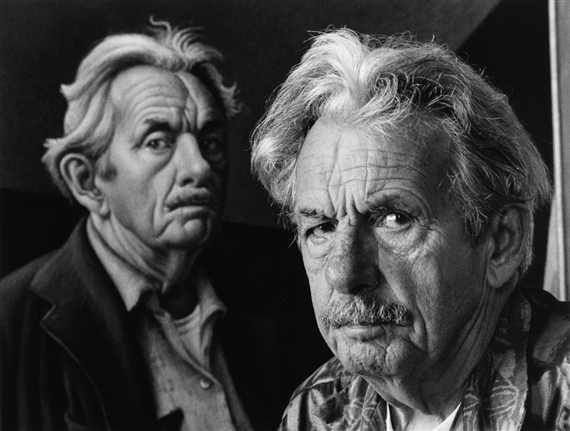
Along with the photo of the drum major that was featured in yesterday’s blog, I also came across another Alfred Eisenstadt photo. Shown above, it is of one of my painting heroes, Thomas Hart Benton, standing in front of a self-portrait. It’s a face that definitely belongs in one of his paintings. It reminded me of the post I’ve included below from a few years back that contains a video about the making of one of his famed murals. If you have ten or eleven minutes and are interested in the painstaking efforts that went into the making of this masterpiece, give it a look. 

************

Thomas_Hart_Benton_-_Achelous_and_Hercules_-_SmithsonianBack in June, I wrote about going to the Smithsonian’s American Art Museum to see the painting shown above,  Achelous and Hercules, a wondrous mural from the great American painter Thomas Hart Benton.  It was commissioned to hang in a now-defunct Kansas City department store in 1947 and after the store closed in 1984 this masterpiece was given to the Smithsonian.

The photo of this mural doesn’t do it justice. Its size and scale, 5′ high and 22′ on a wide wooden panel that Benton painted in egg tempera, is lost in fitting its image on a small screen.  Take my word, it’s imposing and grand, a piece I could stand in front of for hours, losing myself in the rhythms and colors.

That being said, I came across a video taken from an old film that shows the incredibly elaborate process that Benton used in the making of this mural, which took about eight months.  It is fascinating and unusual to see a known masterpiece all the way through the process and coming together in all its stages.  It makes me appreciate this painting even more.

Here is that video.  It’s about 11 minutes long and worth the time spent.

This morning I was shuffling through some stuff and came across the great photo shown above. It’s a photo the great photographer Alfred Eisenstaedt took in 1950 of a University of Michigan drum major leading a group of kids across the campus lawn.

It has a wonderful effect in that it never fails to make me smile broadly. The joy in those kids mimicking the drum major is palpable.

Now, that’s a parade.

Which brings me to the news that broke last night that a certain person in Washington has given his directive to the Pentagon that they plan for a huge military parade with columns of marching soldiers, tanks and all sorts of armaments flowing down Pennsylvania Avenue in the District of Columbia.

At first blush, you might think that sounds great. Why not?

But when you consider the history and symbolism of such parades, you begin to ask, “Why?”

Military parades are not part of our national identity and have happened infrequently, the exceptions being at the ends of those wars when we have had citizen troops returning.

When you think of such parades, images of those in the Soviet Union, China and North Korea come to mind. These were conceived as shows of strength from these countries but were, in fact, signs of weakness and insecurity. The need for bravado and the flexing of military muscles is meant not so much to impress the outside world. Were we in the US really filled with fear at the sight of tanks and troops marching in Red Square?

No, these parades are designed from a stance of weakness and are meant to instill unquestioning, fervent nationalism as well as to stifle dissent within their own countries by showing the absolute might of those in power.

And this proposed parade falls into that same category, in my opinion.

These shows of strength not who we are and are not necessary. They show our weakness in a pitiful need to conspicuously show the military strength that everyone in the world knows we have. When we spend more than all of the other major powers in the world combined, they know.

Not to mention the cost, most likely in the range of a hundred or so million dollars. At a time when we are adding a trillion dollars to the national debt this year, wouldn’t there be better places to direct those funds? Maybe in helping those many, many soldiers suffering with PTSD, post-traumatic stress disorder?

I doubt those folks will be marching in these parades.

And all to appease the vanity of a weak and needy leader who kowtows to despots and dictators while constantly attacking his own government, a fool who believes that we are somehow constitutionally bound to stand and applaud for him.

Nobody can tell me when to stand and when to clap.

This ability to defy acts of authoritarianism might be the right that makes me feel truly American. Not some ridiculous military extravaganza.

Give me a drum major and a bunch of kids any day. Now, that’s a parade.

Vasarely/ Quality

.

The value of the prototype does not consist in the rarity of the object, but in the rarity of the quality it represents.

–Victor Vasarely

*******************

I have to confess up front that I am not a big fan of Victor Vasarely (1906-1997) or the Op-Art movement of which he is at the forefront. It’s not that I am denigrating it. I have seen a number of pieces that I do like and I can certainly see people being intrigued by its color and forms and how it can reverberate in certain environments.

If I had a mid-century home with lots of glass and chrome, I might think about hanging this type of work. But I live in a cabin in the woods.

It’s just not to my particular taste, that’s all.

That being said, I immediately nodded in agreement when I read the quote above from Vasarely. As I read it, it jibes well with my own views on the intrinsic value of art and how the artist behind it affects the artwork’s value beyond that of a mere object.

When I have spoken with students in the past I try to impress on them that while they must learn their craft, they should also focus on making themselves fully rounded humans with an individual voice that reflects their uniqueness and individuality.

I urge them to read more, listen more, and to look at more things, all preferably outside their own known preferences.  I believe it creates a sense of fullness that will extend into their work, giving their work a greater sense of that quality that takes a piece beyond being a mere object of decoration.  And today, when there are more artists than at any other time at any point in history, its that rare sense of this quality that can make the difference in how seriously an artist’s work is viewed.

I don’t know if that ever gets through to these kids or if it even holds true in reality, but it seems right to me. I personally try to view each piece as a combination of skill, experience, acquired knowledge and influences, and the flaws and strengths of my own character–hopefully, the better parts of it.

Sometimes it works and at those times I see the quality represented by it that Vasarely described. When it doesn’t, I see a mere object that lacks the fullness that I am trying to put in it. I can see that I have somehow withheld some part of myself from that work and I try to figure out how to overcome that deficiency.

But most of all, I keep trying to find that rare quality…

Sorrow’s Companion

Truly, it is in darkness that one finds the light, so when we are in sorrow, then this light is nearest of all to us.

Meister Eckhart (1260-1328)

********************

In the last few days I finished a small group of paintings to add to the several I had already submitted for the West End Gallery‘s annual Little Gems show that opens on Friday. I hadn’t been planning on doing these additional pieces as I have other work that needs to be started. But there was something in the original pieces that I took out last week that lit that spark that I had been futilely searching for in the first month of the year. So, I thought I had been stick with it for a bit to see where it goes.

This piece, which I call Sorrow’s Companion, is one of the new paintings to emerge. Since it’s been done, I keep coming back to this one to just peer at it, all the while trying to discern what I am seeing and feeling in it.

There’s something very sorrowful in it’s imagery. The dark clouds in the sky. The empty chair. The dead tree with the lone crow on a branch. The empty horizon. It all point to the sorrow of loss of someone or something.

Yet, despite the sense of sorrow there is dull sunlight peeking through the gray in the sky. As the 14th century German theologian Meister Eckhart pointed out in his words at the top of the page, light is found in the darkness and is always nearest in our sorrow.

The light is sorrow’s companion.

So, I see this piece as having an air of melancholy but it is an optimistic melancholy, if there can be such a thing. Maybe this comes from understanding that true sorrow comes from knowing the feeling of true love. And there is a certain joy in just having experienced that feeling that lingers through the sorrow.

Sorrow doesn’t come without joy…

Rave On

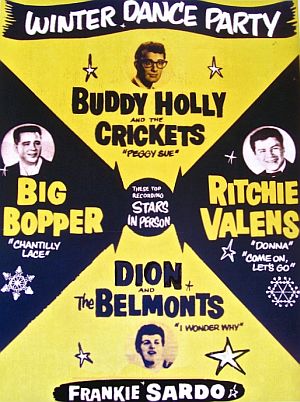
Forgot to mention yesterday that it was the anniversary of the Day the Music Died as Don MacLean called it in his 1971 mega-hit American Pie. It was early in the morning on February 3, 1959 that the small plane carrying Buddy Holly, Richie Valens and J.P. “The Big Bopper” Richardson to their next show in North Dakota crashed into an Iowa cornfield, killing all three.

Holly and Valens were key players in the transition from the early days of rock and roll to the next generation that was marked by the rise of the Beatles and the Rolling Stones, both bands that very heavily influenced in their early work by the music of Buddy Holly. Think of modern rock/pop music being a genealogy chart, a family tree with Buddy Holly as a parent and his offspring and their children and so on all branching out in front of him. Most likely, he is a direct musical ancestor of many artists you listen to today, even though they may not even recognize it themselves because each subsequent generation adds lines of influence from which they synthesize their own music.

Just like Buddy Holly was the result of country music, folk blues and early rock and roll, each generation is a distinctly unique blend.

So, 59 years ago it was a huge loss when that plane crashed outside Clear Lake, Iowa. I have to admit that I sometimes overlook Buddy Holly, shifting him into a hidden file in my mind, until I am reminded by something, such as yesterday’s anniversary just how unique an artist he was and how much I enjoyed his music. I’ve spent much of this morning revisiting his discography, listening to songs that had a huge impact on so many other artists: That’ll Be the Day, Not Fade Away, Maybe Baby, Peggy Sue, Well..All Right, Oh Boy and many others. Just plain good stuff.

Here’s a favorite of mine, Rave On. Have a great Sunday.

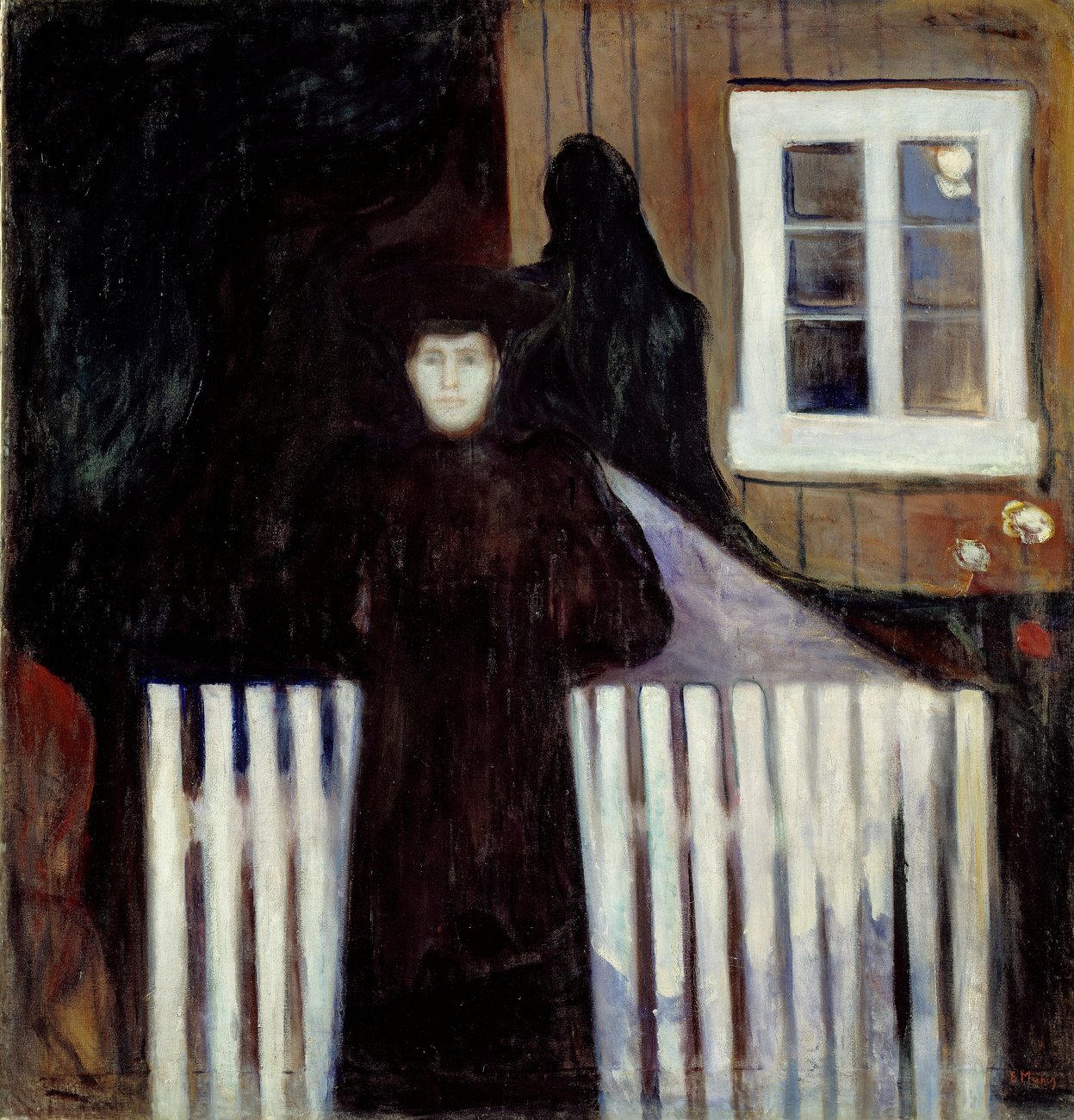
I do not believe in the art which is not the compulsive result of Man’s urge to open his heart.

–Edvard Munch

*****************

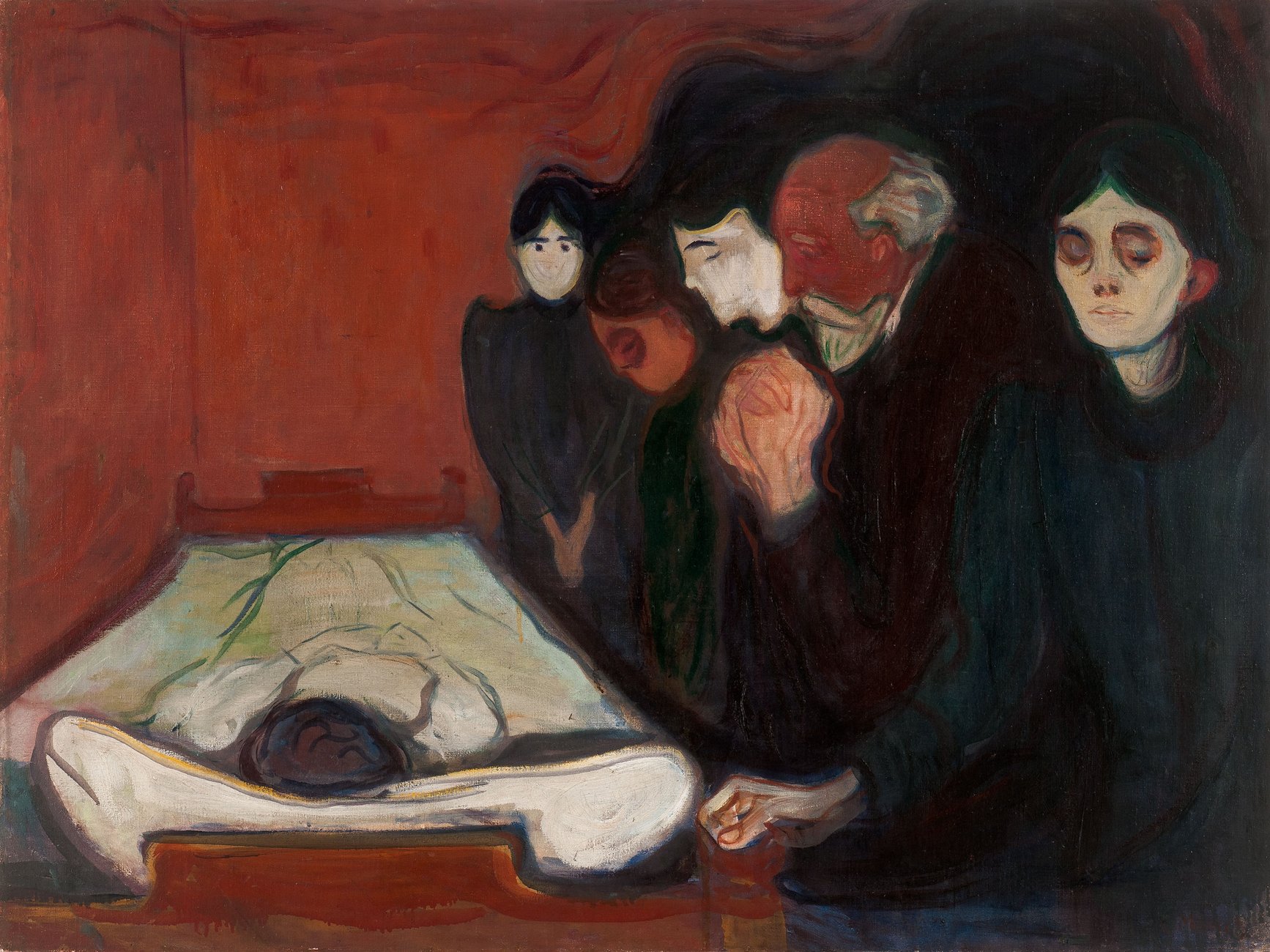
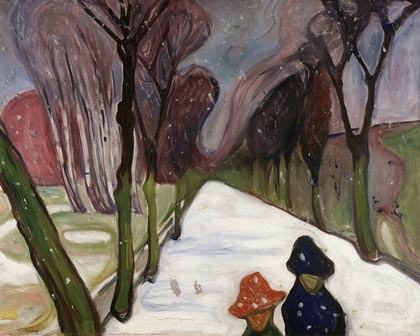
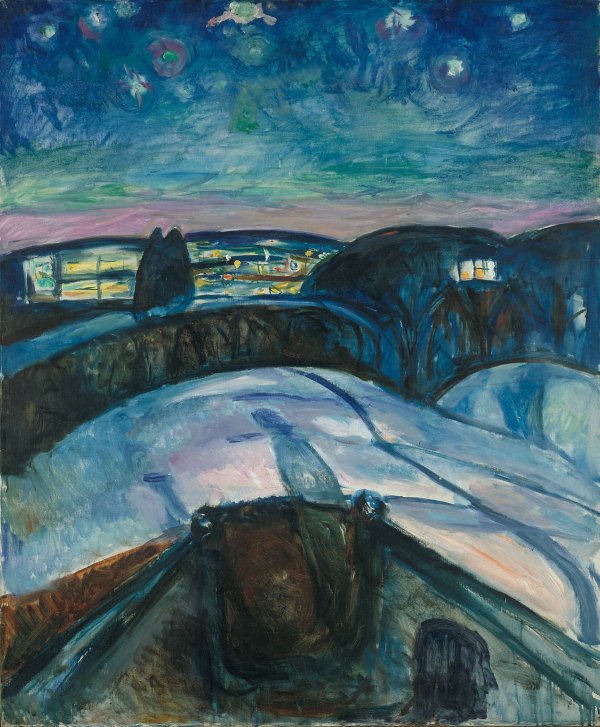
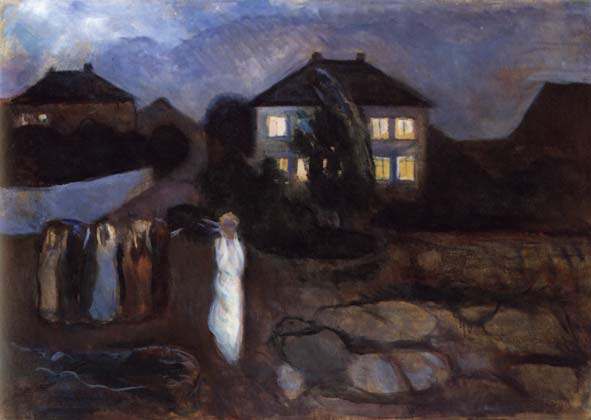
Edvard Munch, the Norwegian painter who lived from 1863 to 1944, is best known for his painting The Scream. Unfortunately, that’s the only painting of his most folks can recall. But he had a long and very productive career, creating work that was often dark and filled with anxiety. But it was always his own, pulling deeply from his own inner life and emotions.

His work may not resonate with you– not all of his work hits the mark for my own tastes–but there is no denying that it has the emotional power that can only come from an opened heart that seeks meaning in life, his ultimate goal as an artist.

Or as he said: In my art I have tried to explain to myself life and its meaning. I have also tried to help others to clarify their lives. 


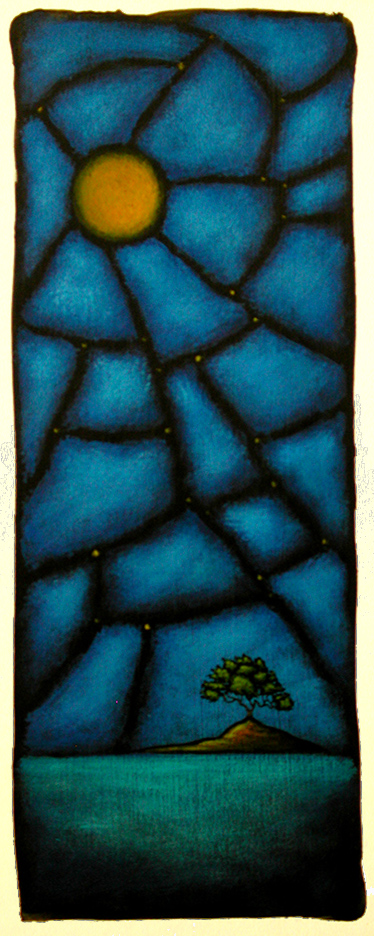
Night Blossom

I was recently going through some old work and came across some paintings from 2002 that had slipped my mind. There were several done in the same style as the piece shown here, Night Blossom, with chunky, mosaic-like skies in deep blues and greens.  They had a dark, moody tone and a sense of weight in them that really drew me to them when I pulled them up on my screen.

It made me wonder why it was a path that I didn’t follow a bit further at that time. Maybe I felt it was too reminiscent of stained-glass. It does have that feel in the way it goes together.

Or maybe I just was headed in another direction that had a little more pull on me at the time. I was in the midst of my Dark Work in the aftermath of 9/11 which took me directly into my Red Roof series so perhaps that is the main reason for not doing more in this vein.

So, it may be as simple as it turning out to be that there is not enough time in the day to follow up on all the flares that are sent off in one’s head sometimes. Who knew?

But seeing this again and examining it closely re-ignites that flare and I see this as a new possibility in a larger scale done with skills that have evolved in the past 16 years.

And that is exciting for me.

Whether it turns outs to be what I see in my head is another thing. Sometimes those things I envision turn out much different in reality and not always in a positive manner.

We shall see…