Feeds:
Posts
Comments

Posts Tagged ‘History’

Betwixt and Between— At Principle Gallery


The universe is full of magical things patiently waiting for our wits to grow sharper.

― Eden Phillpotts, A Shadow Passes (1919)


Running very late today. Overslept for a change. But I wanted to share the quote above from British author/poet/dramatist Eden Phillpotts who lived a life, 1862 to 1960, that spanned a time period marked by huge changes in society, culture, and technology.

It was an amazing time period to be alive. But, as Dickens wrote in regard to a different era, it was both the best and worst of times.  It was a time that saw huge advancements in science and medicine that brought relief to many who suffered. It was beginning of the Industrial Revolution with the huge technological shifts that advances brought such as the rise of the automobile, the airplane, radio, television along with the beginnings of space exploration and computerization. I am not always sure if the rise of the computer should go in the best or worst category. For this discussion, we will put it in the best.

But there were also two World Wars and multiple civil wars. Holocausts and ethnic cleansings. The rise of fascism and Nazism. The nuclear bomb was developed.

I am just spit-balling here off the top of my head and not even going into the cultural and societal shifts that occurred during that period. In short, it was an amazing time period.

But in that time period did our intelligence expand along with the knowledge that spawned such great change? Did our wits sharpen in any way to make us sense those magical things that surround us?

I can’t say. I doubt it. There is certainly little evidence of it taking place. Maybe that is why the bests and worsts of that era and our own run to the extremes. Maybe our wits are not yet developed enough to fully utilize the changes we have experienced as well as the magic that always surrounds us.

Hmm. That’s a lot to think about for a guy who just rolled out of bed and hasn’t even combed his hair or washed his face. Maybe I won’t even bother today. Maybe I will just focus on sharpening those wits. Mine have been dulled down lately and do need a touch up.

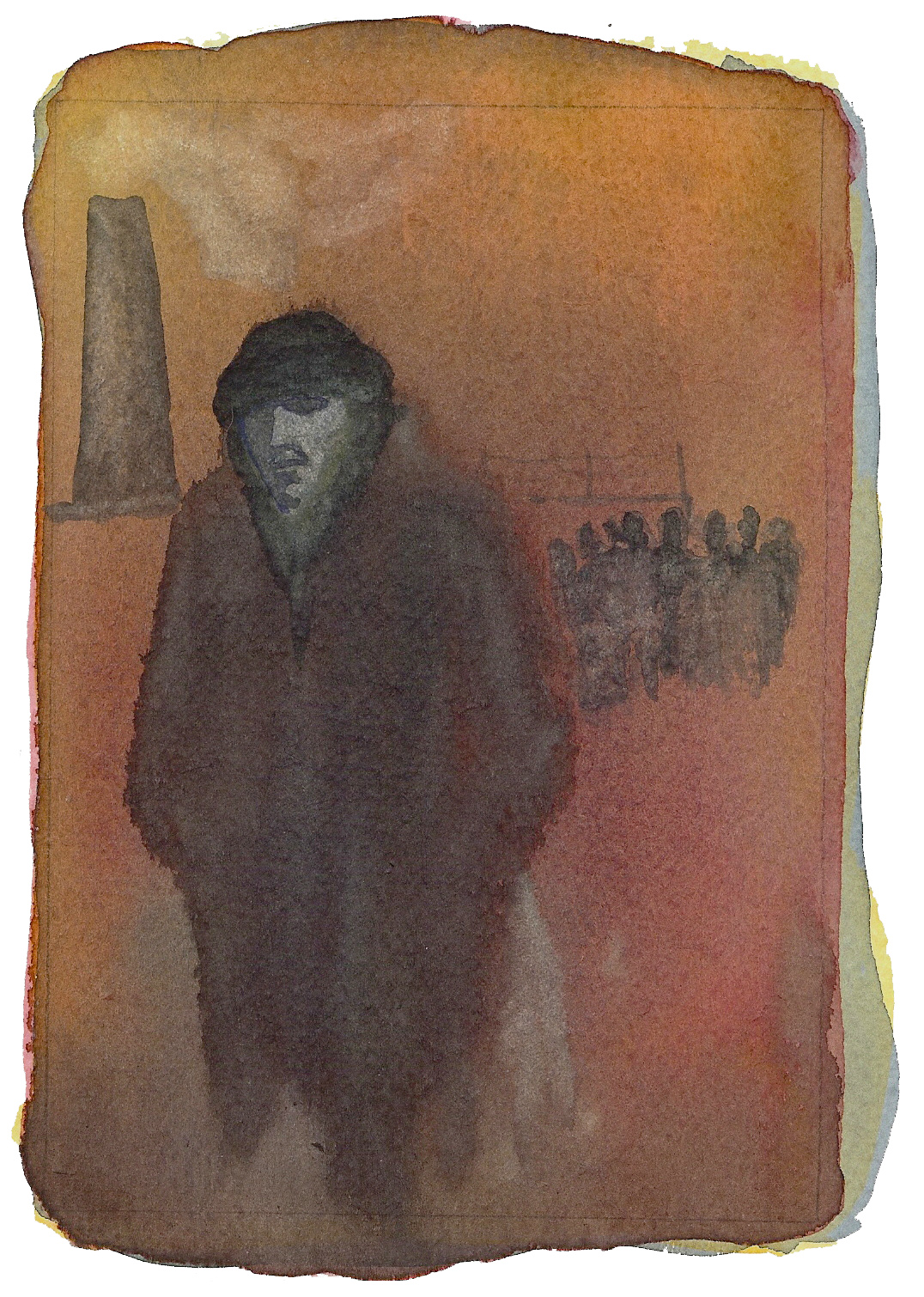
The painting at the top, Betwixt and Between, very much relates to the words of Phillpotts and the song below from Dave Brubeck. It is Sixth Sense from his 1964 album, Jazz Impressions of New York.


Read Full Post »

Charles C Mulford Grave, Alexandria VA National Cemetery


The nation which forgets its defenders will be itself forgotten.

–Calvin Coolidge


I don’t have to do a search to know that I have never quoted Calvin Coolidge here before. With a nickname like Silent Cal, he wasn’t that quotable although his “When a great many people are unable to find work, unemployment results” is a classic. Probably a good thing he didn’t say much.

That being said, it is yet another Memorial Day. I am very busy getting ready for my annual show at the Principle Gallery, as I have been every year around Memorial Day for the last quarter century or so. But as I prepare, I am reminded of an entry I wrote about a small family connection with that city that was revealed to me several years back. I last shared this post five years ago but felt like it was worth running again on this Memorial Day.


I’ve been going to Alexandria, VA, a lovely and historic town that hugs the Potomac River just a few miles below Washington DC, for a long time, often several times a year. Outside of my link with the Principle Gallery and the relationships that have grown from that, I never thought I had a connection of any sort with that area.

Col. Eleazer Lindsley

Col. Eleazer Lindsley

But, as many of you who read this blog on a regular basis already know, I am an avid genealogist. I have documented some of my ancestral discoveries in a series of paintings, Icons, like the one shown here on the right, that I hope to get back to soon. While going through one of my lines earlier this year I came across a great-grand uncle by the name of Charles C. Mulford, who was the great grandson of Colonel Eleazer Lindsley, a Revolutionary War veteran who had served as aide-de-camp to Lafayette who is also my 7th-great grandfather, shown here in the Icon painting on the right.

Mulford was born in nearby Lindley, just above the NY/PA border, in 1821 and lived a quiet life as a farmer until the Civil War broke out. Serving for the 6th Regiment of the NY Heavy Artillery, he saw combat in battles at Spottsylvania, Cold Harbor, the Wilderness, Totopotomy and Petersburg.  At the Battle of Petersburg, Mulford was shot in the upper thigh and, during his hospitalization, contracted typhus and died in early July of 1864.

It was the same sort of tragic ending that many of my ancestors met while serving this country. But the interesting detail in the account was that he had died in Alexandria at the Fairfax Seminary hospital and was buried in a National Cemetery not too far from the gallery.

On Friday morning when I went out for coffee at a local cafe that I frequent when I am in town, I decided to seek out my great-grand uncle. Under threatening skies, I strolled the few blocks to the cemetery that is tucked quietly among neighborhoods filled with townhouses. It only took a few moments to find the grave, sitting in the first row facing a stone wall.

The marble headstone was well weathered as you can see at the top of the page. I stood there for quite a while. I wondered if any others had looked closely at that stone in recent years, had uttered the name over that grave, had considered the life lived or the sacrifice given.

It was a small gesture but just standing in front of that stone for a few minutes was very calming for me, especially on the day of an opening when I am normally very anxious. Just knowing that he and I shared a tiny bit of DNA and a common beginning had meaning for me, connecting to me to my family, our history as a nation and to Alexandria, as well. I felt like I belonged in so many ways.

And there was great peace in that moment.

So, besides the many paintings that I know populate the homes of Alexandria and the friends that I have made there, a small part of my past will always reside in that city. I finally feel truly connected there.

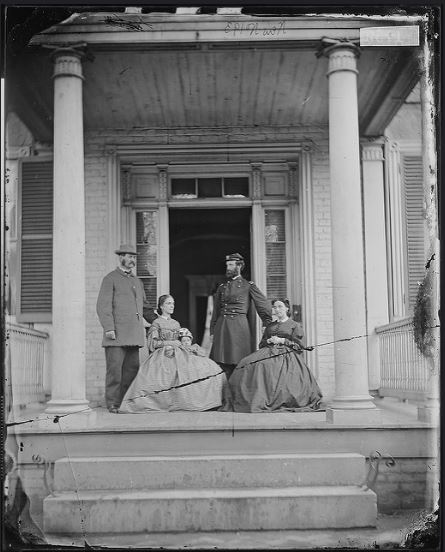
Some extra info:  Charles Mulford was the first cousin of General John E. Mulford (my first cousin 6 generations removed) who was President Lincoln‘s Commissioner of Exchange which meant that he arranged for the exchange of prisoners during the war. He is shown below in uniform in a photo from Matthew Brady that I believe was taken in Richmond in the immediate aftermath of the war.


Gen John E. Mulford Matthew Brady Photo Richmond VA

Read Full Post »


Not your typical Easter egg, I suppose. Most definitely different than the brightly colored eggs of my youth. I don’t recall any flirty topless young women on any of the Easter cards back then.

Maybe I was just looking in the wrong places.

Back then I never knew much about the origin of the egg in the Easter tradition. Never gave it much thought at all. But there is a story behind that iconic egg. Like the rabbit which has come to symbolize Easter as well, the egg stems from the pagan Easter festival which celebrated both as symbols of fertility and the emerging new life of spring. The coloring of the eggs, done in earliest times by boiling the eggs with flowers petals, also symbolized the budding colors of spring.

For the Christians part, the egg also had a part in their tradition. There is a legend that states that after the crucifixion of Jesus, Caesar summoned Mary Magdalene to appear before him, and upon hearing her claims that Jesus had been resurrected is claimed to have said, pointing at a nearby basket of eggs, “Christ has not risen, no more than that egg is red.”  At that point, the eggs supposedly turned red. Many orthodox Christians traditionally color their eggs red to symbolize this story as well as the sacrificial blood of Christ.

There’s also a pragmatic part to the story of the Easter egg. The festival of Lent, the 40 days prior to Easter that symbolize Jesus’ 40 days spent fasting in the desert, had long had a prohibition on all meats and animal by-products including milk and eggs. This created quite a surplus of eggs which would have gone to waste in those days long before modern refrigeration without their preservation by boiling.

Now, where the topless lady in that Victorian era card at the top falls into the story, I have not a clue.

The Victorians certainly had unusual tastes in their greeting cards. I’ve shared some in the past here but some of the ones below have me scratching my head. The couple below with the bunnies riding on chickens behind a sword wielding Rabbit Generals raise a lot of questions. Should we be readying for such an invasion?

Hmm.

For this Sunday Morning Music, I opted to not play an Easter song. I usually play a bit of gospel music from Sam Cooke or Mahalia Jackson. But here is a gospel-tinged song from the great Sister Rosetta Tharpe. Here’s her This Little Light of Mine.

Rockin’ good way to start your Sunday.


I am taking a short break today so if this looks familiar, it is a slightly edited replay from a couple of years back. Now get out of here or I’ll set those crazy chicken-riding rabbits loose on you…


Victorian Easter Egg 5Victorian Easter Egg 7

Read Full Post »


Lawlessness is a self-perpetuating, ever-expanding habit.

–Dorothy Thompson, The Courage to Be Happy (1957)


Let me preface today’s blogpost by saying that I am sorry for being compelled to write this but, though I knew it could, I never truly thought such a thing would happen here.


I didn’t know much about Dorothy Thompson before a few weeks ago. She was a journalist/ radio broadcaster who died in 1961 at the age of 67. She was, to put it plainly, an asskicker and a truth-teller. She interviewed Adolf Hitler in 1931 before he came to power for the magazine Cosmopolitan and soon after wrote a book, I Saw Hitler. Published just before Hitler became German Chancellor in 1933, she warned of the grave dangers presented if he were to ever take power.

The book infuriated Hitler. As a result, she was the first American journalist expelled from Germany in 1934. Arriving in Berlin she was greeted in her hotel within hours by Gestapo agents who gave her 24 hours to leave the country. A crowd of journalists gathered at the train station the next day as she left, presenting her with bunches of American Beauty roses as a symbol of their solidarity.

She became a celebrity, on equal footing with Eleanor Roosevelt in as being the most influential woman in America according to Time Magazine in 1939, as well as a symbol for journalism’s role in fighting fascism.

She spent the 30’s on a crusade to warn the world and particularly the USA of the threat that Naziism and Fascism posed to all countries. She famously disrupted the infamous 1939 German American Bund at Madison Square Garden, heckling and laughing at the speakers until finally being escorted from the building. Her efforts against totalitarianism were tireless.

And of course, many brushed it off as hyperbole. It might be no coincidence that she was married to Sinclair Lewis from 1927 until 1942, a period in which he wrote the prescient and dystopian novel It Can’t Happen Here which outlined just how an American candidate who fomented fear and division while making empty promises of instant prosperity is elected president. He then immediately takes complete control of the government and sets up a totalitarian regime.

Sounds familiar, doesn’t it?

I came across the quote at the top from Dorothy Thompson a few weeks ago and its truth screamed at me. Looking her up made wish we had a journalist like Dorothy Thompson right now who had the guts and the brains to speak truth to the naked lawlessness we are experiencing.

If you’re not paying attention, it’s high time to get your head in the game because as Thompson said, lawlessness is self-perpetuating and ever-expanding. In short, it’s going to get much worse if something doesn’t bring an end to it soon.

As an example, the idea that due process can be thrown out the window for any reason should terrify everyone. Without due process, anyone can be whisked off the streets and dispatched to a distant or even foreign detention center (you can read that as slave labor or concentration camp) without any chance to seek legal counsel or defend oneself against the charges–if there are even charges.

Without due process, they could basically disappear anyone at any time for little to no reason and with no determined length of sentence. You are just gone. You cease to legally exist. And there is no telling when and if you might return.

And you better believe that this has been part of their plan for some time. In fact, at yesterday’s meeting with the El Salvadoran president, Trump told him that El Salvador needed to build about five more even larger prison camps as Trump was planning on starting to send native US citizens there. He used the term home-grown.

Don’t try to shrug this off and say these people being whisked away to camps here and El Salvador probably did something to deserve this kind of treatment because without due process there is no way of knowing that. Due process provides the evidence, charges, and adjudication that have been the backbone of our legal system for as long as we have existed as a country.

It feels like we are about 8 seconds from being fully into fascism here as this administration totally ignores Supreme Court orders and openly makes plans to disappear all sorts of people. Disappearing people has long been one of the go-to moves for totalitarian regimes. Think of the several thousand people disappeared in Chile under Pinochet in the early 70’s. %o years later Chile is still dealing with the repercussions from that time. Or think about Argentina in the late 70’s/ early 80’s when it is estimated that around 30 thousand people, mainly political opponents or activists who spoke out against the dictatorship that was put in place by a military junta that overthrew Juan Peron, were seized and never heard from again.

The numbers that are being thrown around here would dwarf those from Argentina.

The idea that they could sweep anyone off the street and imprison them indefinitely without charges should concern you deeply.  You might think it doesn’t affect your life but it portends an even darker future where this corrupt and lawless government may very well affect every aspect of your life. Now is the time to stop this madness. The window for action is closing fast and there may not be an opportunity in the future. And depending on how the Supreme Court responds to their orders being tossed aside, that window might already be closed.

You might be shaking your head and saying that I should calm down, that this is all hyperbole. That such a thing couldn’t happen here. Dorothy Thompson heard that all the time and look what happened then when people ignored the repeated warnings from her and others.

It can happen here and will if we don’t act now. The crisis is now at hand and there is no avoiding it.

Here’s a song off the 1983 album Voice of America from Little Steven. The song is titled Los Desparecidos (The Disappeared) and is about those who were surreptitiously taken away in Argentina at the time. I urge you to pay attention to the lyrics here and be aware that it might well apply here now.

It can and will happen here unless we stop it now. As I stated at the beginning: though I knew it could, I never truly thought such a thing would happen here…


For more on Dorothy Thompson there is a fine article online from the United States Holocaust Memorial Museum.


Read Full Post »

The Resistance– At West End Gallery


We have been silent witnesses of evil deeds: we have been drenched by many storms; we have learnt the arts of equivocation and pretense; experience has made us suspicious of others and kept us from being truthful and open; intolerable conflicts have worn us down and even made us cynical. Are we still of any use? What we shall need is not geniuses, or cynics, or misanthropes, or clever tacticians, but plain, honest, straightforward men. Will our inward power of resistance be strong enough, and our honesty with ourselves remorseless enough, for us to find our way back to simplicity and straightforwardness?

–Dietrich Bonhoeffer, Letters and Papers from Prison


I see this new painting, The Resistance, as being about the willingness to stand one’s ground when the prevailing winds bellow against, trying to force you in a direction in which you do not want to go. You can read that interpretation as being political, topical, or merely symbolic of one holding tight to their principles. It’s a painting, ostensibly a piece of art, so that’s up to you.

Whatever the case, it’s a little piece that speaks loudly for me which is why I had not hesitation in coupling it with the words at the top from Dietrich Boenhoeffer. He and his writings, especially his posthumous Letter and Papers from Prison, are the subject of what has easily been my most popular blog post, On Stupidity.

Dietrich Boenhoeffer (1906-1945) was a German pastor and theological writer who stood in direct opposition to the Nazi regime and spoke out against its programs of eugenics, euthanasia, and genocide. He fled Germany and had an opportunity to stay in the US in the late 1930’s, safe from the reach of the Nazis. But after only two weeks in NYC, he insisted on returning, believing that if he were to rebuild the German church in the war’s aftermath, he must endure the conflict with its people.  In June of 1939, he returned and joined the German resistance to Hitler and Naziism.

He was imprisoned in a German prison in 1943 and later transferred to a concentration camp. He was implicated in a plot to assassinate Hitler in April of 1945 and was sentenced to death after a court martial trial in which there were no witnesses, evidence or any form of defense provided for him. He was hanged in the final days of the war. The legacy of his courage and the strength of his resistance are still celebrated around the free world today.

As I said, this painting may represent that sort of resistance for you. You might well just see it as simply being about a strong wind blowing against a person and a tree. Or you might be a bit of a contrarian (as I am) and see it as a symbol of not being swayed by popular opinion as symbolized by the wind’s effect here. Or you might expand that reading of this painting and see it in an existential sense. Again, that decision is your privilege and responsibility.

However you see it, I hope you see something for and of yourself in it.

This small painting, The Resistance, is 3″ by 3″ on paper, and is now at the West End Gallery for their annual Little Gems exhibit. The show is hung in the gallery for viewing now and the opening reception is next Friday, February 7.

Here’s a song from Bob Seger and the Silver Bullet Band to go with this all. Maybe it’s a little too on the nose but the song is Against the Wind. For some unknown reason, I have never shared anything from Bob Seger here even though I was big fan of his work, especially in the 70’s and 80’s. I think it’s just a case of holding on to some things and losing track of others. But it’s almost always solid stuff.


Read Full Post »

Last Best Hope

statue-of-liberty-flame-torch


Oh, all you immigrants and visionaries, what do you hope to find here, who do you hope to become?

–Michael Cunningham, By Nightfall: A Novel


I love this line from Michael Cunningham, who won a Pulitzer Prize for his novel The Hours, which was later made into an Academy Award-winning film. It’s a line that seems to crystallize the appeal of America for the immigrant, in the voice of a destination that whispers that here you can follow your dreams and transform yourself.

Immigration is always in the news these days, especially as a tool of fear-mongers who often portray immigrants in sub-human terms. You have seen ample evidence of that in recent months of the current election. I will admit that there are problems with our system of immigration that need to be addressed in a clear-eyed and humane manner. That is obvious. But that is on us and not on the people who seek to make a home here.

Myself, I am personally heartened by the idea that people are still drawn to this nation, that they still see us as their last best hope. That, of course, echoes the words of Abraham Lincoln who in addressing Congress in 1862, during the Civil War, said:

In giving freedom to the slave, we assure freedom to the free – honorable alike in what we give, and what we preserve. We shall nobly save, or meanly lose, the last best hope of earth.

He saw this nation as the last best hope of earth and that has long been the perspective of the oppressed and hopeless around the globe. A place where there is still hope for a better life for their families and the opportunity to become something more than they were allowed to be in their own homeland.

A place they can envision themselves calling home.

I personally like that these people still see us that way and seek to make a home here even though we have often not lived up to our outward attractive appeal. That they still come means that we have not lost our way yet, that we still have the ability to welcome them and weave them into the everchanging fabric of our nation.

How many other nations can say that? Are people abandoning all they once knew so they might swim rivers and cross deserts, risking their lives, to get into Russia? China? Iran or Saudi Arabia?

You know the answer– no.

I don’t want to become a nation where people wouldn’t want to come here. That has been the one quality that has differentiated us, providing the basis for American Exceptionalism. That is a term that generally makes me cringe, mainly because the people who spout that term the most are America First nationalists and their ilk. They often cite it as justification for any behavior, abhorrent as it might be, that furthers their aims.

The point they don’t seem to understand is that it is our welcoming nature and the opportunity we offer to all that makes up our exceptionalism. The idea that we are the last best hope is our sole superpower.

To take that away, to close ourselves off while vilifying those who seek to make this land their home, also takes away that exceptionalism. There is nothing exceptional in rank hatred. It makes us smaller, mean-spirited and cruel.

It weakens– no, it rips apart– the fabric of our nation. It is important that we remain that last best hope, for the oppressed around the world and for ourselves as a nation, because once that is lost our own hope is lost with it.

Thanks for reading this far. Vote.

Read Full Post »


GC Myers- Monde Parfait

Monde Parfait— At West End Gallery

In order for the wheel to turn, for life to be lived, impurities are needed, and the impurities of impurities in the soil, too, as is known, if it is to be fertile. Dissension, diversity, the grain of salt and mustard are needed: Fascism does not want them, forbids them, and that’s why you’re not a Fascist; it wants everybody to be the same, and you are not.

–Primo Levi, The Periodic Table (1975)


Love this passage from Primo Levi, the famed chemist/writer and Holocaust survivor, especially with the growing stench of fascism lingering in the air.

I think it succinctly sums up the strength of this country: fertility.

Not fertility in the human reproductive sense of the word. More like when analogizing the country to its soil and its ability to gain strength from diversity, absorbing everything beneficial from the impurities that are blended into it, becoming more fertile and productive.

Without this diversity and the ensuing impurities, the soil becomes sterile and fruitless.

A simple analogy, of course. That doesn’t take away from its point– that the conformity and purity that fascism demands are antithetical to the individual and to humanity.

The fascist society requires absolute obedience and compliance. They desire a homogenous population that is easily dictated to and compliant in their response. Purity and conformity.

There can be only one viewpoint, that of whoever stands at the head of the governing body.  The government is then that person, subject to the whims, beliefs, and aims of that person alone.

That sounds pretty goddamn un-American to most folks. We are not a one-size-fits-all country. There is practically no single unifying factor to this nation except a belief that we can say whatever the hell we want to say whenever we want to say it, that we alone can set our own course and make the important decisions in our life, and that our individuality counts for something.

We don’t like being told we have to be something other than what we are. Or being told what we have to do.

We are a contrarian place in many ways. But that somehow works here. We like the idea of the underdog, the David versus Goliath story of the little guy taking on the bully. Right over might.

Fascism is the opposite of that. It is might over everything, even right. Goliath would smash David to bits in their telling of the story. Fascists hate individuality, anything that veers from the uniform lockstep of their march forward.

Clean and compliant.

But in the end, that’s not who we are as a nation. We are messy and loud, sometimes stupid and wrong. But that’s just because, in theory, we try to give everyone an opportunity to follow their dreams and imagination. That’s the fertile part of it. In that crazy, diverse mix we have often found something that works for us, something that suits most of us in a fair way.

We are at our best when we celebrate the individuals, the oddballs, the non-conformists. When we recognize and respect the many diverse voices and viewpoints, not the commands of one rich old white guy who has exploited every one of the many advantages he has been given in life.

The end of that final sentence– that’s why you’re not a Fascist; it wants everybody to be the same, and you are not– might be the best argument for rejecting the current form of fascism being seen as a solution by a sizable number of folks.

Some will not have a problem adhering to what is expected of them but many, when seeing how they will be limited and controlled, will flinch at the thought. But it will be too late at that point. Once it has taken hold, it won’t let go except by the physical force of the people uniting against it.

And it will do any and everything to prevent that. That means sterilizing the soil through the elimination of any impurities.

We all know what that means. Some will scoff at the mere suggestion. Some will feel they are safe– they already fit the mold that others will be forced into. I fit that mold– an older white guy who has lived a life of being able to blend in easily on the surface, often going unnoticed. But I certainly wouldn’t feel safe because I know that in my heart of hearts that I will never be part of that group. In any way.

I don’t want to be the same nor do I want that for anyone else. I want people to be the singular beings they should be, to celebrate their differences while still respecting and appreciating the differences of others.

I want the fertile soil that America alone can offer.

That’s a lot this morning, I know. Thank you for sticking with me to this point today. I apologize if you came here to be soothed. I can only offer that this–clarifying where I stand– serves as a check valve, helping to release the pressure of my own anxieties. Holding it in only serves to make it worse.

Here’s an all-time favorite song from the Kinks that I last shared a couple of years back. It’s title really speaks to the subject at hand: I’m Not Like Everybody Else. This is one of my favorite versions, a performance from their 1994 live album, To the Bone.


Read Full Post »

Lotte Laserstein- Evening Over Potsdam (Abend Uber Potsdam) 1930

Lotte Laserstein- Evening Over Potsdam (Abend Uber Potsdam) 1930


I steer my bark with hope in the head, leaving fear astern. My hopes indeed sometimes fail, but not oftener than the forebodings of the gloomy.

–Thomas Jefferson, Letter to John Adams, 8 April 1816


With two weeks to go until the election, I am bouncing between hope and fear. The consequences for this election seem to have a magnitude far beyond any past presidential race and there are days when I feel as though there is a bit of hope and light that the American people will not roll willingly into an autocracy that will forever change our nation’s future and character.

But there are also darker days when we seem destined to that path, that too many of us don’t recognize the peril or think it won’t affect their lives in any way. They are like sleepwalkers trudging in the dark.

Jefferson’s words give me a tiny bit of comfort. Hopefully, that feeling of black foreboding that sometimes fills me these days will drift away behind us as we sail into the bright light of the future, never to bother us again.

These feelings reminded me of a German painting from the 1930’s. I wrote about it here back in 2014 and it feels like a fit for today. It is slightly edited from that earlier post.


While looking up some the artwork that was branded as being entarete kunst, or degenerate art, by the Nazis in 1930’s Germany, I came across a number of amazing works, many by well-known artists but some from artists who were unknown to me. Many of these were Germans who were well on their way to establishing big careers as important artists before the war and its buildup but never really regained their momentum after the war. That is, if they even survived.

Lotte Laserstein at work on "Evening Over Potsdam"

Lotte Laserstein at work on “Evening Over Potsdam”

The painting shown above, Abend Über Potsdam, or Evening Over Potsdam, by German-born artist Lotte Laserstein , stopped me in my tracks when I stumbled across it. It is a large painting that speaks volumes with just a glance. At first, all I could see was a sort of classic Last Supper type arrangement as if it had been painted by Norman Rockwell while he was in the deepest depths of despair.

It was big and brilliant, over 43 inches high by 80 inches wide. The facial expressions and the body language evoke a mood that is beautiful and tragic at once, perhaps filled with the foreboding of what was to come for these people and that city and that nation.

Perhaps the dog, a sleeping German Shepherd, is symbolic of the German people being unaware of what is ahead, an omen of what might be lost when the shepherd is not vigilant.

This was painted in 1930, just as the Nazis were beginning to make their fateful move to take over the German government. I can only that imagine someone with the keen perceptive powers of an artist such as Laserstein could easily imagine what might be coming for the German people in those dark clouds massing over that German city.

Lotte Laserstein- In Gasthaus ( In the Restaurant)Laserstein grew up in Prussia and was trained as an artist in the creative whirlwind that was post- WW I Berlin. Art in all forms was flourishing, fueled by the desperation and fatalism of living in a post-war world. There was change in the air. Women were becoming bolder and more empowered, and modernity was pushing away the conventions of the past. Laserstein embraced this life, typifying the image of the single, self-sufficient New Woman. The painting shown to the right, her Im Gasthaus (In the Restaurant), is a great example of that time, showing a single woman with bobbed hair and fashionable clothes sitting alone in a restaurant. The hands are strong and the expression is pensive, thoughtful. It’s a great piece and a wonderful document of the time.

Laserstein was gaining stature at this point but in 1933 was marked as being Jewish and her career began to stall in Germany. In 1937, the same year as the famous Entarete Kunst exhibit put on by the Nazis where they displayed and mocked artwork labeled as being degenerate then destroyed much of it (a story worthy of another post), Laserstein was invited to have a show in Sweden. She traveled there for the exhibit and stayed until her death in 1993.

After the war she basically fell off the radar, although she was active until the end of her life. However, her work after the beginning of World War II lacked the fire of her earlier Berlin work. It was good work but it was less full, less expressive. No doubt the war had sapped away a great part of her. Her earlier work was rediscovered in her late 80’s and had a retrospective at a London gallery and in 2003, ten years after her death, she returned to Berlin, in the form of her paintings, with a large retrospective.

There were many victims of that horrible time.  Lotte Laserstein survived and did produce work for half a century but was a victim, nonetheless.  As with many surviving victims, there was something, some part of themselves, lost. We will never know fully where her work might have taken her without the war. As it is, she has left us some wonderful work to appreciate.

And in Evening Over Potsdam, to serve as a warning to stay forever vigilant.

Read Full Post »

GC Myers- And the River Flows 2024

And the River Flows– At the West End Gallery


That time
we all heard it,
cool and clear,
cutting across the hot grit of the day.
The major Voice.
The adult Voice
forgoing Rolling River,
forgoing tearful tale of bale and barge
and other symptoms of an old despond.
Warning, in music-words
devout and large,
that we are each other’s
harvest:
we are each other’s
business:
we are each other’s
magnitude and bond.

–Gwendolyn Brooks, Paul Robeson


I had come across part of the poem above from Gwendolyn Brooks before, those last three lines: …we are each other’s harvest: we are each other’s business: we are each other’s magnitude and bond. These are strong lines, sentiments that always speak loudly to me, ones that I hope will more people would realize and take to heart.

Unfortunately, I hadn’t taken the time to search out where it had come from in her work.  I was pleased when I finally came across the whole poem and found that it was titled Paul Robeson, about someone who I consider one of the most fascinating people of the last century.

Paul Robeson (1898-1976) was a star athlete, a lead actor and headlining singer– the bright light in any sky in which his star appeared. He was also a scholar– valedictorian for the 1919 class at Rutgers where he was the only black student. He went on to graduate from Columbia Law School and worked for a time as lawyer. But his performing talents were undeniable and they brought him worldwide acclaim. But beyond all this, Robeson was throughout his life a ceaseless champion of the labor and civil rights movements, here and abroad. If you don’t know much about Robeson, please look him up.

He is best known to most folks for his performance of Old Man River in the musical Showboat. I thought the song would be a fitting companion to the painting at the top, And the River Flows. It’s a piece that keeps drawing me back to look a little deeper. I feel there’s something beyond the surface, a message or story in the river rolling by or in a lit room in one of those buildings that overlook it. I might never know that message or hear those stories but just knowing that the river keeps rolling it good enough this morning.

All I need to know…


Read Full Post »


“To those human beings who are of any concern to me I wish suffering, desolation, sickness, ill-treatment, indignities—I wish that they should not remain unfamiliar with profound self-contempt, the torture of self-mistrust, the wretchedness of the vanquished: I have no pity for them, because I wish them the only thing that can prove today whether one is worth anything or not—that one endures.”

Friedrich Nietzsche, The Will to Power


I paused a little bit before using this quote from Nietzsche this morning. The use of anything from a philosopher whose work, and the book from which this excerpt has been taken, had been appropriated and distorted to justify their own ends , by the Nazis is a little risky, especially in this time of rising authoritarianism here and around the world. For many of us, just the title, The Will to Power, immediately conjures up imagery of invading Nazis goose-stepping through conquered cities in their quest for more and more power.

People naturally assume that that the power to which he is referring is ultimate power, ruling power to be  exercised over others. That is how the Hitler and his ilk interpreted it. But Nietzsche was talking about two separate forms of power which are expressed in German as the words Kraft and Macht. Kraft refers to brute force, both physical and mental, while Macht refers to true power. Kraft is the animal force, that primal element that is possessed in all of us. Macht, on the other hand, is the power to control one’s own kraft and use it in positive ways.

Macht is the overcoming and controlling of the kraft within us.

And that’s where we are now. We have two elements within this nation, one who see the power of this nation as pure animal power, and another who recognizes our power– our kraft— but understands that it cannot solely guide our actions and future. It is unsustainable. History shows that clearly. 

So, the question is how do we emerge from this? Do we have the fortitude to endure this tug of war between these two concepts?

Though I have my doubts on some days, in the long run I think we do have the ability to endure, actually.

And as Nietzsche expresses above, perhaps this struggle is just what we need to really move forward. Maybe we need some real hardship and suffering to understand the responsibility of our power. Maybe we need it to finally recognize that we must at some point sacrifice something of ourselves to a greater good, that our bounty does not come without a price.

Many of us have never had real hardship. I am not talking about normal loss and suffering that comes with being a human being. I am talking about widespread hurt that runs through the nation and touches most every citizen. Most of us have never had to sacrifice much for anyone.

Maybe we need the hurt and the humbling. While nobody wants to willingly take on great suffering, there are lessons to be learned from it. Perhaps that one can overcome and endure great hardship is the greatest of these. That and allowing more of us to develop a greater sense of empathy with those who continue to suffer around us.

Maybe we need to simply learn that we can endure.

Maybe then we can cross the divide between us and work together for some greater good.

Let’s hope, okay? 

Hey, here’s some old Canned Heat from about 50 years back with a fitting message for any time. It’s Let’s Work Together. Now, have a good day.


https://youtu.be/oXo6G5mfmro

Read Full Post »

Older Posts »