Feeds:
Posts
Comments

Posts Tagged ‘Quote’

Like everything genuine, its inner life guarantees its truth. All works of art created by truthful minds without regard for the work’s conventional exterior remain genuine for all times. 

Franz Marc

******************

Franz Marc is not one of my favorite artists but that is not to say I am not a fan of his. I like many of his paintings and some do little for me. And that’s okay.

But I greatly admire the fact that he created an impressive body of work in a short period of time– he was only 36 years old when he was killed in the Battle of Verdun in World War I in 1916— that has survived and prospered during the last hundred years. Under Hitler’s Nazi Third Reich, his work was labeled as degenerate art and was subject to destruction. But his work persisted.

I also admire the fact that he chose to carve out his own niche, creating work that is instantly identifiable as his. His use of bold primary color, the animal subjects that populated many of his pieces and the use of Cubist elements make his work easy to distinguish when you come across one. Many of you are probably familiar with his famous yellow cow or his blue horses.

I also admire and am in agreement with many of his writings about art. We both tend to look at art as having an inner life of its own so long as the artist allows that truth to manifest itself and creates the work with true emotion and feeling.

His desire to create work that remains genuine for all time is mine as well. The idea of connecting and communicating with future generations is deeply appealing. You always hope your work speaks beyond time or language or place.

So, while I may not number Franz Marc among my favorite artists, he is nonetheless a great influence on my work.

Read Full Post »

Remembrance of things past is not necessarily the remembrance of things as they were.

 Marcel Proust

*********************

A few days back I featured a new small painting that is headed to the West End Gallery for next week’s opening of their annual Little Gems show. That piece, and never looked back…, was a stark image in tones of black and gray that was about the idea of being forced from your home, never to return. It’s a depiction of that moment of leaving and the sense of loss and abandonment that remains.

The new painting above, also headed to the Little Gems show, is another take on the idea of abandoning one’s home. This piece, One Last Look, speaks to the nostalgia that appears after time, as memories of bad times and the accompanying anxieties have faded and singular moments of happiness have grown to fill all the moments of that time.  Time has smoothed away the rough edges and we begin to think that that time, that place, was much more idyllic than it ever was in actuality.

To me, this painting speaks to that nostalgia and its idealized sense of home and youth. With nostalgia, the past seems more vivid and vibrant.

The grass was greener then, I guess.

I am reminded of a post I wrote back in 2009 where a large poll taken at that time throughout Russia named Joseph Stalin as the third greatest Russian of all time. I wrote: Despite the many millions, yes, millions of Russian citizens who were put to death by Stalin, despite the political purges and gulags and Soviet policies that caused a type of artificial famine that killed far more citizens than any natural famine more than once, the current populace said that this Man of Steel was their guy.

Some of those polled had lived through the Stalin era but time, and a little more food and comfort now, had eroded the memory of the hardship, the famines and the purges. In fact, Putin had began extolling the virtues of Stalin about that time and many of these people felt the country needed that type of autocratic leader again. In Putin, they– and, unfortunately, we as well– may have found him.

We all often fall prey to this sort of nostalgia, our memories holding onto a few events of happy triumph here and there through time and discarding the much more numerous days and weeks and months of chaos or drudgery that many of us live through.

Nostalgia is like a beautiful double-edged sword– both wonderful and terrible. Such things should be handled with care.


Read Full Post »

Botero

An artist is attracted to certain kinds of form without knowing why. You adopt a position intuitively; only later do you attempt to rationalize or even justify it.

Fernando Botero

.
*********************
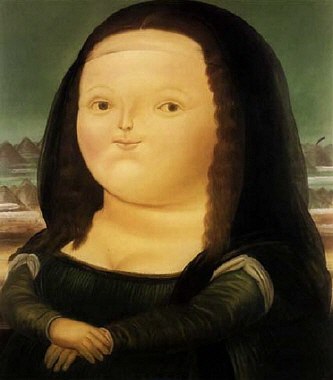
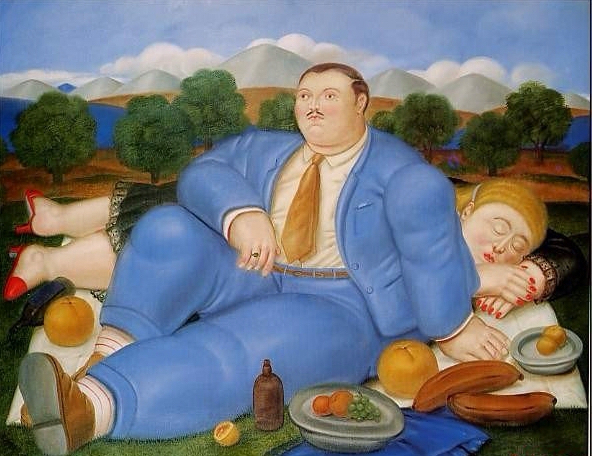
I don’t know much about artist Fernando Botero, who was born in 1932 in Medellin, Colombia. But it is obvious that his work represents his attraction to a certain kind of form– the round and the over-sized. While I would not count him among my favorites, I am impressed by the impression his work makes, how you never doubt that a painting or sculpture is his work.
.
His work is boldly and instantly identifiable. And that is saying a lot.
.
I think a lot of artists struggle in finding that certain kind of form that speaks to them intuitively, a form that becomes part of their true voice. Botero found it in the form of rotund figures and listened to his intuition. I think the impressive body of work he created over his long career justifies his decision.

Read Full Post »

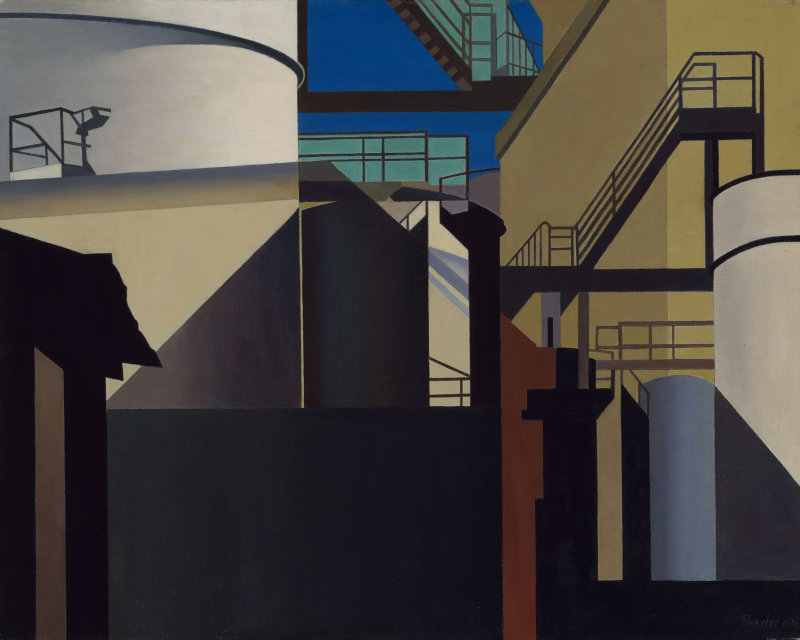
Every age manifests itself by some external evidence. In a period such as ours when only a comparatively few individuals seem to be given to religion, some form other than the Gothic cathedral must be found. Industry concerns the greatest numbers-it may be true, as has been said, that our factories are our substitute for religious expression.

Charles Sheeler
*******************
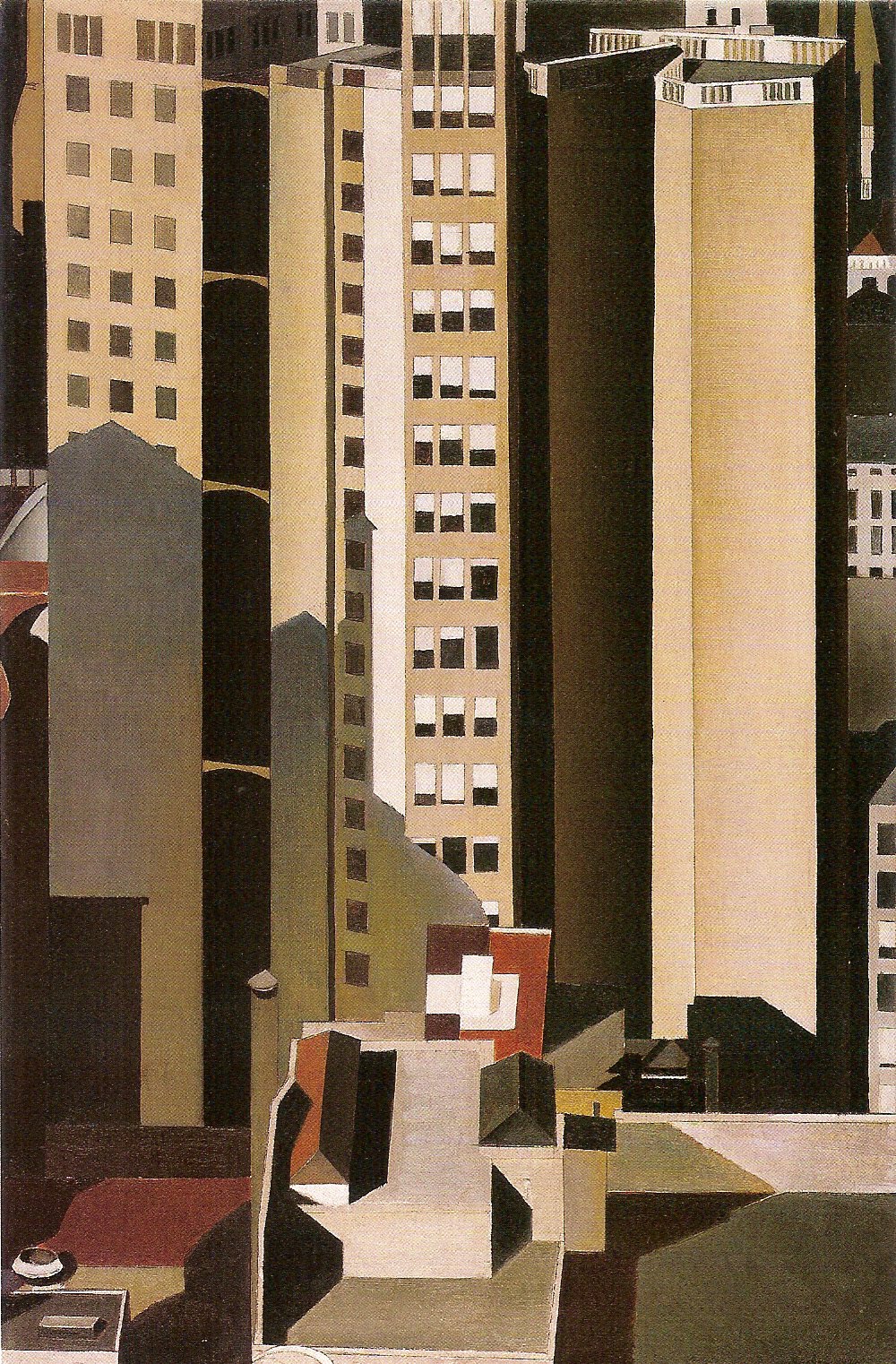
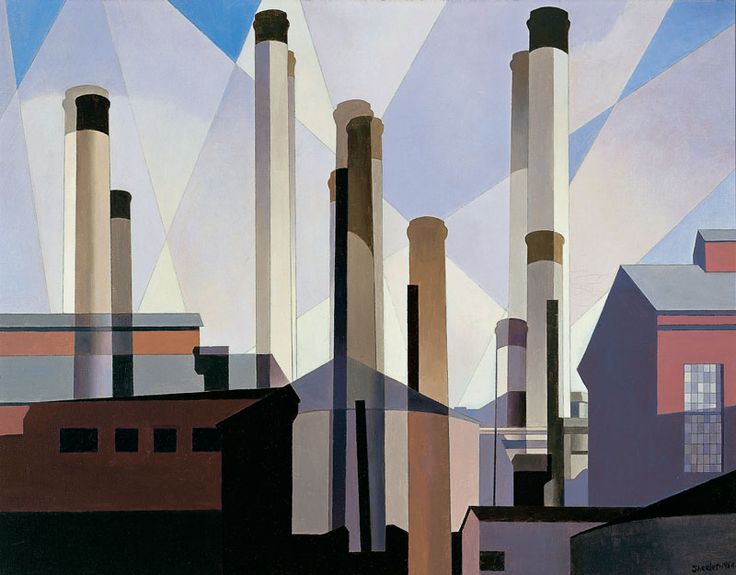
In much of his photography and painting, Charles Sheeler (1883-1965) equated the sheer mass and space of modern industry with the grandeur of medieval cathedrals. He saw in both of these environments, spaces that bring awe to the common man. These places often make one feel small and insignificant and in the presence of a powerful entity, one that dwarfed one’s own strength and power.
I think his work accurately showed the transition of our spiritual adoration from the religious to the corporate structures. It seems to me that we have bestowed a new sense of reverence on corporations, believing that they are some sort of savior and protector that will always act in the best interest of the many. When we speak of policy now, we don’t speak about how we can help people in need, we speak about how we can help large businesses. The idea there is that if they do well the benevolence they show in their hiring and acquiring will naturally take care of all ills.
If you look at that from a historical perspective, that’s not much different than the place occupied by the church throughout the ages. I know that’s not a new observation but it seems more and more obvious in recent times as so many common people have come to view capitalism in almost religious terms, with corporations deserving our veneration and protection.
And it makes me wonder if Sheeler was right, that the factories and corporations have become our substitute for religious expression? What will future generations see as the external evidence of our age? Will our perceived legacy be little more than the spaces of large corporate campuses and huge distribution centers? Is that the extent of our reach now?
Just thinking a little this morning.  Anyway, here are some other Sheeler paintings.

Read Full Post »

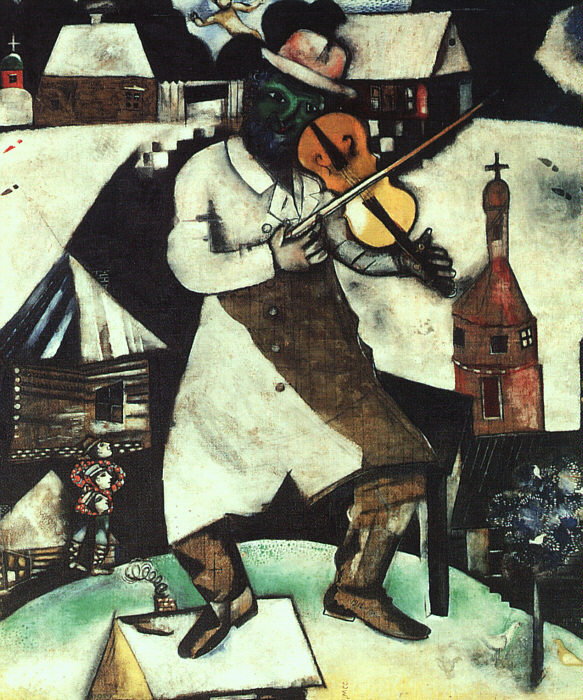
If I create from the heart, nearly everything works; if from the head, almost nothing.

― Marc Chagall

********************

So true…

Read Full Post »

There can be no failure to a man who has not lost his courage, his character, his self respect, or his self-confidence. He is still a King.

Orison Swett Marden
***********************

It’s fitting that one of the only things I’ve actually finished in this new year should be a painting that I see as a personal motivator. This new piece is a 30″ by 20″ canvas that I am calling Still a King for the time being.

The title is taken from the quote at the top from Orison Swett Marden, who was a writer in the late 19th and early 20th century who focused on inspiring people to make the most of their lives in business. This was the time of Horatio Alger and many rags-to-riches stories, with the world exploding with invention and innovations. Marden was an early self-help writer, trying to motivate would-be entrepreneurs to make the most of their opportunities.

I periodically go through crises of confidence, some shallow and short-lived while others are deeper and a bit more difficult from which to escape. I have observed that when I feel my self-confidence is nowhere to be found, my courage and self-respect are also missing in action. In these deeper ruts, I can only hope my character is strong enough to carry me up and out, at least to a point where those other attributes decide to rejoin the struggle.

When they all come back together I know I will be okay.

And it is that moment that I see in this painting. The Red Tree in this piece represents the coming together of those four qualities: courage, character, self-respect and self-confidence. The path to this point winds through a landscape that goes up and down until it comes to a higher point and the realization that it is still a king , even if its realm is only its own little landscape.

Anyone with those attributes can– and should– walk as a king.

Or a queen.

There was definitely male dominance in the time of Marden and he probably gave little thought to the idea that these concepts, simple and universal as they may seem, would apply to a woman. But times have changed and are still changing, thankfully. There is still male dominance in most fields but if women can hold on to and display their  courage, character, self-respect and self-confidence, they will be queens.

I’ve been an artist long enough to see this evolution take footing in the art world. In recent years, there are more and more women artists coming to the forefront. For me, much of the most interesting work I see is created by women and, more often than not, it is the result of seeing themselves as courageous rulers of their own realm.

And that is a very good thing.

Which leads me to one last epigram from Orison Swett Marden that I think also applies to this painting and what I written here:

Nothing else so destroys the power to stand alone as the habit of leaning upon others. If you lean, you will never be strong or original. Stand alone or bury your ambition to be somebody in the world. 

Now, I only have to put these words into action. Wish me luck…

Read Full Post »

Rockwell Kent- The Trapper

****************

Force against reason: reason, because it has the power

of enlisting force to fight for it, will win.

From the recognition of that truth has come democracy.


-Rockwell Kent

***************

There are a lot of things that could be said this morning, especially with a governmental shutdown taking effect overnight. This shutdown is the symbolic culmination of the political attitudes of the past twenty years that have led us away from compromise and reason as a means of governance.

I am not going to go into my own grievances here. I’ve done that enough. But I will say that for all the anxiety this government produces as it tries to force itself closer and closer to some form of autocratic authoritarianism, I am somewhat optimistic. And that may be because I agree with the premise of the quote above from one of my favorite artists, Rockwell Kent.

I do feel that we are in struggle right now between force and reason, that the direction in which we are being directed via deception and fear-mongering– the force here–goes against the ideals and virtues that we have long professed as the basis for our democracy– reason.  The idea that reason is enduring because it has the ability to enlist those who will fight for the truth of it is reassuring to me and seems to be backed by history.

What we are experiencing is reminiscent of the way other empires have ended, when the beliefs that grew these empires are set aside by rulers who see themselves as being above those ideals and virtues. But I believe we are still a nation with enough reasonable people to resist the forces of greed and nativism that have descended upon us.

And that gives me hope, even on these days that seem so dark. So, thanks for reminding me of that, Mr. Kent.

Here’s a video of some of Kent’s landscape work, primarily of the Adirondacks, Vermont and Greenland. The format of the video is a little cutesy for my taste but it shows a lot of great work from Kent and features the music of Edgar Meyer and Joshua Bell. Have a good day and stay reasonable.

Read Full Post »

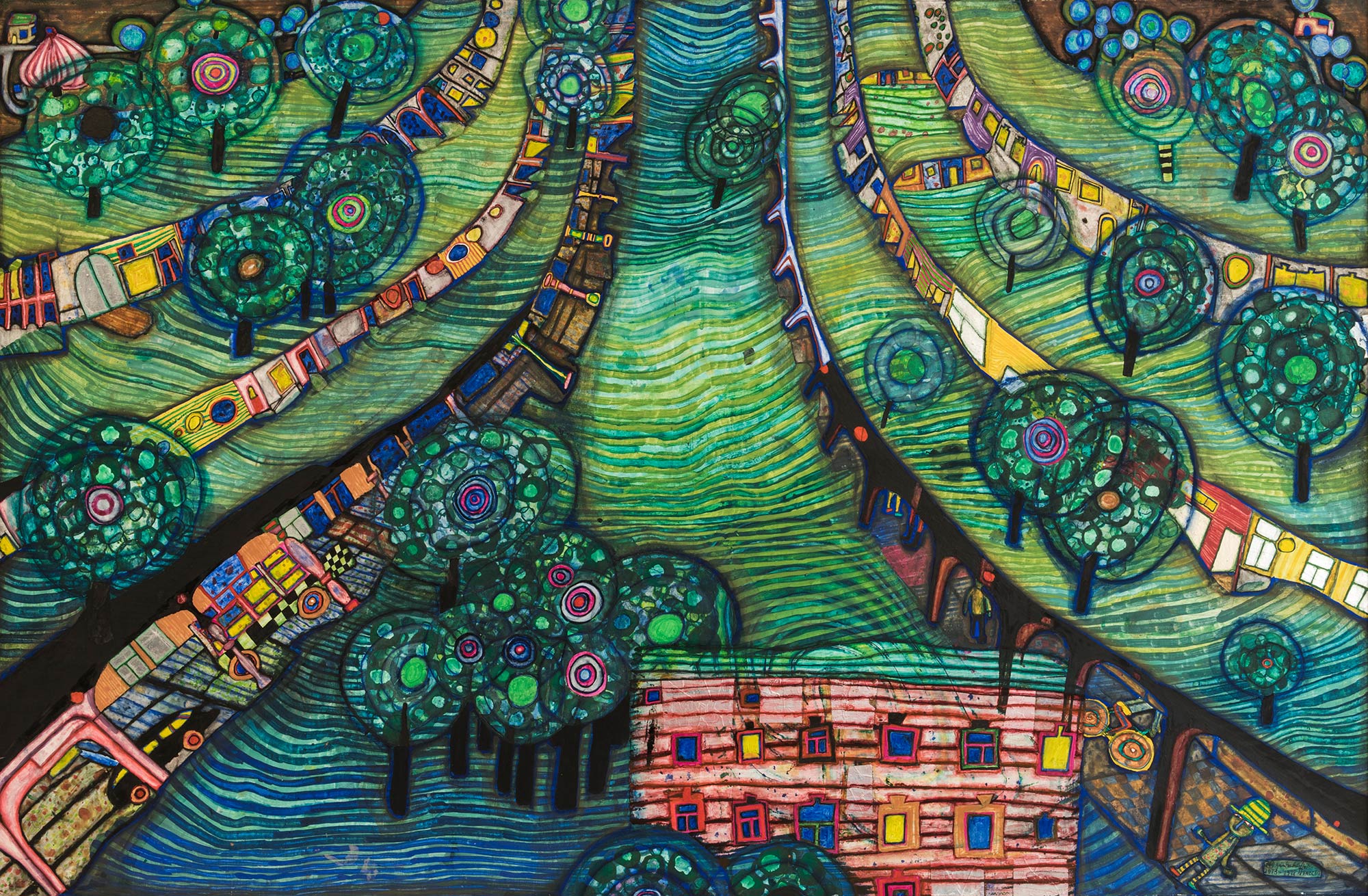
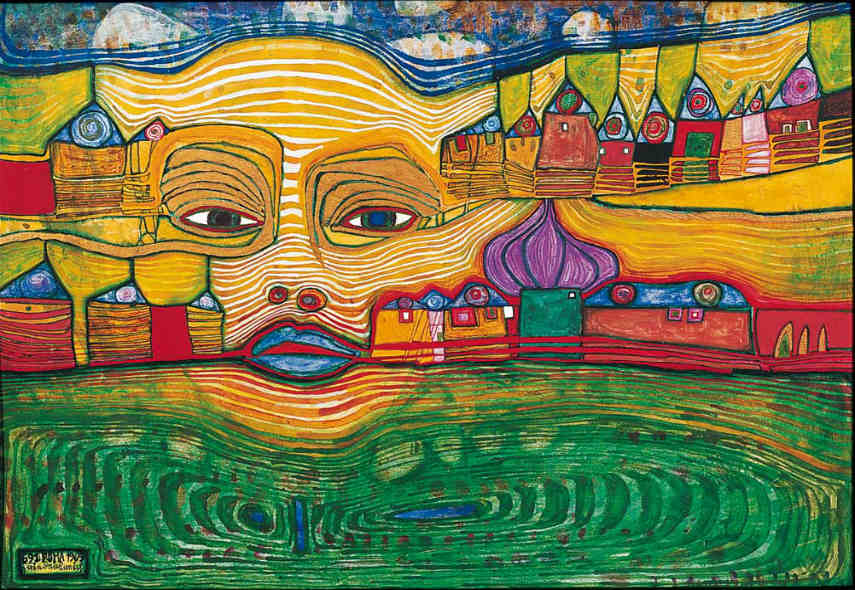
The straight line is godless and immoral. The straight line is not a creative line, it is a duplicating line, an imitating line.

Friedensreich Hundertwasser
****************************
I was originally drawn to the work of painter Friedensreich Hundertwasser (1928-2000) by his use of color and the organic feel of his forms. Every line has a natural curl and arc and even those lines meant to replicate the straightness of a man-made object quiver and waver a bit. It all creates a world that feels natural and alive. Organic is the word that always jumps to mind although maybe spiritual is a better fit in that it seems to depict a world that is comprised not of the human body but of its soul and spirit.
I maintain a similar relationship with straight lines, viewing them as something to be avoided at all cost. The man-made feeling that comes with a straight line is something that I do not want to see in my work with the possible exception of the horizon line as seen on a body of water. Consciously painting that straight line is a real task, an ordeal of concentration.
As hard as it is to draw a straight line, it’s harder than you might think to not draw a straight line, especially after you have spent years drawing and painting, gaining a certain proficiency with pen and brush. I sometimes have to really focus on not painting a straight line or the stroke will unconsciously go straight and true. When that happens, it irks me to no end and I find my eye constantly going back to that straight line in the composition.
I think there is something in our brain that makes our eye seek out straight lines as though we are always searching for signs of humans, perhaps as some sort of survival mechanism. And a very straight line is almost always a man-made thing.
So, I am going to practice not painting some straight lines this morning with Hundertwasser’s words echoing in my ears. And eyes.

Read Full Post »

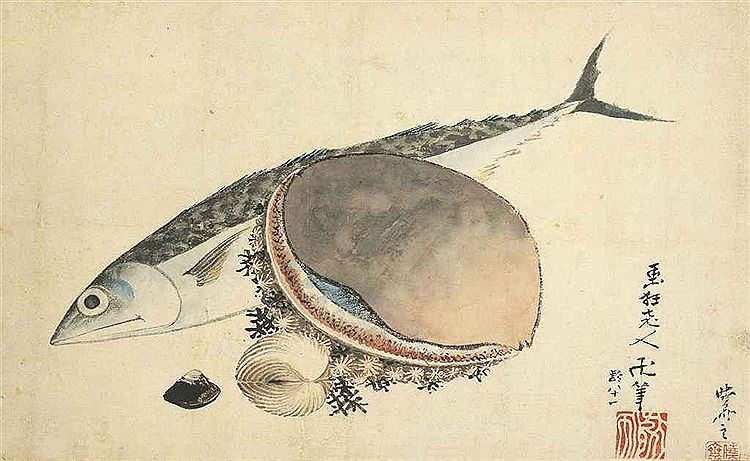
Hokusai’s Dot

At seventy-three I learned a little about the real structure of animals, plants, birds, fishes and insects. Consequently when I am eighty I’ll have made more progress. At ninety I’ll have penetrated the mystery of things. At a hundred I shall have reached something marvelous, but when I am a hundred and ten everything I do, the smallest dot, will be alive.

Katsushika Hokusai

***********************

I really like the bit of wisdom above from the great Hokusai, both for his optimism on aging as well as the idea that as he continues to progress his work will reach a point where everything he paints– even something as simple as a dot– has a life force within it.

Attaining that life force, where the painting transcends what you have put into it, in any one piece is a rare and difficult thing for any artist to achieve. But that idea that you might one day reach a point where your work has moved from a product of thought and craft to a transcendent expression of the spirit is something that seems beyond our reach or even our aim.

But perhaps we should keep it as an aim in our mind, along with the idea that we will continue to progress as we age, even if it is stored in rarely visited corner.  If we hold on to it perhaps we will subconsciously find our way to that goal. And when we are a hundred and ten, the dots we paint will have that same life force as those created by Hokusai.

It’s something to hope for…

I’ve included a few of Hokusai’s paintings beyond his famed wave and landscapes. I love his fish pieces and the raven is wonderful. Enjoy!

Read Full Post »

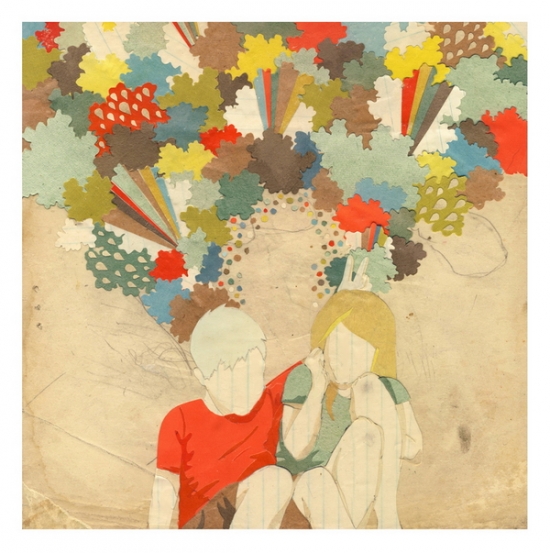
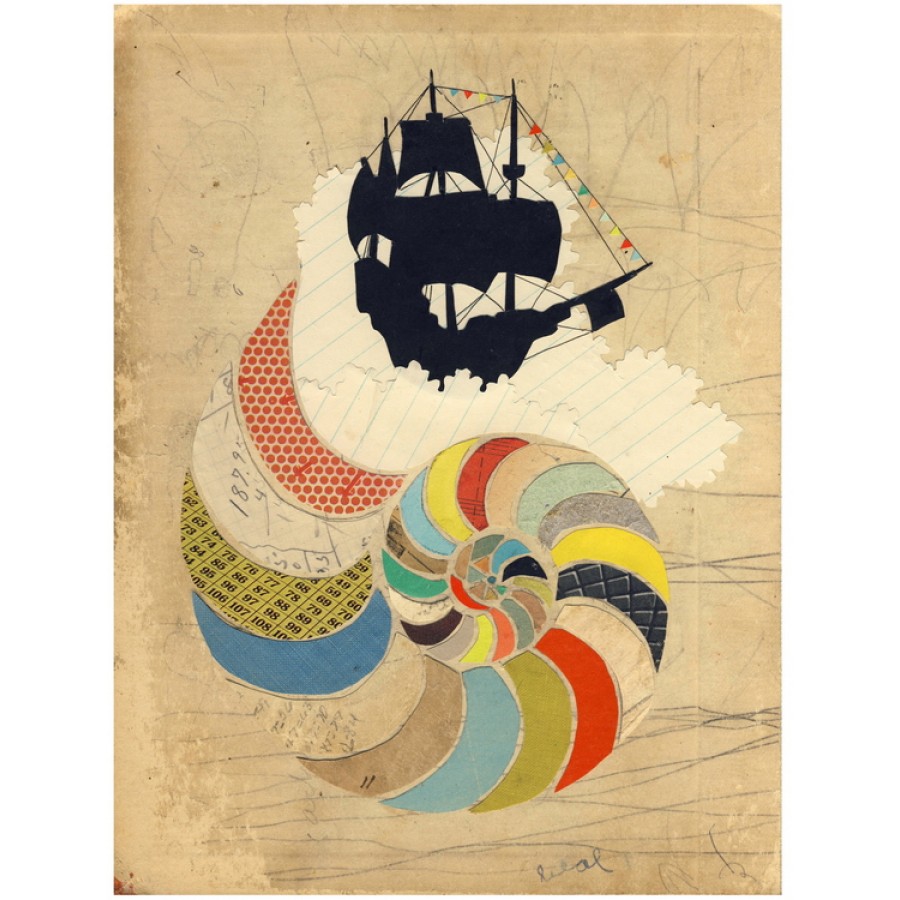
I think as an artist it’s very easy to [equate self-worth with artistic success] because of the nature of the work. If you think of art as a job, then your product is so much more than hours invested. The product is a piece of yourself, so of course if the reception is not the greatest, then it can feel like a direct hit to who you are as a person. I think this happened a lot more when I was younger and still finding my way around. I would doubt my direction when a viewer wasn’t thrilled. The trick for me is not to put more distance between my work and myself, but to close that gap completely. I can see myself in the art that I create, and that builds a wall of confidence.

–Hollie Chastain

***************

I was reading a bit this morning on one of my favorite websites, Brain Pickings, when I came across this quote from contemporary artist Hollie Chastain, a Tennessee based artist who works in paper art and collage. The quote was included in an article about creative blocks and her words really spoke to me.

I liked the idea that at some point there is no gap between the artist and their work. The artist is the work and vice versa. But that term she employed, wall of confidence, really hit home. I see ias being t something that comes with continuing to stick with what you know is true to who you are as an artist and not being swayed by momentary lapses in confidence. It’s a wall that protects you from the peaks and valleys that come in the course of a career, that shield you from those times when you are not the flavor of the month.

It’s a wall that allows you to fight off creative blocks, knowing that you are secure in your own vision and the work that flows from it.

When that wall is there, you– actually, I should be saying I here–just have to get to work. And that is what I am going to do.

Thanks for the good words, Hollie.

You should check out Hollie Chastain‘s work. Good stuff. You can get to her site by clicking here.

I Came to Get Down-Hollie Chastain

Read Full Post »

« Newer Posts - Older Posts »