Feeds:
Posts
Comments

Archive for January, 2012

Bookshelf Porn

Some might think a website called Bookshelf Porn is something other than what it really is.  But if you’re like me, you probably understood at once what the name implied.   It’s the thrill of a bookcase filled with multi-colored tomes, their spines tantalizing and promising unknown pleasures if you would only take them from the shelf.   The desire to reach out and run one’s fingers over the leatherbound cover of an old book.  To smell the dustiness of the  pages as the book opens.

It may not be sexual but it certainly is sensual.

From my earliest age I have been drawn to bookshelves, from the beautiful reading rooms of our old local library to bookstores of all shapes and sizes.  It was like a portal to an outer world or an altar of worship to knowledge. The silence of the places only punctuated this feeling of sacredness. 

When I was working at jobs where I was often in people’s homes, I would always first look to see if they displayed their books or even had books at all.  I was always disappointed at the number of places that had no evidence of books.   If there were bookshelves, they had videotapes and knick-knacks.   Perhaps they kept their books in a bedroom or in the basement.  Or maybe they just didn;t have books.  I don’t know. 

But when I would come into a home and there were filled shelves, I would be almost giddy.  I would scan the spines hungrily, taking in the titles, ascertaining in a moment what I thought might be the primary interest of the owners.  Sometimes they were filled with professional journals or textbooks from their college days.  Sometimes romance novels or the popular bestsellers of the day. 

But once in a while, they were jammed with an eclectic mix of literature and art books, poetry and philosophy.  They were book and knowledge  lovers. Those were always the most exciting visits and I usually had the best rapport with the owners of these shelves.  We could usually find something interesting to talk about while I did what I had to do and we often spoke in terms we both understood, the bookshelf providing a sort of common ground. 

So, if you’re drawn to the bookshelf as I am, if you are excited by the thought of libraries or bookstores,  take a moment and check out the Bookshelf Porn site.

Read Full Post »

I have decided to stick with love. Hate is too great a burden to bear
—-Martin Luther King, Jr.

^^^^^^^^^^^^^^^^^

This morning, on the day honoring Martin Luther King, Jr., has me thinking about those who dream of a perfect world.  The cynic in me says that this is a pipedream, that perfection is beyond human means.  That we are flawed and doomed creatures.  But the optimist in me says that perhaps we are never as  far from perfection as we seem.  That we have the possibility of an ideal world near at hand if we could only push aside our hatred and our pettiness long enough to take notice.   As King said, Hate is too great a burden to bear.  And all too many of us are weighed down with hatreds that sap of us our energy, our joy and our ability to see the beauity and possibility of the world around us.

 I have chose the piece above to illustrate this thought because it is to me a representation of a world where the burden of hatred is cast aside.  Called In a Perfect World, this piece is about the ideal setting where the individual can exist without bias, without envy or anger– freed from all the draining negativity of such hatred.  Of course, this is a place that can only exist inside each of us.  It must first become our internal landscape because real change must take effect internally before it can become a greater reality. 

So for now, this perfect world may only exist on this canvas or in my mind.  But maybe one day, it could become a real landscape.  What do we have to lose?

Read Full Post »

I’ve always been a fan of the short story.  I grew up reading the classic short stories of  Guy DeMaupassant, O. Henry and Edgar Allan Poe, all beautifully crafted and plotted.   There are short stories by other authore that are lodged deeply in the fabric of my memory, which helped shape how I view the  world.  The will to live of the man struggling against nature in Jack London’s To Start a Fire or the way that love and art changed the lonely characters in Who Am I This Time? from Kurt Vonnegut are two varied examples.

A short story is very much like a painting to me.  They are often complete views of an event or a moment but there is still a lot of room for the reader to fill in the spaces with their own imagination, to allow their own emotional understandings to become part of the tale.  They can be taken in quickly yet often, as I have noted above, the memory lingers on.  Again, like the glance of a painting that stays with you in a haunting way.

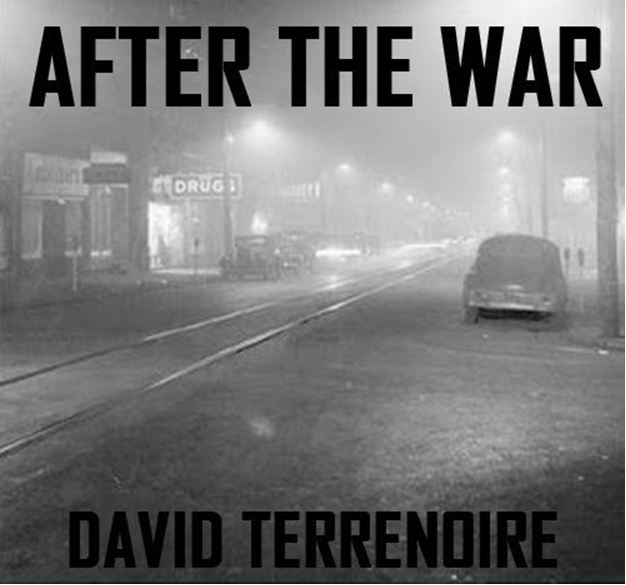
I was pleased to come across such a piece of short fiction recently from writer David Terrenoire, a friend I met several years ago through my work.  It’s called After the War and is the story of two lonely souls who momentarily find one another in the area of the steel mills around Pittsburgh of 1948.  I would call the story a poetic tragedy. The writing is spare and direct, giving the piece the feeling of the fable that it is. 

Just a damn fine piece of writing that will stay with you for days after.  And maybe longer.

After the War is available  from Amazon for e-readers.


Read Full Post »

I’ve been pretty busy in the studio lately.  That’s not unusual at this point of the year because it is when I’m gearing up for upcoming exhibitions but  in past years  this is when I have often  felt a bit blocked and far removed from the point where I wanted my work to be .   But thus far this year, things have been flowing easily and I feel as though I am near that sometimes elusive groove where the act of painting becomes more  instinctual than cerebral.  When I feel myself in this groove, I start to trust these instincts, this pushing back of conscious decision making.  As a result, there’s no dwelling over decisions at the table or the easel.  I just make the mark and move on from there.

And each piece brings an inspiration and desire for the next painting with ideas gushing forward.  I often find myself making quick little sketches on scraps of paper, little rough stick drawings really.  Just enough of the thought to be able to rekindle the idea later.  Often, I don’t make the sketch and the idea floats away and is sometimes fortuitously recalled at a much later date or is gone forever.  I sometimes think my best thoughts have taken this fleeting route.

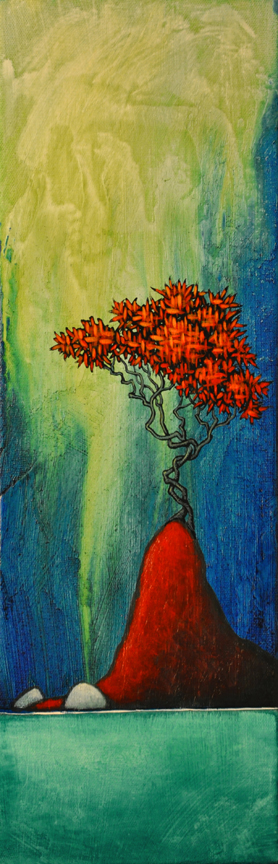
The piece shown here is from this recent burst, a smallish canvas, only 6″ by 18″ that I call Tangled Up In Blue.  The title is, of course, taken from the old Bob Dylan song.  This is a simple composition, very typical of much of my work, but it’s carried strongly forward by it’s colors and contrasts.  It has a dramatic edge to it.  I think the red of the mound really highlights this feeling of high emotion.  I try to envision it in other, more natural colors and the result is less potent, more understated.  This feels to me like the tangled trees are two lovers springing from the same red bleeding heart.  The intensity of the red mound and the trees is a sharp contrast to the cooler blues of the water and sky, even though they still have their own intensity.

But the piece is probably brought to completion by the break of pale yellow in the sky, the light that comes through creating chasms in the blue night wall.  This break sets off all the other color and creates a sense of moment in this small, simple piece.  The result is that the result is greater than the sum of its parts.

Or at least I think so.

Here’s a little music.  I bet you thought it would be Tangled Up In Blue.  It was going to be but I came across this version of  a different Dylan song, Love Sick.  I really like this film and performance of a song that has been a favorite since it first came out in 1997 and decided to share it instead.  Enjoy.
http://youtu.be/Abbu5hcH0kk

Read Full Post »

 In a post from a few days ago and several times before, I have mentioned the stained glass windows that came from the studio of Louis Comfort Tiffany in the early part of the 20th century.  They have been a large influence on my work over the years, from their use of complex color harmonies to the way they are composed using simplified forms and strong lines which divide and define the panels.  I never try to imitate any one piece or even have them in mind when working, but I often find myself comparing my work, after it is completed, to them as far as color and composition are concerned.  Often, the paintings that satisfy me the most have an opalescent quality in their color with each color having elements of several colors combining to create a depth of harrmony in the piece, if done well enough.

The panel shown here is a good example.  It is a panel of magnolias that resides at the First Unitarian Congregational Church in Brooklyn, NY.  This is a little darker and contrasted than the image of this window that the church uses on an available  notecard but , for our purposes, this works well.  It shows distinctly the many colors that make up the distant sky– the multiple blues, yellows and pinks which combine masterfully.  In other hands, such a melange could come off as shrill and sharp.  Even cheesy.  But here it has a glowing harmony.

The beautiful silhouettes of the magnolias that cut the sky are graceful  and delicate yet powerful as they climb across the ocean of color behind.  The whites of the flowers are multi-colored with only hints of actual white.  The landscape that runs to the distanet has greens and blues and purples running through them as they provide a deep counterpoint that only enhances the depth of the sky.

Just beautiful.

So, when I mention the windows of Tiffany, you’ll hopefully have a better idea of what I mean.  We’re very lucky that Tiffany Studios was tremendously prolific and that many of these windows still are preserved for our viewing pleasure.  I am always enthralled when I come across one and never turn away feeling less than inspired.  It is that feeling that I hope most carries through in my own work.

Read Full Post »

Scene From”Black Narcissus”

Last month I wrote here about color influences and focused on the film work of filmmaker Jack Cardiff, particularly in the the movies of Michael Powell and Emeric Pressburger.  Tonight, Turner Classic Movies (TCM) is featuring an entire evening of the Cardiff-shot films of Powell and Pressburger as well as the documentary, Cameraman: The Life and Work of Jack Cardiff.  If you like films with a distinct look and a unique storyline, this is a great night to tune in.

 
The Cardiff documentary is very good and gives great insight to this innovative mind behind the movies.  For instance, it talks about the film Black Narcissus which is set in a convent in the Himalayas, with spectacular shots such as the one shown above.  The film is so wonderfully shot and lit that the viewer always feels that the film was shot on location in the high mountains.  Their is depth and naturalness in every view yet it was completely shot on a British studio lot with long views composed of papier-mache mountains and painted backdrops.   One of the people who worked on the film said that the sets were so brilliant that when you walked by a window with the mountains in the distance, you forgot for a moment where you were and believed you were  in the Himalyas.
 
The evening starts with The Life and Times of Colonel Blimp  , a movie I really hold in high esteem, and moves on to the Cardiff documentary.  That is followed by A Matter of Life and Death which was originally released as Stairway to Heaven .  It’s a great film with wonderful fantasy scenes shot in a reverse Technicolor monochrome that are quite striking.  The film, though not well known here, is considered by many film critics to be one of the greatest British films.
 
Then comes the incredible color and beauty of the ballet-based The Red Shoes.  I don’t know ballet but this is a spectacular film. The evening finishes up early in the morning with Black Narcissus
 
All are beautiful to see.  All have stories that are a bit unusual.  All have great impact.  I can’t speak for every taste here, knowing that many might see these and just not see what I see in them.  But for those who love great films, this is a great night to see some of the best.

Read Full Post »

In the past year or so,  I have done a series of paintings where I took out much of the color in my work, leaving behind sometimes monochromatic renderings of my compositions.  But recently I have swung back to the deeper, richer colors that has long marked my work.  I think this new painting is a good example of this return to color.

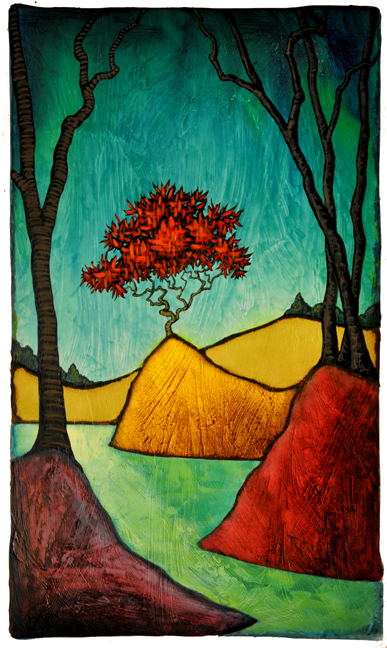
I call this piece Discovery’s Door and it’s a 15″ by 25″ painting on paper.  The Red Tree here is again the central figure and holds a position that feels like it is in a spotlight as its image emerges into sight from behind the darker trees that frame it.  It’s this emergence that gives me the discovery in the title as well as the bright light that seems to be illuminating the tree.  A light of epiphany, self-discovery.

The colors here are very strong but there is a harmony between them that makes their impact seem softer and natural.  I don’t think this will come through in this image on a computer screen but the blues and greens of the sky and the water have an opalescence that brings to mind a favorite color of mine from the windows of Louis Comfort Tiffany.  It gives this piece  a bit of the feel of a stained glass panel, something I often hear from people who see my work for the first time.  I definitely see that here.

I also think the intensity of the color here enhances the sense of self-discovery implied in the title.  As though the realization of one’s true self suddenly makes everything near seem more vivid and alive, forcing their way into the memory of the moment, creating a sensory marker. I know that I often remember major moments of my own life either  in deep colors or in strong scents.  That is what I see here in this image of a moment of self-realization– the vividness of the moment.

Read Full Post »

2012 is going to be a very exciting year for me– and not only for the Mayan Apocalypse.  I have three solo shows at the galleries that represent my work all set around my upcoming  exhibit,  Internal Landscapes: The Paintings of GC Myers, at the Fenimore Art Museum in Cooperstown which runs from August 17 through December 31 of this year.  There will also be four gallery talks, including one at the Fenimore in November. So, as I say, it looks to be a busy and exciting year.

Also new this year is an energetic Midwest gallery that will begin representing my work beginning later this month.  Watts Fine Art opened in 2010 in the historic district of Zionsville , a suburb of Indianapolis with tree-lined brick streets.  It is ran by Shannon and John Watts, a young couple who retired a few years back from extremely sucessful corporate careers and decided to make their passion for art their newest life adventure in the form of a gallery dedicated to bringing the very best contemporary art to the Midwest. 

Shannon and John have a palpable excitement for the work they represent which is something that, as an artist, you hope for in the gallery staffs that represent your work.  Their enthusiasm for their gallery and the possibility of showing my work there was key in my decision to join with them.  They also have a wide and long-range vision for their gallery,  wanting to introduce collectors throughout the entire Midwest with their collection of artists from around the country.  I am really pleased and enthused about joining their gallery and having Shannon and John represent my paintings.

So, with all of this on my plate, I guess I should get back to work!

Read Full Post »

I have never seen the HBO series True Blood.  Maybe I’m reticent to get sucked into the current vortex of popularity created by the return of vampires and zombies in pop culture.  I don’t know, but I have never felt a strong desire to watch the show.  Maybe that will change.

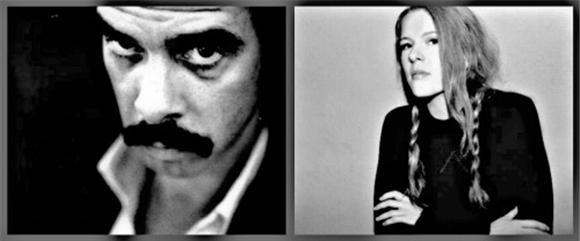
One thing that might make me switch on True Blood is their use of music in the show.  Apparently, each episode is titled after a piece of music that is used in that show.  I came across one such piece of music created for an episode that really piqued my interest.  It’s a remake of the 1964 hit She’s Not There from the classic 60’s British Invasion band, The Zombies, performed by my favorite, Neko Case, and the provocative Nick Cave.  I immediately knew that this would not be your typical cover/remake.

Normally, I wouldn’t even want to hear a remake of a song like She’s Not There.  It has held up spectacularly well over the almost 50 years since it was released, as do several of The Zombies’ other songs.  Probably why they still perform and tour after a half decade.   But the idea of these two performers singing it expressly for a vampire series brought up some the possibility of something different than a straight cover.

And I was right.  It has a creepy Cajun bayou thump in its bass and with Nekos’s voice soaring over Cave’s growl, it makes a compelling cover.  Old yet new.  Like a vampire, I guess. 

So, here I am, despite my protests, endorsing a song made for vampires originally sung by zombies.  Here is the new cover with Neko and Nick (hey, that’s kind of catchy) and, if you’d like to compare, the original from The Zombies.

http://www.youtube.com/watch?v=f5IRI4oHKNU

Read Full Post »

I was looking through a book of American Expressionist paintings and came across this piece that completely pulled me in.  It was a scene of Greenwich Village in the 1940’s painted in spectacular fashion by Beauford Delaney, a name with which I wasn’t too familiar.  Looking at it, there was so much going on in this quiet street scene that it was like a luscious meal set before me and I simply hovered over it, savoring it  before I dug in.  I didn’t know where to start.

The colors are big and bold with a blue night sky that brought Van Gogh to mind and a moon that hangs in a crescent  that floats almost sweetly over the near empty street.  It is rough and expressionistic yet elegant and complex in the ways the colors play off one another.  It is quiet yet hardly timid.  It is what it is, a street scene, but its abstracted manner gives it other dimensions and depths.

Just about everything I want in a painting.

Like I said, I didn’t know much about Beauford Delaney, to my embarrassment.  He’s shown here in a 1940 portrait done by Georgia O’keefe, which I thought was pretty interesting as well.  Born in 1901 in Knoxville, Tennessee, he and his brother, Joseph, were both prominent artists and part of the Harlem Renaissance of the 1930’s.  Beauford never achieved the sort of recognition here that his work deserved and he struggled mightily until finally leaving the States in the early 1950’s, settling in Paris where he lived the rest of his life, dying in 1979.  There is an interesting short  bio, A Tale of Two Brothers by Jack Neely, online for those who seek to know a bit more about the man.

I know I will be looking for more of his work.


Read Full Post »

« Newer Posts - Older Posts »