Feeds:
Posts
Comments

Archive for the ‘Advice’ Category

“And Dusk Dissolves”- Now at the Principle Gallery

**************************

Great artists make the roads; good teachers and good companions can point them out. But there ain’t no free rides, baby. No hitchhiking. And if you want to strike out in any new direction — you go alone. With a machete in your hand and the fear of God in your heart.

–Ursula K. Le Guin

**************************

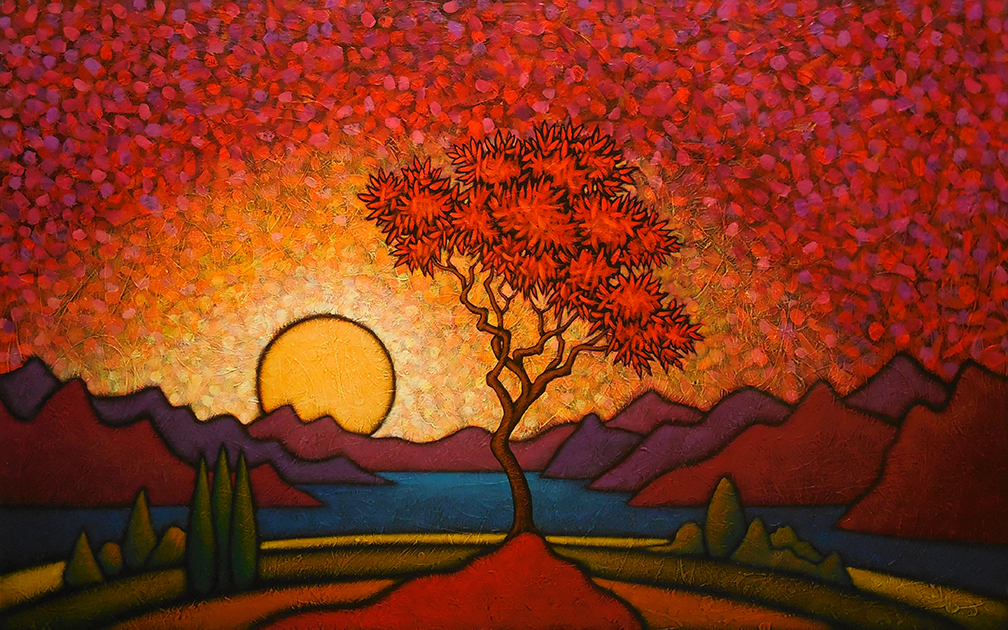
I felt compelled to put up a piece of new work from my current Principle Gallery show along with a piece of advice for aspiring artists from writer Ursula LeGuin. Make your own road, baby.  Do the heavy lifting and don’t depend on any one person to guide you through. There are no shortcuts– no hitchhiking as she puts it. You’re on your own so learn to hear what you have to say to yourself.

Show who and what you really are then stand tall. Own your road.

That’s it. I’m going to be concise because it’s a busy day for me. While my show at the Principle Galley is ongoing, I am working hard on new work for my next show which opens in July at the West End Gallery. Plus this morning I am leaving the safe bubble of my studio and home to accompany my dad on his first radiation treatment for a cancerous growth on his temple.

It’s the first time in 13 weeks that I am seeing him as the nursing facility where he resides is under lockdown from the covid-19 virus. I am both looking forward to and dreading seeing him. The dread comes from anticipating what changes may have taken place in this past quarter of a year from the dementia and skin cancer that plague him. Perhaps his awareness and power of recollection has eroded even more? Will he even recognize me now, especially with the mask I will be wearing?

I guess I’ll soon find out.

Odd days, indeed. Have a good one, folks.

Read Full Post »

*******************

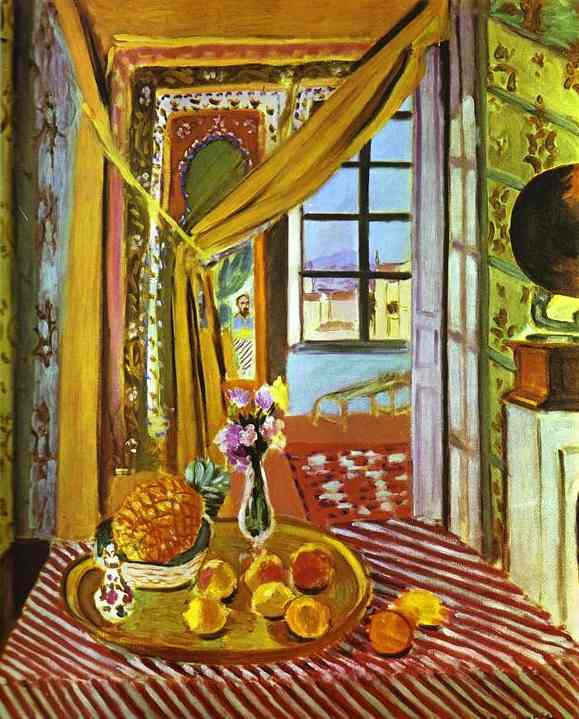
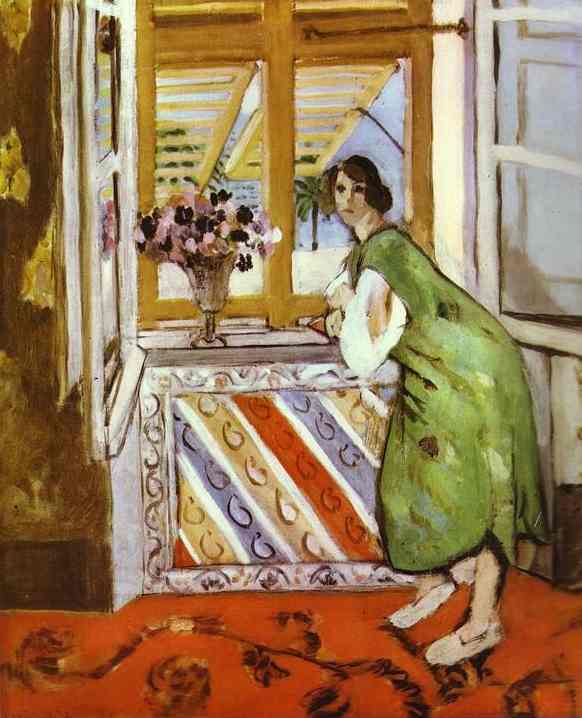
It has bothered me all my life that I do not paint like everybody else.

–Henri Matisse

*******************

Well, Mr. Matisse certainly did not paint like everybody else and I, for one, am glad of it.

But I believe I know what he is saying. As an artist, you’re always torn between poles of confidence.

When it is at its highest point, you believe so strongly in what you are doing that it doesn’t matter what everybody else’s work is like.

But at the low points, you lose confidence in the credibility of your own voice and vision. At these low points it seems like it would be easier to have the comfort of being able to judge your own work against others who do the same type of work so that you could gauge whether your creations were worthy of notice.

I certainly have swung wildly between these two poles and have at points wished that I painted more like other artists, as though I would somehow benefit from their credibility. I know that this sort of thinking is misplaced and the result of low self-esteem in that moment, but it happens. And on a more regular basis than one might think.

But the work itself is usually the voice of reason, the thing that brings me around once more. Just getting lost in the creation of a piece and sitting in front of it in the aftermath, still fully immersed in the life force it then exudes, washes away that need to be like everybody else.

But even in that moment, I know that nagging feeling, that desire to be like everybody else, will still be there waiting for me when I inevitably swing back to that other pole.

So, Mr. Matisse, thank you for not being like everybody else. I know how hard it sometimes must have felt but we appreciate you staying true to your own voice.

Here are a few more of his interiors, a group of his work that I really love.

Read Full Post »

*********************

“Hello babies. Welcome to Earth. It’s hot in the summer and cold in the winter. It’s round and wet and crowded. On the outside, babies, you’ve got a hundred years here. There’s only one rule that I know of, babies-“God damn it, you’ve got to be kind.

― Kurt Vonnegut

*********************

The words above are from the book God Bless You, Mr. Rosewater from the late Kurt Vonnegut. They are are spoken to the infant twins of a neighbor as part of a baptismal speech from Eliot Rosewater, the book’s protagonist.

It seems like a ridiculous bit of advice to speak over infants at a religious ceremony but the sentiment is striking in its simplicity and practical application.

In nearly every instance, kindness will make the situation better.

I don’t know why I am writing this today. Maybe it’s the shrill ugliness of our society at the moment, marked by naked tribalism and selfish greed.

Or maybe its our attack mentality that has become the norm, one where reason and logic are thrown aside and replaced with insults and slurs.

These negative aspects, the hatred and selfishness we are so often displaying, are not sustainable for us as a society. They are the signs of an undisciplined and unprincipled people.

On the other hand, kindness is a sustainable and enduring principle of guidance. It builds up, not tears down. A hand up, not a push down.

Like I said, I don’t why I am writing this. Maybe the thought was that we– maybe just I– needed a reminder that a little kindness does more for the world that all the ugly words spoken with hatred by one person toward another.

So, this is your reminder. We have a short time on this world. Don’t waste your time here being mean-spirited and vengeful.

Be kind to others. Be kind to yourself.

This made me want to hear a little Otis Redding this morning. Try a Little Tenderness. Doesn’t get much better than that.

Have a good and kind day.


Read Full Post »

nope

******************

Earlier, I began to write about the huge amount of sloppy thinking being displayed lately by many people. You know what I mean, those people who grasp at the first meme or video clip or article that confirms what they want to believe the truth should be. They react in a visceral manner and immediately pass it on, not considering its veracity, source, or the context in which it is presented. They do no research at all and just take its credibility as a given.

As I wrote, I asked myself if this sloppy thinking was a product of ignorance or apathy. My answer of “I don’t know and I don’t care” made me think it would be best to save this subject for another day.

So, moving on, I read the other day that a lot of people are struggling with the isolation because they find there is actually more intrusion into their private time by their commitments to video chats and things of that sort with friends, family and co-workers. The article mentioned that their inability to say NO was a real issue for these folks, who felt an obligation to accept every invitation to participate.

It reminded me of an article that I ran years ago and again four years back about the necessity of saying NO. This is one of the first pieces of advice I offer to young artists when I speak with them, telling them there are sacrifices and choices that need to be made in order to succeed. One of those  choices is how you spend your time. My advice to them is that just learning to honestly say NO will make their artistic path easier and their lives infinitely better.

Here’s that article about the power in that word NO:
noThere’s an interesting article on the website Medium by tech pioneer Kevin Ashton (best known for coining the phrase “the internet of things“) called Creative People Say No. In it he talks about how productive creatives —productive is the key word here–  understand the limitations of their time here and as a result weigh every request for their time against what they might produce in that time. It immediately struck a chord with me as I have known for many years that my time as both a living human and artist are limited and that for me to ever have a chance of capturing that elusive intangible answer that goads me forward, always just a step ahead of me and just out of sight, than I have to mete out my time judiciously. We have X numbers of hours and doing something other than that which I recognize as my purpose  represents a real choice.

no 2Ashton echoes my own feelings when he  writes:  Time is the raw material of creation. Wipe away the magic and myth of creating and all that remains is work: the work of becoming expert through study and practice, the work of finding solutions to problems and problems with those solutions, the work of trial and error, the work of thinking and perfecting, the work of creating. Creating consumes. It is all day, every day. It knows neither weekends nor vacations. It is not when we feel like it. It is habit, compulsion, obsession, vocation.

So, over the the last 15 years, I have wrestled over every choice that takes time away from the studio, in most cases declining invitations to all sorts of functions and putting off travelling and vacations. Even a morning cup of coffee with friend or family requires serious debate. For a while I thought I was agoraphobic but I know that’s not the case. I just view my time here on Earth as extremely limited and shrinking at a constant rate with each passing day
no 1It reminds me of a conversation I had with a painter friend a number of years ago. He had brought up the name of a well-known artist whose work he admired who was incredibly productive. My friend bemoaned the fact that he himself wasn’t as productive and wondered how this person could do so much.  In the conversation he told me about all the activities that his life held– traveling , classes, music sessions with friends and time with his kids. I couldn’t bring myself to point out that he would have to start sacrificing something in order to be as productive as this other artist. It was obvious that his X amount of hours were spent differently than the other artist, who I should point out also had a studio staff with a manager and several assistants to boost his productivity. My friend made the choices that he felt were right for him and who could argue that his kids didn’t deserve even more of his time?  

I think of this conversation quite often when I am faced with a choice other than spending time in the studio. Even writing this blog entry is gnawing at me because it has exceeded the amount of time I want to spend on it this morning. That being said, I am going to stop right here and get back to that thing that I feel that I have to do.

Read the article. It’s a good essay.

Read Full Post »
The_Torment_of_Saint_Anthony_(Michelangelo)

***********************

A man paints with his brains and not his hands.

-Michaelangelo Buonarroti

***********************

I am a little intimidated in quoting the words of a man who is believed to have painted the piece shown above, The Torment of Saint Anthony, at the tender age of 12 or 13. Pretty amazing. It’s obvious from this, and almost everything created afterward over his lifetime, that Michaelangelo had both brains and hands– the highest degree of craftsmanship along with thought and feeling that brought his work to life.

But his words ring true for any painter. Painting should not be mere craft, not formulaic process nor exact replication of the reality before them. No, it is beyond that. It is how the artist imbues the work with their own thought and emotion, their own spirit, their own essence that elevates the work above craft. It requires a total investment of the self.

Doing that is the trick. At first glance, it seems both a tall task and a simple one. Giving what you think is 100% of yourself seems easy, right? But not holding back something, not sharing every bit of yourself, makes it a Herculean effort. In the end, it comes down to simply feeling emotion in what you are doing and being willing to openly display it without reserve.

Now, maybe I am misinterpreting Michaelangelo’s words to fit my own subjective view of painting. Perhaps in these ten spare words he was speaking about taking a more scientific or mathematical approach to painting and composition. That I don’t know. But when I read it, it made sense to me because the differentiating quality I see in painting, from self-taught rough-hewn outsiders to the highest level of traditional representational painters, is how much of themselves a painter is willing to invest in their creations.

An investment of the self.

It is the thought process of the artist that makes the painting, not the mechanical process.

*******************

This post is from five years back. and is shared again because I love this youthful piece from Michaelangelo along with his words. Whenever I see this painting, or for that matter, anything from Michaelangelo, I am humbled beyond description. And that’s not a bad thing. 

Read Full Post »

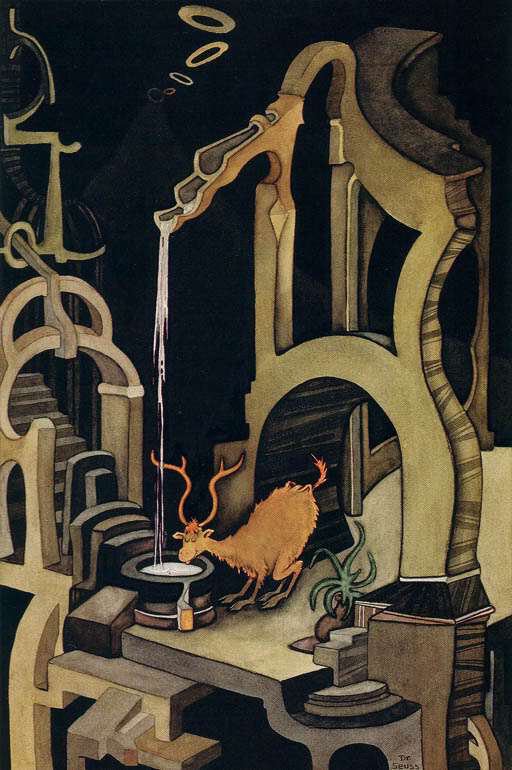
Dr. Seuss- Gosh Do I Look As Old As All That

***************

Say what you mean and act how you feel,

because those who matter don’t mind,

and those who mind don’t matter.

Dr. Seuss

*************

I think these words about sincerity from the wonderful and wise Dr. Seuss are good advice for just about anybody.  For myself, I pass this advice on to young artists. Make your own meaning and feeling the focus of your work…

**************

I ran the short post above several years ago and it resonated with me again this morning. For one thing, it reminded me of how much the imagery and messaging of Dr. Seuss influenced and informed my own perspectives and art. I never thought about it at the time I started drawing and painting but his way of representing the landscapes of his worlds very much infiltrated my own way of looking at my own inner worlds. I see the bendy curves of his trees and smile because I see them in many of my own Red Trees.

The other reason this older post resonated with me were his simple words about honestly saying what you mean and acting how you feel. There are many days when I am trying to write this blog and I feel inhibited by not wanting to offend anyone with my own personal views. I have many times set aside posts that I deemed potentially too offensive. But more and more, I am less shy about sharing my honest opinions for just the reasons that the good Dr. points out: those that matter don’t mind and those who mind don’t matter.

And that also translates to my work. I am also less shy in sharing work that moves outside my comfort zones for this same simple reason. I figure if I am being honest and sincere in my work and in my opinions, what do I have to fear from the opinions of others?

So, thanks for that Dr. Seuss, wherever you may be. Your words and art and storytelling have changed the worlds of many, myself included.

Here are a few more of his paintings that weren’t in the original post:

Read Full Post »

Earlier, I came across this blog post from several years ago that features an older painting of mine at its top. It’s a favorite of mine that hangs in my main painting space, high in a far corner. But even tucked away, it’s one that often has me glimpsing over it or going over to it and standing in front of it to ponder it for a bit. It seemed like an apt companion for this post years ago and still does now. Its simplicity and stillness echo the final line of Berry’s poem perfectly: make a poem that does not disturb the silence from which it came.

*************************
GC Myers- Trio:Three Squares

**************************

I came across this poem from poet/author Wendell Berry on Maria Popova‘s wonderful site, Brain Pickings. It’s a lovely rumination that could apply to any creative endeavor or to simply being a human being.

I particularly identified with the final verse that begins with the line: Accept what comes from silence. I’ve always thought there was great wisdom and power in silence, a source of self-revelation. Perhaps that is why so many of us shun the silence, fearing that it might reveal our true self to be something other than what we see in the mirror. Berry’s words very much sum up how I attempt to tap into silence with my work.

At the bottom is a recording of Wendell Berry reading the poem which gives it even a little more depth, hearing his words in that rural Kentucky voice. It’s fairly short so please take a moment and give a listen.

******************

HOW TO BE A POET
(to remind myself)

Make a place to sit down.
Sit down. Be quiet.
You must depend upon
affection, reading, knowledge,
skill — more of each
than you have — inspiration,
work, growing older, patience,
for patience joins time
to eternity. Any readers
who like your poems,
doubt their judgment.

Breathe with unconditional breath
the unconditioned air.
Shun electric wire.
Communicate slowly. Live
a three-dimensioned life;
stay away from screens.
Stay away from anything
that obscures the place it is in.
There are no unsacred places;
there are only sacred places
and desecrated places.

Accept what comes from silence.
Make the best you can of it.
Of the little words that come
out of the silence, like prayers
prayed back to the one who prays,
make a poem that does not disturb
the silence from which it came.

Wendell Berry

**************

Read Full Post »

*********************

Another head aches, another heart breaks
I am so much older than I can take
And my affection, well it comes and goes
I need direction to perfection, no no no no, help me out
Yeah, you know you got to help me out
Yeah, oh don’t you put me on the backburner
You know you got to help me out, yeah

–The Killers, All These Things That I’ve Done

*********************

Lots of pain and anxiety in the world right now. Sometimes, in times like this, we go into survival mode and focus solely on our own needs. That’s only natural. But at those times, we often see only our own fears and pain– as we perceive them– and then fail to recognize the very real suffering taking place around us.

And there is plenty of suffering taking place.

The families and friends of the 30,000 killed by this virus — actually, probably a much higher number if you account for those who have most likely died from the virus but were never tested and therefore, not counted– can attest to the sorrow and suffering. Then you factor in those folks who have lost jobs and insurances and are now homebound, unable to go out into the world and fend for themselves and their families. The pressure from the anxiety of finding enough food and paying the rent and enough of their other bills to keep the lights and heat on is enormous for these folks. And I am not even mentioning the idea of having to to comfort and school their kids.

Makes my own anxieties seem small and petty.

So, take care of yourself, okay? But don’t block out these others, don’t downplay their suffering, please. Try to reach out in some way, extend a helping hand. It could make all the difference for somebody.

And for yourself.

Here’s a favorite song,  All These Things That I’ve Done, from The Killers. It’s one of those songs that make me feel both large and small at the same time. I prefer feeling large but sometimes it takes feeling small to set me into motion, to move beyond myself.

Have a good day. Do something good for someone today.

***********

Read Full Post »

I always play a bit of music on Sunday mornings here, usually trying to link it to whatever is going on in my little world of paint or out there in the larger world. You know, a relevant song for a new painting or for a current event that might be dominating the news.

But sometimes they are songs that I simply like, songs that have meaning for me. Songs that make me cry. Or songs that make me happy and maybe even laugh.

I didn’t want to go with songs that make me cry today. There’s been enough reason to cry lately without having to be prodded.

So, I am opting for a song or two that make me happy. Make me smile and actually chuckle. Plus, you can easily link both with the situation at hand.

Facing hardship is an integral part of the nature of being alive. Illness and injury, death, loss, failure, humiliation– we all face some or all of these things in our lives.  Some face fewer and some even more of these hardships, but none are completely exempt. While facing my share–which are no more than most– I have always found music and humor to be effective coping mechanisms.

For me, it helps sometimes to laugh at my misfortune, especially if it has come about at my own doing. Laughing makes the situation seem smaller, less momentous. Laughter actually belittles the moment. I know that in the aftermath of some of my most down moments that I have some soothing salve in laughing at myself and the moment as I lick my wounds.

So, let’s lick our wounds and have a couple of songs. Both are from Eric Idle of Monty Python’s Flying Circus fame. He wrote most of the songs that the troupe employed in their shows and movies. We were lucky enough to see him many years ago, I think it was 2000, at Carnegie Hall for a very enjoyable evening of his songs and some well known Python bits.

The first is  a beautifully shot film of a sing-along performance of Always Look on the Bright Side from the film, Life of Brian. The song has become over the years the go-to song in Britain when they are facing adversity, a screw you to the problem at hand.  In recent days, a tug on the Thames River has been blaring it from loudspeakers as it chugs up and down the waterway.

Plus, this version has pipers. What more could ask?

The song here at the bottom is The Galaxy Song from the film, The Meaning of Life. It puts the problems we face into a galactic and universal perspective.

So, give a listen. Maybe sing along and smile. But do try have a good day.


Read Full Post »

***********************

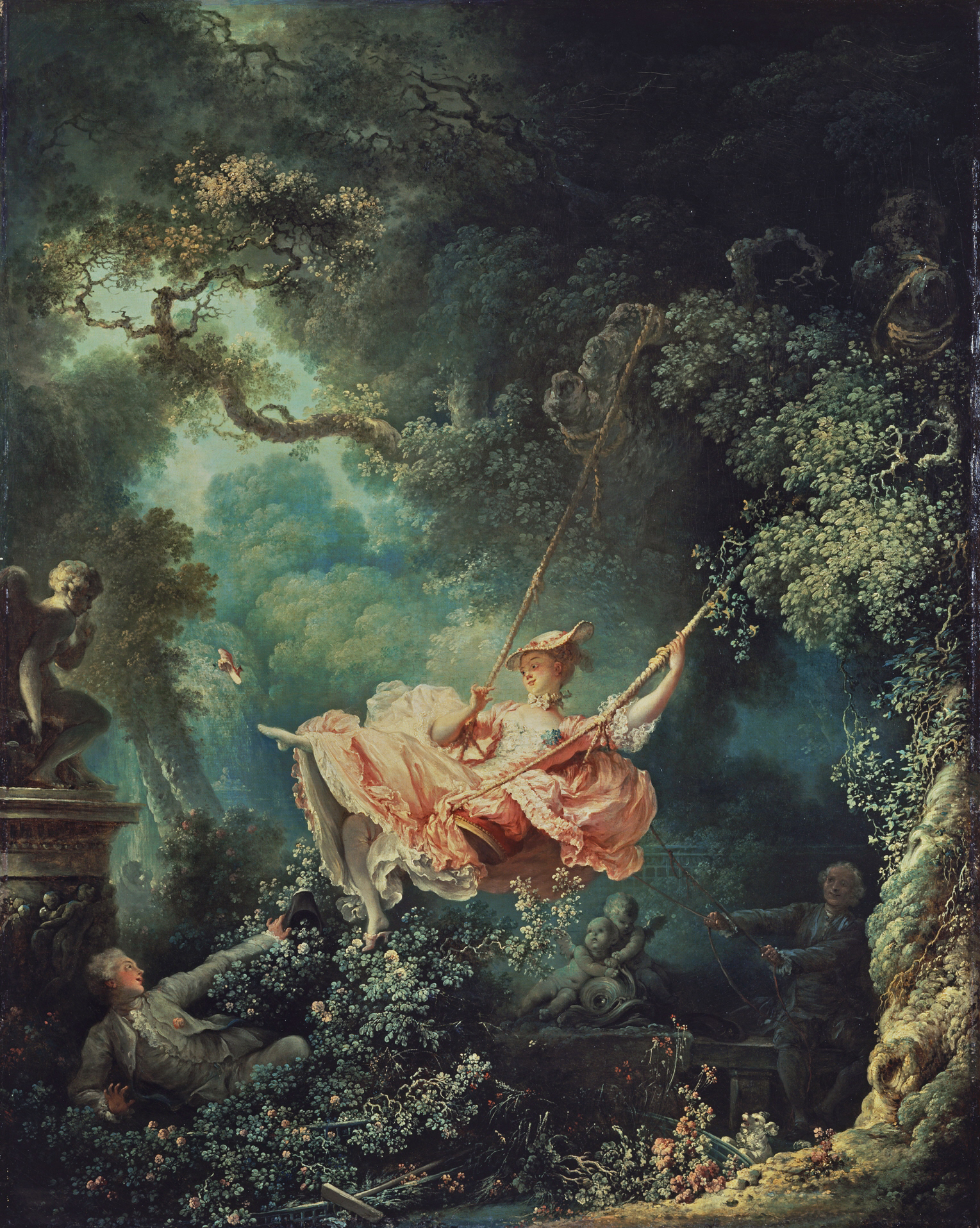
If necessary, I would even paint with my bottom.

Jean-Honore Fragonard

***********************

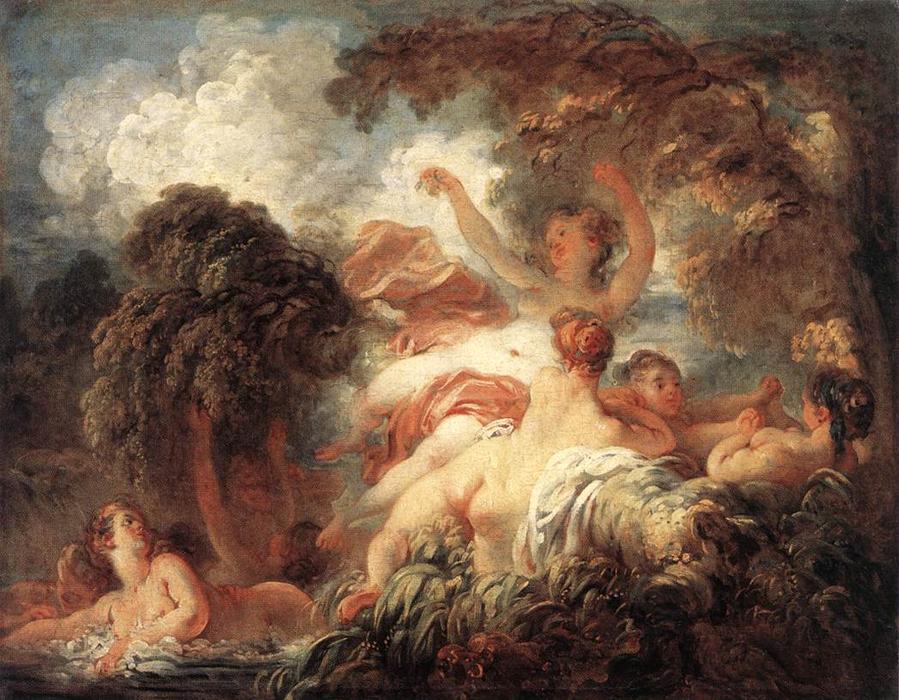
I can’t say I am a fan at all of the work of Jean-Honore Fragonard but the quote above made me laugh this morning. I think some folks believe I’ve been painting that way for years now. Sometimes, I believe it myself.

But his point, while humorous, makes a vital point.

I know I have been asked what I would do if I suddenly couldn’t paint anymore and I always answer the same way:

I’d find a way.

Whatever obstacles arise, there is usually a way to be found around or over or under them. Hopefully, it doesn’t come down to painting with my bottom but if that’s the way it must be, so be it.

Now, let me share just bit about Fragonard, the French painter who lived from 1732 to 1806. He painted in the Rococo style, one which never really appealed to me. It’s very

the French painter who lived from 1732 to 1806 and worked in the Rococo style, which has never really appealed to me. I have a hard time even describing it except to say it’s busy and soft and often has the feel of a bad romance novel book cover. Rococo paintings might look fine and in their proper place in a highly decorated chateau in the Loire Valley but they just don’t translate well for me personally.

But that’s just my take.

Fragonard dies in 1806 as an almost unknown painter. He had achieved fame and notoriety as a painter earlier in his career, painting his elaborate pieces with a hedonistic feel for the upper classes of French society. Unfortunately for Fragonard, the French Revolution effectively wiped out most of his patrons, most either guillotined or sent into exile.

His style of painting was not appreciated and he went into hiding of sorts. For the last fifteen years or so of his life, he was off the radar completely. This extended for another sixty or seventy until his work underwent a reevaluation and rebirth. He has since been hailed as one of the masters of French painting.

So, his work lives on and he never had to paint with his bottom, to the best of my knowledge.

Read Full Post »

« Newer Posts - Older Posts »