Feeds:
Posts
Comments

Archive for the ‘Advice’ Category

********************************

The only quality that endures in art is a personal vision of the world. Methods are transient: personality is enduring.

–Edward Hopper

**********************************

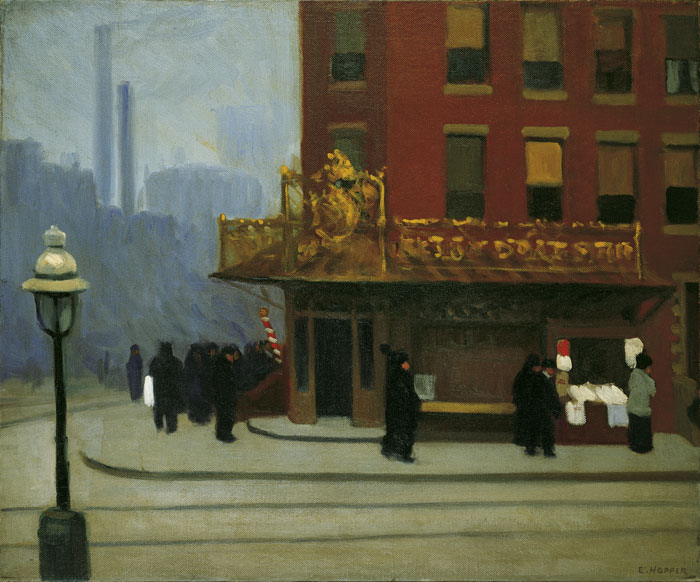
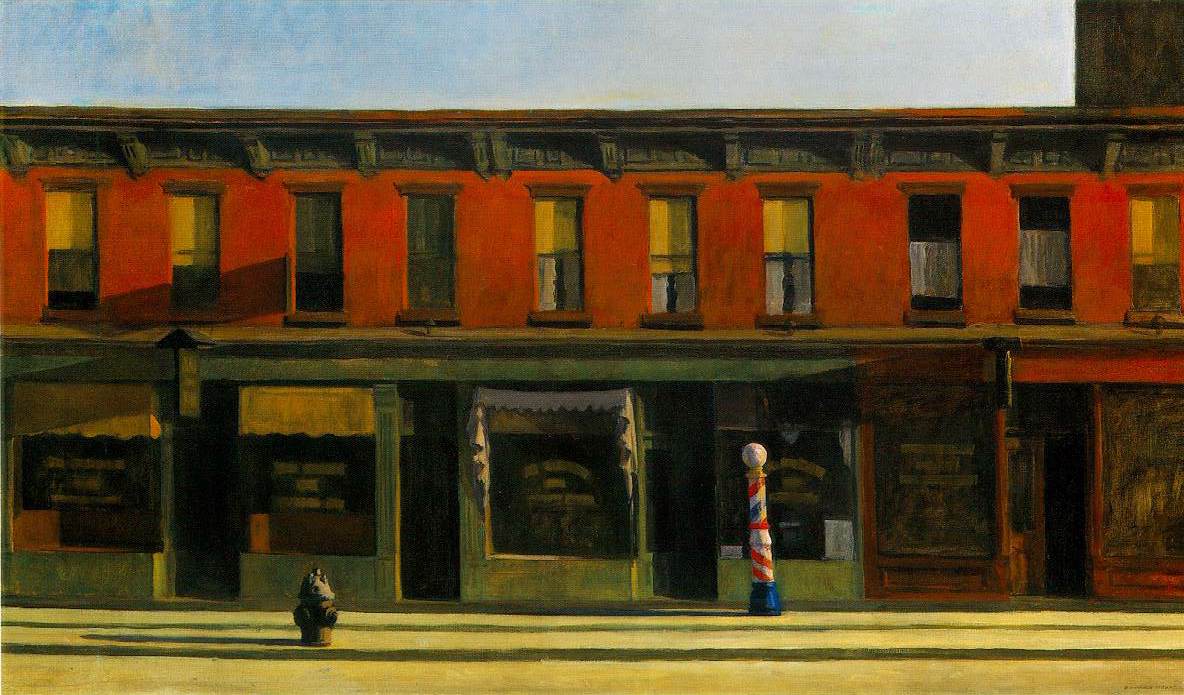
Felt like a little Edward Hopper this morning and realized that, in all the years of doing this blog, I had never shown his most famous painting, Nighthawks, above. Can’t say why I had failed to display it. Maybe it just felt so obvious that it overshadowed other works from his career that also moved me. Regardless, it remains a defining painting, one that never fails to be striking.

His words just below the painting above are equally striking for me.

I often write about artists trying to find their voice. By that, I am talking about painting (or working in any other medium) in a manner that matches up with and captures the artist’s point of view, their thought process, and the many facets of their personality. Not every method or style jibes with every artist, allowing them full expression of the truth of their own personality.

And method alone only goes so far. Method is transient and without endurance, as Hopper points out, without personality.

How does this happen, this insertion of personality into one’s work?

I can’t really say. I guess it starts with having a point of view, an opinion, an emotion, a thought. I tell high school and college students that technique is important but it is even more vital to have a base of other knowledge to draw from. Art is not technique or method, it is expression of the self so have a fully realized self to express.

Don’t know if that’s right for everybody but, hey, it feels right for me.

Work on that and get back to me, okay?


Read Full Post »

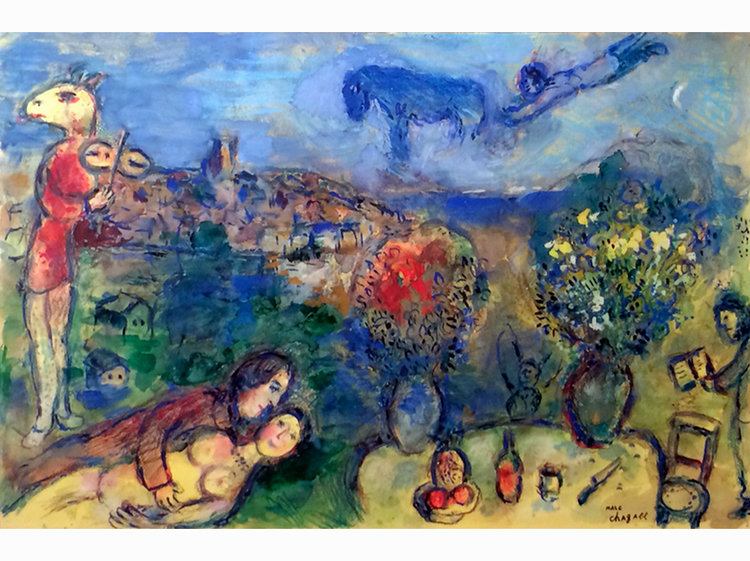
Marc Chagall- La Vie – 1964

***************************

If all life moves inevitably towards its end, then we must, during our own, colour it with our colours of love and hope.

–Marc Chagall

***************************

Well, I feel that you can never go wrong by showing a painting or two from Marc Chagall. His work never fails to make me stop to examine it, to try to read what it has written in its colors and forms.

There is always something there.

There is music and dance, grace and movement. There is myth and memory all intertwined. So much is there. But in it all are the warm colors of love and hope, much like the ones he mentions in the words at the top.

I can only hope to live out my life like a Chagall painting.

That would be a good thing for any of us.

Marc Chagall- L’Âne Musicien à Saint-Paul- 1975

Read Full Post »

*****************************

“Abandon the urge to simplify everything, to look for formulas and easy answers, and to begin to think multidimensionally, to glory in the mystery and paradoxes of life, not to be dismayed by the multitude of causes and consequences that are inherent in each experience — to appreciate the fact that life is complex.”

M. Scott Peck

****************************

There are times when one can simplify, where complex concepts can be broken down to easily digestible chunks that allow almost anyone to understand and appreciate that concept.

I would argue that is the basis for my whole career as an artist.

I do it in simplifying forms and compositions so that they enter the viewer’s eye easily, before it has had a chance to fully comprehend the underlying complexity in the colors and textures. There’s more to it, obviously, but that’s a nice shorthand explanation of my process– in itself simple.

But there are other times where you can’t take a concept or situation and simplify it fully without losing the impact of all the details.

I am not talking about art here. No, I am talking about the beginning of the impeachment hearings tomorrow. I am afraid that too many of us want that simplified version, one that makes us see unequivocally either the guilt or innocence of this president* without having to wade through detail and actual thought.

This is a complex and multifaceted case, one filled with a multitude of details. When placed side by side so that you can easily see them, these details tell a damning tale. Cutting out details to simplify the story would muddy the clarity of the motivations behind it. When you get only a simplified version, you fall prey to the whims and preferences of the person telling the story or painting the picture.

I urge you to pay attention in the coming weeks. Take in the details, the nuance of each witness’ testimony, and let the story unfold in full for yourself. If you can do that, you may well come to a conclusion that is similar to my own after having followed this whole thing closely for the past three years.

Or maybe not. Maybe you will see things in a completely different way. Maybe you will refuse to see the details and complexity and try to simplify it for yourself to suit your own biases and predispositions.

But either way, I believe that the closer you look, the more you will see and the more you will understand.

Hey, maybe we’re back to art now?

Whichever case it is, pay attention and take a deep dive if you want to really get a better grip on the complexity that you’re witnessing. It’s too important to be asleep at the wheel at this point.

Read Full Post »

Robert Henri- Irish Girl (Mary O’Donnel) -1913

************************

Because we are saturated with life, because we are human, our strongest motive is life, humanity; and the stronger the motive back of the line the stronger, and therefore more beautiful, the line will be.

–Robert Henri (1865-1929)

************************

I came across this quote from the highly influential painter/ teacher Robert Henri and it made me think of two separate incidents that influenced my work.

The first comes from the quote itself, about how a strong belief in humanity and life should manifest itself in one’s art, creating a stronger and bolder and more beautiful line. It brings to mind the only art training I ever received, a night course, Drawing 101, from a local community college. I was taking it because at the time I had an interest in pursuing architecture and needed a portfolio. All the drawing I had done up to that time was just, more or less, doodling on bits of paper, in journals, or in the margins of magazines and newspapers. I thought a course on drawing would get me to some work that might help in putting together a portfolio.

The course ended up being a travesty. The instructor had little interest in being there and gave only cursory instruction. He kept an eye fixed on the clock and often ended the sessions early so that he could get to the local pub a bit quicker. I didn’t get much out of the course and dropped my quest to go into architecture but I did get one bit of advice that I carried with me.

The instructor pointed out that he preferred strong, bold lines even if they were not completely accurate or correct in the context of the drawing. They exuded confidence and that was more important that accuracy, especially if the lines were weak and tentative. That really struck a chord with me and stuck with me through the years until I began painting.

I think his words line up well with Henri’s assertion above. That confidence the instructor referred to is much the same as Henri’s saturation with life and humanity.

The other incident that I was reminded of upon stumbling across Henri’s words is my encounter with the painting at the top of the page. It is titled Irish Girl ( Mary O’Donnel) and was painted by Henri in 1913 and is at the Boston Museum of Fine Art. When I first saw it, I was showing my work at several galleries and was about a year away from my first big solo show at the Principle Gallery.

I encountered this painting in a large gallery in the museum and was struck how people would immediately head to this painting, even though it was one of the smaller pieces in the large space. I couldn’t figure out why this was. I mean, it was a strong painting but the way people were attracted to it seemed out of line with what I was seeing. Looking at it dispassionately, I finally settled on the color of her sweater as being the reason. It was deep crimson that really popped off the wall.

It made me examine my own palette of colors. My colors at the time were more earth toned and red was certainly not a large part of it. When it did come into play, it was usually more subdued and washed out. Pale. To tell the truth, I was a bit afraid of it as a color. When I tried it in a bolder way, it often skewed to harsher, sharper tones that were not to my liking and usually didn’t align with the emotional context of the painting.

But seeing Henri’s use of it made me better appreciate the power of the color. I began to work with it more and soon was incorporating in my work on a regular basis. It became a vital part of my visual vocabulary. It showed itself in a big way with my first show at the Principle Gallery which was titled Red Tree. It has stuck with me and I have Henri’s Irish Girl to thank.

It’s interesting how sometimes failed attempts, like my college course, or confounding encounters, such as mine with Henri’s painting, have impacts on you that you could never foresee. You never truly know what will come from anything we stumble across. Inspiration comes in many forms.

Have a good Saturday.


Read Full Post »

GC Myers- Night Comes OnThe post below from a few years back is very popular, receiving quite a few views each day. As I prepare to lead my annual painting workshop next week, I thought it would be appropriate to replay it here today.

*************

Whenever I am asked to speak with students I usually tell them to try to find their own voice, to try to find that thing that expresses who they really are. I add that this is not something that comes easily, that it takes real effort and sacrifice. The great poet e e cummings (you most likely know him for his unusual punctuation) offered up a beautiful piece of similar advice for aspiring poets that I think can be applied to most any discipline.

Or to anyone who simply desires to feel deeply in this world.

I particularly like the line: To be nobody-but-yourself -in a world which is doing its best, night and day, to make you everybody else- means to fight the hardest battle which any human being can fight; and never stop fighting.  That line alone speaks volumes and no doubt resonates with anyone in a creative field.

Take a moment to read this short bit of advice, substituting words describing your chosen discipline wherever the word poet (or a word describing poetry) is used, and see what you think– or feel.

*****************

A Poet’s Advice To Students

(e e cummings)

A poet is somebody who feels, and who expresses his feeling through words.

This may sound easy. It isn’t.

A lot of people think or believe or know they feel-but that’s thinking or believing or knowing; not feeling. And poetry is feeling-not knowing or believing or thinking.

Almost anybody can learn to think or believe or know, but not a single human being can be taught to feel. Why? Because whenever you think or you believe or you know, you’re a lot of other people: but the moment you feel, you’re nobody-but-yourself.

To be nobody-but-yourself -in a world which is doing its best, night and day, to make you everybody else- means to fight the hardest battle which any human being can fight; and never stop fighting.

As for expressing nobody-but-yourself in words, that means working just a little harder than anybody who isn’t a poet can possibly imagine. Why? Because nothing is quite as easy as using words like somebody else. We all of us do exactly this nearly all of the time-and whenever we do it, we’re not poets.

If, at the end of your first ten or fifteen years of fighting and working and feeling, you find you’ve written one line of one poem, you’ll be very lucky indeed.

And so my advice to all young people who wish to become poets is: do something easy, like learning how to blow up the world-unless you’re not only willing, but glad, to feel and work and fight till you die.

Does this sound dismal? It isn’t.

It’s the most wonderful life on earth.

Or so I feel.


Read Full Post »

************************

“She was fierce in the presence of death, heroic even, as she was at no other time. Its threat gave her direction, clarity, audacity.”

Toni MorrisonSong of Solomon

************************

I’ve been working with a new element in my work lately, a lone female figure like the one in the new painting above, and it has been making me think.

Probably explains the headaches– that dull pain that comes after using long neglected muscles.

I joke, of course. Never had those muscles in the first place to neglect.

Again, a joke. My apologies.

This lone figure strikes me in a much different way than the lone male figure I sometimes employ in my work. While he sometimes feels remorseful or lonely, this female figure doesn’t give me those feelings at all. There is a sense of boldness, determination, and empowerment that comes with her that really pleases me.

She feels absolutely strong.

Fierce.

Audacious.

It was something I hoped for In the work. Being in the world of art for last couple of decades has exposed me to many strong and bold women, both behind the scenes and as artists. It excites me to see so many young female artists recognize the importance of their own voices and the need to step forward to let the world hear them.

I think that is what comes through in the painting above. The title certainly hints at that– Light Favors Audacity. Boldness is something I fully believe in. This world doesn’t favor the meek and timid and nothing is given unless it is either asked for or simply taken.

This stands in stark opposition to the phrase that so many folks hang on to tightly, better safe than sorry. Those folks that invoke the phrase often end up being both sorry and sad in their safety. You know those people, the ones who constantly start their stories with if only or I could have or I should have.

Stop waiting for others to find you. Set out on your own journey and stay true to your values and your voice. It is as important and valid as that of anyone else.

Be audacious and let the world know you are there. The light will usually find those who are bold enough to seek it.

Here’s this Sunday morning music. It’s a neat rendition of the Billy Idol song, Dancing With Myself, done in the form of a jazz quartet from the Postmodern Jukebox, which is a group of rotating musicians who rework modern songs into different vintage genres. This song translates really well and I find it highly enjoyable.

See for yourself. Have a good Sunday.

Read Full Post »
John Sloan- The Wake of the Ferry I 1907

**********************

You can be a giant among artists without ever attaining any great skill. Facility is a dangerous thing. When there is too much technical ease the brain stops criticizing. Don’t let the hand fall into a smart way of putting the mind to sleep.

John Sloan

**********************

I am a fan many of the Ashcan painters of the early 20th century, such as John Sloan, 1871-1951, whose work is shown here. The painters in this group obviously had technical prowess but you get the feeling from their work that they often operated in that danger zone outside their facilities, relying as much on instinct in the moment as their skill to create their paintings.

As Sloan points out, technical ability is a wonderful thing but also dangerous  for the artist. I love his description of the hand’s ability putting the mind to sleep.

I know that feeling.

I often feel my best work comes from not knowing exactly how the work is going to proceed or where it will end. That sense of danger, that nervous feeling the painting is in peril of becoming included in the next garbage pickup, is a great indicator for me that my instincts are engaged., that my brain is not in the off position.

This is when good things happen, when breakthroughs are achieved, where the work moves beyond you and becomes something of its own.

But it’s all too easy to fall under the spell of your ability, to let your mind doze while your hand takes over.  But obtaining that ability takes years of work and is actually a goal. Why wouldn’t you let this gained knowledge carry your work? That’s a great question and I think every artist has to look at it on their own terms.

I look at this gained ability as tool that I have learned to use. Now, even though I know how to use this tool in a normal, predictable manner, sometimes I need to use it in way for it wasn’t intended. That’s not always the safe way to go but sometimes you find a new way.

And that’s a good thing.

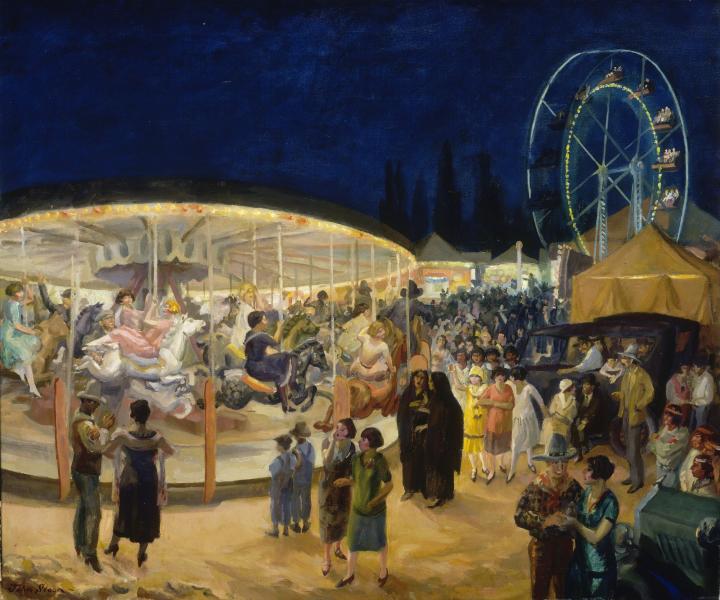
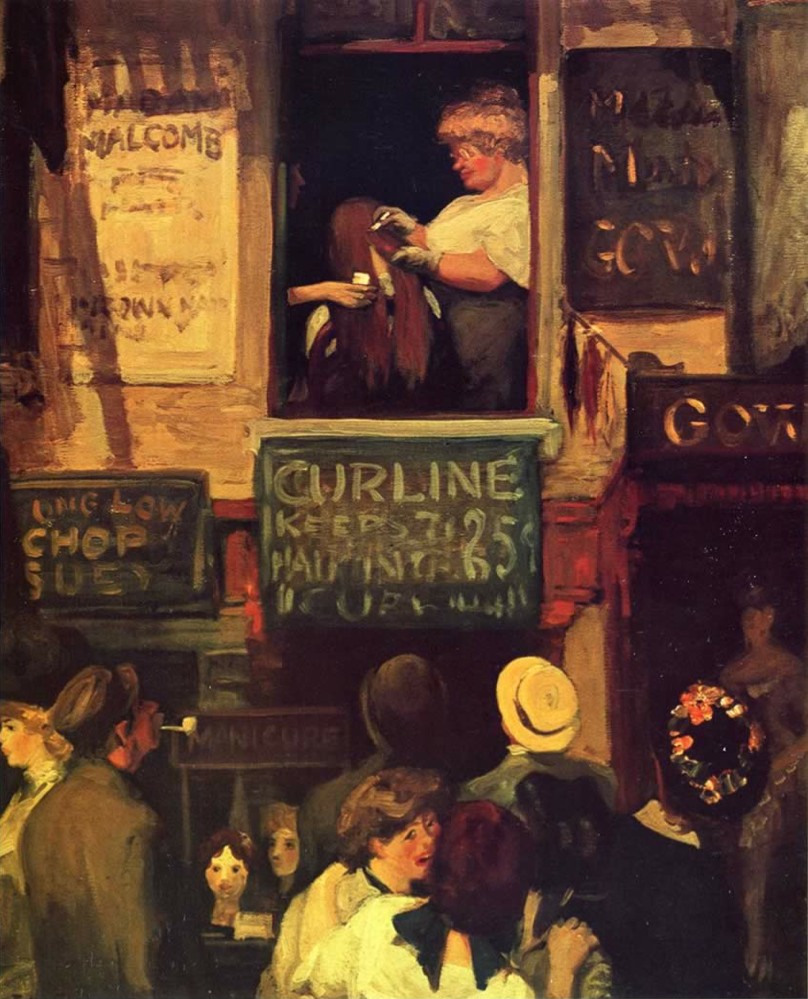
John Sloan- Travelling Carnival, Santa Fe

John Sloan- The Wake of the Ferry II 1907

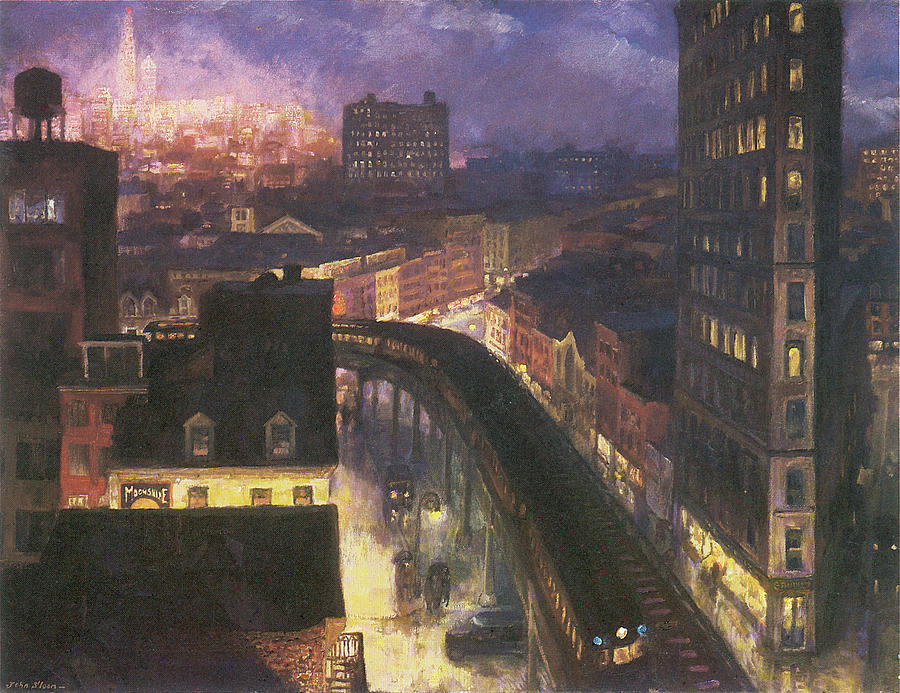
John Sloan- The City From Greenwich Village

John Sloan- Hairdresser’s Window 1907

Read Full Post »

Paul Gauguin- The Painter of Sunflowers 1888

*************************

What still concerns me the most is: am I on the right track, am I making progress, am I making mistakes in art?

-Paul Gauguin

*************************

I am in the last day of prep before I deliver my show to the West End Gallery. I am in my 25th year at this gallery where I first started publicly showing my work and this is what I believe to be my 18th solo exhibit. But even with all that experience there is always an element of doubt present when I am getting ready to deliver paintings to a gallery.

It’s just a natural state of being. At least, for me.

I used to worry that my own judgement of the work was flawed and that this would be obvious once it was hung on a wall outside my studio. My inadequacy would be on public display for all to see.

That feeling never fully goes away and on these last days of prep, this insidious doubt always creeps back in.

But time has made me adhere to the words above from Paul Gauguin, under his 1888 painting of Vincent Van Gogh.

You do what you can do. You try to do a bit better each time. You discard those things that don’t work and grow the things that do.

And you live with that.

Okay, got lots to do this morning so I am out of here. And I think I am leaving my doubts right where they are. Don’t need them today.

Read Full Post »
********************

“A man should hear a little music, read a little poetry, and see a fine picture every day of his life, in order that worldly cares may not obliterate the sense of the beautiful which God has implanted in the human soul.”

― Johann Wolfgang von Goethe

*********************

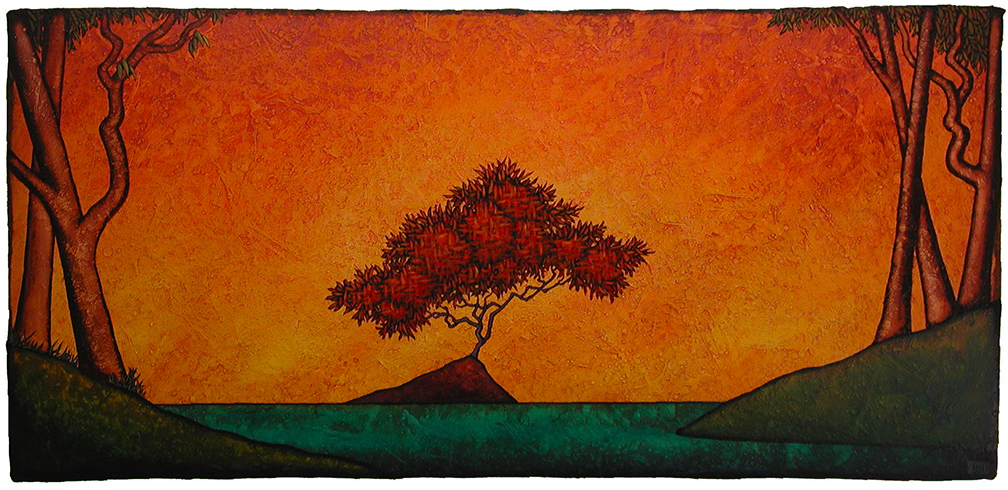
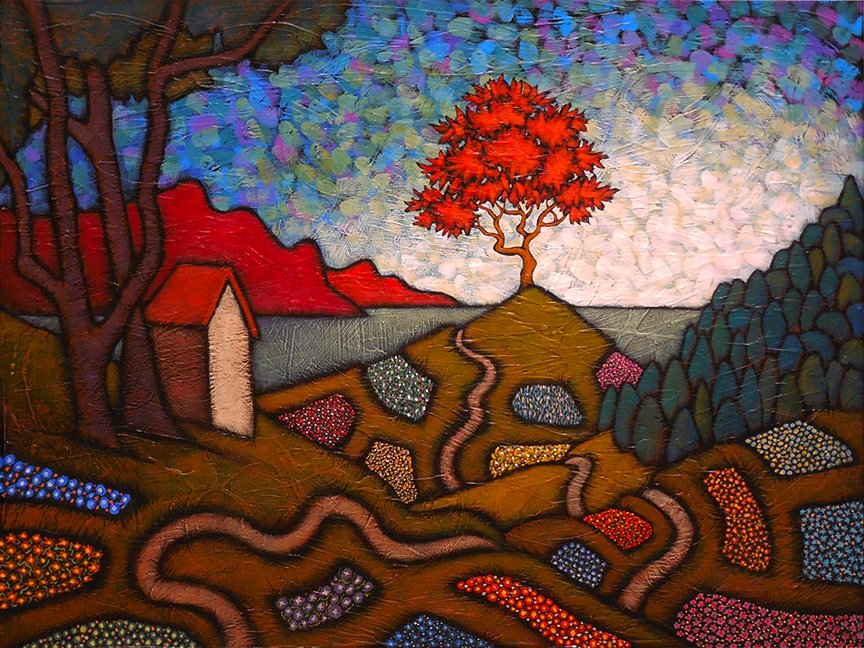
The painting at the top is a new piece that is included in my solo show, Red Tree 20: New Growth, that opens June 7 at the Principle Gallery in Alexandria. It is titled To Stand in Beauty and is 18″ by 24″ on canvas.

Beauty was the first thing that came to mind when I began looking for a title for this painting. It seems like a fitting representation of the old adage that we should stop and smell the roses.

As Goethe points out above, worldly cares often threaten to obliterate our sense of the beautiful. That may never be more true than it is in these days as there is so much anger, hatred, stupidity, and frustration on public display now. Many of us find ourselves focusing on all that is wrong in this world and in the process forgetting the beauty that often surrounds us.

The beauty of a blooming flower.

The romance of a beckoning horizon.

The graceful strength of a tree trunk.

The awe of a rising mountain.

The lure of a winding path.

I am looking out my studio window from my seat at the moment and a deer is looking back at me from the lawn. Beyond him I can see a couple of wild turkeys strolling up the driveway in front of one of the large rhododendrons that line it. The rhododendron is finally flowering fully, adding a gorgeous splash of color among the greens and grays that surround them. In the distance I can see the mass of yellow irises that are blooming on the edge of the pond. And while I was looking to the distance, a small buck with velvet covered antlers just beginning to develop walks across my line of sight. And above it all. I can hear the chirp of the bird nesting above my front door.

It’s a beautiful moment, one that I all too often overlook, especially when I first come into the studio. I check the news, read emails, begin figuring out what to write for this blog and what my painting agenda might be for the day. And the rush of the day sometimes blots out the beauty that surrounds me.

But this painting, especially this morning when I am in the final frantic steps of putting the work for the show together so that it can be delivered tomorrow, has reminded me to stop and consider things of beauty instead of news or emails or whatever bothersome tasks lie ahead.

And it has made a difference. Goethe was correct, there is beauty to be found in music, poetry and fine pictures as well in simply looking out at the natural world for a moment.

We can all stand in beauty if we choose to look.

Read Full Post »

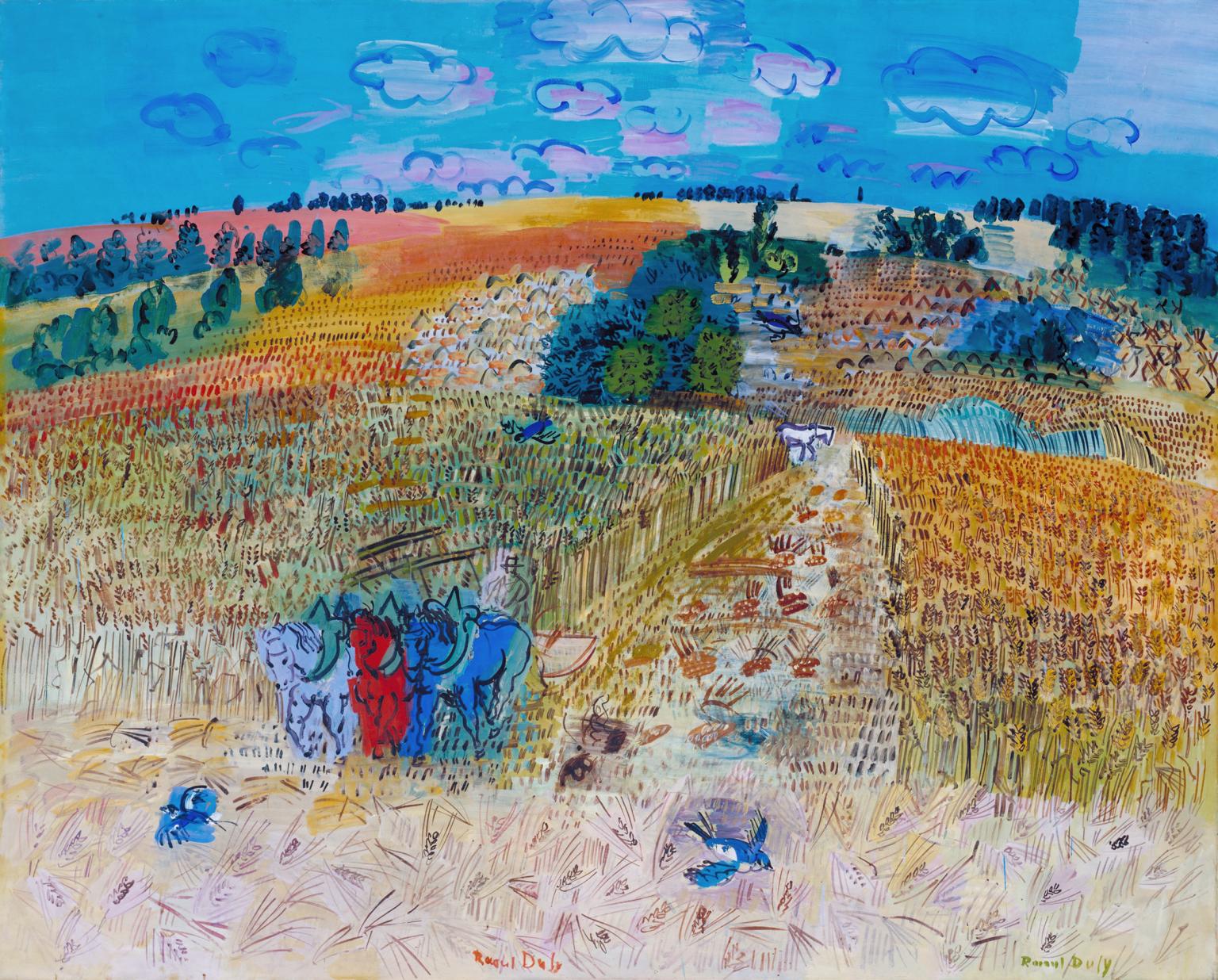
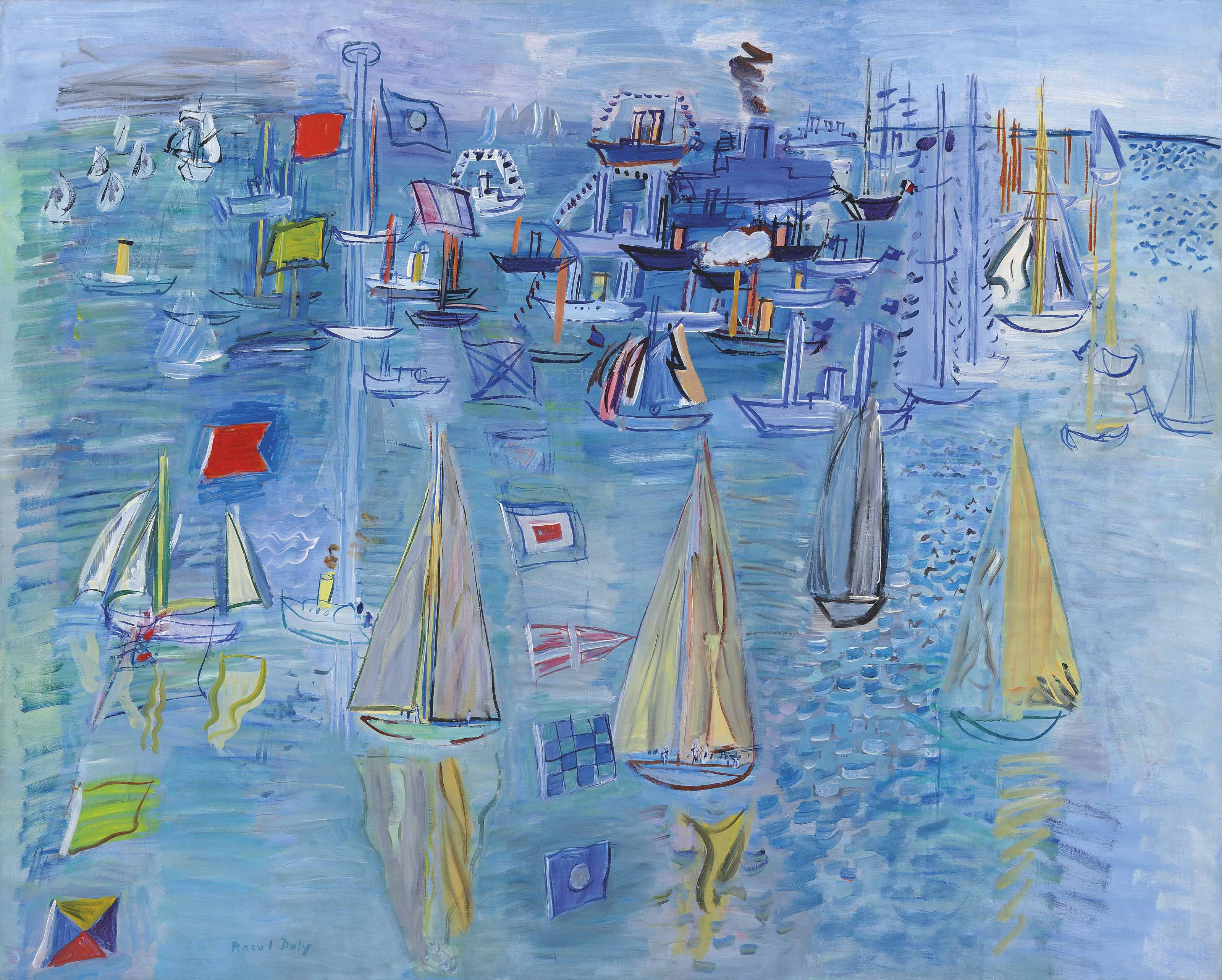
The Wheatfield -1929- Raoul Dufy

************************

I don’t follow any system. All the laws you can lay down are only so many props to be cast aside when the hour of creation arrives.

Raoul Dufy (1877-1953)


**********************

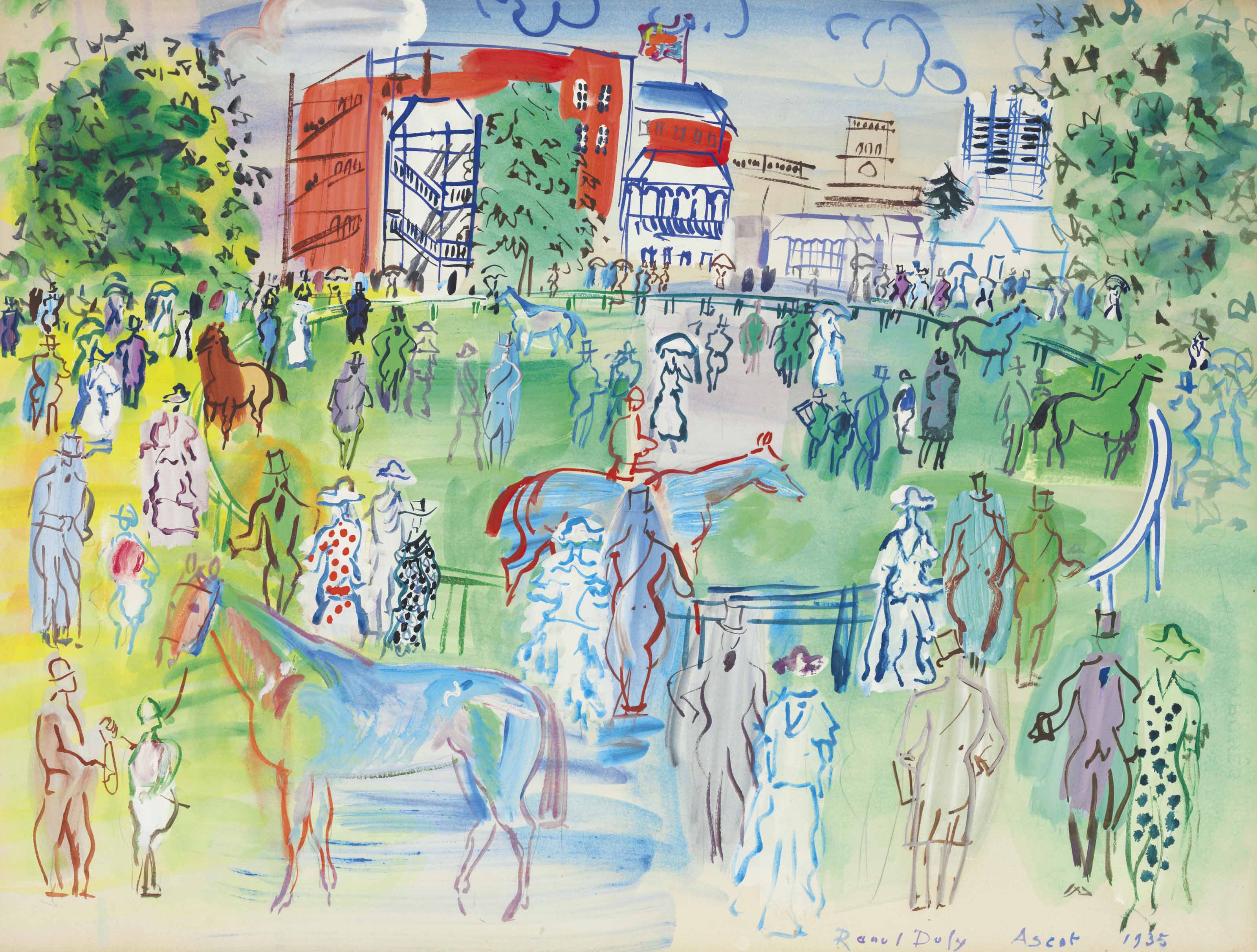
I can’t say I am the biggest fan of the paintings of Raoul Dufy or his younger brother, Jean Dufy (1888-1964) , French painters who were popular in the first half of the 20th century. It’s not that I don’t find them attractive and pleasant. While I particularly like the painting at the top , The Wheatfield, from 1929, they just don’t speak to me deeply.

But I like and agree with Raoul’s words above. Rules and systems may be fine and necessary up to a point. The trick comes in knowing when to blow past the limitations that they set on your work. When it comes down to making a piece work and come to life, rules and systems are often set aside. Whatever it takes to create rhythm, energy, and harmony within the painting becomes acceptable.

Casting aside rules is often the beginning of a new artistic freedom. It’s like taking off the training wheels and feeling the fear and freedom of being out there on your own.

Got to go try to break some rules right now. Have a great day.

Read Full Post »

« Newer Posts - Older Posts »