Feeds:
Posts
Comments

Archive for the ‘Favorite Things’ Category

+++++++++++++

The purpose of my work was never to destroy but always to create, to construct bridges, because we must live in the hope that humankind will draw together and that the better we understand each other the easier this will become.

Alphonse Mucha

+++++++++++++

You most likely know the work of Czech painter Alphonse Mucha (1860-1939) for his extremely popular posters that set the style for and were the epitome of the Art Nouveau movement. It was beautiful and graceful work much like the piece shown here on the right.

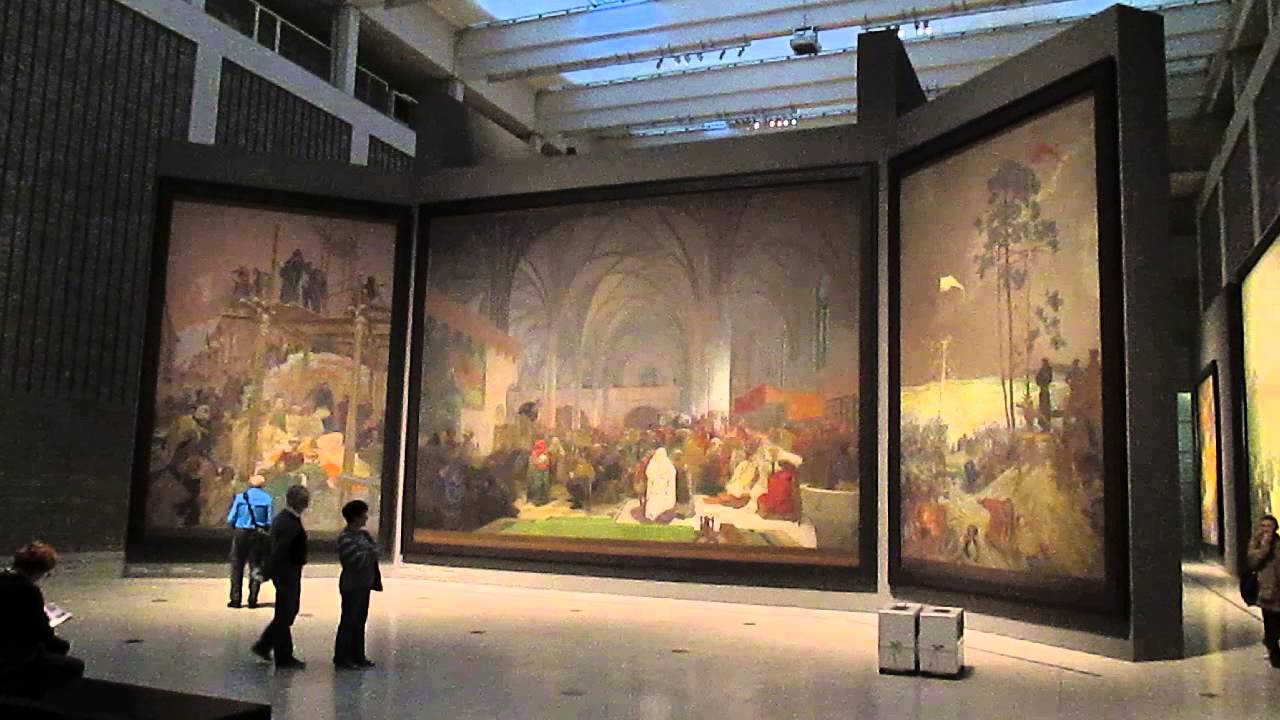
That was definitely the extent of my knowledge about Mucha’s work. And that alone would be a worthy enough achievement for most artists. But his greatest work may well be his monumental Slav Epic series.

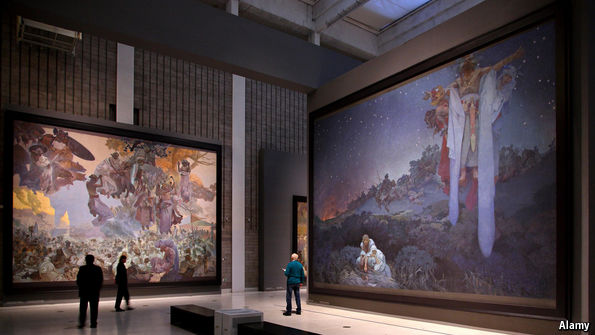
The Slav Epic is comprised of 20 large works that depict the history and the mythology of the Slavic people. It was painted over the course of 16 years with the aid of financial support of American industrialist/philanthropist Charles Crane. The works are all painted on a grand scale with some of them measuring 20 feet in height and 25 feet in width.

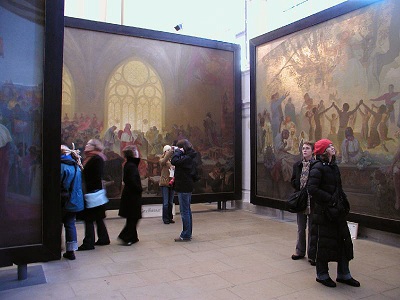
They somehow survived Czech occupations by both Nazis and Soviets who both saw the work as being counter to their ideologies. Mucha died soon after being interviewed by the Gestapo in 1939. The paintings are now in possession of the Czech government who are in the process of creating a museum to permanently display this magnificent work. I am sharing a number of images below that show them with viewers so as to give  an idea of the sheer scale of the works.

Pretty amazing. Good reason to get to Prague.

Alphonse Mucha- Slavs in Original Homeland

Read Full Post »

I came across this blogpost that first ran back in 2009. It’s about a fellow that was in my family’s orbit as teenager. He would probably be classified as marginal, someone who didn’t fit into most categories or social classes. Sadly, these marginal folks are most often quickly forgotten. But sometimes they leave a deep impression. Take Fat Jack, for example.

+++++++++
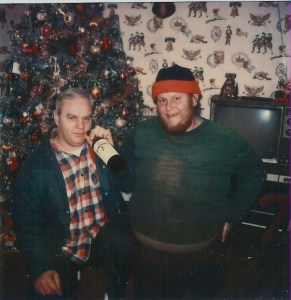
I came across this old photo from the early 70’s and was instantly sent back in time. The two gents in the shot from a Christmas season long ago are my Uncle Joey (holding the Seagrams 7 bottle– I’m not sure that he was just mugging for the camera) and Jack Reynolds, who everyone called Fat Jack , Jackboy or, as my Dad would say, Jackeee.  You need to pronounce all three e’s to get the full effect.

In 1972, we moved from one edge of our county to the other, to a little remote brick house on a high hilltop plateau where the wind always swirled and the view south went for many dozens of miles, across a multitude of hilltops down across the border into northern Pennsylvania. It was exquisitely quiet there, often many hours passing before a car might appear on the narrow road.

My aunt Norma and her husband, Bob, ran a large dairy farm just over the ridge and Fat Jack would often be seen there tinkering with the equipment, his short, round body rolling around in the dirt under tractors in his ever present filthy bib overalls, crudely cut off at the cuffs to accommodate his short legs. On his feet were his ever present dime store canvas sneakers.

Jack and his dad lived at the bottom of the hill in a  home that his father had started building in the 50’s. When Jack’s mom died, they had only finished the basement and that is where they stopped. The father and son lived in the small walkout basement, that had a dark and dank appearance when you drove by.

At the time when I first met him, Jack was in his early 20’s and didn’t have a driver’s license. But he could seen chugging up the hills on an old Ford tractor pulling a wooden trailer with a large collection of his tools and paraphernalia. I can still vividly see him in my mind with his little rig of tools chugging along the cow pastures to my aunt’s farm.

Jack absolutely loved and was fascinated with tools. Any kind. Any spare money he earned went directly towards buying tools, the tool department at Sears being the primary recipient of his spending.

Jack couldn’t read or write very well, if at all. But while he couldn’t read the words, he could read diagrams and schematics like a first language. That was vital to his natural ability for figuring out how things worked. It was an ability made him a valuable asset to a farm where there are always things in need of repair. Bob, as well as several other local farmers, was always asking him to work on this or that at the farm.

But if Jack didn’t want to do something for whatever reason, he would just say “Nope” with his stained and gapped with missing teeth grin and pick up his tools. But he’d stick around for the conversation and maybe a meal.

When we moved up on the hill, Jack started coming to our house to do a few repairs there. He took an instant attachment to my dad and my dad took to him as well. He became a regular fixture at our house, fixing things around the place and more often than not eating dinner with us or drinking a beer with Dad. He had an appropriately large appetite for both food and drink. Bob called him my father’s third son.

Jack was not big on hygiene.  That’s actually a gross understatement. His overalls were always dirty and oil-stained from working on machines and engines. His hair was a greasy mat under the stocking cap that seemed permanently attached to his head and there was often a pungent odor that was a mix of used motor oil, fried food and sweat.

Night after night he would plop himself in one of my mother’s upholstered chairs in our living room to the point that there was a dark, greasy line on the arms of the chair where his ample belly would rest. My mother kept a pristine house so it drove Mom crazy to the point she would bellow at him–she wasn’t shy about yelling at anyone in her house. Jack would just grin.

And though she might have been mad but she would never think of not letting him sit there or at our dinner table. She had a soft spot for marginal people as well.

Eventually, after his own father died, Jack parked his tractor and started driving an old yellowish Ford Econoline— the kind with the flat front sort of like the one the gang drove on the Scooby Doo cartoons!– van packed with his tools. He didn’t have a license but that didn’t stop him from buzzing around the hills around us, being well known to most of the farms in the area. Dad, who was with the Sheriff’s Department, turned a blind eye. Dad would eventually help Jack get a driver’s license and as well as helping him find work as a maintenance man at a local nursing home.

For a while, Fat Jack seemed to be thriving.

Fat Jack passed away sometime in the 1980’s when his Econoline slid off the road not too far from his basement home and hit a viaduct. In the impact, his tools were thrown forward against him, killing him. He probably would have appreciated the irony of it. His funeral was a large affair at Mt. Saviour Monastery which was a short ways from his home. He had also did a lot of work over the years for them.

His basement home is no longer there, long ago bulldozed over and there remains no trace of Fat Jack anywhere but in the memories of a handful of people who got to know this strange little character.  I know I haven’t fully captured the man here but I just felt that he deserved a few moments of recollection.

Everybody does, don’t you think?

Read Full Post »

Moanin’

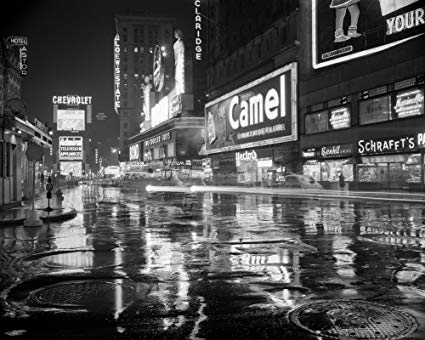
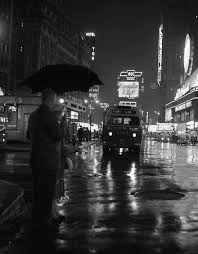
Up early listening to old jazz. It puts an image of high contrast black and white films in my mind. Rainy night street scenes from a 1950’s NYC. Neon lights reflecting on dirty puddles. Brakes lights from rows of cabs glowing and steam rising. A rich stew of smells, alternating from sweet aroma to stench. People with their heads down, scurrying through the bustle of light and dark, roars and rhythms.

Lots of raw energy buoyed by the possibility of self-invention. Images that create an odd sense of romance.

Here’s an example. The classic Moanin’ from jazz legend Charles Mingus. Keep up the energy and have a good Saturday.

Read Full Post »

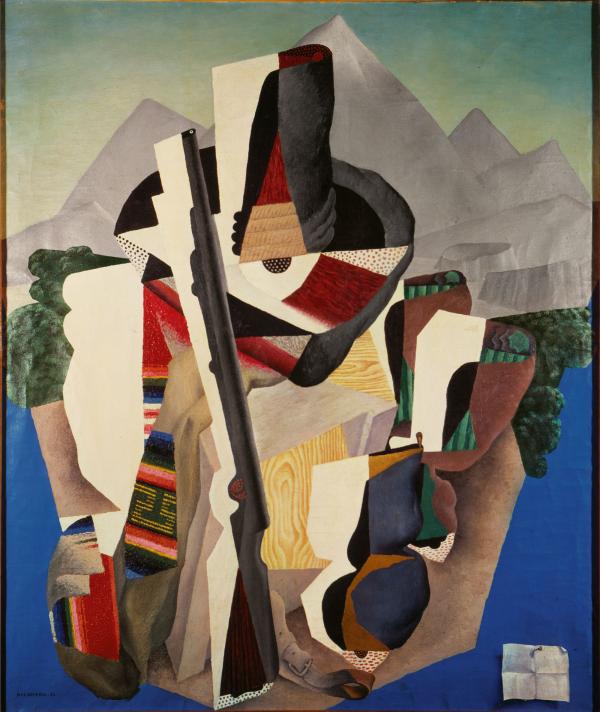
Diego Rivera- Zapatista Landscape 1915


++++++++++++++++++

As an artist I have always tried to be faithful to my vision of life, and I have frequently been in conflict with those who wanted me to paint not what I saw but what they wished me to see.

–Diego Rivera

++++++++++++++++++

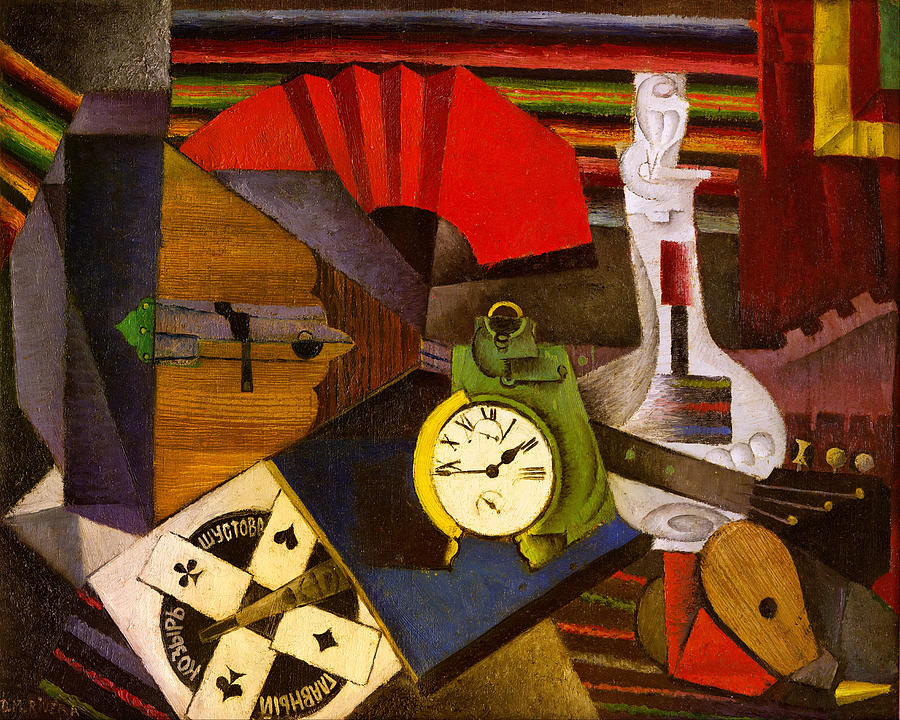
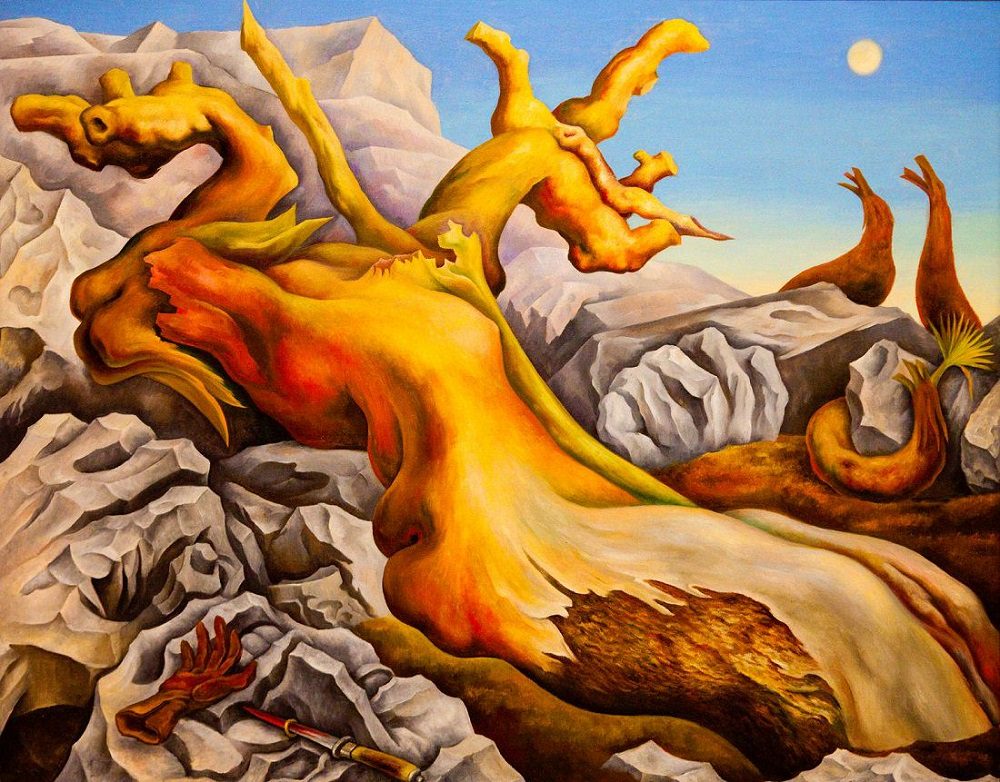
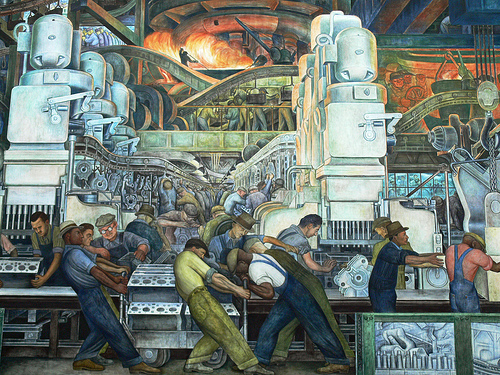
Big fan of the work of Diego Rivera (1886-1957), the great Mexican painter/muralist and husband of Frida Kahlo. There is much I love in his work such as the way his colors harmonize and soar off the surfaces, the sheer brilliance of his compositions, the scale and breadth of his murals and the fact that his work was beautiful and powerful in whatever genre or style he chose at any given moment. He was also fearless in expressing his political and philosophical beliefs in his work, often becoming a strong element in his work.

I also admire his absolute devotion to his own voice in his work, as noted in the quote above. He painted his own vision, not what others desired him to see. That’s a big thing for any artist and not something easily done. Too often artists try to work for the approval of other eyes, for people who want their work to remain as they have always known it.

It’s understandable from the perspective of a viewer to want an artist to remain in that space that first attracted the viewer. They know and like the work as it is and perhaps can’t imagine it becoming more than it is if it somehow evolves or changes. Or they fear it will become less or something that doesn’t speak to them in the same way. As I said, it’s understandable.

But from the artist’s point of view this present a threat in that this may stop them from expanding their creative vision. They begin to be afraid to go off their own beaten path, to try new things, to move out of their comfort zone to challenge themselves, and to grow their self-created universe. They remain in a known space and may never know how expansive their vision might be if they only tried.

From what I know, Diego Rivera always moved to new creative spaces with his work. He painted with his own voice, even in his commissioned murals. I still stumble on pieces of his that surprise me.

A true inspiration.

++++++++++++++++

Diego Rivera’s Mural at the City College of San Francisco

Detroit Institute of Arts Mural Segment

Diego Rivera- Flower Seller

Diego Rivera- The Alarm Clock

Diego Rivera- Nocturnal Landscape 1947

Diego Rivera- Symbolic Landscape 1940

Diego Rivera- View of Toledo 1912

Detroit Institute of Arts Mural Segment

++++++++++++++++++

Read Full Post »

Hokusai- First Cargo Boat Battling the Wave

++++++++++++++

You must live in the present, launch yourself on every wave, find your eternity in each moment.

—-Henry David Thoreau

++++++++++++++

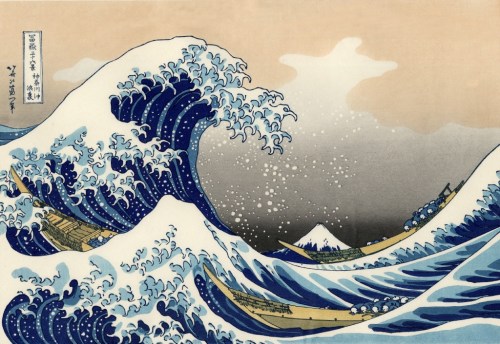
Really felt like looking at some of my favorite Japanese prints from the 19th century this morning, mainly from Hokusai and Hiroshige. There are a couple here, including the one above, that led to the iconic Great Wave from Hokusai, shown just below.

With their great rhythm, harmony, and force, I could look at these pieces continuously and never feel like I’ve looked enough.

As for the symbolism of the wave today, you can plug in whatever meaning pleases you.

I know what it means for me today. And, with a bit of hope, tomorrow.

Hokusai- The Great Wave

Hokusai- Feminine/Male Wave Kammachi Festival Float Ceiling Panels

Feminine Wave – From Float Panel Hokusai

Hokusai

Hokusai

Hiroshige- Navaro Rapids

Hiroshige- Sea Off Satta Point

HiroshigeThe Wave 1859

Hokusai- View of Honmoku off Kanagawa

19th Century Japaneses Woodblock -Artist Not Indicated


Read Full Post »

Blake

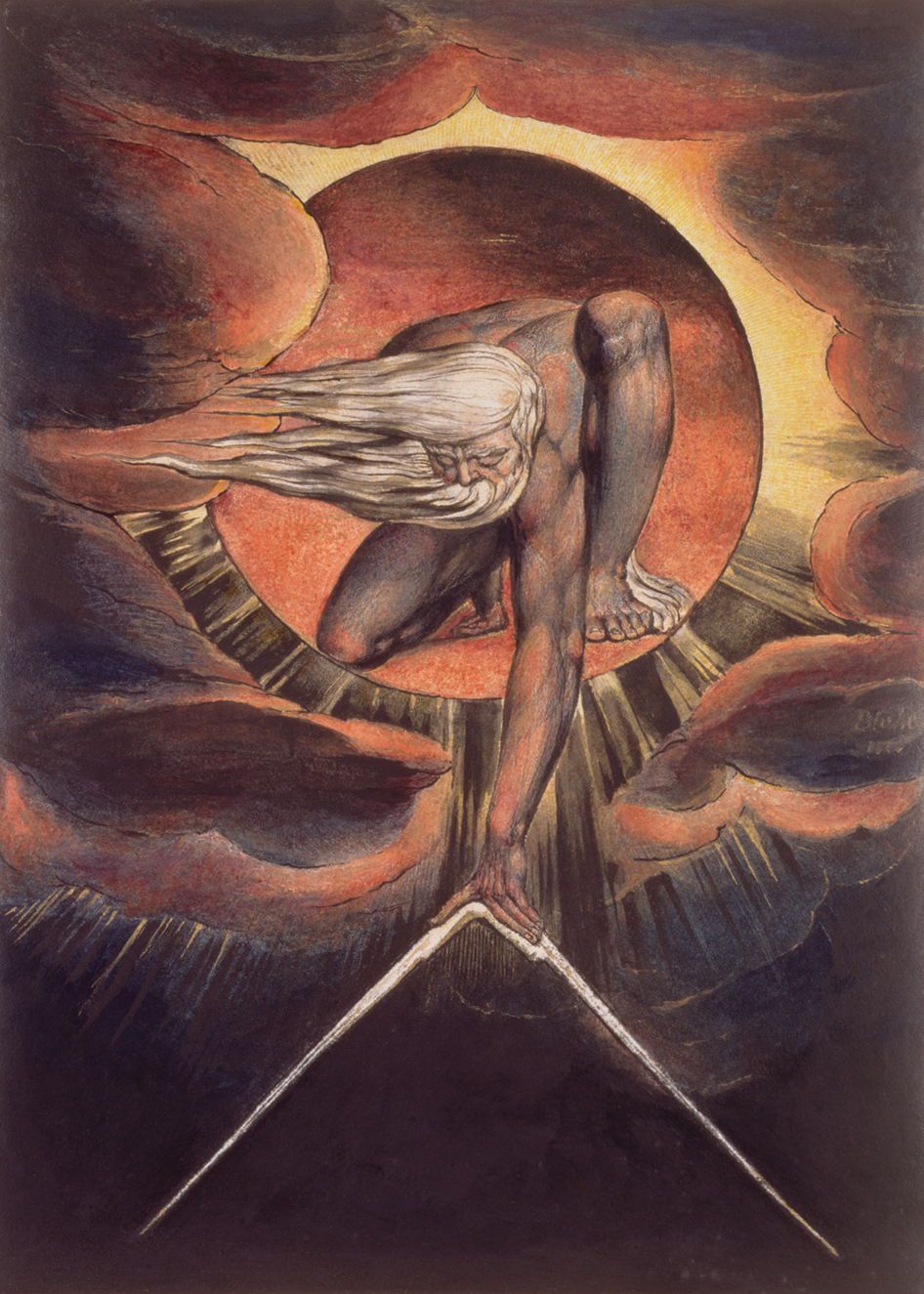
William Blake- The Ancient of Days ca 1821

+++++++++++++

If the doors of perception were cleansed, everything would appear to man as it is – infinite.

William Blake 

+++++++++++++

On yet another gloomy morning in what seems to be an endless parade of gray and rainy days, the only infinite this morning I am seeing is infinite dreariness. On a morning like this, a few pieces from William Blake seem like the right choice to ponder.

The work of British poet/printmaker/painter William Blake (1757-1827) seems drastically different from the work of his contemporaries in the early 19th century. It went beyond representation and dealt with a metaphysical reality/unreality with which most artists of the time were not dealing. Much of his work deals with a complex mythology revolving around Urizen, a godlike figure representing reason and law.  He is shown in the famous image shown at the top of this post and in the first below.

To be honest, I can only pretend to understand his work at the most basic level. But his visual work and his writings have a definite attraction for me.  It remains vital and interesting work, forever tinged with the mystery of the ages.

And that mystery is something to ponder, especially on a dreary, rainy morning.

Maybe this rain is attempting to cleanse those doors of perception?

I’ll let you know if anything shows up…

Urizen Worshipping Before the World He Has Forged

Read Full Post »

Looking through some older work, I came across this piece from January of 1995. It was from a time just before I first showed my work publicly. It seems like just yesterday in some ways but a hundred years ago in others. I was just finding voice in my work but still had some work to go before I  could fully utilize it.

This is called Outside Shakeytown and it’s obviously watercolor on paper. Shakeytown was the name I used sometimes at that time for a mythical dark and dank town that hovered under dirty gray skies and sooty foundries and factories. It is a name that could be used in place of any number of small Rust Belt cities and towns that have seen industries disappear over the past 40 or 50 years. These often impoverished towns often still have shuttered factories that stand like ugly monuments to a long gone past as they struggle to find a new identity in a modern world.

It can be a compelling setting, one filled with deep darkness that give rise to startling and dramatic contrasts. One of the birthplaces of art.

This piece is a favorite of mine, one that checks a lot of boxes in a list of what I want to see in my work. It always sends off sparks within me when I pull it out. For me, it acts as sort of a creative terminus from which all sorts of paths depart.

And like the beginning of any journey, it fills me with excitement and a bit of dread.

And those are good starting points for new work.

While I never had plans of showing this publicly, I had to laugh when I looked this morning and noticed that I had signed it twice. The one on the left is the original and the one on the right is from what I think is a much later date when I must have not noticed the other signature. They are both in pencil so I could just erase one but I am going to leave it as it. That way, a couple of hundred years in the future maybe someone will stumble across it– in a gallery or a junk shop or a junk heap, who knows?–and will wonder what was meant by the two signatures.

I won’t be there but I can chuckle at the possibility of it now.

And these days, here in Shakeytown, that’s a good thing.

Read Full Post »

++++++++++++

I think the best we can achieve is asking questions about the world in which we live because I think accepting the world as it is and so on is just impossible. Finding the right answer, maybe finding some directions towards some answers is the most we can dream of.

Samuel Bak

++++++++++++

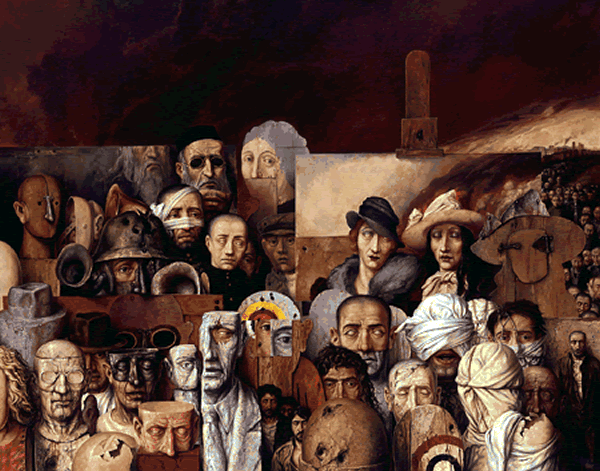
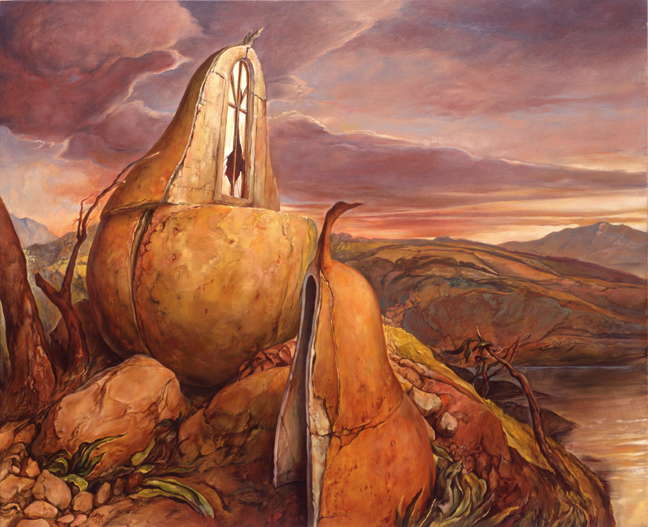
I came across the work of Samuel Bak about twenty years ago, at the Pucker Gallery in Boston. It was easy for me to be drawn into his work. It was strongly symbolic and densely painted with deep, dark colors. It was easy to see that there was nothing trivial about it.

It had weight.

I discovered that Samuel Bak, who has resided in the United States since 1993, was born in Poland in 1933. From an early age his artistic talent was obvious. His family was Jewish and spent much of World war II in the ghetto of Wilno (where he had his first exhibit of his work at the age of nine) before being sent with his mother to a labor camp. They were able to flee and take shelter in a convent where they remained until the end of the war. At that time, only he and his mother survived from an extensive family.

He and his mother spent three years in a Displaced Persons camp in Germany before moving to Israel in 1948. He lived there until his move to the US in 1993.

I have followed his work for the past couple of decades and it almost always has the weight that I first saw in it.

It feels like it is filled with the memory of all memories.

I thought today would be a good day to share his work.

Read Full Post »

++++++++++++++++++

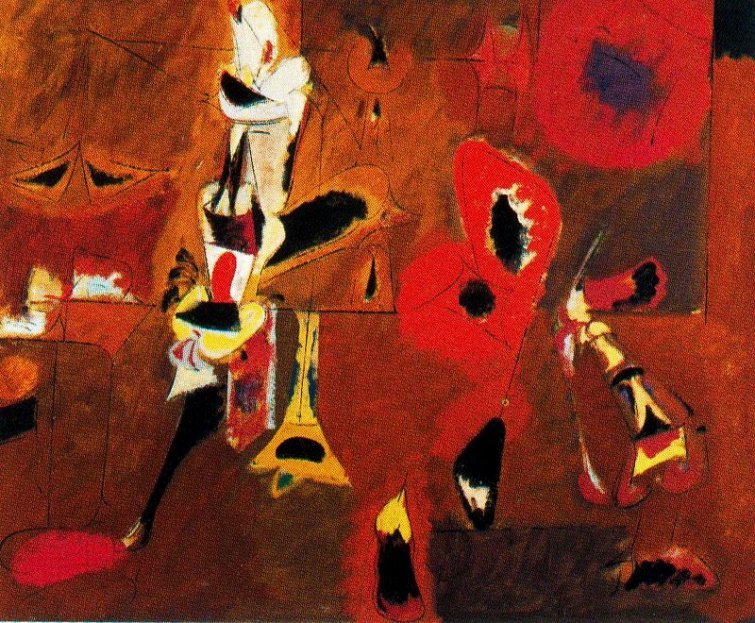
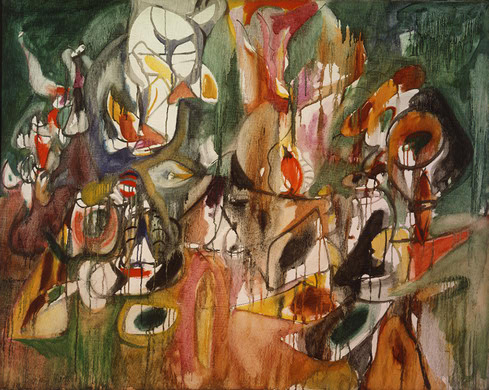
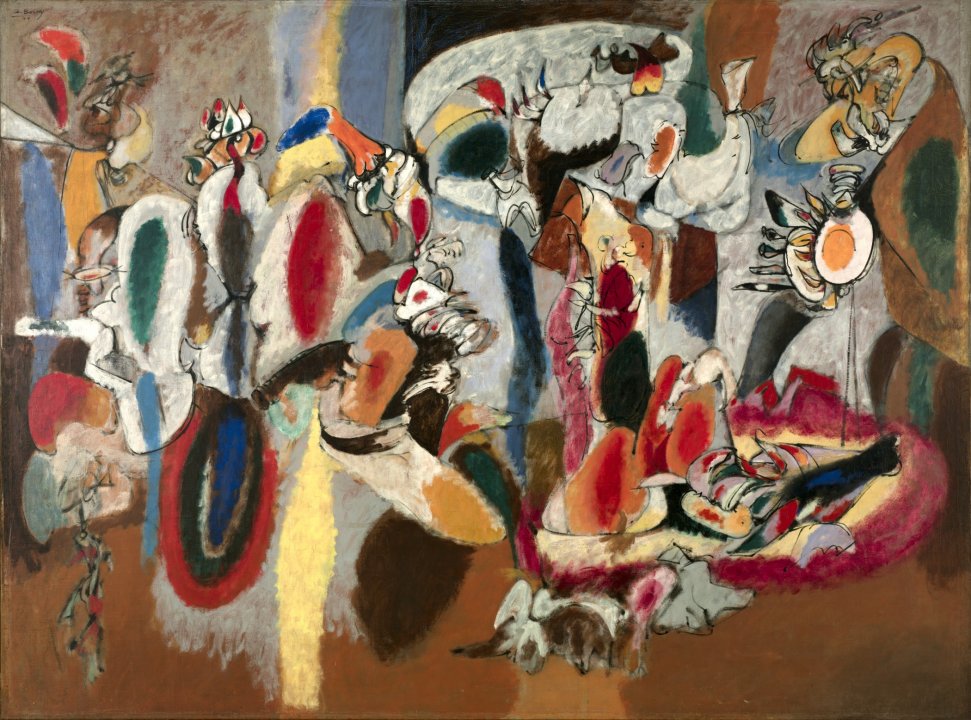
If a painting of mine suits me, it is right. If it does not please me, I care not if all the great masters should approve it or the dealers buy it. They would be wrong.

Arshile Gorky

++++++++++++++++++
Arshile Gorky is one of those names that instantly stands out for me. But the reality is that I never knew much about his work. Just a unique name.

But of course there is more than the name. Gorky was born sometime around 1904 in Armenia and came to America in 1920 in the aftermath of the Armenian Genocide perpetrated by the Ottoman Empire on its own citizens of Armenian heritage. About 1.5 million Armenians died in this dark era including Gorky’s mother in 1919.

Fortunately for him, America was still a welcoming land to refugees fleeing hatred and danger.

He quickly integrated into the America of the 1920’s and spent the rest of his life here, gaining a sizable reputation as an important painter. He is considered one of the major influences on the Abstract Expressionist movement of the 1950’s, which he unfortunately didn’t live to see.

His candle burnt brightly but was short lived. He suffered several personal setbacks after 1946 including a car crash that broke his neck and temporarily paralyzed his painting arm. He hung himself in 1948, dying at around a young 44 years of age.

He hadn’t even come into his prime as a painter.

I like much of his work that I have seen. I am not a fan of abstraction for abstraction’s sake. For me, a work still has to have something to say and a sense of movement, rhythm and harmony of some sort. It has to talk, to communicate a meaning of some sort to me. It has to have have that sense of rightness that I have referred to a number of times here.

Without that, the most beautifully crafted piece of work can be sterile and cold.

Dead.

So, I agree with Gorky’s words above about rightness in his own work. That is the quality I seek most in my own. His work is often described as Lyrical Abstraction which is where the work has many of the qualities that I described above, forming in itself a visual language of sorts that transcends the image.

These are ideas that spark my imagination, that make my time spent in the studio worthwhile.

Read Full Post »

I have been going through my files lately, trying to find some misplaced or lost images and somewhat organize twenty plus years of chaos. I came across this video which I thought I had shared at some point but couldn’t find any evidence anywhere of having done that. So I guess today is a good time to do so.

This slideshow is a group of the images from my Exiles series set to one of my favorite pieces of music, Gymnopédie #1 from composer Erik Satie. I believe this was put together back in 2006.

I’ve written about the Exiles series a number of times here. It was created around the time of my mom’s death back in November of 1995 and focused on how I saw her suffering in the last several months of her life as lung cancer ravaged her body. It’s a personal series, one that was important to me in many ways.

This film is flawed and doesn’t contain all the series images but it captures the series perfectly, at least in how I saw it then and see it now.


Read Full Post »

« Newer Posts - Older Posts »