Feeds:
Posts
Comments

Archive for the ‘Favorite Things’ Category

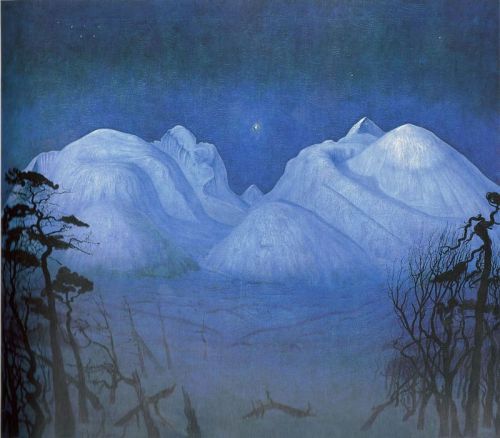
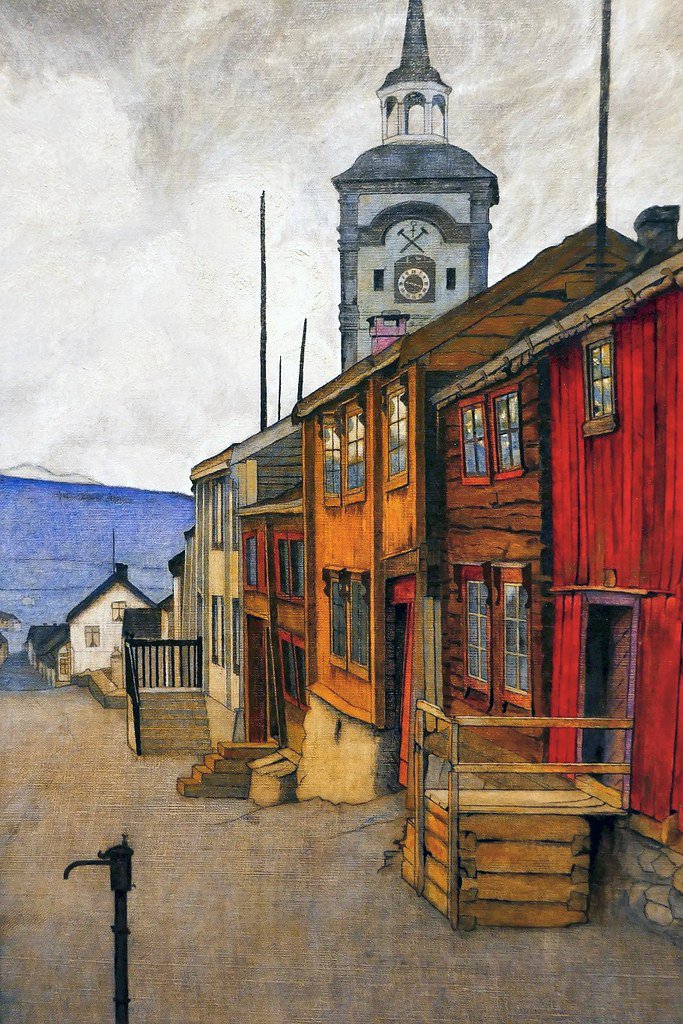
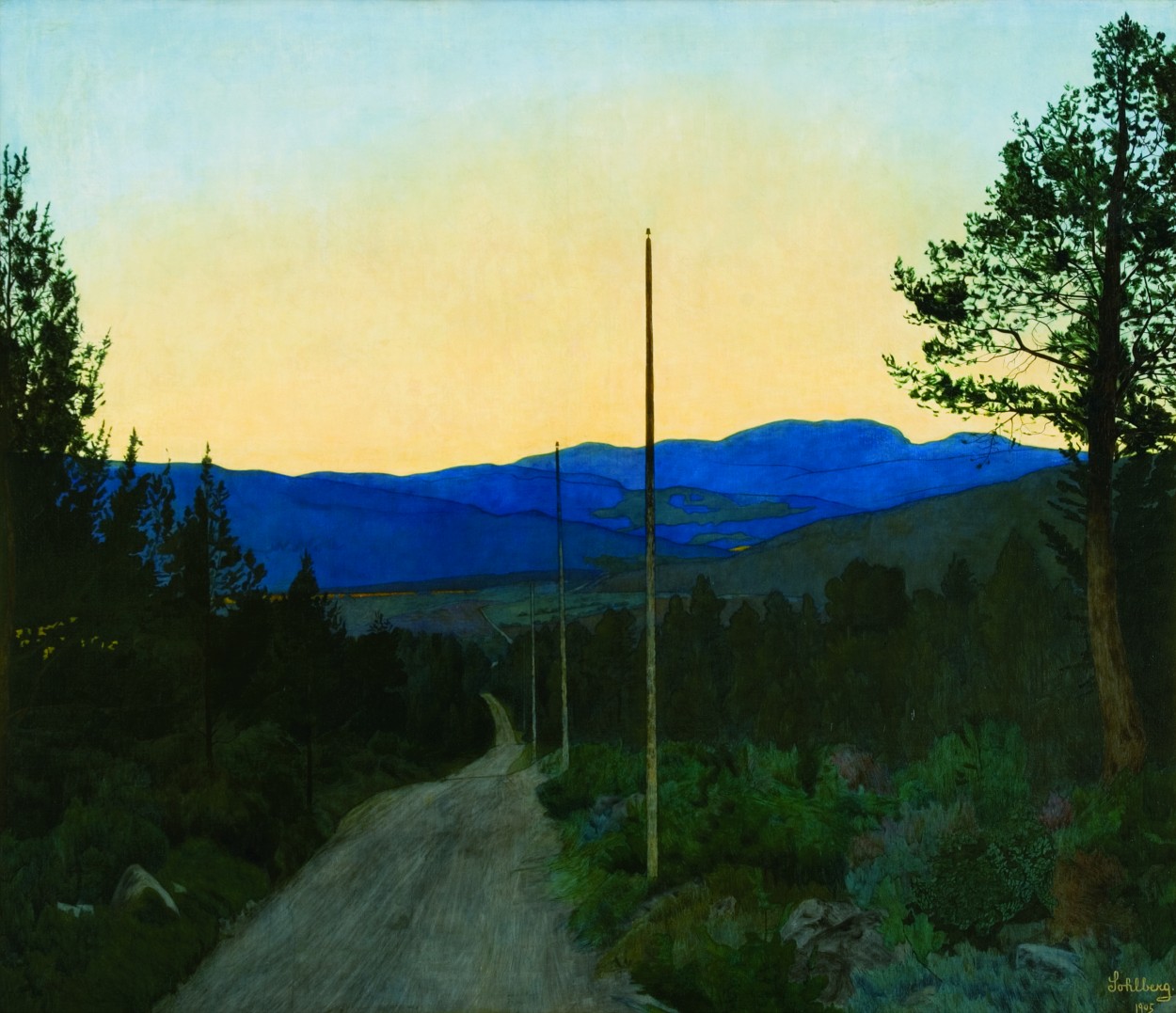
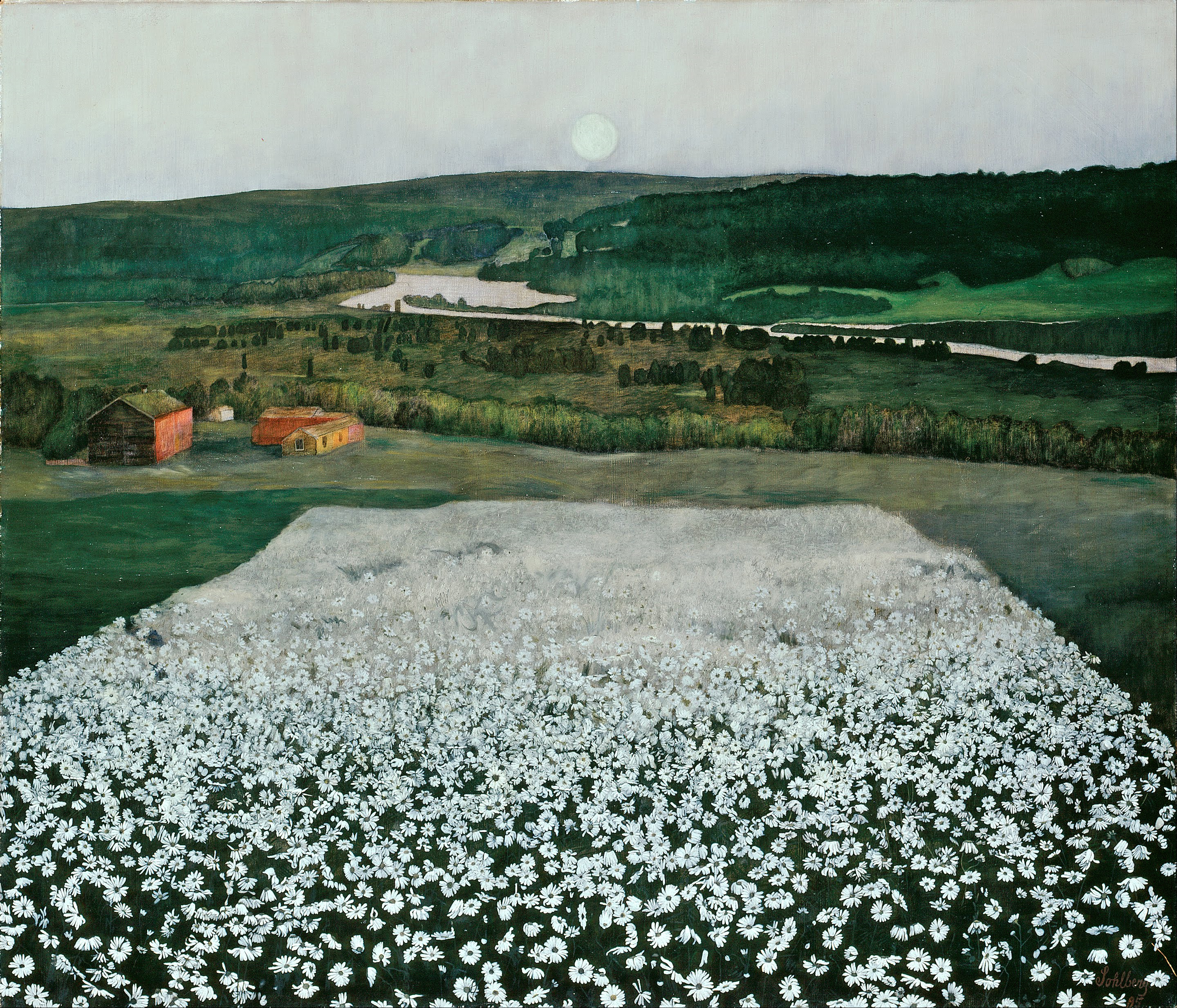
Harald Sohlberg-Night 1904


***********************

I was in the studio even earlier than normal this morning. I watched the news for a bit only to hear that some hospitals in the NYC/ Tri-state area were already near the point where doctors were going to have to decide who would be put on a ventilator and who would not. Basically, who would live and who would die. And the soulless clown in charge keeps saying that Ford and GM are manufacturing thousands of these much needed items when, in fact, they are not and that he wants to end the shutdowns in a week or so. He is willing to sacrifice lives, perhaps large numbers of them, for a stock market bump and for the fiscal wellness of multinational corporations that were as recently as a month or two ago sitting on a mountain of cash, something like $1.7 trillion.

It’s okay to let grandma die alone in a hospital so long as there’s a profit to be made.

I had to turn the news off and find something to quell my rising ire. 

Something tranquil and far removed from this horror show.

I thought I’d share a post from several years ago about a somewhat overlooked artist with whom I feel a real kinship, Harald Sohlberg, sharing many of his artistic goals and way of looking at the landscape. Like him, I seek consistency and a union of pictorial and spiritual values.

I’ve added a number of images to the original post. Take a look. Hopefully, you’ll find some tranquility in them. Have a good day.

***********************

There’s a good possibility that you haven’t heard of Harald Sohlberg, a Norwegian painter who lived from 1869 until 1935. I know he was not on my radar until I stumbled across a few of his images. In fact, there is not a lot of info about him outside of a short perfunctory bio.

This kind of stumped me but it wasn’t until I came across the short essay shown below that this made sense, giving me a lot more insight into the man behind the work. I particularly identified with his connection with the landscape and his feelings as expressed in the final paragraph where, as an old man, he desired that people see his work not for the simple scenes they seemingly portrayed but ” for the pictorial and spiritual values on which I have been working consistently throughout the years.”

As an artist, that is your greatest hope– that people will look beyond the surface and see the emotional and spiritual content that the artist uses as a catalyst. Take a moment and read this essay from a 1995 exhibit at the National Academy of Design in NYC that featured the work of Sohlberg and Edvard Munch. At least take a moment to give these few Sohlberg’s paintings a good look.

In an obituary, Pola Gauguin [son of Paul Gauguin and a painter and art critic of the time] wrote that as an artist, Harald Sohlberg was alone and forgotten: “A name which was famous in its day.” Now that Sohlberg was dead, Gauguin thought, “the coldness which he helped surround it with, will thaw.” Sohlberg’s isolation was partly the tragic result of his wholehearted endorsement of the myth of genius as formulated by Romanticism and adopted by the Symbolists. Like Munch, he was obsessively preoccupied with denying that the influence of other contemporary artists had been important to him. He dissociated himself from the discussion about where he belonged in the history of art, relegating the origins of his artistic awakening outside of art to his own psyche.

Sohlberg wrote that his form sprang forth subconsciously from his first awareness of the landscape. The difference in texture of the sky and earth gave him a sense of standing on a heavy and firm planet gazing out into boundless space. He attributed the simple forms and great lines of his pictures to this first awareness of the landscape. The point of departure was the personal experience. Thus, the artist’s experience of his subject preceded the picture. Sohlberg was preoccupied with the concrete local landscape that surrounded him and his emotional reaction to it. The place, in itself, was charged with meaning. For this reason, where he sought his subjects was important. He experienced the landscape in Norway as nature in strong and intense moods and gave form to the echoes of these moods in his mind. He agreed with many of his generation who, taking their point of departure in Andreas Aubert’s writings about Norwegian art, were of the opinion that there existed distinctive, Nordic colors, clear and strong colors created by the clear, intense light of the North. Once artists realized this, it would be possible for an independent Nordic art to develop. Sohlberg believed that, along with the unique construction of the Nordic landscape, local color ought to result in a style of its own. Experience and interpretation of nature determined the choice of colors. For Sohlberg, the main color should assemble the picture and be as strong as possible.

The function of line in painting according to him was to express feelings. It could be lonely, down to earth, or melancholy. It could be willful and persevering as required. It should be developed according to the nature of the subject and the artist’s dialogue with nature. Because the picture was bound by a perceived reality, Sohlberg paid tribute to reality by portraying it naturalistically. But his gaze carried with it the legacy of picture formulas that transformed and adapted nature. He was an artist who rarely put a stroke on the canvas before the picture was clear to him in his imagination. As an artist, he was a substitute viewer. What interested him was his own experience and interpretation, regardless of how naturalistic his pictures appeared to be. Ideally everything in the picture was controlled by his will.

As an older man, Sohlberg longed for confirmation that the public saw the values he wished to impart: “it is probably true that for simple and naive reasons my works have aroused sympathy. But I maintain that they have by no means been properly understood for the pictorial and spiritual values on which I have been working consistently throughout the years.” The quotation contains three words which are keys to an understanding of Sohlberg: “Pictorial,” “spiritual,” and “consistently.” The pictorial is means for expressing the spiritual, and one was obliged to stick to the spiritual values one held true.

– From Ivind Storm Bjerke, Edvard Munch, Harald Sohlberg: Landscapes of the Mind

Harald Sohlberg-A Street in Oslo 1911Harald Sohlberg-Night in the Mountains 1914Harald Sohlberg- After The Snowstorm Harald Sohlberg-Storgaten_Røros_1904

Read Full Post »

It seems a little silly to write about my work while what is happening in the outer world beyond my studio goes on. I would prefer to give air to my anger at the gross incompetence and irresponsibility displayed by our government in its handling of the current crisis. Or to voice my anxiety for the health of my family and friends, as well as my own. Or my fears about the almost certain loss of the better part of my livelihood for at least the near future. And maybe well beyond.

Who knows how this ultimately shakes out?

So, writing about painting seems grossly insignificant, even trivial, at the moment.

But it’s what I do.

I am painting diligently now with the hopes that soon there will be a return to normalcy.

It’s what I do.

It also keeps me from thinking too much about the current situation, keeps me as sane as I can be. Now, where that falls on the sane to insane spectrum, I can’t tell you. But while it provides me with an escape route, the outer world often finds its way in.

Take the piece at the top, a new painting on paper that’s 18″ by 24″. It’s a real throwback to my earlier work with transparent color washes with hard edges and a sparseness of detail. Painting it was a joy, like meeting an old best friend once more and recognizing all those things that made that person important to you at one time. There was an inherent comfort in it for me, one that allowed me to forge ahead, finding focus even though my mind was still partially distracted.

The sky in these works always seem to dominate whatever element I choose to serve as the central character in the composition, here the house and the adjacent Red Tree. This domination provides evidence for me of our frailty, our relative smallness in the greater scheme of things in this world, in this universe. But at the same time it provides affirmation of my own existence, standing alone under the dome of the sky.

It just felt good. Feels good. The image above is not perfect, needs a little tweaking as I just noticed a shadow on the foreground. But for the moment, it’s good enough. But even though it, for the most part, takes me away from the now, the current situation always seems to creep back in. When I was finishing this piece the idea of social distancing as a way of mitigating exposure to the virus was on my mind. This piece, like much of my work, has a sense of isolation.

I decided to call it Keep Your Distance, the title taken from a Richard Thompson song from one of my favorite albums, Rumor and Sigh.

Here’s the song. Give a listen and keep your distance, okay?


Read Full Post »

Garnet Mimms

When I was about eleven, I remember getting the posthumous album, Pearl, from Janis Joplin. This was pre-boombox and Walkman, the era where vinyl still ruled the musical roost and eight-track and cassette tapes were the new pretenders to the throne. My copy of Pearl was on tape cassette and I listened to it incessantly on a little personal tape recorder, the kind someone might have used for dictation. Even with the limits of the technology, Janis’ album was a revelation, especially for a kid living out in the country who spent much of his time alone.

What I didn’t know until yesterday is that a couple of tracks from that album were songs that were originally performed by one artist, an early Soul and R&B artist by the name of Garnet Mimms. I was listening to a quirky local channel that plays a weird mix of old music, a station that I sometimes jokingly call Offbrand Radio because they often play versions of hit songs performed by artists other than the hitmakers. I often find myself scratching my head wondering why a certain song that I’ve heard and enjoyed a thousand times before just doesn’t sound right. Or is suddenly downright awful.

But every so often things go the other way and I am thrilled with what I am hearing.

Such was the case yesterday. The song Cry Baby which Janis immortalized on Pearl with a scorching rendition came on the radio but it was man’s voice. I prepped myself to laugh or yell “Why would you do that?” at the radio. But it was good. Really good.

I Shazammed the song to find out who it was because this channel almost never identifies the singers or bands it plays and found that it was a name I was not aware of– Garnet Mimms. I did a quick search on him and was shocked and a little ashamed that I had never heard of him. Along with Cry Baby, Mimms also did the song My Baby from Pearl. Several other songs were minor hits in the early 60’s and later were covered by the Yardbirds, Led Zeppelin and many others.

Listening to many of his songs, I was really pleased with the high level of quality in his performances and in the songs themselves. Great stuff.

Reading his bio, Garnet Mimms, who is 86 now, had a lot of success before retiring from music in the 1980’s and turning to a life of ministering the gospel to incarcerated prisoners. But even with his success and the fact that he is often cited by those familiar with his work as the first Soul singer, the equal of legends like Sam Cooke and Jackie Wilson and an influence on singers the likes of Janis Joplin and Otis Redding, his name is not well known. As one pop music critic wrote, Garnet Mimms is “criminally underappreciated.”

As someone who works in a creative field, that is something I can understand and appreciate. Being criminally underappreciated may be the next best thing to being celebrated at the highest levels. There’s evidence for people to find. The work is still there and it is consistent and timelessly strong enough to still turn heads.

Criminally underappreciated.”

I can only hope that someone will someday say that about my work.

So, while I am ashamed that he has been off my radar for so long, it is my great pleasure to play a couple of songs from Garnet Simms here for this Sunday’s morning music. First up is his version of Cry Baby and then A Quiet Place, which is a title that meshed well with my own work.


Read Full Post »

*************

I showed a work in progress here a couple of weeks ago that featured a cityscape that I compared to a skeleton that spoke to me as I painted, telling me how to flesh it out. Above is a side by side comparison that shows where that skeleton led me.

It was one of those paintings where I find myself constantly trying to restrain myself from going too bright. As noted in recent posts, I am looking for more depth and darkness in the colors I employ right now. But I often still want to go the next higher and brighter tone. Holding back on that impulse is difficult but rewarding in the long run. Even though this is a painting with a lot of color, it is greatly restrained which allows the deeper colors hold court and show through clearly.

I was originally going to call this piece Light on Main Street. It works well but in the end I opted to adopt the title from the classic Rolling Stones album, Exile on Main Street. The reason for this change was that I saw this piece as being the view of the Exile, an important character in my work, standing on the other side of the street.

The Exile sees the blank  and anonymous eyes of the lit buildings. It’s a feeling of alienation that I described in a post last week, Inner City Blue, about another cityscape, where each building seems like its own alien world filled with lives and occurrences about which you know little, if anything.

I think this feeling of being the Exile, a stranger in a strange land, is enhanced by the reddish tones of the sky and the deep gem tones of the distant mountains.

They seem familiar but different somehow.

And it’s that familiar but different feeling that appeals to me. I think it is may be something I actively seek in my work. It might be described as a desire to have you feel the comfort of the familiar while at the same time thinking that there is something different at play.

I really don’t know for sure.

I’ve looked at this piece for a couple of weeks now and I am still taking it in. The fact that it makes me want to continue to do so is a good indicator for my personal judgement of a work. I look forward to continue doing so with this piece.

Hey, since I snagged their title, how about a track from the Stones from Exile on Main Street? Hard to decide which to use with so many great tracks from which to choose. However, I am going with a personal fave, Sweet Virginia, in honor of Virginia’s presidential primary taking place today. Plus, there’s something in it that matches up well with this painting. Can’t put a finger on it but…

Hey, have yourself a good day.


Read Full Post »

This quote came from Hermann Hesse‘s most famous book, Steppenwolf. A great book but my favorite Hesse book is Demian, which I have referenced here a couple of times in the past. It was a book that I read at a time when I was at a crossroads in my life and it was very influential in my heading in the direction which led to this point. I think this quote very much jibes with my perception of the world portrayed in my work, that being that it is a real entity, a real place.

It has as much substance as the outer world to me. It has depth and layers. It has breath and light. It has emotion and its truth comes the fact that it is a precise portrayal of itself– not a replication of the outer world.

It just is.

That may sound nutty or perhaps egotistical to some. I get that. But without this belief in the reality of this inner world, the validity of the work to myself comes undone. It fades to nothingness and certainly doesn’t move across the void to the viewer. It loses all meaning for everyone, myself included, without this certainty in its being real.

I’m going to stop at this point. I may have said too much already, maybe too much for the outer world. In here, in my little inner world of colors and shapes, it sounds right…

*************

This post was from about five years back. I reread it for the first time again this morning and thought it deserved another run.

Read Full Post »

I don’t have much to say today. Oh, I have plenty to say but I am going to spare you having to hear it. I just want to get to work this morning seeing as it’s March 1 which translates to me as march forward as I prep for my annual shows. It’s total immersion time.

So, let’s keep it short today. I want to show a coupling of a song and a painting which I think works well together. The painting is above and is titled Blaze. It’s one of those pieces that have somehow found their way back to me and this one always confounds me. It felt so right and easy– graceful–off the hand. Even now, I always stop and look at this piece for the longest times, wondering why it is here. I guess it just hasn’t met its rightful partner yet.

The song that I matched up with Blaze is Wild Is the Wind from Nina Simone. It was originally recorded by Johnny Mathis for a movie of same title in the 1950’s. It’s a little overproduced for my taste but the song is undeniably strong. Nina Simone took it and made it into a spare and special song. It was used as the title track for her 1966 album which is considered one of the greatest albums of the 1960’s, remarkable in a decade filled with legendary albums. David Bowie also is noted for performing this song, which was done as a tribute to Simone.

Give a listen and have a good day.
*************

Read Full Post »

*******************

Rockets, moon shots
Spend it on the have-nots
Money, we make it
Fore we see it, you’ll take it

Oh, make you wanna holler
The way they do my life
Make me wanna holler
The way they do my life

-Gil Scott Heron, Inner City Blues ( Make Me Wanna Holler)

********************

I showed a painting last week in progress last week and mentioned that I was working on a series of cityscapes. This is a different painting from that series that I am calling Inner City Blue. It is 22″ wide by 28″ high on canvas.

These pieces are painted in the same way as the Multitudes series that consisted of masses of faces. I normally start at one spot and just work outward from it with little or no plan as to where it will go or how it will emerge. There’s an excitement in working this way because there is always the tension that comes from not knowing whats going to come out.

I often find myself eager with anticipation as the painting progresses. It’s still a mystery at that point and I need that. That not knowing is a big part of how I work, a driving force. I don’t think I would last long if I knew with any certainty how any painting would come out in the end.

And these cityscapes, with all their moving parts and angles and shapes and shades, are totally unpredictable. And that just engrosses me in the process, allows me to find little bits of meaning and beauty in the cracks and crevices that are being created.

Hopefully, a little bit of what I am getting from these pieces comes across to the viewer. That reaction is as unpredictable as the painting itself.

I compared these cityscapes to the Multitudes series earlier. There are similarities beyond the process. Much as I left the faces without eyes in the Multitudes pieces, I leave elements out of these cityscapes. There are no traces of people on the streets or in the windows. There is no signage, no lettering. No street lights or anything on the street. It creates a skeletal effect, showing the bones of what gives the city its appearance while leaving a void.

That void could be described as the anonymity that very large cities often provide.

You know what I mean. That sense of being lost in a throng of faceless people moving on the street. Little, if any, eye contact and as you jostle along with the crowd, your own eyes are locked on some far distant point, fending off the intrusive eyes of the street vendors, hustlers and beggars.

You try to look stoic and determined, like you’re on a mission that should not be interrupted. You’re like a silent rocket hurtling through the space between the buildings that tower above the street and each building is a new alien world to you, filled with life and lives about which you know little.

A stranger in a strange land. That feeling might be the best way to describe what drives much of my work. I often feel out of place in this world– a stranger in a strange land– and am trying to put it, in my work, into some sort of order that allows me to fit in.

Don’t know if that makes any sense. But I do like these city pieces and feel there is something in them that I need to see. So, I will keep looking for a while.

Here’s the song Inner City Blues (Make me Wanna Holler), written by Gil Scott Heron and performed by the great Marvin Gaye. I didn’t mean to borrow the title but after I had titled it I remembered that there was the song. So, here it is. Enjoy.


Read Full Post »

I ran the post below several years back and thought it deserved another look. As I say, it is advice from poet e e cummings to aspiring poets on becoming nobody-but-yourself, advice anyone can use for whatever creative path they might want to follow. I know it always makes me want to feel and work and fight a little bit harder. Take a look:

***************

****************

Whenever I am asked to speak with students I usually tell them to try to find their own voice, to try to find that thing that expresses who they really are. I add that this is not something that comes easily, that it takes real effort and sacrifice. The great poet e e cummings (you most likely know him for his unusual punctuation) offered up a beautiful piece of similar advice for aspiring poets that I think can be applied to most any creative discipline.

Or to anyone who simply desires to feel deeply in this world.

I particularly like the line: To be nobody-but-yourself -in a world which is doing its best, night and day, to make you everybody else-means to fight the hardest battle which any human being can fight; and never stop fighting.

That line alone speaks volumes.

Take a moment to read this short bit of advice and see what you think– or feel.

*******

A Poet’s Advice To Students

(e e cummings)

A poet is somebody who feels, and who expresses his feeling through words.

This may sound easy. It isn’t.

A lot of people think or believe or know they feel-but that’s thinking or believing or knowing; not feeling. And poetry is feeling-not knowing or believing or thinking.

Almost anybody can learn to think or believe or know, but not a single human being can be taught to feel. Why? Because whenever you think or you believe or you know, you’re a lot of other people: but the moment you feel, you’re nobody-but-yourself.

To be nobody-but-yourself -in a world which is doing its best, night and day, to make you everybody else -means to fight the hardest battle which any human being can fight; and never stop fighting.

As for expressing nobody-but-yourself in words, that means working just a little harder than anybody who isn’t a poet can possibly imagine. Why? Because nothing is quite as easy as using words like somebody else. We all of us do exactly this nearly all of the time-and whenever we do it, we’re not poets.

If, at the end of your first ten or fifteen years of fighting and working and feeling, you find you’ve written one line of one poem, you’ll be very lucky indeed.

And so my advice to all young people who wish to become poets is: do something easy, like learning how to blow up the world-unless you’re not only willing, but glad, to feel and work and fight till you die.

Does this sound dismal? It isn’t.

It’s the most wonderful life on earth.

Or so I feel.

Read Full Post »

Stuart Davis- Swing Landscape 1938

*********************

For a number of years Jazz had a tremendous influence on my thoughts about art and life.

-Stuart Davis

**********************

I wrote yesterday about how as an artist I am influenced by many things other than the paintings of other artists. I thought I’d share some paintings from artist Stuart Davis (1892-1964) whose work itself is considered a huge influence on the Pop Art movement of the 1960’s. I’ve been a fan of his for many years, particularly after seeing how his work evolved through his career from a Robert Henri trained Modernist whose early work echoed the influence of Van Gogh through a Picasso inspired Cubist period into his own style with its own vocabulary that was largely inspired by the Jazz of the time.

I also always keep something in mind he said when I am at work: Always remember that in a painting, color has a position, and a place, and it makes space. As a result, I try to make color a vital element in my paintings, sometimes more important than the actual subject of the painting.

But, this morning let’s just look at a few of Davis’ Jazz inspired paintings and take a look and a listen to the great Duke Ellington‘s Jazz classic Take the A Train. I get the feeling Stuart Davis might have painted a bit to this track.

I am not sure but the video here looks to be a Soundie, which were short, well produced music films that were played on video jukeboxes in bars and clubs the late 1940’s. They mainly featured popular black Jazz musicians, giving these often musicians, who really didn’t have an many outlets for their music as their white counterparts, an exciting venue that really spread the popularity of their music.


Read Full Post »

One of the benefits that come from writing this blog for nearly 12 years now is that on those days when I am super busy and have to get to work early, I can go into the archives and pull out a favorite. Below is a such a favorite from back in 2013, made doubly so in that it is in itself a reposting of an even earlier entry from 2009. Give a look ( and a listen) if you have a few minutes.

*********************

farmer[2013]– Yesterday, I checked my blog with a search to see if I had ever written here before about that day’s subject, Long John Baldry. I found that I had only mentioned him once in a post from back in 2009. I read the older blog and it made me chuckle. It was titled You Can’t Judge a Book… from a song that Baldry had once covered and had to do with how our preconceptions are often wrong about people. It immediately brought to mind something that had happened over the weekend here at the studio.

My niece, Sarah, brought a friend and her husband to visit the studio from their NYC home. Sarah didn’t share much about her friend outside of saying that they danced together and that she was a filmmaker for one of the large big-name auction houses in NYC.  I had no idea about what her husband did for a living. That was the extent of my knowledge outside of knowing they had been married the year before in New Orleans.

But they arrived and we had a wonderful visit. Both were charming and inquisitive, asking real questions and relating their own experiences in response to my answers. They were easy to speak with and made me feel comfortable in describing my work and process, not something that a lot of people can do easily. We visited for a couple of hours and they headed back to the city.

During our visit we learned a bit about the friend’s husband, whose name I won’t use out of respect for their privacy.  He was in the music business in some fashion, performing as a DJ, and had spent a lot of time touring here and abroad. He also was working on soundtracks for films. When I asked what sort of music he worked in, he said, in an almost apologetic way, that it was mainly rap and hip-hop. The manner of his response struck me in a curious way. He went on to explain that it was the music of when and where he grew up, in the neighborhoods of NYC. Again, this was said in an apologetic manner.

I didn’t think much about it until after they left and I decided to see if I could find out more about his music.  Googling him, I discovered that he had a prodigious reputation in the rap genre, with over twenty years in the business as a DJ and producer for a pretty big name rapper. He had recently started his own record company and had released an album  of his work only weeks before our meeting. I watched a couple of videos of his work and listened to several songs.

I am not an authority on rap/ hip hop in any form but this was powerful stuff. I was really impressed and thought back to his apologetic description of his work.

I understood it then.

He didn’t want to be judged and was trying to make it easy for me to not judge him. I mean, here I was, a middle-aged white guy with gray hair out in the country— not exactly a prime candidate for a hip-hop connoisseur. He had surely heard the venom directed toward his musical genre before from people who looked like me.

So, he judged me before I could judge him. I understood that.  It’s most likely what I would have done had I been in his place. My only regret is that it robbed me of an opportunity to ask the many questions that I formed in looking up his work after they had left the studio. It would have been fascinating to compare our creative processes, to see how he synthesized his influences. I got the impression from our talk that, though we worked in vastly different environments with disparate influences, we both working on a similar creative rhythm, expressing emotion within the framework of our own personal environments.

Well, the next time we will both know and won’t worry about judging one another. Here’s the original post from back in 2009:

I’ve just put the final details on a couple of paintings that will be part of my solo show at the Principle Gallery in Alexandria, VA. The show opens June 12th and I’m scheduled to deliver the work to the gallery a week before so I’m in the final stages of preparation. This is my tenth one-man show at the gallery and before that I did two shows as part of a group of painters from the Corning , NY area that was dubbed the Finger Lakes School.  

I particularly remember one moment from the first show with that group. There was a pretty good crowd and several of us from the group mingled, answering questions and such. I had a small break in the conversation and I heard a female voice from behind ask her companion where we were from. Her friend answered that we were from the Finger Lakes region in New York, pointing out that it was a pretty rural area with a lot of wineries and farms.

“Well, you know, they do look like farmers,” she replied.

I think I did a spit take. Over the years I often think back to that lady’s comment and sometimes laugh. Maybe we shouldn’t have all worn our overalls and straw hats that night. It just reminds me how people judge others by that initial glimpse and how often they end up being wrong. Actually, I’ve come to the conclusion that, in the end, I would prefer being mistaken for a farmer than an artist anyhow. Offhand, I can think of more positive attributes for the farmer. So, if you can make it to the opening look for the guy who looks like a farmer…

That brings me to a song, You Can’t Judge a Book, that was originally written by blues great Willie Dixon and made popular by Bo Diddley. This is a personally favorite version from Long John Baldry, one of the pioneers of the British blues/rock movement in the early 60’s and a guy who had real panache. Give a listen and be careful before judging someone, okay?

*************
https://www.youtube.com/watch?v=exANll1Mk7o

Read Full Post »

« Newer Posts - Older Posts »