Feeds:
Posts
Comments

Archive for the ‘Influences’ Category

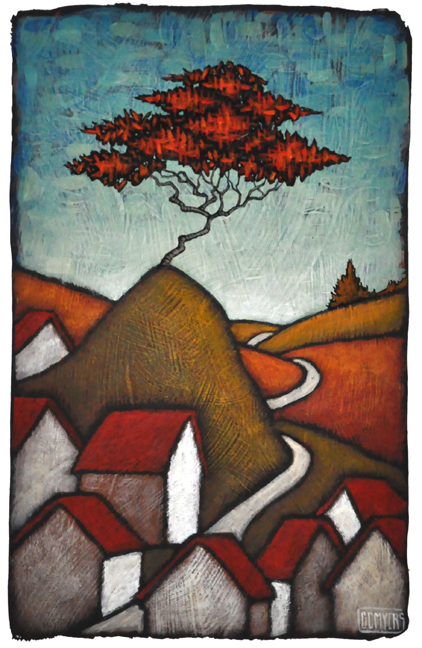
GC Myers -High Sign  Every natural fact is a symbol of some spiritual fact.

— Ralph Waldo Emerson

*********************

I think I understand what Emerson is getting at with these words.  I know that when I look around I often see juxtapositions of natural elements– trees and stone and water and sky– which move me in ways that I can never fully explain.  Some fill me with inspiration.  Some with a sense of wonder  and great calmness.  Peaceful unity with the world.  And, with some, a sense of foreboding, a dread of the inevitable valleys that accompany all peaks.  Even those scenes which make me feel as being “in the moment” resonate because they have some underlying  connection to a deeper strand of thought or being.

I think it’s this sense of this symbology that fills in some of the gaps in my work, that gives it a little more depth than the surface offers.  I know that it is this greater sense of being that I am trying to capture in my work, hoping that perhaps others who feel this same type of  innate symbolism in the natural world  somehow sense it and connect with it.

I think this newer piece, High Sign (6″ by 10″ on paper), is a good example of this.  It is a simple scene but, for me, is filled with symbolism.  Some is obvious and some subtle.   The tree and it’s position on the mound against the graded sky is obvious as is the road that winds through.  Less obvious are the upward pointing arrows of the houses’ peaks and the light and shadows of their walls.

The odd thing is that it’s not something I think about when I am painting the piece.  It’s all about achieving a sense of rightness in each move in the painting.  Each move is  step forward and if I can maintain  that feeling of rightness throughout the process, generally the painting will have this added depth, this layer of symbolism.  It comes of its own accord, naturally.   And I guess that the way it should be.

Read Full Post »

Alvin-Lee-III heard last night that guitarist Alvin Lee had died, at the age of 68, on Wednesday in Spain  from surgical complications.  I am sure the name doesn’t mean much to a lot of you but to those of you who grew up in the time of Woodstock, his name brings up memories of one of the more memorable  performances from that show.  Lee was the leader of the British band Ten Years After and their frantic version of  I’m Goin’ Home  took off when the documentary and soundtrack of that festival came out soon after.  It was electrifying stuff , then and now, and was one of the definitive moments of that landmark show.  I know that it really stood out for me even with all of the the many other incredible performances.

Unfortunately, he always felt that the attention that the Woodstock performance brought forced them in a different musical direction, more pop and away from the electric blues that he so loved and which their earlier success was built.  It’s one of those instances where success is a double-edged sword.

Lee’s biggest hit here, besides the Woodstock performance, was the 1971 song I’d Love to Change the World, which hit the Top 40 here.  It has a great sound and  in many ways expresses the chaos and uncertainty that marked the late 60’s and early 70’s.  Lee’s playing on this cut is memorable.  Here it is, in memory of Alvin Lee.

Read Full Post »

Hans Memling

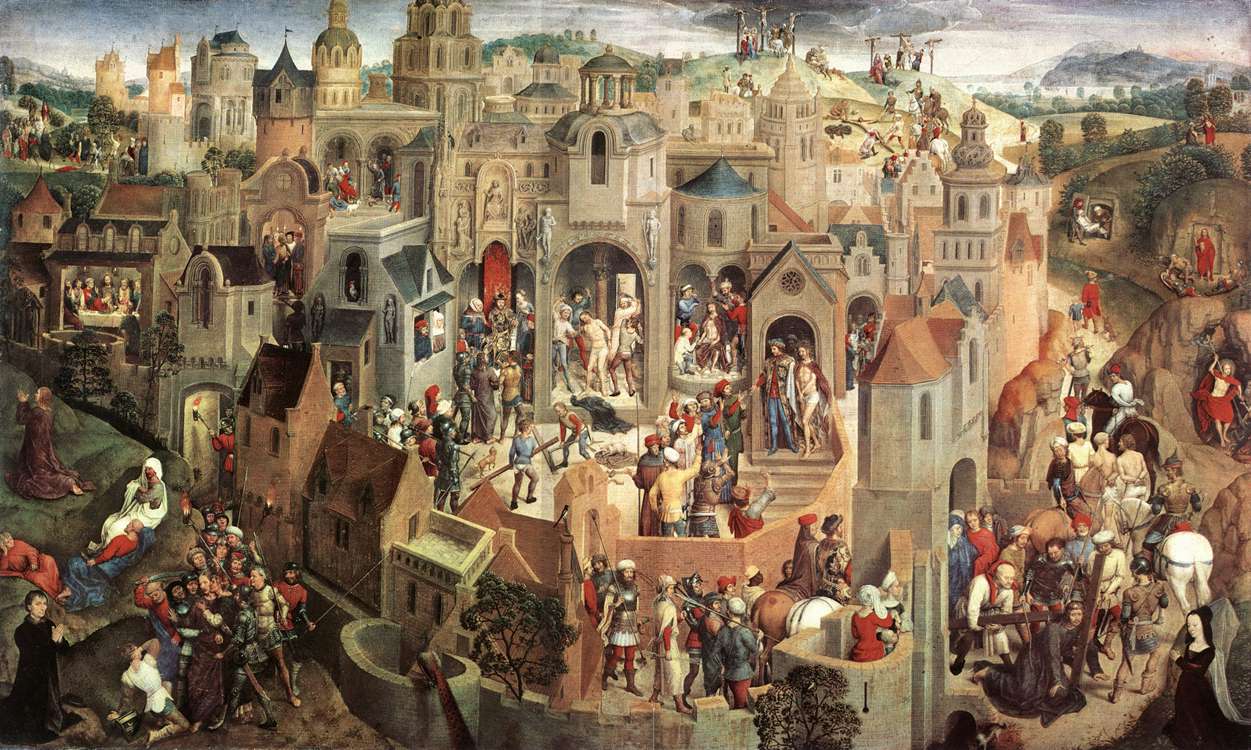
I’m not an art historian.  I try to maintain a certain knowledge about artists, especially those work I have seen and taken something from in the form of influence for my own work.  But  I am often reminded by how little I really know.  A friend recently stopped by the studio and, while looking at a couple of my large landscapes, said that their compositions reminded him of some of the panoramic pieces from Hans Memling.Hans Memling- scenes-from-the-life-of-mary-1480

I hesitated before responding, running the name through my mind, wondering if it was someone that I should really know if I wanted to call myself an artist and deciding if I should just feign knowledge of the name– “Memling? Oh, yeah…”   But I finally admitted that I wasn’t familiar with the name or the work.  Of course, after my friend left, I was online looking for Hans Memling.

And was pleasantly surprised at the beauty and power in his work.

Memling was a German-born painter who lived in the 15th century, painting in the style of the Dutch masters.  Painters, not cigars.  His work employed beautiful contrasts and deep, rich colors.   His panoramas, such as Scenes From the Life of Mary shown above, were feasts  for the eyes. Every glance offered a new and compelling vignette, each which would make a powerful painting on it’s own.  Just beautiful stuff, to use a technical term.

I know  many of you will look at his work and wonder how in the world my friend could see any equivalency between his and mine.  And that’s a fair question because they are worlds apart  in time, expression and style.  But I see  a similarity in the rhythm of the composition, the way each part plays off the other to create a harmony of movement throughout.  That’s what I take from them because I have no desire to paint like Memling or express the things he conveyed in his work.  I want to paint in my own way and express feelings that dwell within me now.  But I am moved by the rhythm and  the way they’re put together.  Looking at them made me aspire for even more in my own work.  More detail.  More areas of concentrated interest.  Greater depth into the picture plane.

Just more.

Now I know who Hans Memling is and another item is taken from the list of things I don’t know.  Hey, you do what you can…

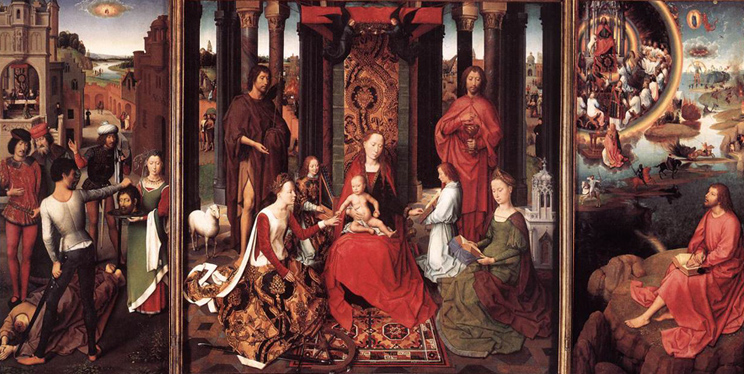
Here are some other magnificent Memlings-

Hans Memling- Scenes from the Passion of ChristHans Memling- St John Altarpiece Hans Memling- The Last Judgement

Read Full Post »

Abraham Lincoln Tintype Medallion  1860I’m always intrigued whenever I come across images of Abraham Lincoln.  There aren’t many I haven’t seen  as his image has remained in the public eye on a regular basis throughout my life.  Growing up, in our family photos there was a small image of Lincoln that was mixed in with a handful of early photos from my great-grandmother.  I didn’t yet understand the place that Lincoln held in the heart of the American people   and wondered why it was there.  I actually felt more related to his image in that I at least recognized who he was which was something I couldn’t say for some of the folks in those old photos of people standing in front of what appears to be 1920’s automobiles in some totally unfamiliar rural farm setting .  Maybe that’s why I am drawn to his image even now.

So when I come across an image that doesn’t seem familiar, I take notice.  It’s part of trying to capture another part of the prism of the man, to fill him out as a human rather than as the icon he has become.  The token shown above, obviously a souvenir from the 1860 campaign, is new to me.  Lincoln is still youngish in appearance, not yet showing effects that the ravages of the weight of a nation at war would  appear  in later photos.

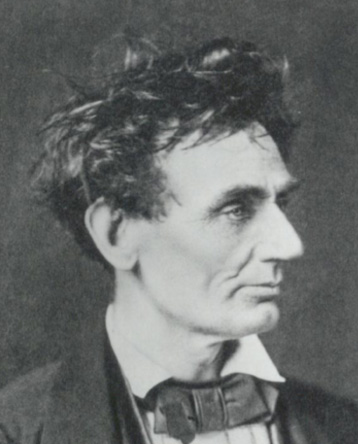
Abraham Lincoln- Early with Wild hairThis photo on the right brings up questions.  Why was his hair so wild?  Would he not have been aware of that when he agreed to sit for the photo?  It’s not like there was a paparazzi at that point snapping candid shots at every turn or a White House photographer documenting every moment.  You had to more or less pose for most photos.  But I like it.  Again, it fills out the man.  And it makes me feel a little better about my own crazy professor hair as I sit here.

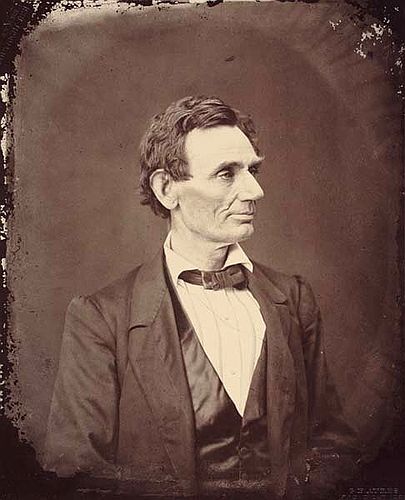
There are a few more images below and some of them are a bit more familiar.  The first one seems to be a shot from the same sitting as the wild-haired one above.  Maybe the photographer noticed and offered up a comb.  I don’t know.  The second is from the War years and he has began to age.  But it’s a noble and strong image with that steely look of determination staring directly into the camera. The last is an earlier image when he is obviously not as consumed by the tasks before him.   But all are interesting in their own way and give us more insight into this most compelling character.

Abraham Lincoln George Ayres 1861

Abraham Lincoln- Alexander Gardner 1860s

Abraham  Lincoln-attributed to Nicholas H Shepherd

Read Full Post »

GC Myers-  ExplorerAnother thing from the Out of Bounds interview that I wanted to expand on was my answer to Tish Pearlman‘s question as to what advice I  might give to aspiring artists.  I said that I thought that they should paint the paintings that they wanted to see.  I think there needs to be a little more depth to that answer.

Earlier in the interview I had said that I was influenced by a wide variety of imagery from other great painters and illustrators to advertising and film and television.  Any visual input had some influence.  I spoke of   deeply saturated colors that I had seen maybe 25 years ago in a Coke ad on TV, colors that still dwell in my mind.  There are hundreds of little nudges that push at the buttons for the perfect, idealized  image that you maintain in your mind but is never quite fully captured.  I know that’s how it was for me.

I would go into museums and look at great works of art and absolutely love so many of them yet still felt that none was exactly an expression of what I was feeling or who I was.  There was always a lingering feeling that there was work that was closer to the hazy criteria my mind presented, work that I still wasn’t seeing.  It was this feeling that led me to the conclusion that I would never find what I was looking for by trying to paint in the style of other painters.  If their work was what I was looking for to begin with, why even paint?  It seemed to me that too many artists are satisfied by simply doing work that resembles other work, safe in the accepted pack, rather that taking the gamble on stepping away from it.

But I wanted to step away and to do so I would have to assess what I was as well as what I wasn’t.  By that, I mean I would play to what I felt were my strengths and not waste too much energy on my weaknesses.  I knew that anything that would be close to what I wanted to see had to come from a total belief from within and that trying to do things that were not who I was, which would be a weak area in my abilities, would diminish the whole thing.  No, it needed a total commitment from myself.

I guess what I am saying it that aspiring artists need to focus on what they believe they want to see and use their strengths to try to achieve that end.  By concentrating their efforts on their strengths, a natural  style or voice will evolve.  If they accept this voice with a real belief in its validity, it will soon be as natural as signing their name.  They will soon be able to celebrate the things that make them different  than others, rather than striving to be like them.

I don’t know if any of this is making sense this morning.  I’m sure some of the above will ring true to some and ruffle the feathers of others.  That’s art  for you.  It’s more mystery than science.  I might, be right, wrong or both.  Depends on who’s looking…

Read Full Post »

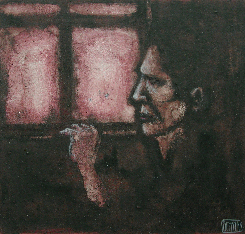
Steven Wilson- The Raven That Refused to SingMy friend Scott Allen from the Cleveland area sent me a link to a video the other day.  It was an animation of a song from Steven Wilson, a British progressive rock musician who is the lead singer for Porcupine Tree.  The song is titled The Raven That Refused to Sing and Scott said that he felt reminded by it of my Exiles/Outlaw series, both in tone and imagery.

It’s a dark and sad storyline that runs through the video as an old man deals with the grief of loss and memory.  But I could definitely see the parallels that Scott hadGC Myers- Followed observed , especially in certain scenes.  For example, the scene where the old man sits in his bed in front of the windows  ( shown above) instantly reminded me of my characters as they peer out their own windows with that same haunted look.  Perhaps their fear is much like this old man’s grievous fears.

The video was made by British animators Jess Cope and Simon Cartwright who have a real knack for incorporating this type of dark and mysterious subject matter in their works.  Their The Astronomer’s Sun is a much celebrated short in the same poignant vein. It’s definitely worth a look, as is this video.  Thanks, Scott.

Read Full Post »

I listened to the Out of Bounds interview yesterday with a squirming knot in my stomach.  Fortunately, it seemed to go okay and  most of the knot subsided immediately.  Not all of it, however, as I had a lingering, nagging feeling about  an omission on my part that I need to correct .  When Tish Pearlman, the host of the show, asked about the time when I first showed my work to  the gallery owner at the West End Gallery she didn’t use his name.  As I listened yesterday, I kept saying to myself as the interview went on, ” Say his name, for chrissake!“, hoping that I was about to utter the name.  I was positive I had used his name during the interview.

But it turns out that I had not.


Tom Gardner's Artemus  the  Buffalo Bursting from Rockwell Musuem

Tom Gardner’s Artemus the Buffalo Bursting from Rockwell Musuem

The name was Tom Gardner, who owned the West End Gallery at that time with his then wife Linda Gardner, the current owner who I did mention during the interview.  Besides owning the gallery, Tom has  been a mainstay  and engine of the art scene in the Finger Lakes  region for decades.  He is well known for his oil paintings with collectors all over the country, his teaching of aspiring painters and his public sculpture.  Visitors to downtown Corning are well familiar with his sculpture of the buffalo, Artemus,  that bursts  through an upper exterior wall of the Rockwell Museum of Western Art there.  Or the Dali-esque melting clock that adorns the front of the West End Gallery.

Tom Gardner-  Amish Drive-By

Tom Gardner- Amish Drive-By

He is a non-stop ball of creation and a great and amiable character, to boot.  You can’t walk twenty feet down the street with him  in Corning without someone stopping him to talk or someone yelling at him from across the street.  It was this amiability that made me comfortable enough back in January of 1995 to bring in my milk crate filled with scraps of paper and board for him to critique.

As I said during the interview as well as many times during  gallery talks through the years, my life would have been vastly different if not for Tom’s willingness to look at my work with an open mind.  I really don’t know where I would be right now if Tom had not seen something that day and had not encouraged me.    I don’t even know if I would have continued painting for long if he had told me there was nothing there.  I doubt very much that I would be in my own studio, writing this blog.   I’m sure I would not be as contented in my life as I now am and,  for that alone, I am forever indebted to Tom Gardner.  Even if I do absentmindedly overlook mentioning his name on a radio interview.

Thank you, Tom, for opening a door of opportunity for me when I wasn’t even aware that there was one in front of me.

Read Full Post »

Lawren Harris Bylot IslandThere seems to a big void in my collected knowledge, which is not too large to begin with, when it comes to artists form our neighbor to the north, Canada.  I’ve written about David Blackwood, the master printmaker whose work documents the world of the Canadian maritimes, on this blog a couple of times but beyond that, I come up short when thinking about Canadian painters.  Based on what I know about other Canadian artists in other fields such as music, acting and writing, I figured there had to be a wealth of great painters waiting to reveal their work to me. I wasn’t disappointed.

Lawren Harris Mt Lefroy - 1930This all came about because  I had a comment the other day comparing my brushwork to a Canadian painter who I was not familiar with in the least, Tom Thomson.  I am saving his story for another day because it is a big story with twists and mystery.  But Thomson is considered one of the pillars of Canadian painting along with the artist whose work I am showing today, Lawren Harris.

While doing a search for Thomson, I stumbled across a mention of Harris and followed the link.  The images of his work jumped out at me.  Strong, simple images of the Canadian landscape with beautiful color and form with a sense of abstraction that I found irresistible. The Google Image page  with Harris’ paintings just glows.  How had I not heard of this guy or Thomson  or any other Canadian painters?

LawrenHarris-North-Shore-Lake-Superior-1926Lawren Harris was born into a relatively wealthy life in 1885 in Brantford, Ontario, his family part of the Massey-Harris company that made farm and construction equipment.  After attending college in Toronto, he headed to Berlin in the early years of the 20th century where he painted and started his involvement with Eastern philosophy and Theosophy, which he maintained throughout the remainder of his life.   He was one of the founders of the Group of Seven which is a  group of Canadian painters of formidable talent from around 1920 until the mid 1930’s , a group which deserves much more attention than I can give at the moment.  In the 40’s, Harris  headed out to Vancouver where his work became more and more abstract. He died in 1970.  Buried on the grounds of the McMichael Art Gallery in Ontario, his work has sold for impressive sums in the years since.  In 2010, the painting at the top of this post, Bylot Island, sold for 2.8 million dollars.

LawrenHarris-Mount-Thule-Bylot-Island-1930I really identify with a lot of the things I have read in my brief research into Harris, how he felt that art was “a realm of life between our mundane world and the world of the spirit.”   I like the continuing simplification of his work and his expression of spiritual emotion through his explorations of color and form as he saw them in the starkness of the Canadian landscape.  It’s hard to believe he has escaped my notice, and probably most of America’s as well, for so long.  Just beautiful work…Lawren-Harris-Isolation-Peak-1930lawren_harris_greenland_mountains_c1930-450x379

Read Full Post »

Mark Reep Issue -Blue Canvas CoverThere’s a great article in this month’s issue of Blue Canvas, a quarterly magazine that is distributed worldwide and features articles and interviews with some of the finest artists around the globe. The article that I mention concerns the work of Mark Reep, an artist who has shown at the West End Gallery since 1995 and lives in Lawrenceville, PA. It’s a wonderful article that focuses on Mark’s process and the motivation behind the mysterious places that populate his unique artistic world. It shows several pieces of his beautiful black and white work , including two full page images. Just a great opportunity for the rest of the world to see the work that the folks around here have been lucky enough to have right under our noses for these last 17 years.

Mark Reep - Stone of Turning

Mark Reep – Stone of Turning

I have always felt a kinship with both Mark and his work. We started showing at the West End Gallery around the same time and our work was different than much of the other work in the gallery at the time, both of us focusing on landscapes that originated internally, based on creating a world based on feeling and emotion rather than one that represented the world around us.

Mark’s pieces were moody and mysterious small pieces, meticulously crafted with a laborious stippling that created magnificent depth and detail. They rewarded the viewer who stopped and deeply pondered the work with a stillness and quiet that was almost spiritual in its nature, all the time filling you with questions. Where does that path lead? Who lives in that stone house perched atop that high cliff? How do I get there?

Over the years, there has been an incredible consistency in his vision, even as his process has evolved and the world that he portrays has expanded. I never get the sense that his created world is not real because of this great commitment. As a result, his world is always distinctly his own, something I really appreciate and struggle for as an artist.

Mark Reep-  All the Silent Years

Mark Reep- All the Silent Years

I have to admit to being awestruck by Mark’s work over the years, perhaps more than any artist I have ever shown with. And that includes some truly great artists. Maybe it’s because I know of his commitment to this work, his unwavering belief in it. Maybe it’s because I see its timeless appeal, something that makes me believe it will only become stronger as the generations pass.

Maybe I don’t know exactly why. But I am thrilled that Mark’s work is being seen on a worldwide stage. It is well deserved. I have often felt that we took his work too much for granted on a local level, that we didn’t see the diamond in our presence. And his work is a diamond.

Read Full Post »

GC Myers- Passing Clouds

Optimism is the faith that leads to achievement. Nothing can be done without hope and confidence.
-Helen Keller

***************

Who can speak more about optimism than Helen Keller?

I still struggle to get my mind around how she persevered to overcome blindness and deafness.  Such a remarkable thing.  It makes me question my own strength of character, makes me wonder how I would respond if similar circumstances.  I wonder how well known her life’s story is to the younger generation, outside of the tale of her early years with the woman, Anne Sullivan,  who taught her how to join the world as portrayed in the play and movie, The Miracle Worker?  That drama, while marvelous, doesn’t tell of the great influence that Helen Keller had through her life as an activist and inspirational speaker.  She is a pretty amazing case, to say the least.

That brings me to this  little piece, a new 12″ by 12″ canvas that I call Passing Clouds.  There’s a lot of joy, a lot of bright-eyed optimism in this painting, both in the process of painting it and in the final product.  It’s one of those pieces that I truly enjoyed every moment that I worked on it and never felt a twinge of doubt about the strength or validity of it.  It felt in rhythm with the first brushstroke and every subsequent move was made with complete confidence.  That’s a rare thing.  Usually there is a struggle at some point.  But occasionally things come together and a painting like this flows out with complete ease.

No, there are no clouds over this one.

I wanted to include a version of Irving Berlin‘s classic song  Blue Skies, one of my favorites.  But as I searched  I came across this different song  with the same title from Tom Waits.  I had forgotten this song that I hadn’t heard in many years but it immediately came back to me.  Just a lovely small song, perfect for a lovely small painting.

Read Full Post »

« Newer Posts - Older Posts »