Feeds:
Posts
Comments

Archive for the ‘Neat Stuff’ Category

GC Myers-The Ferryman smOne of the new paintings that is part of my solo show, Traveler,  at the Principle Gallery is a small piece titled The Ferryman.  It’s a depiction of a man poling a small boat across a body of water, simply constructed with the impact coming from its starkness and the intensity of its color.  It’s a theme that I have revisited several times over the years.  Perhaps it is the symbolic nature of the crossing or the essential nature of a single individual propelling themselves forward.

Probably both apply to my reasoning  for returning to this theme.

Whatever the case, it is a theme that has resonated with others over these years and recently struck a chord with author Thomas William Simpson, who was looking for appropriate artwork for his new book, The Ferryman: 8 Crossings to a Gentler Life.  He came across images of my prior ferrymen pieces and got in touch with me.  The result was this painting which graces the cover of his book which is a parable of sorts.

Here is the book description from Amazon:

Thomas William Simpson-The Ferryman Cover  / GC Myers art This short tale about a man’s desire to live a different kind of life unfolds during a single day. At the crack of dawn the ferryman opens his eyes to find an impatient businessman nudging him with his foot. The businessman demands they cross the river. Now. Right away. Not a minute to spare. The ferryman rises and offers tea and scones. The businessman says he has no time for tea and scones. He needs to reach the other side. Progress and profits depend on it. The ferryman understands. Before becoming a simple ferryman he had been a striver bristling with ambition, always angling to close the next deal. He had manipulated and deceived to accomplish his aims. He had believed material wealth the only true measure of success. But he cannot just yet haul the businessman across the river. He must wait for the old woman. The old woman is sick and needs to see the doctor on the other side. The Ferryman is an amusing and tender tale that attempts to shine a wide light on what might actually matter in life. Yes, we have our necessities: food and shelter, security and transportation. But what beyond these basics truly has relevance? The ferryman, who has been a humble ferryman for several years by the time we meet him, has identified eight (8) crossings that have changed his life, he thinks, for the better. By better the ferryman means richer, deeper, less stressful, more joyful. The crossings have civilized the ferryman. Benevolence in all things, the ferryman has come to believe, is the surest way to peace of mind. And really what greater gift can we bestow upon ourselves than a quiet and contented mind? Come ride the ferry with the ferryman. It’s a pleasant, scenic journey filled with small gifts, interesting characters, and boundless miracles. The Ferryman is a tale of self discovery you will read over and over as your own journey passes back and forth across the river of life. Thomas William Simpson is the author of such diverse novels as The Immortal, Full Moon Over America, The Fingerprints of Armless Mike, and This Way Madness Lies. His curiosity for the human condition, as evidenced in The Ferryman, knows no bounds.

Simpson is a very talented and well known author with an impressive resume with books, such as The Caretaker, The Hancock Boys, This Way Madness Lies  and The Editor, that have sold hundreds of thousands of copies and have garnered widespread critical acclaim.  It has been a pleasure working with Mr. Simpson and an honor to have my artwork on the cover of his book.  Please check out his website, Simpson Books,  which is very informative on his writings and his career journey.

If you would like to purchase The Ferryman, click here or on the book cover above to be taken to its Amazon page.

If you would like to see the original painting for this cover, it is currently at the Principle Gallery in Alexandria, VA as part of Traveler, my solo show opening this coming Friday.  It is a modest sized painting, only 5″ by 9″ on paper.  Stop in and see it.
Read Full Post »

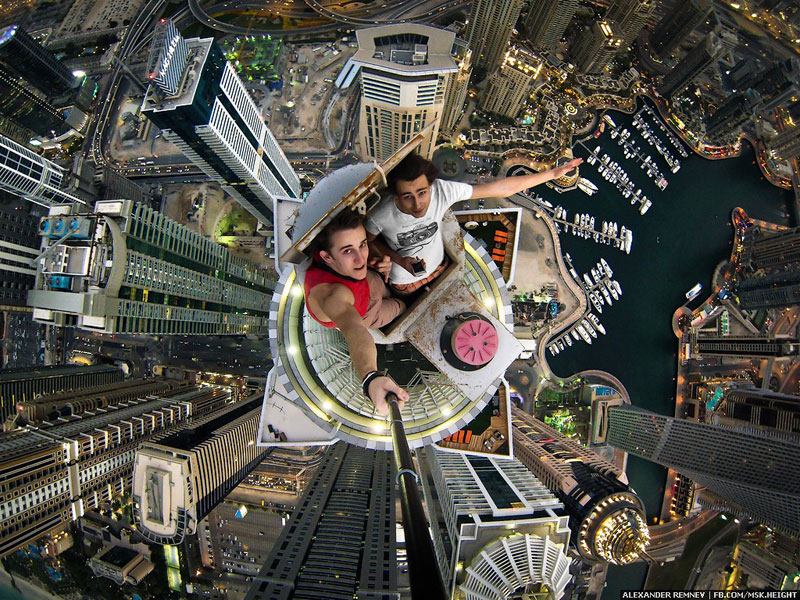
selfie-atop-the-princess-tower-by-alexander-remnevI am getting ready to start a very busy Friday as I am in final preparations for my solo show at the Principle Gallery. The last few details on a couple of paintings and assorted other tasks are on the agenda but I wanted to share this photo that was on TwistedSifter. It’s from a young photographer, Alexander Remnev, who was vacationing in Dubai. Remnev is a fan of rooftops and was touring the lofty rooftops of the soaring skyline of Dubai. He and friend went to the very top of the Princess Tower, which at 101-storeys and 1358 feet tall is the tallest residential tower in the world, and took this incredible selfie.

It’s a pretty amazing image, filled with striking details.  I think Mr. Remnev deserves the title as King of the Selfies until someone can knock him from his high throne.  You can see more of his high wire shots of Dubai at his LiveJournal blog.

Okay, on to the work at hand…

Read Full Post »

architectural-density-in-hong-kong-michael-wolf-8A friend sent me a link the other day to an article on TwistedSifter, a site that collects the most interesting visual images from the web on a daily basis.  While I enjoyed the article to which I was directed, about a French artist who makes creative use of the negative space in the photos he takes (I will feature his work here because it’s much more interesting than that), it was another image on the same page that really caught my eye.  It was a photo of several apartments towers in Hong Kong, the terraces filling the frame, shown here on the right.  It is a fascinating shot, with so much visual data that was both overwhelming and captivating with its abstraction and relentless chaos.

The photo is from the award-winning photographer Michael Wolf, who is German born but now resides in Hong Kong.  He has made a career out of capturing the imagery of the urban landscape.    This image is from his series and book, Architecture of Density, in which he takes away any glimpse of the sky or horizon, giving the viewer a claustrophobic feeling, as though there is no escape from the never-ending  sprawl.  It’s a bit scary but fascinating, nonetheless.

You can see more of Michael Wolf’s work at his site, photomichaelwolf.com.

architectural-density-in-hong-kong-michael-wolf-5 architectural-density-in-hong-kong-michael-wolf-3

Read Full Post »

Archie Comics Cover _608It’s always interesting to discover something new — a few interesting facts or the true backstory — about things that have been in plain sight for most of your life.  Take for instance the song Black and White , released in 1972 by the pop band Three Dog Night.  The song went to #1 on the pop charts here and, with its pleasant beat and gentle message of racial equality, has been a staple of oldies radio for decades now.

I never really thought much about the song even though I’ve heard it hundreds of times over the years, even singing along with the lyrics that have been embossed in my synapses with repeated listening.  It came on the radio in our car the other day and Cheri and I couldn’t agree on who had written the song.  Three Dog Night didn’t write many of their own songs, most being penned by other, more notable songwriters– Hoyt Axton, Laura Nyro, Randy Newman, Harry Nilsson, Elton John and others.  So whenever we hear one of their songs we try to identify the original songwriter.  But we drew a blank with Black and White.

Looking it up, we were both surprised that it was written in 1954 by songwriters Earl Robinson and David Arkin, a blacklisted teacher and set-designer who was the father of actor Alan Arkin.   This fact  made sense to me because I knew that Alan Arkin was a folksinger in the 1950’s, scoring a hit that went to #4 on the charts with a version of the The Banana Boat Song with his group, the Tarriers.

The song was written to celebrate the Supreme Court decision in the landmark case  Brown v Board of Education which outlawed segregation in public schools and was first recorded in 1956 by Pete Seeger.  In the original version, which Seeger sang, the beginning lyrics are different than the ones that so many of us who know the song through the Three Dog Night version remember– the ink is black/the page is white/ together we learn to read and write.  The original deals directly with the supreme court decision:

Their robes were black, Their heads were white,

The schoolhouse doors were closed so tight,

Nine judges all set down their names,

To end the years and years of shame.

The 1972 version that Three Dog Night recorded was based on one that was recorded a year before, in  1971, by a British group, Greyhound, that had a hit in the UK with it.  The Greyhound hit did not use these original lines anywhere in their version and Three Dog Night merely copied  this.  Though it doesn’t greatly diminish the song, it would be nice to have these lines in the song.  Perhaps by 1971 or 1972 they felt that the 1954 Supreme Court decision was no longer topical or relevant.

So, there you have it: a seemingly innocuous and pleasant song with some real history behind it.

Here’s a 1970 version from the Jamaican band The Maytones.  I believe that Greyhound‘s version of the following year came from this one.

Read Full Post »

5 Pointz Long Island CityI was looking for a diversion from the cold and snowy weather that refuses to release its grip on us when I came across this short video that gives a brief (it’s only three minutes!) history of art.  It’s obviously not comprehensive and done with tongue firmly in cheek so don’t be too critical if they miss an -ism or two along the way.  All I know is that I would much rather be watching this than going out to plow, which is next on the agenda.  So I am going to watch it again and put off putting on my boots for a bit.

The image I chose for this post is a commuter’s view of 5 Pointz in Long Island City, NY.  It was an old factory complex that became a haven and showcase for graffiti  artists until recently when developers took over and began transforming the space as the area undergoes gentrification.  That is the short version of what has become the 5 Pointz controversy as graffiti artists and aficionados try to preserve this space and the art therein.  I just thought the image was striking in the way the imagery changed and enlivened the whole feel of what was a dilapidated space.  Such is the power of art.

Have a great day and enjoy a short journey through the history of art.


Read Full Post »

GC Myers- The Mind Ponders“If you were born without wings, do nothing to prevent them from growing.”

– Coco Chanel

************

There is a new website, Other Cool Birds, out there in the inter-tubes that has all forms of artwork– visual, musical, performance and literary–that features a bird as its central theme.  It is a unique labor of love from multi-talented writer Lafayette Wattles, who also maintains an eponymous and entertaining website devoted to his own writings.  There is also a character always hovering around Lafayette named Dave DeGolyer who I first came in contact with a year or two back when he interviewed me for another website.  Lafayette took parts of my interview and has put it to good use as he has graciously selected me to be the first Featured Artist on the Other Cool Birds site, an honor for which I am highly appreciative.

I urge you to visit this site and the Lafayette Wattles site.  Both are entertaining and informative, plus if you are (or aren’t) an artist, writer, photographer, dancer or musician of any sort, Lafayette is always looking for another cool bird to include in his gallery.  Let your wings show!

I’ve gotten accustomed to having some music on Sunday mornings so here’s one of my favorites from the bluegrass kings, Flatt & Scruggs.  I just finished watching the film  Bonnie and Clyde after waking way too early and the strains of their Foggy Mountain Breakdown had me digging for a version of a Bob Dylan song they covered years ago, Down In the Flood.     I probably have a soft spot for Flatt & Scruggs because of their appearances on The Beverly Hillbillies but this is a great version and shows off the versatility and willingness to venture outside their own neighborhood.

Hey, have a great Sunday!

Read Full Post »

Beltracchi Working on a Fake Max Ernst (Vanity Fair)

Beltracchi Working on a Fake Max Ernst (Vanity Fair)

This past Sunday, 60 Minutes did a segment on a German artist named Wolfgang Beltracchi.  I would be surprised if you had heard of him unless you know this story.  But you probably have seen his paintings if you have been in many of the great museums of the world.  You see, Beltracchi is an art forger who has dozens of fakes still hanging in many venues around the world.

There was a brilliant twist in his scheme to bring fake paintings to the public and especially to the big money collectors.  Rather than merely copy existing paintings from the masters, Beltracchi would more or less channel the artists, making paintings that he felt that they themselves might have painted if they had had the time to move in a given direction.  They are labeled as  lost masterworks. He would do great amounts of research into the artist’s body of work and biography as well as studying the materials and tools of the time periods so that everything gave it a genuine appearance.  His research was so meticulous that his paints often matched the chemical profile of the originals, making the fake almost impossible to detect with even the most sophisticated of scientific tools.

Helene Beltracchi posing as her grandmother in front of fakes

Helene Beltracchi posing as her grandmother in front of fakes

This genuine appearance made validating the work as original much easier.  But Beltracchi and his wife, Helene, completed the deal with a detailed backstory that made complete sense and was seldom challenged.  They claimed that the paintings were owned by Helene’s grandparents there in Germany and were hidden from the Nazis before World War II .  To make the illusion complete, they would make up Helene as her grandmother and take photos on old period photo paper in front of the paintings.

It was deviously clever deception that stumped the art world for many years.  Museums and high profile collectors (Steve Martin was duped by one of Beltracchi’s fakes to the tune of around $850,000) ate up his works, some being included in books of the best paintings of the last century as well on the cover of a high profile Christie’s Auctions catalog.

The deception was perfect.

Except for one tiny mistake.

On one of his paintings Beltracchi used a tube of white paint that did  not disclose that it included a bit of titanium.  Titanium white was not available as a pigment until 1921 and his use of it made the work instantly detectable.  The house of cards crumbled and both he and his wife were arrested.  They lost everything– the cars, the yachts, the plush homes and the huge stacks of  cash that their con had provided.  They are both serving terms in an German open prison, meaning that they go out each day to work and return at night.

Most of the works , which Beltracchi claims to be well over 1000 and maybe as many as 2000 by over 50 different artists, still hang in many museums around the globe.  It will probably take some time and effort to detect these fakes, if they do it all.  Nobody wants to admit they’ve been conned.

Bellini's "Saint Jerome Reading" at the National Gallery, DC

Bellini’s “Saint Jerome Reading” at the National Gallery, DC

It’s an interesting story.  I was immediately intrigued by Beltracchi’s claim that he could paint in the style of anyone except for perhaps Bellini.  I love Bellini’s work and was glad when this master forger thought it was beyond counterfeiting.  But I wondered how an artist who had this kind of ability, this technical prowess, could have no voice of his own.  The money and the thrill of the ruse were surely big factors in discarding his personal aspirations. For me, painting and art is all about personal expression and emotion.  To see someone with so much obvious talent to be without any personal expression that he would call his own is somewhat sad.

Perhaps he views this whole thing as some sort of performance piece in itself, in which case he may be the greatest artist of our time.  But I doubt it.

Read Full Post »

Stanley Wolfson  (NY World Telegram & Sun ) Bullet Holes in back of stage where Malcolm X was shot

Stanley Wolfson (NY World Telegram & Sun ) Bullet Holes in  back of stage where Malcolm X was shot

I wrote  here several months back about coincidence, those strange moments of synchronicity.  You know, those times when someone who you haven’t spoken with in quite some time suddenly calls you just as you about to pick up the phone to call them.  Or an old song comes into your head and you flip on the radio and there it is.  There seems to never be a reason and the coincidences are seldom  remarkable enough to wonder about for more than a moment.

I had one of those this morning when I was looking for a photo on one of my favorite sites, Luminous Lint.  While scanning through a page of  many small, unrelated images, the photo above caught my eye.    Looking quickly at the small image on my screen it reminded me for a moment of one of my Red Chair paintings.  It was an overturned chair set against a landscape.  There was an immediate sense of loss, of someone having died in my quick reading of the shapes in the photo.   It wasn’t until I looked at the larger image that I could see that the landscape was theatrical backdrop and the chair was on a stage.

The caption said that the circles on the backdrop were bullets holes and this was where Malcolm X was shot at Harlem’s Audobon Ballroom.  I immediately wondered, for some unknown reason, when exactly that was.  I knew it was around 1964 or 65 but wasn’t sure.  I looked it up and there the date– February 21, 1965.  Today’s date, forty nine years ago.

I am sure there was nothing in this. No deeper meaning.  No connection or synchronicity with the movements of the universe.  Just coincidence.  But it makes one wonder why this photo and this date coincided this morning.  I will try to keep my own chair upright today.

Read Full Post »

North Celstial Tree-- JeronimoLosadaI’ve been having some work done here in the studio recently and have been sharing my space with a couple of carpenters.  I am never comfortable sharing my  workspace with anybody and always feel a bit distracted, even inhibited.  But both Tony and Nick are good and easy going guys and I have been able to get some work done.

Yesterday, Tony told me to check out the NASA’s Astronomy Picture of the Day.  He thought it would look familiar to me.  Clicking on the site I was greeted by the photo above, a magnificent image of a great tree under a night sky taken by Spanish astrophotographer Jeronimo Losada  near Almaden de la Plata in the province of Seville, Spain.  Through a break in the upper reaches of the tree you can see the North Celestial Pole.  Losada focused on the North  Star and over two hours recorded a series of 30 second exposures which created the star trails that make up this spectacular sky.

It was just a great photo and it certainly did strike home even though the tree was not exactly my Red Tree.  But  Tony was right.  The tree , the saddle in the center of the photo created by the wide angle of the lens  and the silhouettes of trees on the horizon reminded me of much of my work.  I had even done a painting or two with that same swirl of light and color in the sky.

Please check out Jeronimo Losada’s  blog  to see some of his other wonderful shots of the landscape beneath the night sky.  There are some brilliant shots there and it’s well worth a visit.  It is a Spanish language site but most browsers have translators.

And for some other great shots of the heavens check out the Astronomy Picture of the Day.  Today’s is a great shot as well.


Read Full Post »

The tools I create and work with are pinhole cameras. With pinhole photography, the same air that touches my subject can pass through the pinhole and touch the photo emulsion on the film. There’s no barrier between the two. There are no lenses changing and manipulating light. There are no chips converting light to binary code. With pinhole what you get is an unmanipulated true representation of a segment of light and time, a pure reflection of what is at that moment. With some exposure times getting close to 2 hours, it’s an unsegmented movie from a movie camera with only one frame.

–Wayne Martin Belger

*****************

Wayne Martin Belger-Yama Pinhole Camera

Wayne Martin Belger-Yama Pinhole Camera

I recently came across the very intriguing work of Wayne Martin Belger, a contemporary artist/photographer working out of the Los Angeles area.  He makes pinhole cameras from found and unusual materials and uses the cameras to photograph scenes related to the theme of the camera.  Pinhole cameras are very simple in their nature but Belger’s creations are nothing like the shoebox or milkcarton cameras from one’s childhood.  They are elegant and strange, often elaborate in their construction.  The images he pulls from these cameras are often just as elegant and strange.  For example , Belger has a camera called Roadside Altar which , of course, he uses to photograph  the altars that are erected at the sight of fatal road accidents.   His website,  Boy of Blue Industries, tells this story  as well as give complete backgrounds on all of his cameras and Belger himself.  Fascinating stuff which I encourage you to investigate further.

Wayne Martin Belger-Wood Camera

Wayne Martin Belger-Wood Camera

One of my favorites, among many here, is the Wood Camera, which Belger describes as being designed to study distance.  He writes on his site:  The Wood Camera is made from Wood, Aluminum, Copper, Steel, Acrylic, and Insects. Most of the camera parts were found in Death Valley, CA. The camera has an interchangeable front plate used to float objects in front of the pinhole. With pinhole photography the focus is infinite. Objects which are a quarter-inch in front of the pinhole are just as in focus as objects 20 miles away.

He floats small objects in front of the pinhole to create great juxtapositions as both the object and the scene in the far distance remain in focus.  It made me realize that I often paint as though I were a pinhole camera.

Wayne Martin Belger-Wood Camera Photo

Wayne Martin Belger-Wood Camera Photo

Wayne Martin Belger-Wood Camera Photo 2

Wayne Martin Belger-Wood Camera Photo 2

Here is the Deer Camera which is used to take photos of deer, of course.  Again, for more info on this work, check out his site.

Wayne Martin Belger-Deer Pinhole Camera Front View Wayne Martin Belger-Antilocapraamericana (Mother & Babies)

Read Full Post »

« Newer Posts - Older Posts »