I wanted to play a Christmas song for this week’s Sunday music and thought I’d replay a song that first ran here back in 2009. It’s Must Be Santa from Bob Dylan. It’s a great song, a polka with a klezmer feel and in the the entertaining video you get the bonus of seeing Dylan dance. Good fun for the day before Christmas.
While looking for an photo or two to accompany this post, I browsed through masses of images of Santas from the past and was amazed how many of them crossed that line into outright creepiness. It made me believe that Santa is just about on par with clowns in creep factor. You might see a rogue clown in the woods but Santa is, simply put, a bearded home intruder ( and flamboyant dresser) who slides down your chimney in the dark of night. He knows when you are sleeping, for god’s sake!
I picked a few that are pretty strange. I left out some that actually made me cringe and feel a little queasy. I have a feeling that many of their photos are also in some sort of registry somewhere.
Anyway, enjoy the song and have a good holiday evening. And don’t worry about the weird old man hovering around your home tonight…
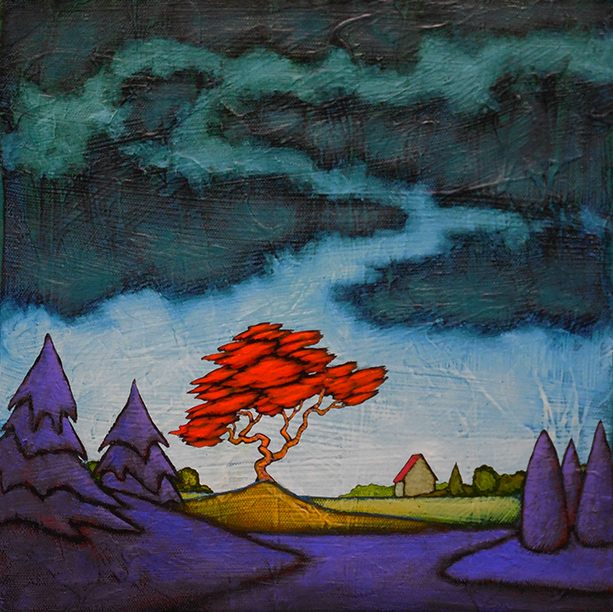
“Split the Darkness” -Part of the Kada Gallery Show
Well, the show is in place at the Kada Gallery and I can take a deep breath. Sensing the Unseenopens December 1, this coming Friday evening with a reception that runs from 6-9 PM.
I haven’t done a count but I’ve done a number of solo shows with Kathy and Joe DeAngelo at the Kada Gallery in the almost 22 years I have been showing my work with them. They were only the second gallery to take on my work those many years back and have always been strong advocates for my work so I try to go a bit extra for them. And I believe this show lives up to my wishes.
Here’s a simple slideshow of the show. Take a look and if you can, come out to the gallery this Friday. I look forward to talking with you.
There’s a lot going on in the next few days, with Thanksgiving stacked on top of a couple of other things including getting work ready for my show at the Kada Gallery that opens next Friday, December 1. Everything seems to racing at a frantic pace around here.
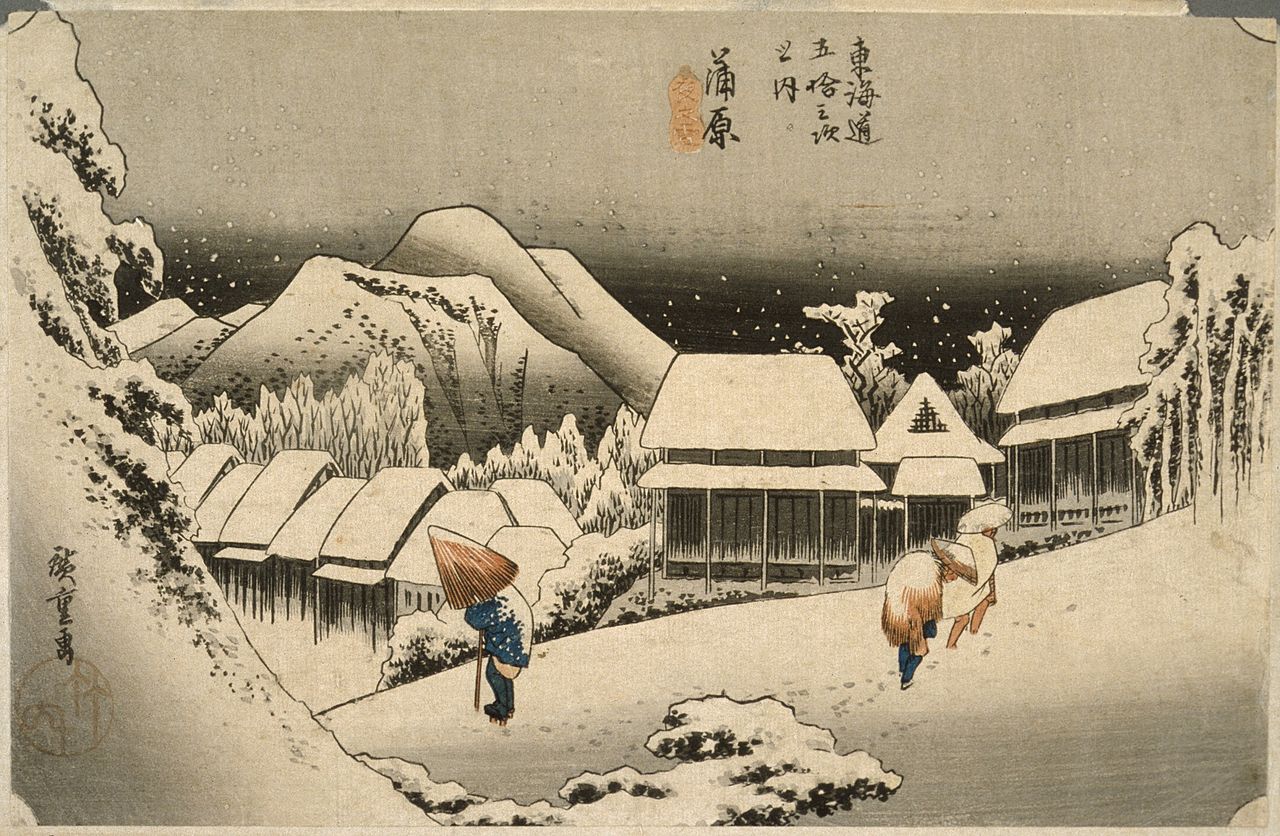
But even so, I took a little time in the darkness of this early morning to stop and savor some work from the great Japanese artist Hiroshige, who lived from 1797 until 1858. Every time I look at his work it feels new and wondrous, with a quality of absolute calm that always soothes. The color is always gorgeous and harmonious while the compositions have an orderliness, even in his treatment of something like the chaos of sea waves, that has a way of setting the viewer’s own internal mechanisms in their proper place and order.
At least that is what it does for me.
Take a few minutes to watch this video of his beautiful work and allow yourself to slow down just a bit this morning.
Dragged out and looked over this older painting this morning. It’s from 1995 and is called Sky and Submission. It was a favorite when I did it and it still rings very true for me. The composition is sparse and it’s color is very delicate in nature– I had to adjust it a bit to make it show properly on the screen– but there is something powerful in it as a whole.
It reminds me of the feeling of looking out at the ocean. Maybe for us who live and were raised inland, away from the seas, seeking the far horizon in our landscapes is the equivalent. Watching the roll of the land and how it comes up to meet the sky raises many of those same feelings, creating a sense of awe in us of the great power and vastness of the world and our own smallness in relation to it.
Funny the things a small bit of paint on a piece of paper can make one think. Worse things to think on a Sunday morning, I suppose.
This piece reminded me for some reason of a song I played last year about this time, Reign O’er Me, from The Who’s Quadrophenia, which has been performed several times in the last month as the rock opera it was intended to be, with full orchestration. Last month it was at the Metropolitan Opera House in NYC.
I spent the better part of the last hour watching videos shot by audience members from this show with tenor Alfie Boe singing the lead. Even with a handheld smartphone’s recording limitations, they really show the power of the music and the performers. I am showing Reign O’er Me and a personal favorite 5:15from that show back in October. Take a look and have yourself a good Sunday.
“Our dead are never dead to us, until we have forgotten them.”
— George Eliot
*******************
November 2 is Dia de Muertos, the Day of the Dead, in Mexico. Actually, it’s a multi-day holiday that spans from October 31 to November 2. It’s a holiday that has ancient roots dating back some 3000 years and was originally celebrated earlier in the year until the Spaniards conquered Mexico in the 16th century. They moved the date to fall in line with the Christian Allhallowtide.
Most of see the imagery that is associated with the Day of the Dead, such as the painted skulls like the one at the top, and automatically equate it with our Halloween. Spooky and scary. But it is a much more benign and pleasant holiday, a celebration of the memory and spirit of our deceased relatives, a day to travel to cemeteries to eat and drink at their graves. The ancient belief was that that on that day each year the spirits would come back to visit their worldly ancestors.
Being a person who loves to stroll through cemeteries among the stones and monuments, it’s my kind of holiday, more so than our Halloween. I find the calm and quiet of cemeteries to be comforting and not spooky at all.
The names and words written about them on their stones give each the feel of a voice waiting to be engaged and I am often more than willing to stop to speak their name, especially the older stones where it is obvious that they are no longer visited by family members, if any remain at all. I get a feeling that simply speaking their name aloud once more brings them back to life in some small way, like a faint trace of mist appearing in the vast sky of our collected memory.
That may seem crazy but that doesn’t matter. Nobody gets hurt and it creates a little peace for myself. And I think that’s what the Day of the Dead is about.
That being said, here’s a video that might seem a little more Halloween than Dia de Muertos. But it is a song about love and attraction and that makes it more about this day. It’s Shakin’ All Over. I was going to play the original by Johnny Kidd and the Pirates or the great live version from The Who but settled on this version from The Guess Who, mainly because of it’s cartoon video with dancing skeletons. Feels like a fitting song for Dia de Muertos.
I ran the post below a few years back, mainly about the quote in it from Fauve painter Maurice de Vlaminck. His attitude as expressed in those words really resonates with me. I, too, find myself not giving a second thought to anyone else’s work when I am in my own. The only concern then is filling my space, creating my own new world. His words are in my mind this morning so I thought today would be a good day to replay this short article with the addition of a video of de Vlaminck’s work and a few more images.
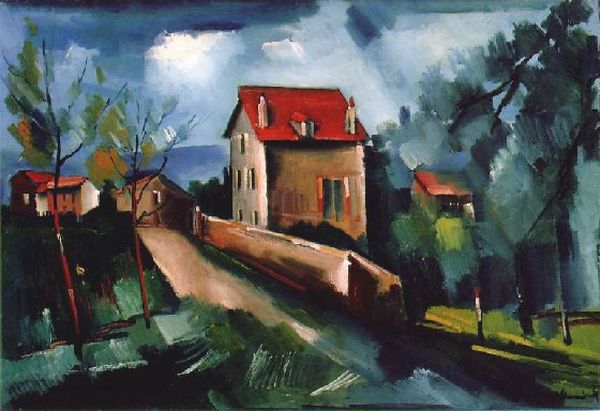
Maurice de Vlaminck- Houses at Chatou 1905
When I get my hands on painting materials I don’t give a damn about other people’s painting… every generation must start again afresh.
— Maurice de Vlaminck
********************
I have to admit I don’t know much about French painter Maurice de Vlaminck (vlah-mink) who lived from 1876 until 1958. His work is best known for a short period in the early years of the 20th century when he was considered one of the leading lights, along with Andre Derain and Henri Matisse, of the Fauve movement. Fauve translates as wild beast and the style of these painters was very much like that to the sensibilities of that time. It was brightly colored with brash brushwork and little attention paid to detail. It was all about expression and emotion.
I recognize some of his early Fauvist work, mainly for the obvious influence of Vincent Van Gogh it exhibits, and none of his later which becomes less colorful and exuberant, perhaps shaped by his experiences in WW I. But his name is one that I have often shuffled over without paying too much time to look deeper.
Maurice de Vlaminck- At the Bar
But I came across this quote and it struck me immediately. It was a feeling that I have often felt when I immerse myself in my work. All thoughts of other painters– of their influence, of comparisons and artistic relationships– fade into nothing. It is only me at that moment faced with the task of pulling something new and alive from the void. I can’t worry myself at that moment about what other painters are doing. Their what’s and how’s and why’s are all moot to me then because I am only trying to express something from within. It might only exist and live for me in that instant, though I hope it transcends the moment, but that is the whole purpose and all of the works of all the painters throughout time can’t change this singular expression of this moment.
This single, simple quote brought me into kinship with de Vlaminck and made me promise myself to explore more deeply into his work and life so that when I come across his name in the future I don’t simply skim past without a thought. But when I am painting, rest assured I will not be thinking of Maurice de Vlaminck. And that is as it should be…
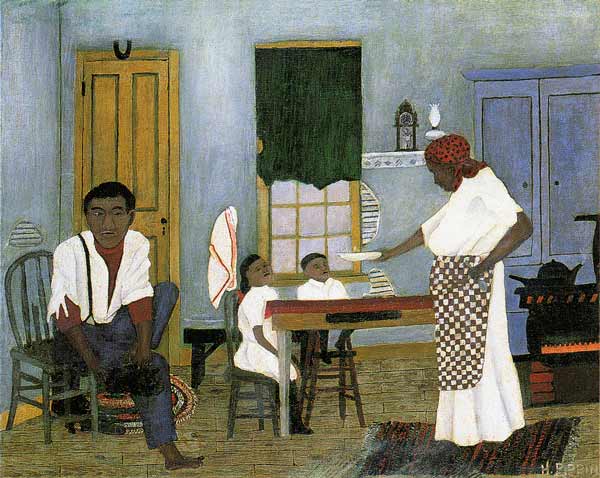
Not surprisingly, I have a real affinity for self-taught and naive painters. Among my favorites is American Horace Pippin who lived from 1888 until 1946. He only produced about 140 paintings in his relatively short life but they are real gems, displaying a wonderfully sophisticated and more mature form of naivete. He achieved a pretty high level of recognition in his short career, being championed by a number of critics as well as artist N.C. Wyeth. The bulk of his work is now held in museums.
Though born in West Chester, PA, Pippin grew up in Goshen, NY, which interests me because I have three grand-nephews living there. Goshen was where he began his artistic journey after winning art supplies in a newspaper contest, using them to make drawings of the jockeys and horses at the famed Goshen racetrack. He was wounded in World War I, serving in the famed Harlem Hell Fighters, and turned to art in a more serious manner to strengthen his damaged right arm.
He married and moved back to West Chester and his work began to draw notice, appearing in numerous exhibits in museums and galleries alongside some of the giants of the art world. In 1946, he suffered a stroke and passed away.
As I said, he produced a fairly small number of paintings, many depicting the African American experience of the time along with a number of biblical and historical paintings, John Brown and Abe Lincoln being favorite subjects. They are a rich American treasure.
Here’s a nice video of much of his work with Ella Fitzgerald’s great Cry Me a Riverbacking it.
Have a lot on my plate this morning, a lot of things needing to be done. But I came across this video by one of my favorite singer/songwriters, the late Townes Van Zandt, and thought I would share it. It’s called Big Country Blues and the video features the photos of primarily working class Americans from the great Richard Avedon.
It’s a compelling video, given this time in this country. I watched it twice this morning just to fully take in the imagery and Townes’ music never lets me down. I wish he were around just to hear his take on these times. He could write some sad songs, after all.
Busy morning here in the studio but I wanted to replay a post from over eight years ago about a painter whose work always dazzles me, Joseph Stella. I’ve added a few images from the original post as well as a video that shows the wider range of his work over his lifespan. Just plain great work…
When I see the paintings of Joseph Stella, particularly his modernist work, I am immediately engaged. They seem dense and complex, almost manic in their compositional content, yet the color and symmetry have an effect that I find calming. I often wonder how Stella viewed this work, what he felt from it. Not in an artspeak sense. Not academic jargon. Just how it made him feel.
Stella (1877-1946) was an Italian immigrant to this country who has often been linked with several movements- modernism, futurism, and precisionism among them. There is a contradiction in this in that everything I find about him points to someone with an outsider’s mentality, someone who never felt himself a part of any group and with an “antipathy for authority” as it has been described, with which I strongly identify.
Maybe that’s what I see in the work. I don’t know. I do know that I am drawn to the boldness and beauty of it. The strength of the lines. The depth of the colors. The sheer visceral bite of the image that when taken in as a whole seems to engulf you. Gorgeous stuff. Work that makes me feel smaller, even tiny, for a moment yet inspires me to want to move my own work further ahead. To grow and expand.
Maybe that’s how I classify other’s work in my head- by how much they make me want to do better, by the way their work’s impact becomes an endpoint for me, a goal that I hope to achieve.
The work of Joseph Stella is definitely such an endpoint. Now I must work…
_
There are sensory perceptions that we carry throughout our lives. It might be a sound, a smell, an image that once brought to mind brings forth the atmosphere and feeling of the time in which they first entered our consciousness.
The smell of a cooking turkey instantly returns me to my childhood and the farmhouse where we lived. It would be Thanksgiving and I can see Mom’s old formal dining table with the heavy chairs that surrounded it. It’s a long table with all the extending leafs in place and it’s surface is covered with the bounty of Thanksgiving, the mashed potatoes, canned cranberry sauce, stuffing and so on. Just the tiniest whiff of a roasting turkey always — and I mean always–sends me hurtling through time back to that table.
The same is true with certain songs. Take for instance, the song In My Life from the Beatles. Hearing those opening chords always sends me back to same big old farmhouse that played such a big part in my formative years. I can see the old floral wallpaper in the living room and there’s a big console record player with cloth covered speakers on its front and two sliding panels on top that uncover a turntable on one side and the controls for a radio on the other. Those opening chords have me immediately standing in front of that record player with the light from the large windows in that room filtering through Mom’s frilled white cotton curtains. On the wall there was a reproduction of a schlocky painting — I think it was a red covered bridge–printed on thick cardboard that was bought at the Loblaws grocery store.
It’s a good memory. I felt safe in that place, free to imagine places and adventures I hoped for in the future. It was a good place to foster some of the thoughts and observations that direct my paintings to this very day.
That’s my intro for this week’s Sunday morning music. I thought instead of playing the original Beatles version of In My Life which is understandably a favorite of mine, I would opt instead for one from Bette Midler with a beautiful accompaniment on ukelele from uke wizard Jake Shimabukuro. The feeling of his playing on this song works for me as much as the original in bringing back that earlier time and place.
Give a listen, think about some of those sensations that trigger your own memories and have a good Sunday.
 I wanted to play a Christmas song for this week’s Sunday music and thought I’d replay a song that first ran here back in 2009. It’s Must Be Santa from Bob Dylan. It’s a great song, a polka with a klezmer feel and in the the entertaining video you get the bonus of seeing Dylan dance. Good fun for the day before Christmas.
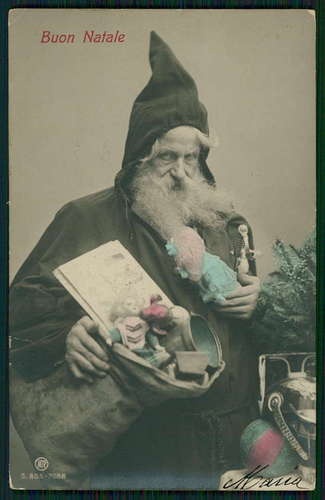 While looking for an photo or two to accompany this post, I browsed through masses of images of Santas from the past and was amazed how many of them crossed that line into outright creepiness. It made me believe that Santa is just about on par with clowns in creep factor. You might see a rogue clown in the woods but Santa is, simply put, a bearded home intruder ( and flamboyant dresser) who slides down your chimney in the dark of night. He knows when you are sleeping, for god’s sake!








 Redtree Times