Avoid methodology. If what you’re doing is about technique, that’s not art.
–Kay WalkingStick
**********************
Very much agree with this quote from contemporary landscape painter Kay WalkingStick. Soon to be 84 years old, Kay WalkingStick is a member of the Cherokee Nation who was raised in Syracuse and was an art professor at nearby Cornell University for a number of years. She incorporates Native American symbols and patterns in her work, which are often executed in diptych forms.
Even though there has been a physical proximity. I don’t know a lot about her work. I would love to see it up close to examine the surfaces, to see how the pieces speak in person.
Her advice about not tying yourself solely to process is a most valuable lesson for all artists. I think you need to live in the fringes of technique, always ready to stray into territory of material use that is new to you as an artist. You need to feel a bit lost so that you react intuitively, using what little you do know in new ways.
That is where the magic sometimes happens, where art takes place.
I saw an idiot* on television yesterday say, “The buck stops with everybody.”
Inspiring stuff. A new chapter in Profiles in Courage.
But, even though this pains me to say, the moron* was right.
Well, right in a way, not in the instance of which he was speaking, where he was trying to relieve himself of all responsibility for the particular situation in which he finds himself. No, the fool* is the primary bearer of the responsibility for that.
I am saying the buck stops with us all right now. We have allowed and enabled this whole ugly situation to take place. We have willingly given a looter a flamethrower and we are now witnessing how much damage can be done as he flees the scene.
And he* is very much a looter. Think about it.
A looter comes riding in on a wave of chaos and confusion, grabbing whatever he can as he runs through the mayhem. He thrives on the bedlam taking place around him because his only concern, his only focus, is on himself alone. He carelessly pushes people aside to get where and what he wants. Not a bit of care for the damage being done or the losses suffered from his actions. Not a single thought for those hurt as he tramples through.
And when it looks like the authorities are closing in, the looter* uses his flamethrower and sows even more confusion. When the whole city is ablaze, you focus on putting out the fire. The looter* focuses only on moving himself to safety.
It is now time for us all to understand that this is our responsibility to end this chaos, to extinguish the fires and take the flamethrower out of the tiny hands of the looter*. We must make our presence felt and our voices heard. Hit the phones and keyboards. Take to the streets and do it now. We can’t depend on anyone else doing it for us.
It is our responsibility.
If we want to continue to be considered a great nation, this is the price we must now pay. Because as Winston Churchill states above, responsibility is the price for greatness.
Or as a reality TV show nitwit* once said, “The buck stops with everybody.”
I have been saddled with a chest cold for several days that is severely limiting my activities and making work feel like a real chore. In need of a little pick-me-up I came across this very early post from back in 2008 that is a good reminder of what I consider my work ethic. Reminds me that I need to dig a little deeper on days like this. See what you think:
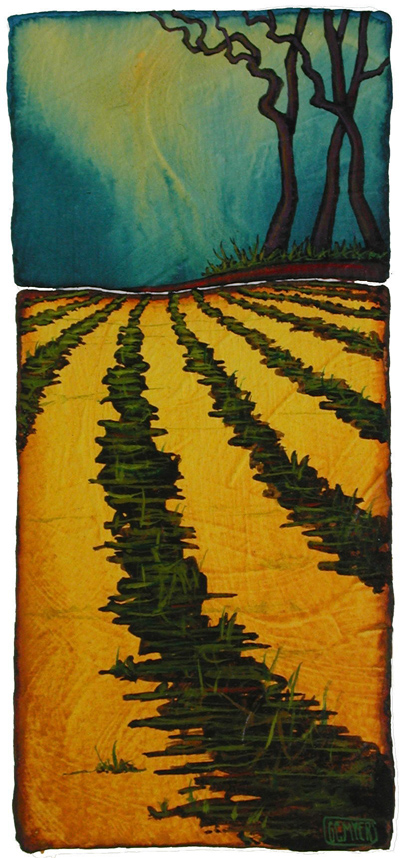
This is a piece called “Labor to Light”, a smaller piece that is at the West End Gallery in Corning. It features one of what I call my icons, the field rows running back to the horizon. To me, they represent the act of labor and the results derived from it. The ability to work hard has been very important to me in this career and something I stress to kids whenever I get to talk to them.
I remember years ago reading an interview with author John Irving (of “The World According to Garp” and “The Cider House Rules” fame) where he talked about his work routine. He talks quite a bit about wrestling in his writing as he was a high school and college grappler and he used a wrestling analogy to describe how he approached his writing.
He said that if he aspired to compete and win at the highest level as a wrestler, which would be an Olympic or world champion, he would have to train harder and longer than the men he would be competing against. If a wrestler in Bulgaria or anywhere else in the world was training 7 hours a day, he would need train at least that much and maybe more. He knew he would be basically competing against every wrestler in the world.
He then turned this mindset to writing.
His writing became a competitive effort of Olympic proportion, where he saw himself as competing with every other writer in the world for each reader that came into a bookstore. If you were buying someone else’s book, you weren’t buying his and in his mind, he had lost. So he began to train himself as a writer with the same effort as though he were an Olympic athlete, writing 7-8 hours per day, forcing himself to forge ahead even on days when it would be easy to just blow it off and do anything else.
When I read this it struck a chord. I realized that in order to reach my highest level I would have to be willing to devote myself to working harder and longer than other artists and be willing to spend more time alone, away from distraction. It would require sacrifice and hard, focused labor. But Irving’s example gave me a path to follow, a starting point.
I have since realized that there is a multitude of talented people out there, many with abilities and knowledge far beyond mine. But art is often more than sheer ability. It is the communication of an idea, a feeling, to others. And to do this successfully with your art you need to push that ability fully, in order to go beyond what your mind sees as an endpoint. I see this as my goal everyday in the studio. Sometimes I succeed and sometimes I come up short but I’m out there competing everyday.
Is there not some chosen curse, some hidden thunder in the stores of heaven, red with uncommon wrath, to blast the man who owes his greatness to his country’s ruin?
– Joseph Addison, Cato, 1713
***********************
As much as I want to, I am not going to comment on the ridiculous speech, if you want to use that word for this thing that aired on our nation’s airwaves last night. The speech and the “crisis” to which it referred were nothing more than a calculated distraction from the constant flow of emerging information that is providing more and more clarity in the investigation into the current squatter who resides in our White House.
Yesterday, a clerical error by the lawyers for Paul Manafort, the onetime campaign manager for this squatter, provided yet another puzzle piece, one that filled out the overall picture a bit more, letting us see that we may indeed be dealing with actions that are truly traitorous to this nation.
It is now well beyond anything we have dealt with at this level of our government at any point in our history. We are in uncharted territory.
Treacherous territory.
I wrote about the possibility of this type of treasonous behavior here a few weeks back in a post called Circle of Traitors. The painting at the top, which reflects the subject of that post, Dante and Virgil in the Ninth Level of Hell, is from Gustave Dore who is better known for his popular engravings.
I am not going to go on anymore this morning. I just want you to consider the actions of traitors and how they have been viewed through history. The line at the top from Joseph Addison has Cato, the noble defender of the Roman republic and its people, railing against the coming tyranny of Julius Caesar, whose actions ultimately led to the downfall of the Roman Empire.
The person who would willingly betray the interests of the people they have sworn to serve in order to fulfill their own egotistical desires does not fare well in the end.
Nor does the country or empire that allows such a creature rise to power.
Keep your eyes open, folks. The circle is coming closer.
My days, my years, my life has seen up and downs, lights and darknesses. If I wrote only and continually of the ‘light’ and never mentioned the other, then as an artist, I would be a liar.
–Charles Bukowski
*******************************
This is a painting, Sleepwalk, from back in 2002. It is part of what I call my Dark Work which was when I first began working on a black painted surface. The idea was to make the blackness part of the painting, to give the painting the darkness against which I could set the contrast of the light.
Like the poet Charles Bukowski says above, I felt that in order to be honest as an artist I had to incorporate my own darkness in my work. Utilizing the darkness kept the perceived optimism of the work from wandering into the territory of cockeyed Pollyanna-ism. It provided contrast in the form of a sense of reality, a basis for validating the optimism of the light and the color.
Light needs dark, plain and simple.
The Dark Work was very important for me and I continue to paint using the same process and techniques I developed in that time. This particular piece has lived with me for many years now and I love pulling it out to study it from time to time. There always seems to be something new to focus on. A brushstroke. A section of the texture. The transition of one color into another.
It provides lessons that memory has long forgotten as I continue my own sleepwalk through this life.
Under the weather this morning but stumbled across this song that I featured here back in 2011. It’s been 7 or 8 years so I guess that’s not too repetitive. Plus, it’s just such a great song from an artist that deserves a lot more attention. Enjoy and have a good Sunday.
**************
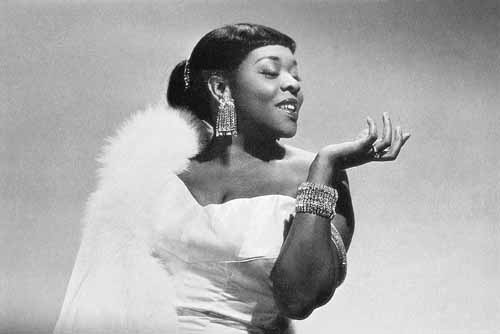
This song is That’s a Rockin’ Good Waysung by Dinah Washington and Brook Benton which made it to #7 on the Pop charts and #1 on the R&B charts in 1959. I heard this song on the radio yesterday for the first time in a long time and it made me think about Washington’s career and legacy.
Known as both the Queen of the Jukeboxes and Queen of the Blues, Washington was one of the biggest recording stars of the 1950’s, singing jazz, blues and pop songs with her earthy delivery. Her body of work is impressive yet she is seldom mentioned alongside the other jazz greats such as Ella Fitzgerald or Billie Holiday. In fact, she is little known today which is a shame not only because so many are missing out on her vast talent but because her story is such a compelling story.
There are all the elements of great drama in her biography, her rise from a poor girl in Alabama to her great success as a major recording artist being only one aspect. There were all the men in her lives including 8 or 9 marriages, depending on which source you believe, and a number of other lovers. There was her battle with drugs and alcohol as well as a struggle with her weight which led to emotional swings that found her fighting with everyone around her, including her fans at times. There was the constant struggle with her record company for the respect she deserved. She had a big, big personality and finally seemed to be coming into her own as an artist when an accidental overdose brought her life to a close in 1963.
She was only 39.
So, here’s just a small sample of her talent. Hopefully, her legacy will continue to grow…
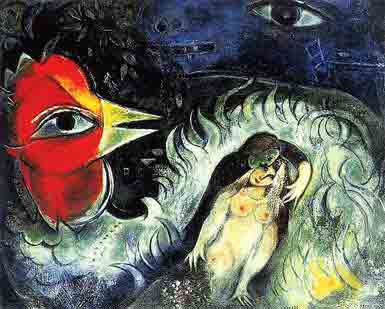
Work isn’t to make money; you work to justify life.
–Marc Chagall
*************************
Whenever I am feeling frazzled or creatively blocked, there is always comfort in turning to Marc Chagall. Both his work and his words work wonders for me. I can’t speak for other artists but making using money as an incentive to create never turns out well for me. The work must validate my existence, give me a reason for being. Otherwise, it is hollow and lifeless.
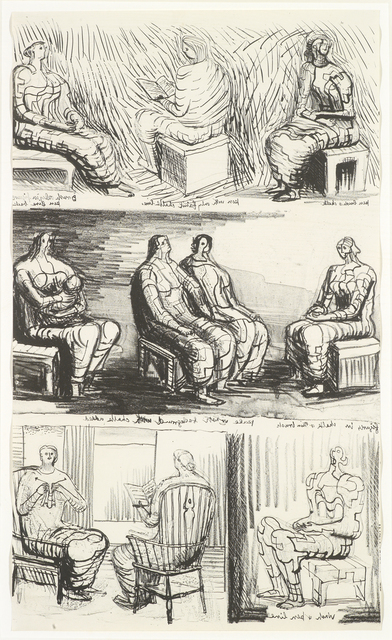
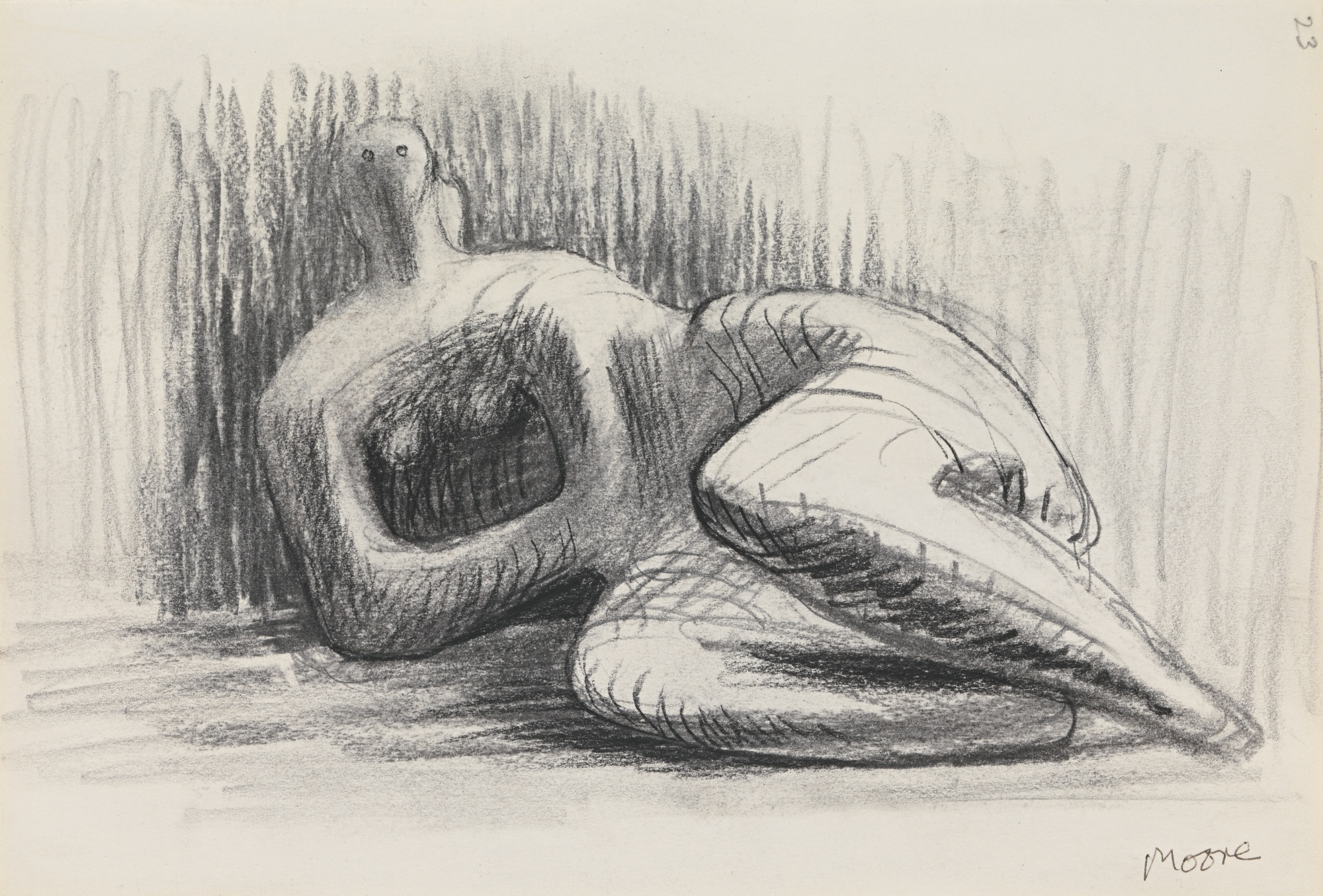
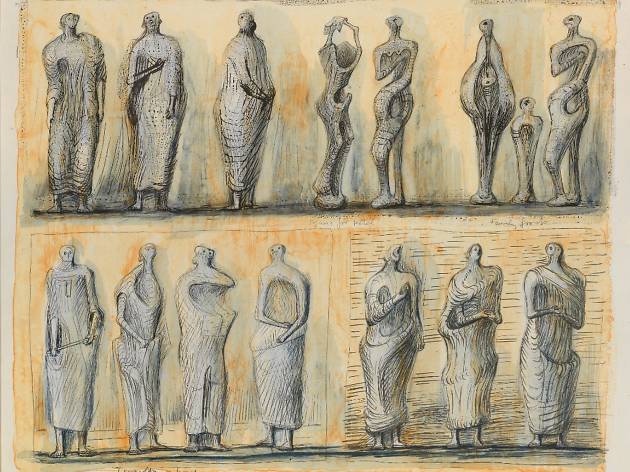
Discipline in art is a fundamental struggle to understand oneself, as much as to understand what one is drawing.
–Henry Moore
***************************
First day of work in 2019 and I am looking to the great sculptor Henry Moore for some guidance. I understand his idea that discipline in art comes with the need to understand oneself, as though the image or object created reveals as much about the artist’s inner self as it does about whatever it supposedly represents. The discipline to continue bringing oneself to that act of self-revelation is certainly a fundamental struggle, one where the artist is constantly presented with diversions, most of their own making, to keep them from the task.
It’s 2019. Hard to believe we’re in the last year of the second decade of the 21st century. It definitely has lost its new millennium smell.
When you’re young, time feels like a boulder that you’re pushing up a hill. It seems like a long, slow slog to get to certain days or reach ages where the world supposedly opens up for you. Take for example, how long the month between Thanksgiving and Christmas used to feel when you were a kid. Everyday felt like a week. Or how long that year from 15 to 16, the age when you could get you driver’s license, seemed to drag on.
Time seemed to almost go backwards at certain points back then.
But there comes an age when that boulder reaches the apex and begins rolling down the other side of the hill. Not so slow anymore. In fact, it quickly picks up speed and, try as you might, there’s no way to slow this monster down now. That month between Thanksgiving and Christmas? It begins to feel like five or six days.
And a year? Seemingly gone in the blink of an eye, racing away down that hill and dragging you along for the ride.
That is certainly how the last two decades have felt for me– a boulder rushing down a hill. It hasn’t run over me yet so guess so long as I can avoid it and can’t see the bottom there shouldn’t be any complaints.
The concern should be not where it takes you but how that fleeting time is spent. Want to use my time well because think this coming year, 2019, is going to be a doozy in may ways.
Just not sure if those are good or bad doozies.
Walking over to the studio this morning in the dark, it was very windy and I heard the thunderous crash of tree tumbling over a ways up in the woods. I stopped and stared up into the blackness of the forest waiting for any more sounds. A slightly smaller crack and crash followed a moment later. Then nothing but the blackness and the sound of the wind’s fury through the still standing trees.
All I could think was that there was some symbolism in that falling tree and the arrival of the new year. There is little doubt that something big is going to happen, great changes are going to come in some way, good or bad.
It’s like that boulder of time is rolling through a forest.
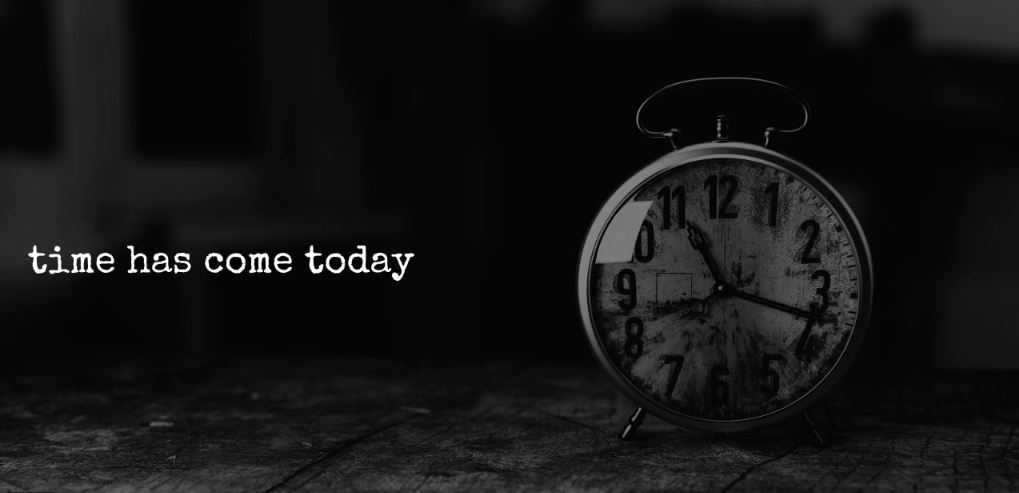
Welcome to 2019, kids. Hope you’re ready for the ride because, like the old Chambers Brothers’ song said, time has come today. It could be pivotal, a defining year in many ways.
So make good use of your time. And look out for boulders.
Before nodding off last night, I began watching the 1942 movie Casablanca for what might be the the nine hundred and fifty first time. It’s one of those films that is easy to jump in and out of because there is always something to relish at any given moment– a memorable scene, shot, line or piece of music. It is chock full of small pleasures that totally add to a greater whole.
Perhaps the greatest of these pleasures is the performance of Dooley Wilson who plays Sam, the star performer at Rick’s Cafe Americain. His musical performances light up the screen, most notably the song As Time Goes Bywhich has taken on legendary status.
Watching and listening to it last night made me think about how it was a fitting song for the end of the year, a wistful looking back as the clock marches on.
The song was written in 1931 by Herman Hupfeld for a Broadway show, Everybody’s Welcome, that had a short run. It went on to have modest success as recording by a number of record labels and orchestras. Herman Hupfeld was a minor songwriter of the era who you wouldn’t think would be the composer of a song that would turn out to be one of the great classics of the American songbook. He wrote some popular songs of the time that have long faded into the dustbin of history. I’ve included one at the bottom just to give you a taste.
As Time Goes By almost didn’t make it into the movie. The musical director, Max Steiner, was opposed to its inclusion but was overruled by the movie’s producers. Then in post-production they considered dropping it but because star Ingrid Bergman had already cut her hair for another part, they couldn’t possibly reshoot the scenes that already contained the song. So, it remained and became one of the most memorable parts of a true classic.
I wonder how the the film would have felt without it.
So, for this New Year’s Eve day, here’s the original along with that other Herman Hupfeld classic, , When Yuba Plays the Rhumba on the Tuba. Have a good New Year’s eve.











 Redtree Times